Targeted Financial Sanctions for Terrorism
Targeted financial sanctions (TFS) restrict designated persons and entities and relevant assets under the applicable regime. Terrorism-related TFS are preventive measures; they do not require a bank to prove a criminal offence before carrying out a binding freeze. Conversely, an automated name alert is not itself a confirmed designation match.
FATF Recommendation 6 addresses implementation of UN terrorism-related sanctions, including the relevant designation frameworks. Recommendation 7 concerns proliferation financing and must be distinguished. National legislation supplies the binding bank obligation, designation coverage, ownership/control rules, reporting and exceptions. The meaning of without delay cannot be replaced by an invented universal processing SLA.
The June 2026 FATF update aligns Recommendation 6's Interpretive Note with UN humanitarian exemptions under resolutions 2664, 2761 and 2615. This is not blanket permission for any payment described as humanitarian. Determine the applicable regime, eligible actor or activity, conditions and national implementation; a licence and a legal exemption are distinct routes.
For UK designations, the UK Sanctions List is the sole designations source from 28 January 2026, after closure of the OFSI consolidated list. Screening services must use current official data and the relevant legislation, not a cached obsolete list. Other jurisdictions require their own source and regime mapping.
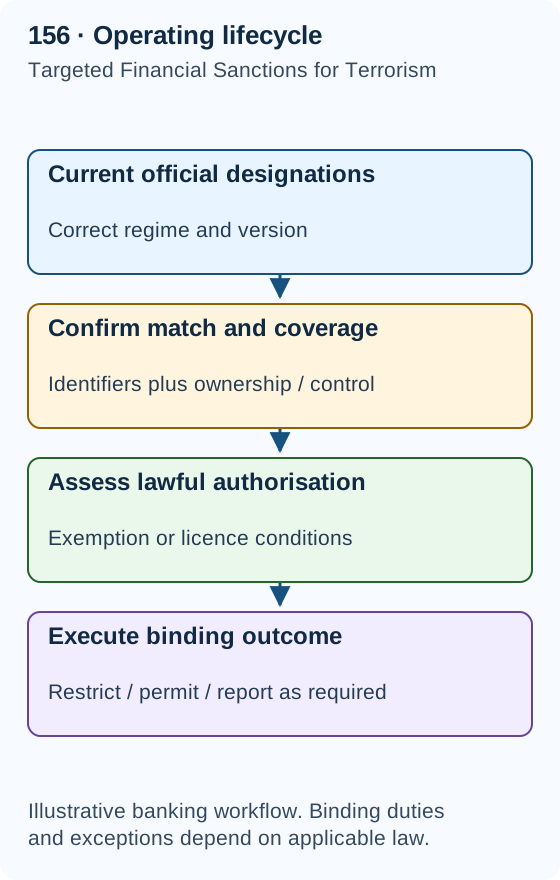
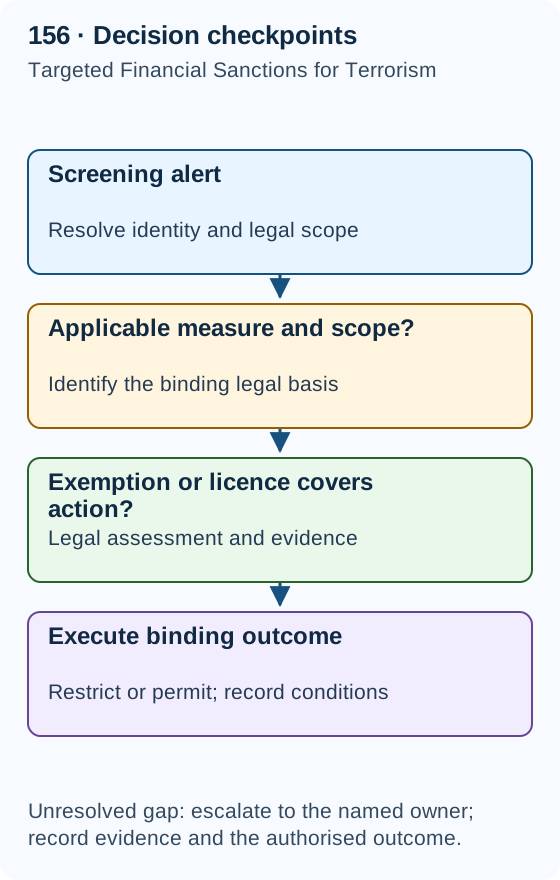
From list update to controlled action
Validate list provenance, download integrity, version and effective deployment. Screen relevant customers, beneficial owners, counterparties and assets according to the applicable obligations and the bank's risk-based model. A list update should prompt appropriate rescreening; a nightly job that silently fails leaves a control gap.
Review alerts using identifiers, aliases, dates, addresses and other available context. Record why a match is confirmed or cleared. Similar names can produce false positives; incomplete data can also conceal a true match. Ownership or control analysis is separate from name matching and needs regime-specific rules.
For a confirmed applicable prohibition, carry out required freezing or other action, prevent prohibited making available of funds or economic resources, and report as required. Do not simply return funds to the sender if doing so would be prohibited dealing. Preserve asset and attempted-transaction records and obtain guidance through approved channels where treatment is uncertain.
Humanitarian exemptions require a documented legal basis. Check who is covered, the activity's purpose and any conditions, reporting or recordkeeping requirements. A general licence may have terms or expiry; a specific licence covers the permitted action and parties described. Maintain controls against diversion without imposing a blanket block unsupported by the regime.
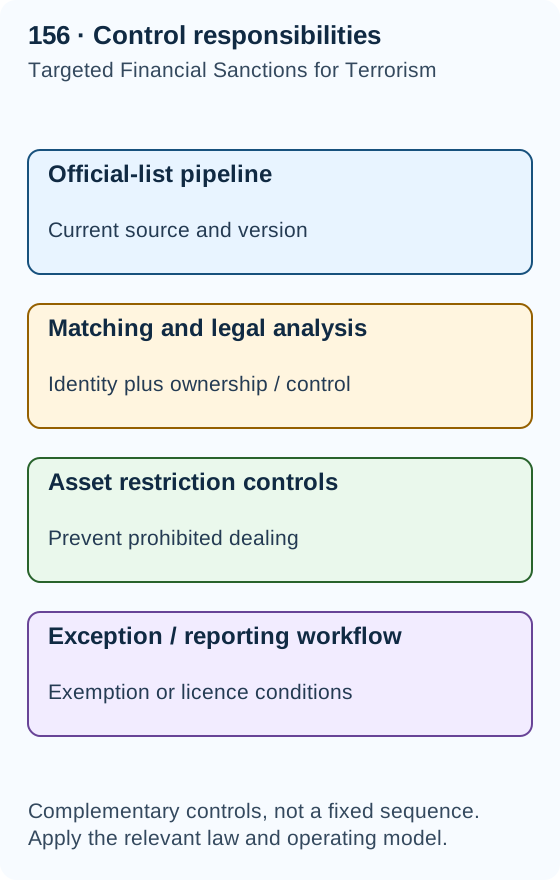
Translate a designation into specific banking actions
A targeted financial sanctions programme has two connected jobs. It must identify persons, entities and property within a legally applicable restriction, and it must make that restriction effective across the bank's products. A well-tuned matching engine solves only part of the first job. It cannot decide every question about legal scope, identify assets absent from the customer register, or prevent an unscreened service from transferring value. Design the programme around the actual instruction that each banking service must execute when a restriction applies.
Begin with a jurisdiction and regime register. For each legal entity, branch and service, identify the relevant legislation, official designation source, categories of restrictions, competent authority and specialist responsible for interpretation. Record effective dates and any territorial or personal reach relevant to the bank. International standards and UN resolutions matter to the framework, but a customer-facing bank needs an accurate account of its binding obligations. A jurisdiction-neutral diagram is a learning aid; it cannot replace this register. Cross-border groups must assess the rules applying to each entity and transaction rather than automatically assuming the parent company's rules are the only rules.
The register should distinguish terrorism-related measures from other programmes that happen to use the same screening technology. An asset freeze, a restriction on making funds or economic resources available, a sectoral limitation and a travel restriction can require different bank actions. List inclusion alone does not establish that every available restriction applies to every transaction. This distinction became particularly relevant for UK source management when the UK Sanctions List became the sole designation source in January 2026: the list covers designations across sanctions regimes, so legal classification remains essential after ingestion.
Translate the legal interpretation into a product action matrix. Rows might cover current accounts, term deposits, custody holdings, credit facilities, guarantees, merchant settlement, remittance services and digital wallets. Columns describe the relevant measure, the point at which value can move, the instruction to the operational system, treatment of incoming value, reporting route and permissible exceptions. The matrix should identify whether the service can implement the required restriction directly or needs an additional manual control. A promise that the customer is marked in the central CRM is weak if a separate card processor continues to authorise withdrawals.
An action matrix must also distinguish customers from other parties. A listed beneficiary of a payment may not hold an account at the bank. A listed person can have an interest in property held through a corporate structure. A counterparty appearing only in a guarantee or securities instruction can still be relevant. Conversely, the occurrence of a common name in a free-text invoice does not by itself identify a designated beneficiary. Map the relevant parties and property to the applicable prohibition, supported by information about their actual roles. Avoid both narrow account-only coverage and indiscriminate freezing whenever a string appears.
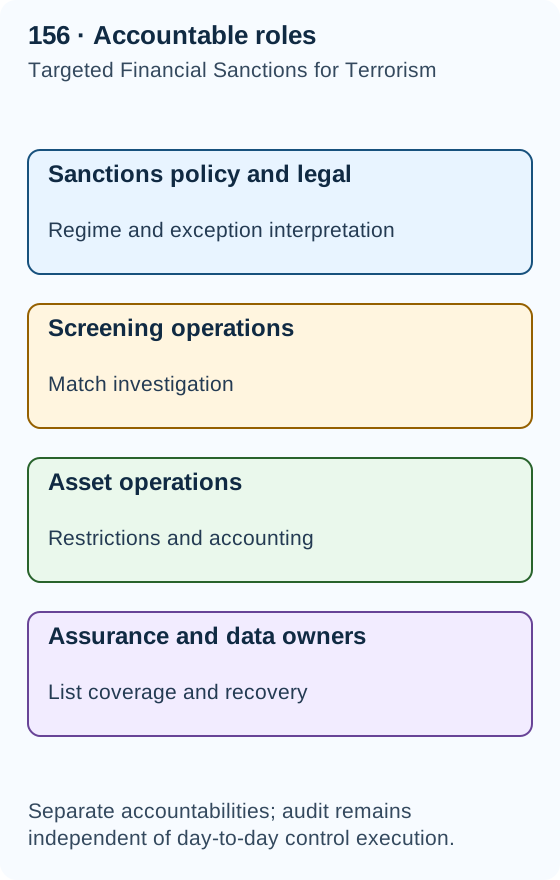
Each instruction needs an accountable executor, an independent check appropriate to its risk and evidence of completion. The sanctions specialist may determine the applicable restriction while payments operations stop an instruction, custody operations restrict an asset and the reporting team submits required information. The business owner must see the operating outcome rather than treating a legal memo as implementation. A case is incomplete when the decision is correct but one system has not acknowledged it. Track rejected instructions, failed updates and pending manual actions until reconciled or explicitly escalated.
Official data, ingestion and rescreening
An official-source pipeline is more than an automated download. Identify where the authoritative data are published, how the bank learns of updates, which formats are consumed and how changes are authenticated. Store the source version, retrieval time, content integrity check, ingestion result and deployed screening version. A vendor's timestamp may show when it built a file rather than when the authority made a designation effective. Those are useful but different events. Capture enough chronology to understand the period between a legal change and the bank's operational response.
Verify semantic completeness after a format change. A file can be syntactically valid while an importer silently ignores new alias fields, identifiers, dates, regimes or entity types. Compare record counts, field availability and representative designations against the official source. Large deletions or unexpected falls in the number of aliases should trigger investigation. Do not automatically treat every difference as an error: a genuine delisting or official correction must also reach the service. The control objective is justified, complete transformation, not preservation of yesterday's file regardless of what the authority has changed.
Separate list availability from deployment. A central service can receive a new file while a regional screening instance still uses the previous version. Produce an inventory of instances and obtain an acknowledgement from each relevant consumer. Include customer onboarding, periodic customer screening, payments, custody, trade and any platform-specific controls. Record which service is intentionally out of scope and why. If a service cannot be updated, the incident owner must assess the exposed population and arrange effective temporary controls. A dashboard saying that the file was received is insufficient evidence that customers and transactions were rescreened.
Use the update event to identify the required affected populations. A newly designated customer requires a different investigation from a new alias for a designation already controlled. A revised identifier can change previous false-positive decisions. A delisting can require review of continuing restrictions, while another measure may still apply. A risk-based programme should have procedures for these changes without promising that every event has an identical operational consequence. The applicable law governs the required promptness; a bank's internal target should support that obligation and identify escalating exceptions rather than create a competing legal deadline.
Rescreening depends on records of who and what the bank holds. Reconcile the screened population to authoritative source systems, including inactive accounts with remaining balances, closed products awaiting settlement, custody subaccounts and outstanding guarantees. A person without recent transaction activity can still own relevant property. Data exclusions need a documented reason, not an assumption that low activity eliminates sanctions exposure. Population completeness can be tested by selecting products directly from source registers and finding the corresponding screening and restriction evidence.
When an outage ends, recovery has three elements: current service availability, treatment of missed activity and prevention of recurrence. Replay or otherwise review the transactions and customers exposed during the gap where appropriate. Preserve the original timing and decision context rather than presenting a later rescreen as though it happened before execution. Investigate whether prohibited value moved, involve the relevant specialists and consider required notifications. A recovery plan that only restarts the list feed can leave a completed transfer and an unreviewed asset outside the investigation.
Identity resolution and defensible alerts
An automated alert is a request to resolve uncertainty. Analysts should compare the proposed match against relevant identifiers, aliases, dates, locations, legal form and other available information. A matching name can be highly significant in one case and weak in another. Explain which information agrees, which conflicts and which is missing. An unresolved date of birth must not be converted into a definite mismatch simply because the analyst would prefer to close the alert. Missing information is a fact about evidence quality, not proof that the person is different.
The strength of negative evidence also requires judgement. Two records using incompatible passport details may support a false-positive conclusion if the data are current and reliable. A different postal address may be much weaker because a person can move or use multiple addresses. Corporate entities can change names and registered locations without becoming new legal persons. Training should teach these distinctions using realistic data, including transliteration and ordering differences, rather than rewarding a fixed number of checked boxes. Preserve the information actually used so a reviewer can reconstruct the reasoning.
Define decision authority and escalation for uncertainty. Frontline teams should not release an instruction solely because the customer objects to a delay. Analysts should have access to specialist sanctions and legal advice for ambiguous ownership or scope questions. The operational response to an unresolved alert must reflect the relevant law, product and risk. Document the basis of any temporary restriction and distinguish it from a confirmed sanctions freeze. Uncertainty does not justify indefinite unexplained restriction without review, but neither does an internal queue target authorise a potentially prohibited release.
False-positive suppression can improve consistency when it is narrowly designed. A rule linked to a specific customer, designation record and verified differentiating identifier is safer than a global rule exempting a name. Define conditions that invalidate the decision: a changed designation, new ownership information, conflicting identity data or material alteration of the customer record. Test whether suppressions are replayed correctly after list updates. A customer incorrectly described as cleared forever can bypass future sanctions analysis even when the original mismatch was properly supported.
Screening quality is not measured only by the percentage of alerts closed. Sample the rationale, evidence and operational outcome of both true matches and closed alerts. Compare different language populations and party types. High alert volumes can reflect tuning or data-quality issues, but low volumes can result from a failed feed or lost aliases. Test known relevant examples and plausible non-matches, with approval for any artificial test data. Tests should establish whether the service produces usable evidence and routes the case correctly, not merely whether an alert appears on a screen.
Avoid implying guilt in customer communication or internal records. A confirmed designation match establishes the relevance of a restriction under a regime; it does not mean the bank has proved a criminal offence. A name alert establishes much less. Use precise statuses such as unresolved identity, confirmed different person, applicable designation or ownership analysis pending. These distinctions improve fairness and prevent later teams from relying on an exaggerated label. They also support decisions about restrictions, reporting, complaints and lawful disclosure that can have different evidential thresholds.
Ownership, control and indirect interests
Ownership and control analysis starts with applicable legal rules. Do not copy a numerical threshold from one jurisdiction into another regime or assume that AML beneficial-ownership identification thresholds determine sanctions coverage. AML rules may identify information to collect for due diligence, while sanctions rules determine whether property or an entity is restricted. A bank can have enough information for one purpose and still need further evidence for the other. Maintain separate reasoning and references, even when both teams use the same corporate documents.
Under OFAC's 50 Percent Rule, ownership of 50 percent or more in aggregate by blocked persons can make an entity blocked without its own list entry. Control alone does not create automatic blocking under that rule, although separate designation criteria, programme provisions and involvement of a blocked person can matter. This is a US-specific rule, not a global test. OFAC's published examples of indirect ownership illustrate why simply multiplying every percentage through every chain can produce incorrect outcomes. Analysts should apply the relevant official guidance to the actual structure and seek specialist advice for complexity.
For illustration, consider two blocked owners whose direct interests in an otherwise unlisted company total 50 percent under the applicable US rule. Searching only the company name can miss the restriction. The bank needs a justified aggregation assessment and operational restrictions for the entity where required. Change the illustration so the only known interest is a minority shareholding and the blocked person can influence management. The bank must not describe control alone as automatic blocking under the 50 Percent Rule; it must assess other applicable legal provisions and the actual transaction. These illustrations show why the rule must be named alongside the conclusion.
An ownership file should show the legal entities and persons in the chain, direct interests, relevant intermediate entities, source documents, effective dates and unresolved links. Document which interests are aggregated and the basis. If control is legally relevant in the applicable regime, preserve the facts supporting that assessment: voting rights, appointment powers, contractual rights or other reliable evidence as appropriate. A colourful chart without dates or sources is not a defensible assessment. A well-structured chart can be very useful when it accurately reflects the legal analysis rather than substituting for it.
Treat opaque or changing structures as an information problem requiring proportionate action. Request relevant documents through the approved channel; record the customer's response and verify material facts where practicable. Use reliable corporate and other sources without treating every database entry as conclusive. A missing shareholder record is not automatically proof of a designated owner, but it may prevent the bank from completing an adequate assessment. The decision to continue, constrain a service or seek legal direction should identify this uncertainty instead of inventing a definitive ownership result.
Reassessment should respond to material change. An ownership transfer, merger, new trust arrangement or revised designation can affect the previous conclusion. Decide which source events trigger review and which teams must send them. Relationship managers may know of a transaction before the ownership repository is updated; custody or corporate-action teams may see a change that onboarding does not. Reliance on a periodic annual review alone can leave the operational service using outdated facts. Preserve the chronology when information arrives late and assess exposure during the gap.
Make restrictions effective across assets and services
Identify the property and transactions covered by the applicable measure before implementing system instructions. The bank may hold deposits, securities, collateral, receivables or contractual rights, and may process instructions involving property it does not hold. Product terminology can obscure the legal position. A credit balance, a pledged security and an undrawn facility are operationally different. Obtain legal advice where coverage is uncertain and give operations an instruction they can implement. A general direction to freeze everything can create avoidable errors if it is not translated into the relevant products and rights.
A restriction should have a defined state in the system. Record the responsible legal entity, account or asset, applicable measure, start time, authorised instruction, limitations and evidence of execution. Distinguish an account status from a payment status and from a custody holding status. Prevent prohibited movement through all available channels, including branch instructions, scheduled payments, batch files, API calls and operational overrides. A visible banner can alert staff but does not demonstrate that the service rejects prohibited actions. Test actual processing paths using controlled test accounts or other authorised methods.
Check pending and scheduled activity. A designation can arise after a customer submitted an instruction but before settlement or final execution. Determine which instructions remain controllable and what measures apply. An analyst must know the relevant cutoffs without mistaking a commercial cutoff for permission to deal. Payments already transmitted may require investigation or recovery efforts appropriate to the law and circumstances. Record the bank's actual ability to intervene rather than stating that an instruction was stopped when it had already left. Preserve communications and confirmations from intermediaries when involved.
Incoming credits and asset income require product-specific treatment. A freeze does not invariably mean the account must reject every incoming amount; the applicable regime may provide rules for crediting frozen accounts, interest or payments due under earlier arrangements. Do not assume permission merely because the beneficiary cannot withdraw. Determine the applicable conditions, reporting and treatment of funds. Configure permitted credits so they do not become available through an alternative product or automatic sweep. Reconcile the frozen position after each authorised or legally permitted event.
Custody services introduce corporate actions and entitlements. A security may pay a dividend, mature, undergo redemption or be subject to a rights event. Operations must identify whether accepting, converting, paying or transferring the resulting property is allowed under the applicable measure or authorisation. Preserve the original holding and resulting asset trail. A security identifier change should not accidentally remove a restriction. Where the bank must seek guidance or authorisation, establish an accountable deadline derived from the event and legal requirements rather than silently ignoring the corporate action.
Credit, collateral and guarantees need the same disciplined separation of legal analysis and execution. The bank's right to set off a debt or realise collateral does not automatically override a sanctions restriction. Nor should the bank presume that ordinary interest accrual or enforcement is always prohibited without examining the applicable regime. Route the question to legal and sanctions specialists, preserve relevant contracts and document the authorised outcome. Relationship pressure to reduce credit exposure is a commercial concern; it cannot decide the legal availability of blocked property.
Reporting and escalation without conflating processes
Map reporting obligations by regime and event. The relevant authority, reportable information, deadline, form and acknowledgement can differ from suspicious-activity reporting. A sanctions freeze report and a SAR or STR have different purposes even when the same underlying facts are relevant. Assess each obligation through the appropriate officer or team, using national rules. Filing one report does not necessarily satisfy the other, and sending a SAR does not by itself authorise a transaction involving frozen property. Keep the reporting decisions and operational restrictions separately traceable.
The evidence packet for a sanctions notification should identify the person or entity, the relevant designation and legal regime, the property or transaction, the bank's action and the information requested by the authority. Avoid unexplained exports containing ambiguous field names or quantities without currencies. Validate customer and asset identifiers against the controlled records. Preserve what was submitted, who approved it, when it was delivered and the acknowledgement or delivery evidence. If a portal rejects the submission, a saved draft does not establish successful reporting.
Late discovery requires a truthful chronology. Record when the designation became applicable, when the bank received or should have processed the relevant information, when the alert was identified and when the operational restriction became effective. Investigate any intervening activity. Do not replace the historical sequence with a backdated status indicating uninterrupted control. The specialist assessment can then consider breach reporting, remediation and further authority engagement under the relevant rules. Root-cause analysis should examine population coverage, data transformation, staff decisions and system execution rather than selecting one convenient failure explanation.
Provide an urgent escalation path that survives weekends, public holidays and staff absence. The path should identify who can decide, who can execute and who can obtain specialist advice. Staff must be able to preserve evidence and prevent an unauthorised override while advice is sought. Internal business-hour procedures are inadequate where relevant obligations or processing services continue outside those hours. Test the contact route and delegated authority in realistic exercises. A document listing a person who has left the bank is not an available control.
Confidentiality rules must be applied to the actual information. Sanctions information can include public designations and protected bank records. SAR information may attract separate protections. Customer communication should be legally reviewed where needed, factual and proportionate. Do not assume that every account explanation must be withheld because a SAR may exist, or disclose protected reporting information as proof that the bank is taking action. Approved communication patterns should distinguish public legal restrictions from protected investigatory content and route unusual requests to the authorised team.
Humanitarian exemptions and licences
Humanitarian activity should be assessed through the applicable legal route rather than a broad reputation judgement about the customer. FATF's June 2026 update reflects relevant UN humanitarian exemptions; implementation and transaction-level conditions must still be determined. A customer description such as aid payment is a starting fact, not a completed assessment. Identify the eligible actors, activity and supporting conditions within the specific regime. Preserve the source and version of the legal basis and obtain appropriate specialist review. The question is whether this activity qualifies, not whether humanitarian work is generally desirable.
An exemption and a licence are different forms of authority. An exemption may apply by law when its conditions are met; a licence authorises defined activity under its terms. A licence application is not an issued licence. Neither a previous approval for another transaction nor a correspondent bank's willingness to process proves that the present instruction is covered. Assess the issuer, parties, purpose, amount or asset limits, duration, conditions and reporting requirements relevant to the actual transaction. Where a general licence applies, retain the version and document how its conditions are satisfied.
Build an authorisation record that operations can use safely. It should specify the permitted action and scope, the conditions to check before execution, the responsible approver and any continuing obligations. Link it to the restricted asset and payment instruction. Avoid an unrestricted customer-level flag saying humanitarian approved when only one route or purpose is covered. If an authorisation has a limit, track consumption and prevent repeated instructions from exceeding it. If it expires, identify pending instructions and ongoing arrangements that require reassessment.
The operating design should support timely lawful activity. Unnecessary repeated requests for information already verified can delay aid without improving the legal assessment. Ask questions that resolve an actual condition or uncertainty, explain the information required through the appropriate channel and provide a clear escalation route. Risk assessment remains necessary, but refusal based solely on a broad customer category can obscure legitimate activity and shift transactions into less transparent channels. Neither inclusiveness nor reputational caution replaces the legal analysis; both benefit from specific evidence and accountable decisions.
Monitor changes after the initial assessment. A new beneficiary, intermediary, destination or purpose may fall outside an authorisation. A change in the applicable measure can affect previously acceptable activity. Capture these changes in payment and relationship processes, with instructions on when specialist reassessment is required. An automated recurring payment must not continue indefinitely under a licence that has expired or ceased to cover its parties. Review outstanding commitments and inform operations of the authorised treatment before the next controllable event.
Maintain evidence of conditions after execution where required. A report, use-of-funds record or other condition should have a named owner and due date derived from the applicable instrument. Where information cannot be obtained, assess and escalate the consequence rather than closing the case merely because the payment succeeded. Keep the authorised transaction trail separate from the bank's general charitable or customer-service records. Independent reviewers should be able to establish the legal basis, scope, approval, execution and continuing compliance from a coherent record.
Delisting, false positives and release control
A release decision needs the same attention as a restriction. A false-positive determination means the relevant person or asset did not fall within the restriction as assessed; delisting means a designation changed. Neither automatically removes another applicable legal measure. Before release, review the restriction register for sanctions under other regimes, court orders, asset restraint, contractual restrictions and other legally relevant instructions. Distinguish these bases so the bank can remove an erroneous restriction promptly while preserving any valid separate one.
For a delisting, validate the authoritative event and identify the affected records. A vendor's removal can result from a data error rather than an official change. Record the source, effective date and specialist assessment, then communicate executable instructions to each system owner. Release may involve account access, payment holds, custody restrictions or suspended services with different operational paths. Require acknowledgements and reconcile the outstanding restriction register. A customer should not remain unable to transact because one regional instance still uses an obsolete list or an unreviewed flag.
Before releasing held funds or instructions, confirm their current status and authorised destination. A queued payment may no longer reflect the customer's wishes or commercial arrangement. A counterparty may have changed, an instruction may have expired or another relevant designation may now apply. Follow the approved process for revalidation rather than automatically sending every old instruction at once. Record how the balance or asset position was reconciled and whether an additional customer instruction was required. The fact that one reason for holding has ended does not itself create a new mandate to pay.
If an erroneous restriction caused customer harm, preserve the chronology and route remediation appropriately. The bank may need to address fees, missed payments, access problems or complaints according to its legal and contractual obligations. Do not erase the original case to make performance statistics look better. Retain the reason for the error and the corrective action with appropriate access controls. Investigation should consider data quality, incorrect suppression rules, misleading ownership records and operational execution, then verify that the correction prevents recurrence without weakening valid restrictions.
Release controls should be proportionate. Repeating the entire onboarding investigation for a clearly established false positive may prolong avoidable harm. Conversely, a release triggered by an unverified email or a staff member's unsupported assertion can permit prohibited dealing. Define the evidence and approval required for each release category and provide a route for urgent review. Test both unauthorised release attempts and legitimate release completion. A sound control prevents inappropriate movement and can also end a restriction lawfully when its basis no longer applies.
Worked case: an unlisted company with relevant ownership
The following cases are fictional learning examples. Their control choices illustrate banking practice; any binding legal conclusion requires the applicable regime and facts. A corporate customer, Alder Components, has a pending supplier payment and a custody holding. A new designation affects one of its shareholders. The initial customer-name screen produces no exact match because the company itself is absent from the list. A relationship manager sends a recent shareholder register to sanctions operations. This is a relevant event that the programme must be able to receive without relying on an automated name alert.
The analyst first identifies the bank entity, relevant jurisdiction and measure. The file contains direct ownership interests and two intermediate companies, but one intermediate record is out of date. The analyst records the confirmed information and unresolved chain, obtains the appropriate specialist assessment and follows the bank's legally grounded interim process. It would be wrong to declare the company unaffected solely because it is unlisted. It would also be wrong to assert a global ownership rule or fabricate the missing percentage. The case turns on the actual applicable rule and supported structure.
Assume the verified structure establishes coverage under the applicable restriction. The sanctions decision specifies the company, measure, affected property and instructions. Payments operations confirms whether the supplier instruction remains stoppable and records its status. Custody operations restricts the identified holding and considers its scheduled dividend under the relevant rules. Deposit operations checks sweeps and debit channels. Each team acknowledges the instruction; the case owner reconciles the asset register and exceptions. A single CRM annotation would have left several relevant services outside the operational evidence.
The reporting team prepares the required sanctions notification, while the designated reporting officer separately considers whether the facts meet the local suspicious-reporting threshold. The bank does not assume that designation itself proves a money-laundering offence. It also does not use the existence of a SAR as authority for asset movement. The two decisions share relevant evidence but have distinct purposes and confidentiality rules. The file preserves the jurisdictional assessment, ownership documents, asset position, pending-payment treatment, notifications and remaining questions.
An assurance review then tests whether other customers connected to the same ownership chain were identified and whether the designation update reached every relevant screening instance. It checks both the confirmed restriction and a similar customer correctly assessed as outside the applicable rule. This prevents a remediation exercise from becoming an indiscriminate sector freeze. If the unresolved intermediate data caused delay, the action plan improves event collection and ownership evidence rather than simply requiring analysts to close cases faster.
Worked case: a humanitarian instruction and an incomplete authorisation
A bank receives a payment instruction from a longstanding relief organisation to support essential services in a region subject to relevant terrorism-related measures. The payment includes an intermediary not named in the customer's previous authorisation file. A staff member recognises the organisation and proposes releasing the instruction because it is charitable. The appropriate question is narrower: does the actual transaction fall within the applicable exemption or licence, with all relevant conditions satisfied? Reputation and past relationship experience do not determine legal coverage.
The analyst gathers information needed for that question: the payer, recipient, intermediary, purpose, route and supporting activity. The specialist identifies the applicable regime and the available legal route. The file records which actor or activity condition is relevant and why the new intermediary matters. If the legal basis covers the instruction, operations receives a specific executable approval. If a necessary condition is unresolved, the bank seeks targeted evidence or appropriate direction. It does not treat a pending application as permission, nor assume that the only lawful approach is permanent refusal.
Suppose a licence covers a defined payment purpose and limit but not every activity of the organisation. The authorisation record links the permitted instruction to its amount, parties and scope. Operations verifies the current licence and applicable conditions before execution, records the value used against any relevant limit and schedules required follow-up. The customer's general account record does not receive a blanket unrestricted flag. A later request for a different purpose requires an assessment against the actual authority, even though the first payment completed lawfully.
The bank also examines whether its own information demands are causing avoidable delay. Repeatedly asking for an identity document already verified does not establish the new intermediary's eligibility. A targeted explanation of the missing condition is more useful. Compliance and customer-facing teams coordinate communication without exposing protected reporting information. The decision record is accurate enough for a reviewer to understand both the legal assessment and the operational reason for any delay. Management sees a specific unresolved condition, not a vague humanitarian high-risk label.
After execution, the owner verifies any continuing requirements and reconciles the payment with the authorised record. Independent review checks the exemption or licence source, version, factual conditions, approvals and execution evidence. It also considers a rejected or delayed legitimate case to test whether the process can support lawful activity. A programme that counts every rejection as success may conceal misunderstanding, poor data or inadequate specialist capacity. The aim is correct implementation of applicable measures and lawful exceptions, with reliable evidence of each.
Worked case: a list update arrives while payment processing is degraded
During an infrastructure incident, the bank receives an official designation update. The central list service ingests it successfully, but a regional payments instance cannot deploy the version. Batch payments are awaiting processing and branch staff can submit manual instructions. The first dashboard shows a successful download. The incident owner must look beyond that status to service acknowledgements, population coverage and value movement. The relevant obligation has not been implemented merely because one component received the file.
The owner identifies the affected instance, channels, time window and outstanding payment population. Sanctions specialists and operations define temporary controls consistent with the applicable law and actual processing capability. Branch instructions are included because they can bypass the batch route. The teams preserve the pending records and deployment logs. If an instruction is restricted, the evidence distinguishes prevention before execution from a later attempt to recover value. Customer-facing teams receive approved explanations of the operational delay and escalate urgent cases through the specialist route.
After the instance recovers, technology verifies the current version and confirms field mapping. Operations reviews or replays the exposed population as appropriate, reconciling counts and identifying exceptions. The team investigates any completed instructions involving the new designation and records the historical timing without backdating the successful screen. Legal and compliance assess whether further authority engagement or breach reporting is required. The incident does not close merely because the application's health indicator turns green.
The remediation plan separates contributing causes. A network outage, absence of deployment acknowledgements, incomplete manual-channel inventory and unclear out-of-hours authority require different fixes. Training can help staff understand the response, but it cannot replace the missing technical acknowledgement or stop rule. Assurance tests a subsequent simulated deployment failure and confirms that the temporary control reaches the branch channel as well as the batch queue. The exercise should also demonstrate how lawful urgent activity is assessed during the incident, rather than silently cancelling every request.
Acceptance tests for an operational programme
Test 1: official-source change. Introduce an authorised test update containing a new designation, alias and identifier. Verify retrieval, field mapping, deployment acknowledgements and affected-population review. Preserve the expected records and actual outputs. Passing means the complete relevant change reaches the appropriate systems and produces an accountable response. A download log or vendor email alone fails to establish deployment. Include a real-source format variation in test design when the bank is changing its parser.
Test 2: obsolete instance. Keep one controlled test instance on the previous version. Confirm that monitoring identifies the discrepancy and routes it to an available owner. Check what happens to the affected product and channel while the discrepancy is unresolved. A test should not assume that the central service's success covers every consumer. Record whether the incident process identifies both current exposure and transactions processed during the gap, with an appropriate recovery plan.
Test 3: matched and different persons. Use approved examples with a relevant identity match, a common-name false positive and insufficient differentiating data. Require analysts to explain the evidence and uncertainty. Review the effect of each conclusion on the instruction and restriction registers. Passing is not achieved by assigning identical outcomes to all three. The false-positive decision must be supported; the unresolved case needs an accountable next step; the confirmed applicable match requires effective action.
Test 4: ownership without a list entry. Present an unlisted entity with a structure relevant under a named applicable rule. Verify that the ownership process can identify coverage and direct restrictions without waiting for an exact company-name match. Then change the facts so coverage is not established under that rule. Review whether the analyst identifies the distinction and considers any separate relevant provision. The test should expose universal threshold assumptions and blind percentage multiplication rather than reward memorised labels.
Test 5: concurrent restrictions. Apply two different legal bases to a controlled asset, then remove one. Confirm that the release process identifies the remaining measure and implements only the permitted change. Preserve separate records for each basis. Passing requires an accurate current position and a usable customer outcome; neither releasing everything nor retaining every obsolete restriction is correct. This test should include the system's behaviour when multiple teams maintain different restriction registers.
Test 6: scheduled debit and sweep. Restrict a test deposit relationship and attempt relevant future-dated instructions, automatic sweeps, branch transactions and permitted test API requests. Verify the actual processing outcome, not just the displayed account status. Review legitimate actions that should still be available under the applicable instruction. Any permitted movement must have a justified basis. Record which channels cannot enforce the instruction directly and demonstrate the compensating control rather than leaving them outside the result.
Test 7: custody entitlement. Process a controlled corporate action on a restricted holding. Confirm that the original security and resulting entitlement remain traceable and are treated under the authorised legal assessment. Test identifier changes and movement into a cash subaccount. The case should detect whether a dividend or redemption bypasses the restriction through a separate settlement service. Preserve asset quantities, currency, event identifiers and approvals so the resulting position can be reconstructed.
Test 8: reporting delivery failure. Simulate rejection by an approved reporting test interface or use a safe equivalent. Confirm that a prepared notification remains outstanding until valid delivery or authorised alternative action is evidenced. Review escalation against the relevant legal deadline. A test passes when the owner can identify what was submitted, the rejection, corrective action and actual delivery outcome. Avoid describing a draft document or an internal approval as a successful report.
Test 9: licence scope and expiry. Present an authorisation covering one defined activity and an instruction outside its scope. Verify that the approval is not converted into a blanket customer exemption. Repeat with an expired authority and with an applicable current authority. Check limit tracking and continuing conditions where relevant. The evidence should show why each instruction receives its outcome. Legal parameters must come from the actual test authority or carefully labelled fictional instrument, not an invented universal rule.
Test 10: false-positive suppression change. Close a supported mismatch, then introduce a changed designation identifier or customer fact that invalidates the old basis. Confirm that the suppression is reconsidered as designed. Test an unchanged supported case as well, because a control that unnecessarily reopens every alert can produce harmful delay and resource strain. Record the rule scope, invalidation event and analyst response. A global name exemption should not survive merely because one customer was previously cleared.
Test 11: legitimate release. Establish that a restriction no longer applies and authorise release through the correct process. Verify completion across the customer access layer and processing systems, including queued instructions needing revalidation. Preserve the evidence of removal and continuing measures. A sound restriction control must be able to stop prohibited activity and complete a lawful release. Measure whether customer access remains blocked by a forgotten product flag after the central case is marked closed.
Test 12: staff absence. Run an out-of-hours exercise with the primary specialist unavailable. Confirm that staff can obtain authorised advice, preserve evidence and execute the required instruction through delegated arrangements. Include the reporting and product owner where relevant. Record failed contacts and unclear decisions as defects. The control is available only if the required people, access and authority work together; a telephone list with no valid delegation does not establish operational resilience.
Management information that exposes unresolved risk
Useful management information combines coverage, timeliness and decision quality. Show which official sources and instances are current, the age and nature of deployment discrepancies, the affected populations and the outstanding operational restrictions. Distinguish unresolved identity cases from confirmed matches awaiting product implementation. Report lawful-release delays separately from delay in applying required restrictions. These measures reveal very different risks. A single average case time can look healthy while one high-impact unmatched product continues to move value.
Interpret volumes cautiously. A rise in alerts can result from a newly added alias field or new business population. A fall can result from improved quality or a lost data feed. Review the context and sample decisions before concluding that performance improved. Track recurring false-positive causes, incomplete identifiers, ownership evidence gaps and failed execution instructions. Pair each significant issue with an owner, affected scope and corrective action. Avoid using an alert-to-freeze conversion rate as a universal quality score; the expected rate depends on actual customers, activity and screening design.
Monitor restricted asset positions with accounting and operations. The value and number of controlled items can change because of permitted credits, market movements, corporate actions or authorised releases. Reconcile differences and investigate unexplained movement. A case-management count may remain unchanged while property has left an account. Management should understand any material reconciliation limitation and the temporary controls in place. Keep financial values and quantities intelligible by identifying currency, valuation date and whether a figure represents current balance, transaction value or an asset count.
Quality review should include customer impact. Examine erroneous restrictions, avoidable delays, unsupported release refusals and complaints with appropriate safeguards. These are relevant to whether the programme correctly applies the law. Review the accessibility of information requests and escalation for people whose documents or names differ from common system assumptions. Correcting a biased or unreliable matching pattern can improve accuracy and inclusion together. Do not weaken a valid legal restriction to meet a service metric, but do not treat preventable customer harm as evidence of a stronger control either.
Board and senior management reporting should identify material uncertainty explicitly. Explain whether an ownership conclusion is pending legal analysis, an asset register is incomplete or a platform cannot implement a required instruction. State the consequences, interim controls, decision needed and accountable owner. A large slide deck listing completed training cannot substitute for disclosure of an unmitigated product gap. The governance function should challenge whether deadlines and resources are credible, and independent assurance should test the resulting correction using the underlying population rather than only selected successful cases.
A restriction record that survives handover
An operational handover should make the next required action clear. A concise record includes the relevant entity and asset, applicable legal basis, source and version, decision rationale, current processing state, authority for any exception, outstanding reporting or follow-up, responsible owners and the next review trigger. Link the detailed evidence rather than copying protected material into an unrestricted shift email. The receiving team should confirm the unresolved actions and their authority to complete them. A case title saying sanctions hold provides too little information for safe execution.
Record the difference between fact, assessment and instruction. A fact might be that a shareholder register dated a particular day shows a specified interest. An assessment applies the relevant rule to those facts. An instruction tells a product team what to prevent or permit. If one changes, determine which other elements require revision. This structure avoids treating an old operational flag as an enduring legal conclusion and prevents later reviewers from mistaking unverified customer statements for established ownership. It also makes correction more targeted when an error is found.
Preserve provenance when evidence comes from another group entity or service provider. Identify the source, information received, limitations and permissions for its use or disclosure. Do not assume that a group connection creates a universal legal gateway for protected records. Request missing evidence through the authorised route. If the bank cannot obtain necessary information, document what remains unresolved and the resulting control decision. The existence of an outsourced matching service does not remove the bank's need to understand its own obligations or demonstrate effective implementation.
Before closing a case, reconcile the decision against the operating outcome. Confirm that relevant restrictions are effective, reports are delivered as required, authorised actions have the right scope and outstanding conditions have owners. If the case is transferred to longer-term asset management, identify the receiving process and active review triggers. A case can be administratively complete while a licence condition or unresolved asset instruction remains open; those actions must stay visible. Closure should mean that responsibilities have been resolved or formally transferred, not that the analyst has exhausted the available form fields.
False positives, exemptions and release controls
Test transliteration, aliases, missing birth dates, changed ownership and a newly designated entity. Verify that cleared false positives remain distinguishable from licensed or exempt dealings; these are legally different conclusions.
Test a purported humanitarian payment whose parties or activity fall outside the exemption. The system should route it for legal assessment rather than accept a descriptive keyword. A delisting, licence variation or order release must be authenticated and checked for other applicable restrictions before funds move.
Assurance should reconcile official updates to deployed lists and affected populations, inspect ownership decisions and review freeze-account accounting. Screening success rates do not establish that every legally covered asset was controlled.
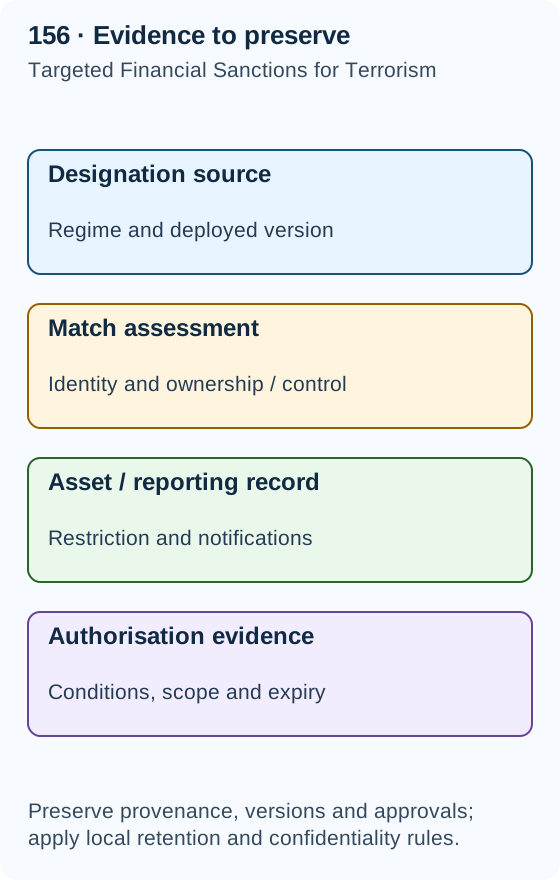
Intermediary banking and incomplete payment information
An intermediary bank can receive payment messages with limited information about the parties and underlying activity. Its position differs from that of the customer's account-holding bank. Identify the message type, available fields, operational role and legal obligations relevant to the intermediary. Do not assume that every message creates a full customer relationship, or that lack of such a relationship removes sanctions obligations. The bank must determine whether the transaction or property falls within an applicable restriction using the information and powers available to it.
Data transformation is a critical weakness at this point. A payment hub may shorten names, concatenate addresses, map structured identifiers into free text or discard information unsupported by a downstream format. Compare the received native instruction, transformed message and screened representation. Document which fields are screened and why. A successful screening status is misleading when the relevant beneficiary or intermediary data were never supplied to the matching engine. Test non-Latin characters and long names through the actual transformation path instead of testing only the matching engine's direct input.
When a relevant party cannot be resolved, obtain information through an appropriate channel and assess the legal and operational response. A request should identify the uncertainty without distributing unnecessary customer records. Track the response to the actual pending instruction; a generic correspondent acknowledgement does not answer a question about a beneficiary's identity. Record who can authorise the next step. Rejecting, returning, holding and freezing can have different consequences under different regimes. Staff should not use those words interchangeably or move potentially restricted property through a return solely to reduce queue age.
An intermediary's successful screen also does not establish that the receiving bank completed its own assessment. Each institution operates within its duties and evidence. A bank should avoid representing another institution's compliance as an established fact merely because the transaction was accepted. Where the bank relies on a service provider to screen its own transactions, it still needs coverage, version and outcome evidence appropriate to the service. Distinguish a contracted control from the independent actions of another institution in the payment chain.
Omnibus holdings and customer subledgers
A pooled or omnibus holding can make the asset trail harder to reconstruct. The visible account may belong to an intermediary, nominee or platform, while underlying entitlements belong to several persons. Determine the bank's actual role, the relevant property and the information needed under the applicable legal rules. Do not equate the total omnibus balance automatically with one underlying person's interest. Nor should the bank ignore relevant property because the person does not appear as the account title. Obtain specialist advice where legal interests and operational records do not align clearly.
Reconciliation should connect the restricted entitlement to the appropriate ledger without disturbing unrelated interests unnecessarily. Identify the underlying amount or asset quantity, allocation date, currency, pending adjustments and evidence source. Preserve the distinction between an asset held by the bank and an amount recorded in a provider's subledger. Where information is supplied by a platform, verify the lineage and establish who can change allocations. An unsupported spreadsheet can accidentally shift a restricted interest to another customer or leave the restriction attached to the wrong asset after settlement.
Consider refunds and reversals in the same analysis. A payment can be cancelled commercially while the bank still holds property subject to a legal restriction. The commercial cancellation does not automatically authorise returning funds to the original payer or allowing a platform to substitute another destination. Determine the applicable measure and authorised treatment of the specific asset. Preserve the original instruction, commercial event and legal decision as separate records. This avoids later claims that funds were released because the transaction ceased to exist in a merchant's order system.
Assurance should test an individual restricted entitlement within an otherwise active pool. Verify whether the provider and bank can identify its position, prevent prohibited movement, process unrelated lawful activity and reconcile subsequent changes. Include an attempted destination amendment and a legitimate correction to a mistaken allocation. The control needs accuracy in both directions. Freezing the entire pool indefinitely may conceal inadequate records rather than demonstrate correct legal implementation; releasing the pool without assessing the relevant entitlement can create the opposite problem.
A completed instruction does not erase historical exposure
Suppose an investigation identifies that a payment executed during a screening outage involved a party later confirmed as within an applicable restriction at the relevant time. The bank should reconstruct the actual transaction and legal chronology. Determine where value moved, the bank's role, applicable measures and the information available at each event. A later corrective screen improves detection but does not reverse the historical instruction. The bank must be accurate about what it prevented, what it discovered afterwards and what remains recoverable or uncertain.
Assign ownership for the exposure assessment and any external engagement. Operations can trace settlement and communications; technology can reconstruct deployment and message transformations; sanctions and legal specialists can assess the relevant measure; the reporting function can handle required notifications. Keep their findings connected through a case identifier. Do not ask one analyst to sign off every technical, accounting and legal question beyond their competence. A coherent investigation uses distinct responsibilities and a single reconciled account of the material facts.
Where recovery or correction is pursued, document the legal authority and operational capability. A message asking another bank to return funds may be an appropriate step in some circumstances, but it is not proof that the money was recovered or that all obligations were satisfied. Track the response and confirmed outcome. Avoid moving additional value or disclosing protected material without assessing the applicable rules. The remedial instruction can itself raise sanctions, confidentiality or customer-authority questions that need an authorised decision.
The final incident review should state the affected population, confirmed and unresolved cases, property positions, notification outcomes and corrections tested. It should explain whether the defect was a missing list update, an excluded field, an invalid suppression, a mistaken legal conclusion or a failure to execute a correct instruction. Different causes need different fixes. Requiring every staff member to repeat a training course does not repair a transformation that discards beneficiary identifiers. Closing the incident requires evidence that the corrected control works along the exposed path.
Worked humanitarian case
A fictional payment involves a designated counterparty and is described as aid. The reviewer confirms the match, identifies the applicable regime and asks legal to assess whether a relevant humanitarian exemption or licence covers the actors and transaction. The bank must not equate the humanitarian label with authority to pay.
Explain which evidence supports the exemption assessment, who approves it and how any remaining restrictions and reporting duties are handled.
Release requirements and evidence
Separate alert status, legal match conclusion, asset restriction and authorisation status. Store the regime, source version, ownership/control reasoning, reporting record and exemption or licence conditions. Access and maker/checker controls should prevent a single operational user from overriding a binding restriction without the approved authority.
Before deployment test list-ingestion failure, rescreening completeness, freeze propagation across channels and expiry of permitted dealings. For outages, preserve missed populations and complete recovery screening; restarting the service is insufficient.
The objective is prompt, accurate application of the relevant legal measure with a lawful route for permitted humanitarian activity.
References and further reading
Reviewed 2 October 2026. FATF provides international standards; applicable national law determines binding duties. The operating examples are fictional teaching cases.
-
FATF Recommendations, updated June 2026 — relevant anchors: 6 and its Interpretive Note, as amended June 2026; distinguish 7.
-
OFAC FAQ 401: indirect ownership under the US 50 Percent Rule. US-specific rule and official examples.
-
OFAC FAQ 398: control and the US 50 Percent Rule. Control alone is not automatic blocking under this rule; other provisions can matter.