Cross-Border Cash, Bearer Instruments and Cash Couriers
Physical movement of cash and bearer negotiable instruments can bypass the electronic payment trail. A cash courier may transport their own funds, another person's funds or property sent through freight or post. Bearer instruments can transfer value by possession or endorsement, depending on their form. The actual legal definition matters; do not assume every cheque, prepaid card or valuable object is covered identically.
FATF Recommendation 32 calls for systems to detect physical cross-border transportation of currency and bearer negotiable instruments through declaration and/or disclosure systems. National law defines the threshold, aggregation, types of property and reporting route. This is different from a bank cash-transaction reporting requirement and from the rules for electronic payments.
As at 2 October 2026, US official guidance requires reporting amounts exceeding USD 10,000 when entering or leaving the United States, using the relevant currency/monetary-instrument process. Great Britain requires declaration of GBP 10,000 or more carried between Great Britain and a country outside the UK; family/group aggregation matters. Northern Ireland has separate EUR 10,000 rules and route distinctions. These examples show why a universal 10,000 threshold is inaccurate.
A declaration is evidence of declaration, not proof that funds are legitimate. A bank accepting the money still assesses customer identity, ownership, source of funds, purpose and suspicious circumstances. Legitimate cash use should not be equated automatically with laundering.
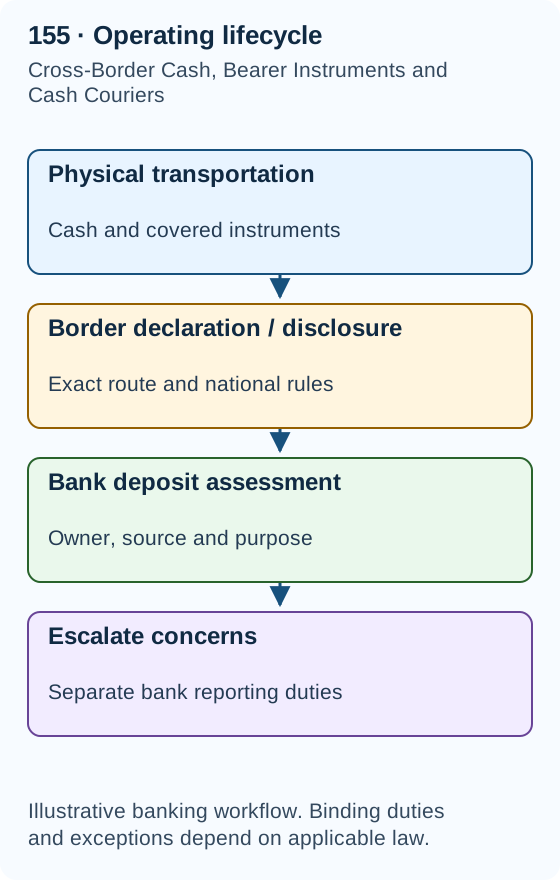
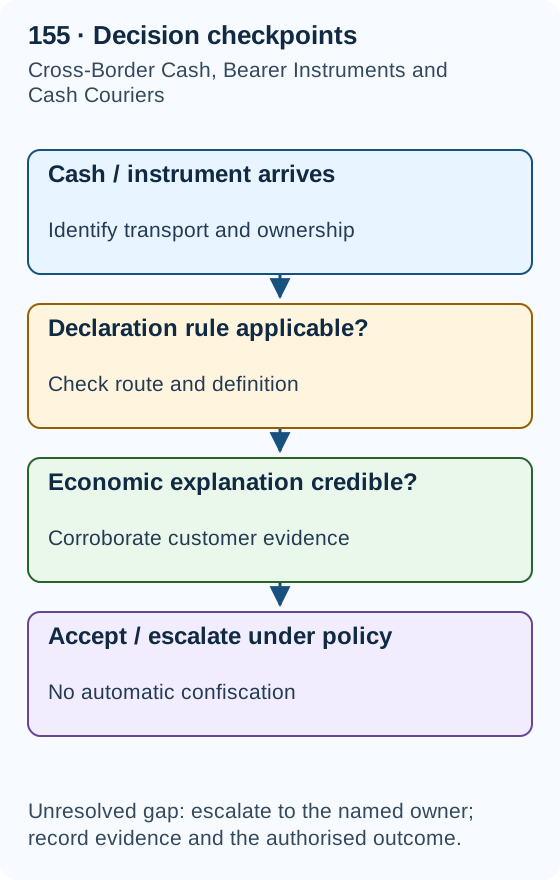
Bank treatment of transported cash
For a customer depositing transported cash, understand who owns it, how it was generated, why it moved physically, the route and intended use. Evaluate supporting records proportionate to the risk: business activity, withdrawal history, sale proceeds or other credible explanations. A customs document can support the journey but does not establish the underlying economic source.
Distinguish factual inconsistency from proof of crime. Different dates, amounts or currencies may have an explanation; repeated fragmented deposits, unexplained third-party ownership or inconsistent travel accounts warrant investigation. Link activity across branches and related accounts where lawful rather than treating each deposit in isolation.
Banks do not perform the border authority's declaration function merely by recording a deposit. If a customer asks about travel requirements, direct them to current official guidance for the exact route and instruments. Avoid suggesting amounts designed to evade a declaration or splitting funds between travellers.
Where suspicion arises, follow internal escalation and local reporting requirements. Any seizure or restraint requires the relevant legal authority; a branch teller's concern is not a confiscation order. Preserve transaction and document records and assess immediate risk within the bank's lawful powers.
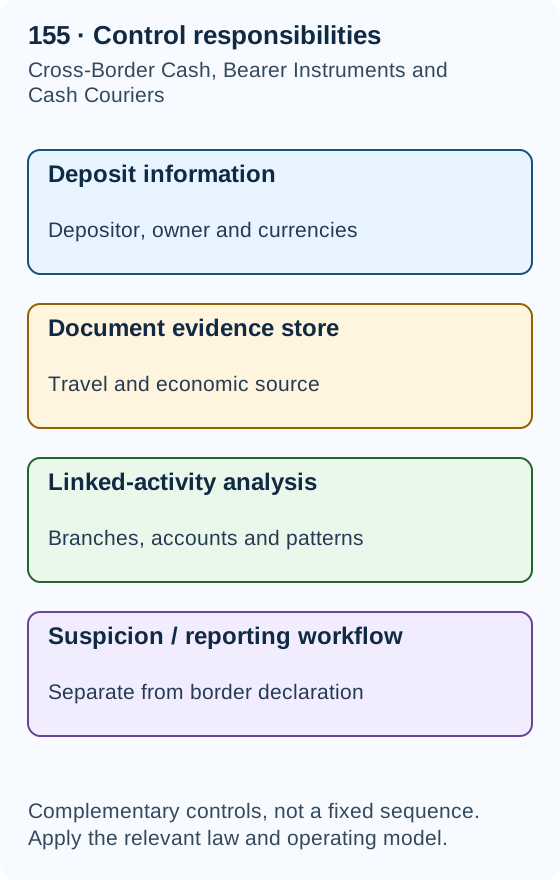
Why physical value needs a different control model
Physical currency moves without the continuous electronic record normally associated with a bank transfer. A traveller, courier, freight company or postal service can carry value across a border, while the corresponding bank activity appears only before withdrawal or after deposit. That creates an evidential gap, but does not make the movement automatically unlawful. The bank's task is to understand relevant customer activity and applicable reporting duties, while border authorities apply the declaration or disclosure framework within their legal powers.
A cash courier is a role, not a criminal label. A person may carry their own travel funds, company receipts, another person's property or value under a commercial transport arrangement. The actual owner, source and intended recipient can differ from the person presenting the cash at a branch. Identification of the presenter answers only part of the question. A risk-based inquiry should establish the relationships and economic purpose where relevant, without treating every third-party courier as proof of money laundering.
Bearer negotiable instruments can move entitlement differently from ordinary account instructions. Whether an instrument is covered depends on its form and the jurisdiction's definition: who is named, whether it is endorsed, whether title passes by delivery and what restrictions apply. A generic word such as cheque is not enough. The bank needs staff and specialists who can recognise the actual instrument and route uncertain cases, rather than applying a currency-only script to everything that resembles paper value.
The physical journey and banking journey should be recorded separately and linked when the evidence supports it. A customer withdraws funds, transports them, declares them where required, converts them and deposits them. Those events may occur at different times and involve different owners, currencies and institutions. The bank should avoid collapsing the entire sequence into a single label such as imported cash. Such a label can hide the original economic source and make a later reviewer unable to explain the value path.
FATF Recommendation 32 establishes the international framework for countries to detect physical cross-border transportation and address false declarations or suspicious value within their legal systems. It does not assign border powers to a bank teller. The practical banking model must therefore distinguish customer due diligence, cash-transaction reporting, suspicious-activity reporting, customs declaration evidence and any valid restraint or seizure instruction. These controls can relate to the same facts while requiring different decisions and records.
Mapping the exact route and jurisdiction
Start with where value entered and left, including transit where relevant to the question. A rule can apply differently to arrival, departure, accompanied transport, freight or post. A customer saying they came from Europe does not establish the precise border movement or applicable framework. Record enough route information to understand the activity and direct any legal question to the appropriate source, without requesting irrelevant travel details merely because the case concerns cash.
The United Kingdom illustrates why geographical precision matters. Great Britain and Northern Ireland have different declaration rules for particular movements. Official guidance distinguishes carrying cash between Great Britain and a country outside the UK, movements involving Northern Ireland and non-EU countries, and arrival in Northern Ireland from Great Britain. An undifferentiated UK threshold can therefore mislead. Staff should use the current official route-specific guidance rather than an old poster or a statement copied from another jurisdiction.
Threshold language must be exact. More than an amount and that amount or more are different conditions. Currency-equivalent and aggregation rules can also change the outcome. This chapter's current US and UK examples are supported by the cited official sources, but they are examples rather than a global harmonised threshold. A system or training table should include jurisdiction, route, property definition, comparator and source date, so the numerical value is not detached from the rule it implements.
Changes in law or guidance require version control. Record when a source was reviewed, which operational population it affects and whether a change is adopted, effective or merely proposed. A training team can prepare material for a future rule while keeping current instructions clear. An outdated reference should not remain in use because its title looks authoritative. Equally, a newly published consultation should not become a binding customer requirement before the relevant process establishes it.
A bank should be careful about its role when a customer asks how much cash they may carry. It can direct the customer to current official information for the exact journey and instruments. It should not advise dividing value, changing travellers or selecting a route to avoid a declaration. Declaration rules are legal obligations, not product limits the bank helps customers optimise around. Customer communication should explain the need to consult the appropriate authority without presenting branch staff as customs advisers.
Who carries, owns and receives the value
Identify the depositor or withdrawer and the capacity in which they act. A business employee, director, family member, transport provider or agent may lawfully handle another person's funds, but the bank needs relevant authority and context under its customer model. The presenter's identity, the account holder's identity and the actual owner of the physical value should not be stored as though they are necessarily the same person. If the system permits only one role field, staff may overwrite an important distinction.
For company funds, establish the business purpose and relationship to the account. Cash receipts from sales, an employee's personal savings and funds belonging to another company have different explanations. A director's authority to operate an account does not prove that every deposit belongs to the company. Compare the amount and activity with the business's records, expected payment methods and customer profile. Inconsistency warrants inquiry, but the conclusion should follow the evidence rather than the person's job title.
For personal funds, consider plausible economic sources such as employment, savings, a sale, inheritance or family support. A customer may not possess the same documents as a large corporate, so proportionality and alternative credible evidence matter. The bank should define what evidence is useful for the identified risk rather than demand an inflexible list that excludes legitimate people. At the same time, sympathy or familiarity cannot replace required identification or resolve a material unexplained third-party interest.
The intended recipient and use can explain or challenge the movement. Cash for travel spending differs from cash taken abroad to settle a business transaction or delivered to another person. The bank may not know the eventual physical recipient, but it should record what the customer states and any supporting evidence relevant to the account activity. Do not convert an unverified statement into a confirmed fact. Preserve whether a relationship was corroborated, inferred or unresolved.
Where ownership is disputed, route the question appropriately. Branch operations should not determine competing legal entitlements to a bag of cash or a bearer instrument merely from verbal assertions. Apply applicable identification, acceptance and escalation procedures, preserve relevant records and obtain specialist advice where needed. A suspicious explanation may trigger reporting consideration, but does not grant the bank a general power to confiscate the property or distribute it to a claimant.
Source of funds and declaration evidence
A border declaration can document that a person declared specified value for a journey under the applicable process. It can support the travel narrative and identify claimed source, owner or purpose where the form contains those details. It does not certify that the funds are clean, that the claimed facts were independently verified or that every other legal obligation was met. The bank should treat it as one piece of evidence and understand exactly what it establishes.
The economic source question often sits earlier in the chain. A withdrawal receipt shows that money came from an account; it does not necessarily show how the account was funded. A sale agreement can support a claim of proceeds, but ownership, completion and amount may need corroboration proportionate to risk. A business receipt book may explain cash generation, while the activity's scale and counterparties require additional context. The bank should connect the documents to the particular deposit rather than accept an unrelated stack of papers as a complete explanation.
Assess coherence across amounts, dates and currencies. Differences can arise from exchange, spending, partial deposits or fees, so not every mismatch is suspicious. The customer should be able to explain material differences, and the bank should record how it evaluated the explanation. Where the story changes repeatedly or the supporting evidence conflicts with known facts, escalation may be justified. Record the contradiction and uncertainty without inventing a criminal conclusion.
Document provenance matters. Record what was provided, by whom, when and how it was checked. Preserve original images or records where appropriate and distinguish a customer-supplied copy from information obtained directly from an official or reliable source. If a document cannot be authenticated, note that limitation. A stamp, logo or reference number can make a document look credible without proving that it is genuine or relevant to the funds presented.
The bank's decision should explain why the evidence is sufficient for its own obligations and risk. A declaration may answer the route question while leaving ownership unresolved; a bank statement may support funding but not the commercial purpose; a travel itinerary may explain timing without proving value origin. This explicit separation makes the review more useful and avoids the common mistake of treating any official-looking document as comprehensive clearance.
Cash withdrawals before transportation
The bank can see the withdrawal stage before physical transport as well as the later deposit. A large or unusual withdrawal should be considered against the customer's profile and purpose under the applicable controls. Cash-intensive businesses can have legitimate needs, while a sudden withdrawal unrelated to known activity may warrant inquiry. The bank should not infer that a withdrawal is illegal merely because the customer intends to travel, nor ignore a material inconsistency because cash use is permitted.
Customer protection can overlap with financial-crime concerns. A person may be withdrawing cash under scam pressure, coercion or another fraud scenario. Staff should follow the bank's protection and escalation process while keeping the AML reporting decision distinct. A fraud intervention can ask about a suspicious instruction without revealing a protected SAR. The content and limits of communication depend on the relevant law and approved guidance, not a universal instruction to remain silent about every concern.
Record the requested amount, currency, account, presenter, purpose and relevant explanation. Preserve whether the withdrawal occurred, was cancelled or remained pending. A request for cash that was never executed is not a completed physical movement. If a case concerns later transport, distinguish customer intent from evidence that the journey actually occurred. The bank should not report a fictional chronology merely because the events seem plausible.
For business withdrawals, understand authorisation and the intended use. Payroll, purchases, supplier payments and delivery of funds to another entity can involve different evidence and risk. A corporate mandate may allow the employee to withdraw money while leaving the economic destination unclear. The bank needs to assess the transaction within its actual service scope and route concerns to the responsible owner. It should avoid treating an authorised signatory as automatic proof of a legitimate purpose.
Operational handling also matters. Cash ordering, denomination availability, counting, verification and secure handover are physical controls with their own responsibilities. They should not be confused with AML clearance. Completing the cash-service procedure does not establish source legitimacy; completing the risk review does not eliminate counting or counterfeit controls. Keep both evidence trails where relevant so the bank can explain the actual withdrawal and the associated decision.
Deposits after cross-border movement
At deposit, the bank sees the presenter, account, value and explanation, but may have incomplete visibility into the physical journey. Staff should collect information needed for the relevant account and transaction risk, including claimed owner, source and purpose where appropriate. They should not require a border declaration for every cash deposit regardless of route or rule. First establish whether a declaration would be relevant to the claimed movement and what the applicable framework actually requires.
Compare the deposit with the relationship's expected activity. A retailer's seasonal cash receipts, a personal customer's one-off sale and a newly formed company receiving unexplained foreign currency present different questions. The bank should investigate deviations with context rather than rely on a single size threshold. Amount can inform priority, but a small deposit may still be suspicious because of its parties or pattern, while a large deposit can be well explained.
Currency conversion can complicate reconstruction. Record original currencies, amounts, exchange transactions and deposit entries. A converted equivalent used for a system rule should not overwrite the actual value presented. Where a legal threshold depends on conversion, use the approved source and method for that framework. Do not substitute an arbitrary current rate for a historical event and then claim a precise legal conclusion. Preserve the timing and basis used.
Acceptance does not end the lifecycle. The deposit may be followed by rapid transfer, investment, cash withdrawal or payment to another person. Monitoring should link relevant subsequent activity with the initial explanation where lawful and useful. If the customer said the cash was for a business purchase but immediately routes it through unrelated personal accounts, that can change the analysis. A valid initial document does not permanently immunise later activity from review.
If the bank cannot complete applicable due diligence or identify material facts, follow the relevant restrictions and reporting consideration. The precise action comes from local law and approved policy. Avoid both extremes: accepting everything once cash has been counted, or confiscating value whenever an explanation is unsatisfactory. Branch teams need an accessible route to compliance, fraud and legal specialists for decisions outside their authority.
Linked activity and apparent fragmentation
Individual transactions can look ordinary while a linked pattern raises concerns. Several deposits across branches, accounts or presenters may involve the same owner or source. The bank should use reliable identifiers and lawful data access to assess connections. A common address, device, telephone number or name can support inquiry, but may reflect a family, shared business premises or service provider. Treat linkage confidence and the factual relationship as separate information.
Amounts below a reporting threshold are not automatically evidence of evasion. A customer can legitimately make repeated small deposits. Investigators should assess timing, instructions, explanations, parties and the relevant law before describing a pattern as structuring or another offence. A system scenario can identify candidates for review; it does not decide the legal conclusion. Preserve the original pattern and the reason it matters to the customer's activity.
Aggregation rules differ between legal reports and internal monitoring. A statutory rule may specify a population, period and comparator. A bank's monitoring scenario can use a different risk-based period to detect unusual behaviour. Those should be configured, labelled and governed separately. A tester must know whether an alert reflects a legal reporting obligation or an internal signal requiring investigation. Combining them into a single cash threshold makes both training and evidence unreliable.
Cross-branch visibility should include failed and attempted activity where relevant. A customer who asks how to avoid a report, changes the story or moves to another branch after a question may create useful context. Staff should record facts accurately and avoid embellishment. A customer's concern about privacy or inconvenience is not itself proof of evasion. The case should show what was said, what occurred and which inference the reviewer drew.
Quality assurance should sample both alerted and non-alerted patterns. A rule may generate many false positives while missing relevant relationships because customer identifiers are fragmented. Investigate source-system coverage, duplicates, missing currencies and inconsistent transaction types. Tuning should address the demonstrated defect rather than simply raise a threshold to reduce workload. A lower alert count after a feed exclusion is not improved proportionality.
Bearer instruments and instrument-specific questions
For an instrument presented to the bank, identify its type, issuer, payee, endorsements, transferability, currency and actual value. The legal definition for border reporting and the bank's processing rules may differ. A named cheque with restrictive endorsement is not necessarily treated like a bearer instrument, and a prepaid product is not universally part of the same physical-cash definition. Staff should route uncertain classification to the appropriate specialist rather than infer coverage from appearance.
The instrument can create different risk from notes and coins. Its issuer or underlying obligation may need verification, and collection or settlement can occur later. A customer receiving provisional credit has not necessarily received finally collected funds. Monitoring and customer communication should preserve that distinction. If a case records the deposit as final proceeds before the instrument clears, the value story can become inaccurate.
Endorsement and third-party presentation need context. Establish why the presenter is entitled to the value and whether the instrument's form permits the requested treatment. A chain of endorsements can complicate identity and ownership; it should not be ignored because the bank is focused on customs documentation. Conversely, a legitimate instrument should not be treated as criminal simply because it changed hands. The relevant legal and product rules determine what evidence and processing are appropriate.
Fraud and financial-crime controls overlap. Counterfeit or altered instruments, stolen items and false endorsements may require immediate protection and specialist investigation. Suspicious movement of legitimate instruments can raise AML questions even when authenticity is established. Authenticity answers whether the instrument is genuine; it does not settle ownership, purpose or source legitimacy. Keep those conclusions separate in the record.
Preserve front and back images or other relevant native evidence, original identifiers, endorsements, collection responses and accounting entries according to the applicable schedule. If the item is returned unpaid, link the return to the original transaction and explain the actual loss or value status. A reversal of provisional credit is not the same as voluntary return of funds already paid to another person. Instrument-specific expertise helps the bank avoid generic cash terminology that obscures these differences.
Customs evidence, bank reports and legal powers
Border declarations, bank cash reports and suspicious-activity reports serve different purposes. A declaration describes physical cross-border value under the relevant customs or currency-reporting framework. A bank report may concern transactions under local rules. A SAR or STR communicates suspicion under its own legal test. Filing one does not automatically satisfy the others, and an account's activity should not be considered fully reported merely because a customer supplies a declaration reference.
Identify the obligated person and reporting entity for each framework. A traveller's duty to declare does not necessarily become the bank's filing duty. The bank may have its own obligations arising from the deposit, withdrawal, suspicion or receipt of a competent-authority request. Compliance should maintain an obligation map with jurisdiction, population, threshold or trigger, timing and evidence. The chapter intentionally does not prescribe a universal reporting form or deadline.
False declarations and suspected criminal value can lead to stop, restraint, seizure or other action by authorities with the relevant legal power. A bank's concern does not create those powers for branch staff. If the bank receives an enforceable instruction, authenticate and implement it according to its scope. Separate asset control from ordinary CDD and reporting. Do not assume that a SAR gives permission to hold funds indefinitely or transfer them to an investigator.
Customer communication must respect protected information. Staff can often ask factual questions needed to understand the transaction, but tipping-off and reporting confidentiality rules vary. Use approved escalation when a proposed question or explanation may reveal protected activity. An instruction never to ask customers anything after an alert can leave investigators without useful evidence; an instruction to disclose the report to encourage cooperation can breach confidentiality. The correct approach comes from applicable law and reasoned guidance.
Record each reporting or asset decision separately. The file should show the cash transaction, relevant declaration evidence, investigation, reporting decision, submission status and any legal restriction. An investigator should be able to understand why the bank accepted, delayed, declined or escalated the activity without treating every status as the same outcome. This separation is essential when the facts support some actions but not others.
Financial inclusion and proportional evidence
Cash use remains legitimate in many communities and industries. Customers may have limited access to electronic services, receive cash wages, work seasonally or support relatives across borders. A proportional control model understands those circumstances while applying required measures. Treating every cash-intensive customer as unacceptable can exclude lawful activity without improving the bank's understanding of risk. It can also conceal the actual defects in data, training or product design.
Evidence should be relevant and obtainable. A small trader may provide business records different from a large company's audited statements. A personal customer may support a one-off sale through an agreement and other corroboration. The bank should define acceptable alternatives according to the identified risk and legal requirements, with clear escalation for uncertain cases. Flexibility does not mean accepting unsupported assertions; it means evaluating credible evidence without insisting on a single form that may not fit.
Language, accessibility and customer understanding can affect explanations. A confused answer may reflect unfamiliar terminology rather than deception. Staff should ask clear questions, avoid unnecessary jargon and record the customer's meaning accurately. Translation or assisted communication should preserve the factual record. Do not turn a communication difficulty into a criminal inference without considering alternative explanations and the available evidence.
Risk-based decisions should also be consistent. Similar customers with similar activities should receive comparable treatment, while different facts should produce explainable differences. Quality review can identify whether certain groups or branches face unnecessary repeated requests or premature refusals. That review should focus on the process and evidence, not assume every outcome must be identical. Legal prohibitions and mandatory CDD boundaries still apply.
The objective is lawful access with effective controls. A bank can restrict an activity when requirements cannot be met or risk cannot be managed, but it should document the reason and consider available proportionate options. An unsupported blanket rule cash equals crime does not provide a defensible basis. Neither does a rule that inclusion concerns override every legal obligation. Professional judgement must connect the actual facts to the applicable framework.
Worked case: declared travel cash with an ownership gap
This fictional case uses illustrative amounts rather than legal thresholds. A customer deposits 46,000 in currency A after returning from overseas and supplies a border declaration. The account is a business account for a small company that normally receives domestic electronic payments. The declaration lists the presenter, journey and amount, while the customer says part of the cash belongs to an unrelated person. Staff record the actual documents and explanation without describing the declaration as proof of legitimate business revenue.
The reviewer first separates the questions. The declaration can support the claimed journey and declaration event. The bank still needs to understand the owner, source and reason for depositing into this company's account. The unrelated person's involvement could be legitimate, but requires a coherent explanation and appropriate authority. The company's previous profile does not explain the change automatically. The case should identify the discrepancy rather than label the entire deposit illicit.
Relevant evidence might include business records, the transaction generating the cash, the relationship with the other owner and any agreement supporting use of the company's account. The actual evidence needed depends on the risk and local duties. The reviewer compares dates, currencies and amounts and asks about material differences. If the customer explains that some value was spent or exchanged, preserve the explanation and assess corroboration rather than forcing exact equality without context.
The decision owner considers whether applicable CDD can be completed and whether suspicion meets the reporting threshold. Any account or asset restriction has a separate basis. The bank should not confiscate the cash because ownership is unclear, nor accept it unquestioningly because an official form is present. Where further action is required, document the authority, scope and customer communication route. Keep the transaction's actual execution status visible.
Follow-up monitoring considers whether the money is transferred rapidly to parties inconsistent with the explanation. A later change can justify reassessment. The initial decision is evaluated on evidence available at the time, while new facts are recorded as new facts. The case demonstrates that declaration, source legitimacy, ownership, CDD and suspicion are distinct conclusions that need linked but separate evidence.
Worked case: genuine cash-intensive business
A fictional retailer regularly deposits cash from lawful sales. During a festival period deposits increase and the owner travels with cash to purchase stock abroad. The activity differs in size from ordinary weeks but broadly fits seasonal business. Staff should assess the actual explanation and records rather than assume that the increase proves laundering or that the company's established relationship makes all inquiry unnecessary.
The reviewer examines sales patterns, stock purchases, customer profile and the stated reason for physical payment. Documents may support the commercial purpose, but the bank should understand why cash is used and whether the amount and route are coherent. If the customer asks about travel declaration duties, staff direct them to current official guidance for the exact journey and property. They do not suggest splitting the amount or changing companions to avoid reporting.
The bank distinguishes its own withdrawal and deposit controls from the border framework. It records the requested and executed amounts, currencies and purpose, applies relevant internal monitoring and fulfils any applicable bank reporting duty. The customer's subsequent declaration, if relevant and available, can support the journey but does not replace the bank's transaction record. A report filed under one framework does not automatically satisfy another.
Suppose one deposit differs from the sales record because it includes repayment of a personal loan to the owner. That does not necessarily establish wrongdoing, but it changes ownership and account-purpose questions. The reviewer should identify the mixed funds and assess whether the company's account is being used appropriately under its agreement and CDD profile. A seasonal explanation should not obscure an unrelated component simply because most deposits are well supported.
The outcome can be continued service with a documented explanation and proportionate monitoring, or another action if material requirements remain unmet. The quality standard is not the number of documents requested. It is whether the bank understood the activity, resolved relevant inconsistencies and applied the correct duties without unnecessary exclusion. This is what a useful cash-business review should demonstrate.
Worked case: linked deposits below a reporting amount
A fictional bank identifies several deposits at different branches by related customers, each below an amount used in a local report or internal scenario. The pattern deserves review, but the bank should not automatically describe it as illegal structuring. Determine the applicable legal rule, actual relationship between the parties, source of cash and reason for the timing. The internal scenario's threshold and period may differ from the legal reporting framework.
Investigators link records through reliable identifiers and note uncertain matches. They review whether the customers operate one business, share a household or act independently. A shared address can reflect any of those situations. They also examine what staff recorded at each branch, including customer explanations and any requests concerning reporting. Facts should be quoted or summarised accurately without adding intent that was not expressed.
If the pattern reflects one person's funds deliberately distributed to evade a specific obligation, the evidence may support concern under the relevant framework. If it reflects separate genuine cash receipts for a group of traders, another explanation may be appropriate. The investigation should consider both and identify what changes the conclusion. A useful narrative explains why the pattern matters, not merely that the totals cross a number in a dashboard.
Technology contributes population completeness and linkage, while trained reviewers assess context. Check for duplicate feed records, reversals, currency conversions and transactions that never completed. Summing duplicates or cancelled transactions can exaggerate the pattern; failing to link genuinely related accounts can understate it. Preserve original events and the transformation used for aggregation so an independent reviewer can reproduce the analysis.
The final record separates the bank's reporting duty, suspicion decision, customer risk review and any relationship action. It should not show a single label fragmented deposits as the rationale for every outcome. The case demonstrates how automated detection and professional judgement work together: a signal identifies a question, and evidence supports the answer within the applicable law.
Worked case: bearer instrument with provisional credit
A fictional customer presents an instrument described as a cheque received from another person after overseas travel. The bank must identify the actual instrument, payee, endorsements, issuer and processing route. Customs coverage cannot be determined from the informal description alone. Product specialists assess whether the requested deposit or collection is permitted, while compliance considers the customer relationship, source and purpose.
The bank provides provisional credit pending collection under the applicable product terms. The case record should identify that state clearly. If the customer immediately seeks to transfer the credited amount, fraud, credit and AML considerations may arise, but they are distinct. A system showing an account balance should not lead investigators to describe the instrument as finally settled proceeds when collection remains unresolved.
The instrument later returns unpaid. Operations links the return, reverses or adjusts the relevant entry according to the authorised process and identifies any value that has already left. The actual loss or exposure is different from a simple cancelled deposit. Preserve collection responses, images, accounting entries and customer instructions. A reversal of provisional credit does not prove that an external beneficiary returned money.
Investigators assess authenticity, entitlement and economic explanation using the evidence available. A genuine instrument can still be used in unexplained value movement; a counterfeit instrument can support a fraud concern with its own reporting or protection requirements. The border declaration, if any, is relevant only to the physical journey and the applicable definition. It does not establish final collectability or ownership.
The case shows why instrument expertise matters. Currency controls, customs definitions, collection status and customer-risk analysis should cooperate without becoming one generic cash check. The final narrative should reconstruct the actual sequence and distinguish what was claimed, verified, attempted, credited, collected or returned.
Data design for reconstructible cash activity
Store the customer, account, presenter, capacity, claimed owner, transaction type, currencies, amounts, dates, branch and relevant document references. Preserve original transaction values and statuses. A system can display converted totals for analysis, but should retain the original currency and conversion basis. If cash was counted, rejected, partly accepted or exchanged before deposit, those events may need separate representation to avoid an inaccurate value trail.
Document fields should describe what the evidence establishes. A declaration record can capture issuing process, reference, journey and declared amount where relevant. A source-of-funds record captures the claimed economic event and corroboration. An instrument record captures issuer, payee, endorsements and collection status. Combining every attachment into a generic verified documents field hides whether the bank actually resolved the ownership, source and journey questions.
Linkage should preserve confidence and provenance. A common name or address may create an investigative link; a verified legal relationship can support a stronger conclusion. Store the source and date rather than presenting every connection as equal. Investigators should be able to challenge the linkage and correct errors without deleting the original analytical trail. A false link can unnecessarily affect several customers, while a missing link can conceal relevant patterns.
Case status should distinguish information requested, evidence received, review completed, reporting decision, submission and any relationship action. An email sent to a customer does not prove receipt of evidence; a case closed by an operations user does not necessarily represent a reporting officer's decision. Preserve accountable approvals and unresolved conditions. Workflows should prevent convenience labels from becoming unsupported risk conclusions.
Access and retention should follow the relevant categories and legal duties. Cash evidence may contain travel, identity and third-party information alongside protected reporting material. Staff need information sufficient for their role without unrestricted access to every attachment. Test exports, search tools and support tickets as well as the main case application. Data protection and confidentiality can fail through copied notes even when the original document repository is controlled.
Acceptance tests for cash and instrument controls
The tests below are illustrative. Binding thresholds, reporting periods, definitions and powers come from the applicable jurisdiction; expected results must be agreed against that framework.
| Situation | What the test should establish |
|---|---|
| A value sits exactly at a stated threshold | The configured comparator matches the applicable rule. More than and at least are not treated as interchangeable, and the source date is recorded. |
| Multiple currencies are presented | Original values remain intact, any required conversion uses the approved basis and the resulting decision can be reproduced without overwriting transaction facts. |
| A customer travels on a UK route involving Northern Ireland | Staff or systems select the correct route-specific official guidance rather than apply an undifferentiated Great Britain rule. |
| A declaration is present but ownership is unresolved | The document supports only its relevant facts; the workflow keeps the bank's CDD questions open and prevents blanket clearance. |
| The presenter acts for a company | Identity, capacity, authority and claimed ownership are recorded distinctly. A signatory field does not automatically answer the economic source question. |
| A seasonal cash business increases deposits | The review considers credible business context and evidence, while preserving unresolved inconsistencies. Size alone does not dictate a criminal conclusion. |
| Related deposits occur at several branches | The monitoring population is complete, linkage confidence is visible and the reviewer can distinguish statutory aggregation from internal scenario logic. |
| Duplicate source events enter aggregation | Reconciliation detects or handles duplicates so the pattern is not inflated. Original identifiers and transformations remain available. |
| A customer provides an unreadable declaration copy | The limitation is recorded and the relevant question remains unresolved until sufficient evidence is obtained or an authorised decision is made. |
| A bearer-instrument classification is uncertain | The case reaches a qualified owner and does not assume that every cheque or prepaid product falls within one physical-cash definition. |
| Provisional instrument credit is later reversed | The record distinguishes pending collection, actual transfer of value, returned item and accounting correction; it does not imply recovery that did not occur. |
| A suspicious transaction is accepted before investigation finishes | The case preserves the actual execution state and subsequent review. Reporting consideration is not suppressed merely because cash counting completed. |
| A customer asks how to avoid a declaration | Staff use approved communication and escalation, record facts accurately and do not recommend splitting or another evasion strategy. |
| An authority requests seizure without a validated instrument | Legal authentication and scope review occur; the bank does not treat an unverified request or SAR as automatic confiscation authority. |
| A monitoring feed omits one branch | Coverage reconciliation identifies the gap, affected transactions are assessed and restarting the feed does not falsely close historical exposure. |
| A routine export includes protected reporting material | Access and disclosure controls prevent or detect the leak route, and the output remains limited to authorised information. |
Each test should record input, applicable interpretation, expected outcome, observed system and operational behaviour and defects. A pass label without those facts is weak evidence. The owner should explain whether a failure concerns legal mapping, transaction data, linkage, review workflow, reporting or instrument processing. Repair the demonstrated cause and retest affected behaviour. Lowering sensitivity merely to reduce failed cases does not establish correctness.
Population reconciliation complements scenario testing. Compare accepted cash events, instrument transactions, reversals and branch coverage with the source systems. Explain excluded events and verify that exclusions are intentional. A case-level test can pass while a branch or product is absent from monitoring. Reverse tracing from an alert to the original event and from a source transaction to downstream coverage helps expose those gaps.
Quality assurance, reporting and customer impact
Quality assurance should review evidence sufficiency and reasoning, not only whether a checklist was completed. Did the investigator distinguish journey, source, ownership and purpose? Did they consider plausible explanations and document uncertainty? Did the reporting decision use the correct threshold and authority? A large attachment count does not prove those questions were answered, while a concise file can be strong if its evidence is relevant and traceable.
Sample closed and non-reported cases alongside escalations. A team that reports many cash cases may still miss a relevant pattern; a team that closes quickly may rely too heavily on declaration documents. Review repeated defects by source and role. The cause might be unclear guidance, inaccessible evidence, missing data, workload or a misleading screen. Training can help, but it should not be prescribed as the answer to every operational defect.
Management information should distinguish legal reports, internal alerts, unresolved evidence requests, customer restrictions and authority instructions. Aggregate counts can hide differences in urgency and risk. Include aged cases, missing populations, recurring inconsistencies and the effect of remediation. A decline in cash alerts after a feed failure is a warning, not proof that the customer base became safer.
Customer impact deserves measured review. Unnecessary repeated requests, inaccessible language, false linkage and avoidable delays can harm legitimate customers. Correct those process defects while preserving necessary controls and legal boundaries. An inclusion goal cannot justify ignoring required CDD, and a compliance goal cannot justify unsupported assumptions about entire communities. The bank should be able to explain how the evidence and actual risk drove its decision.
Independent assurance tests the programme's design and effectiveness, including branch coverage, instrument expertise, statutory mapping and confidentiality. It should challenge whether current guidance is actually used and whether old thresholds remain embedded in local tools. A centrally updated policy does not prove that a spreadsheet or teller script changed. Closure evidence should show the repair, affected historical population and verified current behaviour.
Incident response and historical review
A discovered defect needs population analysis. If a branch feed failed, identify the missing events, period, products and customers. If a legal threshold was configured incorrectly, determine which transactions and reports were affected. If a declaration document was wrongly treated as universal clearance, identify cases where material CDD questions may have been skipped. Restoring the application or publishing new guidance does not settle those historical decisions.
Assign owners for factual reconstruction, legal interpretation, reporting assessment, customer remediation and technical repair. These workstreams can proceed in parallel while retaining separate approvals. An engineering fix may be complete before the reporting officer finishes reviewing affected cases. The issue should not close merely because one workstream ended. Preserve remaining uncertainty and the next decision required.
Interim controls must be workable. A manual review should define the population, criteria, evidence source and responsible team, including out-of-hours coverage where relevant. An instruction to scrutinise cash more closely is too vague to establish consistent protection. If the temporary process creates a backlog, management needs to know its age and severity and provide a credible plan. Commercial pressure is not a substitute for required review.
Root cause should follow the failed path. A feed may omit currencies because of a schema change, duplicates may inflate totals, branch identifiers may fragment customers or an export may lose instrument status. Fix the relevant transformation and monitor it. A generic reminder to staff will not correct a data defect they cannot see. Acceptance evidence should demonstrate the repaired behaviour and population completeness.
The final incident record should explain what occurred, what exposure was identified, what decisions were made, what reporting or remediation followed and what remains unresolved. It should preserve actual events rather than reconstruct a cleaner story. This evidence lets management and independent reviewers assess whether the bank learned from the defect and restored effective control.
Review questions for a complete banking case
A complete case should begin with actual activity. Identify the customer, presenter, capacity, account, currencies, amounts and execution states. Link the claimed physical journey only where evidence supports it. Distinguish withdrawal, transport, declaration, conversion, deposit and subsequent payment. A reviewer should be able to follow the sequence without assuming that a status label explains the whole story.
Next, assess the economic evidence. What is the claimed source, who owns the value, why was it moved physically and what will it be used for? Which facts are corroborated, which are customer statements and which remain uncertain? A border form, withdrawal receipt or sale document supports particular conclusions, not every conclusion. The file should show how the bank evaluated material differences and alternative explanations.
Then identify the applicable obligations. Which jurisdiction and route are relevant to the border question, and which bank reporting or CDD rules apply to the account activity? Are legal thresholds and internal monitoring scenarios labelled separately? If an authority instruction exists, is it authenticated and within scope? Do not let a declaration reference or an alert number become a substitute for those answers.
Finally, review the decisions and actual outcomes. Who accepted or declined the transaction, who assessed reporting, what was submitted and whether any restriction had a valid basis? Did value settle, return or remain provisional? Was customer communication lawful and useful? Were records protected and retrievable? The strongest case is one that makes these answers visible with evidence, without overstating what the bank knows or what authority it possesses.
The practical skill is to understand physical value in its economic and legal context. Cash controls work when the bank combines proportionate inquiry, accurate transaction reconstruction, current jurisdictional mapping and accountable judgement. They fail when a number, an official-looking document or a generic cash-risk label replaces that reasoning.
Commercial cash transport and freight
Commercial transportation can involve a bank, cash-management company, logistics provider and several customer businesses. The transporter may carry value owned by others under a service agreement. Identify the actual service, contracting parties, ownership, collection and delivery locations and the records available to the bank. A recognised logistics brand does not prove the source of every consignment. Conversely, the use of a professional transporter does not make the activity inherently suspicious.
Accompanied travel and unaccompanied freight or post can be treated differently by national declaration or disclosure frameworks. The bank should not assume that rules addressed to travellers cover every commercial shipment in the same way. If it needs to assess a shipment-related obligation or document, obtain current route-specific official guidance and specialist interpretation. Record which party is responsible for the relevant declaration or information request rather than allocating it to the bank by default.
Reconcile consignment records to the bank events they are claimed to explain. A deposit can combine receipts from several clients or locations. The bank needs sufficient information for its own customer-risk assessment and reporting duties, not necessarily every operational detail of the transporter's route. Identify aggregation, substitutions, partial deliveries and currencies where material. A total that balances can still conceal uncertainty about ownership or the customer population represented.
Chain-of-custody information can support physical handling but does not settle economic legitimacy. Collection and delivery acknowledgements establish particular custody events; they do not independently verify every underlying sale or transaction. Keep that evidential boundary clear. When a transporter provides a certificate, understand its scope and limitations instead of treating certification as comprehensive AML clearance.
Service termination or an operational dispute can leave records unavailable. Agreements should preserve access to evidence the bank needs under applicable duties and define secure transfer or retention arrangements. Test retrieval of older consignments and customer allocations. A data-export clause is useful only if the bank can obtain complete, readable records and link them to its accounts and transactions. The ability to reconstruct activity should survive a commercial relationship ending.
Currency exchange and multiple value stages
A customer may exchange physical currency before or after travel and deposit only the resulting value. Record the sequence and preserve original amounts. Exchange produces another transaction with its own parties, rate, fees and execution state. It does not erase the need to understand the earlier economic source or ownership. A conversion receipt supports a conversion; it is not proof of clean funds simply because a regulated institution performed it.
Investigators should distinguish a difference caused by conversion from a missing-value inconsistency. If a customer presents one currency and deposits another, identify the exchange date and basis where relevant. Some value may have been spent, partly deposited or retained. Ask about material gaps and evaluate the explanation proportionately. For legal threshold analysis, the approved conversion method and relevant event timing need separate treatment from a current portfolio or management-information rate.
Multiple stages can expose data weaknesses. A cash exchange may be booked in a branch system, while the deposit appears in the core ledger and later payment appears in a payment hub. Monitoring that sees only the final deposit can miss the exchange or misidentify the amount. Reconcile identifiers, customer links and transaction types across those systems. A currency code wrongly defaulted to the bank's domestic currency can change an alert or report outcome materially.
Product mechanics also affect status. An exchange quote is not an executed exchange; a deposit request is not an accepted deposit; an outward payment instruction is not final settlement. The case chronology should preserve the events that actually occurred. Staff should not infer a completed physical journey from a planned exchange or create a final funds-flow narrative before pending transactions resolve.
Testing should include partial exchange, fee deductions, multiple currencies, cancelled requests and a later return. Preserve the original event and corrections so the bank can reproduce the value trail. When an error occurs, fix accounting and monitoring evidence together under the appropriate approvals. A ledger correction should not delete the facts needed to understand the customer's original activity or the bank's decision.
Branch hand-offs and specialist decision rights
Cash cases often begin with branch staff and move to operations, compliance, fraud, legal or a specialist instrument team. A good referral contains the actual transaction, customer explanation, documents received, unresolved questions and any immediate customer impact. It should not simply say suspicious cash and leave the next team to reconstruct the facts. Staff should identify what they observed rather than add a criminal theory unsupported by their role or evidence.
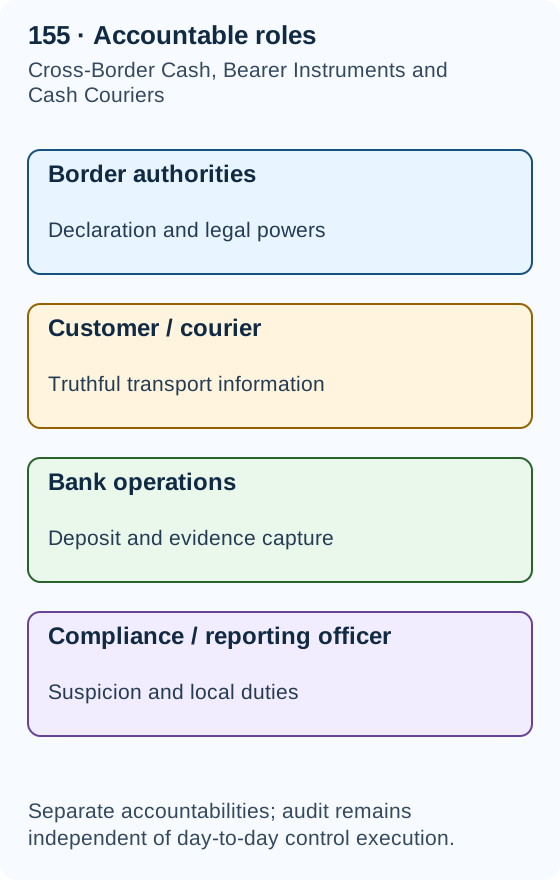
Each team needs a clear decision boundary. Branch staff record and execute authorised service steps; instrument specialists establish product treatment; fraud teams assess protection; compliance and reporting officers assess AML duties and suspicion; legal validates powers and disclosure questions. Commercial managers can coordinate service and escalate urgency, but cannot replace the relevant legal or reporting authority. The referral workflow should preserve these separate decisions.
Urgent requests need confirmation of ownership and next action. Sending a message to a shared mailbox does not prove that a specialist accepted the case. Record who owns the issue, the expected response and any interim treatment supported by the applicable procedure. Where a customer is waiting, staff should use clear approved communication without revealing protected reporting material or promising an outcome they cannot authorise.
Handovers should preserve the original explanation and document provenance. Repeatedly retyping a customer's story can introduce errors, especially across languages or shifts. Link the original note and add subsequent facts with dates and sources. If a customer changes the explanation, retain both versions and assess the significance; do not silently replace the earlier account. Contradictions and corrections need to remain distinguishable.
Training and rehearsals should test the hand-off, not only individual knowledge. Use fictional cases involving uncertain ownership, a declared journey, provisional instrument credit and a changed explanation. Observe whether staff collect useful facts, reach the right owner and preserve actual transaction status. A team can pass a definition quiz while failing to route a live exception. Practical evidence of coordination is therefore part of capability assurance.
Maintaining the jurisdictional reference set
The policy owner should maintain a small, governed set of official reference sources relevant to the bank's business. For each source record jurisdiction, topic, applicability, last review and the owner responsible for change assessment. Local working tools should point to this set rather than copy numerical thresholds indefinitely. A precise source title and date help staff recognise when a familiar rule has changed or a route-specific exception matters.
Review references for accessibility and substance. A link that opens a generic government homepage may not support the stated threshold or definition. A historic form can remain online after guidance changes. The bank should know which source supports which claim and distinguish archived evidence of a past rule from current operational guidance. For historical case review, use the applicable rule at the time while documenting later changes separately.
Technology teams need controlled instructions when a legal rule becomes configuration. Specify the population, comparator, currencies, conversion method, aggregation, effective date and exception treatment, with approved interpretation. Test boundary cases and compare the implemented result with the source. A requirements document saying implement the cash threshold is too vague to establish correctness across jurisdictions and transaction types.
After a change, identify affected training, forms, scripts, reports and systems. Verify actual updates and consider whether historical decisions need review if the change corrects a prior error. A policy publication date alone does not prove that branch spreadsheets or reporting tools adopted the rule. Keep evidence of deployment, testing and communication to the relevant staff population.
This reference discipline supports speed as well as accuracy. Staff can resolve routine questions from a current source and escalate genuine uncertainty instead of repeatedly guessing or searching ungoverned web pages. The bank remains responsible for applying its approved local framework, while educational examples illustrate the reasoning without pretending to supply every jurisdiction's legal implementation.
Testing threshold and aggregation explanations
Use explicit examples at, below and above a stated jurisdiction's threshold, including multiple currencies, family/group transport and different UK routes. Keep the distinction between more than and at least visible. Verify the relevant definition before including bearer instruments or prepaid products in an example.
Monitor for repeated deposits and related-account patterns without assuming that every amount below a reporting threshold is structuring. The evidence should connect the pattern, customer profile and plausible explanation. Distinguish a failed declaration, suspected criminal proceeds and a bank's own reporting duties.
Review training whenever the official definition or threshold changes. Static posters and old intranet guidance can outlive the underlying law.
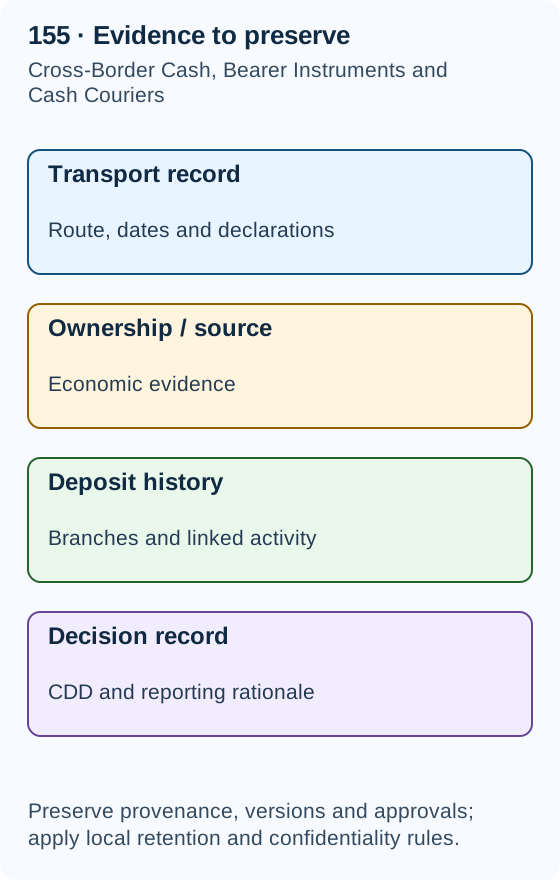
Worked courier deposit
A fictional customer deposits cash and provides a border declaration. The stated business normally receives electronic domestic payments, while the cash is said to belong partly to an unrelated person. Obtain context about ownership, source and purpose and compare it with the account profile.
Explain why the declaration supports one part of the story but does not settle the CDD or suspicion decision. Identify which national cash-reporting rules apply separately.
Data and operational controls
Capture deposit amount, currencies, transaction date, branch, depositor, claimed owner, customer explanation and supporting document references. Preserve original documents and record who verified the information. Link related activity using confidence-based identifiers rather than name alone.
Test multi-branch deposits, duplicate document references, inconsistent currency conversions and a customer acting for another person. Operations need a clear escalation path and customer communication that does not disclose protected reporting decisions.
Sound cash controls investigate the economic story while respecting the exact jurisdictional reporting framework.
References and further reading
Reviewed 2 October 2026. FATF provides international standards; applicable national law determines binding duties. The operating examples are fictional teaching cases.
- FATF Recommendations, updated June 2026 — relevant anchors: 32 and its Interpretive Note.
- US CBP currency and monetary instruments
- UK cash declaration rules