Asset Freezing, Restraint, Confiscation and Recovery of Criminal Proceeds
Freezing, restraint, seizure and confiscation describe different legal measures. A sanctions freeze prevents prohibited dealing with assets under the applicable regime; it generally does not transfer ownership. A restraint order preserves assets for proceedings under domestic law. Seizure places property under official control. Confiscation or forfeiture removes property through the legally authorised process. Asset recovery includes tracing, securing, managing and ultimately recovering or returning assets under the relevant framework.
FATF Recommendation 4 addresses confiscation and provisional measures; Recommendation 38 addresses international assistance for freezing and confiscation. These are distinct from Recommendation 6 terrorism sanctions and Recommendation 7 proliferation sanctions. A bank must identify the actual legal instrument before deciding what it can or must do. Suspicion or a SAR alone does not grant the bank a general power of confiscation.
Validate the authority, jurisdiction, parties, assets, amount or scope, commencement and any exceptions. An order naming a person may affect assets owned or controlled through an entity, but the scope depends on the applicable instrument and law. Do not apply one sanctions regime's ownership rule to every judicial restraint order.
Freezing is an operational state requiring ongoing control. Record the affected accounts, assets, balances, interest, attempted dealings and permitted exceptions. Notify the relevant authority where required. Release or transfer requires a valid basis; a customer's explanation or disappearance from an internal alert queue is insufficient.
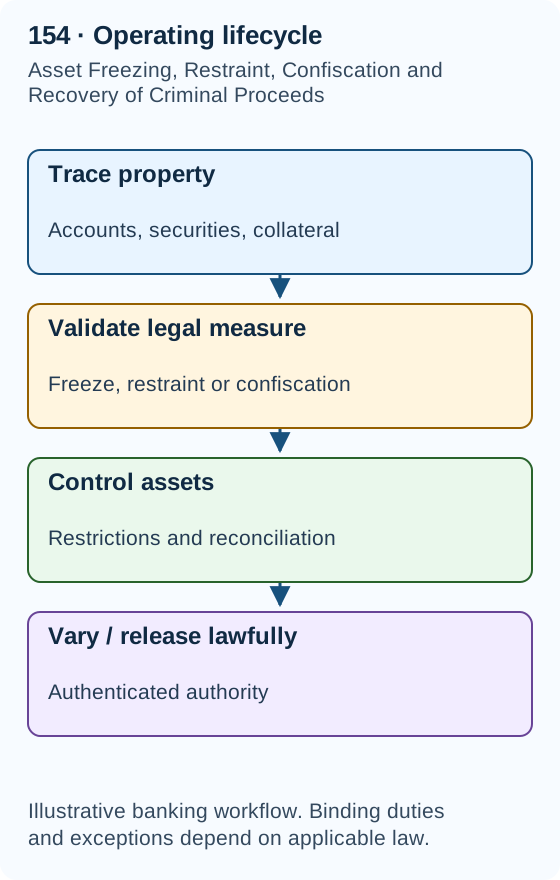
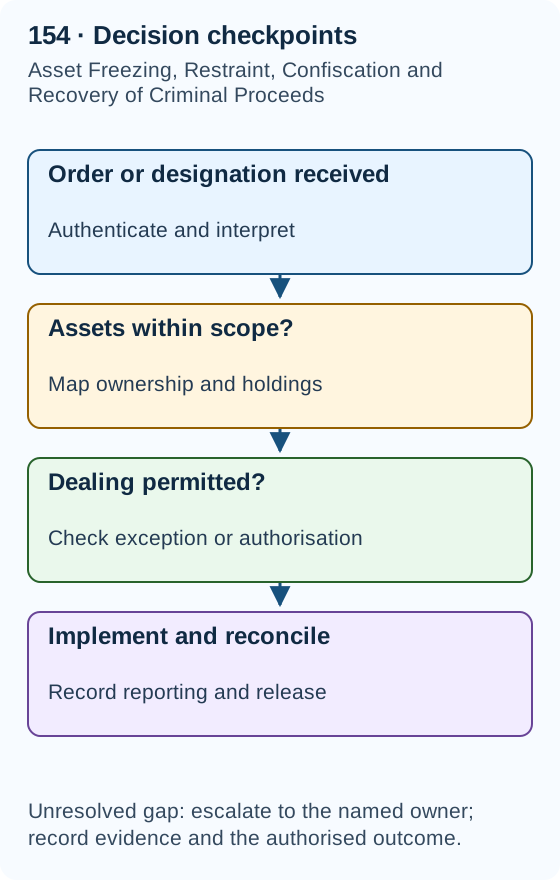
Asset control from receipt to release
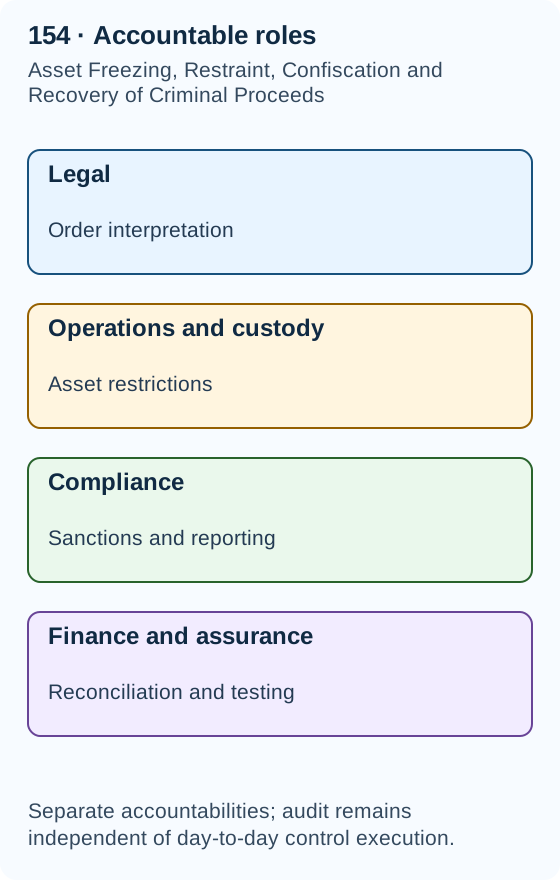
Legal authenticates an order and interprets scope; operations identify matching accounts and positions; securities or custody teams address non-cash assets; compliance checks reporting and related sanctions issues; finance reconciles balances. Keep the original instruction and a traceable implementation record.
An account block may not cover all relevant property. Consider deposits, securities, collateral, loans, safe-custody assets and payments in transit within the order's scope. Identify what the bank holds versus what belongs to another custodian. Track ownership and control evidence without assuming that every linked account is included.
Incoming funds, interest, fees, corporate actions and third-party claims need specific treatment. Check the regime or order for permitted credits, deductions or licensed dealings and maintain appropriate accounting records. An operational system that blocks debits but silently pays interest elsewhere may undermine asset control.
Reconcile the legally restrained population to system restrictions daily at an appropriate risk-based frequency. Record attempted transactions and escalation. On variation or release, authenticate the instruction, obtain approval, update every affected system and reconcile the final position. International orders may require domestic recognition before enforcement; cooperate through approved legal channels.
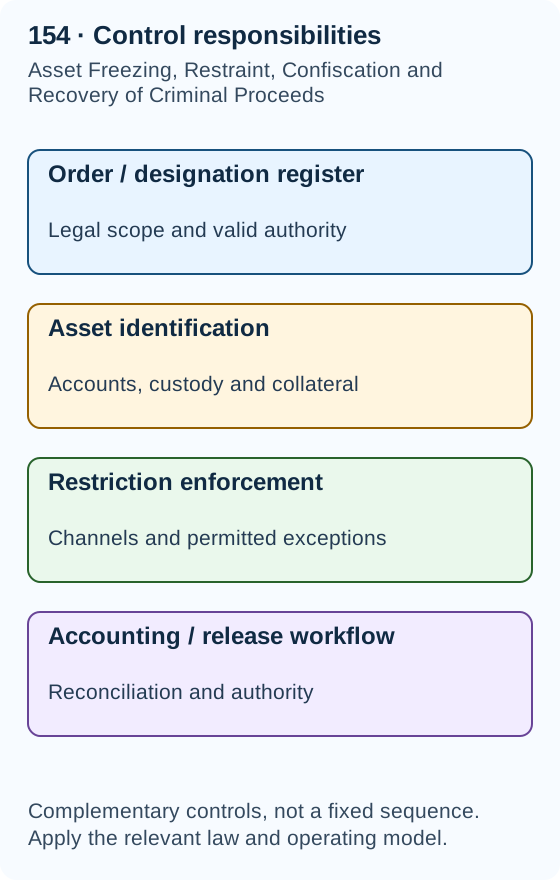
A bank's role in the asset-recovery chain
Asset recovery begins before a final confiscation instruction reaches a bank. Investigators may trace ownership, seek records, preserve property, obtain provisional measures, pursue a legal determination and arrange the eventual disposition of recovered value. The bank can support several stages without becoming the authority that decides the case. That distinction matters because operational teams often receive a mixture of inquiries, orders, sanctions alerts and informal requests concerning the same customer. They need to know which item establishes a duty, which requests information and which simply supplies an investigative lead.
Consider a fictional investigation into diversion of corporate funds. The bank first receives a valid request for historical statements. Providing those statements through the authorised process does not mean the accounts must be frozen. Later it receives an enforceable restraint order covering specified assets. That instrument establishes the relevant asset restrictions according to its terms and applicable law. A subsequent confiscation or forfeiture direction may require a different action, such as transferring an identified amount to an authorised recipient. Combining these stages into one generic account status loses the authority and chronology needed to explain what the bank did.
An operational record should therefore distinguish the underlying matter from each legal measure. The matter groups related documents and assets. Each measure has its own issuer, legal basis, scope, commencement, exceptions, variation history and implementation tasks. A new instruction can supplement, amend or replace an earlier one; it should not silently overwrite the original. Where two measures apply at the same time, release under one does not necessarily remove the other. The relationship between them needs an explicit legal assessment.
The bank also needs to distinguish preservation of records from preservation of property. A legal hold on transaction evidence prevents disposal of relevant information; it does not necessarily restrict the customer's balance. An asset restriction prevents specified dealing; it does not excuse deleting the underlying records. Both may apply to the same investigation, but their populations, systems and release processes can differ. A case system that treats every hold as a single account flag is likely to confuse those purposes.
The educational operating model in this chapter is deliberately jurisdiction-neutral where the law differs. It describes decisions a bank must make, evidence it should preserve and implementation risks it should test. It does not supply a universal list of court powers, appeal periods or disclosure deadlines. The bank's local legal function must identify the enforceable instrument and applicable procedures. FATF's standards support effective asset-recovery frameworks, including appropriate safeguards, while domestic legislation and competent-authority instructions govern the bank's actual response.
Establishing the instrument and its scope
An authenticated document is the starting point, not the end of scope analysis. The team needs to identify who issued it, which legal entity is addressed, where it is enforceable, which persons and property it covers and what action is required. A valid order served on one subsidiary may not automatically bind every company in the group. Conversely, an order with lawful group or beneficial-control reach may require action beyond the booking entity that first received it. These questions should be resolved explicitly rather than inferred from the mailing address or the bank's organisational chart.
Read operative terms, schedules, definitions and amendments together. The cover letter might summarise a restriction less precisely than the actual instrument. A schedule can list particular accounts while another provision addresses property held through nominees. The team should capture those distinctions in a scope memorandum approved by the appropriate legal owner. Operations then implements the interpretation against a controlled asset population. Staff should not be expected to interpret unfamiliar judicial language independently while processing a time-sensitive request.
When a document is incomplete or ambiguous, record the uncertainty and seek clarification through the authorised channel. Preserve relevant records and take any immediately required action supported by the valid portion of the instruction. Do not invent a balance threshold, assume an omitted account is covered or widen an order merely because doing so feels safer. Over-restriction can harm innocent parties and create legal exposure; under-restriction can allow property to leave. Both are control failures that require a reasoned resolution.
Authentication must withstand plausible impersonation. Use approved contact details and authority verification methods rather than a telephone number inserted into an unverified email. Check signatures, service and reference information according to local procedure. A request to change the destination of restrained funds is particularly sensitive because it can be a fraud attempt even when the initial order was genuine. Preserve the communication and route the proposed change to legal and the designated authority liaison.
Scope changes require version control. Record when the bank learned of the change, when it became applicable, who approved interpretation and which asset controls were updated. Some systems may update immediately while another channel needs a manual restriction. During that interval the bank must know the incomplete tasks and any interim protection. A case marked complete should mean that the required actions were verified, not simply that the legal document was uploaded.
Building the affected-person and asset population
Start with reliable identifiers for the named parties. Names, dates of birth, company numbers, addresses, ownership records and account history can support matching. A shared name is not proof that two customers are the same person. Equally, spelling differences, former names and aliases can conceal a relevant relationship. Record the sources and confidence of each link, and distinguish a possible match awaiting review from a confirmed asset within scope. Analysts need enough information to explain why an account was included or excluded.
For legal persons, map direct and indirect ownership and control only to the extent relevant to the applicable measure. Judicial orders and sanctions regimes can use different tests. A percentage rule from one sanctions programme cannot be copied automatically into a criminal restraint interpretation. Control may involve voting rights, appointment powers or other facts depending on the framework. Legal and compliance specialists establish the applicable test; the data model records the facts, source and date supporting the conclusion.
Identify what the bank actually holds or administers. The population can include current and deposit accounts, investment positions, custody assets, collateral, safe-custody items, loans, receivables and transactions in flight where the measure reaches them. Some property may be held by another group entity or external custodian. Record the distinction between property owned by the customer, property merely administered for someone else and the bank's own contractual claims. A search of deposit-account balances alone can be incomplete.
Map technical identifiers to the legal property description. An account may have several internal numbers across a migration; a security position may have a custody identifier and a separate portfolio identifier; a payment can have an instruction reference, network reference and accounting entry. Keep those relationships so the restriction can reach the actual channel that moves value. Changing the customer master record is ineffective if a downstream payment service uses a disconnected identifier.
Negative findings also matter. If a searched system contains no relevant property, record the system, search criteria, date and limitations. An empty result caused by a failed query should not be presented as proof that no assets exist. If an archive or subsidiary cannot be searched promptly, disclose the gap internally and escalate according to the matter's urgency. Completion evidence should cover both identified assets and the reasonable search of relevant repositories.
Restrictions are more than a debit block
A debit block on a current account is a useful implementation tool for some measures, but it may not cover the required legal scope. Value can leave through standing orders, scheduled payments, card settlement, securities transfers, fees, set-off, foreign exchange, collateral substitution or another service. The bank should translate the approved legal scope into a channel inventory and verify each applicable route. A control that succeeds in the branch application but fails in an API or batch process is not fully implemented.
Account restrictions should distinguish the reason and permitted actions. A fraud-protection hold, a credit-control block, a judicial restraint and a sanctions freeze can require different treatment. If the system stores only a generic blocked status, operations may release the wrong control after resolving an unrelated issue. Preserve multiple concurrent restrictions and their authority. Removing one reason should leave other valid reasons effective, with an audit trail showing the separate decisions.
Customer instructions received before the restriction need careful treatment. Determine whether they remain pending, have become irrevocable under the applicable payment framework, are already settled or can lawfully be stopped. The answer depends on the instrument and legal context. A system timestamp alone does not establish the legal treatment. Payments, legal and asset-control teams should reconcile the actual status and record why an action was available or unavailable.
Restrictions should propagate to channels without changing the historical record. Keep the original instruction and note the restricted outcome rather than deleting the request. Preserve attempted transactions where relevant to reporting or the order. Staff should understand the permitted communication route and avoid telling the customer that a restriction proves wrongdoing. An investigation or preventive measure is not itself a criminal conviction.
After implementation, test that the expected controls work. Use an authorised test environment or carefully governed verification method, not an unauthorised movement of restrained assets. Verify scheduled and alternative channels as well as the primary account screen. The evidence should show the restricted population, the control setting, the time activated and the result of verification. A screenshot without a reference to the affected asset or rule version is weak completion evidence.
Payments and settlements already in flight
An in-flight payment presents both a legal question and a state-reconstruction problem. The bank needs to know whether it holds the funds, has only sent a message, has booked a debit, has settled through another institution or is awaiting a return. Message delivery and movement of funds are different events. A status called sent may mean a queue accepted the instruction, not that the beneficiary received value. Keep the event sequence visible before deciding what can be stopped or recovered.
Consider a fictional payment instruction accepted shortly before a restraint becomes applicable. The customer account was debited, but the bank's outward settlement has not completed. Legal determines how the instrument applies; payment operations establishes whether the instruction can be stopped under the relevant framework. If funds have already left the bank, a recall or cooperation request is a different action from freezing assets still held. A recall is not guaranteed recovery, and its initiation must not be recorded as returned funds.
A returned payment also needs scope assessment. Its arrival can replenish property covered by an existing measure, or it may concern a different party or obligation. Reconcile the original and returned references and establish who owns the value. Do not assume that every incoming payment can be passed straight back to its sender. Returning value can itself be prohibited dealing under a sanctions regime or inconsistent with an order. Seek the appropriate interpretation and preserve the balance meanwhile as required.
Settlement through correspondents adds another boundary. The bank may hold an account for the affected customer but use a correspondent that has its own duties. Communicate through approved channels and distinguish information sharing from instructions the bank has authority to give. The correspondent's decision does not replace the bank's own obligations, and the bank cannot promise an external institution will reverse final settlement. Records should identify the request, response and actual recovered amount separately.
Where operational data is uncertain, escalate the uncertainty rather than choosing a convenient terminal status. Reconcile ledger entries, network responses, correspondent statements and beneficiary-bank information where available. A temporary suspense entry is an accounting treatment, not proof of legal ownership or recovered assets. The case should explain the remaining exposure and the next event that will resolve it.
Securities, custody and non-cash property
Securities introduce events that a cash-account restriction may not address. Holdings can be transferred, sold, pledged, converted or affected by corporate actions. Custody operations should identify the security, quantity, account, beneficial entitlement, settlement state and any linked financing. The legal instrument determines what actions are restrained and what management of the property is allowed. The bank should avoid automatically liquidating positions merely because it has applied a restriction.
A corporate action can change the property without a customer instruction. Dividends, interest, stock splits, mergers, redemptions or rights issues may create cash or replacement securities. Establish their treatment under the applicable measure and preserve the relationship to the original asset. If a blocked position is exchanged for another instrument, the control may need to follow the replacement property. The bank must record the event and legal interpretation rather than leave the new identifier unrestricted by default.
Unsettled trades require separate analysis of contractual obligations and actual holdings. A sale executed before an order may settle afterward; a purchase may involve cash due and securities not yet delivered. Record the trade, execution date, settlement date, counterparties and payment legs. Operations should not treat an executed trade as identical to settled custody assets. Legal and product specialists determine the available action in the instrument's context.
Collateral and secured lending add third-party interests. Property may secure the bank's claim or another creditor's claim. A restraint does not automatically extinguish those interests, while an asserted security interest does not automatically permit the bank to enforce or dispose of the property during the measure. Record the agreement and refer the competing rights to legal. Protecting the bank's exposure must not become an informal workaround for an applicable restriction.
For physical items or property administered by an external custodian, establish control and evidence custody. Record location, description, identifiers and the party capable of preventing movement. A central case note is insufficient if the custodian never receives an authorised instruction. Verification should confirm that the required restriction was implemented and that subsequent changes, releases or transfers follow the approved route.
Accounting, interest and frozen balances
Applying a legal restriction does not erase the bank's accounting responsibilities. The ledger must continue to represent liabilities, holdings, interest and permitted movements accurately. A restricted deposit can remain a liability to the customer while dealing is prevented; confiscation or transfer under valid authority can create a later change. Finance should understand the legal event that supports any reclassification rather than treating the restriction flag as an accounting instruction by itself.
Define how balances are reported internally and to the relevant authority. Specify whether figures are transaction-currency values, converted equivalents, quantities of assets or valuations at a particular time. Market values can change even when no dealing occurs. A securities position's quantity, market price and reporting currency should be preserved separately so changes in value are not mistaken for movement of property. Any requested valuation methodology must follow the instrument or approved policy.
Interest and incoming credits require interpretation under the specific regime or order. Some sanctions frameworks permit certain credits to frozen accounts while keeping the additions frozen; other actions may require authorisation. The bank should not invent a universal rule for fees, charges or accrued interest. Record the relevant basis and implement it consistently. A fee sweep to another account can be a dealing requiring analysis even if the amount is routine and automated.
Daily or otherwise appropriately frequent reconciliations should compare the legal asset register, core ledger, custody positions and restriction settings. Investigate differences caused by timing, valuation, missing identifiers, manual entries or unprocessed corporate actions. A balance total that matches can still conceal the wrong assets or wrong account. Reconcile identifiers and control coverage as well as amounts.
When an accounting error occurs, correction must preserve the historical trail and respect the restriction. Operations cannot simply move restrained value to make a suspense account balance. Legal and finance should agree the permitted correction, approvals and reporting implications. Record the original error, affected property, corrective entries and final reconciliation. The objective is accurate books and lawful asset control together.
Joint ownership, nominees and innocent third parties
Joint accounts and pooled assets can involve rights of persons who are not the subject of the measure. The bank needs an interpretation of the instrument's reach, the ownership or control facts and any applicable safeguards. It should not assume that the entire balance belongs to one named party solely because that party is a signatory. Equally, a joint label should not be used to exclude assets where the applicable legal test reaches them. These are fact-sensitive decisions for the authorised legal process.
Nominee structures require a distinction between legal title and underlying entitlement. A nominee may hold property for another person, but the statement of a customer or intermediary should be corroborated as appropriate. Identify the agreement, beneficiaries, instructions and actual control. Different instruments can address beneficial interests differently. Preserve both the legal form and the operational facts so the bank can show why it treated the property as within or outside scope.
Pooled client accounts create another challenge: the bank may see the account holder while underlying entitlements belong to multiple clients. The order may target the account, a particular client's entitlement or property held for a specified person. Obtain the relevant allocation evidence and legal interpretation. Restricting the whole pool without analysis may affect innocent clients; allowing withdrawals based on an unverified spreadsheet may defeat the measure.
Third-party claims should be routed through the authorised process. A supplier, spouse, trustee, creditor or beneficiary may assert an interest, but branch staff should not adjudicate competing rights. Record the claim and supporting documents, maintain any required restriction and obtain legal guidance on the proper route. The bank should explain procedural next steps through approved communication without promising that the claimant will prevail.
FATF's asset-recovery framework includes attention to rights and safeguards, and domestic procedures determine how they operate. For bank implementation, the practical lesson is to preserve evidence and avoid shortcuts that turn an operational decision into an unsupported determination of ownership. The case record should clearly distinguish the bank's matching assessment, the authority's direction and any unresolved third-party claim.
Exceptions, licences and authorised dealings
An exception is not the same as an operational override. Some measures permit specified activities directly under law; others require a licence, court variation or competent-authority authorisation. The bank must identify the applicable route and conditions. A manager's approval can govern the bank's process but cannot create legal permission that the framework does not provide. The approval record should identify both the legal basis and the internal authority executing it.
Read scope closely: covered parties, assets, purpose, amounts where specified, timing, recipient, conditions and reporting. A licence permitting one payment does not necessarily permit related payments or ongoing account use. A variation changing a judicial restraint does not automatically alter a separate sanctions restriction. The case should list concurrent measures and establish whether all relevant constraints are satisfied before a dealing occurs.
Evidence collection should focus on the condition actually requiring proof. If permission concerns a specified expense, identify the obligation, recipient and supporting record rather than requesting unrelated customer documents. If a condition concerns eligible humanitarian actors or activities, verify the relevant facts and implementation framework. Labelled purpose alone is insufficient. Avoid expanding the interpretation because the bank believes the underlying cause is worthwhile.
Technology can support condition tracking but should not hide the judgement. Store authorisation reference, approved interpretation, validity, permitted actions and the person who confirmed applicability. Track use against any defined amount or scope and prevent duplicate execution. If a system cannot model the conditions safely, an approved manual control may be needed with appropriate evidence and review, rather than forcing the dealing through an inaccurate generic exemption code.
After execution, reconcile the actual payment or asset movement with the permission and complete any required notifications. Preserve failed attempts and retry history so a second execution does not exceed the authorisation. An expired or revoked permission should no longer allow dealings. Changes should be communicated to every relevant channel, not only the team that obtained the original document.
International recognition and cooperation
Assets may be held in a jurisdiction different from the investigating authority. International cooperation can support tracing, evidence collection and securing property, but a foreign document does not automatically have the same enforceability as a domestic instrument. Legal should determine whether recognition, domestic execution, treaty procedures or another lawful route is needed. Operational urgency does not remove that requirement. The bank can cooperate through authorised channels while preserving the distinction between a request and an enforceable measure.
Group banks need clarity on which entity holds the asset and which law governs the action. Headquarters may coordinate information, but a local subsidiary's duties and disclosure restrictions remain relevant. A group instruction should identify its lawful basis and local implementation responsibilities. Unrestricted cross-border sharing of protected reports is not justified simply because the matter concerns asset recovery. Underlying transaction records and SAR material can have different disclosure rules.
International asset valuation and reporting can differ. A requesting authority may refer to an amount in one currency while assets are held in another, or seek proceeds after a sale that has not occurred. Record quantities, currencies, valuation date and exchange-rate basis. Do not treat currency fluctuation as an unexplained missing asset. If a transfer is eventually authorised, reconcile actual proceeds and costs under the approved instructions rather than promising a fixed equivalent prematurely.
Authorities may need evidence that supports admissibility and chain of custody. Preserve original records, source identifiers, collection time, custodians and transformation notes. A translated or converted document should remain linked to its original. The bank should identify the person who can explain the record, while leaving evidential determinations to the competent legal process. Fabricating a cleaner narrative than the source data supports can undermine cooperation.
FATF Recommendation 38 addresses international assistance for freezing and confiscation, including strengthened asset-recovery cooperation. For a bank, the defensible output remains the same: authenticated authority, understood local effect, identified property, controlled execution and reliable records. The international setting makes those boundaries more important, not less.
Worked case: multiple restrictions on a deposit relationship
The following case is fictional and uses illustrative amounts, not legal thresholds. A bank holds three accounts for a company: an operating account with 120,000 in currency A, a term deposit with 80,000 in currency A and a foreign-currency account with 30,000 in currency B. A valid domestic restraint order covers specified property belonging to the company. The bank also has an unrelated fraud-protection hold on one outgoing payment. Legal interprets the restraint scope and confirms which assets and actions are covered.
Operations creates separate records for the judicial measure and fraud hold. It searches relevant systems, maps the legal entity to customer and account identifiers, confirms the balances and checks scheduled instructions. The term deposit matures later in the week, and its default instruction would transfer proceeds to an external account. That event is included in the implementation plan. Restricting only the operating account would leave a foreseeable value route uncontrolled.
The outgoing payment subject to the fraud hold is then confirmed as genuinely authorised by the company. That resolves the fraud question, but does not release the judicial restriction. The workflow should remove only the fraud-specific reason while retaining any valid restraint. If the application has one generic blocked flag, a release action may incorrectly enable payment. The bank needs either a properly modelled multiple-restriction capability or a governed compensating control until that defect is fixed.
A week later, the company requests payment of an expense it says the order permits. Legal reviews the operative text and supporting documents, seeks clarification where necessary and records whether the dealing is authorised. Operations does not treat the customer's assertion as sufficient. If permission is granted through the appropriate route, the payment is executed with the specific approval and reconciled to the permitted scope. Any remaining assets continue to be restricted as required.
Finally, the bank receives an authenticated variation reducing the restrained population. The team identifies which systems and scheduled events are affected, obtains approval and verifies the changes. It keeps the original order and variation history, rather than replacing them with a single current-state document. The final evidence pack contains the asset search, interpretation, restrictions, exception decisions, balance reconciliations, variation and verification. It explains every material action without implying that the bank determined the company's guilt.
Worked case: custody assets and a corporate action
A fictional customer has a custody portfolio containing 4,000 units of a security and associated cash. A valid measure restricts specified dealing with covered property. Before implementation, custody operations identifies the security identifier, quantity, pending trades and upcoming corporate actions. Legal confirms scope and permitted administration. The bank records both the legal property description and the technical identifiers used by the custody and trading systems.
The issuer later announces a mandatory corporate action exchanging the holding for a replacement security and a cash component. The event can occur without a customer instruction. If the bank's control is tied only to the old identifier, the replacement holding may appear unrestricted. Custody operations should identify the event in advance, obtain the appropriate treatment and ensure the restriction follows the covered property where required. The event record preserves the old position, conversion terms, new position and cash allocation.
The portfolio valuation changes because the replacement security trades at a different market price. Finance and the asset-control team distinguish valuation movement from disposal or missing property. They report the quantity, price date and reporting currency according to the relevant instructions. A fall in market value does not establish that value was unlawfully moved, but an unexplained reduction in quantity requires investigation. Those are different reconciliation questions.
A broker requests settlement of an outstanding transaction. The bank must establish when the trade was executed, whether settlement remains pending and how the measure affects the contractual obligation. Custody, payments and legal teams review the actual trade and cash legs. A trade confirmation alone does not mean settlement completed. If an action is lawfully permitted, record its basis; if it is not, route the exception through the approved process and preserve the relevant records.
The case demonstrates why non-cash property needs product expertise. A deposit-only runbook can miss mandatory corporate actions, unsettled obligations and replacement identifiers. Acceptance testing should therefore include realistic custody events and verify both asset continuity and permitted treatment. The bank's responsibility is to implement the measure accurately while preserving accounting and property records, not to force every security event into a cash freeze workflow.
Worked case: a false identity match and release
A fictional customer's name resembles the person identified in an asset measure. An initial search finds the account, but other identifiers differ. The bank's matching team gathers relevant information, records sources and asks the appropriate legal or compliance owner to assess the match. The first alert should not be described to the customer as proof that they are the subject of the order or designation. Equally, the team should not clear it solely because the customer denies the connection.
The review establishes that the customer is a different person and that the relevant measure does not cover the account. The bank follows the applicable correction or release procedure, records the authorisation and updates the systems that received the original restriction. It also checks whether any other valid restrictions remain. A false-positive conclusion for one measure does not automatically clear every control on the relationship.
Customer impact needs attention. Payments may have been delayed, fees generated or instructions rejected during the review. Operations identifies those effects and routes remediation under approved policy and legal guidance. It should explain the outcome through an appropriate communication process without exposing protected information or promising compensation outside its authority. A correct legal match decision can still be accompanied by a poor operational response if affected instructions are left unresolved.
The evidence pack should support learning as well as defence. Was the initial match based on inadequate identifiers? Did a migration omit relevant birth-date or company information? Did a system propagate a possible match as a confirmed restriction? Those questions can identify a bounded improvement. Tuning should preserve detection of true matches; reducing false positives by removing useful identifiers or disabling a required control is not a sound response.
This case shows why false-positive handling is part of asset-control quality. Speed matters, but the bank needs a reliable distinction between a possible match, confirmed coverage and authorised release. Records should preserve the full sequence so later review can assess both the correctness and timeliness of the outcome.
Acceptance tests that challenge actual control behaviour
The following tests are illustrative implementation checks. Expected outcomes must be agreed against the relevant law, instrument and approved operating model; they are not universal legal prescriptions.
| Test situation | Expected evidence and control question |
|---|---|
| A customer has deposit and custody assets under different identifiers | The search and mapping demonstrate which holdings are covered, and restriction evidence reaches every relevant system. A customer-level flag alone does not prove custody control. |
| One account has both a fraud hold and a judicial restraint | Releasing the resolved fraud hold leaves the independent restraint effective. The audit trail identifies each authority and reason rather than one ambiguous blocked status. |
| A term deposit matures after restriction | The default maturity instruction is checked against the measure. Any proceeds and rollover or transfer action receive the authorised treatment, with original and resulting balances reconciled. |
| A scheduled payment was created before the measure | The team establishes actual payment state and legal treatment. The system does not presume that instruction date alone decides whether execution is permitted. |
| An incoming payment returns from another bank | Original and returned references are linked, ownership is assessed and the relevant restriction is applied where required. Return processing does not automatically release value externally. |
| A custody asset changes identifier through a corporate action | The property continuity and replacement identifier are recorded. The test checks whether the applicable restriction follows the covered replacement property and cash component. |
| A licence permits a specified dealing | The workflow records scope, conditions and approval, executes only the authorised action and reconciles the actual movement. It does not convert one licence into unrestricted account access. |
| An authorisation expires before a retry succeeds | The retry is reassessed against current permission. A prior failed attempt does not grant indefinite authority to execute after expiry. |
| An order is varied but another measure remains | The change removes only the amended scope. Other valid restrictions continue, and legal interpretation and system verification are recorded separately. |
| A search returns no assets after a service error | The error remains visible and is escalated. The result is not recorded as a successful negative search or used to close the task. |
| An external custodian holds relevant property | The bank identifies its authority and communication route, obtains implementation evidence where required and records limitations rather than claiming direct control it does not have. |
| An operational user tries to release a restriction without authority | Access and workflow controls prevent or detect the attempted action, preserve the audit trail and route it to an appropriate owner. |
| A fee or interest process acts on a restricted account | The treatment follows the applicable regime or instrument. Automated processing does not bypass the restriction merely because it is routine. |
| A duplicate legal instruction is received | The register recognises the duplicate without losing the original arrival history. It avoids duplicate asset movement or reporting while preserving any new information in the second communication. |
| A foreign authority requests immediate balance transfer | Legal determines the enforceable route and scope. Operations separates preservation, disclosure and movement of funds instead of treating urgency as a substitute for authority. |
| A false match is resolved | The authorised correction reaches every affected channel, unresolved customer instructions are reviewed and remaining independent restrictions are preserved. |
Testing should produce evidence of the observed result, not only a pass label. Record the fictional input, applicable interpretation, expected system and operational behaviour, actual events and any deviation. For a failed test, assess whether the problem is scope interpretation, identifier mapping, workflow, access, accounting or channel coverage. Different causes require different fixes. Retest the defect and affected adjacent behaviour after repair; repeatedly testing unrelated screens adds little confidence.
Population testing is as important as individual scenarios. The bank may correctly restrict every case supplied to the test while failing to identify another product entirely. Reconcile the asset register with the complete relevant systems and explain exclusions. Include a reverse trace from a selected restricted asset to its legal instrument and from an instrument to all covered assets. This two-way approach exposes orphan restrictions and missing property.
Management information and escalation
Management needs to know whether legal asset measures are implemented accurately and promptly, whether property remains controlled and whether unresolved gaps threaten the outcome. Useful information includes measures received, assets identified, incomplete implementation tasks, mismatches, pending interpretations, authorised dealings, releases and overdue reconciliations. Counts should be accompanied by severity and context. A small unresolved custody gap can be more material than many routine completed deposit cases.
Distinguish operational delay from legal uncertainty. A team waiting for an interpretation may need an urgent legal escalation and interim control; a team with a clear interpretation but a failed system task needs technology and operations remediation. Reporting both as open cases hides the cause. Record the affected property, available protection, accountable owner and next decision. Avoid assigning a closure date before the team understands the actual work.
Escalations should preserve concurrent duties. A sanctions reporting deadline, a court response requirement and an internal reconciliation issue can run in parallel. The bank needs responsible owners for each, with coordination at matter level. Resolving one workstream should not close the others silently. A dashboard that calculates completion from the first task marked done can misrepresent the remaining legal exposure.
Customer impact should be visible without equating it to permission to release assets. Delayed legitimate activity, false matches, disputed ownership and communication problems require attention through approved channels. Management can resource faster review, improve data or seek clarification; it cannot authorise an unlawful dealing simply to reduce complaints. Clear records help distinguish necessary restrictions from avoidable processing errors.
Independent assurance should review both current controls and completed matters. Sample releases, exceptions, false positives and negative asset searches, not only straightforward freezes. Check whether issues recur across products or entities. A repeated omission of custody assets points to an inventory or governance defect, while inconsistent interpretation may require policy clarification. Report the cause and affected population so remediation addresses the actual weakness.
Incident recovery and historical exposure
Suppose a bank discovers that a scheduled-payment service did not receive restriction updates for several hours. Restoring the feed is necessary, but it does not establish that assets remained controlled during the gap. Identify the affected measures, accounts, instructions and actual settlements. Preserve logs and determine which transactions could have dealt with covered property. The population should be based on system evidence rather than staff recollection or a convenient time window.
Legal and compliance assess the implications of the actual events and any notification duties. Operations establishes whether funds remain within the bank, are pending externally or have settled. A recovery request, recall or further authority cooperation may be appropriate depending on the legal route. Record each action and its actual result; requested recovery is not recovered value. Do not conceal uncertainty by posting an accounting adjustment that leaves the external value unchanged.
Interim protection should address the affected channels and related systems while the defect is repaired. Manual checking can be useful if its scope, owner and evidence are clear, but an informal instruction to be careful is weak. Define how staff identify covered transactions, how they obtain current restrictions and how exceptions are escalated. Consider workload and out-of-hours operation so the temporary process does not fail when the original problem is most likely to recur.
Root-cause analysis should follow the failed path. Was the source message omitted, rejected, delayed or applied to the wrong identifier? Did monitoring detect the failure? Did the service incorrectly acknowledge completion? Different answers lead to different repairs. Reconciliation, acknowledgement semantics and exception visibility may need improvement alongside the data feed. Fixing only the endpoint while leaving false success messages intact can repeat the same failure later.
Closure requires verified remediation and a documented assessment of historical exposure. Preserve the affected population, legal conclusions, recovery actions, reporting and customer effects. Independent validation should challenge the evidence and confirm the repaired behaviour. The bank should be able to explain what happened during the gap, what remains unresolved and why the issue is or is not safe to close.
Practical review of a complete asset-control file
A strong file begins with authority and ends with an explainable outcome. An authorised reviewer should be able to identify the operative instrument, understand its local effect, follow the affected-person and property mapping and see how every relevant system implemented the restriction. The reviewer should also see uncertainties, clarifications and exclusions. A case that looks tidy because inconvenient facts were omitted is less reliable than a transparent record of a complex decision.
The file should distinguish evidence from inference. A company register, custody statement, contract or payment message supports particular facts; a conclusion about ownership or control may depend on several sources and legal interpretation. Record that reasoning close to the relevant evidence. Avoid copying a conclusion into every system without preserving its source, date and applicability. Later changes may make the original conclusion obsolete for new activity while leaving it relevant to the historical decision.
Check the asset trail and accounting together. Identified balances and quantities should reconcile to implementation and later events. Authorised dealings should match their permission; attempted prohibited actions should be recorded where relevant; corporate actions and incoming value should receive the approved treatment. Releases should cite valid authority and show verified removal of the correct scope. The final amount moved, if any, should be supported by actual settlement evidence rather than an instruction status.
Check access and disclosure. The file may contain sensitive investigation material, SAR-linked information, privileged advice and third-party data with different protections. An operational need to see an asset restriction does not necessarily justify access to every report or legal communication. Preserve the information needed to execute the control while applying the appropriate confidentiality and disclosure framework. The bank should know what was shared, with whom and on what basis.
The final review asks whether the bank acted within its role. It should have authenticated authority, implemented the required measure, respected applicable safeguards, kept accurate records and escalated uncertainty. It should not have presumed guilt, confiscated property without a valid route, returned restricted value casually or treated an internal status as legal permission. That is the practical standard for a banking team supporting effective asset recovery.
Executing an authorised final transfer
A final confiscation, forfeiture or recovery instruction can move the matter from asset preservation to disposition. The bank should authenticate the actual authority and destination, identify the property or amount to be transferred and determine whether other measures or competing interests affect execution. It should not treat the existence of a prior restraint as automatic authority for a later transfer. Preservation and deprivation are different legal steps even when they concern the same investigation.
Verify recipient details through the approved channel. A fraudster can exploit a genuine investigation by substituting an account for the proceeds. The person entering payment instructions should have the validated destination and approved scope, with appropriate checking before execution. Preserve the authority communication and verification record. Avoid relying on an email thread whose most recent message supplies a changed bank account without independent authentication.
Reconcile the amount available and the instructed treatment of currencies, interest, expenses and non-cash assets. A direction to transfer an amount is not necessarily a direction to sell every holding. Where liquidation is authorised, custody and trading specialists should document the process and actual proceeds under the approved instruction. Market movement, execution costs and settlement timing can affect the result; the bank should not promise a fixed value before the permitted sale completes.
The transfer's completion needs actual value evidence. Record initiation, validation, any repair, settlement and receipt information available through the applicable channel. If the payment rejects or returns, the matter remains operationally unresolved. Preserve the funds under the appropriate continuing treatment and obtain direction where necessary. A dashboard should not mark property recovered solely because the outbound file was accepted.
After final disposition, close the relevant asset tasks while preserving any continuing record hold, reporting requirement or unresolved third-party matter. Inform responsible teams of the completed action through approved channels. The case record should show which assets remain, which restrictions still apply and which obligations ended. A single closed label applied to the entire customer can incorrectly remove an independent measure or trigger premature record deletion.
Borrowing, overdrafts and the bank's own claims
Credit relationships can complicate an asset-control matter. The customer may have a positive deposit, an overdraft, a secured loan and collateral in the same bank. The bank should identify its contractual rights and the measure's effect through legal analysis rather than assuming that all balances can be netted for convenience. Accounting net presentation and legal rights over separate assets are different questions. The presence of a debt does not automatically authorise dealing with restrained property.
An undrawn facility is also different from funds already held. Extending further credit can create value available to a restricted person, while preserving an existing balance concerns property already in the bank. The legal and contractual treatment depends on the framework. Product and legal teams should determine whether drawdowns, refinancing, renewals or collateral changes are permitted. Operations should not regard them as harmless because they do not begin with a deposit-account debit.
For collateral, record the owner, secured obligation, custody location, valuation and any existing rights. A pledge may involve another person's property or a pooled holding. A customer instruction to substitute collateral can move covered value or alter control. The bank needs an approved interpretation and execution record, not merely a credit officer's view that the replacement is financially equivalent. Equivalent value does not necessarily mean equivalent legal treatment.
Fees and set-off require the same discipline. A standard automated deduction can be a dealing with property, and a bank's asserted claim may need specific treatment under the measure. Identify the source of permission or restriction and configure the relevant process. If the system cannot distinguish permitted from prohibited entries, escalate for a governed workaround and technology repair. Do not silently disable all accounting or allow every routine charge.
These examples explain why legal, credit, finance and operations must work together. Financial exposure and legal asset scope need simultaneous understanding. A financially prudent action can still be unlawful under a restriction, while an overbroad operational block can misstate or disrupt legitimate obligations. The final record should identify the rights considered, interpretation adopted and actual asset movement or non-movement.
Requirements for a controlled asset register
The register should answer five practical questions: what authority applies, what property is affected, what the bank has implemented, what remains uncertain and who can approve the next action. Design fields around those questions rather than around one product's convenient status codes. Preserve legal-document references, entity scope, party identifiers, asset identifiers, currency or quantity, restriction type, permitted actions and effective history. The register should support more than one measure per asset.
Source data should remain linked to its origin. A manually entered balance can be useful for a snapshot, but the record should state the source system, time and person collecting it. A valuation needs a price and date basis. A legal interpretation needs an approving owner and document reference. When a field changes, record the prior value and reason. Without this history, a reviewer cannot determine whether the bank acted correctly on the facts available at the time.
Task state should distinguish not started, in progress, implemented, verified, failed and not applicable where appropriate to the model. Those labels describe operational work, not legal conclusions. A verified restriction can later need review after a corporate action, migration or variation. The system should make that event visible and create the required task rather than leave the old verified flag as perpetual assurance.
Access should match responsibility. Asset operations may need legal scope and permitted actions; investigators may need underlying factual records; legal may hold privileged interpretation; reporting teams may manage protected reports. Do not assume every user who executes a debit block needs every linked document. Equally, withholding operationally necessary scope information can cause incorrect action. Design the access model to protect material while supplying the information needed for lawful execution.
The register also needs resilience. Test backup, retrieval, unavailable interfaces and manual continuity. An outage should not make current restrictions unknowable or erase pending changes. Preserve the event population and reconcile recovery updates. When a service restarts, verify that all instructions received during the interruption were implemented and that completed manual actions are not executed a second time. Resilience evidence should cover actual restriction state, not only application availability.
Retaining a usable evidential history
Asset-control records can be needed long after the initial event. Retention periods and holds depend on the relevant jurisdiction and record category; the chapter does not prescribe one universal period. The bank should retain the legal instruments, implementation evidence, asset reconciliations, authorised dealings, disclosure records and final disposition information according to the approved schedule and any valid hold. A closed matter is not automatically eligible for deletion.
Store native records where they matter and readable representations for authorised review. An image of an order can be useful, but missing schedules or illegible attachments can undermine interpretation. A payment export should retain original identifiers and explain transformed fields. A custody report should preserve quantities and the relevant valuation date. Evidence quality is more than keeping a large attachment directory: each record should support a fact in the asset-control chronology.
Migration needs specific checks. Reconcile instruments, assets, tasks, concurrent measures, attachments, histories and permissions between systems. Account-count agreement alone can hide lost variation documents or an incorrectly cleared restriction. Select old and complex matters, retrieve evidence and reconstruct the outcome from the migrated record. A migration that improves the current screen while losing historical authority is a material defect.
Disclosure from the file still requires a valid gateway. The bank may need to provide records to an authority, respond to litigation or handle a customer request, with different scope and protections. Protected reporting material and privileged advice should be reviewed under their applicable rules. Do not assume that material linked to an asset order becomes unrestricted simply because some documents are public or an authority knows the customer is being investigated.
At eventual disposal, record the authority, category, eligibility review and result, including any store where deletion remains deferred. Release of one hold does not remove another, and expiry of ordinary retention does not defeat an active preservation duty. A well-managed evidential history allows the bank to explain past actions while applying lawful lifecycle controls instead of either indiscriminate deletion or indefinite accumulation without purpose.
Shift handover and urgent decisions
Asset-control work can span teams, time zones and shifts. A handover should identify current measures, affected property, completed restrictions, unverified tasks, urgent deadlines and decisions awaiting interpretation. It should link the governing record rather than rely on a chat summary that may omit a condition. The incoming team needs to know what it can execute, what it must preserve and which owner can resolve uncertainty. A named coordinator supports continuity but should not obscure specialist decision rights.
Urgent customer requests deserve triage without bypassing authority. Distinguish a request that can be processed under an existing permission from one requiring a new variation or legal assessment. Record the customer's stated need and supporting facts, then route it appropriately. A commercial escalation can obtain attention and resources; it cannot supply the missing legal permission. Staff should be trained to explain procedural next steps through approved wording while avoiding a promise of release.
Out-of-hours instructions need the same authentication and interpretation controls as daytime work. Maintain authorised contacts and access to current scope records. If the specialist owner is unavailable, follow the approved escalation and interim-control procedure rather than accepting an unverified instruction or improvising an interpretation. The bank should test that route in a rehearsal, including a changed recipient and a competing restriction, so staff understand its limits before a live event.
The handover ends when the receiving owner confirms understanding of the open tasks and their urgency. Preserve that accountability in the matter record. A message sent to a shared mailbox is not proof that an urgent action was accepted or completed. Verification of implementation and final settlement remains necessary regardless of how many teams handled the instruction.
Assurance over asset measures
Test partial ownership, joint accounts, multiple currencies, securities with corporate actions, a payment already settling and an amended order. Expected results must come from legal interpretation of the instrument, not a generic freeze-all script.
Preserve the distinction between asset preservation and permanent deprivation. Confiscation can involve conviction-based or non-conviction-based routes where the legal system permits them, with applicable safeguards. The bank executes valid instructions; it does not determine guilt or decide ultimate distribution to victims on its own.
Independent review should establish that restrictions cover the required assets, accounting remains reconciled and releases are authorised. A screen showing blocked is not enough if another channel can move the same property.
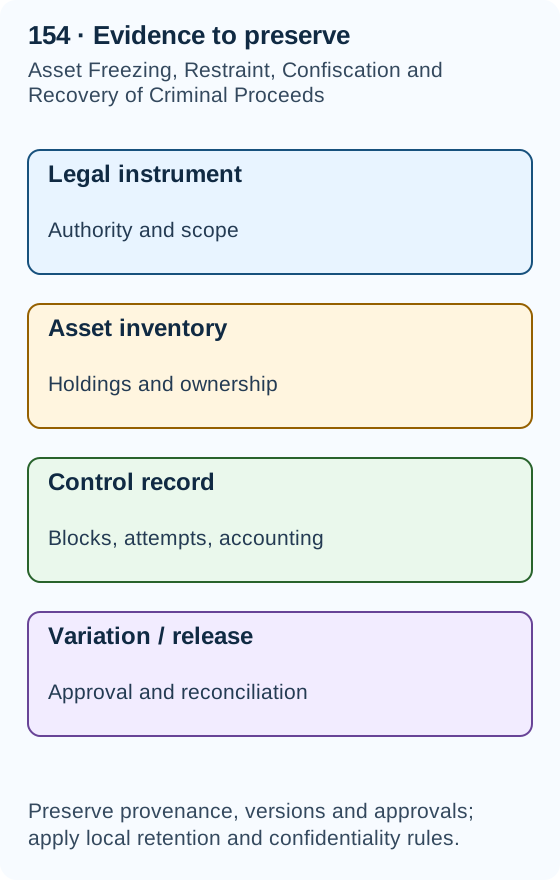
Worked restraint case
A fictional domestic order restrains specified assets pending proceedings. The customer requests a transfer to pay a supplier and produces an email said to be from an investigator. Legal must validate whether the order permits the transfer or requires a variation. Operations retain the restriction while the request is resolved through the approved channel.
Explain what records are needed to identify the affected property and why an informal email cannot replace the applicable authorisation.
Delivery and custody evidence
Create a governed register linking the instrument to asset identifiers, implementation steps, exceptions, reporting and release approvals. Reconcile the register with core banking, custody and payment systems. Use restricted access and preserve changes to scope rather than overwriting the original entry.
Acceptance tests should prove that all relevant channels honour the restriction and that authorised releases do not affect unrelated assets. A missed channel requires population analysis and immediate escalation, not only a software fix.
The defensible outcome is accurate execution of the legal measure with complete asset and decision records.
References and further reading
Reviewed 2 October 2026. FATF provides international standards; applicable national law determines binding duties. The operating examples are fictional teaching cases.
- FATF Recommendations, updated June 2026 — relevant anchors: 4 and 38; distinguish 6 and 7.