Cross-Border Information Sharing, Data Localisation and Bank Secrecy
A payment can cross three countries in seconds while the evidence needed to understand it remains divided between three banking entities. The originating bank knows the customer and source of funds. A correspondent sees the payment route. The beneficiary bank knows the receiving account and subsequent movement. Joining those observations can reveal a fraud network or explain an apparently suspicious transaction. The information exchange itself, however, is a separate regulated activity. A legitimate financial-crime purpose does not automatically authorise every disclosure, recipient or overseas access path.
The bank needs a precise answer to six questions: why share, with whom, under which authority, which fields, across which border, and with which safeguards? This chapter develops that decision into an operating model. It builds on the information-sharing chapter's general gateway principles and focuses on the additional problems created by jurisdictional boundaries, bank secrecy, data localisation and group investigations.
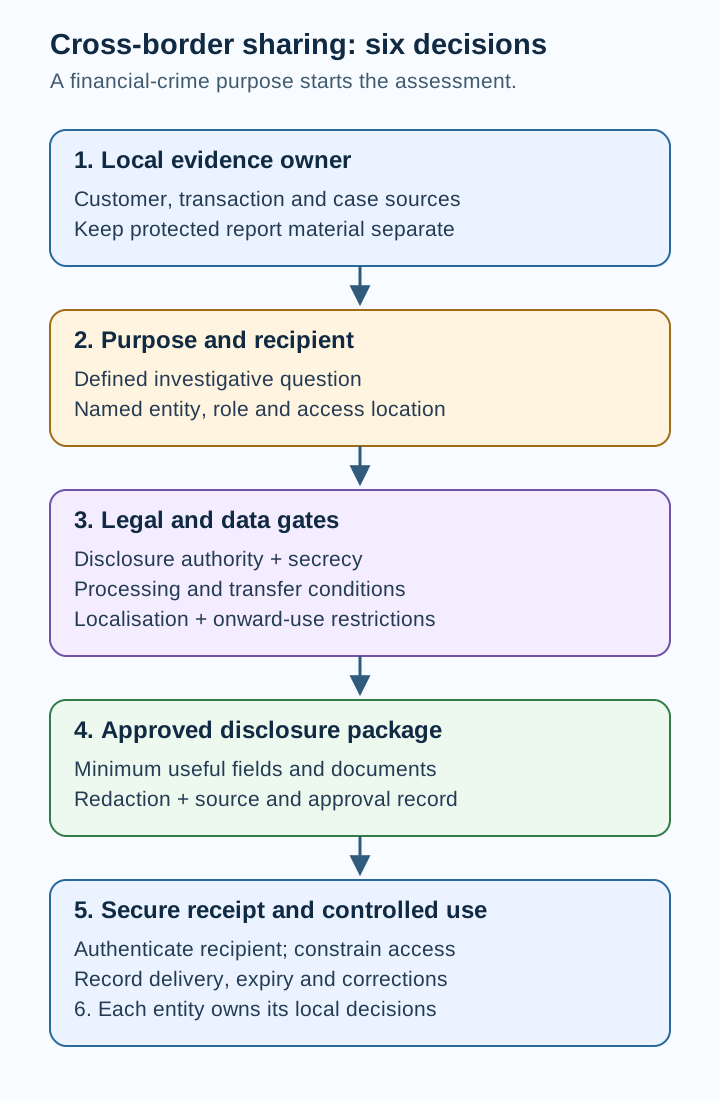
Four legal questions that must remain separate
AML/CFT information sharing asks whether the bank needs or is permitted to exchange information for customer due diligence, risk management, investigations or an authorised cooperation arrangement. FATF Recommendation 18 sets a standard for group-wide programmes and sharing safeguards. Its interpretive note also addresses situations where host-country law prevents adequate implementation: additional risk-management measures and notification to the home supervisor may be needed. FATF is a standard addressed to countries; the binding authority for a particular disclosure comes from applicable law and the bank's approved interpretation.
Bank secrecy and confidentiality ask whether information about a customer, account or transaction is protected and whether an applicable exception allows disclosure. Secrecy may protect corporate as well as personal information. A processing contract or group policy cannot create a statutory exception by itself.
Privacy and international-transfer rules ask whether personal information can be processed for the proposed purpose and made available to the recipient in the proposed country. A lawful basis for processing and a valid international-transfer route answer different questions. A transfer mechanism does not authorise an otherwise impermissible purpose or override bank secrecy.
Localisation and supervisory access ask where specified data must be stored, processed or accessible and whether copies, backups or overseas support access are permitted. A requirement to keep certain records locally does not necessarily prohibit every overseas disclosure. Conversely, approval to share a customer record does not establish that the whole payment database may be replicated abroad. The exact instrument, data population and permitted exceptions decide the result.
These questions are cumulative where more than one framework applies. The disclosure record should identify each relevant answer instead of one undifferentiated privacyApproved flag.
Start with the data flow, not the cloud-region label
The bank should map the entity that holds the evidence, the entity receiving it, the individuals or services accessing it, and the physical locations involved. The assessment must include browser access, APIs, exports, attachments, support sessions, logs, backups and onward sharing. A database hosted locally can still be accessed by an overseas group investigator or service provider.
The EDPB's final Guidelines 05/2021 identify three cumulative criteria for a GDPR Chapter V transfer: the exporter is subject to the GDPR for the processing, it makes the data available to another controller or processor, and that importer is in a third country or international organisation. Remote access can meet those criteria even when data stays on an EEA server. Internal processing within the same controller is a different case; it still requires the other GDPR safeguards. The UK ICO likewise explains that overseas access by a separate organisation can be a restricted transfer. An architecture review must establish the legal actors as well as the countries. EDPB guidance, ICO transfer guidance.
The customer’s nationality, the currency of the payment and the country of a correspondent do not, individually, establish where a disclosure occurs. Store the booking entity and exporter/importer roles separately from customer residence, payment route and user location. Shared-brand subsidiaries are still distinct legal persons; a branch may have a different legal structure. Do not decide the transfer mechanism from the organisation chart alone.
Separate ordinary evidence from protected report information
Transaction facts, KYC documents, analyst working material, a suspicious-activity report, filing metadata and an FIU response are different data classes. Giving them the same permission set creates avoidable disclosure risk. A group investigator may need transaction history without needing access to a local report object or its filing status.
FinCEN's 5 September 2025 cross-border guidance clarifies that the BSA generally does not prohibit appropriate voluntary sharing of underlying customer, transaction and investigative information with foreign financial institutions. It does not remove other U.S. or foreign legal restrictions. SARs and information revealing their existence or non-existence remain protected, apart from permitted circumstances. The guidance gives examples of underlying facts and documents that ordinarily do not reveal SAR status, while requiring care with analytic material bearing on a SAR decision. Thus an export should exclude the report, status, filing reference and revealing decision commentary when that disclosure route does not permit them. FinCEN FIN-2025-G001.
That is a U.S. distinction, not a universal exemption. Other jurisdictions have their own reporting confidentiality and tipping-off rules. FIU-provided intelligence may carry additional purpose and onward-disclosure conditions. A request from group headquarters is not automatically permission to share everything that an FIU supplied.
The U.S. agencies' 2 September 2026 statement also distinguishes protected SAR information from customer communication about underlying activity. It does not authorise revealing a SAR. Customer-service scripts and cross-border evidence exports should therefore be approved separately. Joint statement.
Different recipients require different gateways
Within a financial group, sharing may support group risk management and coordinated investigation. The approved route still needs entity, purpose, data scope, secrecy restrictions and recipient safeguards. Sending information to an unrelated bank requires its own authority. A correspondence relationship does not give the respondent unrestricted access to the customer's file.
U.S. section 314(b) offers a conditional safe harbour for eligible participants sharing information for permitted purposes concerning possible money laundering or terrorist activity, including relevant fraud or other unlawful activity. FinCEN's current fact sheet is dated 12 June 2026. Participation checks, purpose, protection and the applicable conditions matter. It is neither blanket global immunity nor permission to exchange SARs. FinCEN section 314(b).
Disclosure to an FIU, supervisor, law-enforcement authority or court follows a different route from voluntary bank-to-bank sharing. Authenticate the request, establish the authority's power and the bank's duty, determine permitted scope and involve the authorised local owner. A foreign authority's request should not be treated as if it automatically had the same effect as a domestic statutory notice. Requests for protected report information require specialist handling.
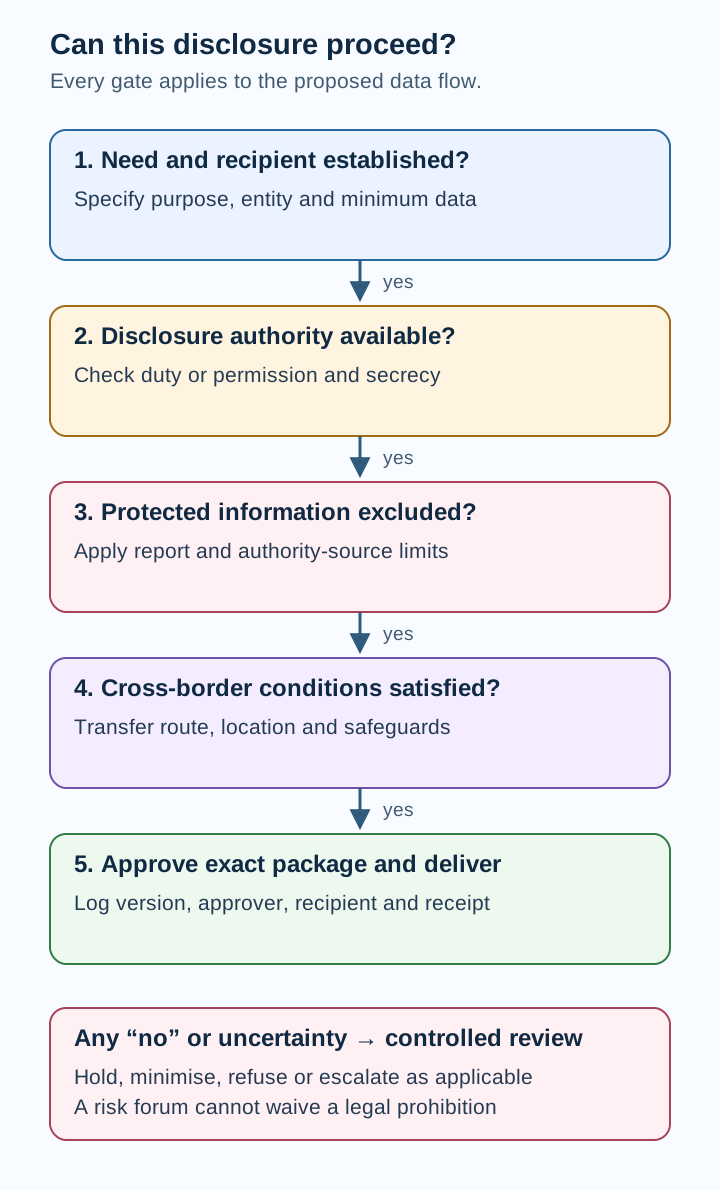
Localisation is a data-specific control
India's RBI payment-data storage framework illustrates why scope matters. The RBI's clarification addresses end-to-end payment-system data and provides specific treatment of foreign legs and processing outside India. It is not a general statement that every banking record everywhere must be stored only in India. A bank should map the actual regulated dataset, processing arrangements, local-storage duty and permitted exceptions against the current instruction and FAQs. RBI payment-data FAQs.
Singapore's PDPA transfer limitation obligation is another distinct model: overseas transfers require the prescribed protection conditions, including comparable protection where applicable. That privacy rule does not by itself establish a general local-only storage mandate or resolve every banking secrecy question. PDPC cross-border guide.
The operational lesson is to classify by data and use. The full local source may stay in its approved location while a permitted, minimised evidence package is shared. If a permissible summary cannot support the investigation, escalate the missing evidence and the legal constraint. Do not describe a case as fully investigated merely because the export filter removed the necessary facts.
A bank-grade disclosure workflow
The request begins with an investigatory question: for example, whether two payments relate to the same corporate beneficiary or whether an account received funds from a known fraud victim. It should name the recipient and the smallest useful evidence scope. “Send the entire customer file” is not an adequate purpose specification.
The local owner checks identity and authority. Legal and privacy review establish the applicable route and conditions; the reporting specialist classifies confidential report material. Existing approved patterns can automate these checks where the request fits their scope. New jurisdictions, recipients or data classes require escalation rather than an analyst choosing an approximate rule.
The disclosure service builds a point-in-time package from governed sources, removes fields outside scope, checks attachments and records the applied policy version. The reviewer approves the exact package. Secure delivery authenticates the recipient, constrains access and records what was sent. Recipient acknowledgement and expiry complete the hand-off. Investigation decisions remain with their authorised owners; a shared package is evidence, not a command to file or close an account.
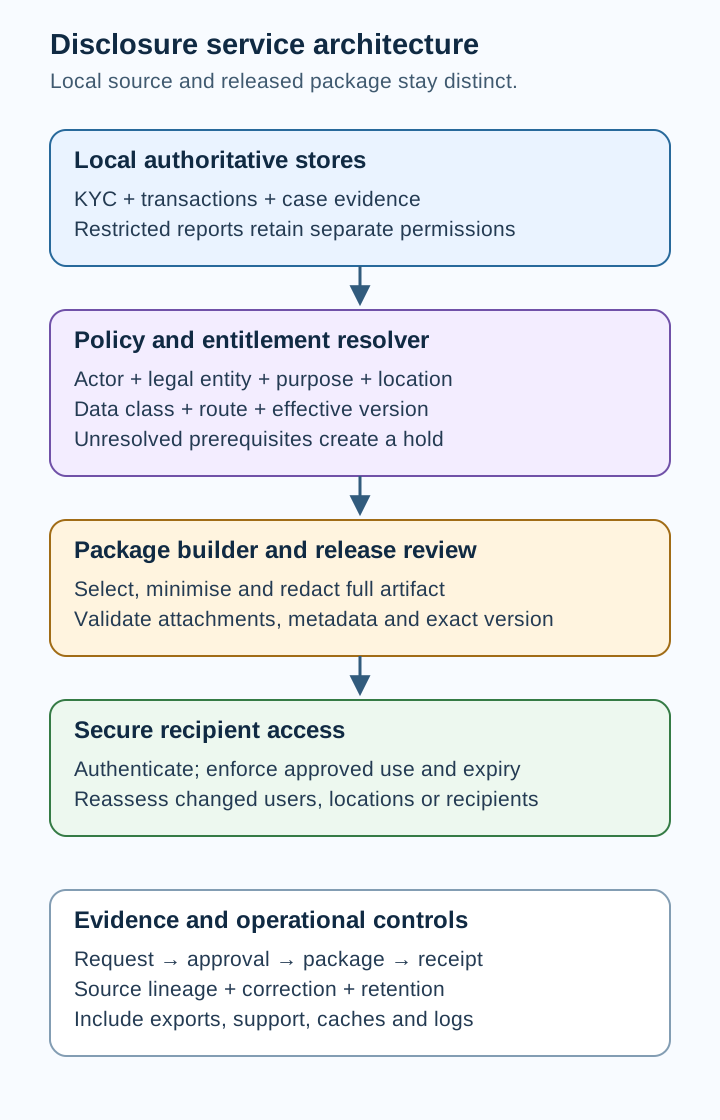
When information cannot lawfully move
A legal restriction should create a visible investigation limitation, not a silent technical workaround. Options can include a local analyst answering a narrowly defined question, approved read-only access, a permitted summary, a federated query, anonymised aggregate intelligence, or an authority-mediated channel. Every option requires its own legal assessment. “Federated” describes where computation runs; it does not mean the returned data escapes transfer or confidentiality rules.
Pseudonymised identifiers remain personal data when re-identification is possible in the relevant context. Hashing an account number does not automatically make a graph anonymous. A rare combination of amount, date, geography and counterparty can identify a customer even without a name. The receiving team's available information matters.
If no lawful route supplies sufficient evidence, the local and group owners document the control gap, assess additional measures and determine whether the relationship can be managed. Commercial importance cannot override law. Equally, inability to share one document should not automatically become a worldwide customer-exit decision without considering permitted alternatives and risk.
Evidence and accountability
The disclosure record should preserve request purpose, exporter and recipient, jurisdictions, data classes, source identifiers, exact released scope, withheld fields, legal route, transfer safeguards, policy version, approvals, transmission time, receipt and onward-use conditions. The evidence should allow an independent reviewer to reconstruct what crossed the boundary without making the audit log a new uncontrolled copy of the customer file.
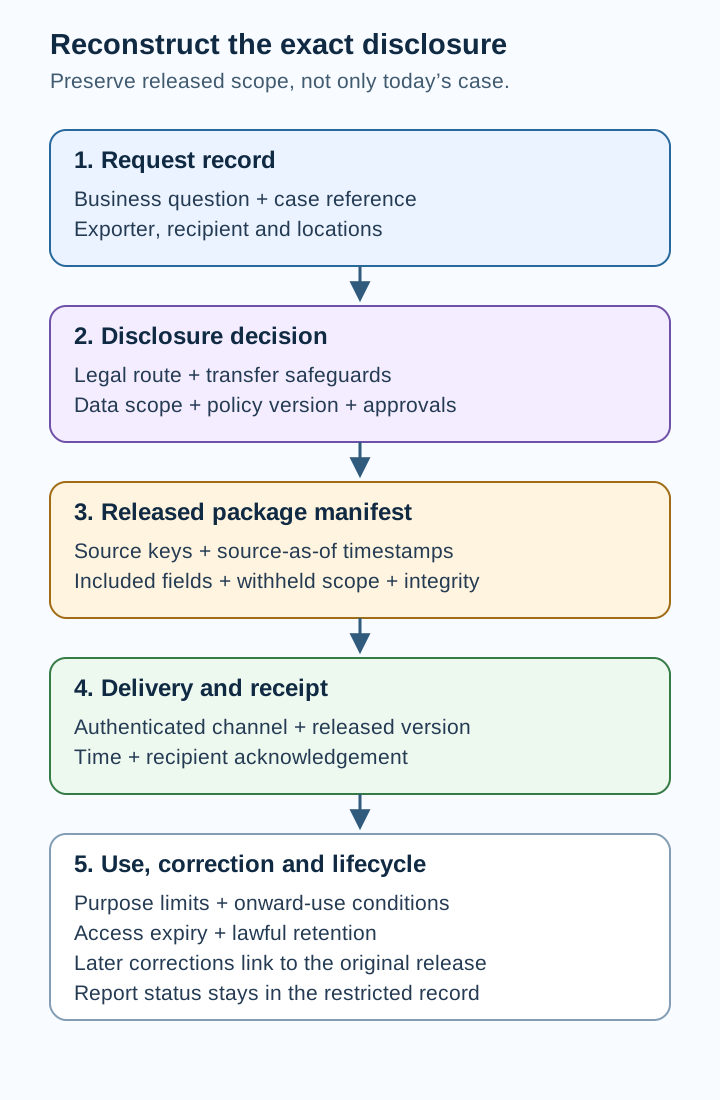
The local entity remains responsible for its reporting and secrecy duties. Group financial crime coordinates the wider investigation. Legal interprets conflicts; privacy assesses processing and transfer safeguards; security enforces access and delivery; data owners maintain provenance. Independent assurance tests the route and the controls. Accountability should identify who can approve each decision, because a committee endorsement cannot replace an absent legal authority.
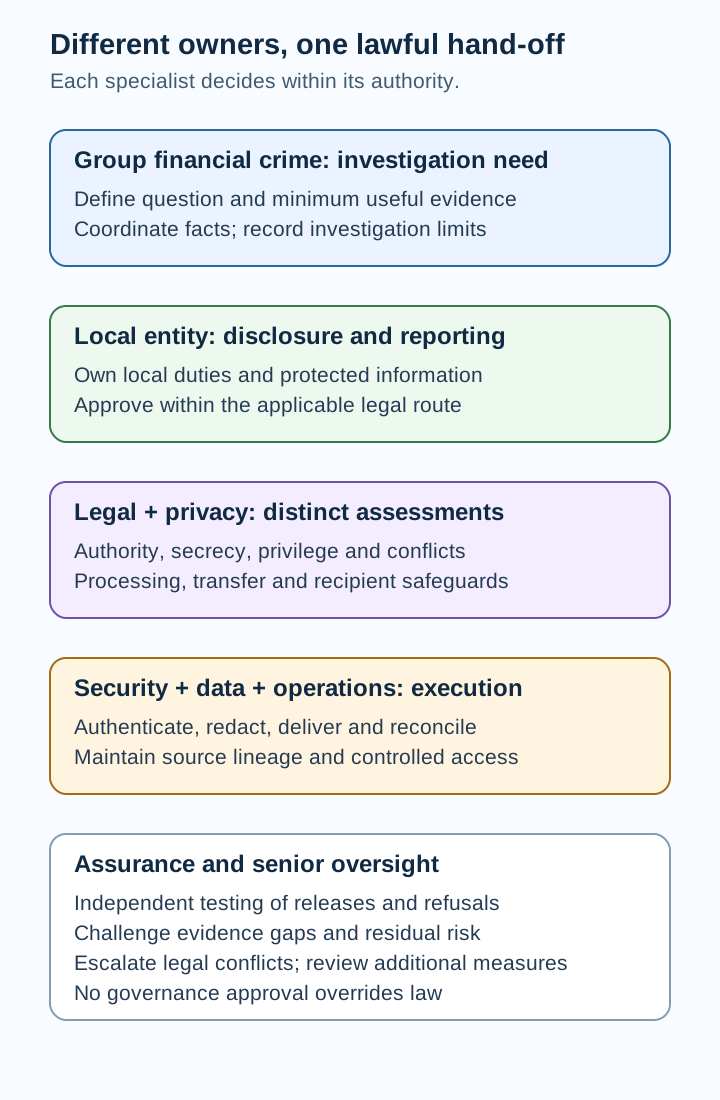
The practical outcome is a useful investigation that remains lawful and reproducible. The bank should be able to explain both what it learned from shared evidence and why the chosen disclosure was permitted.
Deep dive: legal routing and investigation design
The obligation register is a decision input
A cross-border register should describe an approved disclosure pattern, not merely list country names. A pattern links an exporting legal entity, a recipient category, purpose, data classes, locations and legal route. It also records conditions, authority, review date and effective period. For example, a group's approved customer-risk exchange may allow certain KYC fields to a particular compliance entity while excluding local suspicious-reporting records. The pattern is useful only if the system can enforce those distinctions.
The register should distinguish prohibited disclosure from disclosure awaiting evidence of a condition. A missing recipient participation check is a remediable prerequisite. A rule that prohibits release of a report is a different outcome. Their workflow states must differ so operations do not interpret every rejection as a temporary system failure and repeatedly retry it.
Regulatory changes can alter approved routes without changing the case's underlying suspicion. A new transfer mechanism, an amended secrecy exception or a recipient's changed legal status affects whether evidence can move. It does not retrospectively change what the local investigator knew. Keep the former rule version for historical reconstruction, retire it from new requests and assess whether open permissions need review.
Build a disclosure graph alongside the investigation graph
The investigation graph links customers, accounts, transactions and counterparties. The disclosure graph links data holders, recipients, access locations, processors, support teams and onward recipients. Both are needed. A group fraud investigation can be operationally sound while its evidence is copied into an unauthorised support environment.
Suppose a case platform hosts records in one approved country, a second group company operates the investigators, and a third-party support provider diagnoses defects from another country. The hosting approval answers only part of the question. The bank must map the investigator's access, the support provider's access, their legal roles and the information included in troubleshooting logs. A support account should not automatically inherit the investigator's entitlement.
A disclosure graph also helps incident response. If an export contains an unapproved field, the bank can identify the package, receiving entity, users, downstream copies and access window. Without that map, containment depends on recipients remembering where they downloaded attachments.
Transfer safeguards must match usable access
The EDPB's Recommendations 01/2020 explain a process for evaluating transfer tools and any supplementary measures needed to maintain protection. Contracts, technical controls and operational commitments need to work together; a signed document alone does not resolve every destination-country risk. EDPB supplementary measures.
Encryption protects transmission and storage, but an investigator who must read plaintext changes the threat model. Ask who has the keys, where decryption occurs, whether an overseas administrator can acquire plaintext, and what the approved route permits. Do not claim that encrypted transport proves the whole transfer compliant. The same applies to virtual desktops: they can reduce downloads while still making personal information available overseas.
Operational safeguards can include named users, constrained case assignments, shorter access windows, export restrictions and monitored support access. They are implementation patterns rather than universal statutory requirements. The bank chooses and tests them against its approved legal conditions and risk assessment. A safeguard recorded in a contract but absent from the access platform provides weak protection.
Separate group insight from local report decisioning
A group hub may assemble facts from several entities and identify a network pattern that none could see alone. Each entity then assesses its own reporting obligation using the information it lawfully receives. The group should not issue an instruction saying “file the same SAR everywhere”. Suspicion standards, filing populations, report fields and confidentiality rules differ.
The shared investigation can identify common transactions and documented explanations, while local report systems retain jurisdiction-specific reasoning, approvals and report references. Link the objects through permitted case identifiers. Where even the link would reveal protected report status, use a restricted internal mapping instead of a visible report badge in the group view.
Report acknowledgements also require classification. A general delivery receipt for a bank-to-bank evidence package is different from an FIU acknowledgement. The latter may reveal filing or include protected instructions. An analyst should not attach it to an ordinary customer-support ticket simply to prove that a case was completed.
Privilege and authority-provided material
Legal professional privilege, bank secrecy, privacy and reporting confidentiality are separate protections. Not every email copied to counsel is privileged, and an underlying payment record does not become privileged merely because it was reviewed by a lawyer. Conversely, attaching legal advice to a permitted transaction export can introduce a protected item that the approved pattern never considered. Counsel should determine privilege and applicable treatment.
Material received from an authority may impose purpose and onward-use conditions beyond those on ordinary bank records. Classify the original source, not merely the file's current location. If a local FIU supplied intelligence for a specified use, group ownership of the platform does not erase the source restriction. A local owner should seek a permitted disclosure route or provide only an authorised conclusion where that is allowed.
Retention, correction and deletion across recipients
A sender should record the source timestamp and verification status of disclosed information. The recipient should avoid treating every exported attribute as current truth. A customer may later establish that a payment was refunded or an identity match was wrong. Correction should update the operational view and link to the earlier disclosure, rather than silently deleting the record of what was originally sent.
The sender and recipient may have different recordkeeping obligations. A legal hold can prevent deletion of specified evidence while ordinary access rights should still expire. Design retention and access separately: retaining a package for lawful evidence purposes does not require every original user to retain access indefinitely. The retention decision should state its scope and owner.
Expired recipient permissions should cover downloads, caches and downstream services where relevant to the approved arrangement. An expired portal token is useful, but it does not remove a previously downloaded copy. Delivery design and recipient commitments must reflect that practical limit. For highly restricted packages, consider access-based viewing where it meets the investigation's needs and the legal route allows it.
Worked disclosure matrix: three recipients, three different decisions
Consider a fictional EEA subsidiary reviewing a corporate customer's payments to an Asian beneficiary. Its group investigation hub is outside the EEA, and its external graph vendor provides overseas support. The subsidiary also receives a lawful information request from its domestic competent authority. All three recipients may have a legitimate role, but they do not have the same authority, purpose or access requirements. An approval for the authority response is not an approval for the hub or vendor.
For the group hub, the business question is whether two customers at different subsidiaries are controlled by the same person and use the same payment pattern. A useful first package could contain verified corporate identifiers, the particular ownership relationship, a bounded set of transaction facts and the local investigator's explanation of uncertainty. It does not need the entire account archive, every identification document or the protected report decision. The local bank identifies its disclosure authority, applicable secrecy exception, processing basis and international-transfer route, then approves this recipient and purpose. The hub's access rights exclude onward disclosure beyond the approved group investigation team.
For the graph vendor, the purpose is initially technical troubleshooting. The bank asks whether the defect can be reproduced with synthetic records or a redacted configuration package. If the vendor needs real records, its processing role, support location, subprocessors, access method and retention become part of the approval. A production service account with unrestricted access is not justified merely because the hub's investigators may view selected records. A vendor's contractual promise also does not answer the bank's local disclosure authority. The release should make those decisions explicit before support begins.
For the domestic authority, the bank validates the request's identity, authority, scope and delivery channel through the designated response team. The authority may be entitled to particular records that the hub cannot receive. Conversely, a voluntary group cooperation arrangement does not establish the authority's entitlement to unrelated customer files. If the request includes protected reporting material, the local procedure must address that material's specific disclosure regime. The bank retains the request and response manifest rather than treating a successful upload as proof that the scope was correct.
The practical matrix therefore has one row per recipient and data category. Columns record the purpose, disclosure gateway, confidentiality restrictions, processing basis, transfer route where relevant, minimum fields, recipient permissions, release owner and review date. The matrix is a decision record, not a catalogue of theoretical exceptions. A blank authority cell means the release is unresolved; it does not become valid when a technical operator completes the file transfer.
An EEA-to-third-country investigation package
The privacy team first identifies the entities and their actual roles. Under the EDPB's final Guidelines 05/2021, the transfer analysis uses three cumulative criteria: a controller or processor subject to the GDPR for the processing, disclosure or availability to another controller or processor, and an importer in a third country or an international organisation. Overseas access can satisfy the availability element without moving the primary database. Internal access within the same controller calls for a different analysis; it still requires appropriate protection and does not remove other applicable restrictions.
The transfer owner then identifies the relevant Chapter V route and its conditions. Where the bank relies on an appropriate safeguard such as contractual clauses, the assessment must address the receiving-country conditions and any necessary supplementary measures. A generic clause library with no mapping to the actual importer, purpose and access path cannot demonstrate this assessment. An exceptional route should not be assumed suitable for a routine, repeated operating model without checking its requirements. The bank records the approved legal analysis rather than teaching investigators to choose a legal mechanism from a dropdown without specialist review.
Security contributes concrete evidence: which recipient accounts can access the package, how access is authenticated, who controls the keys, which logs capture viewing and export, and where support or backups expose the data. Encryption in transit protects the connection. Encryption at rest protects stored copies under particular access and key arrangements. Neither proves that the authorised recipient's subsequent plaintext use is lawful. If a proposed supplementary measure depends on the importer being unable to read the information, the operating design must actually preserve that property.
After approval, the investigator releases the smallest package that answers the business question. A customer alias can conceal a name in a working graph while the source entity retains the mapping, but the alias may remain personal data and identifying transaction patterns can permit re-identification. The recipient must understand that limitation. Before an onward release, new audience or unrelated model-training use, the bank returns to the approval record and evaluates whether the existing authority covers the new activity.
The evidence bundle contains the role analysis, applicable gateway, approved transfer route, scope, safeguards and recipient terms alongside the actual released manifest. Legal approval and operational execution must describe the same flow. A template saying that only corporate identifiers are shared is unreliable if the attachment also includes natural-person names and free-text account notes. The release reviewer compares the package with the decision before transmission, and a subsequent assurance test samples what the recipient actually received.
An India payment-data support incident
A fictional payment operations team discovers a reconciliation defect affecting India payment records. An overseas vendor asks for a production database extract. The bank's initial response should identify the payment-system data covered by the RBI storage requirement, the system operator and each intended destination. It should not apply the payment-specific rule indiscriminately to every bank record, or assume that a general outsourcing contract settles the payment-data question.
The RBI's payment-data FAQs describe storage in India and distinguish the foreign component of cross-border transactions from the domestic component. They also address overseas processing, including the prescribed return and deletion conditions. Those details matter to the actual architecture: an offshore support copy, a temporary processing file, an application log and a backup may have different lifecycles, but calling any of them temporary does not by itself satisfy the conditions. The bank's local legal and payment-data owners map the exact proposal to the applicable instrument before authorising it.
Operations can often answer the vendor's technical question without releasing full production records. A synthetic transaction with the same formatting defect, a masked field sample or a locally operated diagnostic may preserve the necessary behaviour. If real data remains necessary, the bank identifies the minimum population, destination, processing period, permitted access and required deletion evidence. The release record includes the vendor's support location and any secondary storage introduced by its ticketing, analytics or backup services.
Completion requires more than fixing the reconciliation defect. The team confirms that the returned results are usable, any required local storage is maintained, overseas copies are treated according to the approved conditions, and the vendor has not retained sensitive extracts in a general support repository. A lesson learned is to build local diagnostic capabilities before the next incident. The control improvement follows the observed exposure path; it does not require banning every remote engineering interaction regardless of its data scope.
Retention, legal holds and competing obligations
Cross-border case records may have AML retention requirements, privacy limits, contractual commitments and litigation holds at the same time. The bank should maintain a record-specific retention schedule and identify which entity owns the authoritative record. A group case's closure date does not automatically start every local record's retention period. A customer's request to delete information does not automatically override a lawful retention obligation, and an indefinite group archive is not justified merely because a future investigation might find it useful.
Where a legal hold applies, its scope and authority need controlled documentation. The record owner identifies the affected systems, recipients, copies and relevant events, then communicates the hold through approved channels. The retention system should prevent scheduled deletion of held records while allowing lawful disposal of unrelated records. Broadly freezing an entire multinational database can create unnecessary exposure and operational cost if the actual preservation obligation concerns a defined set of documents.
The release manifest also supports correction and disposal. If a source record is later shown to identify the wrong person, the bank assesses the recipients and derived decisions affected by that error. It preserves the historical decision record where required, marks the correction clearly and uses the approved recipient channel to address downstream misuse. Deleting the source field while leaving an unchanged graph conclusion can preserve the harm without preserving the evidence needed to understand it.
For final disposal, the owner checks local retention, active holds and recipient commitments. Access revocation is one control; deletion of an exported copy is another. The bank records which action occurred, in which system and with which exceptions. A residual immutable backup may require a defined treatment rather than an inaccurate claim of immediate physical deletion. Evidence should describe actual system behaviour and its legal assessment, not promise an outcome the platform cannot deliver.
Advanced practice: architecture, permissions and failure handling
Keep the local source authoritative
The local case store remains the source for local customer and transaction evidence. An export creates a separate, identifiable disclosure package. It should not become an uncontrolled replica of the source case, because the source can contain material outside the recipient's permissions. A package manifest records included documents, fields, timestamps and policy version; content fingerprints can support integrity checks without replacing access controls.
An export identifier connects the request, decision, package and receipt. An investigation identifier connects the business question and related cases. A regulatory report identifier remains protected according to its classification. Distinct keys reduce the temptation to reuse a filing number as a convenient global case reference.
Evaluate access at request time and use time
An entitlement should depend on the actor, legal entity, purpose, case assignment, location and data classification. A role called global-investigator is insufficient by itself. Users may change teams or access the platform while travelling; a service account may support several tenants. The policy should decide whether the actual context fits an approved pattern.
The gateway first checks whether the request can be approved. Delivery then checks that the permitted recipient and conditions still apply when access occurs. If the receiving company changes, a new subprocessor is introduced or a user accesses from an unapproved location, the previous approval may no longer fit. The workflow should prompt reassessment or deny access according to policy rather than silently broadening the permission.
Least privilege applies to machines too. An indexing process, export renderer or monitoring service should see only the data needed for its function. A service that builds a minimised package need not expose raw SAR fields to a general search index. Security review should include logs and error traces because developers often log the input that export filters were intended to withhold.
Redact the whole package
Field-level filters are necessary but insufficient. A free-text note can state “SAR submitted”, a screenshot can show the filing tab, an attachment name can include a report reference, and a document's metadata can disclose its source. Review the released artifact, including cover text, filenames, hidden sheets, comments and embedded material where supported.
For repeated approved disclosures, automated controls can flag restricted terms and incompatible classifications. They cannot reliably decide every legal implication of prose. A human release review remains appropriate for novel or sensitive packages. The system should show what it excluded and why, so an investigator can judge whether the remaining evidence still answers the business question.
Redaction must actually remove content from the released artifact. Covering text with a visual rectangle can leave selectable text underneath. A PDF export should be tested with text extraction and attachment inspection, not only a visual preview. Store the exact released version separately from the working source and restrict access to any unredacted original.
Federated queries still need a disclosure decision
In a federated design, a query runs against local data and returns an approved result to the group hub. This can reduce raw data movement and preserve local stewardship. It does not remove legal assessment of the query, returned identifiers, inferred attributes or repeated requests.
A Boolean answer can be sensitive. “This account exists” reveals a relationship; “this customer matches the FIU list” may reveal protected intelligence. Aggregates can expose individuals when a group is small or a sequence of queries isolates one record. Limit query scope, classify outputs, record purpose and assess re-identification risks. Results should include permitted uncertainty and data-as-of time rather than a misleading universal clearance.
A failed local query must remain visible. If the source is unavailable, the hub should distinguish no match from not assessed. It should not close the network investigation because one jurisdiction returned an empty result during an outage. Replay or local manual review needs its own controlled workflow and evidence.
Conflicts and exceptions
Where approved group controls cannot lawfully operate in a host jurisdiction, create a documented exception describing the conflict, affected population, missing capability, additional measures, accountable owners and review trigger. A group risk forum may approve the residual operational arrangement within its remit. It cannot waive host-country law.
Escalation should identify the specific legal question. “Privacy issue” is too broad. Better descriptions include an absent transfer mechanism for a named recipient, a statutory restriction on an identified data class, or unresolved authority to disclose a report. Precise classification makes remediation possible and reduces repeated legal review of the same approved pattern.
Degraded delivery and incidents
If recipient authentication, redaction or policy evaluation fails, the package should not silently fall back to ordinary email. The controlled response may be a hold, an approved alternative secure channel, or local investigation while the route is repaired. Financial-crime urgency can affect escalation priority; it does not invent a disclosure gateway.
An incident record should distinguish excessive disclosure, unauthorised access, lost delivery integrity, stale permissions and recipient misuse. Containment can include revoking access, isolating the package, notifying the responsible functions and investigating onward copies. Required authority or affected-person notifications depend on the applicable rules and facts, so the system should route to the authorised incident owners rather than applying a universal deadline.
Management information that reveals real limits
Measure unanswered information requests, time spent awaiting legal prerequisites, packages rejected for excess scope, unauthorised-access attempts, overdue permissions, redaction defects and investigations limited by unavailable evidence. Separate a justified legal refusal from a technical outage. Otherwise management may fund more analyst capacity when the real constraint is an unimplemented approved route.
Also measure usefulness: whether received evidence resolved identity, supported a lawful local decision or corrected a false suspicion. Counting packages sent can reward unnecessary disclosure. Quality assurance should sample both approvals and refusals and challenge whether the minimum useful evidence was identified correctly.
Release-control test plan with meaningful failure cases
An end-to-end test should begin before the export button and continue after receipt. Use synthetic data or an approved non-production dataset with realistic field relationships. The objective is to test the release decision, transformation, recipient permissions and evidence record together. A test that merely confirms that a file downloads does not establish that the bank can control cross-border disclosure.
First, create an approved request for selected transaction facts and a recipient who is entitled to those facts. Confirm that the package contains the approved population, field names, time range and purpose, and that the release log identifies the approving owner and exact version. Include a second customer with similar identifiers outside the permitted scope. The second customer's records must remain excluded even if a graph query would produce a convenient link. Compare expected and actual manifests to make that boundary observable.
Second, place restricted reporting material in realistic locations: a case attachment, the case title, an investigator note and the notification subject. A policy that masks a structured reporting field may still leak information through those channels. The test should confirm that the authorised recipient receives the underlying facts permitted for the purpose while restricted report information is excluded according to the bank's applicable regime. A user-friendly error message must not reveal the protected content when the release is denied.
Third, change the recipient's role after approval but before retrieval. The retrieval control should evaluate current entitlement or otherwise implement the approved revocation design. Then attempt access from an unapproved support account, a forwarded link and an expired session. Record whether the platform denies access, alerts the relevant owner and preserves the attempt in its audit trail. A correctly approved package is still exposed if the delivery method permits an unintended audience to retrieve it.
Fourth, exercise correction, recall and closure. Mark a released identifier as erroneous and verify that the recipient sees the correction status and cannot silently continue using an obsolete package as current evidence. Revoke the case role and test both the application view and exported-copy handling. If exported copies cannot be technically recalled, the test should evidence the contractual and recipient actions that govern them. Do not describe a platform recall function as guaranteed deletion from every recipient device.
Finally, reconcile the evidence. The request record, approval, package manifest, recipient access log and local source record should identify the same case and release version. An auditor should be able to reconstruct the tested decision without relying on the tester's memory or unrestricted access to the production data. Store failed results and remediation evidence alongside the final retest. Removing failed runs from the evidence would conceal the control's demonstrated limitations.
Federated-query design: prevent both disclosure and false reassurance
A federated investigation can reduce movement of raw records by allowing each entity to search its own data and return an approved result. That design changes the release surface rather than eliminating it. A Boolean match, a count or a risk category may still disclose protected information about a person. Repeated narrowly varied queries can reveal more than a single response, and a shared identifier can expose a relationship even when the underlying records remain local.
Define the question at the business level before choosing the query API. If investigators need to know whether the same verified business identifier appears in two subsidiaries, returning every associated employee and counterparty is excessive. The responding entity should distinguish a corroborated identifier match from a fuzzy candidate, and explain whether its search covered active accounts, historical accounts, payments or only an approved subset. Those scope differences materially affect the recipient's inference.
The protocol needs explicit response states. Match means the locally permitted assessment found the defined condition; no match within assessed scope means the defined assessment ran and did not find it. Not assessed, data unavailable, query invalid and disclosure restricted are different operational outcomes. The recipient must not collapse them into a clean result. Where the reason for a restricted response is itself sensitive, the protocol can provide an approved unresolved status without disclosing the protected explanation.
Test whether a recipient can reconstruct confidential attributes by changing one query parameter at a time. Controls may include purpose restrictions, query review, output minimisation, rate limits, pattern monitoring or aggregation, selected for the actual use case. Thresholding alone may be unsuitable for a legitimate urgent case, while unrestricted exact-match responses can facilitate probing. The bank should document the chosen balance and escalation route instead of assuming that one technical technique serves every financial-crime investigation.
Keep local and central evidence connected through controlled references. The local entity retains the source query, dataset version, authority, reviewer and disclosed response. The hub stores the response's scope and limitations with the investigation graph. If the local dataset later changes or an entity-resolution link is corrected, the hub needs an approved notification or re-query process. A federation that preserves privacy but leaves investigators using outdated, unqualified conclusions has not delivered a reliable operating model.
Production-change and incident acceptance criteria
Every material platform change should answer whether the approved disclosure graph has changed. A new cloud region, logging service, backup destination, overseas support team, subprocessor or model-training pipeline can introduce a new recipient or purpose without changing the investigator's screen. The product owner should compare the proposed flow with the approved record and route differences to the relevant legal, privacy, security and local data owners before rollout.
For a release candidate, use observable acceptance criteria: the approved roles can access only the authorised scope; restricted report material is handled according to the applicable regime; the transformation has no unexplained field additions; retrieval and exports are logged; expired permissions are enforced; and source corrections remain traceable. The bank also verifies operational resilience. If the release service is unavailable, a manual fallback must preserve the decision and scope controls rather than encourage staff to send an uncontrolled email attachment.
If an incident reveals an unapproved overseas copy, contain the actual access path, preserve evidence and identify affected entities, people, records and recipients. Local specialist teams assess notification and remediation duties under the applicable frameworks. Investigators should not invent a universal notification deadline or erase the copy before evidence preservation is addressed. The response record separates confirmed exposure from uncertain access, so that management decisions use the known facts without implying that missing logs prove there was no disclosure.
The closing review should identify why the release controls failed and which change will address that cause. If a support account bypassed a recipient restriction, additional annual awareness training alone is weak remediation. If the approval described a flow that the system never implemented, the problem also concerns design ownership and acceptance testing. Retest the repaired path and a related failure scenario before treating the action as complete. The resulting evidence should show an operational correction, not only a closed ticket.
Practice close: acceptance criteria and knowledge checks
A meaningful test pack
The following are fictional delivery scenarios. Their expected outcomes implement the bank's approved policy; they are not universal legal rulings.
| Scenario | Expected controlled behaviour |
|---|---|
| Approved group recipient requests permitted KYC fields for an assigned case | Release only the authorised fields; record purpose, policy version, approver and recipient |
| Same request includes protected filing status | Exclude or restrict that field according to the actual gateway; review revealing narrative and attachments |
| Overseas support user requests direct case access | Assess its separate actor, purpose and location; do not inherit investigator permission |
| Recipient moves access to an unapproved country | Reassess or deny under the approved route; preserve the attempted access event |
| Approved transfer mechanism expires | Prevent new access or disclosure that depends on it until a valid route is confirmed |
| Local source is unavailable during a federated query | Return a visible unassessed state; route replay or local review rather than no match |
| Package contains an image of a filing tab | Detect and remove revealing material before release; field filters alone do not satisfy the test |
| Corrected identity evidence arrives after disclosure | Link a correction to the original package; update operational use while preserving historical evidence |
| Recipient acknowledges a package with fewer records than sent | Investigate integrity and reconciliation; do not mark the hand-off complete |
| A domestic authority makes an authenticated demand | Apply the authority-specific route and scope; do not reuse voluntary bank-sharing approval |
Tests should cover permission boundaries as well as positive delivery. A valid recipient requesting an invalid field is different from an invalid recipient requesting harmless-looking fields. Both should be handled deliberately. Test multiple legal entities with the same brand name to prove that the resolver selects legal identity rather than display name.
Include effective-date boundaries, changed recipient status, concurrent permission revocation, duplicate delivery requests and an interrupted transmission. A retry must not rebuild the package from newer source data without recording that change. Reusing the same export identifier for different content weakens the disclosure trail.
Ten questions to test understanding
- Does storing data locally prove there is no international transfer? No. Overseas access by another legal actor can be a transfer; assess the actual data flow and applicable framework.
- Does an AML purpose automatically override bank secrecy? No. Identify the applicable permission or duty and any conditions.
- Is a lawful processing purpose sufficient for every overseas recipient? No. Transfer mechanisms, secrecy and other restrictions may need separate resolution.
- Are underlying transaction facts identical to a SAR? No. Classify the report, revealing status and underlying evidence separately under the relevant law.
- Does FinCEN's cross-border guidance repeal foreign privacy restrictions? No. It expressly leaves other applicable law relevant.
- Does section 314(b) permit unrestricted global data exchange? No. Its safe harbour is conditional and limited to eligible sharing and purposes.
- Does hashing an account number necessarily anonymise a package? No. Linkability and re-identification must be assessed.
- Does a federated query avoid every disclosure issue? No. Its returned results can themselves be protected information.
- Can a group committee waive a host-country legal prohibition? No. It can govern permitted additional measures and risk treatment within its authority.
- What proves a disclosure was controlled? A reproducible record of purpose, authority, scope, recipient, safeguards, approvals, exact released version and receipt.
Working glossary
Disclosure gateway: a legally recognised permission or duty to release specified information, subject to conditions. Exporter/importer: the legal actors making information available and receiving it for the relevant transfer analysis. Localisation: a data-specific obligation concerning location, storage, processing or accessibility. Pseudonymisation: replacing identifiers while retaining a possibility of re-identification; it is not automatically anonymisation. Federated query: computation against locally controlled data with selected results returned to another party. Purpose limitation: constraining collection and use to the legally permitted purposes. Onward transfer: further provision of received information to another recipient. Disclosure package: the exact approved artifact or field set released. Report confidentiality: protection attaching to a report or revealing information under its applicable framework. Legal conflict: incompatible requirements that need authorised analysis and additional measures rather than a technical workaround.
Masterclass: one network, three local evidence owners
This fictional scenario uses invented bank entities and customer facts. It illustrates design choices, not a legal opinion about a particular country or transaction.
The business question
Harbour Banking Group has a U.S. subsidiary, an EEA subsidiary and an Asian subsidiary. The U.S. fraud team identifies several outgoing payments from customers who report impersonation scams. Some funds reach a corporate customer of the EEA entity. The Asian entity sees later payments to a similarly named business. Group financial crime asks whether the two businesses are linked and whether the onward movement belongs to the same network.
The hub initially asks for complete customer and case files. Local owners challenge the scope. The investigation needs verified entity identifiers, selected transactions, relevant ownership evidence and documented commercial explanations. It does not yet need every identification document, unrelated customer transaction or local filing decision. That narrower question gives legal and privacy teams something concrete to assess.
Local disclosure review
The U.S. owner separates the victim complaints and transaction evidence from protected reporting information. The proposed package excludes filing status and revealing report-decision commentary unless a specific lawful route permits them. The EEA owner identifies the exporting entity and proposed importing entity and checks the approved transfer arrangement. The Asian owner assesses local banking secrecy, privacy and any data-location restrictions for its own dataset. One approval does not automatically cover the other entities.
The hub also uses an external platform for graph visualisation. Its default configuration uploads source attachments and stores troubleshooting logs in another country. Technology disables that route for restricted packages and introduces an approved configuration. Merely approving the hub's access would have missed the platform's separate data movement.
Build the permitted evidence
Each local entity releases a numbered package with its own source dates, included fields, verification status and restrictions. The hub correlates corporate registration identifiers rather than treating similar names as proof of identity. One business name is an alias of the EEA customer; the Asian beneficiary is a different company with a shared director. The shared director is evidence of a relationship, not proof that the two entities are the same legal person.
The payment chronology also changes the hypothesis. The EEA customer retains most receipts for several weeks before the later transfer. The Asian payment is not automatically the same value passing through merely because the amounts are similar. Investigators need further commercial evidence. The hub requests only the relevant invoice and explanation rather than expanding access to every account.
A restricted item and an unavailable source
The EEA investigator has authority-provided intelligence subject to onward-use conditions. It is withheld from the ordinary group export. The local owner seeks an authorised route and states the investigation limitation through an approved method. The hub does not attempt to infer or expose protected intelligence through a yes/no query.
At the same time, the Asian source system is unavailable. Its federated query returns not assessed with the reason and time. The hub continues analysing the evidence available and assigns a local follow-up. It does not treat the empty technical result as clearance or close the network case prematurely.
Local outcomes remain distinct
The hub documents the corroborated relationship, transaction chronology, unresolved explanation and evidence limits. Each entity's authorised decision-maker assesses its own reporting threshold and customer action. The U.S. entity's filing decision remains protected. The EEA entity may need additional customer review; the Asian entity's conclusion may depend on the repaired source query. A network case can remain open while a specific entity completes a justified local decision.
Sanctions screening, if triggered by later evidence, follows a separate legal route. Information sharing does not establish a sanctions prohibition, and a suspicious-activity filing does not authorise a transaction that is independently prohibited.
Reconstruction and lessons
An independent reviewer later asks what the hub knew on the day it linked the businesses. The group produces the original packages and their manifests, the approved routes, recipient permissions, query limitations and the version of the graph used for the conclusion. Local restricted report material remains in its controlled store. A later source correction is linked as a new event; it does not overwrite the original package.
The review identifies three useful control improvements: the initial request form needs a business question and field scope; the graph platform's support-data flow needs explicit approval; and federation responses must distinguish absent evidence from unavailable assessment. Those improvements follow the demonstrated failures. They do not require indiscriminate centralisation of every local customer file.
Second exercise: a lawful investigation meets an unapproved support flow
Three weeks after the first network review, the graph platform displays a duplicate corporate node. Two investigators reach different conclusions because one screen shows the corrected identifier and the other uses a cached relationship. The central technology team raises a vendor ticket and attaches a screen recording. The recording contains account references, transaction values and a note about a local report decision. The ticket is routed to an overseas support team that was approved to use synthetic diagnostics but had no approved access to this production package.
The first response is to contain the ticket's access path and preserve the release and access evidence through the incident team. Deleting the visible attachment alone would not establish what the vendor received, who viewed it or whether its support system created secondary copies. The bank identifies the affected originating entities, records and people, then asks the responsible specialists to assess confidentiality, privacy, transfer and other applicable duties. The case continues through a controlled local route while the exposed graph view is restricted.
The investigation owner initially argues that all recipients support the bank's AML programme and therefore the disclosure was acceptable. The release owner explains that this purpose does not answer the missing gateway and recipient permissions. The vendor has a troubleshooting role with its own data scope. The support team cannot inherit the group investigator's authority merely because the same platform serves both functions. The local report-decision note also requires a distinct confidentiality assessment; a general customer-data processing clause is not sufficient evidence for its disclosure.
The bank reconstructs the event. The investigator created the recording at 10:15, the technology team uploaded it at 10:42 and the support system made it available to two vendor teams. One access log records a view, while another destination has incomplete logging. The incident record states one confirmed view and an unresolved assessment for the second destination. It does not state that the second team had no access simply because a view event is unavailable. Recipient communication and containment actions follow the approved incident procedure and preserve these distinctions.
The root-cause review identifies two linked failures. The application had no safe diagnostic-export mode, so investigators used a full screen recording to show a technical defect. The ticket process also lacked a check against the permitted vendor data scope. Neither failure is corrected by telling investigators to be more careful without changing the tools and release workflow. The repair creates a diagnostic package with synthetic node identifiers, relevant configuration and error traces, and routes any proposed production-data support release to the appropriate owners.
Testing the repair reveals another problem: although the exported recording is clean, the ticket title still contains a customer identifier copied from the case title. The team removes automatic case-title propagation and tests body text, filenames, logs and attachment metadata together. This is a meaningful retest because it addresses the complete disclosure surface. A successful synthetic-data upload with no realistic restricted fields would have missed the defect and produced false assurance.
The corrected graph relationship then needs its own decision review. The data owner explains which source identifier was wrong and which nodes, edges and case conclusions relied on it. Each affected investigator receives a controlled correction notice and reassesses the decision within their remit. The bank retains the historical graph version needed to reconstruct the original judgement, marks it superseded and prevents its silent reuse as current evidence. The incident and analytical correction are related events but remain separately traceable.
An examiner's reconstruction exercise
Ask a reviewer who did not participate in the case to answer five questions from the evidence bundle. What business question justified the group request? Which local authority and transfer analysis permitted each package? What exactly did each recipient receive? Which conclusions were based on verified relationships and which remained uncertain? How did the bank handle the later identifier correction and support incident? The reviewer should locate actual records, versions and accountable owners for each answer.
If the bundle contains a signed group policy but no package manifest, the reviewer cannot tell whether the release matched the policy. If it contains an approved manifest but no recipient access evidence, the bank has a gap in proving execution. If it contains access logs but no lawful-authority decision, it can prove delivery without proving the necessary legal analysis. This exercise turns evidence completeness into an operational test and avoids confusing the size of the document collection with the quality of the control.
For the final management discussion, compare three outcomes. A lawful, minimum-scope release that answers the investigation question is a useful control outcome. A properly restricted response that documents an unresolved local assessment may also be correct, even though the hub would prefer an immediate answer. An unapproved full-file export that produces a fast investigative lead is a release-control failure despite its analytical value. Management should reward reliable decisions and useful evidence rather than treating speed and centralisation as the only measures of cooperation.
The case's action plan assigns specific owners: technology implements the diagnostic mode and cache correction; the release owner changes vendor-ticket approval; local compliance teams reassess affected decisions; privacy and legal teams close the relevant jurisdictional assessments; and independent assurance tests the repaired flow. Due dates and closure evidence reflect these different tasks. A single instruction to improve cross-border collaboration would conceal the decision rights and make later verification difficult.
Before closing the exercise, identify the residual limits. An approved package may still contain uncertain underlying facts, and a corrected system cannot reverse every past decision without identifying those decisions first. Exported copies may require recipient action rather than technical recall. Laws and approved recipient roles may change. The bank therefore keeps the release record, correction chain and review triggers current. That continuing discipline gives investigators a usable basis for cooperation without presenting legal approval as a permanent guarantee for every future disclosure.
References and further reading
Official sources checked for this chapter on 2 October 2026. Legal examples are jurisdiction specific; system designs and fictional scenarios are educational operating patterns.
- FATF Recommendations, Recommendation 18 and its interpretive note: group AML/CFT programmes, sharing safeguards and host-country conflicts. FATF standards require domestic implementation.
- FinCEN FIN-2025-G001, Cross-Border Information Sharing and SAR Confidentiality, 5 September 2025: underlying facts versus protected SAR information, other-law limits and voluntary cross-border sharing.
- FinCEN section 314(b), current fact sheet dated 12 June 2026: conditional U.S. information-sharing safe harbour.
- U.S. agencies' customer-communication and SAR-confidentiality statement, 2 September 2026: underlying activity can be discussed without revealing SAR information.
- EDPB Guidelines 05/2021, final version 2.0, 14 February 2023: three cumulative transfer criteria and remote-access examples.
- EDPB Recommendations 01/2020, final version, 18 June 2021: assessment of transfer tools and supplementary measures.
- UK ICO: Are we making a restricted transfer?: overseas access, exporter/importer roles and onward-transfer examples.
- Singapore PDPC: Guide to Cross-Border Data Transfers: transfer limitation and comparable protection.
- RBI: Storage of Payment System Data FAQs: regulated payment-data scope and specific treatment of foreign legs and overseas processing.