Revenue Models
Subscription, interchange, lending margin, fees, data and partnerships
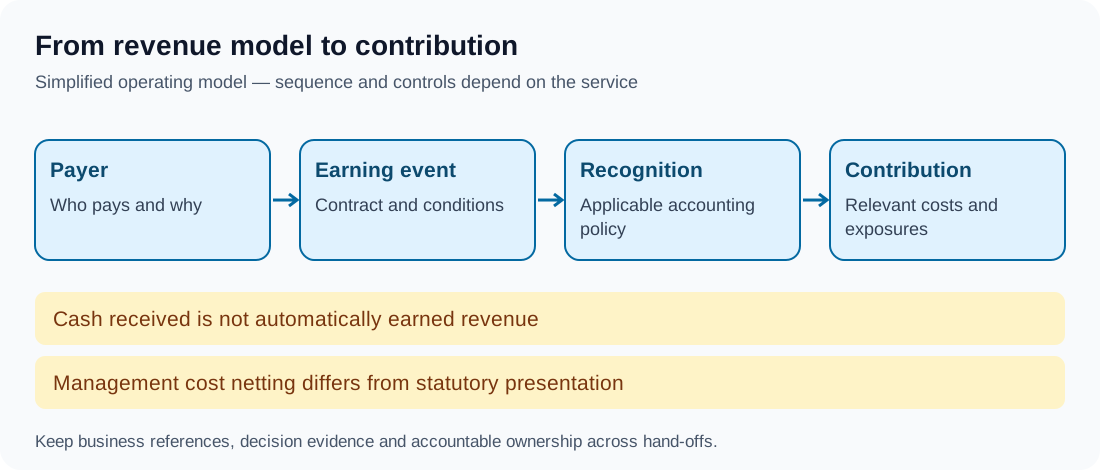
Identify the payer and earning event
A revenue model explains who pays, what they pay for, when the firm becomes entitled to payment and what conditions can change the amount. It is distinct from profitability: a high-revenue service can lose money after funding, losses and operating costs.
Separate commercial cash flow from accounting recognition. An annual subscription paid upfront is not automatically twelve months of earned revenue on the first day. Customer deposits, safeguarded funds and loan principal are not ordinary product revenue merely because cash enters the firm.
Main sources and cost exposures
| Source | Earning basis to understand | Costs or constraints to assess |
|---|---|---|
| Subscription | Defined services over the agreed period | Delivery, support, cancellation and refunds |
| Transaction fee | The contracted billable event | Processing, failures, disputes and service cost |
| Interchange-related issuing income | Applicable card arrangement | Scheme and processing fees, rewards, losses and servicing |
| Lending interest and fees | Credit contract and applicable treatment | Funding, credit loss, collections and capital needs |
| Referral or partnership fee | Agreed introduction or performance event | Distribution duties, conflicts, clawbacks and support |
| Data or infrastructure service | Permitted capability or use | Authority, privacy, delivery and concentration |
Interest earned on funds or reserves depends on the legal structure, contract and permissible investment or use. Do not assume safeguarded customer money can be used like bank funding or that all earnings belong to the platform.
Accounting and management economics
For contracts in scope, IFRS 15 links revenue to the satisfaction of performance obligations and the applicable transaction price. Financial instruments require the relevant framework, including IFRS 9 where applicable. Not all lending interest, fees or investments fall under IFRS 15.
Whether revenue is presented gross or net is an accounting assessment, including the principal-versus-agent facts where relevant. Deducting rewards and fraud in a contribution model does not mean every such cost must be netted against statutory revenue. Finance should document the actual accounting policy and reconcile it to management reporting.
Incentives and customer understanding
Disclose applicable prices, conditions and conflicts at the required points. A customer-paid product should explain compulsory and optional charges. A third-party-funded service may still need disclosure of material referral incentives and information use. Payment by a partner does not expand customer data authority.
Interchange caps, fee restrictions, promotion rules and lawful data use differ by jurisdiction and scheme. Model realistic changes without copying one market's cap into a global forecast. A revenue line dependent on late fees deserves analysis of customer outcomes and applicable credit protections.
Worked example: annual service payment
In this fictional example, a customer pays 120 currency units for a year of a defined service. The cash receipt, earned revenue, refund obligation and delivery cost are separate records. Under an applicable over-time recognition policy, revenue follows service delivery rather than being assumed fully earned on receipt.
If the service is cancelled, the team applies the actual contract and law, updates billing and recognised balances as required and reconciles the result. This illustration is not a universal accounting entry or refund rule.
Measures and takeaway
Track recognised income, cash collection, deferred amounts where applicable, refunds, concentration by payer and contribution after relevant costs. A book of fee promises is not the same as earned income.
The revenue model should identify the payer, earning event and conditions clearly, with accounting policy distinct from commercial economics.
Continue to Unit Economics.