Pricing & Proposition Design
Customer value, willingness to pay, benefit bundles, fairness and sustainable margin
Price the actual customer experience
Pricing design defines what the customer pays, for which service, under what conditions and how the price changes. Proposition design joins that price to the promised benefits and operating capability. A cheap headline can still produce poor value through restrictions, unexpected fees or support that fails when needed.
Identify the target customer, usage pattern and required benefit. Research willingness to pay without treating it as the sole measure of fairness. A confused or captive customer may accept a price that does not establish suitable value.
Comparable costs and conditions
Explain periodic, transactional and conditional costs in appropriate units. For foreign exchange, consider both fees and the rate applied. For credit, apply the required rate and total-cost disclosures under the actual market rules. A factor rate is not automatically comparable to an annual percentage rate (APR).
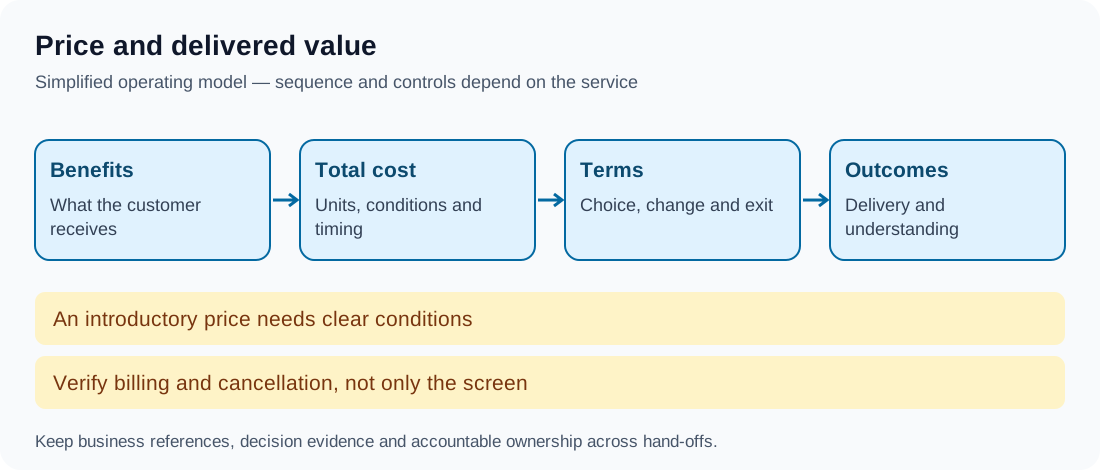
Representative examples and promotional disclosures must follow their actual requirements. Do not assert that a representative example always means the median customer. State relevant assumptions and conditions, including any introductory period, usage allowance or eligibility limit.
Bundles and customer choice
Show what is included, what is optional and what happens on cancellation or downgrade. A package may have legitimate combined economics and need not allow every component to be purchased separately. Tying, insurance, cancellation and provider-choice rules depend on the product and jurisdiction.
Avoid presenting an optional add-on as compulsory or using unnecessary friction to prevent exit. A valid security or mandate check should be proportionate to the action. Test that cancellation changes billing and associated services correctly rather than only acknowledging a screen request.
Price changes and sustainability
Model delivery, support, losses where relevant and expected use of benefits. Examine low, typical and high usage and the effect of rates or third-party cost changes. A promotional discount can be a deliberate subsidy; its terms and funding assumptions should be explicit.
Identify the contractual and legal process for changes, including notices or customer options where required. Do not invent one global notice period or universal right to keep every historical price. Operations needs effective dates, billing rules and support explanations that match the actual terms.
Worked example: a monthly account package
In this fictional package, the customer pays 6 currency units monthly for specified benefits and transaction allowances. Testing finds that users think the allowance resets on the first of the month, while billing resets on the account anniversary. Unexpected overage fees follow.
The team clarifies the cycle before purchase and in account views, tests the edge dates and reviews the affected charges under applicable terms and law. It measures understanding and complaints alongside conversion. Changing the comparison table alone would not correct the underlying billing defect.
Value review and governance
Assess actual benefit delivery, exclusions, customer use, total charges, support access and exit outcomes. Segment where relevant and lawful to identify customers receiving poor outcomes hidden by averages. Non-use can indicate poor fit or misunderstanding but does not automatically mean every unused insurance benefit has no value.
The UK FCA Consumer Duty is a scoped example requiring attention to price and value, understanding and support. A global product needs its own local obligation assessment rather than a copied UK label.
Takeaway
Price and proposition should be understandable, consistent with billing and supported by delivered benefits. Sustainable margin and customer value need to be assessed together.
Continue to Customer Acquisition & Growth.