Platform Partnerships
Commercial, operational and risk models between banks and platforms
An agreement to deliver a service
A platform partnership connects customer reach or workflow with a provider's financial capability. Commercial terms can include fixed fees, transaction pricing, distribution commission or revenue share. The agreement should explain the actual product and activities rather than rely on labels such as “strategic ecosystem”.
Identify each entity, permission and contractual relationship. A provider licence does not automatically cover all platform activities. A commercial partner, outsourced supplier and regulated distributor can have different responsibilities even when they use similar APIs.
Join the responsibility map to operation
Allocate product decisions, customer communications, onboarding tasks, financial-crime work, servicing, complaints and financial records. Establish authority to pause activity, change terms and resolve customer harm. A responsibility table is useful only if the available teams can perform its decisions.
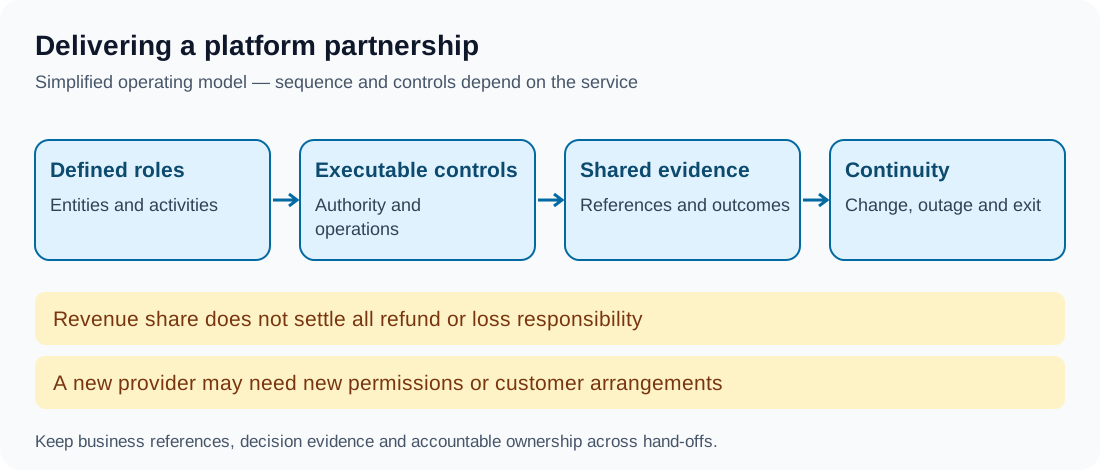
Use shared references and agreed status semantics across firms. A single physical case database is not mandatory, but cases need linked history, ownership and effective hand-offs. Requests and completed financial actions should remain distinguishable. A vendor dashboard is not a substitute for the provider's required records.
Price complete delivery
Include integration, routine operations, exceptions, support, losses, resilience and required oversight. Revenue share does not settle who funds refunds, customer compensation or operational recovery. Model downside scenarios and contractual claims without assuming another firm will always reimburse the provider immediately.
Evaluate incentives in product placement and approval. A minimum-volume commitment can create pressure to accept unsuitable customers or suppress referrals. Controls should still operate under commercial stress; missed commercial targets do not authorise a change to legal eligibility or risk limits.
Information, access and change
Define permitted information sharing, recipient roles, retention and subcontractor access. Apply privileges at the actual service boundary. Restrict high-risk changes such as payout-account updates and rule modifications through appropriate authorisation and evidence.
Treat new products, geographies, providers or customer populations as assessable changes. Not every change requires the same committee or ceremony, but material effects need accountable review. Contract notice alone does not establish technical readiness or customer understanding.
Worked example: a payroll distribution partner
In this fictional partnership, payroll software introduces an optional financial product. The provider makes the regulated product decision; the platform explains its role and sends only appropriate application information. Joint records link the customer selection to the provider's decision and product reference.
A new platform release changes a disclosure and starts showing “approved” before the provider decides. Monitoring and support identify the mismatch. The firms stop the affected presentation, correct customer information and verify pending cases. Reversing the screen change alone would not resolve customers who relied on it.
Failure and exit
Plan for platform, middleware and provider outage or termination. Define access to records, continuing servicing, customer notices and required consents or agreements for migration. A new provider cannot always assume existing accounts or obligations just because it supports the same endpoint.
The Basel Committee's third-party-risk principles provide a bank-risk framework for relevant dependencies. Apply national obligations and the actual partnership classification; do not represent the principles as a globally identical contract template.
Takeaway
A useful partnership contract supports executable roles, evidenced delivery and customer continuity. Commercial alignment should be assessed alongside the permissions and operational responsibilities that survive the launch.
Continue to Super Apps.