Platform & Marketplace Banking
Multi product ecosystems, partner distribution and orchestration
Several products behind one customer experience
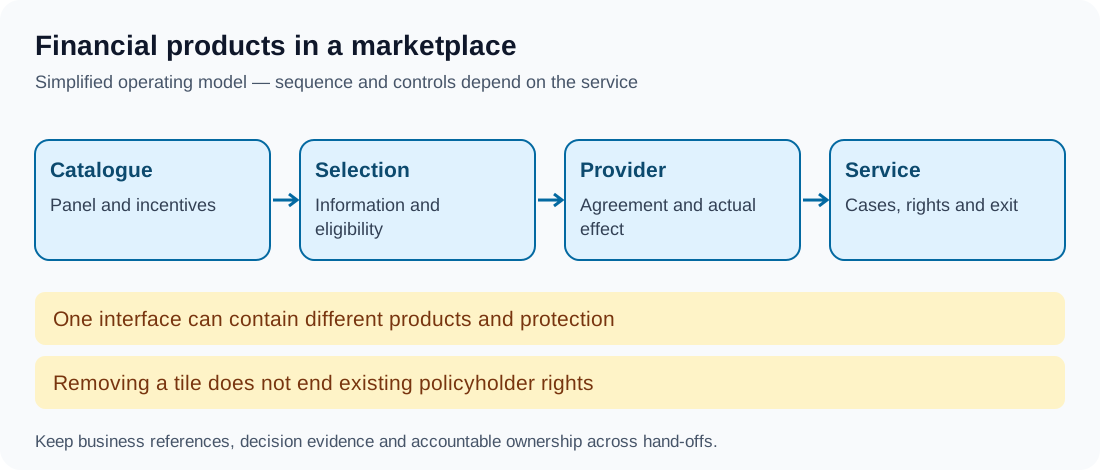
Platform and marketplace banking combines products or providers through a common experience. A bank might show its own accounts alongside partner finance, insurance or investment services. The common interface does not make all tiles one product or place every obligation with one entity.
Distinguish the manufacturer, distributor, adviser where relevant, custodian or funds holder, and service provider. Banking as a Platform concerns reusable capabilities; Banking as a Service concerns particular provider arrangements. A marketplace can use both while retaining separate product relationships.
Catalogue and selection
State panel coverage, ranking and commercial incentives. A limited shelf or commission-influenced order should not be presented as an independent whole-market best match. Relevant product eligibility and permissions apply even when placement is automated.
A personalised offer is not necessarily final approval. Identify the data and conditions behind a quote or eligibility indicator. Processing may rely on consent or another applicable lawful basis; do not assume every offer always requires one particular consent ceremony. Bureau enquiry treatment and required disclosures also depend on the actual framework.
Product information and financial boundaries
Show provider identity, key risks, price and important conditions at the relevant decision point. A combined chart should not suggest that deposits, available credit, loyalty credits and investment valuations are equally spendable cash or identically protected.
Applying for a loan, buying insurance and placing an investment order create different contracts and effects. Suitability, appropriateness, demands-and-needs, credit assessment and execution-only conditions have service-specific scopes. Do not apply investment suitability mechanically to every lender-ranking feature.
Orchestration and exceptions
Define meaningful statuses across systems. A catalogue selection may precede application, assessment, agreement and activation. Preserve references and required evidence for each relationship. Timeout handling should enquire before retrying a potentially executed action.
Complaints and support need to identify the product and relevant duty while maintaining history. A shared case view can help, but one physical database is not mandatory. Transferring the case does not resolve it or restart an applicable legal clock automatically.
Revenue, control and continuity
Referral fees, commissions, subscriptions and own-product income have different qualifying events and accounting treatment. Apply actual clawback and refund conditions. More product tiles can raise revenue and also integration, support, conduct and dependency costs.
The FCA Consumer Duty information is a UK example of product and distribution outcomes with its own scope. The Basel third-party-risk principles provide a separate bank-risk reference for relevant partners.
Fictional example: insurance tile removed
A bank removes a partner insurance tile from new distribution. Existing policyholders still need policy documents, claims and complaints support under their agreements. The transition identifies those rights and responsible firms rather than hiding the tile and declaring the relationship finished.
Customers receive the appropriate service routes and status. Records and contact arrangements remain usable through the agreed transition and applicable retention period.
Takeaway
A marketplace should preserve informed selection and product-specific rights behind its convenient interface. Evaluate completed service, financial records and continuing obligations alongside conversion.
Continue to Digital Transformation.