Digital Transformation
Business model, process, data, technology and culture change
Change the operating capability behind the service
Digital transformation changes how an institution delivers and operates financial service. It can involve business models, processes, technology, data, people and governance. Installing an app or moving infrastructure to cloud may be part of it, but neither automatically improves customer outcomes or reduces total cost.
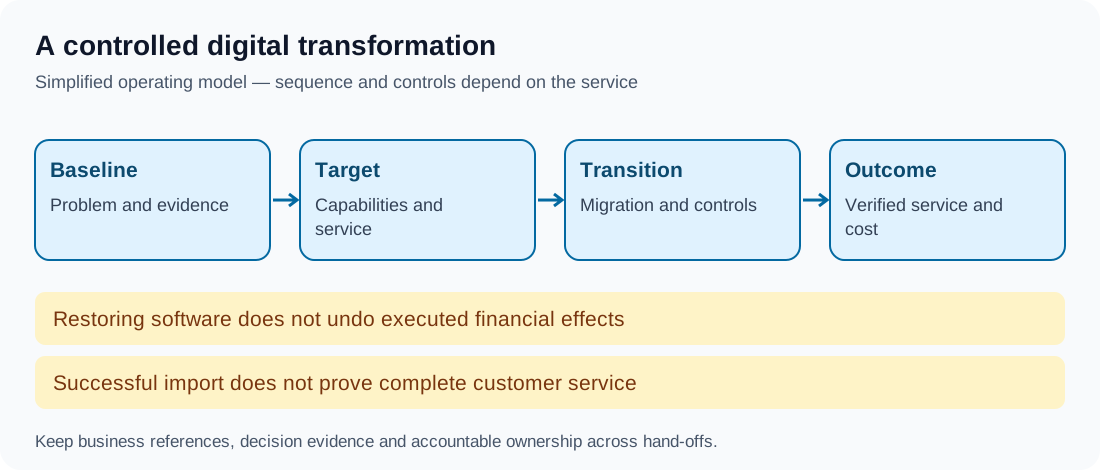
Start with an actual problem and baseline: unfinished onboarding, slow case resolution, inconsistent records or costly manual rework. Define the intended outcome and affected rights, financial effects and obligations before selecting the technology.
Design the target and the transition
Map capabilities, records, decisions and dependencies. Some processes can be simplified; others need a controlled manual path for legitimate exceptions. Automation does not eliminate oversight, and straight-through completion is not a universal objective for every high-risk or complex case.
Choose sequencing that respects shared dependencies. New channels may rely on identity, data and servicing capabilities that must be ready first. Plan how existing customers and agreements continue while old and new systems coexist. A target-state diagram cannot establish a safe migration path.
Data and financial migration
Define source meaning, target mapping, record ownership and reconciliation. Party identity, account, product, transaction and entitlement records are different objects. A unique technical key does not alone establish that two parties or financial positions are the same.
Test representative balances, holds, pending items, agreements and access rights. Dual running can provide useful comparison but also adds processing and operational risk. Specify which system can authorise financial effects during transition and avoid duplicate execution.
Cutover and rollback need limits. Restoring old software does not automatically reverse financial transactions already executed on a new system. Reconcile the effects and use an authorised remediation or forward-recovery process where necessary.
People and governance
Give owners the skills, capacity and decision rights needed for the new service. Retain knowledge needed for complex work and required historical records. Different team structures and delivery methods can work; no universal rule requires squads, monthly councils or one product manager to command every incident.
Review security, privacy, provider risks and applicable obligations throughout change. The Basel third-party-risk principles illustrate relevant banking risks when external dependencies change. The implementation must reflect the actual national and product framework.
Economics and outcome measurement
Track implementation and recurring costs, retained legacy costs, rework, losses and useful task outcomes. Forecast savings separately from savings actually realised. Branch or platform retirement may create savings, but data, migration and servicing costs can continue afterwards.
Compare relevant cohorts and time windows. Faster average handling can conceal unresolved complex cases or barriers for customers needing assistance. A falling contact count does not prove improved service if support has become harder to reach.
Fictional example: case-platform migration
A bank migrates dispute cases to a new platform. Testing preserves original creation times, evidence links, decisions and applicable deadlines. A phased cutover makes the authorised owner and source of current case state clear.
The team checks reopened cases and implemented financial adjustments after migration. Successful file import alone would not prove that customer disputes were resolved or that all evidence remained accessible.
Takeaway
Transformation should produce an evidenced service improvement through a controlled transition. Technology, data, people and economics need to support the same financial outcome.
Continue to Digital Product Management.