Partner Lifecycle Management
Selection, onboarding, monitoring, change and exit
Manage the relationship beyond signing
Partner lifecycle management assesses and operates a relationship from initial selection to residual obligations after exit. It applies proportionately to the partner's role, importance and risk. A material financial provider needs different review from a low-impact supplier; not every partner should receive an identical checklist or review frequency.
Name the accountable relationship owner and relevant product, operations, risk and legal roles. Define which decisions can be delegated, who covers absence and how issues are escalated. A quarterly meeting is not sufficient by itself to manage a live customer-impacting dependency.
Selection and readiness
Assess the actual activity, relevant permissions, ownership, financial condition, operational capability, data handling and subcontracting. Understand concentration and common dependencies. A large brand or certificate is evidence to consider, not a guarantee of continued service.
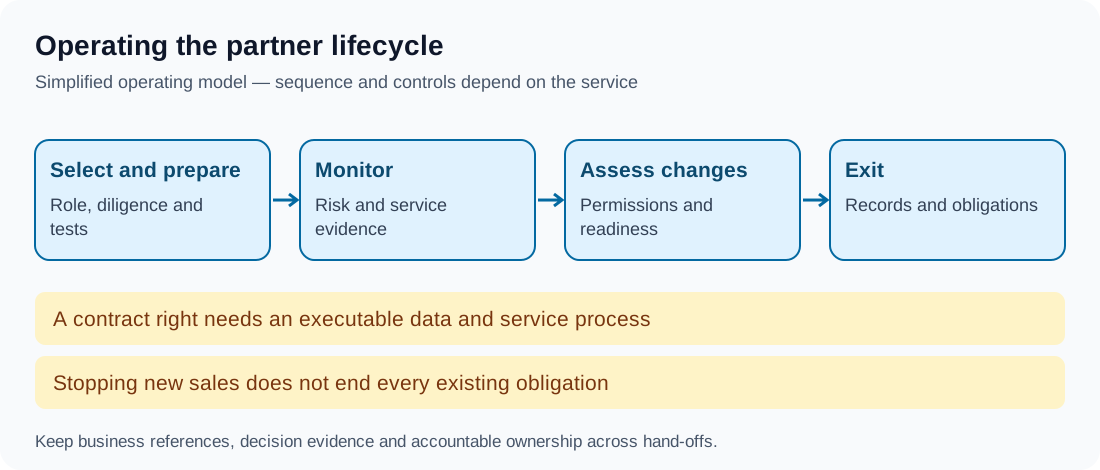
Before live operation, test integration, authority, status mapping, reconciliation, support and relevant failure paths. Document the commercial and responsibility model. Launch criteria should address actual customer risks; a signed contract does not establish that account creation or dispute handling works.
Monitoring with actionable triggers
Use relevant service, financial, conduct and control evidence. Monitor incidents, aged cases, reconciliation differences, permission status and material changes. Define escalation or suspension triggers and the authority to act; reporting red indicators indefinitely without a decision does not resolve exposure.
Review counterpart reports with appropriate challenge and assurance. The bank may need direct evidence for significant activities, but not every service requires unrestricted access to every partner system. Applicable legal, privacy and operational constraints should shape the assurance design.
Material changes need assessment
New countries, products, customer groups, providers, data uses and subcontractors can alter the risk. Evaluate the change's actual effect, permissions and operating capacity. Use proportionate approval and testing rather than assuming all changes are either trivial or a complete new product.
Track configuration and interface versions and define migration behaviour. A partner's field change can silently alter customer eligibility or reporting. Preserve enough evidence to investigate decisions made under the previous version, within appropriate retention rules.
Exit and residual work
Plan termination, failure and migration before they are needed. Identify record access, customer notices, money and asset entitlements, outstanding credit or claims, complaints and required permissions. A contract right to retrieve data is useful only if the format and process can support continued service.
Exit is not complete when new sales stop. Existing obligations and required records can continue. Provider replacement may require customer action or new arrangements and is not universally a seamless API switch. Prioritise continuity using the actual product and legal constraints.
Worked example: middleware failure
In this fictional partnership, middleware stops sending payout confirmations. The service owner invokes the response plan, enquires through agreed provider routes and uses reconcilable original references. It restricts unsafe retries and keeps customer cases owned.
After restoration, the firms reconcile unknown outcomes and investigate missing events. If termination becomes necessary, the exit process handles historical records and pending payouts before treating the relationship as closed. A press release would not complete those actions.
Sources and takeaway
The Basel Committee's third-party-risk principles provide an authoritative bank-risk framework, with national implementation and the particular relationship still relevant.
Lifecycle management turns partner promises into continuing evidence and executable decisions. Selection, monitoring, change and exit should all protect the financial relationship customers continue to rely on.
Continue to Fintech Value Propositions.