Fintech Value Propositions
Solving friction through focus, speed, access or better economics
Define the customer's job
A value proposition explains which customer problem the service solves, for whom, and why the customer should choose it. A banking proposition must also explain the actual product and provider. A polished app does not establish that funds are a bank deposit, a payment is final or a loan is suitable.
Start with a concrete job: a merchant needs predictable settlement information, a worker needs access to earned pay, or a business needs payment approvals. Understand the present journey, cost, delay and failure paths. “Banking is broken” is too broad to define a useful requirement.
Evidence for the promise
Useful value can come from focused functionality, improved speed, easier access or better total economics. A proposition can combine them; there is no rule requiring one claim only. The team needs evidence for every material promise and a viable way to deliver it.
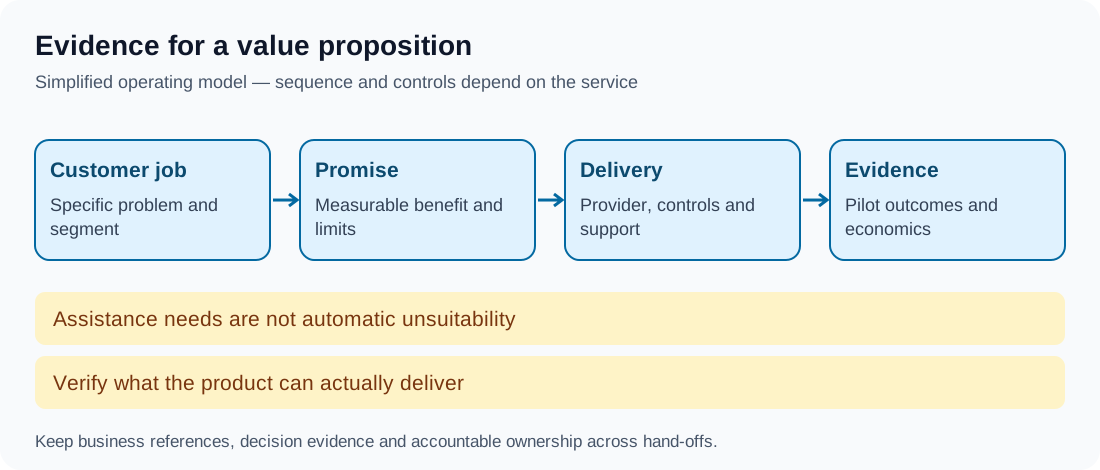
Compare the before and after using clear measures. For faster onboarding, distinguish automated cases from referrals and measure the completion distribution. For lower cost, include fees, exchange-rate effects and relevant conditions. Explain limits rather than using the fastest or cheapest possible case as if it represented everyone.
Segment fit without automatic exclusion
Define the intended customers and where the product lacks necessary capability. A freelancer tool may not support corporate dual approval; a short-term credit product may not suit a particular financial need. Eligibility and distribution should follow applicable rules, evidence and product design.
Customers needing assistance are not automatically unsuitable customers. Provide accessible and assisted routes where appropriate. Avoid treating inferred vulnerability, low literacy or a device type as a blanket reason to exclude people. Evaluate actual needs and applicable protections.
Deliver the legal and operational product
Name who holds funds, provides credit, executes payments and handles support. Distinguish deposits, safeguarded funds and investments. Protection claims require analysis of the actual entity and arrangement, not the branding of the app.
Staff exception and support paths alongside the automated journey. A promise of instant service may be misleading if a foreseeable referral creates a long undisclosed delay. Set customer expectations against the complete service, including outages, disputes and exit.
Worked example: better settlement visibility
In this fictional merchant service, the proposed benefit is clear visibility of expected payouts, not faster settlement. The dashboard separates sales captured, amounts adjusted, payout submitted and money received. A timing estimate carries its assumptions and known uncertainty.
Pilot merchants report fewer avoidable status enquiries and can plan cash flows more accurately. The team also measures incorrect estimates and unresolved payout cases. It should not rename improved information as guaranteed instant settlement to increase conversion.
Economics and review
Estimate acquisition, delivery, support, losses where relevant and resilience costs. Subsidies can fund a deliberate launch, but their source, duration and sustainability assumptions should be explicit. Investor funding does not itself make a proposition deceptive, and a cheap service is not automatically commercially viable.
Measure customer task completion, actual comprehension, recurring use, exception outcomes and contribution after relevant costs. Review new channels and segments before extending the original promise. Product evidence should include the service behaviour customers experience, not only presentation screenshots.
The UK FCA Consumer Duty illustrates a scoped framework connecting products, value, understanding and support. Apply the actual promotion, product and customer-protection rules for the market concerned.
Takeaway
A useful proposition makes a specific, evidenced promise that the product and operating model can keep. Growth should preserve that promise as the customer mix and workload change.
Continue to Revenue Models.