Neobanks & Challenger Banks
Licences, propositions, distribution and sustainable banking models
Labels describe market position, not one legal form
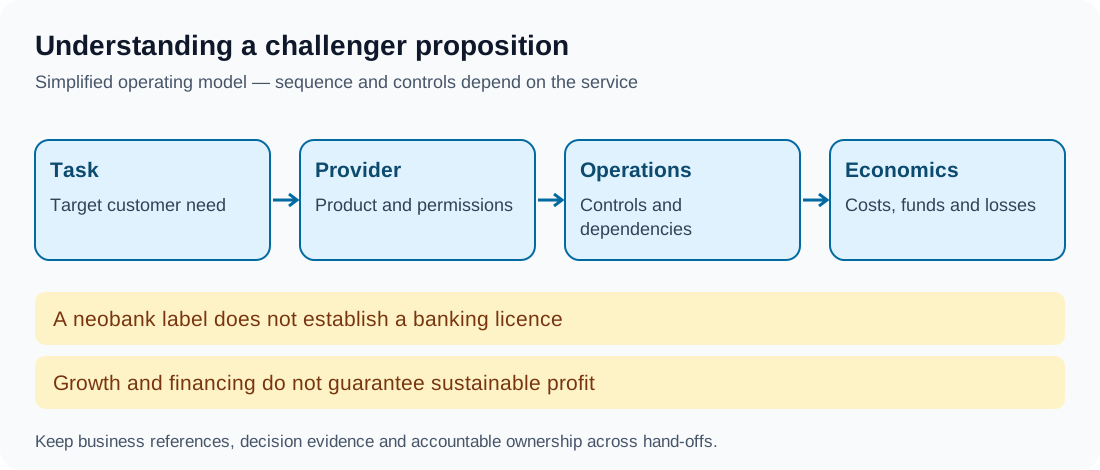
Neobank commonly describes a digitally focused financial brand. Challenger bank commonly describes an institution competing with established banks through its proposition or operating model. Usage varies, and the terms do not themselves establish a banking licence or customer protection.
Some firms are licensed banks; others provide e-money, payments or services through partner institutions. An attractive app and familiar bank terminology cannot establish which entity owes the customer's balance. Name the legal provider, product and relevant rights.
Proposition and target customers
New entrants can focus on particular tasks, such as everyday spending, international use or business cash management. A narrow focus can simplify the initial offer and deepen useful service. It can also leave important needs unsupported or concentrate customers and revenue.
Distinguish the offered account, payment, credit or investment from adjacent app features. Currency conversion, subscription benefits and partner insurance have their own terms and limitations. Low headline fees do not establish that every use case is cheaper.
Operating and partner models
A licensed bank operates within its applicable governance, financial-resource and supervisory framework. A nonbank brand may depend on a bank, processor or other provider for important capabilities. Outsourcing and distribution relationships need clear activity-specific responsibility, records and continuity.
The FDIC third-party-app guidance explains a scoped US example: nonbanks are not themselves insured, pass-through coverage has conditions, and bank deposit insurance does not protect against the nonbank's failure. Do not project US arrangements or protection limits onto every market.
Customer support should identify the relevant provider and outcome without sending customers through a loop of logos. Partner changes may affect permissions, access, agreements and servicing. A provider switch is not necessarily just an API endpoint change.
Economics and growth
Revenue can include applicable account fees, subscription income, contractual card-related income, lending returns or distribution remuneration. Entitlement to each source depends on the actual arrangement. Include acquisition, infrastructure, scheme, fraud, support and compliance costs.
Growth does not automatically cure a negative contribution model. Cash funding, profit, liquidity and capital are distinct. Lending can add income and also credit, funding and servicing risks. Customer deposits, where taken, are not unrestricted revenue or a substitute for loss-absorbing resources.
Fictional example: subscription account
A digital brand offers a paid tier with card features and partner cover. It names the account provider and separately describes insurance eligibility, exclusions and claims routes. Cancellation ends future tier benefits according to the terms while pending transactions and required financial records remain handled.
The business measures continuing useful activity, support outcomes and contribution after the specified costs. A high download count does not demonstrate that the package is valuable or that its financial model is sustainable.
Takeaway
Evaluate neobanks and challengers by actual products, permissions, controls and service outcomes. The market label is useful context, but the financial relationship needs precise explanation.
Continue to Fintech Landscape.