Marketplace Revenue
Referral, distribution and ecosystem monetisation
Income from connecting customers and providers
A financial marketplace can earn income by introducing, distributing or arranging another firm's product. Common forms include lead fees, sale commissions, listing fees, paid prominence and ongoing revenue shares. The precise activity matters: an introduction, comparison, personal recommendation and execution service can carry different obligations.
Identify who pays and the contracted earning event. A click is not necessarily an eligible lead, an application is not necessarily a sale, and a sale may remain subject to cancellation or commission clawback. Reconcile marketplace events with provider records and the applicable accounting policy.
Ranking and commercial influence
Explain whether the list is a partner panel, broad market comparison, sponsored selection or personalised recommendation. Do not describe a paid top slot as independently ranked by price if commercial payment determines its position. Give material sponsorship and panel limitations the prominence required for the journey.
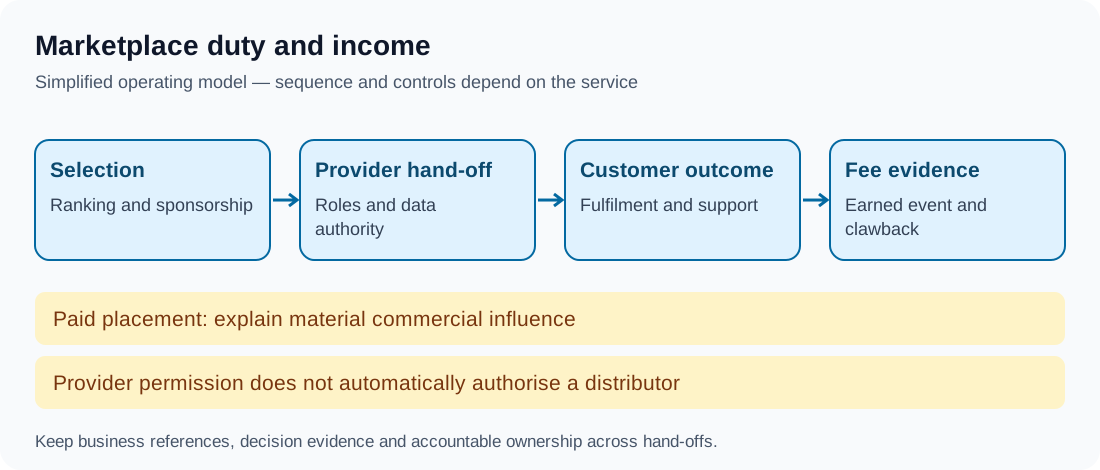
Ranking factors should match the claim made to customers. Record the methodology and version, product information used and any material commercial influence. A disclosure alone does not fix a misleading comparison, stale eligibility information or an unsuitable recommendation. Whether an activity constitutes advice requires its actual facts and applicable law, not the label “marketplace”.
Provider and customer hand-offs
Name the product provider and explain who accepts the application, makes the decision, holds assets, delivers the service and handles complaints. A customer may reasonably contact the marketplace first; establish how that enquiry reaches the responsible firm without repeatedly transferring the customer.
Share only data with an appropriate purpose, authority and controls. A referral commission does not grant unlimited access to banking information. Define what can be sent before the customer chooses a provider and what subsequent information is needed for fulfilment or support.
Due diligence should address the provider's relevant authorisation, proposition, operational capability and customer outcomes. The marketplace's own permissions and distribution responsibilities must also be assessed. A provider licence does not automatically authorise every action by its distributor.
Worked example: business finance panel
In this fictional bank marketplace, a panel of lenders pays a commission for completed eligible loans. The page describes its panel and comparison basis. A sponsored lender is labelled and not represented as the lowest-cost result purely because it bought prominence.
One application is declined, so no completed-loan commission is due under the contract. Another loan is cancelled during a contractual clawback period. Finance adjusts the commission record using the original referral reference. Product teams investigate a rise in customers misunderstanding the provider's identity, even though lead volumes remain high.
Revenue quality and conflicts
Model conversion, cancellation, clawbacks, support and oversight costs. Separate outstanding expected fees from cash received and recognised revenue. For relevant contracts, IFRS 15 provides the revenue framework; principal-versus-agent and variable-consideration assessments depend on the facts.
Monitor whether commercial incentives distort selection, product presentation or complaint handling. Own-brand products can create additional conflicts. Record controls and test the actual journey, including mobile labels and provider transitions. Applicable financial-promotion, credit, insurance and investment rules differ; do not import one regime's disclosure requirement as a global rule.
Takeaway
Marketplace income rests on identifiable activities and evidenced earning events. A sustainable marketplace preserves honest selection, clear provider responsibility and customer support alongside its fee model.
Continue to Fintech Funding Lifecycle.