Freemium & Subscription Banking
Free access, paid tiers and recurring service economics
Two related commercial models
Freemium offers a usable free service alongside paid capabilities. Subscription charges recur for specified services, whether or not a free tier exists. Neither term changes the legal nature of a deposit, payment service, insurance policy or investment bundled into the offering.
Specify what each tier includes, the price and billing period, eligibility, usage limits, renewal and cancellation terms. “Free” should not obscure unavoidable fees, exchange-rate effects or conditions. Optional paid functionality must be distinguishable from protections the firm owes customers under applicable law.
Build a tier that customers can understand
Paid value may include additional functionality, larger service allowances or benefits from partners. Verify the benefits actually available to the target customers. A travel benefit with substantial eligibility exclusions may offer little value to a customer who cannot use it.
Bundling, tying restrictions, insurance distribution duties and required disclosures depend on the market and product. There is no universal rule that every bundle component must also be sold individually. Assess actual requirements and customer outcomes instead of treating the bundle label as sufficient review.
Different commercial support levels can exist, but a paid tier does not remove obligations to other customers. Maintain the applicable baseline for access, complaints, disputes, vulnerability and essential support. Do not equate selling faster discretionary service with permission to delay a legally time-bound response.
Billing is a service process
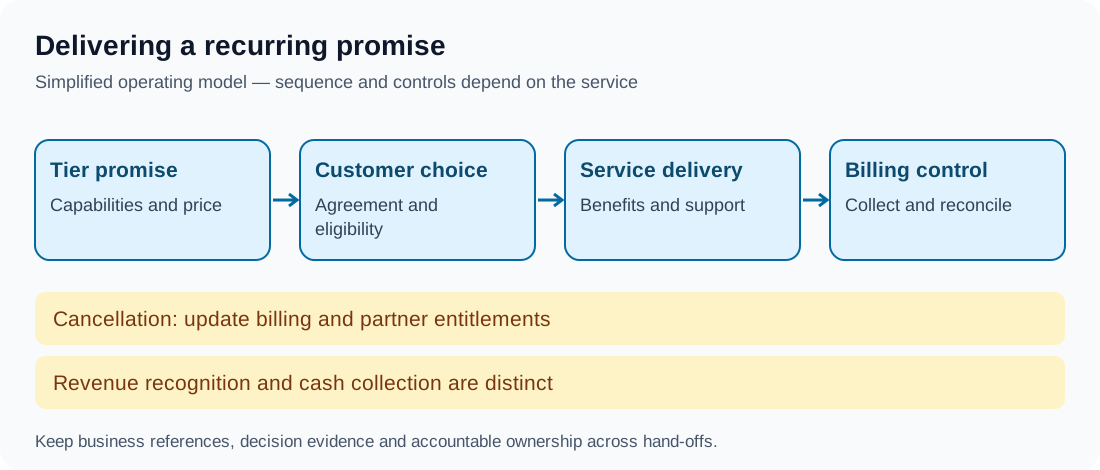
Separate customer agreement, entitlement, recurring collection, accounting and cancellation. Use durable subscription and billing-period references to prevent duplicate charging. A failed collection should follow an explicit retry, notice and access policy; repeated retries should not create several fees for one period.
Cancellation must propagate to the billing system and relevant partners. Explain when benefits end, what happens to unused value and how refunds are assessed. Changing the screen to “cancelled” while a provider continues charging is an implementation failure. Keep customer confirmation and reconciliation evidence.
Revenue recognition is separate from collecting cash. For contracts in scope, IFRS 15 requires assessment of the promised services and when they are delivered. Bundled financial instruments or insurance need their applicable accounting treatment, not automatic classification as subscription revenue.
Worked example: a paid account tool
In this fictional service, a free account has core payment functionality and a paid tier adds expense categorisation and additional business reporting. The customer sees the recurring price and included capabilities before choosing. The firm measures whether customers can use the promised reports and whether the tier remains useful as their business changes.
After cancellation, one customer's partner entitlement remains active and triggers another charge. Operations corrects the charge under the applicable process, reconciles the partner record and fixes the termination hand-off. Counting the cancellation button click alone would have hidden the defect.
Sustainable economics and review
Model paid conversion, tenure, collection failures, benefit utilisation, refunds, partner charges and support costs. Free customers may generate other permitted income or be deliberately subsidised; make those assumptions visible. An annual plan can improve cash timing without guaranteeing retention or profitability.
Monitor complaints about unexpected renewal, unused benefits, failed cancellation and confusing price changes. Test customers' understanding rather than treating a disclosure's presence as proof. Review tier value and eligibility when partner terms or customer circumstances change.
Takeaway
A recurring price creates a recurring delivery promise. Good subscription banking makes the tier understandable and joins customer choice, benefit delivery, billing and exit into one accountable process.
Continue to Marketplace Revenue.