Fintech Regulation
Licensing boundaries, proportionality and activity based supervision
Technology does not define the legal perimeter
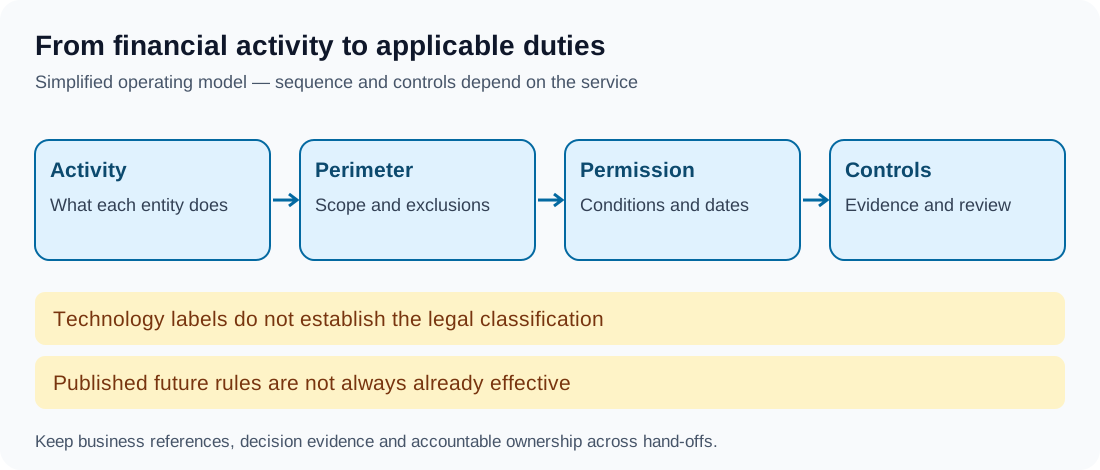
Fintech regulation applies legal frameworks to activities and entities using financial technology. Holding deposits, issuing e-money, providing payment services, lending, distributing insurance, advising on investments and supplying software can involve different permissions and duties. Product branding and an API design do not decide the classification.
Record what each legal entity actually does, where it does it, which customers it serves and which funds or assets it controls. Examine exclusions, exemptions and licence conditions as well as the headline activity. Do not assume all fintechs require a bank licence or that a small technology firm is automatically unregulated.
Distinguish overlapping obligations
Prudential rules address relevant financial resources and risks. Conduct rules address matters such as product information, distribution and treatment. Financial-crime rules address relevant identity, monitoring, sanctions and reporting duties. Data protection and operational resilience can add further requirements. Applicability differs; these are not one universal checklist imposed identically on every firm.
Customer funds also need the correct legal treatment. A deposit, client asset and e-money claim have different protection and insolvency implications. Safeguarding is not simply a marketing synonym for deposit insurance. The EU E-Money Directive illustrates one scoped framework, including the relevant definition and exclusions.
Proportionality and cross-border service
Proportionality calibrates requirements or their application under the actual framework. It does not mean a startup can ignore an applicable duty until profitable. Understand thresholds, permissions and conditions from current primary sources rather than copying another country's model.
An authorisation in one jurisdiction does not automatically permit worldwide activity. Branches, agents, remote distribution, passports and local registration have framework-specific treatment. Customer location, solicitation, provider establishment and the activity can matter differently under different laws.
Current, future and proposed rules
Keep legislation, final rules, effective dates, transitional conditions and proposals distinct. As checked on 1 October 2026, the FCA's new UK cryptoasset regime page states that its new regime is expected to commence on 25 October 2027. Application readiness and published rules must not be described as proof that all new obligations already apply. Existing applicable regimes still need separate assessment.
Another scoped example is UK deferred-payment credit: the FCA framework began on 15 July 2026 for in-scope lending. These dates do not establish identical licensing or treatment for every cryptoasset, checkout provider or overseas product.
Fictional example: a balance called loyalty
A platform holds customer money and allows spending with unrelated merchants. Its team labels the balance loyalty credits. The responsible firms examine the actual rights, issuance, acceptance and redemption against local definitions before launch. The label cannot substitute for that analysis.
If classification changes, update permissions, financial protection, operating controls and customer statements as needed. A disclosure correction alone cannot fix an unauthorised activity or missing financial control. Assess existing customers and affected records rather than correcting only new screens.
Takeaway
Maintain an obligation map with the source, applicability, effective date, responsible entity and implemented control. Reassess it after material changes. Accurate regulation teaching begins with the actual activity and distinguishes current duties from future regimes.
Continue to Regulatory Sandboxes.