Embedded Lending
Credit offered at the point of business or consumer need
Credit inside a purchase or business workflow
Embedded lending distributes credit through a non-lender journey, such as checkout, accounting software or a merchant dashboard. Consumer instalments, business loans and receivables financing have different economics and legal treatment. A “get paid early” label does not establish whether the arrangement is a loan, receivable purchase or another form of finance.
Name the creditor or finance provider and identify what the platform does: introduce, arrange, service or lend. Assess the permissions attached to each activity. Branding, funding and credit-risk ownership may sit with different firms and should not be collapsed into one implied provider.
Assessment and informed agreement
Apply the required creditworthiness, affordability, eligibility and disclosure processes for the actual product and jurisdiction. Platform purchase history can be useful evidence but is not automatically a complete assessment of repayment capacity. Customer attention at checkout should not replace consideration of cost and obligations.
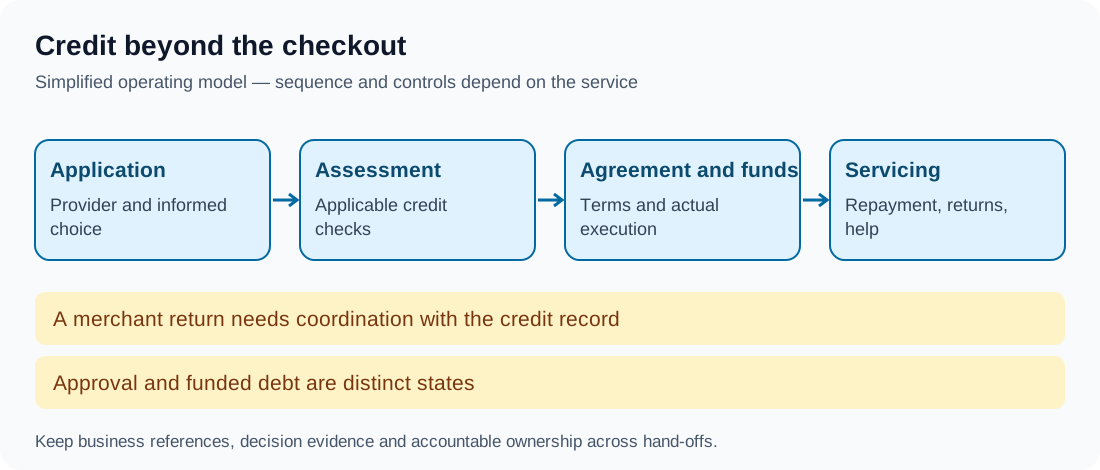
Explain relevant repayments, charges, consequences of nonpayment and provider identity before commitment. The EBA loan-origination guidelines address credit assessment and lifecycle governance in their scoped EU framework. They are not a global checklist for every consumer or merchant finance product.
Approval, disbursement and the debt record
An offer, approval, customer acceptance, executed agreement and funded loan can be different states. Preserve relevant versions and references. Check that the amount paid to the merchant, outstanding principal and repayment schedule match the agreement and actual execution.
Partial shipments, cancelled orders and returns require coordinated handling. A merchant return does not always automatically cancel the entire legal debt. Determine the applicable rights and contract, communicate the interim position and reconcile relevant refunds, balances and future instalments. Avoid collecting an amount already cancelled or refunded under the correct process.
Servicing after the platform moment
Make payment information, statements, hardship support and complaints accessible beyond the original checkout. Collections should refer to the actual creditor and obligation. Changes of servicer or debt ownership need the applicable controls and customer information; the shopping platform's disappearance does not automatically extinguish outstanding credit.
For a current UK example, the FCA began regulating in-scope Deferred Payment Credit on 15 July 2026. Assess scope, exclusions and authorisation arrangements rather than describing all BNPL worldwide as either unregulated or subject to identical rules.
Worked example: a partial return
In this fictional instalment purchase, the customer returns one of two items. The merchant issues a partial refund, the finance provider receives the event and updates the obligation according to the agreement and applicable rights. Records preserve the original purchase and show the adjustment.
A missing refund callback leaves the scheduled collection unchanged. Reconciliation detects the discrepancy and routes it to an owner before avoidable collection or escalation. The customer receives truthful progress; an acknowledgement from the retailer is not treated as proof that the lender has already adjusted the debt.
Risk and economic monitoring
Track acquisition source, assessment quality, loan maturity, repayment, losses, returns, complaints and support workload. Merchant subsidies or referral fees should not obscure total credit economics. Funding, provisions and capital treatment depend on the entity and accounting framework.
Test fraud, merchant collusion, stale sales feeds, duplicate loans, cancellation races and provider failure. Do not treat conversion, approval rate or a short early repayment window as complete evidence of sustainable lending.
Takeaway
Embedded lending remains a continuing credit relationship after checkout. Assessment, debt records, returns and servicing must join the platform event to the provider's actual obligations.
Continue to Embedded Insurance.