Embedded Investment
Savings and investment capabilities inside digital platforms
Identify the destination of the money
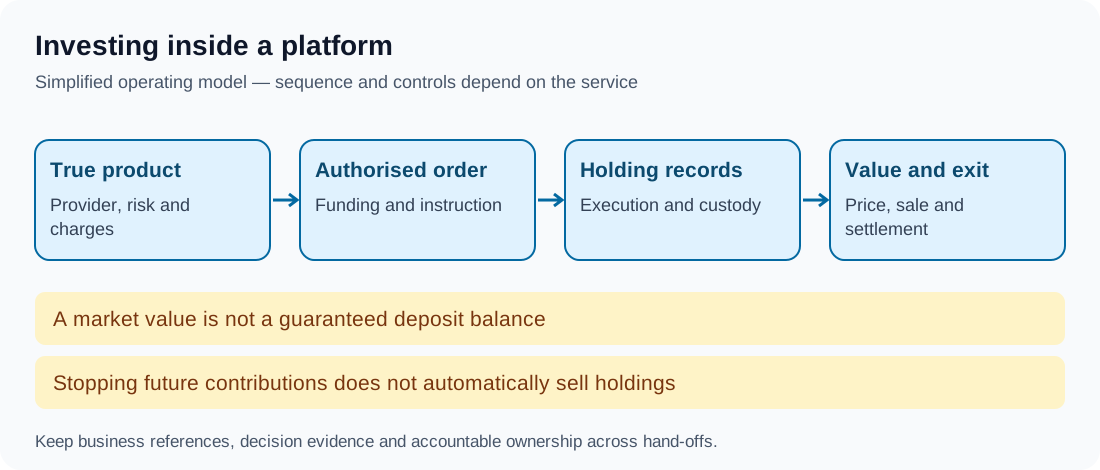
Embedded investment places saving or investing functionality in a wider platform, such as payroll or retail software. A bank deposit, safeguarded balance, fund holding and brokerage position are different products. The interface should explain the actual claim, provider, costs, risks and access conditions.
A money-market fund is not automatically an insured deposit, and a market value is not a guaranteed cash balance. Small round-ups can accumulate into meaningful exposure. A friendly savings label or association with an employer does not establish suitability or remove investment risk.
Distribution and decision responsibilities
Name the relevant deposit-taker, investment firm, custodian or other provider and the platform's actual role. Assess the permissions for information, introduction, advice, portfolio management and execution. A disclaimer does not override the actual activity, but personalised presentation is not automatically regulated advice in every circumstance or market.
In the EU, MiFID II Article 25 distinguishes suitability for advice or portfolio management from appropriateness for other relevant services, with specific execution-only conditions. Apply the actual product and service classification; not every low-value investment qualifies for an exemption.
Permission, orders and custody
For recurring or round-up investing, define the funding source, calculation, limits, frequency and customer control. Authorisation to make a purchase is not necessarily authorisation to invest extra money. Stopping a future rule is distinct from cancelling an existing order or selling a holding.
Separate a funding transfer, accepted investment order, execution, settlement and recorded holding. Use references to reconcile cash and units or securities. Identify the authoritative entitlement and custody records. A platform allocation displayed before confirmed acquisition should not be presented as a settled holding without explanation.
Valuation and exit
Explain price timestamp, currency, charges and any estimated values. Withdrawals may require sale, redemption and settlement, with product-specific timing and market conditions. Do not promise instant access to an investment solely because the platform supports instant payments elsewhere.
Applicable compensation or asset-protection arrangements generally have defined scope; they should not be described as protection against all investment losses. Provider insolvency, market risk and platform outage are different scenarios requiring different explanations and response processes.
Worked example: payroll round-up fund
In this fictional payroll service, a customer chooses an optional recurring investment in a fund. The interface explains the fund's risk, fees and access process rather than describing it as a protected payroll balance. The authorised firm performs the relevant assessment and accepts instructions under its permitted service.
The customer stops future contributions. A pending order is handled under its actual cancellation conditions, and existing units remain held unless a separate sale or redemption instruction is authorised. The platform confirms the future-rule change without claiming the holdings have already become cash.
Operations and customer outcomes
Monitor cash awaiting investment, unmatched orders, holdings differences, valuation errors, withdrawals and complaints. Test provider outage, failed funding, stale prices, disputed instructions and customer exit. A disconnected platform must not make customer entitlements disappear from the provider's records.
Review incentives and presentation around payday or financial distress. Product uptake alone does not establish an informed investment decision. Keep statements, servicing and support available under the arrangement, including after platform or distributor termination.
Takeaway
Embedded investment should make the product and its risk visible despite the surrounding journey. Authority, execution, custody, valuation and exit need distinct records and controls.
Continue to Platform Partnerships.