Ecosystem Governance & Accountability
Decision rights, service ownership, customer responsibility, oversight and exit
Govern activities across the boundary
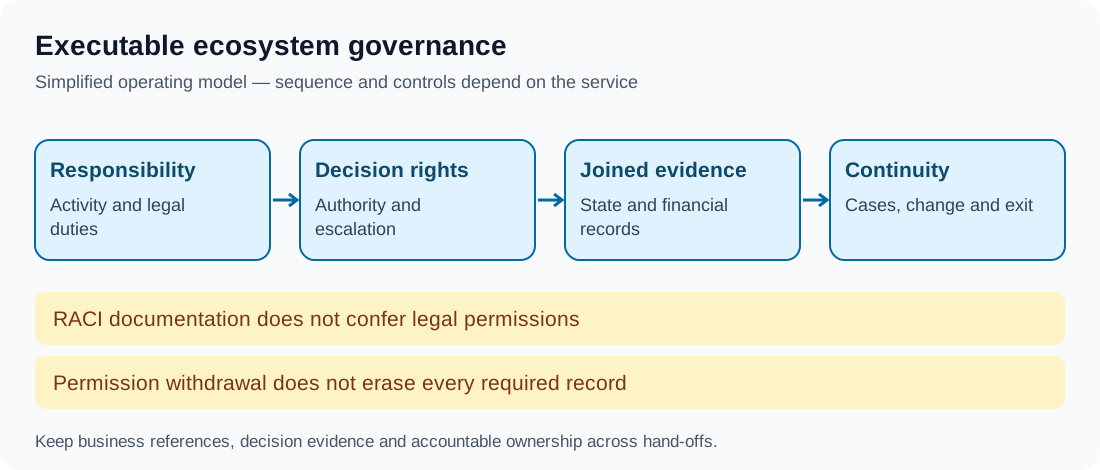
Ecosystem governance establishes how firms decide, operate and correct a multi-provider financial service. Customers may experience one interface while several entities hold funds, provide credit, supply data or handle support. A shared brand does not settle their legal responsibilities.
Map the proposition, activities, financial claims, customer agreements and actual providers. Identify permissions and responsibility under the applicable framework. Firms cannot assume contracts remove their own regulatory duties, but it is also inaccurate to assert that one licensed bank universally owns every outcome across every unrelated service.
Decision rights should work during disagreement
Name who can approve material product changes, pause new business, contain incidents, communicate status and authorise financial adjustments. Separate consultation from decision authority. A RACI table helps describe roles but cannot confer a licence or an action permission that a firm lacks.
Define escalation when firms disagree or one cannot act. Test access and step-in mechanisms where relevant, including contractual and technical limits. Shared governance does not require every ordinary operation to wait for a joint committee; delegated decisions can be controlled and evidenced.
Join the evidence and financial records
Carry durable references across customer instruction, decision, contract, external execution and financial posting. Systems may use different internal identifiers, clocks and data stores. Join them reliably, record uncertainty and reconcile important differences rather than asserting universal exactly-once events or one immutable clock.
Referral income, fees, customer funds and credit exposure have different accounting treatment. A cancellation or clawback condition does not always require an identical provision at referral. Apply the relevant framework and terms, including IFRS 15 where applicable to revenue and IFRS 9 where applicable to financial instruments.
Data permission and customer cases
Specify lawful purposes, access, processing and retention across firms. Consent can be relevant but is not the only lawful basis. Revoking an open-finance permission may stop affected future access without deleting legally retained transaction evidence or reversing settled payments.
Customer-facing firms should explain support routes and join permitted evidence for resolution. Ownership transfers should preserve case history and applicable deadlines. A customer should not be told that a complaint is resolved solely because it was sent to a partner.
Resilience, change and exit
Assess common dependencies, service failure and records needed to continue or wind down the relationship. The Basel third-party-risk principles provide a bank-risk reference. Review national requirements and the actual arrangement rather than inventing universal quarterly replacement tests or one global impact tolerance.
Termination can leave credit, balances, insurance claims, disputes and retention duties. Plan an authorised transfer, continued service or run-off. Data export alone is not complete migration: records must support rights, status, access and financial reconciliation.
Fictional example: partner unavailable during a refund
A platform has accepted a return, while the financial refund remains unexecuted. The partner's case service becomes unavailable. The agreed process retrieves the required evidence, checks the original payment state and assigns an authorised owner for the next action.
The firms avoid an unverified duplicate and communicate uncertainty honestly. Afterwards they review data access, incident responsibility and affected cases. The governance worked only if the customer outcome and financial records were actually resolved.
Takeaway
Governance turns responsibility maps into executable decisions and accessible evidence. It should support routine service, disagreement, failure and continuing obligations after the ecosystem changes.
Continue to Fintech Regulation.