Digital Banking Strategy
Choosing target customers, capabilities, economics and execution priorities
Strategy makes choices under constraints
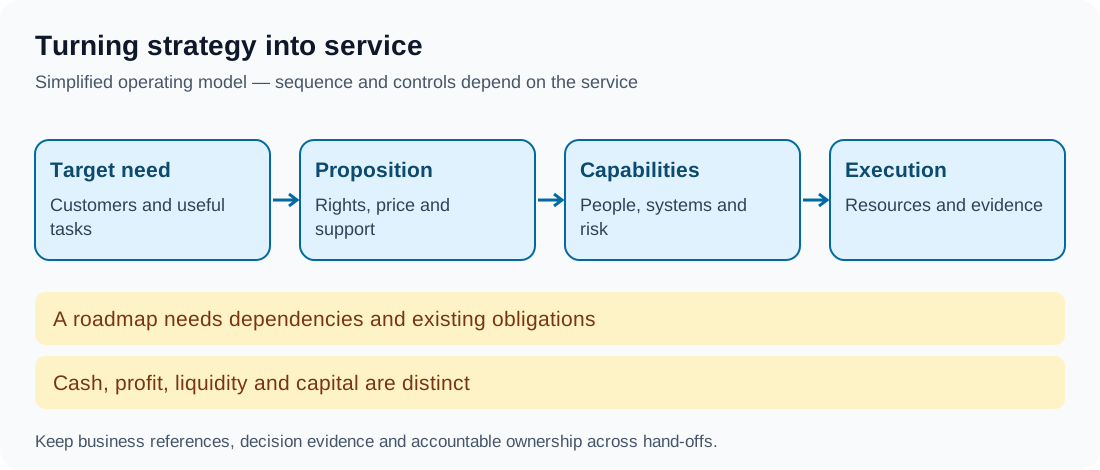
Digital banking strategy identifies whom an institution serves, which problems it solves, the capabilities it needs and how it sustains the service. A list of technologies or features does not establish those choices. The strategy should connect customer value, risk appetite, financial resources and delivery capacity.
Existing products and customers constrain the transition. Selecting a new target segment does not automatically justify abandoning service obligations to the current book. Record what will change, what will be retired and how affected relationships continue.
Translate the target into service requirements
Define useful tasks and circumstances: receiving wages, paying suppliers, recovering access or managing cash. Test device, language, evidence, accessibility and support needs with the intended users. Average conversion among easy applicants may conceal barriers for the target population.
Identify product boundaries and claims before designing the journey. A forecast is not a credit agreement; a partner tile is not necessarily a bank-provided product. Customer promises must match the actual provider, financial rights, timing and limitations.
Identify capabilities and dependencies
Map identity, permissions, records, decisioning, money movement, finance, support and assurance as relevant. Compare build, buy and partner choices against their actual costs and risks. An attractive front end cannot compensate for missing servicing or unreconciled funds.
Sequence dependencies explicitly. A lending launch may need agreement evidence and servicing before acquisition expands. Avoid a roadmap that counts every feature as independent while many depend on the same data platform, provider or specialist team. Include migration and run-off work, not just new development.
Financial feasibility and risk
Model income, losses, operating cost and funding under transparent assumptions. Separate cash runway, accounting profit, liquidity and regulatory capital. A profitable forecast does not guarantee the firm can meet near-term cash obligations; more financing does not necessarily repair a structurally unsuitable proposition.
Use scenarios for adoption, pricing, provider costs, adverse losses and delayed delivery. Link limits and escalation to the actual product risks and applicable governance. No chapter can supply a universal acceptable loss rate or mandatory roadmap cadence for all banks.
Execution and adaptation
Give delivery owners the resources and decision rights to implement the choices. Monitor customer tasks, financial effects and control evidence as well as milestones. Reprioritisation can be appropriate when assumptions change; record its consequences rather than treating every roadmap change as failure.
Define decision points for expansion, correction, pause or exit. The Basel Core Principles provide a reference for banking governance and risk expectations, with application depending on the relevant framework. A strategy presentation cannot replace implemented controls.
Fictional example: serving seasonal merchants
A bank targets small seasonal merchants. Testing shows that sales feeds omit cash revenue and that peak-month sales overstate repayment capacity for the quiet season. The proposition adds appropriate evidence and servicing, with finance assessed under the actual lending framework.
The roadmap funds those capabilities before expanding acquisition. Outcome measures include useful account activity, support resolution and mature repayment alongside growth. The strategy becomes more credible by reflecting the trade it intends to serve.
Takeaway
Strategy should make customer, capability, financial and execution choices that can be explained and measured. Review it against actual outcomes and changing constraints.
Continue to Measuring Digital Success.