Chapter 068: Operating Costs, Leases and Fixed Assets
Section 14: Tax and Other Corporate Accounting · Chapter 068 of 100
This chapter explains operating costs, leases and fixed assets from the reporting bank's perspective. Examples are fictional; accounting follows IFRS unless another framework is expressly identified.
1. Chapter opening
Operating costs, leases and fixed assets have different recognition patterns. Paying cash does not decide whether a cost is an expense, prepayment, asset or liability settlement. A bank's close must reconcile invoices, accruals, fixed assets and lease schedules to the GL.
2. Learning objectives
- Distinguish current service expenses from qualifying fixed assets.
- Record lease liability, right-of-use asset, interest and depreciation.
- Account for branch closures without automatic lease-liability releases.
- Separate cash savings, P&L effects and restructuring obligations.
3. Business context
Branches, ATMs, data centres and offices use resources over different periods. Digital migration may lower future service cost but create investment, impairment or termination costs now. Savings estimates need avoidable cash flows and credible execution dates, not a blanket reduction of allocated expense.
4. Finance and accounting view
4.1 Expenses and property/equipment
Services received are expensed or accrued in the appropriate period unless another standard permits asset recognition. IAS 16 recognition requires the applicable future-benefit and reliable-cost criteria. Asset cost includes qualifying directly attributable amounts; general overhead, routine maintenance and inefficiency are not automatically capitalised. Depreciation begins when available for use, uses significant components where required and reflects reviewed useful lives, residual values and method. A payment before service delivery may be a prepayment rather than current expense.
4.2 Leases
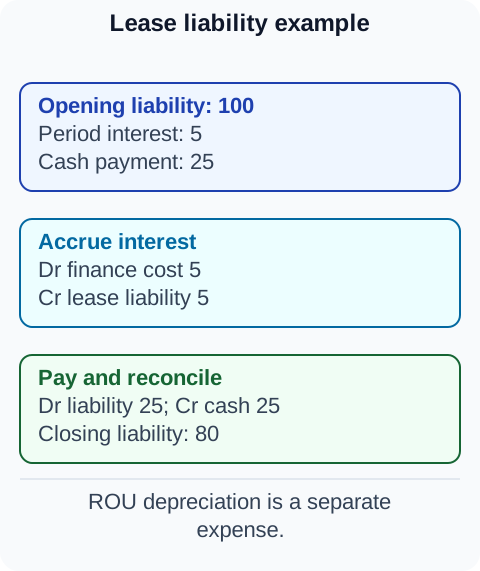
Under IFRS 16 a lessee generally recognises a lease liability measured using the required discounted payments and a right-of-use (ROU) asset, with relevant adjustments. Applicable short-term and low-value exemptions need policy assessment. Subsequent expense includes liability interest and ROU depreciation; lease cash payments reduce the liability and pay interest. There is not a second ordinary rent expense for the same recognised lease.
Suppose initial liability and ROU are each 10, with no other adjustments. A payment of 1 includes interest of 0.3: Dr interest expense 0.3 / Dr lease liability 0.7 / Cr cash 1. ROU depreciation is a separate Dr depreciation expense / Cr accumulated ROU depreciation entry. Reassess modifications, index changes and impairment under their respective rules.
4.3 Closure and disposal
Closing a branch does not terminate its contract. Continue recognising obligations unless a qualifying modification, termination or other derecognition event occurs. For a legally effective full termination, assume liability 12 and ROU carrying amount 9.6 are extinguished and a separate cash settlement of 2 is paid, with no other adjustments. Dr lease liability 12 / Cr ROU asset 9.6 / Cr cash 2 / Cr termination gain 0.4. This simplified result depends on the stated settlement and scope; an unagreed planned closure cannot release the liability.
ROU retained at other branches may require impairment. Employee termination benefits follow IAS 19; restoration obligations may already be recognised in asset cost and a provision, so do not provide twice. A fixture with carrying value 1.5 sold for 1 produces Dr cash 1 / Dr disposal loss 0.5 / Cr fixed asset 1.5.
5. Product and customer impact
Closure decisions need customer access, migration, service resilience and contract review. A profitable cost model does not by itself authorise closure or determine the accounting date. Retain capacity for customers whose services cannot immediately migrate.
6. Regulatory and supervisory view
IAS 16 governs property/equipment; IFRS 16 governs leases; IAS 36 governs impairment. Employee benefits and provisions require IAS 19/IAS 37 as applicable. No universal PRA/FCA joint cost-programme attestation or enforcement multiplier applies to every bank restructuring.
7. Systems and data view
Fixed-asset records include cost, location, component, in-service date, life and disposal approval. Lease records include contract terms, options, discount rate, payment changes and modification date. Accounts payable and accrual controls prevent invoices being recorded in both expense and liability twice.
8. End to end process
- Identify service period or asset/lease nature.
- Apply recognition criteria and approved estimates.
- Post expense, asset or lease entries.
- Reconcile subledgers and inspect impairment/modification indicators.
- Account for effective disposals/terminations.
- Bridge the cost programme's cash flows and P&L effects.
9. Controls and risks
| Cost risk | Control |
|---|---|
| Closure releases unexpired lease | Legal effective-date review |
| Asset not depreciated when ready | In-service milestone evidence |
| Maintenance capitalised | Cost eligibility review |
| Cash savings equal assumed P&L savings | Lease/depreciation and timing bridge |
| Restoration provided twice | Reconcile existing asset/provision schedule |
10. Practical examples
A fictional programme expects 10 of annual cash savings once fully operational. If savings start on 1 July and accrue evenly, first-year savings are 5, not 10. Compare these with transition cash costs separately. Rent-payment savings from a terminated IFRS 16 lease do not equal a removed rent-expense line: forecast liability interest, depreciation, derecognition and any termination gain/loss. Retained ROU assets of 6.4 impaired by 3 close at 3.4.
11. Diagrams
Figure 1. Operating-asset accounting.
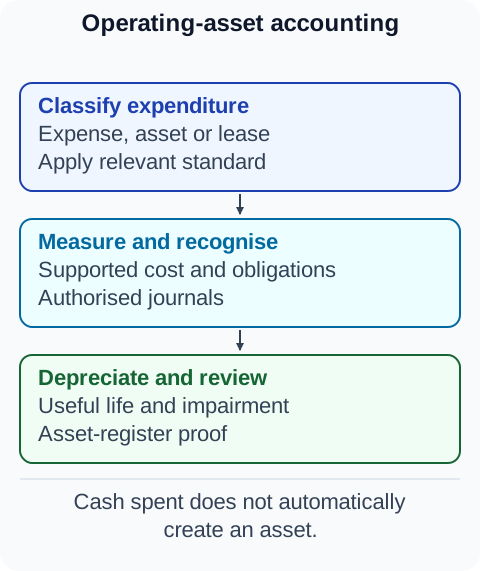 Figure 2. Cost treatments.
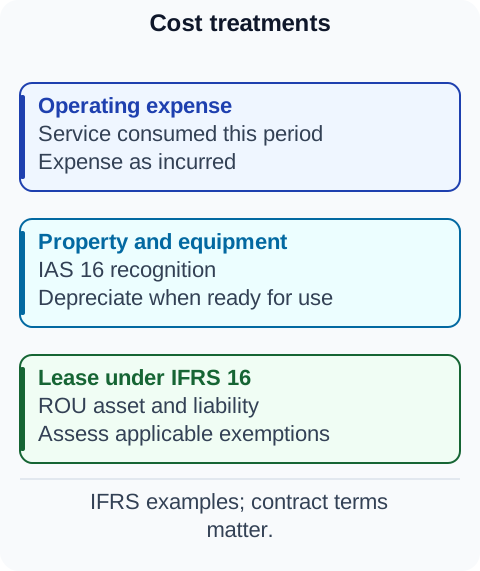 Figure 3. Lease liability example.
12. Tables
| Simplified event | Debits | Credits |
|---|---|---|
| Lease payment | Interest 0.3; liability 0.7 | Cash 1.0 |
| Effective full termination | Liability 12.0 | ROU 9.6; cash 2.0; gain 0.4 |
| Fixture disposal | Cash 1.0; loss 0.5 | Asset 1.5 |
13. Fictional banking case study
A fictional bank announced ten closures and released every associated lease liability before agreements changed. Review restored the unexpired obligations, tested ROU impairment and accounted for each effective termination separately. The budget retained savings only from supported dates and contracts.
14. BA, developer, tester and operations guidance
The close process reconciles operating accruals. Software recognition has separate IAS 38 criteria. Provisions and employee obligations govern restructuring costs outside the lease/fixed-asset measurement.
15. Common mistakes
- Equating cash payment with current expense.
- Capitalising all transformation spend.
- Recording rent expense as well as depreciation/interest for the same recognised lease.
- Releasing leases solely on a Board closure decision.
- Claiming full-year savings from a mid-year start.
16. Key takeaways
Classify costs by the underlying resource and obligation. Recognise assets only when criteria are met, reconcile lease entries and measure closures at their legally and economically effective dates.