US Check Instruments and the Check Collection Lifecycle. Follow US check instruments from issue and deposit through presentment, paying-bank decisions, settlement, final payment, exceptions and reconciled customer and bank records.
A small engineering firm receives a $12,480 check for repairs completed at a warehouse. Its bookkeeper deposits the check and sees a credit in online banking. The owner asks whether the money can fund Friday's wages. At the bank, three teams would answer three different questions: the deposit team can confirm receipt, the availability team can explain when the customer may use the credit, and check operations can trace presentment and payment. None should substitute its own answer for the other two.
Chapter 36 opens Branch 8 by following the instrument from issue to collection and financial closure. Chapter 37 examines Check 21 and image exchange. Chapter 38 owns the detailed availability, return and fraud rules. Chapter 39 follows remote capture, and Chapter 40 follows lockbox and check conversion. Here, the focus is the check itself, the participants, their account relationships, and the evidence that connects one stage to the next.
A check is an instruction presented for payment. Receiving it, depositing it, making its proceeds available and finally paying it are different events.
For a roughly 60-minute core session, spend about 35 minutes on Section 2, Section 4, Sections 7–9 and Section 12. For the next 10 minutes, use the chapter’s three diagrams to distinguish deposit credit, collection, availability and final payment. Use 10 minutes to work through one case in Section 15, then spend the final 5 minutes explaining: What can the bank safely tell a depositor before the check's collection outcome is established? Treat these timings as a study guide. The remaining sections, additional cases and extended reference material are follow-up study; completing the whole chapter takes longer.
Names, values and incidents are fictional. Internal records and accounting examples illustrate possible bank designs rather than mandatory formats. References to the Uniform Commercial Code describe the model provisions; the relevant state's enactment, applicable federal law and valid agreements determine the actual legal result.
Chapter navigator
- What a check payment must achieve
- Reading the instrument and identifying its parties
- Ordinary checks and bank-issued instruments
- The collection chain and bank responsibilities
- Deposit acceptance and the first bank record
- From capture to presentment
- Paying-bank decision and customer debit
- Settlement and where the money moves
- Availability provisional credit and final payment
- On-us checks and internal account movement
- Dates cut-offs and the outstanding-check register
- Unpaid returns adjustments and later claims
- Reconciliation accounting and customer reporting
- Building the bank service and operating model
- Worked cases and lifecycle testing
- Role checklist and learning closure
1. What a check payment must achieve
The business purpose of a check is straightforward: the drawer instructs a bank to pay an amount to the named payee or as the instrument otherwise permits. The instrument can travel separately from the payer's bank systems. A supplier may hold it for several days, a landlord may deposit it immediately, and an employee may lose it before reaching a bank. This separation between issue and presentment is central to the product. The paying bank may first encounter the individual payment when another institution presents it.
The engineering firm's customer records a $12,480 payment in its accounts payable system when it issues the check. The engineering firm records the incoming instrument against its invoice. These records describe the commercial relationship. They do not themselves debit the drawer's deposit account or settle an obligation between banks. A corporate issue file supplied to the paying bank can support controls, but it is not the same event as presentment for payment.
A bank implementing a check service should therefore begin with the business obligation and the instrument identity. The invoice explains what the payer intends to settle. The check number identifies an instrument within an account context. The deposit reference identifies what the payee handed to its bank. A cash-letter reference identifies a package used in interbank collection. These identifiers support different questions and cannot safely be collapsed into one payment number.
Checks also place evidence in the hands of several parties. The drawer may retain an issue register, the payee may retain a remittance advice, the depositary bank may capture front and back images, and the paying bank may retain the presented record and its decision. An investigation becomes difficult when one participant assumes that another holds a complete history. The service design should state which evidence each party can retrieve and how records will be linked.
The commercial obligation continues outside the bank
Suppose the warehouse company writes a check for two invoices, one for $10,000 and one for $2,480. The bank collects one instrument for $12,480. It need not know whether the supplier agrees with the allocation between those invoices. If the customer later disputes part of the repair work, that commercial dispute does not automatically create a bank instruction to reverse a paid check. The payer needs to distinguish its rights against the supplier from the bank's obligations concerning the instrument.
The same distinction applies when the supplier receives an incorrect amount. A $12,000 check against a $12,480 debt is not a $480 bank-processing error if the instrument itself was correctly collected for $12,000. The supplier must record the short payment and pursue the commercial balance. Bank operations should investigate an amount mismatch between the instrument and processing record, not assume responsibility for every difference between an invoice and the payment received.
Product requirements should describe what the customer will be told at each stage. “Deposit received” can be a valid acknowledgement of a submission. “Available balance” describes usable funds under the applicable policy and rules. “Paid check” describes an outcome on the drawer's side. A customer-facing history should use these terms consistently so that a provisional deposit credit does not become an unintended assurance that the instrument is genuine.
A useful learning question is what would remain unresolved if the process stopped now. After issue, the drawer still has an outstanding instrument. After deposit, the payee's bank has a collection task. After provisional interbank credit, payment and return rights may still matter. After final payment, a later warranty or fraud claim may still require investigation. This question keeps the lifecycle connected to real obligations rather than a sequence of green status icons.
2. Reading the instrument and identifying its parties
The drawer creates the instruction. The drawee is the party directed to pay, normally the bank on which an ordinary check is drawn. The payee is the person identified to receive payment. The person presenting an instrument for deposit may be the payee, an authorized representative, or someone claiming rights through a transfer. The bank should establish the relevant relationship instead of treating physical possession as sufficient evidence in every case.
The front of a conventional check carries such information as the drawer's account context, the drawee bank, a date, payee, amount and signature. The magnetic ink character recognition line, or MICR line, supports automated processing. A routing number identifies a routing endpoint; account and serial information help identify the instrument. The exact arrangement depends on check design, including whether an auxiliary on-us field is used. Developers should use the applicable specification instead of assuming that all MICR lines follow a personal-check layout.
A printed bank logo is not a bank verification. A routing number that passes a mathematical check is not evidence that the drawer issued the item. A readable signature is not proof that the signer had authority. Each piece of data supports a particular control, and the bank needs to know the limits of that control. This is especially important when optical recognition fills fields that staff would otherwise have entered manually.
The written amount and the numerical amount can disagree. An operator should not silently choose whichever value makes a deposit total balance. The bank needs an approved interpretation and repair process under the applicable law, preserving the original image and the value used. A later investigation may turn on whether the source document was inconsistent or whether the bank introduced an encoding error.
A document can be readable and still require an exception
Consider a check payable to “Northfield Engineering and Westbank Services” deposited into Northfield's account alone. The image can be perfectly clear, and the routing data can be valid, while the entitlement to collect still requires review. Whether multiple payees are alternative or joint is a legal and product question. The deposit application should not decide the issue merely by stripping words and matching one familiar name.
An endorsement is another piece of evidence with operational consequences. Customer endorsements and bank endorsements have different purposes. A customer's endorsement can relate to transfer or deposit restrictions. A bank's endorsement provides collection-chain information. If the image back is missing, the issue is not just a cosmetic defect: information needed for return routing, entitlement or later claims may be unavailable. Chapter 37 examines the electronic representation; the underlying need for evidence starts here.
The bank should preserve what was read, what was corrected and who authorized the correction. An amount captured as $1,248.00 instead of $12,480.00 should retain both the original extraction and the approved final value. Account-number repair deserves particularly strong controls because an apparently small edit can direct the charge toward another account. A record that stores only the final value makes it harder to determine where a discrepancy began.
The serial number also needs context. Check number 1048 can exist in thousands of accounts. Within one account, numbering can restart after a software change, and customers can issue replacement instruments. A duplicate-control design should combine relevant identifiers and evidence rather than declaring every repeated serial number fraudulent. Conversely, a different serial number does not prove that two images represent two legitimate obligations.
For customer support, a safe lookup uses enough information to find the item without distributing unnecessary account data. Staff may begin with a masked account, date range, amount and check number, then use authorized access to the image and native references. Downloadable evidence should follow the bank's data controls. The convenience of an image archive should not make complete check images available to every user who can view an account balance.
3. Ordinary checks and bank-issued instruments
An ordinary personal or business check is drawn against the drawer's account. A cashier's check, a teller's check and a certified check involve different obligations and should not be presented as interchangeable labels for a safe payment. The model UCC definitions distinguish a cashier's check, where the same bank is drawer and drawee, from a teller's check drawn by a bank on another bank or payable at or through a bank. Certification concerns the drawee's acceptance of a check. These distinctions affect servicing, replacement and claims. UCC §3-104, UCC §3-409.
A customer buying an official check may fund its issue from an account or another permitted source. The issuing bank then needs an outstanding-instrument record that links the purchase, instrument number, payee and amount. Paying the official check later is a separate event. If the bank treats issue as the only financial record, it cannot reliably distinguish an outstanding check from one already paid or replaced.
The depositary bank should still assess authenticity and the customer's entitlement. A counterfeit document can imitate a cashier's check. A faster availability category, where applicable, does not establish authenticity. The operational question is not whether the words “cashier's check” appear on the document, but whether the item and deposit meet the conditions for the treatment being applied. Detailed availability conditions belong in Chapter 38.
Money orders also require identification of the actual issuer and payment arrangement. A U.S. Postal Service money order is not the same product as every retail money order sold at a store. The collecting bank should classify the instrument using authoritative information and the accepted service, not a generic category called guaranteed funds. Treasury checks and other special items receive focused treatment in Chapter 40.
Servicing follows the underlying obligation
Imagine a customer who buys a $9,000 cashier's check for a vehicle purchase, then reports it lost. A branch should not simply cancel it as though it were an ordinary personal check and issue another one immediately. The bank must apply the relevant lost-instrument procedure, establish the claimant's rights and consider the risk that the original will be presented. A replacement can create a second apparent instrument against one intended obligation if the records are not connected.
The operational record should distinguish the person who purchased the instrument from the named payee. Those persons can be different. A request from the purchaser to change the payee after issue is not equivalent to editing an unpaid online transfer. The service team should identify the applicable rights and process before changing any outstanding liability or accepting an indemnity. Exact waiting periods and legal conditions must come from the governing rule and bank procedure for that instrument.
Certified checks require similar care. Certification is not a decorative stamp applied by the depositary bank to improve an ordinary deposit's quality. It concerns acceptance by the drawee. A system that classifies certification from an unchecked image label can apply the wrong availability or servicing treatment. Staff should know what supporting evidence is needed and when a claim of certification must be referred for review.
The drawer of an ordinary business check can also purchase bank-issued instruments for selected payments. The corporate accounting system may record both under a broad category called checks. Bank integration requirements must preserve the distinction because the relevant account, obligation and replacement process differ. A supplier's remittance reference can remain the same while the payment instrument changes.
A practical product catalogue should explain accepted instrument types, channels, required evidence, restrictions and escalation paths. It should avoid promising that a particular type can never be returned or challenged. “Bank-issued” identifies an obligation structure, not immunity from forgery, alteration, mistaken payment or legal claims. That distinction is valuable to a branch employee explaining why an apparently official check still needs review.
4. The collection chain and bank responsibilities
The depositary bank is the first bank to which the check is transferred for collection in the relevant sense. In ordinary language it is often called the bank of first deposit, or BOFD. A collecting bank handles the item for collection, and an intermediary can help route or process it. The paying bank receives presentment and handles the payment decision. A returning bank can handle an unpaid check on its way back. One institution can occupy more than one role in a particular transaction.
A processor is not automatically the depositary bank merely because its scanner or platform first receives the image. A corporate customer may scan at its premises through a vendor's software while depositing into an account at its bank. The contractual and legal relationships determine the bank roles. Architecture documents should identify service providers separately from the institutions that hold accounts and accept collection obligations.
The bank's role also varies by item. A bank that deposits its customer's check today may receive another bank's presentment against one of its own customers tomorrow. Its outgoing collection desk and incoming payment desk use related information but have different responsibilities. Combining them in one application does not remove the need to distinguish outgoing assets, incoming payment obligations and customer postings.
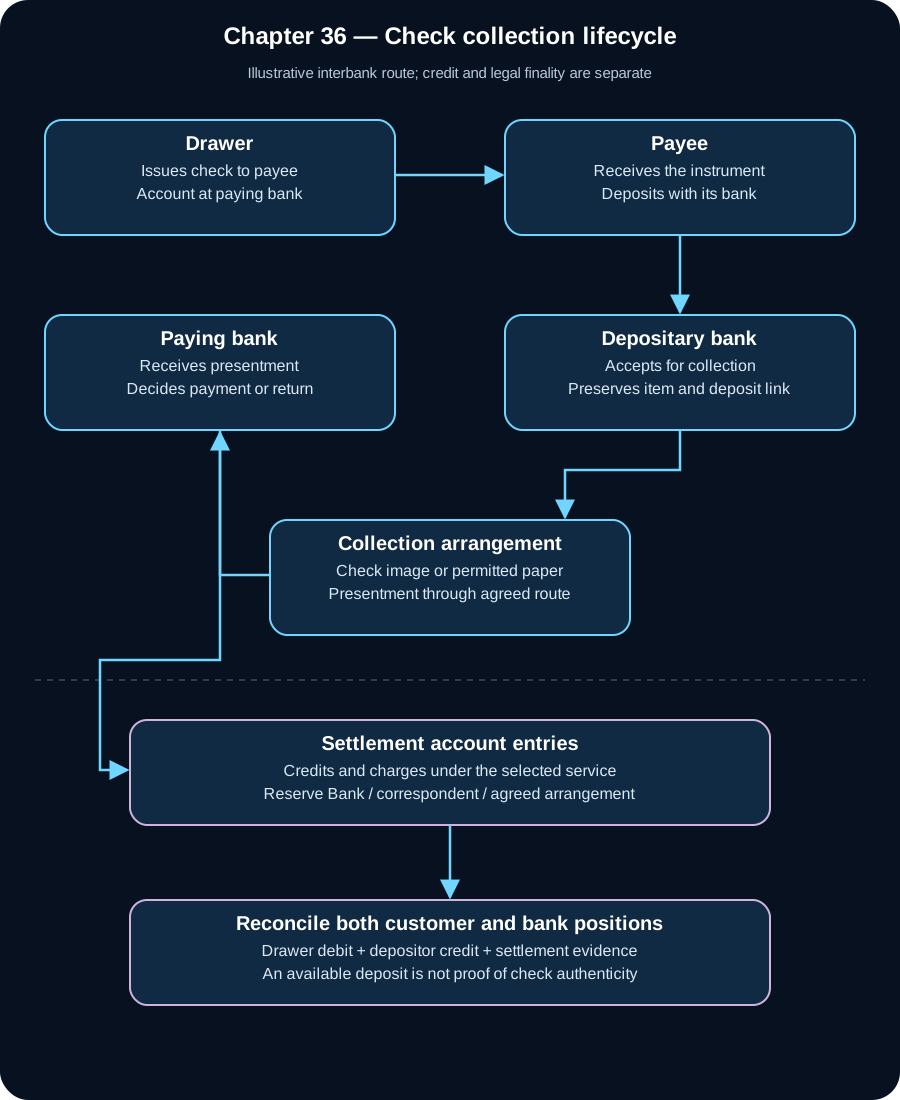
The following diagram shows an ordinary interbank collection. The image or item moves toward the paying bank; settlement value moves through the agreed bank-account arrangement toward the collecting side. It is a logical lifecycle, not a claim that every check passes through the Federal Reserve.
Ownership must survive outsourcing
Suppose Northfield's bank uses a processing company to create its outgoing image cash letters and a correspondent to settle the related activity. Northfield remains a customer of its depositary bank. It should not need to negotiate among the vendor, correspondent and paying bank to find a missing deposit. The depositary bank needs access to the vendor's item evidence and the correspondent's financial reports so that it can give a supported answer.
The service contracts should establish receipt evidence, processing responsibilities, exception reporting, data access and escalation. These are implementation requirements, not a universal allocation of liability. Legal obligations cannot be inferred from the name of a vendor module. A processor may be responsible for sending a file under contract while the bank remains accountable for meeting the relevant collection or return obligations.
A return can take a route different from the forward collection. Operations should not reject an otherwise valid return merely because its sender differs from the original forward intermediary. The correct question is whether the route and return satisfy the applicable rules and whether the item belongs to the bank's customer. This requires reliable BOFD and original-item references, rather than matching solely to the original file sender.
The participant map should identify settlement roles separately. A bank can exchange images directly while using a settlement agent, or use a correspondent for both processing and settlement. The party that receives the file need not be the party whose account is debited. Treasury and operations must share the same effective-date mapping, especially during mergers or provider migrations.
Bank implementation should also distinguish legal responsibility from operational ownership. Legal and compliance interpret duties. Operations owns queues and escalation. Technology owns delivery and data integrity. Treasury owns funding visibility. Customer service explains the effect on the customer. A complete process connects those responsibilities around the same item, so a technical incident does not leave the financial obligation without an owner.
5. Deposit acceptance and the first bank record
Deposit acceptance starts with the customer's account and the instrument being offered. The bank determines whether the channel and product accept that item, whether the depositor is entitled to use the account, and what immediate controls or exceptions are required. A receipt should identify the accepted deposit and any relevant availability information without implying that the paying bank has already honored the check.
A deposit can contain several checks and other permitted components. The bank needs both a deposit-level total and item-level records. If a customer deposits three checks for $400, $900 and $1,200, the $2,500 deposit total does not replace the identity of each check. One item may later be returned while the other two are paid. A design that can only reverse the whole deposit will create incorrect customer and accounting effects.
The moment of acceptance should be recorded using the channel's actual rules. Time of image capture, time of upload, bank receipt, completion of review and assigned banking day can differ. The receipt must reflect the bank's supported meaning of acceptance. Chapter 39 examines remote-channel uncertainty; the same principle applies when a teller workstation or branch connection fails during submission.
The bank should preserve an acknowledgement that the customer can use later. A technical request identifier can help internally, but customer support needs a stable deposit reference tied to the account and items. The reference should survive a batch rebuild, processor resend or ledger retry. Those technical events should not create a new customer deposit merely because they generate new file identifiers.
Correcting a deposit without losing the original evidence
Consider a deposit entered as $2,500 where one check was captured for $1,020 instead of $1,200. The item records sum to $2,320. The bank should investigate the mismatch and correct the appropriate record with evidence. It should not create an unexplained $180 balancing item merely to force the deposit total to agree. If the source instrument supports $1,200, the correction concerns the captured amount. If the depositor added the total incorrectly, the customer deposit record may need a different adjustment.
Every correction should show the original and revised values, reason, authority and financial effect. A correction before ledger posting can prevent an error. A correction after posting may need a separate customer or general-ledger entry. The audit trail should let operations distinguish a data repair from an additional deposit, and finance distinguish a correcting entry from collected proceeds.
Deposit rejection is different from a later unpaid return. If the bank declines to accept a torn or ineligible item before collection, it has not necessarily received an unpaid return from the paying bank. The customer should be told what happened and whether the original can be used elsewhere. If the bank has already submitted the item and cannot establish the outcome, it should not advise unrestricted redeposit as though no collection attempt exists.
A front-office review can also be incomplete. A teller may accept a deposit subject to later image or item verification. The bank should make that conditional treatment explicit within its lawful policy and customer agreement. Internal staff need a way to identify items awaiting review and prevent them from falling between the deposit platform and the outgoing collection process.
For reporting, accepted deposit count, accepted item count and outgoing collection count measure different work. A deposit containing ten checks is one customer interaction and ten potential payment outcomes. Management should be able to see why those counts differ. A consistent definition of the unit being counted prevents misleading success rates and helps size exception operations appropriately.
6. From capture to presentment
After acceptance, the bank prepares the item for collection. This normally includes data capture, image handling where used, balancing, routing and creation of the appropriate exchange package. Check 21 and electronic exchange are examined in Chapter 37; here the important point is that preparation produces a presentable item, not a payment confirmation. A file that can be opened and parsed can still contain an item that the receiving bank cannot use.
The bank must select a supported route to the paying bank or its designated endpoint. Routing decisions depend on the actual service relationships and endpoint data. A routing number on the document supports identification, but the bank may need current processing information where institutions merge, change service providers or designate another receiving location. Routing tables should have controlled updates and a way to reconstruct the version used for an item.
Presentment is the demand for payment through the applicable process. The business event matters because it connects to the paying bank's responsibilities and deadlines. A customer's deposit time is not automatically the paying bank's presentment time. Nor is the start of an upload necessarily the time a receiving endpoint accepted the package. Evidence must come from the relevant interface and legal arrangement.
A bank should record both dispatch and acknowledgement. Dispatch shows that its system attempted delivery. Acknowledgement can establish what the recipient accepted, depending on the service. The meaning of each response must be documented. An encrypted connection closing successfully is weaker evidence than a service report identifying the accepted cash letter and item population.
Preparing for a partial operational failure
Suppose a depositary bank creates a cash letter containing 2,000 items. Its processor rejects a subset because the back images are unusable. The bank should identify whether the service accepted the rest and how the rejected population is reported. It must not assume that the entire file either succeeded or failed if the actual service supports more granular outcomes. Conversely, it must not infer item acceptance from a whole-file transport receipt where the service has not yet validated the items.
The recovery record should identify the original file, affected items, reason and next permitted action. If an item is repaired and resubmitted, its business identity must remain linked to the first attempt. A different image or corrected field should have a version history. This avoids creating two apparently unrelated collection events when the bank later receives a delayed acknowledgement for the original submission.
Presentment evidence also helps answer drawer complaints. If a drawer says the bank paid before the date on the check, the investigation needs the actual document, any relevant notice and the payment history. If the complaint concerns a stopped check, the stop instruction and the timing of the bank's action matter. The outgoing depositary bank's upload timestamp alone cannot resolve those questions.
The bank's internal service levels should leave time to repair common defects before external processing deadlines. That buffer is a bank choice informed by volume, channel and partner performance. It should not be described as a legal cut-off. Operations needs both the internal target and the external requirement, with clear escalation when the buffer is consumed.
A sound presentment design closes each accepted deposit item into a known state: routed and accepted, awaiting a defined repair, intentionally excluded under an approved decision, or unresolved with an owner. “Batch completed” is insufficient if the item population cannot be explained. This is the point where customer deposit evidence becomes a traceable interbank collection obligation.
7. Paying-bank decision and customer debit
The paying bank receives the presented item and determines its treatment. Relevant checks can include account status, available funds or approved credit, stop instructions, duplicate indicators, issue-file controls, signature or payee review where used, and other legal restrictions. Banks vary in their systems and review models. The chapter does not imply that every check receives manual signature inspection or that every bank offers the same positive-pay service.
The model UCC's properly-payable principle connects a charge to customer authority and the account agreement. A bank's ability to debit an account is therefore not established merely by having received a technically valid image. The same model provision addresses postdated checks and the significance of timely notice. The governing state law and facts must be applied to the actual case. UCC §4-401.
A payment decision can require information from a corporate customer. Under a positive-pay arrangement, the bank compares presented items to an issue file and may ask the customer to decide exceptions. The permitted decision window, default action and supported matching fields come from the product agreement. A customer's failure to respond does not create one universal industry outcome. Chapter 38 examines the control and fraud implications in detail.
Customer posting should remain linked to presentment and decision evidence. A debit may be generated through the bank's core processing before all operational reporting is complete. An operator must not treat an intermediate posting state as a legal conclusion about final payment. Likewise, a delayed customer display does not prove that no bank action occurred. Internal state names must be interpreted against the actual processing design.
Distinguishing insufficient funds from other exceptions
A check can fail for reasons unrelated to the drawer's balance. The account may be closed, the item may be a duplicate, the payment may conflict with a valid stop instruction, or the record may require repair. A generic failed-payment label hides the next action. A balance problem may lead to one treatment; a suspected alteration requires evidence preservation and a different investigation. The return reason must describe the supported outcome under the receiving service.
Imagine a $12,480 check against an account showing $13,000 at the start of the day. That visible figure alone does not prove that the check must be paid. Other posted or pending obligations, account restrictions and contractual arrangements may matter. The bank's decision should use the authoritative account and control state at the relevant time, not a screenshot selected later from a customer application.
Now reverse the example: the account has less cash than the presented amount, but the customer has a valid credit arrangement. A system that looks only at the deposit balance can return an item contrary to the intended product treatment. Requirements should state which sources of funds or credit the decision engine may use and how that authority is evidenced. This is a bank product design, not a rule that all checks can create overdrafts.
Manual overrides need clear authority and an audit trail. An employee resolving a false duplicate should be able to explain why the item is distinct, not simply switch a status from reject to pay. An override that changes a financial decision must retain the original exception and the evidence supporting release. Where two people approve a decision, both actions should be linked to the same item version.
The final operational handoff should give returns staff, customer service and finance consistent information. Paying-bank decision, customer debit, settlement treatment and any subsequent correction need separate but linked records. That allows the bank to investigate a complaint without first arguing about what a broad status such as processed was intended to mean.
Separate the issue register from the posting decision
A corporate customer can provide the paying bank with a record of issued checks. That record may support comparison of account, serial number, amount and, where the service supports it, payee information. The bank should preserve when each issue record arrived and whether it was accepted. A presentment that arrives before the corresponding issue record is an exception to investigate; it is not proof that the check is counterfeit. The detailed fraud-control design follows in Chapter 38.
The opposite ordering can also matter. A customer may cancel an issue record in its accounting system without placing an effective stop-payment order with the bank. The bank should explain which instructions its service actually receives and what they do. An internal accounts-payable cancellation does not necessarily reach the paying bank or satisfy the requirements for stopping the instrument. Customer interfaces should avoid giving a local bookkeeping action the appearance of a completed bank instruction.
Consider a $6,400 check that the drawer decides to replace after the payee reports it missing. Before issuing the replacement, the drawer and bank need to address the original under the applicable procedure. The bank's records should distinguish the original and replacement serial numbers and any effective stop instruction. If both are later presented, the bank must assess each actual instrument and instruction rather than assume that matching invoice descriptions make one automatically void.
This distinction is useful for customer education. The payer controls its issue process, but the bank controls its account posting under the applicable duties and instructions. The payee controls when it presents an instrument it holds, subject to the governing framework. A good service makes these boundaries visible so that a customer knows which action it must take with the bank instead of expecting its own bookkeeping system to do everything implicitly.
8. Settlement and where the money moves
Check settlement concerns obligations between participating banks or their settlement agents. It is separate from sending the check image and from posting the payee's deposit. In a Federal Reserve collection arrangement, the Reserve Bank applies credits and charges through the relevant accounts under Regulation J, Operating Circular 3 and the selected service terms. A bank using a correspondent may instead see the associated movement in its account with that correspondent. Private exchange arrangements have their own settlement mechanisms.
There is no requirement to imagine an individual Fedwire transfer for every check. Settlement can reflect cash-letter or other aggregated processing under the arrangement. A bank's report must explain which item population gives rise to each financial entry. The image file carries payment information; the settlement account proves the interbank financial effect. Those records should reconcile without pretending they are the same object.
Operating Circular 3 governs the Reserve Banks' handling of accepted cash items and returned checks. Its current published version is effective January 5, 2026. The document and applicable service schedules should be used for a Federal Reserve implementation, rather than transplanting a private exchange's procedures. Federal Reserve Operating Circular 3.
For Northfield's $12,480 check, the collecting side expects value through its settlement arrangement. The paying side funds the corresponding obligation. The depositary bank may already have credited Northfield's account provisionally. It must reconcile that customer credit to the collection asset and subsequent settlement. The fact that Northfield can withdraw funds early does not remove the bank's need to fund that withdrawal while collection remains outstanding.
Three account layers in one payment
The first layer is the drawer's customer account at the paying bank. Paying the check affects that customer's balance under the bank's posting and legal framework. The second layer is the bank-to-bank settlement relationship: Reserve Bank accounts, correspondent accounts or another agreed arrangement. The third layer is the payee's account at the depositary bank. A complete explanation follows all three without assuming they update at the same instant.
If both banks use settlement agents, there can be additional internal account movements. The agents may settle at one level and then post the banks' correspondent accounts at another. The bank must know which report is authoritative for its own position and how fees or adjustments are presented. It should not treat a net correspondent entry as evidence of the gross value of one particular check without the supporting allocation.
An illustrative reconciliation may begin with $1,000,000 of accepted outgoing items, subtract $8,000 of returned items and include a separately identified $500 correction. The resulting financial expectation depends on the direction of that correction and the service's posting design. A bank should calculate it from signed entries and native reports, not from a vague formula that assumes every adjustment is a debit. Fees should remain identifiable rather than being hidden inside unexplained collection differences.
Treasury needs timing as well as amount. An expected credit later in the day is different from a credit already posted to a usable settlement account. A return or adjustment can also create a funding need after the original deposit credit. The check operations dashboard should therefore provide treasury with actual and expected positions, unresolved differences and the account through which each will settle.
Settlement evidence should survive subsequent claims. A later claim does not mean the original settlement never occurred. The bank may need to record a new debit, credit, receivable or loss under the applicable outcome. Preserving the original movement and the later adjustment explains the economic history and avoids rewriting the past to match the latest case status.
9. Availability provisional credit and final payment
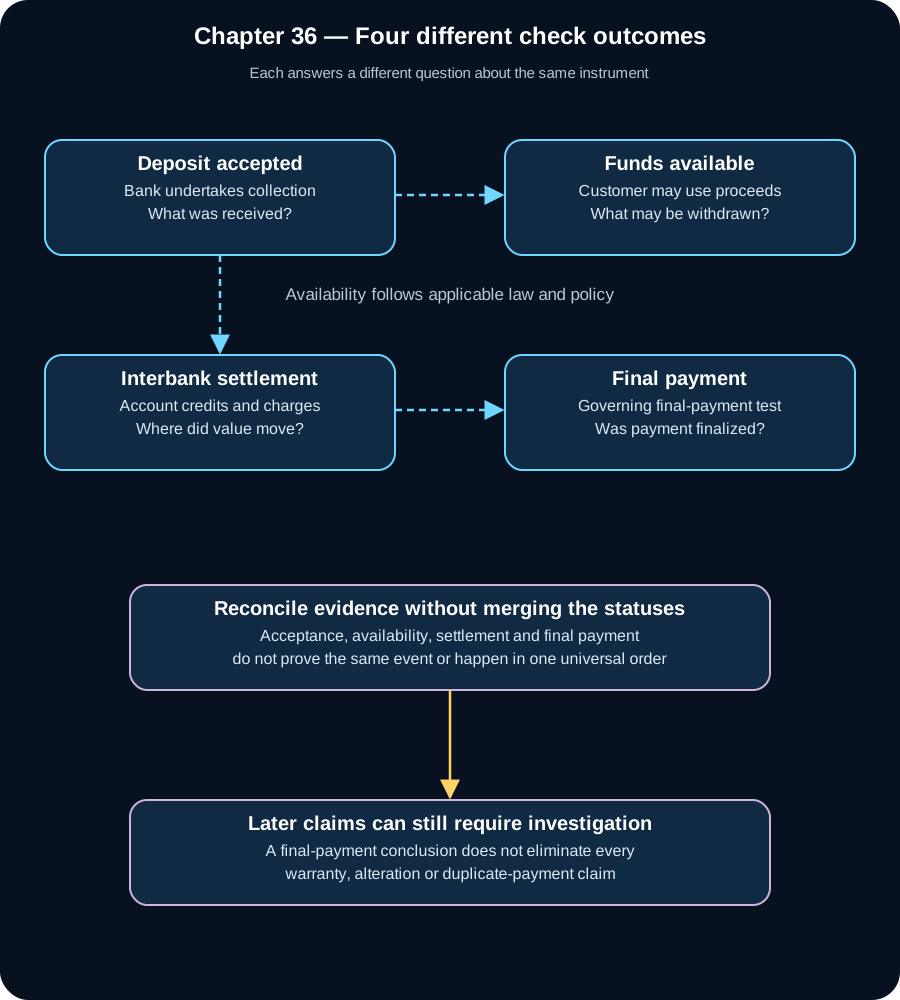
A customer can receive credit before collection is complete. That credit can be provisional, and the bank may make some or all of it available under law and its policy. Final payment is a separate legal event. The model UCC identifies final payment through payment in cash, settlement without a right of revocation, or failure to revoke provisional settlement in the permitted time and manner. The precise application depends on the governing law and arrangement. UCC §4-215.
The operational consequence is that one status cannot answer every question. Northfield may have a posted deposit, a partly available balance and an outstanding collection record at the same time. These are not inherently contradictory. The bank should explain which dimension the customer is viewing and avoid labels such as cleared when staff mean only that an availability hold has expired.
The reverse is also possible. A bank may receive settlement information while a customer display or account-posting interface is delayed. Operations should investigate the missing customer effect without resubmitting the check. The absence of a visible credit is not sufficient evidence that no collection occurred. Recovery must begin from the original item and the financial records already created.
Final payment should not be described as eliminating every possible later claim. Warranties, indemnities, unauthorized-payment disputes and other rights can remain relevant under their own conditions and time limits. A timely unpaid return and a later warranty claim are different processes. The distinction matters to both customer communication and the bank's accounting for recoveries or losses.
Answering whether the customer can use the money
The customer's immediate question may be whether Friday's wages can be paid. The bank should answer from the actual available balance and any applicable restrictions. It can also explain that use of check proceeds does not guarantee that the deposited instrument is genuine or immune from later claims. This is more useful than responding with a technical lecture or an unsupported assurance that the check has cleared.
Internal staff need a consistent vocabulary. Posted means the relevant ledger entry exists. Available means the customer can use the funds as permitted. Collected should be defined by the bank's reporting policy. Finally paid refers to the applicable legal event. A technical state called settled should specify the settlement relationship and whether its entries are provisional. These definitions should be agreed before they are exposed through APIs or customer notices.
A bank should avoid deriving finality from elapsed time alone unless the legal and operational facts support that conclusion. The relevant clock may begin with presentment at the paying bank, not deposit at the payee's bank. An exception can change the analysis. A system that marks every item final at a fixed number of hours after upload can be wrong even when most normal items complete much sooner.
The availability engine should also be independent enough to meet its obligations when a collection report is late. Where law requires release, a missing vendor report is not automatically a lawful reason to continue a hold. Compliance and operations need a supported fallback that uses the applicable rule and evidence. Chapter 38 develops that decision process, including exceptions and notices.
For finance, the key is to retain the relationship between the customer liability, collection asset and settled position. The customer-facing balance is one view of those events. It should not become the only record from which the bank tries to reconstruct an unpaid return or an adjustment weeks later.
10. On-us checks and internal account movement
An on-us check is drawn on the same bank that accepts it for deposit in the relevant arrangement. There is no interbank settlement merely because the bank operates different branches or systems. The bank still needs to identify the drawer, payee, account relationships and instrument, apply the relevant controls, and post the correct customer effects. Removing an external exchange leg does not remove the payment decision.
Suppose Northfield and the warehouse company both bank with the same institution. The bank can handle the check internally, debiting the drawer and crediting the payee under its procedures. It should not send the item into an external route simply because the deposit was captured by a processor serving several banks. Routing must recognize the actual bank identity and account relationship.
An internal book transfer initiated electronically by a customer is not the same business event as an on-us check. The former may carry a direct authenticated instruction through a digital channel. The latter begins with an instrument presented by a depositor and can involve check-specific authority, endorsement and servicing questions. Both can ultimately change balances within one bank, but their evidence and legal treatment differ.
A bank merger complicates the classification. Two brands may share a corporate parent while remaining separate banks, or one legal bank may retain several routing numbers and legacy cores. The application should not infer on-us treatment from branding. Legal-entity, routing and settlement mappings need effective dates and controlled ownership.
Internal simplicity can hide operational gaps
Consider a check deposited at a branch using a new core platform and drawn on an account still held in a legacy platform. The institution may be one bank, but it still needs an internal interface, decision record and reconciliation between the two systems. If the receiving platform credits the payee and the legacy platform never receives the debit instruction, the bank has created an unexplained internal position. Calling the item on-us does not solve the break.
The internal transfer mechanism should preserve item identity and the original evidence. A retry of the interface should not debit the drawer twice. A rejection from the legacy core should return to a named operational queue with enough information to determine the appropriate treatment. Staff should not be required to recreate the check as a new deposit merely to repair an internal message.
Cash presented over the counter introduces another distinction. A person asking the drawee bank to cash a check is not necessarily making a deposit into an account. Identification, eligibility, fees and legal obligations need the actual service and facts. This chapter does not assume that every bank must cash every check for every noncustomer. Product requirements should separate over-the-counter payment from deposit collection.
Reports should identify on-us activity as internal payment activity, while keeping it reconcilable with customer deposits and debits. Including it in an outgoing interbank cash-letter expectation will overstate expected settlement. Excluding it from all check reporting will hide volume and exception exposure. The correct design explains why the same deposited population divides into internal and external routes.
On-us processing can improve the bank's access to information because it controls both account records. It still cannot infer the full commercial relationship from those balances. A complaint about goods or services remains different from a complaint about an unauthorized or incorrectly processed check. The bank should use its better visibility to investigate the payment accurately, not to invent a universal commercial-dispute service.
11. Dates cut-offs and the outstanding-check register
Checks create several relevant dates: issue date, receipt by the payee, deposit, assigned banking day, dispatch, presentment, settlement, customer posting and any return or claim. These dates can differ without error. A bank should retain them explicitly because each answers a different question. Substituting the file creation date for the deposit date can produce inaccurate availability treatment, while substituting deposit date for presentment can misstate a return timeline.
Cut-offs also belong to specific relationships. The customer's deposit cut-off determines how an accepted deposit is treated under the channel's rules and applicable law. The processor's cut-off affects inclusion in an exchange cycle. The settlement service's schedule affects credit or charge timing. A corporate customer's internal accounts payable cut-off is a separate commercial control. The bank should not publish one time called the check cut-off without explaining which action it governs.
The bank's calendar service needs more than weekend exclusion. Business-day and banking-day definitions can differ, and the relevant institution and location matter. Product teams should specify the calendar used for each calculation, including the applicable holidays and cut-off treatment. Chapter 38 applies this to availability and return obligations; the lifecycle record must first make the necessary dates available.
A drawer's outstanding-check register tracks issued instruments not yet resolved in its records. It can include instruments in the post, held by payees, deposited but not yet reflected in the drawer's bank data, or lost. It is not equivalent to the bank's queue of presented checks. A bank receiving an issue file should not treat every outstanding corporate check as already presented or as an immediate interbank funding obligation.
An old instrument is a servicing question
The model UCC provides that a bank is not obliged to its customer to pay an ordinary check, other than a certified check, presented more than six months after its date, but may charge the account for a good-faith payment after that time. This does not mean that every check expires automatically after six months. Applicable law, instrument type and agreements still matter. UCC §4-404.
The bank should therefore avoid a universal expiry flag that treats all older instruments identically. A stale-date exception should retain the date and item type, route the case under the approved policy, and preserve the eventual decision. Customer service should explain whether the item was rejected by a channel, returned unpaid, or paid under the bank's treatment. Those outcomes have different implications for a replacement.
Postdating creates a related trap. A future date printed on a check is not a reliable substitute for a valid notice to the bank where one is required to affect payment. The drawer should understand the bank's supported process, and the system should retain any accepted notice and its scope. A corporate schedule saying “do not pay until Friday” does not automatically create an enforceable bank instruction unless it enters the appropriate service.
When a customer replaces an outstanding check, the old and new instruments should be linked to one business obligation. The bank's servicing process should determine the status of the original and any applicable stop or claim procedure. The replacement should not erase the original from the register. If the original later appears, the relationship is essential to identifying duplicate payment exposure.
An implementation review should ask whether date changes can be reconstructed. If an operator corrects the assigned deposit day after a cut-off incident, the prior value, authority and customer effect should remain visible. A silent overwrite can hide an availability error, distort service reporting and make it impossible to explain why a customer received two different expected release dates.
12. Unpaid returns adjustments and later claims
An unpaid return is a response to the payment process under applicable timing and routing rules. An adjustment addresses a processing or accounting difference, such as an amount or duplicate-paid issue under the relevant service. A warranty or indemnity claim asserts a legal or contractual basis for recovery. A customer complaint can lead to any of these, but it is not itself a bank-to-bank financial instruction.
The model UCC allows recovery of certain provisional settlements through timely return or the permitted notice before final payment and the relevant deadline. Regulation CC adds its own collection and return requirements. Operations must satisfy the applicable combination rather than selecting whichever clock is most convenient. Chapter 38 works through the detailed return framework. UCC §4-301.
A notice of nonpayment should not be confused with the financial return itself. It can warn the depositary bank about an unpaid item, but the bank must still identify the relevant return and settlement entries. If both a notice and a returned item arrive, the customer should not be debited twice. The event model must connect informational and financial records to the same original check.
A late claim should not be disguised as a timely unpaid return. The bank needs the correct basis, evidence, recipient and process. This can change the possible defenses, recovery rights and accounting treatment. An operator who selects a familiar return code merely to move the case forward can create an incorrect representation and a new dispute.
Recovering the right amount once
Suppose Northfield's $12,480 deposit is returned unpaid. The bank identifies the original deposit and applies the authorized customer and accounting treatment. Northfield's accounts receivable team may need to reopen the underlying invoices or record a returned payment. If a later correction establishes that only an encoding difference occurred, the financial treatment must follow that evidence rather than leaving a full-value return in place simply because it was processed first.
Now suppose the paying bank reports that the same check was paid twice. The depositary bank needs both presentment records and their settlement effects. It must establish which event is duplicate and whether a correction or claim has already been initiated. Returning a check, submitting a paid-item adjustment and issuing a customer refund independently can create multiple recoveries for the same loss.
The case record should show the original value, disputed value, customer effect, bank-to-bank recovery, fees and any residual loss separately. A case can be operationally investigated before all financial entries arrive. Conversely, a provisional adjustment can post before liability is finally resolved. The bank should not close the case solely because one ledger balance happens to be zero.
Evidence requests need a purpose. The investigator might need the front and back image, deposit reference, presentment date, native item sequence, return reason or prior adjustment reference. Asking for all available records without identifying the question slows the process and exposes unnecessary data. A focused request helps the other institution provide what is needed to resolve the actual discrepancy.
Customer communication should describe established facts and next steps. “The item was returned for the stated reason” is different from “the drawer committed fraud.” A return reason may guide investigation without proving intent. The bank should explain what happened to the customer's balance and which team is handling any remaining claim, while keeping allegations distinct from confirmed conclusions.
13. Reconciliation accounting and customer reporting
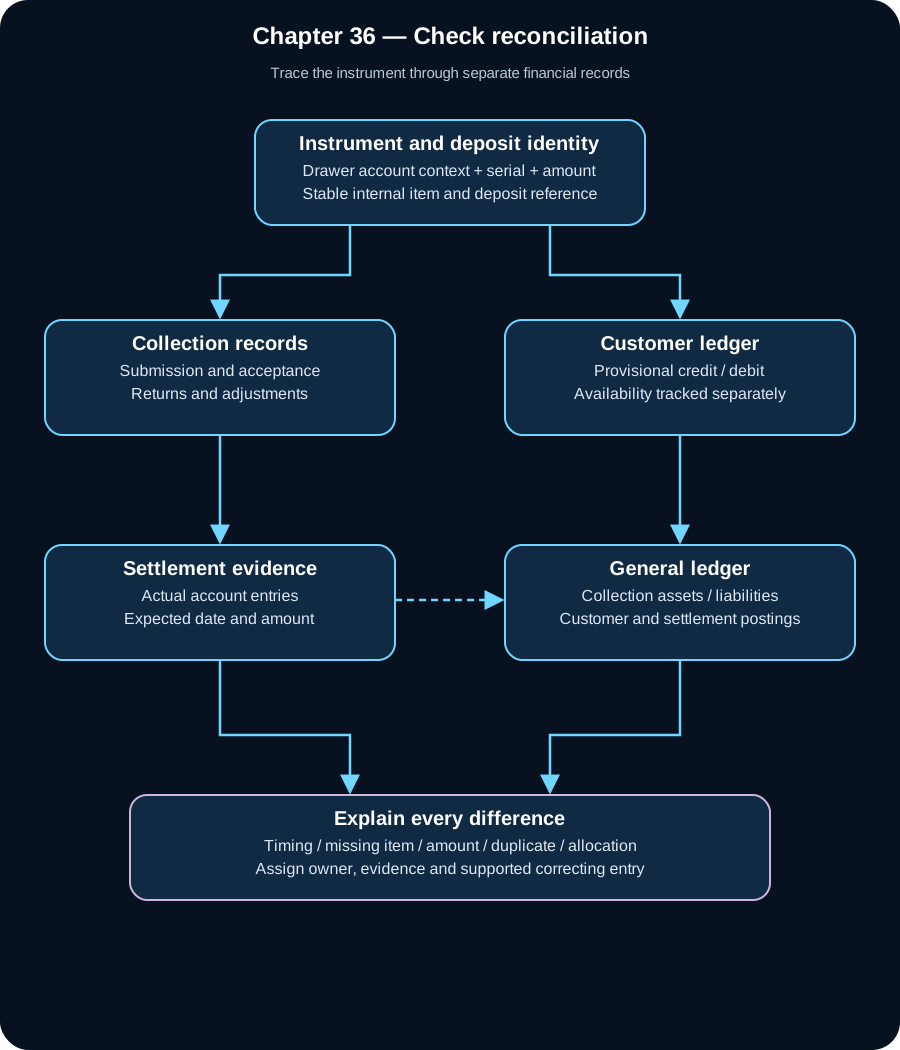
Check reconciliation connects the deposit population, outgoing or on-us processing, settlement entries, customer postings and exceptions. It should operate at both aggregate and item level. Aggregate controls reveal missing files or value differences. Item controls explain which customer and instrument are affected. Neither is sufficient alone: a balanced total can hide an omitted item offset by a duplicate.
In an illustrative bank ledger, accepting a provisional deposit can create a customer deposit liability and a corresponding collection asset or clearing position. Receipt of settlement then clears the appropriate asset against the actual settlement account. The paying bank has its own customer debit and settlement entries. These descriptions explain economic direction; actual account names, timing and journal design follow the bank's approved accounting policy.
A return can reverse the relevant collection effect and change the depositor's balance under the applicable agreement and law. If the funds have been withdrawn, the bank may have a customer receivable or loss exposure rather than cash ready to recover. The accounting should show that exposure honestly. A negative customer balance is not proof that the bank has actually recovered money.
Fees, corrections and claims should remain separately identifiable. Combining a collection shortfall with a service charge into one net difference makes investigation harder. The bank needs a bridge from gross item activity to net financial entries. That bridge should state the population, value date, account and adjustment categories used, with unmatched items retained as breaks.
Explaining a balanced batch that is still wrong
A batch contains one check for $600 and another for $900. The $600 item is omitted, while a separate $600 item is duplicated. The batch total may still match an expected amount. A total-only reconciliation will report success even though one customer is missing a payment and another may be charged twice. The bank should compare item identities and populations as well as counts and sums.
The reverse can happen when one customer deposit is deliberately split across several cash letters. A deposit total does not need to equal one cash-letter total. The lineage should show the item allocation so that operations can reconcile many deposits into one file or one deposit across several files. Hard-coding a one-to-one relationship creates false breaks during perfectly valid processing.
Customer statements should identify the financial events in understandable terms. A correction should be distinguishable from a new deposit. A returned deposited item should link to the original credit where the channel supports it. Corporate reporting may include check number, deposit reference, image access and return information, but the bank must agree the supported format. There is no universal ISO 20022 check-status message that every U.S. bank sends to every depositor.
Management reporting should focus on unresolved value and cause, not merely the number of completed batches. Useful internal measures include deposits awaiting collection evidence, unmatched settlement, unallocated returns, aged adjustments and customer corrections still pending. These are suggested operational measures, not regulatory thresholds. Their definitions should be stable enough to compare periods and identify deterioration.
A reconciliation case closes when the bank can explain the original item, every relevant financial effect and any residual obligation. A manual balancing entry may be part of the approved correction, but it must not replace the explanation. Finance should be able to trace why the entry exists and which customer or bank position it resolves.
Following an illustrative pair of bank entries
Assume the depositary bank gives its customer provisional ledger credit for a $12,480 check and uses an internal checks-in-collection asset account. An illustrative entry debits that collection asset and credits the customer's deposit liability. When the bank receives the corresponding settlement cash through its actual arrangement, it debits the relevant cash or settlement-account asset and clears the collection asset. A bank may use different intermediate accounts or timing, but the distinction between customer liability and collected cash must remain explainable.
At the paying bank, payment normally reduces the drawer's deposit balance and produces the corresponding settlement obligation or cash effect. The exact posting sequence depends on the bank's system and settlement arrangement. These entries should not be inferred from the depositary bank's customer credit alone. The two banks maintain separate books, and the collection service connects their financial obligations through its agreed account mechanism.
Suppose a $20 processing fee is charged separately. The depositary bank should still be able to show the $12,480 instrument and the $20 service charge. Posting only an unexplained net amount obscures whether the check was collected for its face amount. If the agreement provides net reporting, the supporting detail should make the gross payment and deduction recoverable. The customer needs that distinction to apply the invoice correctly.
Now suppose the bank initially posts the customer credit but the collection submission is rejected. The checks-in-collection balance remains unresolved until the item is repaired, removed or otherwise disposed of under the bank's process. It should not be cleared merely because a deposit receipt was issued. Finance should see the item in the relevant outstanding population and operations should own its next action. This is how a general-ledger balance becomes a manageable collection obligation instead of an unexplained suspense total.
14. Building the bank service and operating model
A practical check service connects channel acceptance, item processing, account decisioning, settlement, image storage, case management and reporting. These functions can sit in different systems or be provided by vendors. The architecture should show their responsibilities and interfaces without claiming that one commercial platform is the standard design for all banks.
The core data model needs a stable business item identity, source evidence, customer deposit relationship, relevant routing and account data, processing attempts, financial events and exceptions. Native external references should be retained alongside internal identifiers. This allows an investigator to move from a customer receipt to a processor record and then to a settlement entry without rebuilding the history from screenshots.
Interfaces should specify their unit of acceptance and failure. A deposit API may accept a whole deposit request; an item engine may reject one check; an exchange service may reject a file; a ledger may accept some entries and reject another. The bank must know which of these outcomes can occur and how they are reported. Recovery should use the actual contract rather than an assumed all-or-nothing model.
Access should follow the action being performed. Viewing an image, correcting an amount, changing routing configuration, releasing an exception and posting a financial adjustment are different privileges. A user who can help a customer find a check should not automatically be able to alter the clearing record. Sensitive actions need evidence and authorization appropriate to their financial effect.
Readiness includes the difficult handoffs
A production-readiness demonstration should follow an accepted check through the actual reports used by operations and finance. The team should show where the item appears, which reference links each stage, how settlement is identified and how the customer sees the result. A successful image upload is only the beginning of that demonstration.
The same review should include a missing acknowledgement, a rejected item, a return, an amount correction and a duplicate concern. Each case should have a defined owner and a safe next action. If an incident requires a developer to edit a production database simply to find whether a check was sent, the operating model is incomplete. Support tools should expose the relevant evidence through controlled access.
Business continuity should distinguish new work from uncertain old work. After an outage, the bank can restore a connection while still having unresolved submissions from before the failure. Replaying all files without establishing prior acceptance can create duplicate presentment. The recovery plan should identify the authoritative checkpoints and the population eligible for resubmission.
Vendor oversight should include evidence access during incidents and after termination. A bank may need old images, item references and adjustment records after a platform migration. The contract and data export plan should preserve those capabilities. Operational dependence on a vendor does not disappear when new transactions move to another provider.
Changes in routing, account relationships and product rules need effective dates and regression coverage. A new bank merger mapping can alter where items are presented. A channel change can alter deposit cut-off treatment. A report-format change can break reconciliation even if payments continue to process. The release assessment should connect technical changes to their customer and financial consequences.
The service is ready when ordinary staff can operate it within approved controls, explain its records and recover from realistic failures. This requires clear procedures and evidence, not just a technically successful integration.
15. Worked cases and lifecycle testing
Case A — deposit shown, collection missing. Northfield receives a $12,480 deposit credit, but no item appears in the outgoing collection report. The customer asks whether it should deposit the paper again. What should the bank establish first?
The bank should locate the accepted deposit and determine whether the item was held for review, routed on-us, rejected, sent through another route or left in an unresolved interface state. It should compare item records and acknowledgements before advising a new deposit. If collection already occurred through a different path, redeposit could create duplicate presentment. The customer-facing credit and the outgoing report are evidence from different stages, so their mismatch is a case to investigate rather than an automatic instruction to retry.
Case B — same brand, different bank. A customer deposits a check drawn on a bank with a familiar group logo. The routing engine treats it as on-us, but the drawer's account belongs to a separate legal bank. What is the defect?
The routing decision used branding instead of the legal and processing relationship. The bank should correct the mapping and establish the original item's financial state before sending it externally. If the payee was already credited, that credit must remain linked to the eventual collection. Testing should include shared brands, multiple routing numbers, legal mergers and legacy cores so that internal and interbank treatment follow the actual arrangement.
Case C — settlement credit, missing customer credit. A settlement report includes the item, but the customer's deposit credit failed in the core interface. Should operations resend the check?
No. The collection has financial evidence. The bank should repair the missing customer effect under approved accounting controls, retaining the original item and settlement references. Resending the check would address the wrong failure and could charge the drawer again. The test should demonstrate that ledger recovery can occur independently from collection resubmission and that the customer receives a clear correction history.
Case D — replacement without original status. A supplier says a $3,800 check never arrived. The drawer issues another check and removes the first from its outstanding register. Both later appear for payment. What was lost?
The relationship between the original instrument, replacement and business obligation. The drawer and bank need the relevant stop or servicing process and a retained record of the original. Removing the first instrument from view does not remove its possible presentment. The bank should investigate the two actual payment outcomes and the applicable instructions rather than assuming that the latest issue register proves the first item was invalid.
Case E — returned item and notice both post. A depositary bank receives a notice of nonpayment and later the returned check. Its system debits the depositor for both. What should the design distinguish?
The notice is an informational event associated with the same original item. The return carries its own financial treatment. The bank should link them and prevent duplicate customer recovery. The test should include arrival in either order, replay of a notice and duplicate delivery of a return file. The expected result is one correct financial effect with a complete evidence history, not one posting for every incoming message.
Case F — old check paid. A customer says a check more than six months old could not legally have been paid. What should customer service avoid?
It should avoid repeating a universal expiry claim. The instrument type, applicable law, agreement, any stop instruction and payment facts need review. The model UCC does not make every older check automatically void. The bank should explain the actual treatment and investigate any separate claim of unauthorized payment, rather than deciding the case from age alone.
A complete test follows both banks' evidence
For an end-to-end exercise, give learners the original instrument description, payee deposit receipt, collection item reference, paying-bank presentment record, settlement entries and a customer statement extract. Ask them to identify which document answers each question. Which proves deposit? Which supports presentment? Which proves the interbank entry? Which shows the customer debit? Which records the basis of a later correction?
Then remove one record. If the settlement entry is missing, the bank has a financial reconciliation gap. If the image is missing, payment might have occurred but evidence for a claim is weakened. If the customer deposit reference is missing, the bank may struggle to allocate a valid return. These are different failures and should produce different operational responses.
The exercise should also include an item that is correctly processed but commercially misallocated by the payee. Learners should recognize that the bank's collection record may be correct while the supplier's invoice application is wrong. Chapter 40 later connects lockbox data to that allocation process. Here, the aim is to establish exactly what the check lifecycle proves and where its evidence ends.
An end-of-day outstanding-item exercise
A bank accepts three checks with illustrative amounts of $12,480, $3,200 and $920. By the reporting cut-off, the first has accepted collection and confirmed settlement evidence, the second is accepted but scheduled for later credit under its actual service, and the third is held before release because the paying-bank information needs review. The customer ledger may already contain provisional credits under the bank's model, but treasury should not count all three as cash received.
The correct explanation separates $12,480 of confirmed settlement, $3,200 of expected collection at its documented date and $920 of unresolved pre-release work. The three amounts still reconcile to the accepted-deposit population of $16,600 if that is the bank's acceptance model. If the third item was never accepted as a deposit, it belongs in an intake exception population instead. The bank must apply its actual definition consistently rather than changing it to make the arithmetic convenient.
Ask what evidence would change each status. The scheduled item needs the relevant settlement result. The held item needs an authorized resolution and, if released, a traceable collection attempt. A customer inquiry does not itself change either financial fact. This exercise tests whether the learner can explain the difference between received paper, bank credit, expected collection and actual money movement without relying on the ambiguous word cleared.
16. Role checklist and learning closure
The Business Analyst identifies the instrument, parties, account relationships and distinct business events before defining statuses. The Product Owner agrees which instruments and channels the bank supports, what its acknowledgements mean and how customers will be told about availability and exceptions. Legal and compliance teams distinguish federal requirements, state check law and valid agreements so that operational labels do not become unsupported legal conclusions.
The Architect connects deposit, item, presentment, settlement and customer posting while preserving their separate responsibilities. The Developer retains native references and makes recovery safe when only part of the process succeeds. The Tester follows both the normal path and the uncomfortable cases: missing acknowledgements, duplicate delivery, wrong routing, posting failures, replacements and returns. A test passes when the final customer and bank positions are explainable, not merely when every interface returned a successful response.
Treasury needs actual settlement accounts, timing and unresolved exposure. Finance and operations reconcile populations as well as totals and keep original movements separate from later adjustments. Customer service explains whether a deposit was received, whether funds are available and what has been established about payment, without treating those answers as interchangeable.
Chapter 37 now examines how the paper instrument becomes an electronic collection record and, where needed, a legally equivalent substitute check. That change in representation improves processing, but it does not remove the account relationships and obligations established here.
For every check, be able to show the instrument, the collection path, the accounts affected and the evidence supporting the current outcome.
Authoritative references
Public sources checked on 6 September 2026. UCC links reproduce model provisions and do not replace the applicable state's enacted law. Product-specific cut-offs, settlement relationships, journal entries and servicing conditions require the bank's current agreements and operating procedures.
This application uses JavaScript for the full interactive experience. This text summary is served for accessibility and search indexing.