Pay-by-Bank, Account Linking and Account-to-Account Collections. Distinguish account linking, data permission, validation and payment authority across ACH debit and payer-credit collections, current rules, funding and recovery.
A customer chooses pay-by-bank for a $640 appliance order. She selects her bank, authenticates in a bank-controlled journey and returns to the retailer's checkout. The page says her account is linked. A few moments later, it says the payment is processing. The retailer wants to release the order, but its bank needs to know whether the service initiated an ACH debit, requested a customer credit transfer or merely obtained account information.
Chapter 44 separated invoice exchange, approval and payment execution. Pay-by-bank requires another careful separation: permission to access account data, authority to initiate a payment and evidence that value moved. The customer journey can connect these steps smoothly, but the bank must still preserve their different legal, technical and financial meanings.
Linking an account is not a payment. Validating an account is not a guarantee of funds. A payment authorization is not settlement. The actual rail determines how the collection moves money and what exceptions remain possible.
For a roughly 60-minute core session, spend about 35 minutes on Sections 3–8. For the next 10 minutes, use the chapter’s three diagrams to separate data permission, payment authority and confirmed execution. Use 10 minutes to work through one case in Section 15, then spend the final 5 minutes explaining: Why is a linked bank account insufficient evidence that the retailer has collected the purchase price? Treat these timings as a study guide. The remaining sections, additional cases and extended reference material are follow-up study; completing the whole chapter takes longer.
The retailer, customer, amounts and internal designs are fictional. Bank coverage, API capabilities, rail availability, limits, fees and guarantees require current provider and bank documentation. Regulatory status is stated as checked on October 5, 2026.
Chapter navigator
- What pay-by-bank means in the United States
- Participants and the boundaries between their roles
- The account-linking journey
- Data permission and payment authorization
- Account validation and what it can prove
- ACH debit pay-by-bank collections
- Customer credit transfers and instant-payment options
- Orchestration, routing and uncertain outcomes
- Funding, balances and merchant liquidity
- Fraud controls across linking and payment
- Consumer protection and current data-rights status
- Failures, returns, refunds and recovery
- Reconciliation and payment reporting
- Implementing and governing the service
- Worked cases and implementation decisions
- Role checklist and learning closure
1. What pay-by-bank means in the United States
Pay-by-bank describes a customer-facing way to fund a payment from a bank account. It is not the name of one universal US payment scheme. A service may collect through ACH debit, support a customer-initiated credit transfer, use an available instant-payment arrangement or make an internal transfer where the relevant accounts and service permit. The product should disclose and operate the actual method rather than rely on the label.
The appliance retailer wants a convenient checkout and a dependable basis for fulfillment. The customer wants to understand which account will be used, how much will be paid and what happens if something goes wrong. The bank needs the underlying authority, account information, fraud controls and financial lifecycle. A polished bank-selection screen does not answer those questions by itself.
An account-linking provider can help the customer identify an account and share permitted information. A payment processor can submit instructions and report status. One provider may perform both functions, but the capabilities remain distinct. A data connection that works does not establish that the provider can initiate every kind of payment from the selected account.
The service should state whether the customer is authorizing the retailer to pull a payment or instructing a bank to push a payment. That distinction changes who initiates the financial instruction and which controls and exceptions apply. An ACH debit mandate should not be presented as though the customer has personally sent an instant credit transfer, and a request for a credit transfer should not be treated as a debit authority.
Start with the commercial promise
For a one-time purchase, the service needs the order, amount, currency, payee and selected funding account. For recurring bills, it also needs the scope and timing of future authority. Saving an account after one purchase should not silently enroll the customer in automatic future collections. The customer should understand the separate choice to retain an account or establish a recurring arrangement.
The retailer's fulfillment decision may occur before the underlying collection is beyond all relevant exception risk. If a provider offers a payment guarantee or advances proceeds, that is a specific contractual feature with conditions and exclusions. It should not be described as an inherent property of account linking or every pay-by-bank transaction.
A service can improve convenience by reducing manual account entry and preserving invoice or order references. It can also introduce new failure points: expired data permission, unavailable bank connectivity, an unsupported account, a lost redirect or an uncertain payment response. The bank should design those cases as part of the ordinary lifecycle rather than treat them as rare technical details outside the payment product.
The practical objective is a clear chain from customer choice to financial outcome. At every stage, the retailer, provider and bank should know what evidence they hold and what remains unresolved. That discipline makes it possible to offer a simple customer journey without making inaccurate claims about authorization, funds or settlement.
2. Participants and the boundaries between their roles
The payer owns or is authorized to use the funding account. The payer's bank authenticates its customer and holds the account. The merchant or biller receives payment for an obligation. Its bank receives or supports collection of proceeds. A data-access provider may connect permitted account information, while a payment provider may prepare and process the financial instruction. Rail operators and participating banks perform the applicable clearing and settlement functions.
One business can occupy several roles. An account-linking provider may also offer ACH processing through a banking relationship. A merchant platform may supply checkout, fraud tools and receivables reporting. The bank should map the actual contractual entities and functions instead of assuming a single brand means one legal participant or one ledger.
In an ACH debit collection, the merchant or relevant originator initiates the debit through its originating arrangement under valid authority. The payer's bank receives the debit entry in its ACH role. In a customer-initiated credit, the payer's bank or authorized payment service sends value toward the merchant's receiving arrangement. The direction of the customer's money is not enough to identify the ACH participant roles; the instruction type matters.
A data provider's response can supply an account identifier, balance information or other permitted data. That response does not make the data provider a settlement operator. Likewise, a payment token issued by a provider does not automatically work across all banks and rails. Its permitted use, mapping and lifecycle depend on the actual service.
Establish who holds money
Some arrangements pay directly into the merchant's bank account. Others use a provider's collection or settlement account before merchant funding. The bank should identify whose account receives the funds, who owes the merchant and what reports support the transfer. A provider dashboard balance is not necessarily a deposit account held directly by the merchant at a bank.
If a nonbank holds funds or maintains a ledger, the customer-facing explanation should accurately describe that arrangement. FDIC insurance protects eligible deposits under applicable requirements; it does not provide a general guarantee against every nonbank provider failure. The service should avoid using a bank logo as a substitute for explaining where money is held and who the account holder is.
Support responsibilities should also be explicit. The payer may contact its bank about an unauthorized debit, the retailer about an order refund and the linking provider about revoked data access. These issues can relate to one purchase but require different evidence. The service should help connect the records rather than send the customer through an endless chain of providers.
A bank's due diligence should establish access to authorization evidence, processing records, account-link events and financial reports needed for its role. A vendor that can initiate collections but cannot supply the evidence to investigate them creates an operational gap. The contracts and interfaces should make the relevant information retrievable under ordinary and urgent conditions.
Distinguish the service provider from the account-holding bank
The customer's bank name can appear prominently during linking, while the merchant's collection contract is with another provider. The customer should understand which party supplies each service. A bank-authenticated data connection does not necessarily mean that the bank endorses the merchant's goods, guarantees the collection provider or handles the retailer's refund policy.
For the merchant, the provider's banking relationship should be documented at the level relevant to the service. If one institution supports ACH origination and another holds a settlement account, both roles matter. A generic statement that the provider works with banks is insufficient to explain where a return or funding discrepancy must be investigated.
The service should also identify the party that maintains the saved payment credential. If the merchant changes processors, the credential may not be portable in the same form. Migration should establish supported credential transfer, customer authority and evidence continuity rather than copy opaque tokens and assume they retain their meaning in another system.
A customer may see a different company name on an account statement from the retailer's storefront name. The service should use the appropriate transaction identification and customer communication so the customer can recognize the payment. An unfamiliar descriptor can generate an avoidable unauthorized-payment complaint even when the purchase was legitimate.
These are practical role questions. They determine which organization can retrieve evidence, stop future collections, explain a statement entry or correct funding. A clear participant map supports both due diligence and a much simpler customer-support experience.
3. The account-linking journey
A supported account-linking journey typically starts with the customer choosing a bank and being directed through the bank's authentication and permission process or another clearly described provider method. The details vary by institution and provider. The product should accurately identify where the customer is entering credentials and what information will be shared.
A bank-controlled authentication journey can allow a customer to authorize data access without giving the merchant the bank login credentials. The resulting connection may use tokens and API permissions under the service's design. The merchant should receive only the information it needs for the stated purpose. The existence of such a journey does not mean every US bank supports the same interface or account coverage.
After authentication, the customer may select among eligible accounts. The interface should distinguish accounts clearly enough to prevent accidental selection without exposing unnecessary full account details. Account type, masked identifier and recognizable name can help. An account visible through a data service may still be ineligible for the intended payment method or subject to bank restrictions.
The return to checkout should be bound to the original session and customer action. The service must protect against a substituted redirect, mismatched session or stale response attaching another account to the order. The exact security mechanisms belong in the provider's current implementation specification; this chapter does not invent endpoint names or token formats.
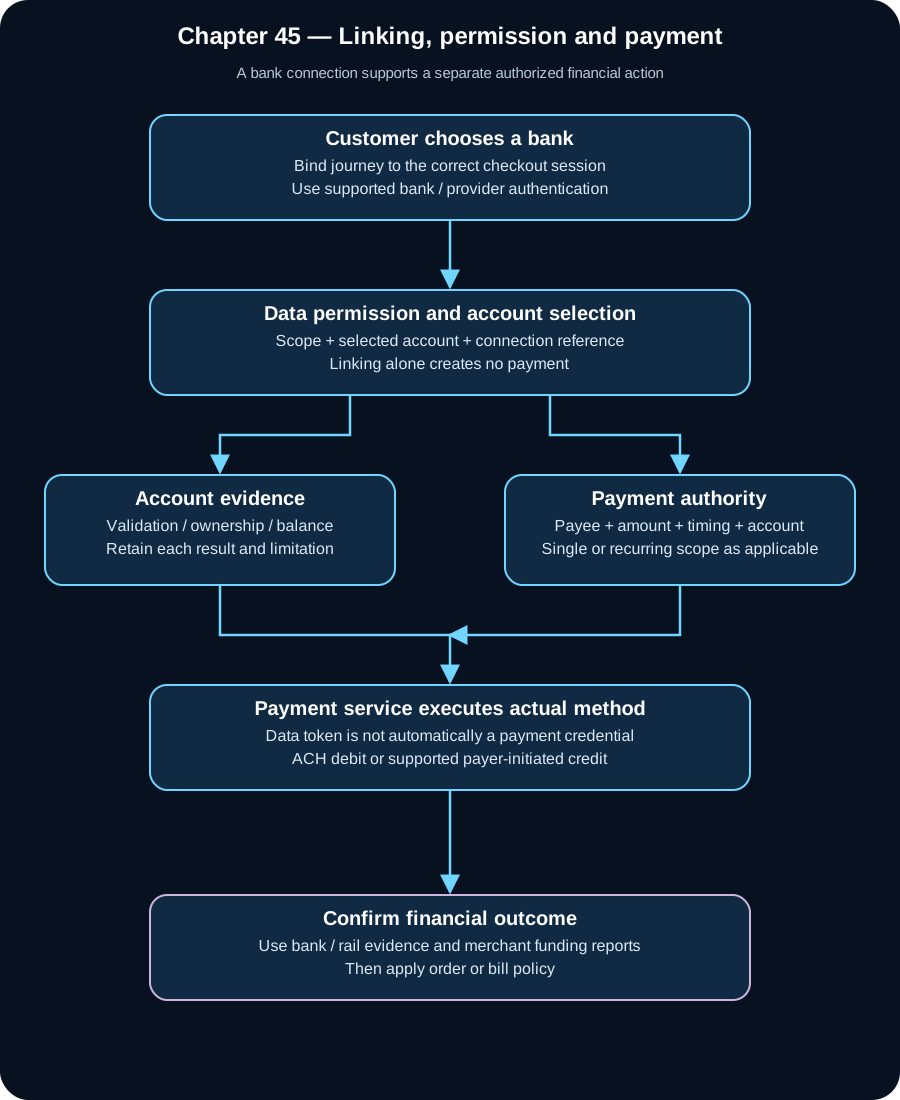
The diagram separates bank authentication, data permission, account selection and payment authority. A successful link supplies an eligible connection and relevant evidence. The customer still needs to authorize the actual payment, and the payment service still needs to establish the financial outcome.
Design the unsuccessful journey
The customer may decline permission, abandon authentication or find that the bank is unavailable. Those outcomes should not be recorded as payment failures because no payment may have been initiated. The checkout should preserve the order appropriately and offer a supported alternative without suggesting that funds were debited.
A link can succeed while a requested data field is unavailable. The service should handle that limitation honestly. If account ownership information is not supplied, it should not label ownership verified merely because routing information was returned. If balance data is stale, the displayed result should not imply a current funds reservation.
Reconnect flows need care. A customer may reauthenticate an existing account after a token expires. The provider should preserve the relationship where supported and avoid creating a second saved account that appears to authorize duplicate recurring collections. A new technical connection identifier should not automatically create a new financial mandate.
The customer should be able to review connected accounts and understand how to remove or manage them. The product should explain the effect of disconnection on data access, saved payment credentials and any existing recurring authority. Those effects may differ, but the difference should be understandable and implemented deliberately.
Good account linking reduces entry errors and makes permission visible. Its success should be measured as a reliable, correctly scoped connection, not as a completed payment. That distinction becomes especially important when a retailer's order system decides whether to release goods.
Account selection should survive the return to checkout
A customer may authenticate successfully and see several accounts, then select a checking account ending in one masked identifier. The checkout should retain that exact selection and show it before payment confirmation. It should not silently default to the first account returned by an API or switch to an account with a higher balance.
The bank's account identifier and the provider's stored credential may differ. The application should maintain the supported mapping and protect it from accidental reassignment. A refresh of account data should update descriptive information without attaching the existing payment authority to another account merely because the order of returned accounts changed.
The service should also handle renamed accounts. A customer can change a nickname from household to bills without changing the underlying account. Duplicate detection and recurring settings should use the supported stable identity, not the display label. Conversely, two accounts with the same nickname remain distinct and should not share authority by accident.
An abandoned linking session should expire or remain recoverable according to the provider's secure design, while the order retains a clear unpaid state. If the customer resumes on another device, the service should establish the proper session and authority rather than trust a copied browser parameter as sufficient proof.
These tests are small but financially significant. They verify that the account the customer intended is the account the payment service actually uses. A correct amount sent from the wrong account is still an error even if the merchant receives the expected proceeds.
4. Data permission and payment authorization
Permission to access account information specifies what data a party may obtain and for what purpose under the arrangement. Payment authorization specifies the financial action the payer permits. A service can collect both in one coherent journey, but it should retain separate evidence of their scope and effect.
For the $640 purchase, the customer might permit access to account-identification information and separately authorize one debit for $640. The merchant should not infer authority for future purchases from that single transaction. If the service also offers to save the account, the customer should understand whether that is merely a convenience for later authorized payments or part of a recurring agreement.
A data-access token should be treated according to its actual permissions. A token allowing account information does not automatically authorize payment initiation. A payment credential or processor token has its own permitted use. The bank should prevent developers from treating all tokens as interchangeable simply because they are opaque strings returned by the same provider.
Recurring consumer debits bring the applicable Regulation E authorization requirements and relevant Nacha rules into the design. Chapter 42 explains the distinction between recurring authority and standing arrangements requiring an affirmative action for each subsequent payment. Pay-by-bank does not remove those requirements. The product should classify the actual interaction and preserve the necessary evidence.
Bind authority to the obligation
The authorization record should identify the amount or permitted calculation, payee, funding account, timing and scope appropriate to the transaction. It should connect to the order or bill and the final customer confirmation. If the amount changes after linking, the payment step should reflect the changed amount before obtaining the required authority.
A customer may link a joint account or a business account. Access to view data does not always establish authority for every payment action. The service should use the applicable account and user permissions and its risk controls. It should not assume that a successful login conclusively resolves all questions of ownership, agency or corporate payment approval.
Revocation also needs a clear model. Ending data access can stop future data retrieval while an already authorized payment remains in processing. Revoking a payment mandate can affect future collections while legally required records remain retained. Removing a saved account from a screen may need to trigger additional actions to match the customer's expressed intent. The system should make those effects explicit rather than rely on technical defaults.
Evidence should be retrievable without unnecessary sensitive data. A case can retain the authorization text or version, customer action, time and relevant account reference while protecting credentials. The bank should establish the required retention and retrieval for the actual record types. A screenshot of a generic consent page is not sufficient evidence of what one customer actually authorized.
The service should also avoid coercive ambiguity. A customer should not have to agree to unrelated ongoing data use merely because the payment flow combines several permissions in one button. The bank and provider should assess applicable legal and privacy requirements and design the scope around the service's stated purpose. Clear permissions improve both customer trust and the quality of investigation evidence.
5. Account validation and what it can prove
Account validation asks a specific question about the account information and supported payment use. Depending on the method, it may establish that an account exists, is open, can receive ACH entries or is accessible to the customer. Ownership verification, authority and available funds are separate questions. The service should name the result accurately rather than use a broad verified badge for all of them.
Nacha's WEB-debit rule requires account validation as part of a commercially reasonable fraud-detection system before first use of an account number and before a change to it. Nacha's public explanation is technology neutral. It also explains that account ownership verification is not automatically required by that particular rule, while a more rigorous assessment may be appropriate for an originator's risk profile. Compliance should assess the actual business and method.
A routing-number format check can catch entry errors, but it does not prove that the account number belongs to an open account or that the customer may debit it. A name match can contribute to risk assessment, but names can differ legitimately or be supplied without sufficient verification. The service should distinguish syntactic checks from substantive validation.
Account-linking data can help where the bank and provider supply suitable evidence. The implementation must understand the response's coverage, freshness and limitations. A successful connection to the institution is not necessarily a successful validation of the specific selected account for the intended ACH debit.
Validation can become stale
An account that was open when first linked can later close or become restricted. A customer can change account details, revoke access or lose authority. The bank and originator should define when further checks are appropriate under the rules, risk profile and service arrangement. A historical validation result should remain dated rather than appear as a timeless guarantee.
Micro-entries are one account-validation method. Nacha defines them as ACH credits of less than $1 and any offsetting ACH debits used to verify a receiver's account, with associated formatting and origination requirements. Its later phase requires commercially reasonable fraud detection, including monitoring forward and return volumes. The current rules and bank implementation requirements should govern production use.
The customer may need to confirm information from the micro-entry process before the service treats validation as complete. Sending the entries alone does not prove that the intended customer accessed the account. The platform should retain the actual completion evidence and prevent an unfinished validation from being used as a fully verified payment credential.
Validation attempts can themselves be abused. Attackers may test large numbers of accounts or exploit small entries. Monitoring should consider repeated attempts, unusual account changes and return patterns. A tiny amount is not a reason to exclude the event from fraud controls.
The practical outcome should be a precise record: what method was used, which account was assessed, what result was returned, when it occurred and what limitations remain. That record supports the payment decision without overstating what validation proves.
A validation result needs a defined scope
Suppose a provider reports that an account number is valid for ACH posting. The merchant should store that result as account validation, with its method and date. It should not expand the result into a claim that the named shopper owns the account, that the account has $640 available or that every future debit is authorized.
If another service supplies ownership-related data, retain its actual meaning and limitations separately. A name comparison can have ambiguity from joint holders, business names or formatting. The risk process can assess those facts without forcing every difference into a binary fraud verdict. A manual review should preserve the evidence and decision rather than overwrite the original response as though it matched exactly.
A changed account number should trigger the applicable first-use or change validation process and any additional risk controls. Reusing a prior validation because the customer profile is unchanged would miss the fact that the financial destination of the debit changed. A new account can also require new or updated authority under the actual arrangement.
If validation is temporarily unavailable, the service should follow an approved policy for that condition. It should not record a successful result simply to keep checkout moving. A supported alternate method, delayed completion or clear inability to use the option is more accurate than a fabricated verified status.
The bank should review how provider status codes map to business labels. Valid, verified, authenticated and authorized can mean different things across services. The mapping should preserve the narrowest supported meaning and expose any remaining decision to the appropriate control process.
6. ACH debit pay-by-bank collections
In an ACH debit model, the customer authorizes the merchant or biller to collect from the account through the originating arrangement. The provider prepares and submits the debit under the applicable rules and bank requirements. Account linking may supply or protect the account information, but the ACH instruction and authority are the financial mechanism.
The customer-facing confirmation should identify the collection as processing according to the actual service. It should not imply that account linking caused instant final settlement. The ACH operator processes entries and the participating institutions settle through the applicable arrangements. Account entries, availability and later returns remain part of the ACH lifecycle explained earlier in the programme.
For an internet-initiated consumer debit, the applicable WEB requirements are relevant. The product should classify the transaction based on the actual authorization and circumstances, not just the retailer's brand. Corporate account collections require their own appropriate treatment; consumer and business rules should not be mixed merely because the same checkout component serves both.
The originating bank needs the required originator relationship, controls and evidence. A merchant outsourcing the interface should still understand who originates entries and who holds authorization records. If the processor changes, the bank should assess continuity of evidence and credentials rather than assume a provider migration automatically transfers every mandate and risk control.
Fulfillment is a separate risk decision
The retailer may choose to release the appliance before all relevant ACH return risk has resolved. That decision should be supported by its agreement, fraud assessment and any actual guarantee. A provider's approved-risk decision can support the retailer's policy, but it does not alter the ACH settlement or return rules.
If the debit fails before submission, the order should remain unpaid under the service's defined treatment. If it is submitted and later returned, the retailer may need to restore the receivable or pursue another method according to its policy and applicable requirements. The system should preserve the original payment and return relationship rather than delete the failed collection from history.
Reinitiation must follow the applicable Nacha rules and authority. The service should not retry every returned debit indefinitely or change the account merely because another linked account is available. A customer's permission for one funding account does not automatically authorize collection from all accounts visible through data access.
The bank and provider should report gross payment attempts, accepted entries, returns, fees and merchant funding in a reconcilable way. A net payout can include several days or groups of activity under the arrangement. The retailer needs to know which orders were funded and which remain exposed, not just the amount of the latest bank credit.
An ACH debit pay-by-bank service succeeds when convenience at checkout is supported by clear authority, suitable validation, risk controls and complete exception reporting. Calling the method bank payment should not hide those continuing responsibilities.
7. Customer credit transfers and instant-payment options
A pay-by-bank service can instead support a customer-initiated credit transfer. The customer instructs its bank or authorized service to send value to the merchant's receiving arrangement. The available rail may be ACH credit, a supported instant-payment service or another method appropriate to the product. The implementation must establish actual bank and account capabilities before presenting an option as available.
FedNow and The Clearing House RTP network support instant credit payments through participating institutions under their respective rules and arrangements. They are separate services. A bank's participation in one does not automatically establish participation in the other or support for every customer-facing request-for-payment feature. The earlier chapters cover their settlement models in detail.
A request for payment is a nonvalue message or service interaction asking the payer to act, according to the supported scheme. It does not pull money from the payer's account. The payer's financial institution and customer must complete the appropriate authorized payment process. The merchant should not release an order merely because a request was successfully delivered.
A bank redirect can help the customer review and authorize the transfer in a familiar environment. The return to the merchant still needs a reliable financial status from the payment service. A browser returning successfully from the bank is not sufficient evidence that the payment settled; the customer may have cancelled or the response may be incomplete.
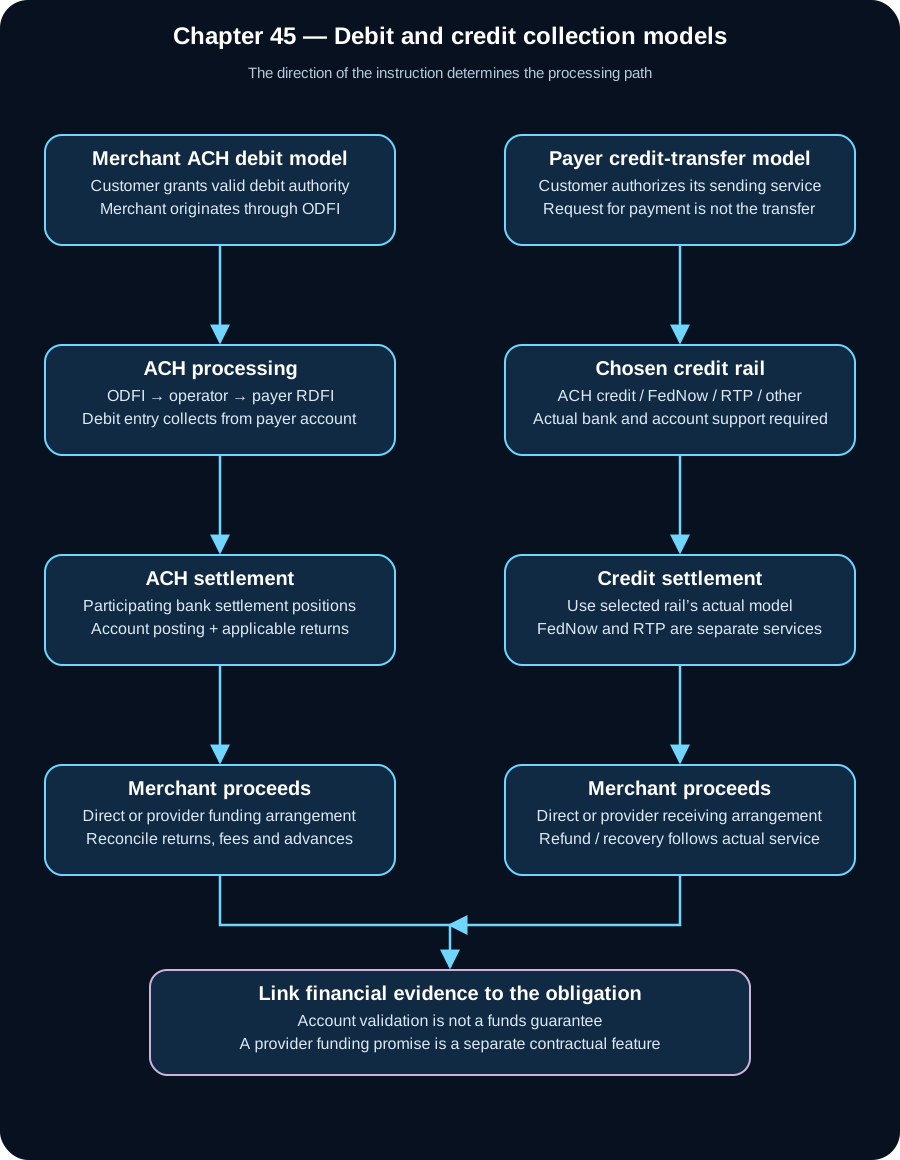
The diagram separates a merchant-originated debit under authority from a payer-initiated credit. The actual rail controls processing and settlement. Account-linking data can support either journey where the service permits, but it is outside the money-movement mechanism.
For FedNow, settlement debits and credits the participating institutions' designated Federal Reserve master accounts, which may be their correspondents' accounts. RTP uses a prefunded model: settlement occurs through the RTP ledger against positions backed by its joint Federal Reserve account. It does not send a new Federal Reserve account transfer for every individual RTP payment. These are different settlement designs. In either service, a provider's later merchant payout is a separate step where the collection arrangement includes one. The account-linking API performs neither settlement function.
Do not assume instant means universal
The merchant's receiving account and provider must support the chosen service and the intended use case. Limits, availability and risk controls should come from current documentation. This chapter does not state a universal pay-by-bank transaction limit or claim that every bank can send every requested payment at any time.
For instant-payment rails, settlement and customer posting must be interpreted through the actual service's messages and rules. A completed payment generally cannot be treated like a cancellable draft instruction. A request to return funds is not an automatic reversal or a guaranteed refund. The bank should explain the applicable recovery process without importing card chargeback terminology as though the same mechanism exists.
A merchant refund is a separate authorized payment or supported return process tied to the original transaction. The refund destination and status need controls. A request from an unknown email to refund an instant payment to a different account should receive appropriate verification rather than bypass controls because the original receipt was fast.
An internal book-transfer option has its own boundaries. If the relevant accounts and service are at one bank, value may move on that bank's books without interbank clearing. The bank must still apply authority, fraud, posting and reporting controls. The product should identify the actual method rather than describe every account-to-account movement as an RTP or FedNow payment.
The credit-transfer model can give the merchant useful financial evidence promptly where supported. Its customer experience should still explain the payee, amount and consequences before authorization. Speed increases the importance of getting the instruction right at the point where the customer approves it.
Request acceptance and payment acceptance are different
A merchant sends a supported request for payment linked to the $640 order. The receiving service acknowledges delivery. That evidence establishes the request's progress, not the customer's financial decision. The customer may ignore it, decline it or choose to pay through another method.
If the customer approves a credit transfer, the payment should have its own instruction and financial references linked to the request. A request status and a payment status can then be reconciled without assuming they are identical. The merchant should use the actual payment evidence for its fulfillment decision under policy.
A stale request can remain visible after the customer pays elsewhere. The service needs a supported way to prevent or handle a second payment. Cancelling or expiring the request may help where the scheme and provider support it, but the platform must still consider a payment already initiated before that update took effect.
The amount should remain bound to the customer's confirmed action. If the order changes after the request was issued, the service should determine whether the existing request remains valid or needs an appropriate replacement. It should not accept an approval for one amount as authority for a higher amount merely because the merchant's order total changed.
A request's expiry is also not proof that no payment occurred. The system should check any associated financial instruction before offering a replacement collection. This is another reason to keep document or request state separate from the bank's actual payment state.
8. Orchestration, routing and uncertain outcomes
Payment orchestration selects and manages the supported processing path for an authorized instruction. It should consider actual bank coverage, account eligibility, customer choice, service rules and risk decisions. It should not change a debit into a credit or switch funding accounts without the authority and disclosures required for the new action.
The business payment needs a stable identity across providers and technical attempts. For the appliance order, one authorized $640 payment may generate several API interactions: create, confirm, inquire and receive status. These are not necessarily separate payments. The system should connect them to the same business instruction and distinguish a replay from a genuinely new customer authorization.
A routing decision should be recorded with its reason and relevant configuration version. If a service changes its preferred rail, support must still be able to explain how an earlier payment was processed. A generic pay-by-bank label in historical records is insufficient for choosing the correct exception procedure.
Fallback requires particular care. If an instant-payment attempt has an unknown outcome, automatically initiating an ACH debit for the same order can collect twice. The provider must establish the original state or use a specifically designed, authorized recovery process that controls duplicate exposure. Faster fallback is not useful if it creates an unresolved second financial obligation.
Treat uncertainty as a real state
A timeout can occur after a bank accepted a payment. The platform should retain the original reference, prevent unsafe duplicate submission and use the supported status inquiry or reconciliation process. The customer display should say that the result is being confirmed, with an appropriate support path. It should not assert failure solely because the browser did not receive a response.
Callbacks can arrive late or out of order. A pending notification after a settled event should not move the customer record backward without a valid correction reason. A repeated success callback should not trigger another merchant credit or shipment. The state model should enforce the actual lifecycle and preserve unexpected events for investigation.
An idempotency mechanism is useful only within its documented scope. A provider may recognize repeated requests using a key for a defined period or endpoint. The merchant should also maintain its own business-level protection across retries, provider changes and order updates. A new key should not create a new payment when the customer's instruction has not changed.
The service should separate payment completion from fulfillment completion. A webhook failure can leave a settled payment with an unreleased order. That is an order-processing exception, not proof that the customer should pay again. Reconciliation should identify the settled payment and safely resume the business action once the evidence is confirmed.
Operational recovery should be designed before launch. Staff need to know which system is authoritative for each state, how to inquire and when a new instruction is permitted. A payment platform that can route successful transactions but cannot resolve unknown ones is incomplete for real-bank operation.
Idempotency across an order amendment
The customer authorizes $640, then adds an accessory that changes the order total. The service should treat the amended amount as a new or revised business decision requiring the appropriate authority. It should not reuse a prior authorization solely because the order number is the same.
At the same time, retry protection must continue to cover the original $640 instruction. If its outcome is uncertain, the platform should not collect the full revised amount as though nothing had been submitted. It may need to resolve the original and then collect an authorized difference, cancel a still-cancellable instruction or follow another supported design. The correct action depends on the real state.
The business record should identify order versions, payment allocations and customer confirmations. One order can have a valid initial payment and a later supplemental payment; that is different from an accidental duplicate. A simplistic rule blocking every second payment for an order can prevent legitimate changes, while a rule accepting every new API key can permit replay.
Testing should include a lost response during the amendment. The system should be able to explain which amount was authorized, which instruction was accepted and what remains owed. Neither the customer nor the support agent should need to infer the result from two unexplained pending amounts.
This design connects technical reliability to customer intent. Idempotency is valuable because it helps preserve one intended financial effect, not because a particular header or token automatically makes every payment workflow safe.
9. Funding, balances and merchant liquidity
Balance information can inform a payment decision, but it is not automatically a reservation or guarantee. A reported available balance can change after the check because another transaction posts or an account restriction changes. The service should preserve the source and time of the information and avoid promising that a debit will succeed solely because the balance appeared sufficient.
The payer's bank determines its account treatment under the actual payment service. An ACH debit, an instant credit transfer and a scheduled future payment can involve different controls and timing. The account-link provider's balance response does not replace that bank decision. A retailer should not treat data access as authority to hold or move funds.
Merchant funding may follow a separate schedule from customer payment processing. A provider can receive funds into a settlement arrangement and later pay the merchant, possibly net of fees, returns or reserves. The bank should identify the actual account structure and contractual obligation. A provider's successful collection status is not always the same as a credit to the merchant's bank account.
If a provider advances merchant proceeds before the collection is fully resolved, that is a funding and credit arrangement. Its eligibility, recourse and exceptions should be explicit. The retailer should understand whether a later return can reduce a future payout or create an amount owed. The product should not describe an advance as proof that the original payment cannot fail.
Reconcile gross activity to net proceeds
Suppose a fictional provider reports $32,000 of collections, $640 of returned activity and $80 of fees, producing $31,280 of net merchant funding under the agreed model. The retailer needs the individual transactions and adjustments that explain each component. It should not mark every order paid merely because the net deposit arrived.
A reserve or delayed-funding amount should also be separately identifiable. It is not a payment failure if funds are held under a disclosed contractual arrangement, but it is relevant to merchant liquidity. Treasury needs to know what is received, what is owed by a provider and what is actually available in its bank account.
Instant customer payment does not guarantee instant merchant payout where a provider sits between the parties. The actual receiving and funding architecture determines that result. A service can support prompt direct merchant credit, but the bank must verify that design before promising it. The customer-facing rail and the merchant-funding schedule should not be conflated.
Refunds and returns create additional liquidity needs. A merchant may need to fund a refund while an original collection remains in a different stage. Controls should prevent a refund plus an independent return from producing double reimbursement. The financial reports should link both to the original payment and show the merchant's remaining position.
Treasury reporting should distinguish expected collections, confirmed financial events and available balances. This lets the retailer plan cash without treating linked accounts, authorized instructions or provider forecasts as already usable money. Accurate liquidity reporting is part of the payment service, even when the checkout itself appears simple.
10. Fraud controls across linking and payment
Fraud can occur before, during or after payment initiation. An attacker can take over a customer account, link an account without proper authority, manipulate a merchant destination or abuse refunds. Controls should address the specific action and evidence rather than assume that bank authentication eliminates every risk.
Account-linking risk includes unusual account changes, repeated failed validations, mismatched customer relationships and suspicious device or session behavior. A service should use appropriate signals under its legal and privacy obligations. It should not turn an uncertain name comparison into an unsupported accusation, but it should not ignore material contradictions simply because an API returned success.
Payment risk includes amount, merchant relationship, velocity, prior returns and changes to the destination. The bank should assess the actual rail and use case. A low-value validation event and a high-value collection have different financial consequences, while both can provide useful evidence of abuse.
Nacha's 2026 fraud-monitoring changes are relevant to ACH-based services. Its Phase 2 removes the applicable volume thresholds for the covered non-consumer originators and third-party participants and extends the credit-monitoring requirement to all RDFIs. The published effective date is June 19, 2026; Nacha notes the practical next banking day of June 22 because June 19 is a federal holiday. These are current scheme-rule requirements, not a new federal regulation or a mandate to use one vendor.
Preserve layered controls
The existing WEB account-validation requirement, micro-entry controls and broader fraud-monitoring responsibilities serve related but distinct purposes. Meeting one narrow check should not be described as completing the entire fraud programme. The bank and originator should assess the full service and current rules through their risk processes.
Merchant administration is a high-impact target. A compromised user may change the receiving account, webhook destination or refund permissions. Those changes can redirect funds or conceal payment evidence. Appropriate access, approval, independent verification and audit history should protect financial configuration as well as customer login.
Sanctions controls belong to the actual banking relationships and transactions under applicable OFAC requirements. Account linking may supply useful identity information, but a link token is not a sanctions clearance. The payment service should identify who performs screening, which information is available and how potential matches affect processing and communication.
Fraud decisions should produce a usable operational state. A rejected attempt should not remain scheduled for later automatic release unless the approved process permits it. A held case should identify the responsible team and evidence required. Customer messages should be accurate and avoid disclosing sensitive control logic unnecessarily.
The bank should monitor outcomes, including confirmed fraud, false positives, customer abandonment and recovery success. A control that blocks legitimate users disproportionately may need refinement; a high approval rate can conceal weak detection. The objective is a reliable service with proportionate controls, not a single score that substitutes for understanding the payment.
11. Consumer protection and current data-rights status
Consumer account payments must be assessed under the applicable law and actual transfer facts. Regulation E can apply to covered electronic fund transfers from consumer accounts. The bank should evaluate authorization, liability and error-resolution obligations through the regulation and current official guidance. A pay-by-bank label does not create an exemption.
The CFPB's EFT FAQs discuss unauthorized transfers and fraud scenarios. A transfer initiated by a fraudster using obtained credentials can require different analysis from a payment the consumer personally initiated after deception. The bank should investigate the actual facts and applicable provisions. It should not use blanket statements that all authenticated payments are authorized or that every scam produces the same refund right.
A merchant's commercial refund policy is also distinct from the bank's statutory error-resolution obligations. The customer may have a legitimate complaint about goods even when the payment was authorized and correctly executed. Conversely, a merchant saying it fulfilled the order does not resolve an allegation that an unauthorized person initiated the account transfer.
Regulation E's preauthorized-transfer requirements remain relevant to recurring consumer collections. Customers need the applicable authorization copy and supported ways to stop or revoke future payments. The service should distinguish cancellation of a payment arrangement from termination of the underlying subscription or debt. Chapter 42 develops those operational details.
Do not teach an obsolete data-access deadline
As of 5 October 2026, the CFPB's current Personal Financial Data Rights page states that a court stayed the rule's compliance dates on 29 October 2025 in Forcht Bank, N.A. v. CFPB. The CFPB also records its 22 August 2025 ANPRM on reconsideration and plans for an NPRM to extend the compliance dates. Treat 12 CFR part 1033 as a rule whose compliance dates are stayed and subject to litigation and rulemaking developments—not as an operative universal account-linking mandate. Section 1033 of the CFPA remains the statutory backdrop; provider contracts, bank APIs, privacy law and applicable payment rules still govern the actual flow.
The CFPB also announced reconsideration activity. An advance notice or proposal is not the same as a final replacement rule. Banks should monitor the official status and obtain current legal advice for their implementation obligations. The practical account-linking services described here can operate through existing contractual and technical arrangements; their existence should not be attributed solely to a presumed universal API deadline.
Data-access standards, network rules and regulation should remain separate in training and product documentation. Financial Data Exchange develops standards for permissioned financial data sharing. That role is different from making federal law or settling payments. A bank can use an agreed standard while still needing to establish the legal authority and contractual terms for the actual service.
The customer explanation should be specific: what data is accessed, by whom, for what purpose, and how to manage the permission. It should not claim that a regulation requires the customer to share all account information to make a purchase. The bank should minimize ambiguity between optional data services and the information necessary for the chosen payment method.
Compliance review should follow the real customer journey, including disconnection, complaints and failed payments. Reviewing only the initial consent wording misses the places where permissions and financial actions can diverge later. The evidence and operational controls must support the rights the service promises.
Apply current legal status without overstating it
The court-stay notice concerns the Personal Financial Data Rights Rule's compliance dates. It does not answer every question about existing data-sharing contracts, privacy obligations or payment authority. A bank should identify which obligations arise from which source and avoid treating one litigation development as a complete description of the legal environment.
For a current implementation, legal and compliance teams should document the status they relied on and review it when official guidance or court action changes. Product copy should avoid hard-coded claims that a particular statutory deadline requires every bank to support the checkout's API. The actual coverage should come from tested provider and bank capabilities.
Technical standards remain useful during regulatory change. A permissioned data-sharing standard can help institutions agree on consistent information and controls. It does not settle the separate question of what a customer authorized the merchant to collect. The authorization record and the payment rail's requirements still need their own review.
The bank should also distinguish consumer and business use. A corporate treasury user linking an account may act under organizational permissions and payment approvals different from a household shopper. Reusing the same visual component does not make the governing account relationship identical. The service should classify users and accounts accurately before applying rules and disclosures.
The operational lesson is to keep the source of each obligation visible. Regulation, scheme rules, technical standards and contract terms can all affect one journey, but none should be used as a vague substitute for the others. That makes updates more precise when one part changes.
12. Failures, returns, refunds and recovery
A failed link is not a returned payment. A rejected authorization is not a settled transfer. A pending provider response is not proof of failure. The exception process should begin with the last confirmed business and financial event, then select the appropriate action for the actual rail.
If the customer abandons linking before authorizing payment, the retailer should preserve the unpaid order state and offer a supported next step. It should not create a collection from account information obtained during an incomplete journey. If linking succeeds but the account is ineligible, the service should explain the limitation without implying that the bank declined a payment it never received.
For a submitted ACH debit, returns follow the actual Nacha rules and bank arrangements. The merchant may need to restore its receivable, change future collection settings or request another method. A processor should not use a generic refund API to conceal a return or automatically reinitiate where the rules do not permit it.
For a completed credit transfer, a recovery request or supported return process has its own requirements and outcome. The sender cannot assume it can cancel the payment as though it were still a draft. A merchant refund should have verified authority, an appropriate destination and a reference to the original payment. The bank should report the actual financial result rather than a mere request acknowledgment.
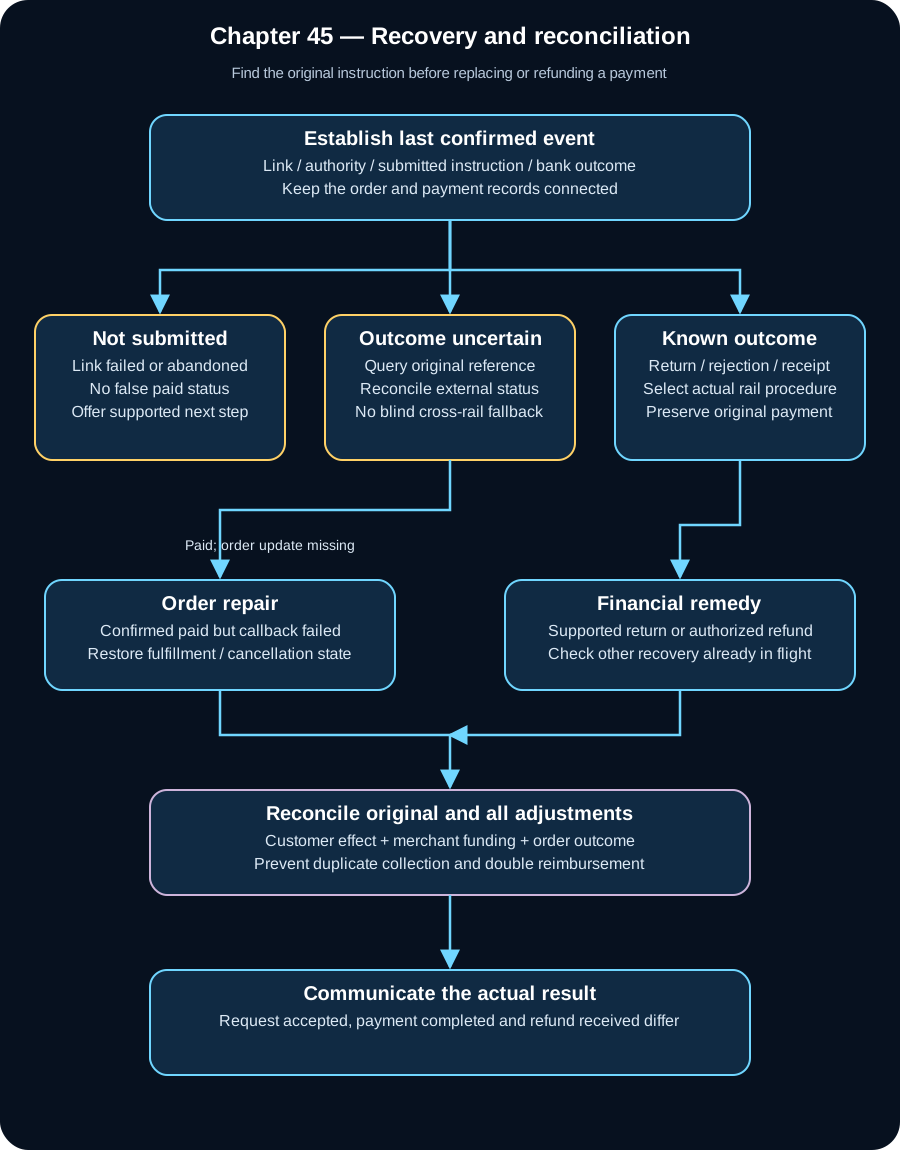
The diagram routes linking failures, uncertain submissions and completed payments differently. An unknown original is investigated before another collection. Refunds and returns remain linked to the original payment so that the customer and merchant are not credited or debited twice.
Keep order and payment corrections coordinated
A settled payment with a failed order update should trigger a controlled fulfillment or refund decision. The customer should not be asked to pay again simply because the retailer's order service missed a callback. Reconciliation should identify the confirmed payment and restore the business record using supported evidence.
A cancelled order may still have a payment in processing. The retailer should determine whether it can cancel the instruction or must handle a later receipt and refund. The order cancellation alone should not erase the payment record. Otherwise a later settlement may appear as unexplained cash or trigger shipment of an order the customer already cancelled.
A refund can fail independently. The merchant should retain the refund instruction, bank status and resulting customer balance. A successful refund request submission is not proof that the customer received money. If the refund is returned, the case should remain open with the appropriate amount owed and a supported next action.
Duplicate recovery is a particular risk where several parties handle complaints. The payer's bank may process an applicable return or error adjustment while the merchant separately issues a refund. The service should coordinate available information and reconcile the original payment's total inflows and outflows. Each institution must still meet its own legal obligations; coordination should prevent error rather than delay a required remedy.
The final customer communication should describe the actual outcome and relevant account effect. It should distinguish an unsuccessful payment, a completed refund and a pending investigation. Precise language is especially valuable when the original checkout offered a simple pay-by-bank button that hid a more complex processing chain.
13. Reconciliation and payment reporting
Reconciliation should connect the order or bill, account-link reference, authorization, payment instruction, rail event and merchant funding. These records have different purposes. The link reference helps identify the selected account and permission; the authorization supports the financial action; the bank or processor record establishes the actual payment event.
The merchant should be able to account for every accepted payment instruction: not submitted, processing, rejected, completed or unresolved under the service's defined states. Financial reconciliation then connects confirmed collections to returns, refunds, fees and funding. A provider payout total alone cannot show whether one order was collected twice or never submitted.
Data access events should not create accounting entries merely because they are successful. A balance query, account-selection response or token refresh is operational evidence. The financial ledger should respond to the appropriate payment and funding events under the accounting design. Treating every provider callback as a financial event can create phantom receipts.
A bank statement may aggregate merchant funding, while the processor reports individual collections. The reconciliation needs a settlement bridge with stable references and explained adjustments. For direct-to-merchant credits, the bank reporting may provide a more immediate transaction link, but the service still needs to connect it to the order and remittance.
Preserve gross and net views
The customer's authorized amount should remain clear even when the merchant receives net proceeds. Fees, reserves and refunds should be separately identifiable. A $640 order payment should not become a smaller customer payment simply because the provider charged the merchant a processing fee.
Late events need controlled updates. An ACH return can arrive after the merchant's daily report; a refund can settle after the order is closed; a provider can correct a funding record. The system should preserve the original event and record the change with its relationship and reason. Silent restatement makes close and investigation difficult.
Reports should distinguish payment success from merchant funding and order fulfillment. The retailer's operations team needs to know which orders can be released under policy. Treasury needs available funds and provider exposure. Customer service needs the status and evidence for one purchase. A shared record can support these views without assigning them all the same completed flag.
Operational measures should include uncertain payments, duplicate-prevention events, account-validation failures, returns by reason, refund age and unresolved funding differences. Linking conversion can be useful for product analysis, but it is not a payment-settlement measure. A high link rate with poor collection outcomes indicates a different problem from customers abandoning authentication.
The bank should retain evidence according to applicable requirements and contracts while protecting sensitive data. Full credentials should not appear in logs or ordinary support reports. A well-designed reference structure lets teams trace the payment without repeatedly exposing account information that is unnecessary for the task.
Permission inventory and payment inventory need reconciliation
The bank and provider should be able to identify active data connections separately from active payment arrangements. A customer can have a live connection with no recurring mandate, or a retained payment record after data access has ended. The inventory should describe those relationships accurately and support the customer's actual management choices.
For each active recurring arrangement, the service should identify the authority, funding reference, payee and next relevant action. For each data connection, it should identify the permitted scope and current status under the service. The two records should link where they support the same product, but neither should be inferred solely from the other's existence.
A periodic review can detect disconnected account aliases still attached to active schedules, unused permissions that should be handled under policy, and failed revocation propagation. The remedy should follow the actual customer request and applicable requirements. The system should not silently cancel valid payments merely because a reporting connection is temporarily unavailable, nor continue unwanted collections because one downstream service missed a cancellation event.
Support should have a plain explanation of the resulting state. A customer asking whether an account is removed needs to know whether future data access stopped, whether saved payment use remains and whether any already released instruction is still processing. The interface should make these consequences clear before the customer acts where feasible, then confirm what actually changed.
The service should retain the evidence required for completed payments while limiting ongoing access appropriately. Deleting historical authorization to honor a request to stop future sharing can undermine later investigations; retaining unrestricted future data access merely because a historical record is needed goes too far in the other direction. The legal and technical design should distinguish retention from continued retrieval.
A concrete release review for the merchant
Before enabling fulfillment on a provider status, the retailer should document exactly what that status proves. Does it mean the account linked, risk accepted the transaction, an ACH instruction was submitted, a credit transfer completed or merchant funds became available? The order-release policy should use the relevant evidence and any actual contractual guarantee, with its conditions understood.
Test the same order through each supported rail and failure state. A status mapping that is correct for a completed instant credit may be misleading for an ACH debit merely accepted for processing. The front end can use simple language, but the back end and merchant policy must preserve the difference.
Finance should reconcile a sample including one successful collection, one return, one refund, one unresolved attempt and any provider fee or reserve. Each item should connect to the order and the merchant's bank or provider position. An unexplained net payout should block financial sign-off even if every checkout test displayed success.
Customer service should then resolve the sample complaints using ordinary tools: account linked but order unpaid, duplicate pending amounts, a disconnected account and a refund not yet received. The team should be able to distinguish the problem and locate evidence without requesting credentials or sending the customer to several providers without guidance.
This release review connects the customer's simple choice to the bank's actual operating model. It establishes that the service can explain and recover the financial outcome, which matters more than the appearance of a successful bank-selection screen.
14. Implementing and governing the service
Implementation should start with the selected payment models and the customer promises they support. Document which banks and account types are eligible, which linking methods are available, what authority is collected and how the chosen rails are executed. Avoid building a generic success screen before defining what success means.
The architecture should separate identity and data access from payment orchestration and financial posting. These functions can share a provider but need explicit interfaces and responsibilities. A data-provider outage should not corrupt the payment ledger. A payment-provider timeout should not automatically revoke an otherwise valid account link. A customer disconnection should trigger the documented effects across the relevant systems.
Provider specifications should define token use, permission scopes, authentication, callback verification, idempotency and recovery. The bank should use current documentation and supported software rather than invent a common API across providers. Standards such as FDX can support permissioned data sharing, but actual implementations and versions still require agreement.
The bank should assess the provider's custody and funding model as well as technology. Who holds collected funds? What happens if customer funding fails after merchant payout? How are returns and reserves reported? Which evidence can the bank obtain during an investigation? These questions determine whether the service can be operated and reconciled, not merely integrated.
Test the boundary conditions
Testing should include bank unavailability, denied data permission, unsupported accounts, stale validation, changed amounts after linking and revoked recurring authority. Payment tests should include a timeout after acceptance, an out-of-order callback, a duplicate request, a failed refund and a financial return after merchant funding. Each case should verify both the customer display and financial records.
A particularly important test is cross-rail fallback. Simulate an uncertain original credit-transfer attempt and confirm that the system does not initiate a second ACH collection without a supported resolution and authority. Another is order recovery: confirm that a settled payment with a lost merchant callback does not force the customer to pay again.
Customer service should use the same state definitions as engineering and operations. Agents need a safe way to locate the original attempt, explain linking versus payment problems and request the appropriate investigation. They should not need to inspect tokens or ask the customer for online-banking credentials.
Change management should consider both regulation and provider behavior. A revised data-access permission screen, bank-coverage change or rail-routing update can affect authority and customer expectations. The bank should review the complete journey and update documentation and tests accordingly. A small interface change can have a material financial effect if it changes what the customer authorizes.
Launch should be based on reconciled end-to-end evidence across the supported models. The customer can link an eligible account, authorize the correct amount, receive an accurate status and obtain a supported remedy for an exception. The merchant can reconcile the order to funds. The bank can explain every financial movement and the authority behind it.
Provider access changes should also reach monitoring and support systems. A revoked connection that continues to generate scheduled balance queries can create unnecessary errors and contradict the intended permission state. A disabled payment credential that remains selectable at checkout can produce a different customer failure. The platform should propagate the actual change to the relevant functions and verify the resulting behavior. It should retain historical references for investigation while preventing future actions that are no longer permitted. This is a concrete operational test of customer control, beyond merely displaying a successful disconnect message on the settings page.
15. Worked cases and implementation decisions
The following cases return to the fictional $640 appliance purchase. Each asks whether the issue concerns data permission, payment authority, financial execution or the merchant's order record. The examples do not prescribe provider-specific deadlines or guarantee terms.
Linked account, no payment authority
The customer completes bank authentication and selects an account, then closes the checkout before confirming the purchase. The provider reports a successful link. The merchant should retain the unpaid order state and should not initiate a debit merely because account information is available.
If the customer returns later, the service can use the saved connection only within its permitted scope and should obtain the required payment authority. The original link event remains useful evidence, but it is not proof that the customer authorized the $640 collection.
Balance check succeeds, debit returns
The service observes a sufficient balance when the customer authorizes an ACH debit. Another transaction changes the account position before processing, and the collection is returned. The merchant should follow the actual return and receivables process. It should not claim that the balance check guaranteed settlement unless a specific contractual guarantee applies and its conditions are met.
The bank and provider should preserve the dated balance result, authorization, submitted entry and return. The retailer can then assess fulfillment and recovery under its policy. The case demonstrates why data evidence can inform risk without becoming a reservation of funds.
Instant-payment response is lost
The payer authorizes a supported credit transfer, but checkout times out before displaying the result. The provider should inquire about the original instruction using the rail and bank evidence available. The merchant should not immediately switch to an ACH debit for the same order.
If the original payment completed, reconcile it and restore the order state. If it was definitively rejected, offer an appropriately authorized next attempt. If it remains uncertain, retain that state and escalate through the supported process. The customer's second click should not silently create a different financial obligation.
Data access is revoked during a recurring arrangement
A customer disconnects the account-data service while a recurring payment mandate exists. The product should apply and explain the documented effects. If the customer's action also requests cancellation of future payments, the service must process that request through the appropriate authority and operational path. It should not hide behind a technical distinction the interface failed to explain.
An already released payment may need separate handling. The bank should establish its actual state and applicable stop or recovery process. Historical records required for the payment should remain retained appropriately even after future data access ends.
Refund and return both approach completion
The customer complains to the retailer and its bank. The retailer prepares a refund while the original collection is also involved in a return or error case. The parties should meet their respective obligations while using available references to avoid duplicate reimbursement. The merchant's reconciliation should identify every outflow tied to the original $640 receipt.
If a refund request has been accepted but not completed, its status must be established before another refund is issued. If both financial adjustments complete, the resulting balance needs an authorized resolution. Deleting one record from the order history does not repair the money movement.
For each case, identify the customer's actual authority, the last confirmed rail event, the merchant's funding position and the next supported action. Those questions keep a convenient pay-by-bank journey grounded in real banking evidence.
Reconcile a completed payment with a missing shipment
The bank evidence confirms the $640 payment, but the retailer's order remains awaiting payment because its callback handler failed. The next action is to reconcile and repair the order record through the retailer's controlled process. Initiating another debit would create an unnecessary second collection.
Before releasing goods, the retailer should confirm the payment belongs to the correct order and has not already triggered fulfillment elsewhere. A replayed callback can duplicate shipment even when payment duplicate controls are sound. The order and payment services therefore need separate, linked protections for their respective business effects.
If the customer cancelled while the result was uncertain, the retailer should apply its supported cancellation and refund process. The confirmed receipt remains recorded, and any refund becomes a separate tracked financial action. The system should not erase the receipt to make the order appear never paid.
A complete reconciliation can then show one $640 receipt, the order's actual disposition and any supported refund. The provider's settlement report, merchant bank entry and customer communication should agree. This case demonstrates that payment completion is necessary evidence for fulfillment, but it does not itself prove that the merchant delivered the goods or finished the customer's service request.
16. Role checklist and learning closure
Product should explain the actual payment model behind pay-by-bank and the difference between account linking, validation and payment authority. It should describe customer control and the meaning of each status without promising universal bank coverage or settlement behavior.
Technology should preserve permissions, business instructions and financial events across redirects, retries and provider callbacks. Operations should resolve uncertain outcomes before unsafe replacement and reconcile returns and refunds to the original payment. Treasury and finance should distinguish provider balances, merchant funding and customer-account movements.
Compliance should apply current consumer requirements, Nacha rules and data-rights status separately from technical standards and vendor contracts. Customer service should investigate the actual facts and give a clear account of what happened.
Branch 9 now connects physical cash collections, consumer bills, corporate cash application, electronic invoicing and account-to-account payments. Across those services, the bank's responsibility is to connect a valid business instruction to supported financial evidence and a correctly updated obligation. The next branch continues the programme's mapped topics from Chapter 46.
Authoritative references
Sources checked on October 5, 2026. Actual bank connectivity, token capabilities, funding arrangements and payment guarantees require current contractual and technical documentation. The CFPB source below reports the court's stay of the Personal Financial Data Rights Rule compliance dates; monitor it for subsequent changes.
This application uses JavaScript for the full interactive experience. This text summary is served for accessibility and search indexing.