Lockbox, Check Conversion and Special Collection Items. Operate lockbox receipts, remittance delivery, authorized ACH conversion, Treasury and foreign items, route-specific exceptions, cash application and financial reconciliation.
At 7:15 on a Monday morning, a lockbox team opens mail for a regional equipment distributor. One envelope contains a $19,600 business check and a remittance advice covering six invoices. Another contains a consumer's payment that may qualify for conversion to an ACH debit. A third contains a Canadian-dollar check that the distributor's customer sent without discussing currency. The envelopes arrived together, but they cannot simply be placed in one processing file and called collected funds.
The distributor wants money in its account and accurate information in its receivables system. Its bank must also decide which items it can accept, which collection route applies, what authority supports that route and what happens when payment or remittance information is defective. This chapter brings those decisions together. Chapters 36–39 explain the ordinary check lifecycle, image exchange, availability and remote capture. Here, those foundations support lockbox operations, the boundary between check and ACH collection, and items requiring a specific collection arrangement.
A lockbox manages incoming receipts. The collection route determines how the payment moves, and the remittance record determines how the customer applies it. All three need to agree.
For a roughly 60-minute core session, spend about 35 minutes on Section 2, Section 4, Sections 6–8, Section 10 and Section 13. For the next 10 minutes, use the chapter’s three diagrams to select the collection route before reconciling money and remittance. Use 10 minutes to work through one case in Section 15, then spend the final 5 minutes explaining: What changes when a lockbox receipt is collected as a check, converted to ACH or handled as a special item? Treat these timings as a study guide. The remaining sections, additional cases and extended reference material are follow-up study; completing the whole chapter takes longer.
Businesses, amounts, file fields and incidents are illustrative. Specific customer cut-offs, acceptance rules and service levels must come from the bank's agreement and current processor documentation. No universal lockbox format, foreign-check settlement period or ACH conversion eligibility limit is assumed.
Chapter navigator
- The business problem behind a lockbox
- Participants, custody and instructions
- Opening, scanning and balancing the mail
- From lockbox receipt to collected check
- Remittance capture and cash application
- When a check becomes a source document for ACH
- Selecting the correct conversion application
- Conversion exceptions, returns and re-presentment
- Treasury checks and government-payment exceptions
- Foreign and Canadian checks
- Other items requiring a specific acceptance decision
- Fraud, sanctions and information controls
- Reconciliation across payments, remittance and fees
- Implementing and operating the service
- Worked cases and implementation testing
- Role checklist and learning closure
1. The business problem behind a lockbox
A business receiving many paper payments can spend considerable time opening envelopes, identifying customers, separating checks from correspondence, preparing deposits and applying receipts to invoices. A lockbox service transfers agreed parts of this work to a bank or its service provider. Payers send payments to the designated address, and the service processes the receipts under instructions established with the business. The address is an entry point into an operating service, not an account in which money settles.
For the equipment distributor, the most valuable outcome is not merely a faster scan. Its receivables staff need to know which invoices a payment covers before they release orders or call customers about overdue balances. A deposit of $19,600 without usable remittance detail may improve the bank balance while leaving six invoices incorrectly outstanding. The bank should define payment processing and information delivery as related but separately measurable commitments.
A retail lockbox commonly handles large numbers of relatively standardized consumer bill payments, often with machine-readable coupons. A wholesale lockbox commonly deals with business payments and more varied remittance documents. These descriptions help establish the operating design; they do not create separate payment laws. A service can combine features of both. Product teams should specify what documents, payment types and data the actual service supports rather than rely on the marketing label.
The bank's customer is normally the business receiving the receipts. The drawer of an incoming check may be that business's customer, a financing company or another party paying on its behalf. The remitting customer and the bank-account holder therefore need not have identical names. Matching solely on the name printed on the check can assign a valid receipt to the wrong receivables account or place it in an unnecessary exception queue.
Define the receipt before automating it
A single envelope may contain several checks, a single check may pay several accounts, and a remittance document may explain deductions instead of authorizing a full invoice payment. The operating model needs relationships between the envelope, each instrument, supporting documents and the resulting allocation records. One flat row per envelope cannot express these relationships reliably.
Suppose the distributor receives two checks in one envelope: $12,000 for its main trading account and $1,800 for a subsidiary using a different deposit account. Staff need instructions for separating the deposits while retaining the common receipt evidence. A system that identifies the envelope correctly but posts both checks to the first account has still failed the service. The intake record should support more than one payment destination where the agreement allows it.
Service implementation begins with representative customer mail. Samples should include missing coupons, handwritten account numbers, stapled documents, multiple invoices and nonpayment correspondence. A design tested only with the customer's cleanest examples will underestimate manual work. The aim is to establish practical acceptance and exception rules before committing to a percentage of automated processing.
The business also needs to distinguish collection performance from its own cash-application policy. The bank may deliver a captured invoice number without agreeing that the invoice is legally due. The distributor may apply a receipt on a provisional basis while preserving a returned-payment workflow. These choices should be visible in the service agreement and customer operating procedures. They are not automatically decided by the fact that the bank handles the mail.
2. Participants, custody and instructions
The payer sends the payment and associated information. The business appoints the lockbox service and supplies processing instructions. The postal or delivery service transports the envelope. The bank or processor receives and opens it, captures the payment and documents, and routes eligible instruments for collection. The depositary bank and subsequent collecting or paying banks then perform their roles under the chosen check route. A correspondent may provide collection or settlement services to the customer's bank.
These roles can be distributed across several organizations. A bank may offer the product while a specialist processor operates the facility. The bank should retain accountable ownership of its customer commitments, oversight and financial controls. A vendor contract cannot be treated as proof that the bank's deposit and information obligations have been fulfilled. The bank needs evidence from the provider that is sufficient to reconcile the service it sells.
Custody starts with receipt. Intake controls should establish which mail batches arrived, which customer destinations they belong to, and whether a package was damaged or incomplete. The process should preserve enough evidence to investigate a missing instrument without exposing every customer's documents to every employee. Access to high-value payments and authority to change their deposit destination deserve particular attention.
Customer instructions define such matters as accepted payee names, accounts to credit, treatment of missing remittance data, checks with restrictive language, foreign instruments and correspondence. Instructions should have an owner, effective date and approval history. A telephone request to redirect a day's receipts should not bypass authentication and change control simply because the caller knows the lockbox number.
An instruction change can move money
Consider a request to replace the distributor's deposit account with a new account. The service desk must determine whether the request came from an authorized customer representative and whether the destination is permitted. A compromised email address could otherwise turn an administrative change into a continuing diversion of receipts. Verification should use an established channel and should not rely solely on contact details supplied in the same request.
The change also affects downstream reporting. The customer may use the old account identifier to select the correct legal entity in its ERP system. A valid account change that is not coordinated with the remittance feed can produce correct bank credits and incorrect accounting. Implementation should identify the first affected receipt batch, confirm data mapping and preserve the old configuration for historical inquiries.
Physical handling requires similar discipline. An item removed for investigation should have a recorded location and status. If staff copy an image for customer review, that copy should not become a second processable instrument. If an original is returned to the customer, the system must know whether it has already entered collection. Custody is part of duplicate prevention, not merely a document-storage concern.
The operating agreement should also identify who can authorize exceptions. The bank should not ask an unverified payer to override the payee business's deposit instructions. Conversely, the customer's desire to accept a payment does not remove legal or service restrictions on the bank. A clear authority model lets staff resolve unusual mail without improvising who owns the decision.
3. Opening, scanning and balancing the mail
A lockbox process normally separates intake, document preparation, capture and balancing, although the exact physical arrangement varies. Staff identify the customer destination, open the envelope, separate instruments and remittance material, and capture the required images and data. A receipt identifier should link these activities even if different devices or teams perform them. The same identifier should remain available when the customer later asks about an invoice allocation.
Document preparation can change the evidence. Removing a staple, separating a coupon or unfolding a check may be necessary for scanning, but the process should avoid losing the association between documents. A loose page from another envelope can create a convincing but incorrect remittance instruction. Controls over work trays, scan order and batch boundaries therefore matter alongside image recognition accuracy.
Capture should distinguish instrument data from remittance data. The check amount and routing information support collection. The customer account number, invoice references and deduction codes support receivables processing. A recognition engine may extract both from the same image set, but they should not share a single undifferentiated approval status. An uncertain invoice number does not necessarily make the check amount uncertain, and a balanced remittance does not validate the check.
Balancing should occur at meaningful boundaries. The service may compare physical item counts to captured instruments, instrument amounts to a deposit batch total, and remittance allocations to the associated payment. These are different tests. A $19,600 check with allocations totaling $19,400 has a remittance difference; it is not automatically a $200 bank deposit shortage. Staff need a reasoned disposition for each kind of mismatch.
Keep exceptions attached to the receipt
If the distributor has instructed the bank to deposit an acceptable check even when remittance information is missing, the collection can proceed while cash application remains unresolved. The reporting should say so explicitly. The customer receives the financial credit and an unapplied-receipt record linked to the instrument. It should not receive fabricated invoice numbers chosen only to make the output file appear complete.
A check with an unreadable amount is a different problem. The bank cannot safely originate collection using an unsupported amount merely because the remittance coupon contains a clear number. The coupon may state the invoice balance rather than the amount the payer intended to send. The operator should follow the bank's approved instrument review and repair procedure, preserving the basis for the selected amount.
Batch recovery needs the same distinction. If a scanner fails after capturing twelve of twenty envelopes, restarting the batch must not create twelve additional deposits. The system should identify completed receipts, incomplete captures and uncertain submissions. Operators should recover from the actual recorded state rather than begin a new batch and hope duplicate detection removes the overlap.
Customer reporting should make these operational facts usable. A batch can show received mail, accepted instruments, held items and nonpayment correspondence separately. A summary of “twenty items processed” is insufficient if the customer interprets every item as a funded payment. Define counts and amounts so that a service review can explain precisely what entered the bank's collection obligation.
The envelope-to-deposit balancing example
An intake batch contains ten envelopes. Eight contain one check each, one contains two checks, and one contains only correspondence. The correct physical count is ten envelopes and ten instruments, but those equal totals are coincidental. The service should retain both counts rather than infer one from the other. On another day, the same envelope count could produce a different instrument count without any error.
Suppose the ten instruments total $31,420. Nine acceptable checks totaling $29,020 are released for collection, while a $2,400 item is held for payee review. The batch record should show the complete instrument population, the released population and the held item. Whether the customer receives provisional credit for the held item depends on the actual acceptance and posting model. Staff should not alter the intake total to make it equal the released total.
The correspondence-only envelope also needs disposition. It could contain a customer complaint, change of address or explanation for a missing payment. The service should deliver or route it under the customer's instructions. Discarding it because it contributes no dollar value can harm the customer's business even though every bank deposit balances. Lockbox quality therefore includes nonfinancial document handling within the agreed scope.
The customer report can use separate receipt, instrument, deposit and correspondence counts with clear definitions. A reader should be able to understand the $2,400 difference without calling the mailroom. This is a small design choice with a large operating benefit: daily reconciliation becomes an explanation of work completed and work remaining rather than an argument about which system's total is correct.
4. From lockbox receipt to collected check
Once the bank accepts a check for ordinary collection, the check lifecycle described in Chapters 36 and 37 applies. The lockbox origin does not establish a separate settlement rail. The bank may capture an image, prepare the applicable electronic check records and send them through a Federal Reserve, private or correspondent collection arrangement. The paying bank receives presentment and makes its payment or return decision under the applicable framework.
The image and associated data carry the item through the collection system. Financial settlement occurs through the account arrangements governing that route. If a Reserve Bank service is used, its operating circular and service terms govern the relevant credits and charges to designated settlement accounts. If a correspondent is involved, the customer bank must reconcile its correspondent account as well as its own deposit records. The lockbox remittance file does not itself settle either relationship.
Customer credit may be posted before collection risk has ended. The agreed crediting and availability treatment must be explained separately from mail receipt and data delivery. A business may negotiate a treasury service that measures collected balances for pricing or interest purposes, but that measure should not be confused with every legal concept of final payment. The product team needs precise definitions for the balances it displays.
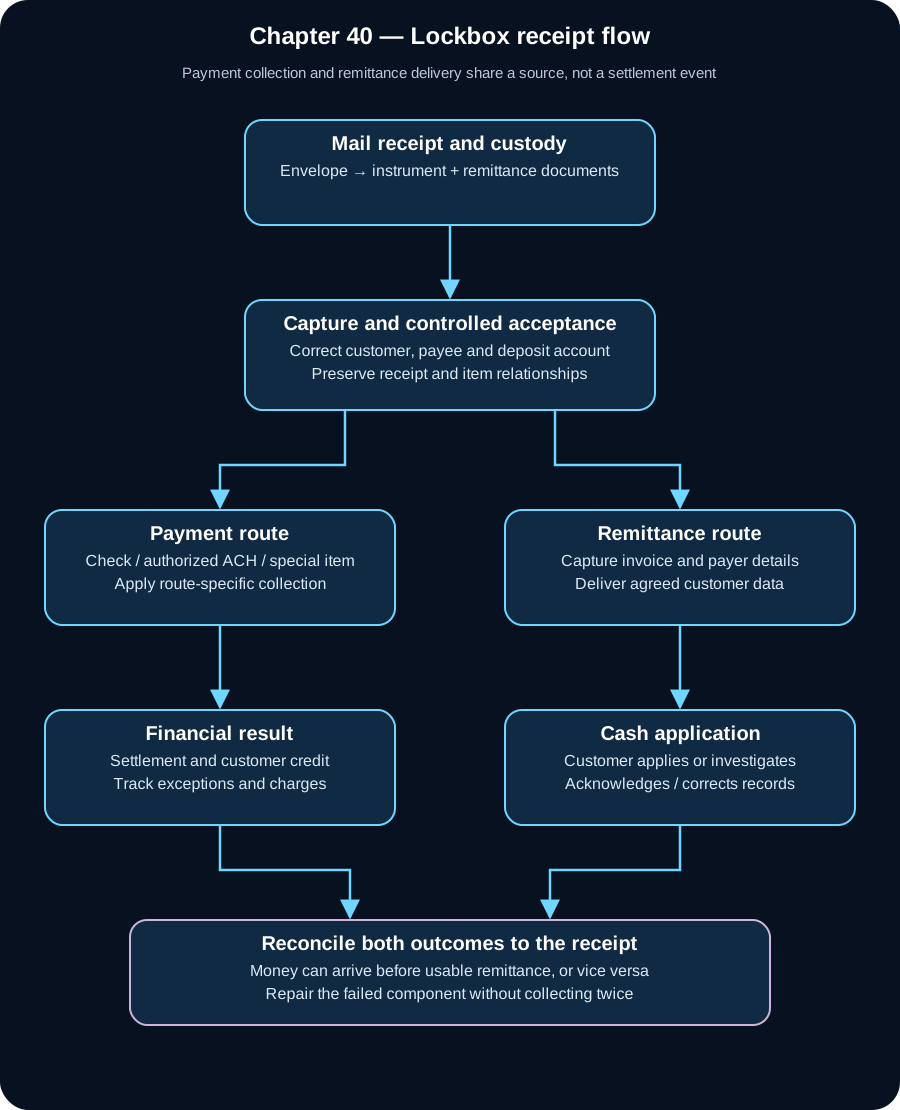
The diagram separates the instrument's financial route from the customer's information route. Both start with the same receipt identity. They can finish at different times. That is why the service must reconcile them rather than assume that one successful delivery proves the other succeeded.
A delayed file is not necessarily delayed money
Suppose the bank has collected the distributor's $19,600 check and posted the deposit, but the remittance file fails delivery. The customer may see the money in online banking while its ERP still shows unpaid invoices. Sending the remittance file again can repair the information failure. Depositing the check again cannot. Operations should identify the failed component before authorizing any recovery.
The reverse situation is equally important. The customer receives a remittance record and applies it to invoices, but the associated instrument was held before collection. The feed should carry a status that prevents the customer from treating a captured receipt as settled money unless that is an intentional provisional accounting policy. If the customer's application cannot handle multiple statuses, the integration design must specify when records are released and how exceptions will be communicated.
A bank may provide several delivery points during the day. These are service choices, not universal US lockbox windows. The implementation should document the relevant time zone, business calendar, intake cut-off, processing target and file delivery commitment. Mail arriving after one cut-off may still be scanned that day without qualifying for that day's financial processing. Customers need the actual consequence, not only a timestamp.
The end-to-end owner should be able to answer four questions about any receipt: was it received, was its payment accepted and routed, what financial result followed, and what information did the customer receive? Those questions connect the mailroom, check operations, finance and the customer's receivables team without requiring all of them to use the same internal system.
5. Remittance capture and cash application
Remittance processing translates the payer's explanation into information the business can use. A payer may quote invoice numbers, customer account numbers, credit memos or a statement balance. The lockbox specification should identify which fields the bank captures, which it validates and which it merely passes through. Capturing a deduction code does not mean the bank has approved the deduction on the customer's behalf.
The distributor's $19,600 receipt might contain six invoice allocations and a $400 freight deduction. The service should preserve the payer's stated allocation and any unresolved difference. If the distributor accepts the deduction, its own accounting process can close the relevant balance. If it contests the deduction, it can pursue the payer. The bank should not silently redistribute the payment to make every invoice appear fully paid.
Customer master data can improve matching but introduces maintenance responsibilities. A valid customer number can be closed, merged or reassigned in the business system. The bank needs a controlled way to receive updates and determine when they become effective. An old alias may still be useful for matching historical payments, but it should not automatically authorize a new deposit destination.
Interfaces vary. A bank may deliver a proprietary delimited file, structured API payload, image package or an agreed industry format. There is no single mandatory US lockbox API or ISO 20022 message for every service. The implementation should use the actual customer-bank specification and distinguish it from the format used to exchange the underlying check. Naming an internal file “cash management” does not make it a standardized bank statement message.
Design for amendments, not just first delivery
A useful interface identifies the receipt, instrument, deposit batch and remittance allocation separately. It should also distinguish an original record from a correction. If an invoice number is repaired after the initial delivery, the customer needs to know whether to replace the previous allocation or add a new one. An unqualified repeat can double the customer's recorded cash application even though the bank collected only one check.
Acknowledgements should have defined meanings. A successful network transfer proves that bytes reached an endpoint under that protocol. It does not necessarily prove that the ERP validated and applied every record. The service may require a separate application acknowledgement, exception response or reconciliation report. If the customer chooses not to provide one, both parties should understand the resulting visibility limit.
Images require similar access controls. A remittance advice may contain commercially sensitive information or personal data unrelated to payment routing. Access should follow the customer's authorized users and the bank's role design. Links should expire or remain available according to a documented arrangement, rather than depend on an employee's shared folder. Historical retrieval should remain possible for legitimate investigations within the agreed retention framework.
For the customer, the practical test is whether a receivables analyst can find the payment using an invoice reference and then trace it to the bank credit. For the bank, the reverse trace should also work: a deposit batch must lead to the instruments and remittance records supporting it. This two-way trace is more useful than a large archive of images without stable relationships.
Remittance confidentiality in a multi-entity service
The distributor may use one treasury team for several subsidiaries while maintaining separate legal entities and deposit accounts. The bank should agree whether users can view all receipts or only specified entities. Shared administration should not automatically expose every subsidiary's customer documents to every operational user. Account entitlements and document entitlements need to align with the service's actual authority model.
A remittance feed can carry customer identifiers that the business considers sensitive even when they are not required for bank collection. The bank should agree which data belongs in routine reporting and which should remain accessible only through controlled image retrieval. This avoids copying entire document sets into every interface simply because storage is inexpensive. The goal is enough information for application and investigation without uncontrolled distribution.
Testing should include a payment received under one subsidiary's lockbox that references an invoice belonging to another. The system should follow the approved exception procedure and preserve the source receipt. It should not move the bank credit across legal entities just because an invoice number matches. The business may authorize an internal accounting allocation, but that instruction and any account movement require their own supported treatment.
Historical access also matters after a subsidiary is sold or an account closes. The bank should establish who can retrieve prior receipts and under what authority. Removing current deposit privileges need not erase legitimate historical investigation access, but the two permissions should be deliberately controlled. A mature service handles both ongoing receipts and the evidence obligations that remain after the commercial relationship changes.
6. When a check becomes a source document for ACH
Check conversion changes the collection route. An eligible paper check can provide information for an authorized ACH debit under the applicable rules. In that case, the resulting payment is processed as an ACH entry; the bank is not merely transmitting a check image more efficiently. The source document supports the entry, while ACH processing, settlement and return arrangements govern that entry.
Electronic check collection is different. Scanning a check and exchanging its image through a check collection arrangement does not by itself create an ACH debit. Regulation E's coverage provisions distinguish electronic check conversion from electronic collection of checks. For a covered consumer conversion, the requirements for notice and authorization matter. A bank should establish that legal basis before using account information from a check to originate an electronic debit.
The business receiving the payment normally acts as the ACH Originator in a conversion arrangement, with its ODFI accepting responsibility for entries it originates under the network rules. A lockbox processor may perform operational functions on their behalf. The payer's institution acts as the RDFI for the ACH debit. These roles differ from the check collection roles even if the same banks are involved commercially.
Settlement follows the selected ACH service and its applicable schedule and account arrangements. A conversion entry can be accepted by a gateway without yet reaching its settlement date. A successful remittance feed remains separate from that settlement. Earlier ACH chapters explain the network mechanics; the important point here is that the lockbox must identify which instrument became which ACH entry and prevent simultaneous check collection.
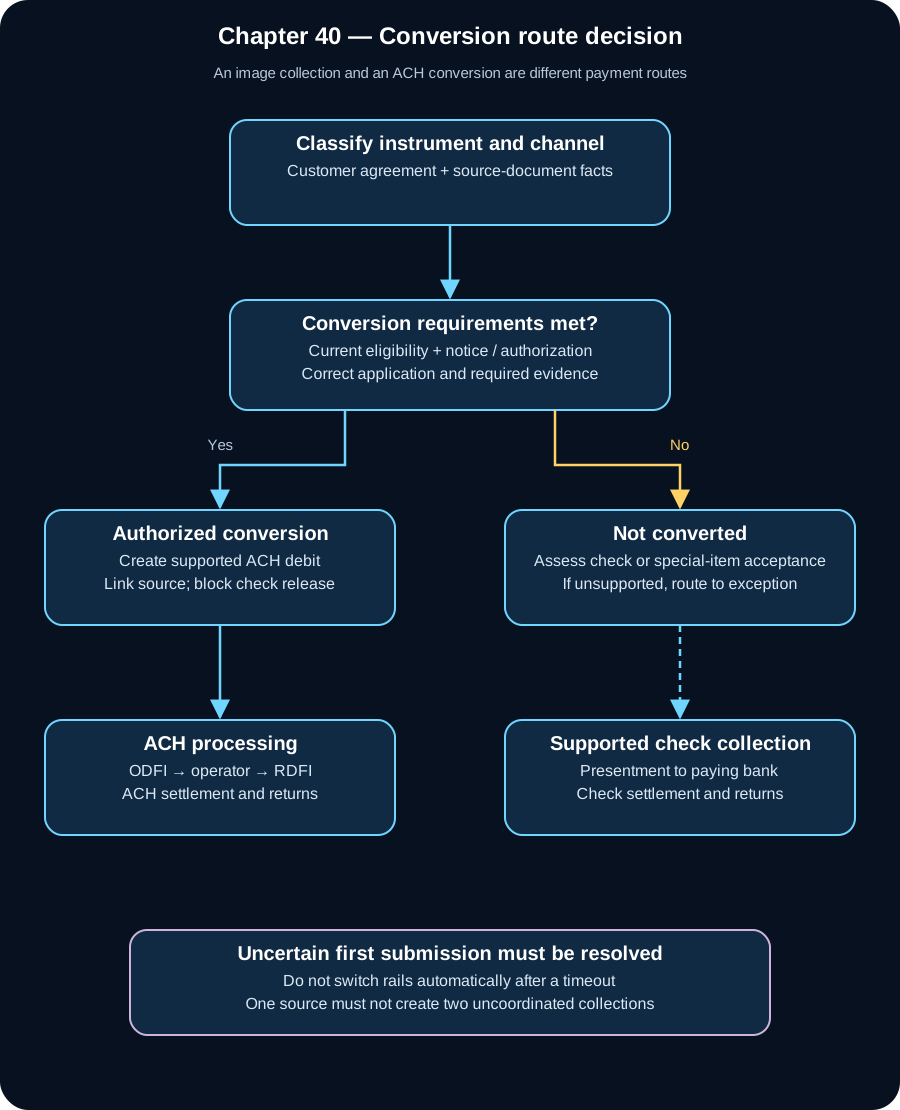
The decision should occur under a controlled rule set before a payment is released. The diagram does not imply that every check is eligible for conversion or that the customer can choose a convenient SEC code after processing. The channel, source document and authorization must support the selected application.
Make the route decision durable
Suppose an eligible $240 consumer bill payment is selected for conversion. The system should record the source receipt, the applicable notice and authorization basis, the selected application and the ACH transaction identity. The original check must then be handled under the conversion procedure so that it does not also enter an image cash letter. A general “processed” flag is too weak if separate systems can still release both routes.
If an outage occurs after the ACH entry is submitted but before its status returns, the bank should investigate the submission. Automatically falling back to check collection creates a potential second debit. The safe recovery depends on whether the first route accepted the entry, not whether the lockbox user interface has a final status. This is the same practical uncertainty problem seen in remote capture, now crossing two payment systems.
A rejected conversion also needs a reason-specific decision. An ineligible source document, missing notice, invalid account data and a technical transmission failure are different defects. The bank should not treat all of them as permission to create a different debit. Any alternative collection must be authorized and must account for what has already occurred. The original business debt does not itself authorize every available bank rail.
The customer should understand what the payer will see. A converted payment may appear as an electronic debit rather than a paid check image. Customer support must be able to explain that outcome using the actual conversion evidence. Without that preparation, a legitimate conversion can generate avoidable disputes simply because the payer is looking for a check number in the wrong transaction history.
7. Selecting the correct conversion application
Nacha identifies distinct applications for check-related ACH debits. ARC, Accounts Receivable Entries, covers qualifying source documents received through specified bill-payment channels, including mail and lockbox. BOC, Back Office Conversion, concerns qualifying documents received at a point of purchase or manned bill-payment location and subsequently converted in the back office. POP, Point of Purchase, concerns conversion at the point of purchase or manned bill-payment location. Their authorization and handling requirements are not interchangeable.
These distinctions matter because a central processor may receive work from several business channels. A check mailed to a lockbox does not become a point-of-purchase transaction because the processor scans it immediately. A check received in a store does not become a mailed payment because the store sends it to a central facility. The originating channel is part of the evidence supporting the application.
Eligibility must be established under the current Nacha Operating Rules and the ODFI's approved program. The source document's characteristics, including relevant MICR information, can affect that decision. A developer should not infer eligibility solely from the payer's name or assume that every business-looking check has the same treatment. Likewise, a readable routing and account number is necessary input for processing but is not a complete eligibility assessment.
The public Nacha developer guide provides an orientation to SEC codes, not the full licensed rulebook or a production certification. This chapter does not state unconfirmed numeric eligibility thresholds, presentment limits or source-document retention periods. A bank implementing conversion must obtain and approve those requirements from the current rules and its service agreement before release. Leaving an unverified value out of a chapter is preferable to embedding it in a production rule engine as a supposed standard.
A practical application matrix
The bank can build an internal decision matrix containing the originating channel, permitted source documents, notice and authorization requirements, required evidence, supported SEC code and exception handling. Each row should identify its authoritative rule source and effective version. This matrix is an implementation artifact; it does not replace the rules. Compliance should approve the interpretation, and operations should confirm that the required evidence can actually be retrieved.
For example, the distributor may operate both a mailed consumer billing service and a parts counter. The bank should test each flow separately. A notice printed on a mailed statement may support one designed arrangement, while the counter process requires its own compliant interaction and evidence. The bank cannot demonstrate the counter process by producing a sample statement that the counter customer never received.
Changes to customer forms deserve control. If the business redesigns its bill and removes the conversion notice, the technical feed may continue without error while the authorization basis has deteriorated. The bank should establish how changes are reported, reviewed and tested. A quarterly file-layout review alone will not discover a missing notice on the payer's document.
The same principle applies to processor migration. A new platform may use different defaults for SEC selection or original-check disposition. Parallel validation should compare decisions as well as amounts. Two systems can originate the same debit total while one uses an unsupported application. A balanced file is evidence of arithmetic consistency, not evidence that every debit has the correct authorization.
8. Conversion exceptions, returns and re-presentment
A converted ACH debit requires ACH exception handling. It should not be routed into an ordinary check-return queue solely because the original source was paper. Operations need the entry's identity, SEC code, settlement information and reason for return or dispute. The source document remains relevant evidence, but the customer-facing debit is now an ACH transaction.
The bank should distinguish a financial return from a processing reject. A file rejected before entry acceptance may not have created a settled debit. A returned debit follows an entry that entered the ACH process. A customer complaint may require investigation even before an interbank return arrives. Each path needs a separate status and recovery rule so that staff do not debit the payer again while believing they are only repairing a file.
Nacha's published explanation of unauthorized return reasons specifically addresses conversion defects, including missing required notice and ineligible source documents. A bank should use the current reason-code requirements for the facts, rather than select a general code that seems convenient. Regulation E obligations for covered consumer transfers must also be evaluated separately from network return processing. Completing an interbank return is not automatically the whole consumer error-resolution process.
Duplicate collection can involve the ACH entry and its paper source. Investigators need to determine whether both were paid, what each bank received and how the loss arose. A lockbox cannot resolve the case from its remittance total alone. It should preserve the route-selection history and the original's handling record so that the ODFI can support the appropriate investigation and recovery.
RCK is a distinct, controlled use case
RCK identifies an ACH application for re-presenting eligible checks previously processed through check collection and returned for insufficient or uncollected funds. It is not a general-purpose method for collecting every unpaid check or every disputed invoice. The current rules impose conditions that the bank and Originator must satisfy before using it. The original return reason, source document and prior collection history therefore matter.
An unpaid check returned because of suspected alteration should not be converted into a routine RCK debit merely because the business still wants payment. Similarly, a stop-payment or authorization dispute requires its own analysis. The bank should not use rail switching to evade the reason the original payment failed. The customer's commercial right to pursue a debt remains separate from permission to initiate a particular electronic debit.
Reinitiation of an ACH debit, re-presentment of a check, and an RCK entry are also distinct operations. Staff need a controlled procedure for each. A generic “retry payment” button is dangerous if it hides the selected rail, permitted reason, required evidence and number of previous attempts. The interface should expose the facts needed for the approved decision, even if most users cannot edit the underlying rules.
Customer accounting should follow the actual financial event. If a converted receipt is returned, the business may need to reopen the original receivable and reverse the associated cash application. If an authorized subsequent collection succeeds, it should be linked to that same receivable without erasing the first failed payment. This preserves a believable history for the customer, the bank and the payer.
A conversion return does not reopen every invoice equally
Assume one converted payment of $480 was applied to three invoices for $200, $180 and $100. If the whole debit returns, the customer's accounting process should identify the original allocation set and reverse it according to its policy. Reopening only the last invoice because it is the most recent record would understate the unpaid balance and misrepresent the payer's account. The payment identity must survive the one-to-many allocation.
If the complaint concerns a duplicate debit, staff should first determine which financial events actually occurred. The payer may see an ACH entry and a paid check, two ACH entries, or one entry described twice in different reports. Each case needs different evidence and recovery. The source document, ACH trace information, check presentment records and customer account effects should be assembled before a final duplicate-payment conclusion.
The Originator should also coordinate any voluntary refund with the bank's return investigation. A refund initiated while a return is already in progress can result in two credits to the payer. The bank should not discourage a required or appropriate correction, but it should link all pending and completed financial actions so that the final outcome is correct. Customer service needs the same view before promising an additional payment.
This is where exception reporting earns its value. A useful record identifies the original receipt, the failed or disputed collection, the receivable allocation and any recovery or refund. A generic unpaid flag leaves the business to reconstruct these relationships manually. The lockbox service should preserve them from the start, even if the customer's application initially displays only a simple payment status.
9. Treasury checks and government-payment exceptions
A US Treasury check requires its own identification and controls. The bank should establish that the instrument is actually drawn on the Treasury, examine the available security and issue information, and follow the applicable Treasury and collection requirements. A government-looking design or an apparent agency name does not prove authenticity. A state or local government check is not a US Treasury check merely because both are public-sector payments.
Treasury Check Verification System information can support verification. The bank should know which fields its actual access method validates and preserve the result with the time of inquiry. The current Treasury Check Verification System documentation describes the verification service and its supported access methods; use only the fields and results exposed by the bank's actual approved integration. Staff should not assume that every public lookup screen performs the same validation or that a successful issue-data match proves the presenter is the rightful payee.
Treasury checks have a specific limited-payability rule: they must be negotiated within one year of issue. This is different from the ordinary stale-check discussion in Chapter 36. A bank should route an out-of-date Treasury check to the appropriate inquiry or replacement process instead of treating the printed date as a discretionary reminder. The underlying federal obligation and the validity of that particular instrument are separate questions.
Treasury reclamation is also distinct from an ordinary timely check return. Under 31 CFR Part 240, presentment guarantees and reclamation provisions can matter after payment. Operations should identify the applicable Treasury claim, retrieve endorsement and presenter evidence, and follow the current response process. The bank should not close the case merely because an ordinary check-return period has passed, nor should it apply ACH reclamation procedures to a Treasury check solely because both involve federal payments.
Current context and a credible verification outcome
Federal policy has moved most federal disbursements away from paper checks, with the announced transition beginning on September 30, 2025. Exceptions and residual items mean banks still need competent Treasury-check handling. The transition does not justify teaching either that paper is still the normal federal disbursement method or that every Treasury check encountered after that date is fraudulent. Staff should inspect the actual item and current program information.
Imagine a $1,380 Treasury check arriving in a business lockbox with a payee name that does not match the customer's approved names. A matching check symbol, serial number and amount would not resolve the entitlement problem. The bank should hold the item in the appropriate review process and establish why the customer claims the payment. A verification service result is one input to that decision, not a substitute for it.
If the verification service is unavailable, the bank should follow its approved contingency procedure. It may need to defer acceptance, use another authorized verification route or escalate. The system should preserve that a check was not verified by the unavailable service. A default “passed” result used to avoid interrupting processing would misstate the control actually performed.
The customer-facing explanation should remain specific. Staff can explain that the item needs government-check review, that an issue-date problem requires resolution, or that payee information does not support the proposed deposit. They should avoid assuring the customer that a government payment is risk-free. The instrument's issuer changes the applicable analysis; it does not remove fraud, endorsement or operational risk.
A Treasury verification response needs context
The bank's verification record should identify the query fields and returned result without claiming checks the service did not perform. For example, matching issue data cannot establish that an endorsement was made by an authorized person. A payee-name validation result also needs to be interpreted under the actual API documentation and the bank's review procedure. Staff should retain the result's meaning, not only a green indicator stripped of context.
If an inquiry returns no match, the bank should follow the documented interpretation and its approved exception process. It should not automatically conclude either that the check is counterfeit or that the service must be wrong. Data-entry errors, the actual service response and instrument evidence need review. A corrected inquiry should preserve the original result and explain which input changed.
The distinction matters in customer communication. The bank can describe a completed verification step and any remaining issue without promising that all later claims are impossible. When the customer asks whether it can refund an apparent overpayment, the bank should explain the actual collection and verification facts relevant to that separate decision. A verification response is evidence within the service, not a guarantee for a new outgoing payment.
10. Foreign and Canadian checks
A check's currency does not by itself identify its collection jurisdiction. A US-dollar check drawn on a foreign institution can require foreign collection, while a domestic instrument must be assessed on its actual drawee and arrangement. The bank should identify the drawee institution, country, currency, accepted collection route and customer agreement before promising a result. Simply putting a dollar symbol in the amount field does not make the ordinary domestic process available.
Foreign collection can involve physical delivery, a foreign correspondent, local clearing arrangements, currency conversion and charges deducted along the way. The exact sequence depends on the service. The receiving US bank needs to know whether it is providing provisional credit or waiting for collection proceeds, how fees are charged, and what later claims or reversals remain possible. A quoted processing estimate should not be presented as a universal legal finality period.
There is a significant current service transition. The Federal Reserve's 2026 Paper Check Collection and FedImage Services Fee Schedule states that its Foreign and Canadian Check Services will be discontinued in 2026 and that forward deposits will be accepted until December 4, 2026. As of this chapter's September 6 source check, that is a future cut-off. A bank designing or renewing a service must plan an alternative arrangement rather than assume the existing Federal Reserve route will continue indefinitely.
A replacement provider requires more than a new mailing address. The bank must establish eligible items, currencies, account arrangements, documentation, transit controls, charges, return handling and outstanding-item reporting. It also needs a plan for items already sent through the retiring service. Closing new submissions does not necessarily eliminate inquiries and financial adjustments relating to earlier work.
Explain the economics before acceptance
Suppose the distributor receives a CAD 8,000 check against a USD invoice. The bank cannot decide that the invoice is fully paid merely by collecting the Canadian-dollar amount. The customer's commercial agreement determines whether foreign currency is acceptable. If the bank converts proceeds, the customer should understand the applicable rate basis, fees and timing. The bank should retain the actual conversion record instead of using a later indicative market rate to reconstruct the deposit.
An illustrative accounting record might show the foreign-currency face amount, collected currency amount, conversion rate, separate charges and net US-dollar credit. These fields explain the result; they are not a prescribed foreign-check message format. A customer should be able to distinguish a currency difference from an unpaid item and from a service fee. Combining all three into a single unexplained deduction makes reconciliation unnecessarily difficult.
Availability disclosures also need appropriate scope. The ordinary Regulation CC check definition relevant to Subpart B is tied to specified US-payable instruments; banks should not promise the domestic schedule for every foreign item. The bank's agreement and other applicable law remain relevant. The product should state the actual foreign-collection treatment in clear terms and avoid a generic mobile or branch receipt that displays an unsupported domestic release date.
If the customer cannot accept uncertain collection timing, the bank can explain another permitted payment method for a future transaction. It should not retrospectively call the existing check an international wire or imply that changing the reporting label changes the instrument's risk. The immediate task remains to handle the received document correctly and to disclose what the selected collection arrangement can establish.
Transitioning outstanding foreign collections
A bank moving foreign-check work to another provider should maintain an inventory of items already submitted through the old route. Each item needs its original provider reference, face currency and amount, dispatch evidence, current collection status and any customer credit. The inventory should remain accessible after new submissions stop. A service retirement can change where new work goes without changing which institution holds the evidence for an old item.
The migration should distinguish physical transit from financial completion. An item confirmed delivered to a correspondent may still be unpaid. A proceeds credit may include a currency conversion or deduction that the customer has not yet reconciled. A later inquiry may concern an endorsement or payment claim rather than ordinary transit delay. One migration status called transferred cannot explain all these conditions.
Customer communication should identify the practical change: whether particular currencies or drawee locations remain supported, how collection estimates and charges change, and when revised instructions take effect. The bank should not promise that a replacement provider gives the same finality or return treatment without verifying its terms. A familiar customer-facing product name can conceal materially different underlying arrangements.
A completion review should account for open instruments, unresolved fees, unapplied proceeds and outstanding inquiries under both providers. It should also confirm that the old physical routing instructions are no longer being used for new work. This prevents an operationally retired service from continuing to receive customer checks because a branch procedure or lockbox exception template was never updated.
11. Other items requiring a specific acceptance decision
A lockbox can receive more than conventional checks. Money orders, drafts, savings bonds, documents with conditions attached and unexpected payment instruments require a defined acceptance policy. The service should not assume that every rectangular document with an amount and routing-like data belongs in its normal cash letter. Staff need a practical route for identifying an item before a capture system assigns it a standard check status.
Money orders vary by issuer and governing arrangement. A postal money order should not be treated as identical to a privately issued money order or a cashier's check. The bank should use the relevant issuer's current verification and collection process where it accepts the item. This chapter does not provide a universal money-order limit or promise that a money order carries the same availability treatment regardless of issuer or deposit conditions.
Savings bonds illustrate another boundary. The Federal Reserve offers image-enabled processing for qualifying redeemed savings bonds, but that does not make a savings bond an ordinary check. Redemption authority, customer identification, valuation and service-specific submission requirements have to be satisfied before the image-processing step. A commercial lockbox should not attempt to redeem a bond merely because its scanner can capture it.
A remotely created check and a remote deposit are also different concepts. Remote deposit describes where an existing instrument is captured. A remotely created check concerns how the payment instrument was created and can raise specific authorization warranties. An electronically created item that never existed as paper has another relevant classification under Regulation CC. None should be introduced into ordinary lockbox check collection merely by printing an image and assuming Check 21 has cured its origin.
Collection instructions cannot be reduced to an amount
An envelope may include a letter stating that payment is offered only in settlement of a disputed account. The bank should follow the customer's approved escalation instructions and applicable law rather than decide the legal effect of the language itself. A processing instruction to deposit all checks without reading attachments creates a different risk from a service that explicitly reviews specified correspondence. The business needs to understand what review it has actually purchased.
Some documents may require collection on specifically agreed terms instead of ordinary automated check deposit. The bank should identify what it is undertaking: sending a document for collection, obtaining a response from another institution, or providing a separate trade or collection service. The receipt of a document is not a guarantee of payment, and the title “collection item” does not establish a universal settlement process.
An unexpected instrument should be placed in a controlled exception state with a physical or electronic location, owner and decision deadline. Returning it to the customer requires evidence that it has not also been released for collection. Destroying it under a standard check-retention schedule may be inappropriate if the instrument requires different treatment. The classification decision should precede the disposal decision.
The useful operational question is whether the bank can state the instrument's legal and service basis, acceptance authority, collection route and expected evidence of outcome. If it cannot, the item is not ready for routine release. That does not mean every unusual item must be refused; it means the bank must establish the appropriate service before making a promise about payment.
Keep special-item decisions visible to the customer
A special item may remain outside normal deposit processing while the bank determines whether a supported service exists. The customer report should distinguish that state from an accepted deposit awaiting settlement. Otherwise, the business may include the amount in its cash forecast and discover later that the bank never undertook collection. The wording should identify what the bank holds and what decision is pending.
When the bank accepts the item under a specific arrangement, it should record the applicable instructions and expected evidence of outcome. If it declines, it should account for the document's return or other authorized disposition. In either case, the original receipt remains traceable. This prevents unusual instruments from disappearing between the mailroom's completed batch and the deposit system's accepted population.
12. Fraud, sanctions and information controls
Lockbox fraud controls should address the whole receipt process. Risks include stolen mail, substituted instruments, altered payees, manipulated deposit instructions and insider diversion. A check can be authentic while its remittance is misallocated, and a remittance advice can be accurate while the check is counterfeit. Controls should identify the asset or decision they protect instead of treating a single image-quality check as a complete fraud review.
Physical security matters because the service handles documents that may be negotiable or contain sensitive information. Access to unopened mail, captured images, original instruments and disposal areas should be assigned by role. The bank should investigate unexplained differences between receipt counts and processed instruments. A recurring small shortage can reveal a custody failure that would be missed by reviewing only large-dollar deposit exceptions.
Instruction security deserves equal weight. Changing the customer's deposit account, approved payee names, user permissions or data-delivery endpoint can redirect value or disclose information. The bank should authenticate requests, apply appropriate approvals and log effective changes. A data-delivery endpoint may not move bank funds, but redirecting remittance images can expose account details and support later fraud.
BSA/AML and sanctions responsibilities should be implemented within the bank's applicable program and risk assessment. Check and remittance information can support investigation, but the bank should not claim that a lockbox scan proves every underlying commercial party has been identified. A sanctions decision, a fraud hold and a check-processing exception have different legal and operational bases. The system should preserve the actual reason and route it to the authorized team.
Monitor the service in the customer's context
The distributor's usual receipts come from established commercial customers and relate to recognizable invoice patterns. A sudden group of unrelated high-value instruments followed by urgent refund requests deserves review. The relevant questions include whether the receipts fit the business, whether the payers and payees make sense, and whether the customer is asking the bank to release value before collection uncertainty is understood. No single amount establishes the answer.
A refund request is particularly important. If a payer claims to have overpaid by check and asks for a wire refund to a different party, the bank and business should investigate the original receipt and the refund instruction separately. Available deposit funds are not proof that the source check is genuine. The lockbox record should let the customer identify the instrument and collection status before it makes a separate outgoing payment.
Monitoring should also identify operational misuse. Repeated manual changes to account mappings by one user, unusual retrieval of images or unexplained after-hours exports can indicate a control problem even when every deposit batch balances. Oversight should include the processor's activity where the bank relies on a third party. Financial reconciliation alone cannot detect every disclosure or diversion attempt.
Incident handling should preserve evidence and contain the specific failure. Suspending a compromised instruction channel may be appropriate while unaffected collection continues under verified instructions. Customer communications should explain the service impact without disclosing restricted investigative information. The bank should coordinate fraud, compliance, operations and customer support so that a protective action does not leave the business unknowingly applying incomplete receipt data.
13. Reconciliation across payments, remittance and fees
Lockbox reconciliation begins with receipt intake and ends with explainable customer and bank records. The bank should account for accepted payments, rejected or held instruments, collection submissions, settlement results, deposit postings, remittance deliveries and subsequent adjustments. These records can reside in different systems, but they need stable links. An aggregate deposit total cannot prove that the right invoices received the money.
The financial side should distinguish the payment amount from service charges and other deductions. If the bank charges a separate monthly lockbox fee, that fee should not be mistaken for a missing receipt. If a foreign collector deducts charges from proceeds, the customer should receive an explanation of the net result. The accounting design should preserve gross amounts and identified deductions where needed to reconstruct the transaction.
The information side should track which records were delivered, accepted, rejected or corrected by the customer integration. A retransmitted file should be identifiable as a retransmission. A correction should identify the record it changes. The customer's ERP should not infer that every new filename contains new money. Both parties need an agreed approach to duplicate delivery and recovery after an application outage.
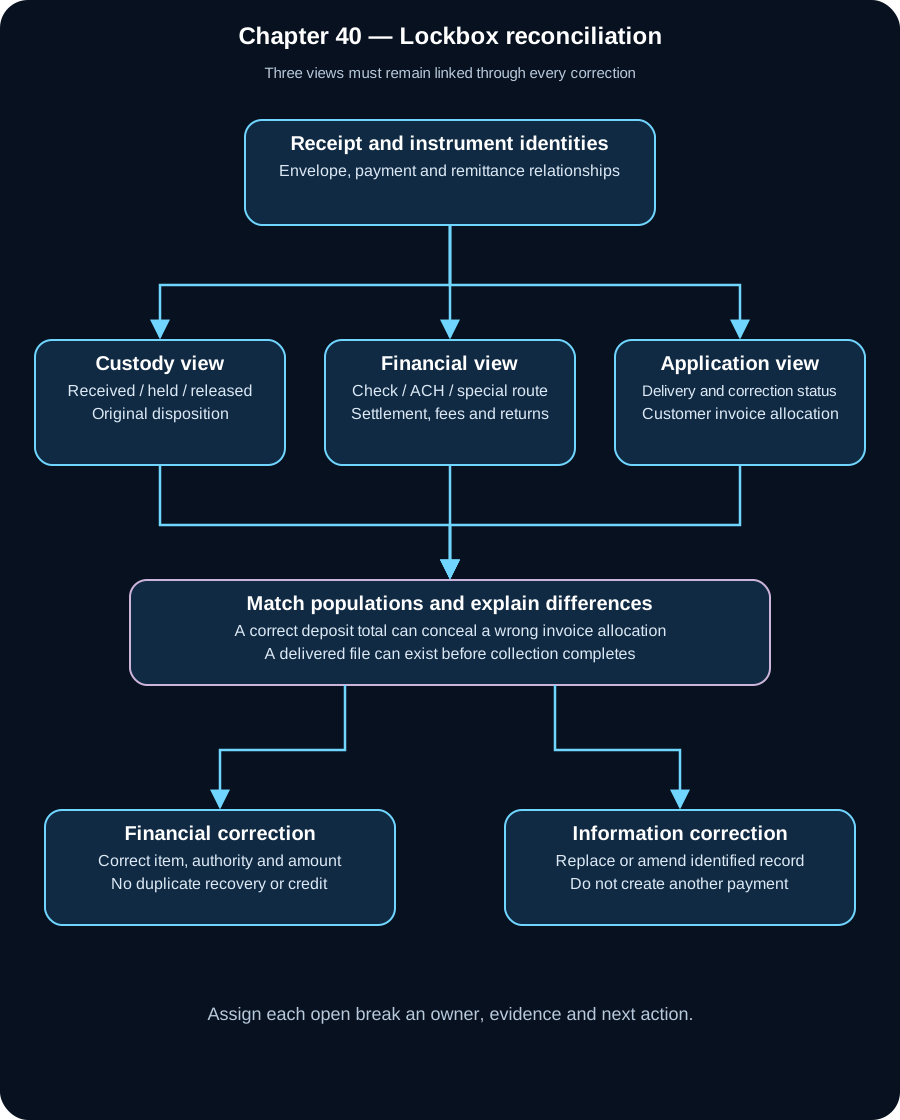
The diagram shows three related views rather than a single balancing total. The payment route supplies the financial outcome. The remittance route supplies the application information. Receipt custody explains the source and identifies work that has not yet entered either completed result.
A balanced bank account can hide an allocation error
Suppose two receipts are $7,000 and $5,000. The bank credits the correct total of $12,000, but the remittance system assigns the invoice references to the opposite payers. The deposit reconciliation passes while both customers' receivables are wrong. An item-level link between instrument and remittance should expose the mismatch. The bank must correct the information without creating an additional financial credit.
Now suppose the $5,000 check is returned after the business has applied it. The bank needs to identify the original deposit and communicate the returned-payment result under the applicable arrangement. The customer's accounting process should reopen the correct receivable. A return record that contains only a batch total may force manual research across many invoices and increase the chance of reversing the wrong customer payment.
Conversion introduces another reconciliation boundary. The check source should be accounted for as converted, with a link to the ACH entry. It should not remain in an open check-to-collect queue. The ACH financial outcome should feed the customer record without generating a second receipt. A route-specific control should identify any source instrument associated with both a released check collection and a released ACH debit.
Open breaks need ownership and ageing. An item held for payee review, a missing settlement credit and an undelivered remittance file require different teams and follow-up. Management reporting should distinguish these causes so that staff do not clear old exceptions by posting unexplained adjustments. A closed batch should mean that its differences are resolved or transparently carried forward with accountable ownership.
14. Implementing and operating the service
Implementation should begin with the customer's receipt population and operating objectives. The bank needs realistic samples, expected volumes, peak periods, payee names, account structures, remittance requirements and exception preferences. It should identify which decisions it can automate and which require customer input. A service designed around an average day may fail during a seasonal billing peak or a merger that changes customer names and invoice formats.
The technical design should map each handoff. Mail intake produces receipt records. Capture produces instrument and document data. A decision process selects the authorized collection route. Check or ACH processing produces acknowledgements and financial results. Customer reporting delivers remittance and status information. Reconciliation links those outputs back to the intake. Each interface needs a recovery rule for uncertain delivery and partial success.
The customer agreement should align with that design. Cut-offs, accepted instruments, availability treatment, processing discretion, data delivery, original handling, fees and responsibilities should be stated in terms the actual systems can support. A promise that every envelope received before a certain time will produce collected funds that day would require evidence the service can meet it; it should not be inferred from a scanning target alone.
Operational staffing should reflect exceptions as well as throughput. Automated recognition can reduce routine keying while leaving difficult payee, allocation and instrument decisions with staff. Training should include how to distinguish a collection problem from a receivables problem and how to route an item that the service does not support. The bank should measure the time spent waiting for customer decisions, not attribute every delay to the processor.
Build recovery around completed work
A facility outage may require moving mail or processing to another location. The contingency plan should preserve receipt identities and custody records during the move. It should identify which batches were already captured, which payments were already released and which reports were delivered. A replacement facility should resume unfinished work rather than reprocess all available paper as new receipts.
A system migration has similar risks. Historical images, customer aliases, unresolved exceptions and return links may be needed after the new platform begins processing. The migration plan should retain access to those records and explain how old references map to new ones. A successful first-day deposit total does not prove the service can investigate a return from the previous month.
Service reporting should make failures actionable. Useful measures include unresolved receipt exceptions, remittance correction rates, delivery failures, duplicate-route incidents and ageing of financial breaks. The bank can also track agreed processing times, but it should define the starting and ending events. A metric from scan completion to file creation cannot honestly be presented as mail-arrival-to-customer-application time.
The service owner should review changes in law, network rules and providers. The 2026 foreign-check service retirement is an example of a change that affects customer promises and operating routes. Maintaining a current instruction set is part of running the product. It is not enough to establish a correct process once and assume that the collection environment will remain unchanged.
Pricing and service evidence should describe the same work
Lockbox pricing can include charges for items, document capture, data extraction, exceptions, image access or other agreed services. The actual contract determines the charge basis. The bank should make sure its operational counts support those charges and distinguish them from the underlying payment amounts. An envelope containing two checks and several documents can generate different service units under different contracts; there is no universal billing unit implied by the word item.
An illustrative monthly review might compare received instruments, manually keyed remittance lines and customer-requested image retrievals to the relevant billing records. A difference should be investigated as a service-charge issue rather than adjusted through the customer's payment receipts. The financial ledger and the service billing system should preserve their separate purposes even if both appear on an account statement.
Service-level evidence should be equally precise. If the bank commits to deliver a remittance file by a stated time, it should define whether that means making it available, completing transmission or obtaining customer application acknowledgement. Those events depend on different parties. A customer-controlled endpoint outage should be visible without concealing the bank's own delivery attempts and notification responsibilities.
The review can then lead to a useful operational change. Repeated missing invoice references may suggest a customer form problem. Repeated image-delivery failures may require an integration fix. Unusual manual exception charges may indicate that the agreed acceptance instructions are unclear. Looking at the actual work behind fees and service measures helps the bank and business improve the receipt process without inventing new payment rules.
15. Worked cases and implementation testing
Begin with the distributor's $19,600 check and six-invoice remittance. The test should establish the receipt identity, accepted payee, correct deposit account, captured instrument amount and allocation total. If the remittance includes a deduction, the expected output should preserve it without changing the check amount. Follow the instrument through collection and the remittance through customer acknowledgement. The final evidence should show one deposit and the intended application records.
Next, make the remittance delivery fail after financial processing succeeds. The correct recovery is to deliver or repair the information under the agreed duplicate-control procedure. There should be no second check submission or second customer credit. The test should confirm that customer support can explain why the bank balance and the ERP temporarily disagree and can identify the missing file or record.
Then introduce a conversion case. Use an approved test source document and the correct channel-specific notice and authorization evidence. Verify the selected application, ACH identity and original-check disposition. Interrupt the flow after submission but before acknowledgement. The system should resolve the first submission's status and prevent an automatic release of the source check into check collection.
A fourth case should return the converted debit. The result belongs in ACH exception handling, linked to the original lockbox receipt. The customer should receive enough information to reverse the correct cash application. The test should ensure that a general retry action cannot silently switch to check collection or RCK without satisfying the relevant conditions and approvals.
Test the unusual mail the service will actually receive
Include a foreign-currency check against a US-dollar invoice. The service should identify it before ordinary domestic collection, disclose the available arrangement and preserve the currency and charges in the eventual result. If the bank uses the Federal Reserve foreign service, test the planned cessation of new submissions before its announced December 2026 acceptance deadline and the handling of outstanding work through the transition.
Include a Treasury check with a payee mismatch and an unavailable verification service. The expected result should reflect the bank's approved review or contingency process, not an invented successful verification. A separate test should identify an out-of-date Treasury instrument and route it to the appropriate resolution. These cases verify instrument classification and evidence, not merely image readability.
Finally, simulate two checks in one envelope for different approved accounts, a returned item after remittance application, and a request to change the customer's deposit destination. Each tests a different boundary: document relationships, later financial events and instruction authority. The bank should be able to demonstrate which control prevented an incorrect credit or unsupported change.
The strongest acceptance evidence is an explainable result at every boundary. Staff should be able to locate the receipt, identify the payment route, show the financial outcome, retrieve the information sent to the customer and account for any unresolved difference. A test that stops when a file is created has not tested the service the customer relies on.
A complete day with mixed collection routes
For a final exercise, combine a domestic check batch, a supported conversion batch and one foreign item awaiting a specific collection decision. Ask the learner to construct separate expected financial positions for the check and ACH routes, an exception position for the foreign item, and a remittance delivery population linked to all received receipts. The totals should be explainable without forcing the three routes to share one settlement date.
Then add a failed remittance delivery and a check return from an earlier day. The first event calls for information recovery; the second changes a previously recorded payment position. Neither should be hidden by netting it into today's new receipts without supporting detail. The customer needs both today's incoming activity and the correction to prior cash application.
The exercise is complete when the learner can explain what the customer may use, what treasury has actually received, what the receivables team can apply and what remains unresolved. Those answers may legitimately differ at a particular moment. The bank's responsibility is to preserve their relationship and make the next action clear, so that the service remains understandable even when the mail contains several payment types and the day does not end cleanly.
16. Role checklist and learning closure
The Business Analyst defines receipt relationships, accepted items, route decisions, remittance fields and exception responsibilities. The Product Owner aligns the service promise with actual processing and customer needs. Legal and compliance teams establish conversion authority, instrument-specific requirements and the applicable customer protections without treating every paper-origin payment as the same transaction.
The Architect and Developer preserve item identity across capture, check or ACH release, settlement records and customer reporting. The Tester exercises partial batches, uncertain submissions, corrections, duplicate routes and special-item decisions. Operations owns custody, unresolved instructions and timely investigation. Fraud and BSA teams assess receipt and customer behavior using the bank's applicable controls and reporting procedures.
Finance and treasury reconcile the collection route, deposit accounts, correspondent positions and identified charges. Customer service explains the difference between a received envelope, a collected payment and an applied invoice. The customer's receivables team remains responsible for commercial allocation decisions that the lockbox agreement has not delegated to the bank.
Branch 8 has followed checks from the instrument and collection chain through images, availability, fraud, remote capture and managed receipts. The common requirement is a defensible connection between what was received, what was authorized, what was presented, where value moved and what the customer was told. A lockbox makes that connection especially visible because payment and information travel through related but distinct processes.
A successful lockbox receipt becomes one explainable payment and usable remittance information, with every exception still attached to its source.
Authoritative references
Public sources checked on 6 September 2026. Current network rules and signed service documents are necessary for production conversion requirements. The Federal Reserve foreign and Canadian forward-deposit deadline above is a dated service announcement, not a permanent feature of US check collection.
This application uses JavaScript for the full interactive experience. This text summary is served for accessibility and search indexing.