Corporate Receivables, Remittance and Cash Application. Join bank receipts, remittance and open invoices through payer identification, controlled matching, deductions, ERP application, returns and reconciled customer balances.
At 9:15 a.m., a distributor's treasury analyst sees a $19,700 bank credit. The accounts-receivable team still shows three invoices totaling $20,000 as unpaid. A buyer's email explains that it deducted $300 for damaged goods, but the attachment identifies one invoice using the buyer's own reference. The money has arrived. The work of deciding what it settles has not.
Chapter 42 followed consumer bills and the gap between payment delivery and account posting. Corporate receivables magnify that gap. One payment may cover many invoices, deductions may require commercial approval, and payment information may arrive through a different channel from the funds. This chapter follows the bank and corporate processes that connect those records without confusing remittance, settlement and accounting.
Cash application explains which obligation a received payment satisfies. It does not move interbank funds, prove that a disputed deduction is valid, or turn a remittance advice into settled money.
For a roughly 60-minute core session, spend about 35 minutes on Sections 2–3, Section 7, Sections 10–11 and Section 13. For the next 10 minutes, use the chapter’s three diagrams to connect bank receipts, remittance and controlled invoice application. Use 10 minutes to work through one case in Section 15, then spend the final 5 minutes explaining: How should a short payment be applied without silently writing off the disputed difference? Treat these timings as a study guide. The remaining sections, additional cases and extended reference material are follow-up study; completing the whole chapter takes longer.
The distributor, buyers, amounts, matching rules and accounting designs are fictional training examples. File versions, reporting calendars, payment availability and bank-service capabilities must be confirmed with the actual institution and implementation guide.
Chapter navigator
- The business problem behind integrated receivables
- Participants, ledgers and ownership of decisions
- Three records that must remain distinct
- Collecting remittance without losing its meaning
- ACH addenda, X12 and bank reporting formats
- Payer identification and virtual references
- Matching rules and explainable automation
- Partial payments, discounts and deductions
- Overpayments, unidentified receipts and refunds
- Settlement evidence, availability and treasury use
- ERP posting and accounting controls
- Returns, recalls and application corrections
- Reconciliation, close and operational reporting
- Implementing the bank-to-corporate service
- Worked cases and cash-application decisions
- Role checklist and learning closure
1. The business problem behind integrated receivables
A corporate receivables service connects incoming value to the business obligations that produced it. The company wants usable cash, accurate customer balances and a reliable basis for collections and credit decisions. Its bank supplies payment receipt, account reporting and, where contracted, data capture or matching services. The company's ERP remains responsible for its receivables records and accounting under the chosen operating model.
The distributor's $19,700 receipt illustrates why a bank credit is only part of the answer. Treasury can include the amount in its bank position subject to the actual balance and availability information. Accounts receivable still needs to determine the payer, invoices, deduction and remaining amount due. Sales may need to resolve the damaged-goods claim. None of those tasks is completed merely by matching the payment amount to a bank statement line.
Unapplied cash has practical consequences. A customer may receive a collection notice after paying. A credit-control system may block a new order because old invoices remain open. The company may spend time chasing a debt that has already been funded while overlooking a genuine short payment elsewhere. Accurate application improves decisions as well as bookkeeping.
Integrated receivables brings payment and remittance information from multiple channels into a consistent process. It can include ACH, wires, checks captured through lockbox, card receipts and other supported collections. The earlier chapters explain those rails and the lockbox workflow. This chapter concentrates on what happens when their outputs reach the corporate receivables process.
Define what the service will actually complete
A bank may deliver enriched reporting without posting anything to the customer's ERP. Another arrangement may provide proposed invoice matches for corporate approval. A further arrangement may send approved application files into the ERP. These are different service scopes. A product called integrated receivables should state which decisions remain with the company and which actions the provider performs.
The service should define the unit of success. Capturing a remittance document, identifying a payer, matching an invoice and posting an application are successive achievements. Reporting all of them as 'automated' can hide manual work at the final stage. A bank should describe the actual result and the evidence available to support it.
For the distributor, a useful first objective might be to identify incoming payments and propose supported invoice allocations while routing deductions to its existing approval team. That is a coherent scope. Promising to eliminate all receivables exceptions without understanding customer billing practices, invoice data and commercial disputes is not.
The implementation begins with the company's real payment population. Which buyers send structured remittance? Which pay several legal entities together? Which use a parent treasury company? Which consistently omit references? These patterns determine where bank data, customer master data and trading-partner cooperation can improve application. Technology works best when it addresses those specific gaps rather than treating every receipt as a generic amount-and-name match.
2. Participants, ledgers and ownership of decisions
The buyer owes the commercial obligation. Its accounts-payable team approves invoices and may prepare remittance. Its treasury function or payment provider may initiate the actual payment. The supplier issues invoices and maintains receivables. The supplier's bank receives and reports payments. A receivables provider can capture, normalize and match data. The ERP records the application and resulting customer balance.
The payer shown in a bank record may differ from the customer named on the invoice. A parent company, shared-service center or authorized payment agent can pay on behalf of a buyer. The supplier needs supported relationships in its customer master rather than assume that a different payer name always indicates fraud or that a familiar parent name permits allocation to any subsidiary.
A payment can also cover invoices issued by more than one supplier entity. The collection account, legal ownership of the receivables and intercompany arrangements then matter. Applying all cash to the group company whose name appears on the bank account can create accounting errors. The service should preserve legal-entity context and route cross-entity cases through approved finance procedures.
The bank is authoritative for the account entries and payment information it reports, within the meaning of its reporting service. It is not automatically authoritative for whether goods were accepted, a discount was earned or a buyer's deduction should be approved. Those decisions require commercial evidence and corporate authority. A matching engine should not turn a buyer's assertion into a supplier-approved credit note.
Assign decisions before building rules
An application policy should identify who can match an exact receipt, approve a tolerance, accept a deduction, write off a residual balance and issue a refund. Different limits or approvals may apply according to the company's policy. The examples in this chapter do not prescribe universal dollar thresholds. The important control is that each financial or commercial decision has an authorized owner.
Data ownership also needs clarity. The ERP may maintain invoice status and customer relationships, while the bank maintains received-payment references. A provider can enrich a payer name or infer a likely invoice, but the original data should remain available. An inferred value should not overwrite the source so completely that an investigator cannot tell what the bank actually received.
Customer service and collections teams need access to the application status. If cash is received but awaiting remittance, a collector should know that before contacting the buyer. The system can flag the account for review without automatically declaring every invoice settled. That distinction prevents unnecessary collection activity while preserving the unresolved allocation.
A responsibility map should include the handoff after bank processing. A successful bank file delivery does not establish that the corporate ERP imported or posted it. The corporate team should acknowledge application results, and the bank or provider should identify failed or missing acknowledgments where the service supports that function. The shared process ends at the agreed business outcome, not at the last system one participant happens to operate.
3. Three records that must remain distinct
A corporate receipt commonly involves a payment record, a remittance record and an invoice record. The payment record describes value received or a payment event reported by the bank. The remittance record explains the payer's intended allocation. The invoice record describes the supplier's outstanding obligation. Matching joins them, but their meanings remain different.
A remittance advice can arrive before the payment. It may state that the buyer intends to pay $19,700 tomorrow. That is useful for forecasting and preparation, but it is not evidence that the bank has received the funds. The system should avoid posting cash solely because an email or EDI message says 'paid.' It needs the financial evidence required by the company's accounting and application policy.
A payment can arrive before the remittance. The bank credit may contain only a short reference, a payer name or a bank-generated identifier. The supplier can record the received amount in an appropriate unapplied position while seeking the missing allocation. Holding the application does not mean the bank settlement has failed; it means the supplier has not yet determined the receivable treatment.
The invoice record can also change after remittance is prepared. A credit note, disputed charge or earlier payment may alter the open balance. The matching process should use current, versioned information and detect a reference to an already settled invoice. It should not apply the same amount twice because the remittance was generated from an older statement.
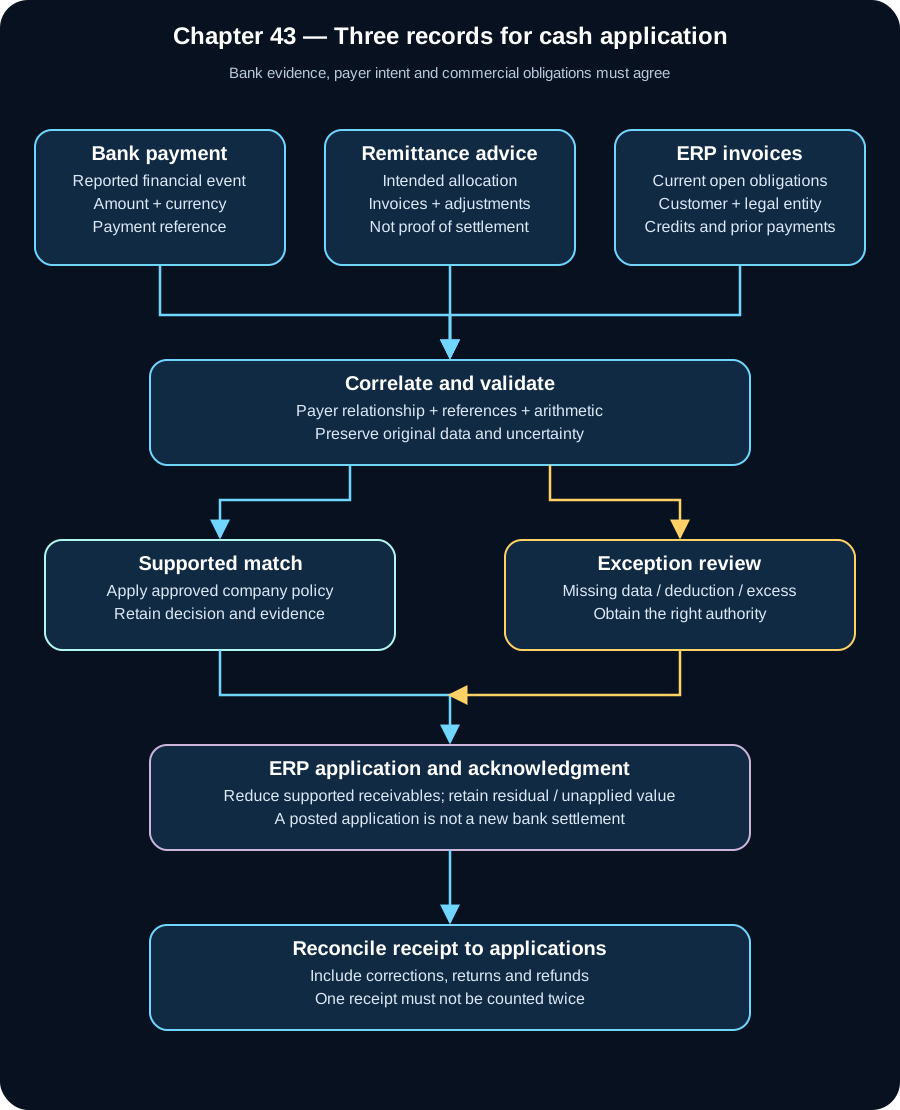
The diagram shows three evidence streams meeting at matching and review. The bank record establishes the reported financial event, the remittance states intended allocation, and the ERP supplies the obligation. Approved application updates receivables; it does not create another interbank settlement.
Correlation needs more than an amount
The $19,700 receipt might match several combinations of open invoices. A name and amount match can be useful evidence, but it is not conclusive when several customers pay similar totals. Stable payment references, invoice identifiers, customer relationships and remittance totals improve confidence. The system should expose ambiguity rather than hide it behind an arbitrary first match.
One payment can have several remittance documents, and one remittance can describe several payments. A buyer may split a large payment across banking arrangements while sending one advice. A supplier may receive an amended advice after the original. The data model should support these relationships without treating every document as a new receipt.
A controlled application record should state which payment amount was allocated to which invoice, which adjustments were used, who approved exceptions and what remains unapplied or open. That record allows a later return or correction to be traced back through the allocation. A simple 'matched' flag cannot support that work on its own.
The three-record distinction also improves customer conversations. The supplier can tell a buyer, 'We received the funds, but need the allocation for these invoices,' rather than incorrectly saying no payment arrived. The bank can confirm the account credit without asserting that it knows the commercial debt is fully discharged. Each participant makes a statement supported by its own evidence.
Preserve the difference between receipt and advice totals
A remittance can include noncash components. Suppose a buyer lists invoices totaling $52,000, an agreed credit of $1,200 and a proposed deduction of $800, then states a payment amount of $50,000. The arithmetic is consistent, but the application process still needs to verify the credit and determine the deduction's treatment. Matching the advice total to the bank receipt establishes only one part of the evidence.
The supplier should retain the gross invoice population, each adjustment and the cash allocation. If the $800 deduction is unapproved, it should remain visible under the appropriate residual or dispute treatment. If the $1,200 credit was already used against another payment, the system must detect that conflict. A mathematically balanced advice can still be commercially or financially wrong.
Some advice totals describe a payment run rather than one bank transaction. The buyer may split the run into several transfers or omit an invoice after generating the advice. The platform should support a pending relationship while it waits for the actual receipts and should not force a one-to-one match prematurely. The expected total can assist investigation without becoming a cash posting.
A payment reference supplied by the buyer may also differ from the bank's trace reference. Keep both and record any supported mapping. Asking the supplier to place a bank-generated identifier into an advice prepared before the bank executed the payment would be unrealistic. The integration needs identifiers available at each stage and a way to join them later.
This distinction makes automated matching more reliable. It treats remittance as a structured explanation to test against invoices and money, rather than as an instruction to make all three totals agree by whatever adjustment is convenient.
4. Collecting remittance without losing its meaning
Remittance can arrive in structured files, payment addenda, portal downloads, emails, spreadsheets or documents accompanying checks. The receiving process should preserve the source, receipt time, sender context and document identity. Normalization should make the data usable without concealing uncertainty in extraction or interpretation.
A structured invoice number still needs business context. The buyer may send its purchase-order number where the supplier expects an invoice number. It may remove leading zeros, use a regional prefix or refer to a statement instead of individual invoices. The matching design should document supported transformations and retain the original reference. A transformation that works for one buyer may misidentify another buyer's invoice.
Document extraction needs field-level confidence and validation. A scanned digit can be misread, a negative amount can lose its sign, and a line break can split a reference. The service should reconcile extracted line totals to the document total and flag inconsistencies. A high-confidence payer name does not make every invoice amount in the document reliable.
Email ingestion requires security and provenance controls. Attachments should be handled through approved scanning and processing, and the service should not trust an instruction to change bank details merely because it accompanies a remittance. The FBI's business-email-compromise guidance emphasizes verifying changes to payment procedures and account details. Cash application and bank-detail maintenance should remain separate workflows.
Normalize with an audit trail
A normalized remittance record can include payer, supplier entity, payment reference, expected amount, currency, invoice references, applied amounts, discounts, deductions and free text. These are illustrative business fields, not a claim that every standard or bank message contains them. The implementation should record which values came directly from the source and which were inferred or supplied by an operator.
Currency should be explicit even in a predominantly US-dollar programme. A numeric amount without currency can match the wrong obligation in a multi-currency ERP. This chapter does not cover foreign-exchange execution, but the application process must not assume a currency conversion or write off a difference without the appropriate evidence and accounting treatment.
Amendments need version control. If the buyer sends a revised allocation, preserve the earlier advice and identify which version is intended to govern. A second document should not automatically create a second cash record or duplicate the original line allocations. If the original application has already posted, the revised advice may require an approved correction rather than a silent replacement.
Missing remittance should enter a targeted request process. The supplier should ask for the payment reference, invoice allocation and explanation of material deductions, not send a generic request for 'more details' indefinitely. A bank or provider can assist with available payment data, but it cannot manufacture commercial information that the payer never supplied.
The result should be a usable and reviewable record. An operator can see what the buyer sent, what the system extracted and why a proposed match follows from it. That transparency supports both automation and efficient exception handling, because staff can focus on the uncertain field rather than reconstruct the entire document.
5. ACH addenda, X12 and bank reporting formats
Formats carry different kinds of information. ACH entry and addenda records support the ACH payment and associated data within the applicable format. X12 transaction sets support business exchanges, including the 820 Payment Order/Remittance Advice. Bank account-reporting formats describe balances and transactions. ISO 20022 provides message definitions for several distinct functions. None should be treated as a universal replacement for all the others.
Nacha's ACH Developer Guide describes the file and entry structures used for ACH. Corporate payments may use CCD or CTX according to the actual arrangement and rules. Their remittance capacities differ. Implementation teams should obtain the current guide and bank specifications rather than assume that a long invoice list can be placed in any ACH payment field without restriction.
The X12 820 is a Payment Order/Remittance Advice transaction set. Its business use and implementation guide determine whether it conveys a payment instruction, remittance information or both in the relevant arrangement. An 820 received by a supplier as remittance is not, by itself, proof of settled funds. The financial event must still be established through the actual payment service and account reporting.
A historical X12 implementation guide referring to an older Fedwire format should not be used as the current Fedwire message specification. Fedwire's ISO 20022 implementation has its own current requirements, discussed earlier in the programme. The cash-application team should consume the data its bank actually provides and preserve references rather than infer an obsolete wire layout from a familiar remittance standard.
Bank reporting may use BAI2, an agreed CSV layout, an API or ISO 20022 messages. X9 publishes information about the Balance and Transaction Reporting Standard. A bank's actual BAI2 or related reporting profile remains important: supported transaction codes, continuation records, reference fields and intraday versus prior-day content can differ by service. The chapter does not prescribe a universal bank-specific code mapping.
ISO message names identify purpose
The ISO 20022 catalogue identifies camt.052 as BankToCustomerAccountReport, camt.053 as BankToCustomerStatement and camt.054 as BankToCustomerDebitCreditNotification. Those names help distinguish reporting functions. The supported version and usage profile must be agreed with the bank. A company should not assume that the newest catalogue version is the version its bank sends.
A notification can arrive before a later statement includes the same underlying entry. The receivables platform should correlate the transaction rather than count both reports as separate receipts. The bank's documented identifiers, entry status and reporting semantics are essential. A message type alone does not tell the application whether every reported item is booked, available or suitable for immediate posting under the customer's policy.
APIs do not remove these questions. An API can return the same business information that another bank delivers in a file, but field meanings, pagination, update behavior and duplicate handling still need documentation. An HTTP success response confirms the API interaction according to its contract; it is not a generic settlement confirmation.
The practical design starts with required business evidence, then maps each source format to it. Preserve the original message or report reference, identify unsupported or truncated data, and test actual bank samples. A technically valid parser is useful only if it produces a faithful record of the payment and remittance the bank actually supplied.
Truncation and field mapping can change the business result
Imagine a buyer uses invoice references AB-10001 and AB-10002, but an intermediate report retains only the common prefix. The receiving parser can be technically correct while the application loses the information needed to distinguish the invoices. The bank should test the actual end-to-end field length and mapping, not just the source document's capacity.
The same problem occurs when a payment's free-text line combines several references without an agreed separator. An operator may read the intent, while a parser splits the string incorrectly. The service should document supported patterns and route ambiguous cases for review. It should not invent missing delimiters and automatically post a result that cannot be explained from the source.
Bank transaction codes need contextual mapping. A code may identify an incoming ACH item or a deposit category without identifying the commercial customer or invoice. The ERP should use the code to classify the financial event at the appropriate level, then use remittance and customer data for allocation. Treating a transaction code as a complete receivables decision confuses reporting with accounting authority.
A reporting migration can change fields even when the underlying payments remain the same. Moving from one bank file profile to another may alter reference placement, aggregation or status detail. The implementation should compare representative transactions across the old and new reports and confirm that duplicate detection and application still work. A parser that accepts the new file without errors may still omit critical data.
The company should retain a controlled mapping document that identifies each target business field, its source, transformation and fallback. This is useful operating documentation, not merely developer detail. When a buyer complains about a misapplied payment, staff can establish whether the error originated in the source advice, bank reporting, conversion or matching rule.
6. Payer identification and virtual references
Payer identification often produces the largest early improvement in cash application. A bank record may identify the sending account holder, while the supplier's ERP identifies the buying customer. A maintained relationship between those identities can reduce manual investigation. The relationship should be supported and controlled, especially where a shared-service center pays for several entities.
A supplier can ask buyers to include a structured customer or invoice reference in their payments. That instruction should be clear, stable and compatible with the actual payment method. A reference that is routinely truncated or placed in a field the receiving report omits will not help. Bank and corporate teams should test the full path from the buyer's instruction to the supplier's received data.
Some banking services assign virtual account numbers or virtual references to identify incoming collections. The design may map those identifiers to an underlying physical account and a customer or business unit. The actual product determines whether the identifier represents a separate account, a routing alias or an internal allocation structure. It should not automatically be described as a separately insured deposit account.
A dedicated collection identifier can identify the intended customer more reliably than free-text remittance. It does not necessarily identify the invoices or validate a deduction. If a buyer sends $19,700 to its assigned identifier, the supplier may know whose cash it is while still needing the allocation across the three invoices. Payer identification and invoice application remain separate stages.
Govern the mapping over time
An identifier should have an owner, purpose, effective period and status. Reassigning a closed customer's identifier too quickly can misdirect a late payment to a new customer. The service should define how inactive identifiers are treated and how old references remain traceable. A customer-master cleanup should not erase the history required to investigate a payment received months earlier.
Mapping changes deserve financial controls. An operator who can redirect a collection identifier to another legal entity or account can change the treatment of incoming funds. The bank should apply appropriate access, approval and audit history. A matching-rule interface should not become an unreviewed way to alter payment destinations.
The system should also detect payments that contradict the expected relationship. A virtual identifier associated with one buyer may receive funds from an unfamiliar sender. That does not automatically prove fraud, but it may require review before application or refund. The supplier should establish whether the payer is an authorized affiliate, a mistaken sender or another party.
Customer onboarding should include a test of the identifier and the reporting delivered to the ERP. The buyer's accounts-payable team should know where to place it and which old instructions to retire. Sending new instructions without confirming their use can leave old and new payment routes active indefinitely, creating avoidable reconciliation work.
A well-run identification service makes the first part of the question easier: whose payment is this? It should not claim to answer the rest without evidence. The invoice allocation, commercial adjustments and actual bank balance still need their own records and controls.
7. Matching rules and explainable automation
Matching should begin with strong evidence and expand cautiously. An exact invoice reference, compatible customer identity, matching currency and supported amount can justify a straightforward proposed application. When evidence is incomplete, the system can rank candidates or route the item for review. It should not disguise a guess as a confirmed accounting fact.
Rules should reflect the company's actual receivables practices. A buyer may routinely pay a statement total, deduct approved credits or combine invoices from a known group. Those patterns can be encoded where the data supports them. A generic oldest-invoice-first allocation may be permitted by a company's policy in some circumstances, but it should not silently override explicit payer remittance or contractual requirements.
Amount tolerances need clear authority. A small difference can arise from a valid discount, a fee, a rounding issue or a disputed short payment. Treating every difference below an arbitrary amount as approved can accumulate losses and conceal a buyer's systematic deductions. The policy should specify which differences can be automatically treated, which require review and how the accounting is recorded.
A match explanation should identify the evidence used: exact invoice reference, customer mapping, remittance total, approved credit note or another supported rule. Operators should be able to see why a candidate was selected and what alternatives were rejected. This helps them correct the underlying data rather than repeatedly override unexplained suggestions.
Confidence is not authority
A machine-learning model can propose likely matches from historical patterns, but its confidence score does not authorize a write-off or prove that a deduction is commercially valid. The bank or provider should separate suggestion from permitted action. The corporate customer should approve the relevant policy, and the system should retain the model or rule version used for a posted decision.
Training data can contain earlier errors. If an operator repeatedly allocated ambiguous payments to the wrong account, a model may learn that pattern. Quality review should examine outcomes, corrections and buyer complaints rather than rely solely on apparent historical consistency. A high match rate is not useful if it increases rework or misstated receivables.
Rules also need negative controls. The system should not match an invoice already fully settled, exceed a permitted open amount without approved overpayment treatment, cross legal entities without authorization or use a remittance that has been superseded. These checks prevent a plausible local match from creating an inconsistent overall ledger.
Automation should leave an exception in a workable state. The queue should show the likely payer, received amount, candidate invoices, missing evidence and reason for review. Sending an operator back to an empty search screen wastes the information already gathered. Good automation reduces the scope of the decision even when it cannot safely complete it.
Measure accuracy after posting as well as the initial automation rate. Reallocations, reopened invoices, refunded overpayments and customer complaints can reveal weak rules. A controlled rollout should compare proposed results with reviewed outcomes before broader automatic posting. The objective is reliable application, not the largest possible percentage labeled straight-through.
A controlled hierarchy of matching evidence
A practical matching design can evaluate an exact payment-to-remittance reference first, then validate the payer relationship, invoice references and arithmetic. Where the reference is absent, it can use a narrower set of supported candidates based on customer and amount. This is an illustrative hierarchy, not a universal algorithm. The corporate policy should determine when a proposed match can post automatically.
Suppose two buyers each owe $10,000 and a bank credit arrives for $10,000 with an ambiguous payer name. The amount provides little discrimination. A verified payer-account relationship or a linked remittance can resolve the case; choosing the oldest invoice cannot establish the payer's intent on its own. The system should show the ambiguity rather than reward itself for producing a match.
Now suppose a known buyer owes invoices of $4,000, $6,000 and $10,000 and pays $10,000 without remittance. There are at least two plausible allocations. A buyer-specific standing instruction may support one treatment, or an operator may need clarification. The matching engine should not assume that a single-invoice match is always correct merely because it uses fewer records.
A rule change should be tested against known exceptions and earlier corrected matches. If the new rule increases automatic application, review whether it also increases ambiguous allocations. A controlled sample can reveal a systematic problem before it affects the whole receivables population. Retain the old and new rule versions so posted decisions remain explainable.
Operators should be able to reject a proposed match with a meaningful reason. Those reasons help improve data and rules, but they should not automatically train a model to repeat every manual decision without review. A correction approved under unusual circumstances may be an exception rather than the new normal for that buyer.
8. Partial payments, discounts and deductions
A payment smaller than an invoice is not one uniform exception. The buyer may be making an agreed installment, taking a contractual discount, disputing goods, offsetting a credit or simply underpaying. The remittance can explain the buyer's intention, but the supplier must determine the supported accounting and remaining obligation.
In the opening case, the distributor has invoices of $8,000, $7,000 and $5,000. The buyer sends $19,700 and identifies a $300 deduction against the $5,000 invoice for damaged goods. A coherent initial treatment can apply the received cash according to supported policy while preserving the $300 disputed balance for review. It should not automatically mark the full $20,000 satisfied merely because the remittance describes a deduction.
If the supplier approves the claim and issues the appropriate credit, that commercial event can clear the remaining amount under its accounting policy. If it rejects the claim, the residual receivable remains subject to collection. The original cash receipt does not change in either case. The decision changes the treatment of the unpaid portion, not the amount the bank received.
An early-payment discount requires evidence that the terms and timing are met. A buyer's use of a discount code does not establish eligibility. The application process should compare the relevant invoice terms and payment evidence under the supplier's policy. It should also account for approved exceptions without rewriting the original invoice date or receipt date to manufacture eligibility.
Keep deductions visible to the right team
A deduction case should identify the invoice, amount, reason, supporting documents and commercial owner. Accounts receivable can track the cash and residual balance while sales, logistics or another team assesses the claim. A payment-matching operator should not be expected to decide whether a shipment was damaged without that evidence.
Partial application should leave the invoice history understandable. If $4,700 is applied to a $5,000 invoice, the record should show the received amount and the remaining $300 or supported adjustment. A later credit note or additional payment should connect to that residual. Deleting and recreating the invoice to make the total look clean destroys useful history.
Credit notes also need scope. A credit issued to one customer or legal entity should not automatically offset another's invoice because the amounts match. A payer may net credits in a way that differs from the supplier's records. The exception process should resolve the relationship and authority before application.
Fees should be distinguished from commercial deductions. If a payment arrives net of a separately identifiable banking or processing charge under the arrangement, finance should apply the appropriate fee treatment. That is different from a buyer refusing to pay for goods. The service should not classify every short receipt as a damaged-goods claim or every small difference as a bank fee.
The customer communication should state what has been received and what remains under review. A buyer who has paid $19,700 should not receive a demand for the full $20,000 because the application is delayed. Equally, the supplier should not tell the buyer the account is fully settled while a $300 deduction remains unapproved. Accurate application supports a precise commercial conversation.
Do not confuse a dispute queue with a credit balance
The $300 damaged-goods claim is a disputed amount still requiring a commercial decision. It is not automatically a customer credit. If the application service puts every deduction into a credit balance, later payments may use that balance and effectively grant the claim before approval. The accounting and workflow should preserve the distinction between a buyer's assertion and the supplier's approved adjustment.
A deduction can also be larger than the unpaid balance of the referenced invoice because another payment has already been applied. That case requires review of the full history. The service should not create a negative invoice balance without the appropriate treatment merely to accommodate the latest remittance.
Reason codes should help route work, not pretend to settle it. A code for freight, pricing or damaged goods can identify the responsible team. Supporting evidence still matters. The supplier may need a delivery record, contract term or issued credit note to reach a decision. A provider's ability to extract the reason from a document does not confer authority to accept it.
The company should track the distinction between time awaiting payer information and time awaiting internal commercial approval. The remedies differ. Repeatedly asking the buyer for evidence already supplied wastes time; repeatedly transferring a complete case among internal queues hides a decision bottleneck. A case history should show the evidence received and the current owner.
When the decision is made, the resulting credit, rejection or negotiated amount should update the receivable and customer communication. Closing the dispute ticket without posting the approved adjustment leaves the financial record wrong. Posting an adjustment without recording the decision leaves it unsupported. The two actions should remain linked while preserving their distinct purposes.
9. Overpayments, unidentified receipts and refunds
An overpayment can arise from a duplicate payment, a stale statement, an incorrect amount or a deliberate advance. The supplier should establish the reason before choosing a remedy. Automatically applying excess cash to unrelated invoices may conflict with the payer's intent or the company's policy. Automatically refunding it can create fraud and duplicate-recovery risk.
A received amount with no identified payer should enter an appropriate unapplied or unidentified position under the company's accounting design. The bank can provide available payment details and trace references. The company can compare expected receipts and request information through established relationships. The absence of remittance is not permission to recognize the amount as sales revenue.
Suppose a buyer sends $12,000 for an invoice already paid by another group entity. The application process should detect the closed invoice and preserve the second receipt. The supplier can confirm whether the buyer intended an advance, another allocation or a refund. The original paid invoice should not be reopened merely to absorb the duplicate receipt.
Refunds need verified authority and destination. A request to send an overpayment to a new third-party account is a materially different instruction from returning funds through a supported original-payment process. The supplier and bank should apply their fraud controls, including independent verification where appropriate. A remittance email should not become the sole authority for a new outbound payment destination.
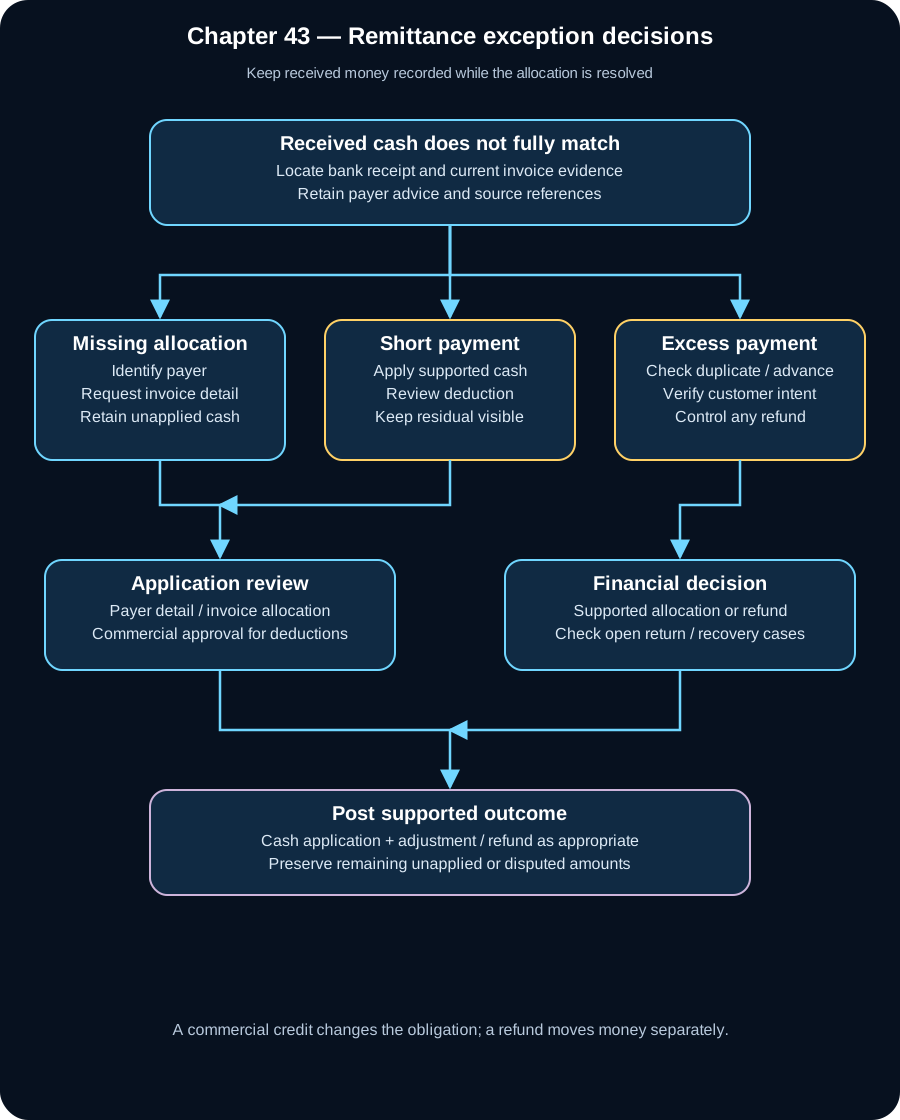
The diagram separates missing information, commercial deductions and excess cash. Each branch has a different decision owner. Financial receipt remains recorded while the company resolves the allocation; an approved refund is a separate payment with its own authority and reconciliation.
Avoid paying back money twice
The original payment may be subject to a return, dispute or recovery request under its rail. Before issuing a refund, operations should check the current financial status and any open case. A refund plus an independently processed return can reimburse the payer twice. The systems should link both potential outflows to the same original receipt and prevent uncoordinated action.
A pending refund should also be visible to the application team. Otherwise another operator may apply the excess to a newly issued invoice while treasury sends the money back. The customer balance, refund instruction and bank movement need a coordinated state. If the refund fails, the system should restore the appropriate unresolved position rather than assume the payer received it.
Long-aged unapplied receipts require ownership and review. The company should investigate why information remains missing and apply its accounting and legal procedures for unresolved balances. This chapter does not prescribe state unclaimed-property deadlines or a universal write-off period. Those requirements depend on the facts and jurisdiction and should be assessed by the responsible specialists.
Reports should distinguish unidentified payer, identified payer with missing allocation, approved customer credit and refund pending. Combining them into one suspense total makes it difficult to prioritize work and explain balances. The company may know exactly whose cash it holds while still lacking the authority to apply it to a particular invoice.
The bank's role is to provide reliable financial evidence and execute authorized payment actions within its service. The corporate customer's role is to determine the commercial allocation and refund entitlement. Keeping those decisions distinct helps both parties resolve excess and unidentified cash without creating another error.
10. Settlement evidence, availability and treasury use
Cash application should consume bank evidence without overinterpreting it. A booked account credit, an available balance and a pending transaction report can have different meanings. The bank's service documentation should define them. The receivables platform should preserve the status and reporting time rather than flatten every positive amount into final usable cash.
Underlying rails retain their own characteristics. An ACH collection can produce later returns. A check deposit can be subject to the collection and return processes covered earlier. A wire or instant payment has its applicable settlement and recovery rules. This chapter does not redefine those rules; it explains why the application record must remain linked to the payment's actual financial lifecycle.
A corporate policy may permit application when a specified bank event occurs while retaining a way to reverse the application if a later financial exception arises. That is an accounting and operating choice subject to the actual requirements and risk. It should not be described as changing the rail's finality or eliminating a return right.
Treasury needs timely visibility into receipts even when invoice allocation remains incomplete. The $19,700 opening receipt can matter to a cash forecast while the $300 deduction is under review. Conversely, an expected remittance of $19,700 should remain a forecast until the bank evidence supports actual receipt. Mixing expected and received amounts can overstate liquidity.
Connect timestamps to decisions
Preserve the payment's relevant bank date, booking information, value information where provided, report time and application time. These fields answer different questions. Finance may need the bank entry for reconciliation, credit control may need the date a customer's obligation was reduced, and operations may need the interval between receipt and application.
An intraday report and an end-of-day statement can include the same transaction. The application service should identify the same underlying entry, enrich it where appropriate and avoid a duplicate cash receipt. If a bank corrects a reported item, the correction should update the supported financial history through a controlled process rather than silently replace a posted ERP amount.
Batch funding can obscure individual receipts. A card processor or collection provider may send net settlement covering many customer payments. The company needs the settlement bridge: gross transactions, fees, refunds, adjustments and net bank movement. The bank credit alone cannot identify which invoices were paid, and the transaction file alone cannot prove the net settlement reconciled.
Treasury and receivables should share a consistent definition of received cash while retaining their distinct needs. Treasury can manage balances and expected movements; receivables can manage customer obligations. A dashboard that combines the two should label pending allocation and financial uncertainty separately. That prevents a commercial dispute from being mistaken for missing bank liquidity, or a bank return from being mistaken for a mere documentation issue.
The practical result is disciplined use of evidence. Apply the receipt when the approved policy and available records support it, track any later financial change, and avoid making stronger statements about availability or finality than the bank and rail actually support.
11. ERP posting and accounting controls
The ERP application process converts an approved allocation into accounting records. It should identify the receipt, customer, invoice, amount, adjustment and posting period. The financial effect must reconcile to the bank evidence and the company's policies. A technically successful import is not enough if the entries affect the wrong entity, currency or customer.
At a conceptual level, collection of an existing receivable increases cash or the appropriate settlement position and reduces accounts receivable when applied. If the receipt cannot yet be allocated, the company may use an approved unapplied-cash or liability treatment until resolution. The exact entries depend on the accounting framework and chart of accounts. The chapter's examples illustrate the business effect rather than prescribe one universal journal template.
For the $19,700 receipt, the accounting should preserve the amount received and the $300 unresolved deduction. If an approved credit later clears that residual, it should be recorded as the appropriate commercial adjustment. Treating the whole $20,000 as cash received would overstate cash; treating the $19,700 as new revenue merely because it arrived would misdescribe collection of an existing receivable.
Posting controls should validate that allocated amounts do not exceed the receipt without a supported adjustment and that invoice balances are not cleared twice. The ERP should return a transaction-level outcome to the application service. A batch can contain accepted and rejected records; a file-level acknowledgment should not mark every receipt posted.
Design for partial success
Suppose an application file contains 100 receipts and the ERP rejects two because their customer accounts are inactive. The recovery process should address those two records without reposting the other 98. Stable application identifiers and returned posting references make that possible. A new filename should not cause the ERP to treat already posted applications as new money.
Accounting periods create additional decisions. A receipt identified after month-end may relate to a bank entry from the closed period. Finance should apply its close and correction policies, preserving the original event dates and approved posting treatment. Operations should not backdate an entry informally to eliminate an aging metric or force a prior reconciliation to balance.
Manual adjustments should carry a reason and approver appropriate to the effect. A user changing an invoice allocation is performing a different action from approving a write-off or refund. Access should reflect those differences. The service should not give every data-repair operator broad authority to alter financial balances.
The audit trail should connect bank source, remittance source, matching decision, application instruction and ERP posting. If an invoice is later reopened, the record should explain which receipt or adjustment caused it. This is particularly important when a single payment was allocated across many invoices: a return must not reopen unrelated obligations or leave part of the original receipt applied without explanation.
A well-designed interface makes finance's review easier. It provides balanced totals, exceptions by reason, posting references and a clear record of corrections. It does not require accountants to infer business meaning from a collection of unlabelled technical response codes.
A posting timeout after the ERP commits
The application service sends an approved allocation and waits for an acknowledgment. The ERP posts it successfully, but the response is lost. From the provider's perspective, the outcome is uncertain. Resubmitting as a new application can double-reduce the receivable even though no second bank payment exists.
The recovery design should query or reconcile using the original application identity and the ERP's supported interface. If the ERP returns the existing posting reference, the provider can complete its record. If the ERP definitively rejected or never accepted the instruction, a controlled retry can proceed. Until then, the item should remain uncertain rather than be marked failed and recreated.
A manual repair must use the same discipline. An operator may be tempted to key the application directly into the ERP to meet a close deadline. Before doing so, the team should establish whether the original posted and prevent the delayed automated instruction from later executing. Otherwise the manual workaround and recovered interface can both apply the receipt.
The reconciliation should compare receipt value with total active applications, approved adjustments and unapplied remainder. That check can detect an overapplication even when each individual ERP transaction appears valid. It should also identify duplicate source receipts created from repeated bank reports, because duplicate prevention at only the application endpoint cannot catch an earlier duplicate financial record.
This case shows why acknowledgment design is a financial control. It is not merely an API reliability concern. The bank, provider and corporate customer need an agreed way to establish the last confirmed accounting event and resume processing without creating a second economic result.
12. Returns, recalls and application corrections
A financial exception after application should begin with the original payment. The bank reports the actual return, adjustment or recovery event under the relevant service. The receivables platform identifies the allocation that used that receipt. Finance then applies the appropriate customer and accounting treatment. A generic negative amount should not be applied to an arbitrary open invoice because it happens to match.
An ACH return can require the company to restore the relevant receivable or another appropriate position. The reason and authorization implications may also affect future collections. A check return has its own evidence and processing. A recall request for a completed credit transfer is not automatically a completed reversal or a guaranteed recovery. The underlying rail and actual bank response govern the financial outcome.
The company should distinguish a payer's commercial request from a bank-confirmed financial event. A buyer saying 'we recalled the payment' does not prove that the supplier's bank balance has been debited. The supplier should obtain the actual status through its bank and preserve the received amount until the evidence and accounting policy support a change.
A pure application error can be corrected without changing bank settlement. If a valid receipt was assigned to the wrong invoice, the company may reverse that allocation and apply it correctly through an approved ERP process. The cash remains received. Sending a refund or initiating a new collection simply to fix an internal allocation can introduce unnecessary financial risk.
Handle a many-invoice receipt carefully
If the $19,700 payment was allocated across three invoices and the full payment is subsequently returned, the correction should trace each application and any associated commercial adjustment. An approved damaged-goods credit may remain valid even though the cash payment failed. Reversing every related record indiscriminately could undo a legitimate credit note as well as restore the unpaid cash amount.
Partial financial adjustments require equally careful mapping. The bank may report an amount that relates to one component of a broader settlement batch. The company should identify the affected receipt before changing customer balances. Where information is insufficient, use an appropriate controlled exception rather than distribute the difference across the batch merely to make totals equal.
Customer communications should separate payment failure from commercial dispute. The buyer needs to know which received funds were affected and which obligations remain due. A collector should not demand payment for an invoice still fully covered by another valid receipt. Updated balances should reach collections and credit-control systems promptly enough to prevent contradictory messages.
The bank's investigation record and the corporate application case should share references where the service permits. That connection lets staff reconcile a later recovery or correction without starting from the beginning. A case may remain open for financial recovery even after the corporate receivable has been restored under policy; those are distinct tasks with related evidence.
Completion requires both sides of the correction to reconcile. The bank movement is explained, the ERP reflects the supported obligation, and any customer credit or refund remains accounted for. A resolved bank ticket does not automatically prove that every invoice allocation was repaired.
13. Reconciliation, close and operational reporting
Reconciliation should cover completeness from the bank source through ERP posting. Every relevant received transaction should be included, excluded for a documented reason or held in an identified exception state. Every posted cash application should trace to supported receipt evidence. These two directions help detect both missing receipts and duplicate applications.
The daily bridge should explain received cash, applied cash, unapplied amounts, refunds, financial returns and other approved adjustments. Timing differences should have expected evidence and owners. A perpetual unexplained difference is not a timing item merely because it has not yet been investigated.
Bank reporting may contain transactions outside receivables, such as transfers between the company's own accounts. The ingestion rules should distinguish those movements so that an internal treasury transfer is not treated as customer payment. Where the same collection proceeds are swept to another account, the sweep should not create a second receipt in the ERP.
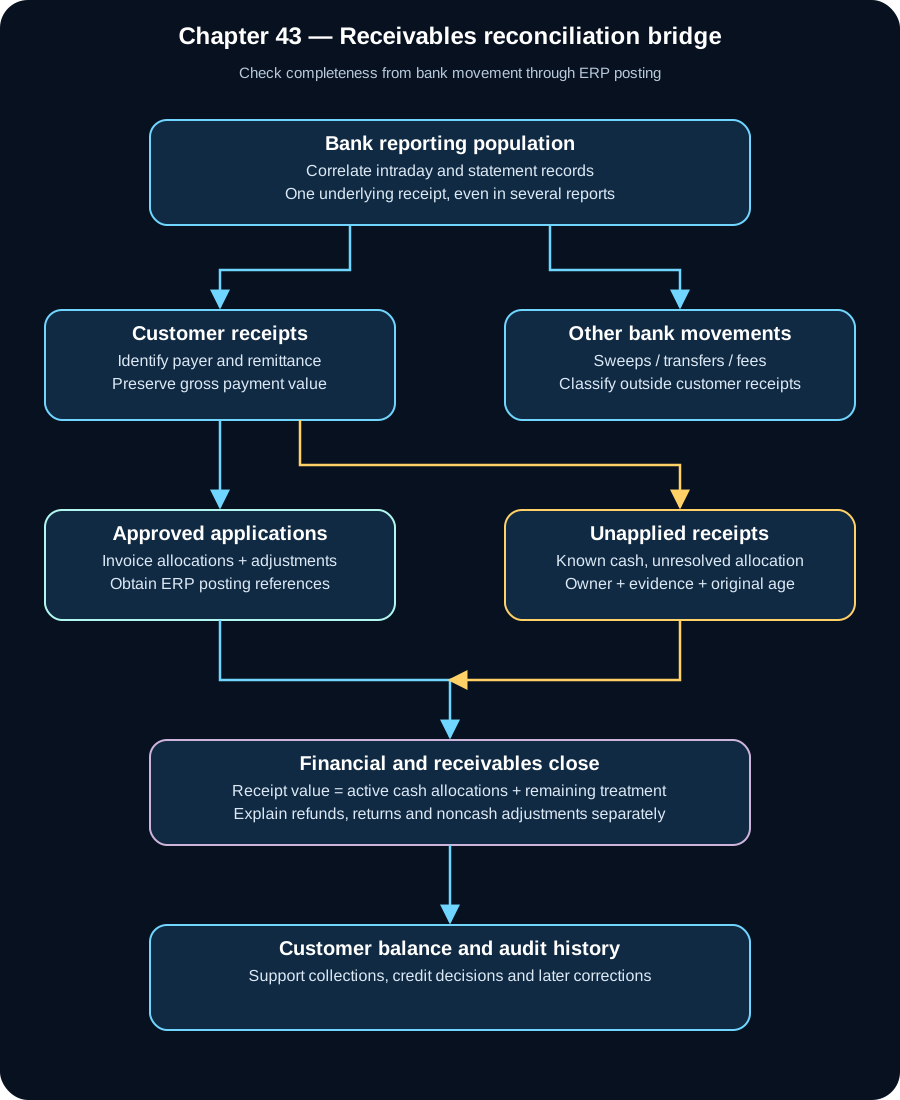
The diagram follows one financial population through receipt processing and application while keeping unapplied items visible. Transfers, fees and other noncustomer movements are classified separately. ERP acknowledgments complete the bridge; receiving a file alone does not prove that the ledger was updated.
Measure the unresolved work honestly
Useful measures include time from receipt to payer identification, time to application, value and age of unapplied cash, deduction resolution time and rate of corrected applications. The denominator matters. A bank should not report an impressive automation rate by excluding every difficult receipt without explaining the exclusion. The corporate customer needs to understand the remaining work and exposure.
Aging should follow the underlying event. If an operator reopens or transfers a case, the original receipt date should remain available. Resetting the age whenever a case changes queues hides long-running problems. Reports should distinguish genuinely new work from items awaiting another team or trading partner.
Month-end close needs a reproducible population. Finance should be able to reconcile the bank statement, receipt subledger, ERP cash accounts and unapplied balances for the period. Later corrections should retain their relationship to the original period and follow the company's approved accounting treatment. A regenerated report should explain changes rather than silently restate history.
Exception trends can reveal upstream improvements. Repeated missing invoice references from one buyer may be addressed through better remittance instructions. Frequent legal-entity mismatches may indicate poor customer-master design. A concentration of extraction errors in one document layout may justify a template correction. The service should use investigation results to improve the source process, not only close individual tickets.
Reports should also support customer-facing teams. A collector needs to know that funds were received but a deduction is unresolved. A credit analyst needs the supported exposure after application, not a raw bank total. The bank can provide reliable payment evidence, while the company supplies the commercial interpretation. Shared definitions make those views consistent without pretending they are identical.
Separate collection performance from application performance
A supplier can receive money promptly and apply it slowly. It can also apply promptly once money arrives while buyers consistently pay late. These are different performance problems. Reports should distinguish invoice due-date behavior, bank receipt timing and the interval from receipt to application so management can address the right cause.
For example, if a buyer pays on the agreed date but remittance arrives two days later, the application delay may be a data problem. If structured remittance arrives early but the bank receipt arrives late, the issue may be payment execution or the buyer's timing. If both arrive promptly but the ERP rejects the application, the bottleneck is internal processing. A single average days-to-cash measure can conceal these differences.
Credit-control reports should account for received but unapplied funds according to the company's approved policy. The existence of cash can justify a review of an order hold without establishing the final invoice allocation. The credit team needs enough evidence to make that decision deliberately. Automatically releasing all credit limits based on unidentified receipts would be as unsound as ignoring clearly identified received cash.
A reconciliation pack should include the unresolved population, not only balanced totals. Finance needs to know which items remain uncertain at close, their value, supporting evidence and proposed treatment. A small number of high-impact cases may deserve individual review even when the overall automation rate is strong.
Management should also review repeated manual work. If one buyer's remittance is always repaired in the same way, a better source instruction or controlled mapping may remove the cause. If the repair changes from payment to payment, the process may need clearer trading-partner communication rather than another increasingly complicated matching rule.
14. Implementing the bank-to-corporate service
Implementation should begin with representative real-world samples provided through approved channels: bank reports, remittance formats, invoice exports and known exceptions. Sensitive information should be handled under the parties' security requirements. The objective is to discover actual relationships and gaps before committing to a matching promise or interface design.
Define the agreed scope of bank and provider action. Will the service capture documents, identify payers, propose allocations, post approved applications or manage deductions? Each additional action requires data, authority and operational support. A service that only delivers files should not be measured as though it controls the corporate ERP's posting schedule.
The integration should support reliable receipt, validation, acknowledgments and replay. Files need control totals and stable record identities according to the agreed format. APIs need documented pagination, update semantics and recovery behavior. A successful connection test does not establish completeness across an entire day's transaction population.
Customer master and open-invoice feeds should have clear effective times. A matching engine working from yesterday's invoice snapshot can suggest an already settled invoice today. The service should detect stale or incomplete feeds and adjust its processing appropriately. It should not conceal a missing corporate feed by relying on increasingly speculative matches.
Security follows the financial decisions
Protect source documents, account information and commercial data according to their sensitivity. Limit access to customer relationships and invoice details that a user needs. Separate authority to edit mappings, approve adjustments and release refunds. A receivables platform can create financial harm through data changes even when it cannot directly initiate an interbank payment.
Business-email-compromise controls are relevant to refund requests and changes in collection instructions. Verify sensitive changes through established channels and retain the approval evidence. Do not reuse a contact number supplied only in the suspicious request as the independent check. The bank and company should agree how suspected fraud interrupts processing and who communicates with affected parties.
Testing should include missing remittance, duplicate bank reports, amended advice, a parent paying for subsidiaries, partial ERP acceptance, an already paid invoice and a later return. It should also include an outage after the ERP posts but before the provider receives the acknowledgment. That case tests whether recovery creates duplicate application.
User acceptance should examine the proposed match and its explanation, not only the final total. Finance should verify the entries and close reports. Collections should verify the resulting customer balance. Operations should resolve sample exceptions using the available evidence. A service that balances only after developers manually repair records is not ready for routine operation.
Rollout can proceed by supported payment populations or customer groups, with explicit handling for the remainder. Monitor corrections and customer complaints as well as automation rates. Expand rules when evidence supports them. The aim is a service the bank and company can explain, reconcile and recover under ordinary operating pressure.
Migration should reconcile opening receivables and cash
A corporate customer moving to a new receivables service should establish an opening population of invoices, customer credits and unapplied receipts. The new platform needs to know which obligations are already settled and which cash remains available for allocation. Importing only open invoices while omitting unapplied cash can cause the company to chase customers who have already paid.
Bank reporting overlap should be controlled. The old and new feeds may cover the same dates during transition. The service should identify the common payment population and prevent duplicate receipt creation. A different filename or reporting format does not make an old bank transaction new cash.
Open exception cases also need a transfer plan. An unresolved deduction should retain its evidence and owner. A pending refund should remain blocked from simultaneous application under the approved process. An uncertain ERP posting should be resolved or carried with its exact status, not reset to unprocessed because the new platform lacks the old provider's identifier.
The customer master should preserve supported payer relationships and historical references. A merger or account renumbering can change current identifiers while older payments continue to arrive. The migration should maintain an appropriate mapping and review ambiguous relationships. It should not assign a late receipt to a new customer simply because an old identifier was reused.
Finance should reconcile the opening balances and a controlled period of new activity before retiring the old process. The comparison should include bank receipts, applications, unapplied amounts, adjustments and ERP results. Matching only the total receivable balance can miss offsetting errors between customers.
Cutover communications should tell buyers which collection instructions and remittance channels change. Where instructions remain the same, the supplier should avoid unnecessary messages that could confuse customers or create an opening for fraudulent bank-detail changes. Any actual financial change should follow the controlled verification process.
After cutover, monitor payments using old references, repeated imports and cases returned to the old team. Those events show whether the transition left an operational gap. A successful first-day file is useful evidence, but the service must also handle the late and exceptional items that cross the boundary.
Migration is therefore a reconciliation exercise as well as a technology release. The company should be able to explain where every opening obligation and received amount went, then continue the same traceable process for new activity. That continuity protects customer balances and makes the new automation trustworthy.
The corporate customer should agree how bank-service fees are reported during migration. A change from separately billed fees to net funding, or the reverse, changes the reconciliation even when gross customer payments remain identical. Finance should identify the fee population and accounting treatment before comparing old and new totals. An apparent short receipt may otherwise trigger unnecessary customer collections. The service should preserve gross payment evidence and explain the contractual fee separately so a reporting change does not alter the amount applied to a buyer's obligation.
15. Worked cases and cash-application decisions
The following cases return to the fictional distributor. Each asks whether the problem concerns received funds, intended allocation, commercial authority or ERP posting. Keeping those questions separate prevents a convenient accounting shortcut from becoming a financial error.
The $19,700 payment and the $300 deduction
The bank confirms the $19,700 receipt. Remittance identifies invoices of $8,000, $7,000 and $5,000 and a $300 damaged-goods deduction against the last invoice. The supplier can apply the received amount according to its approved policy and preserve the residual deduction case. The commercial team then determines whether a credit is supported.
If the claim is approved, record the appropriate credit and connect it to the residual balance. If it is rejected, the $300 remains subject to collection. In neither case should the bank receipt be changed to $20,000. The case demonstrates why matching a buyer's arithmetic does not establish the validity of every adjustment in that arithmetic.
One parent pays for two customers
A parent company sends $48,000 covering invoices for two subsidiaries. The bank record names the parent, and the remittance separates the allocations. The supplier should use supported customer relationships and legal-entity rules to apply the payment. It should not assign all funds to the first customer whose name resembles the payer.
If one subsidiary's invoice belongs to a different supplier entity, finance must apply the approved cross-entity treatment. The matching engine can identify the issue and propose the relevant records, but it should not invent an intercompany arrangement. The payment remains received while the allocation decision is completed.
A notification and statement describe one receipt
The bank sends an intraday credit notification and later includes the same receipt in its statement. The platform should correlate the underlying transaction using the documented references and reporting semantics. The later report can confirm or enrich the record without creating another $19,700 cash receipt.
If the reports disagree, the system should investigate the bank's correction or status information. It should not choose the larger amount or latest timestamp blindly. The application should remain tied to the supported financial record and preserve the evidence of any correction.
A refund request arrives before a return
A buyer reports an accidental duplicate payment and requests a refund to a new account. The supplier should verify the receipt, current financial status, request authority and destination. It should also check for an existing return or recovery case. A convincing email is insufficient authority to redirect money.
If an approved refund proceeds, link it to the original receipt and prevent another operator from applying or refunding the same excess. If the original payment is independently returned, reconcile that event before a second outflow occurs. The case is complete when the bank movements, customer balance and refund record all agree.
An ERP import partly succeeds
A file contains several approved applications, but one fails because its invoice was closed by another process. The platform should retain successful ERP posting references and isolate the failed record. It should refresh the relevant invoice evidence and seek the appropriate correction. Replaying the whole file as new applications would create a larger problem than the original reject.
For each case, state the financial evidence, remittance evidence, invoice state, authorized decision and remaining exception. Those five points form a practical review that can be used by bank operations, corporate finance and implementation teams alike.
A complete arithmetic review
Take an illustrative $10,000 receipt. The supplier applies $6,000 to one invoice and $3,500 to another, leaving $500 unapplied while it seeks instructions. The active applications plus unapplied remainder equal the received cash. If a later operator applies the remaining $500, the unapplied balance should reduce by the same amount. The receipt itself remains $10,000.
Now add a separate approved $200 credit note against the second invoice. That credit reduces the relevant commercial obligation under policy; it does not increase the cash receipt to $10,200. The application report should show cash and noncash adjustments separately so the bank reconciliation remains intelligible.
Finally, suppose the buyer requests a refund of the $500 before it has been applied. An approved refund should reserve or otherwise control that amount under the company's design so another operator cannot apply it simultaneously. Once the refund completes, the cash and customer-credit position should reconcile to the outgoing payment. If the refund fails, the unresolved obligation to the customer remains visible.
This small review can be performed without assuming a particular chart of accounts. It tests conservation of the received value across application, unapplied balances and supported outflows while preserving noncash commercial adjustments. That is a useful final control for any receivables implementation.
16. Role checklist and learning closure
Product should explain which parts of receivables the service completes and which decisions remain with the corporate customer. It should distinguish payer identification, invoice matching and approved ERP application. A high automation figure should describe a defined outcome and population.
Technology should preserve payment, remittance and invoice evidence through normalization, matching and posting. Operations should resolve missing data and financial exceptions without confusing a received payment with a commercial approval. Finance should reconcile bank movement, unapplied cash, adjustments and customer balances without counting the same receipt twice.
Risk and customer teams should understand how incorrect application affects credit decisions, collections and refunds. The corporate customer should be able to see what was received, what was applied and why any amount remains unresolved.
Chapter 44 moves earlier in the commercial lifecycle, into electronic invoice presentment, biller portals and B2B accounts-receivable networks. Better structured invoices and approval information can improve the remittance that eventually reaches this cash-application process, while remaining separate from the payment rail itself.
Authoritative references
Sources checked on October 5, 2026. Bank-specific reporting profiles, virtual-account structures, ERP mappings and accounting entries require the actual implementation documentation and corporate policy. Historical standards material should not be substituted for a current payment-rail specification.
This application uses JavaScript for the full interactive experience. This text summary is served for accessibility and search indexing.