Corporate AP, Consumer Payouts and Disbursement Models. Design recipient-choice and direct payouts across eligible methods, with controlled funding, reissue, unclaimed obligations and delivery evidence.
An insurer approves a $2,400 claim payment. The recipient receives an email offering a choice of delivery methods but has not selected one. In the insurer's portal, the claim is approved and the payout invitation is sent. In the recipient's bank account, nothing has arrived. Calling the payment complete at this point would confuse a business decision, a notification and a financial transfer.
Chapter 49 followed prepared payroll, supplier and tax instructions through the execution desk. This chapter examines how a broader disbursement product turns an approved payable into delivery: direct bank payments, provider-managed payouts, recipient choice, checks, card payouts and supported instant transfers. It also addresses what happens when the recipient cannot be reached, declines a method or never claims the payment.
Approval establishes that money is owed. A delivery choice identifies how to pay. Only the appropriate financial evidence establishes what was delivered, while unresolved obligations remain visible until they are properly resolved.
Allow roughly 60 minutes for the chapter, diagrams and worked cases. Businesses, claims, balances and workflow states are fictional. Examples illustrate bank implementation decisions rather than universal scheme rules. Sources were checked on October 5, 2026.
Chapter navigator
- Define the disbursement obligation
- Direct payment and provider-managed models
- Recipient identity, entitlement and destination
- Recipient-choice journeys and payment invitations
- Match the delivery method to the obligation
- Where each method settles
- Funding, prefunding and payout capacity
- Corporate AP and consumer communication
- Government disbursement as a distinct application
- Failures, uncertainty and safe fallback
- Checks, reissue and unclaimed payments
- Fraud, sanctions and consumer protection
- Reconciliation and accounting for outstanding obligations
- Implementing the disbursement product inside a bank
- Worked cases and implementation decisions
- Role checklist and learning closure
1. Define the disbursement obligation
A disbursement is an outward payment against an identified obligation or authorized purpose. It can pay a supplier, reimburse an employee, return an overpayment, settle an insurance claim or deliver another approved amount to a consumer. The purpose determines the owner, required evidence and customer communication; the rail determines the financial execution mechanics.
Corporate accounts payable, or AP, maintains liabilities to suppliers and other creditors. A disbursement service can execute those liabilities directly or through an intermediary. Consumer payouts often begin in a claims, refund or service system rather than an invoice ledger. Both need a stable obligation reference and a clear authorized amount.
The insurer's $2,400 obligation should exist independently of its delivery attempt. Sending an invitation does not eliminate the payable. A failed ACH credit does not create a second claim. A replacement check does not justify another $2,400 of claim expense. The data model should preserve the obligation while allowing controlled changes to how it is discharged.
Define who can approve, amend or cancel the obligation. A customer-support user may be allowed to resend an invitation but not increase the amount or change the entitled recipient. The service should represent those permissions separately. Otherwise a convenient support action can become an unauthorized financial decision.
The product's completion definition should be explicit: invitation sent, method selected, instruction accepted, payment released or confirmed delivery. Different stages can be useful, but labeling all of them paid creates false assurances and poor reconciliation.
2. Direct payment and provider-managed models
In a direct model, the payer instructs its bank to pay the recipient from the payer's account. The bank supplies execution and reporting under the chosen service. In a provider-managed model, the payer may fund an intermediary or authorize it to initiate payments, while the intermediary supplies recipient engagement, routing and payout reporting.
Those arrangements create different evidence needs. A transfer from the insurer to its payout provider is not proof that the claimant received funds. The insurer needs the provider's obligation-level records and the relevant delivery evidence. The bank funding the provider may have a narrower role than the provider's payout bank.
Identify whose account holds prefunded money and who owes the recipient at each stage. An omnibus account requires reliable allocation records. Do not infer deposit ownership, insurance coverage or bankruptcy treatment solely from a provider's use of a bank account. The relevant agreements and legal structure determine those questions.
A provider can also offer a service where it initiates against the payer's account without holding the full payout balance. That is not the same as prefunding. Liquidity checks, failure handling and accounting need to reflect the actual arrangement. The bank should not reuse a prefunded ledger design simply because both products send payout emails.
For implementation, draw the legal and account relationships before the customer journey. The recipient can still see a simple choice of payment methods, while the operating teams know which entity supplies the funds, sends the instruction, retains the evidence and handles an unresolved obligation.
3. Recipient identity, entitlement and destination
Recipient identity, entitlement and destination validation answer different questions. The claimant may be correctly identified but not entitled to the particular payment. The claim may be valid while the supplied bank account belongs to someone else. A valid routing number does not establish either identity or entitlement.
The payer's source system should supply the approved recipient and obligation. The payout journey should bind the person claiming the payment to that record using appropriate verification. Collect the destination through a protected process and retain evidence of the recipient's choice. The exact controls depend on the amount, risk, customer relationship and service.
An email address or mobile number can be a notification channel or an alias within a supported network. It is not universally a bank-account address. A payout invitation sent to an email does not prove that the entitled recipient controls the mailbox or has selected a supported financial destination.
For joint payees, businesses or representatives, establish the actual authority and payment requirements. A claim naming two people should not automatically become a payment to whichever person opens the email first. A corporate AP payment should not be redirected to an employee's personal wallet without a valid approved arrangement.
The service should retain an audit trail of destination changes, including which pending attempts they affect. A change after release cannot rewrite the original instruction. This is particularly important when a recipient reports that the old account is closed and requests urgent replacement.
4. Recipient-choice journeys and payment invitations
A recipient-choice service can offer eligible methods through a secure journey. The payer approves the obligation; the service notifies the recipient; the recipient verifies access and chooses a method; the service validates eligibility and creates the financial instruction. Those steps should be visible as separate events.
The invitation should identify the payer and purpose clearly enough for the recipient to recognize it without exposing unnecessary personal information. It should direct the person to an authenticated service and explain any applicable fees, expected timing and alternatives before final selection. A genuine payout should not require the recipient to send an unrelated payment to unlock it.
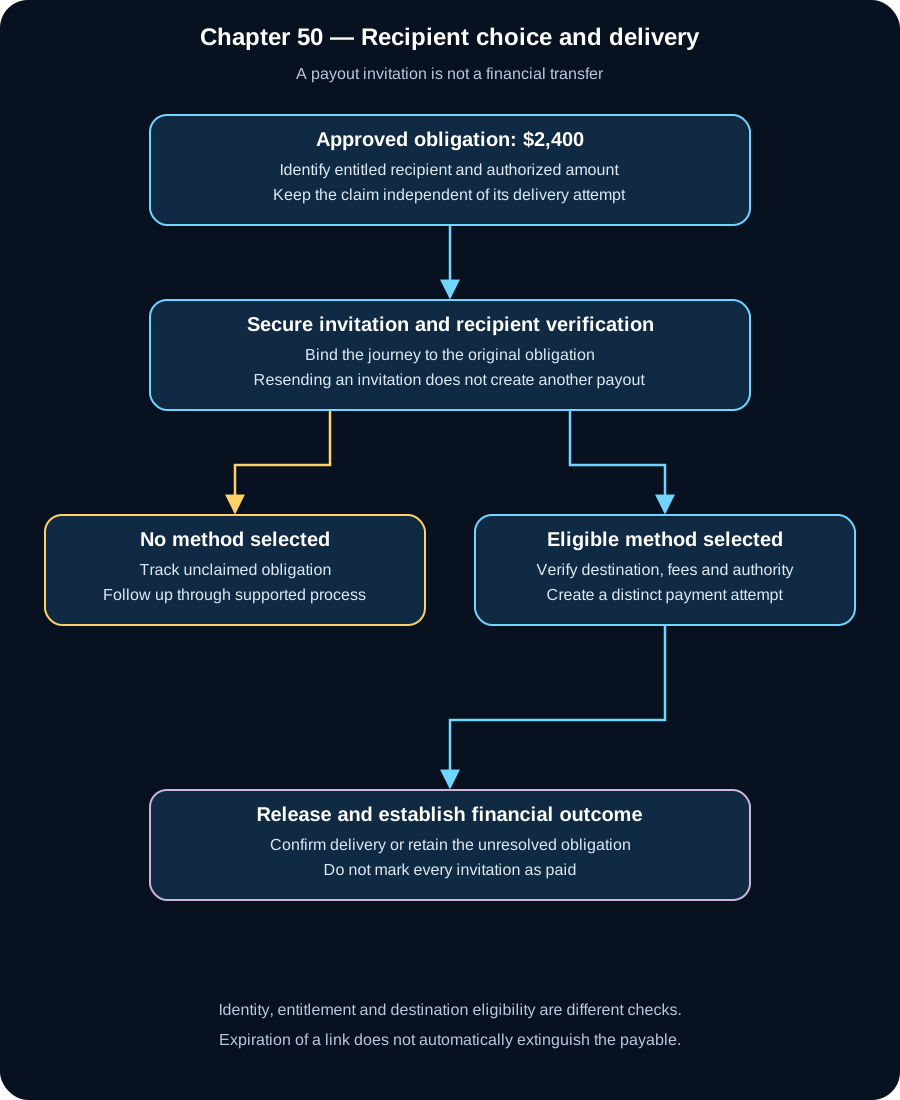
The diagram separates notification from financial execution. It also preserves the unclaimed path: if no method is selected, the obligation remains unresolved. The payer needs a follow-up or alternate-delivery process rather than an automatic completed status.
A recipient can abandon the journey after entering some information. Resume should preserve the obligation and avoid creating another payout. A second invitation should point to the same current obligation, with appropriate expiration and security controls, rather than create a parallel opportunity to claim the amount again.
If the recipient selects a method that becomes unavailable before release, explain the available alternatives and obtain the required choice or authority. Do not silently switch to a method with different fees or terms. After release, first establish the original outcome before offering a replacement method.
5. Match the delivery method to the obligation
ACH credit can suit scheduled bank-account payouts, while supported instant-payment services can serve time-sensitive eligible destinations. Wire transfers can support other requirements under the bank's service. Card payouts can reach eligible card-linked accounts through the appropriate program. Checks remain a distinct delivery mechanism in relevant private-sector arrangements, with mailing, presentment and outstanding-item controls.
The selection should consider reachability, authorized destination, amount eligibility, timing, cost, remittance needs and available funding. A recipient wanting speed still needs an eligible receiving arrangement. A supplier needing detailed invoice allocation may prefer a method and reporting combination that preserves remittance, even if another method is faster.
An app or card number is not evidence that every payout network can reach the recipient. Verify the actual supported account type and program. Visa Direct's documentation, for example, distinguishes Original Credit Transactions used for supported card payouts and notes that actual availability depends on receiving institutions and other factors. It should not be described as identical to a FedNow or RTP credit transfer.
For a corporate supplier, a virtual-card settlement can be another agreed AP arrangement, but it requires acceptance and commercial terms. The payer should not count an unaccepted virtual credential as delivery of cash. Chapter 35 covers those card mechanisms; this chapter focuses on selecting and controlling the disbursement model.
Use a method matrix maintained from current bank and provider specifications. A static training comparison should not become production routing configuration. Limits, eligible destinations and supported service hours can change and require controlled updates.
6. Where each method settles
For ACH payouts, interbank settlement follows the ACH arrangement, while customer posting and returns remain distinct. FedNow settles through Federal Reserve master accounts or the relevant correspondent master account and provides final interbank settlement under its rules. RTP uses its prefunded settlement model with participant positions backed by funds in the joint account. Neither is simply a faster card transaction.
A card payout uses the relevant card-network processing and settlement arrangement. The recipient's issuer determines availability within the applicable program requirements. A check involves issuance, delivery, deposit or presentment and payment through the applicable check collection process. Printing or mailing the check is not evidence that the recipient has received available money.
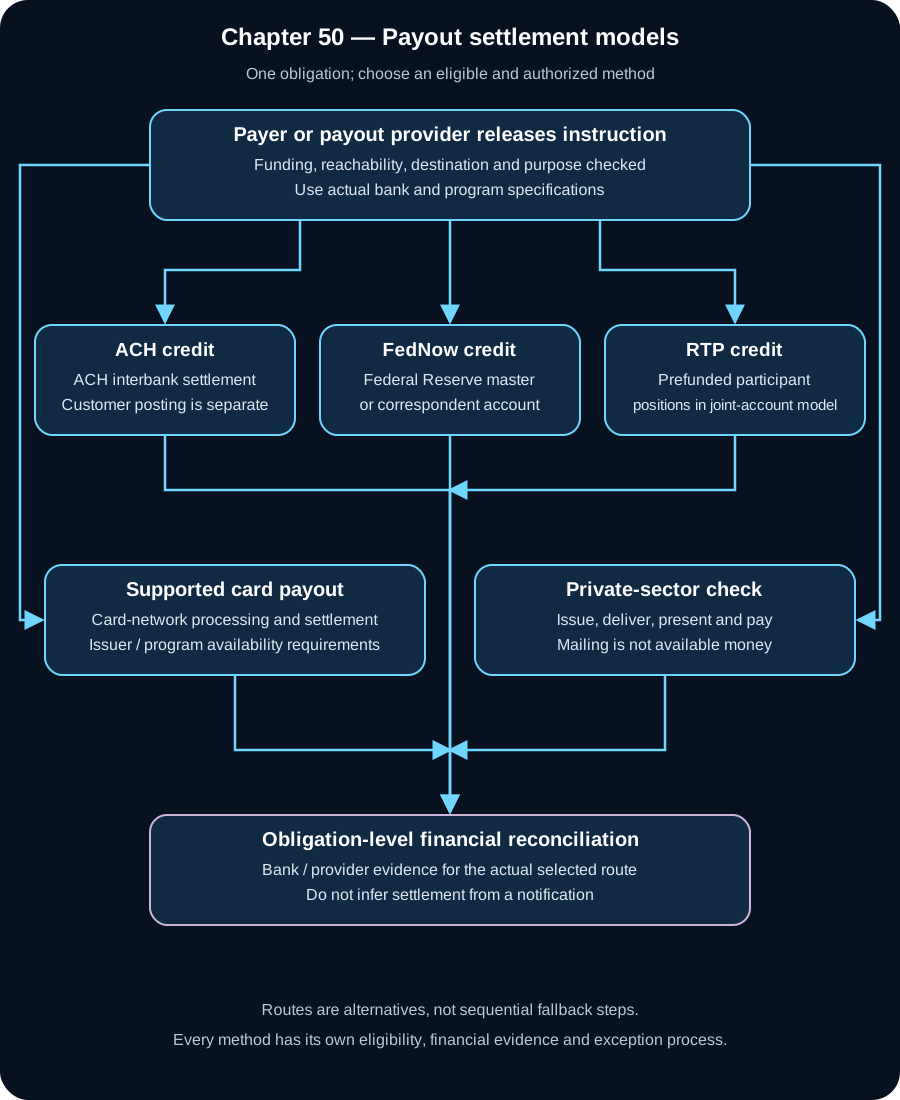
The diagram compares financial mechanisms without treating them as interchangeable fallback steps. Each route requires its own eligibility and evidence. It also distinguishes direct bank settlement from a provider's internal status or prefunding record.
For the bank, identify the settlement account and customer ledger entries involved in the chosen route. A provider might send one aggregate funding transfer and many recipient payouts. Reconcile both levels. The payer's cash reduction is not sufficient to prove every individual payout completed.
Final interbank settlement does not eliminate every customer-protection obligation or contractual dispute. A recovery request can exist after final settlement, and any returned funds are another financial event. The earlier instant-payment chapters cover the detailed message processes; the disbursement service should retain their outcomes accurately.
7. Funding, prefunding and payout capacity
The payer should fund the service according to the actual model: payment-by-payment, a scheduled batch, an agreed credit facility or a prefunded balance. Each has different exposure. A provider's available payout capacity may differ from the payer's ordinary bank balance because the relevant funds have not reached the required account or program.
In a fictional prefunded design, the insurer transfers $100,000 to a payout arrangement. That funding creates a recorded asset or balance for the insurer under its accounting policy and corresponding obligations within the arrangement. It does not create $100,000 of completed claimant payments. The allocation to individual approved claims remains necessary.
Track committed but unreleased amounts, released amounts, completed payouts, rejected attempts and unresolved activity. Available capacity should not be calculated by subtracting only completed payments if pending releases have already committed the same funds. Otherwise simultaneous batches can exceed actual funding.
Refunds, returned payouts and fees need separate treatment. A returned recipient payment may restore capacity only after the financial evidence supports the return and the contract permits reuse. A dashboard flag should not automatically create cash. Treasury should reconcile provider balances with bank reports and supported timing differences.
For continuous payout services, prepare for periods when ordinary treasury staff or funding mechanisms are unavailable. This does not require a universal liquidity algorithm, but it does require a documented operating model with owners, limits, monitoring and escalation appropriate to the service.
8. Corporate AP and consumer communication
Corporate AP normally begins with an approved payable and known trading relationship. The supplier needs remittance identifying invoices, deductions and payer references. Consumer payouts may begin with a claim or refund and require recipient onboarding or method selection. Their communication should explain the purpose and delivery state without exposing sensitive case information.
A supplier advice can be sent after release, but it should use precise wording about the known stage. A consumer notification can say the payout is ready to claim before any financial instruction exists. Both are useful messages when their meaning is clear. Neither should imply bank receipt that has not been established.
For the insurer's $2,400 claim, the recipient may choose an eligible instant method or a supported alternative. If a fee applies, show who pays it and whether it reduces the amount received. The source obligation and net delivery must reconcile. A $2,400 approved benefit should not silently become $2,390 because the routing engine selected a fee-bearing option without the applicable authority.
Remittance resend, invitation resend and payment reissue are different actions. The service should expose them separately and restrict each appropriately. A support agent helping a recipient find an email should not accidentally create another bank transfer.
Maintain contact-history evidence for unresolved cases, but avoid treating an opened email as proof of identity or financial receipt. Communications support the payment process; they do not replace the financial record.
9. Government disbursement as a distinct application
Treasury's Digital Pay service is an example of a government disbursement tool that supports recipient payment choices through a defined agency arrangement. Fiscal Service announced FedNow availability through its Digital Payout program in October 2025. This demonstrates a specific government use of an instant-payment service; it does not mean every federal payment now uses FedNow or every recipient is eligible for every option.
Government programs have their own eligibility, authorization and accounting requirements. A bank or provider supporting delivery should not determine benefit entitlement from payment-routing data. The agency's approved obligation and recipient information must be preserved through the financial process.
Likewise, federal, state and local programs should not be treated as one product. Their payment services, exception procedures and permitted alternatives can differ. The implementation should obtain the current agency instructions for the actual program rather than copy a private insurer's workflow without adjustment.
This chapter does not assume universal paper-check availability for federal payments. The responsible agency's current electronic-payment requirements and exceptions determine the supported methods. Private-sector check examples later in the chapter should not be interpreted as instructions to issue a federal check outside those rules.
The useful bank lesson is the separation of eligibility, payment choice and execution. A recipient can be entitled to a benefit while still needing a supported delivery arrangement, and the agency must retain visibility of that unresolved obligation.
10. Failures, uncertainty and safe fallback
Fallback is safe only when the original attempt's state permits it. A method unavailable before submission can lead to another supported choice. A definite rejection can support a corrected new attempt after appropriate checks. An uncertain response requires inquiry or reconciliation before another financial instruction is released.
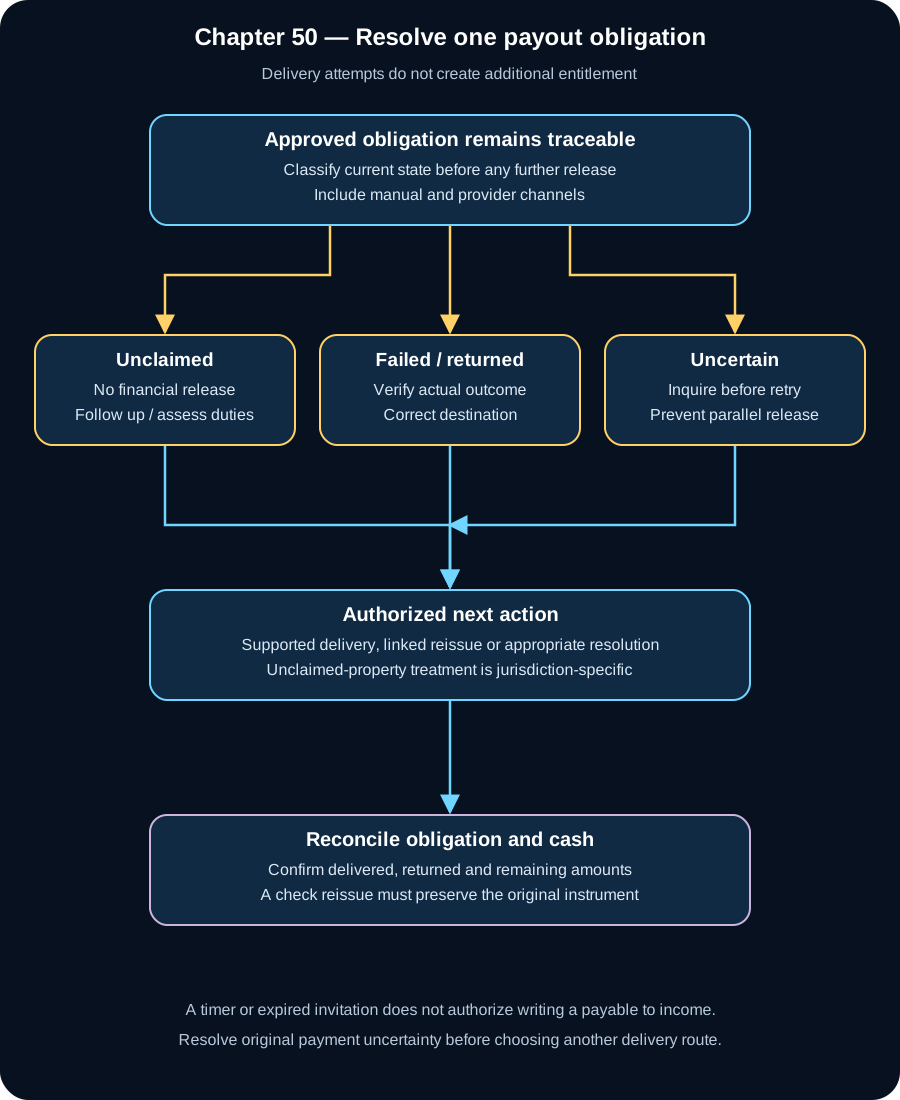
Suppose the insurer releases $2,400 through an instant-payment service and the response is lost. Sending an ACH replacement immediately may pay the claim twice. The bank should establish the original network outcome and retain the amount as unresolved until evidence permits the next step. The recipient's urgency does not make uncertainty equivalent to failure.
For a definitive failure caused by a closed account, verify the replacement destination through the controlled journey. Link the new attempt to the same obligation and record the original outcome. Changing methods can change fees, timing and recipient experience, so obtain the necessary choice or authority.
Fallback controls should operate across providers and channels. A manual wire issued by operations can duplicate an automated payout just as easily as an API retry. The obligation-level release control should therefore cover the contingency process as well as the primary integration.
11. Checks, reissue and unclaimed payments
In a private-sector check model, issuance creates an outstanding instrument that must be tracked through presentment, payment, stop or other supported resolution. A mailed check can be delayed, lost or deposited later. The payer should not assume that a recipient's non-receipt report proves the check can no longer be paid.
Before reissue, establish the original instrument's status and follow the bank's stop-payment and replacement process where applicable. Keep both instrument identities linked to one obligation. If an original later presents after replacement, the bank and payer need evidence to prevent or investigate duplicate payment under the relevant rules and agreement.
A payout invitation can also remain unclaimed without any instrument being issued. Track it separately from an outstanding check. The service needs a follow-up process, supported alternative and appropriate treatment when the recipient remains unreachable. Expiring a link does not automatically extinguish the underlying payable.
Unclaimed-property obligations depend on jurisdiction, property type and circumstances. State holder guidance, such as California's official program, is a starting point for the applicable analysis, not a universal national dormancy period. The payer should maintain ownership and contact records and obtain the appropriate legal and accounting treatment before reporting, remitting or otherwise resolving an obligation.
Do not write old payouts off as revenue merely because a dashboard age threshold was reached. A technology retention setting is not a legal determination that the money is no longer owed.
12. Fraud, sanctions and consumer protection
Payout fraud can target entitlement, recipient identity, destination changes or account access. Controls should start with the source obligation and continue through delivery. A bank-account validation result cannot prove that an insurance claim is legitimate, while a valid claim does not prove that a recently supplied account belongs to the claimant.
Protect invitations against interception and replay. Bind the claim journey to the intended obligation, limit exposure of sensitive data and use appropriate verification before accepting a destination. Do not accept an email reply changing the payee without the approved maintenance process. Support exceptions should retain the same authority and audit standards.
Sanctions and AML controls should reflect the bank's and other participants' actual obligations and risk assessment. Record responsibility for screening and relevant evidence. A provider's statement that it handles compliance should not replace a clear agreement about the bank's own role and access to needed records.
Consumer-protection treatment depends on the account, product and transaction. Applicable Regulation E obligations should not be displaced by a provider's finality label. A delivery complaint, a dispute about entitlement and an unauthorized account transaction need separate assessment and may involve different responsible parties.
The service should communicate an actual next step: verify a destination, investigate an original payment, resolve an entitlement question or complete a protected claim journey. Asking a customer to repeatedly try new methods without resolving earlier attempts creates both fraud and duplicate-payment risk.
13. Reconciliation and accounting for outstanding obligations
Reconcile approved obligations to delivery attempts and financial outcomes. The outstanding obligation should reflect what remains owed after confirmed payments and approved adjustments, using the payer's accounting policy. Notifications, rejected attempts and technical retries should not reduce it as though they were successful payments.
For the insurer, the claim expense and payable are established through its approved claims accounting. Payment then reduces the payable and cash, with clearing accounts where the process requires them. A returned payment restores the appropriate payable or clearing position. A replacement clears the same obligation; it should not create another claim expense solely because delivery failed.
Provider prefunding needs another reconciliation. Connect payer funding transfers, available provider balance, committed amounts, completed payouts, fees and returns. The provider's liability or subledger records should reconcile to bank cash and supported financial positions. An aggregate funded balance can be correct while individual recipient allocations are wrong.
Report outstanding checks, unclaimed invitations, definitive failures and uncertain financial attempts separately. Each has a different next action. The control totals should bridge opening obligations, new approvals, adjustments, completed payments and closing unresolved amounts, with counts as well as dollars.
For one fictional day, 100 approved payouts total $100,000. Completed delivery is $85,000, unclaimed invitations are $8,000, definitive failures are $5,000 and uncertain attempts are $2,000. Those categories reconcile to $100,000. Reporting $100,000 paid because all invitations were sent would hide $15,000 of unresolved obligations.
14. Implementing the disbursement product inside a bank
Use separate records for obligation, recipient, invitation, selected method, instruction attempt and financial event. This supports one obligation with multiple controlled attempts and avoids duplicate payment when a customer restarts a journey. It also allows a contact change without silently changing a bank destination already used in an instruction.
The routing service should use current reachability and eligibility information, funding availability and authorized customer choices. Its output should identify the method and the reason for selection. If a route is unavailable, preserve the original obligation and offer a supported next action instead of forcing a technically convenient but commercially different payment.
Integration specifications should define event meaning, identity, ordering, inquiry and reporting. Use actual bank and provider formats; generic JSON is not a scheme specification. If ISO 20022 messages are used on an underlying rail, the provider's simplified payout response still needs a clear mapping to the specific financial status it represents.
Pilot an unclaimed invitation, a changed destination, a lost response, a later return and a private-sector check reissue. Reconcile the obligation and cash after each case. The test should establish that no combination of customer refresh, support action and provider retry creates a second release against the same amount.
The operating model should include provider exit and unresolved obligations. Historical claim records, financial references and recipient communications must remain usable after new payouts stop. The bank should be able to explain and resolve the last outstanding payment, not only process the first successful one.
15. Worked cases and implementation decisions
An invitation is mistaken for payment
The insurer approves $2,400 and sends a payout invitation. The recipient has not opened it. The claim is approved and delivery is awaiting recipient action; no bank transfer should be inferred. The payable remains visible. Support can resend the invitation through the protected process without creating another obligation.
For the exercise, identify the source approval, invitation record and missing method selection. Write a customer message explaining that the payment is ready for the next step, avoiding language that says funds are already in the bank. This tests whether the user interface follows the same event definitions as accounting.
A recipient changes method after an uncertain release
The recipient chose an eligible instant method, but the bank response was lost. The recipient now selects ACH. Keep the original attempt unresolved and prevent the second release until the actual outcome is established. The new selection can be recorded as a preference without becoming another payment immediately.
If the first completed, explain the confirmed result and investigate access or non-receipt through the supported route. If it definitively failed, authorize a linked ACH attempt with the correct destination and timing. The obligation does not change merely because its delivery method changes.
A prefunded provider balance looks like completed claims
The insurer transfers $100,000 to a provider. Only $85,000 has reached recipients, while $15,000 remains unclaimed, failed or uncertain. The funding transfer is real, but it does not justify closing all claims as paid. Reconcile the provider balance and individual obligations separately.
Ask the learner to identify the insurer's asset or balance treatment under its policy and the remaining claim liabilities. The exact journals depend on the arrangement, but the evidence must preserve both the location of funds and the amounts still owed. One aggregate bank debit cannot replace the claimant-level report.
A private-sector check needs replacement
A supplier reports that its $4,000 check never arrived. Verify issuance and current bank status, use the supported stop or replacement process and retain the original instrument reference. A replacement should remain linked to the same payable. Do not assume mailing failure means the original can never present.
Introduce a late original presentment after replacement. The operating team needs both instrument records and the bank's control outcome. If the system deleted the original when it reissued, it cannot explain or prevent the duplicate reliably.
An unclaimed payout reaches a review date
A $750 consumer reimbursement remains unclaimed after the service's internal review period. That period is a workflow trigger, not automatic permission to cancel the debt. Review contact attempts, alternatives and the applicable unclaimed-property or other legal requirements for the actual obligation.
The learner should identify the responsible legal and finance owners and the records needed for any reporting or remittance. No universal dormancy number is supplied because jurisdiction and property type matter. The correct control is an evidenced resolution, not a timer that moves money to income.
A refund notification is delivered twice
A provider sends the same completion event twice for a $300 payout. The event log can record both deliveries, but the payable and cash should reflect one payment. Later, a legitimate return event references that payout. The system should process the return as a new financial event, not reject every later message sharing the original payout reference.
This tests the difference between event identity and transaction identity. Duplicate delivery must be harmless, while valid subsequent adjustments remain possible. Explain the result using one obligation, one completed payment and one linked return rather than a collection of unrelated status flags.
16. Role checklist and learning closure
Product should distinguish approved, claimable, released and delivered amounts. Business analysis should preserve entitlement and destination authority. Technology should model obligations and attempts separately. Operations should manage recipient follow-up, failed delivery and uncertainty without duplicate release. Treasury should fund the correct arrangement. Finance should reconcile outstanding obligations, provider balances and bank cash.
The insurer's $2,400 claim is complete only when the relevant business and financial evidence supports the appropriate final treatment. A message sent to the recipient is progress, but it is not a substitute for delivery or another properly authorized resolution.
Branch 10 has connected wallets, platform proceeds, institutional collections, execution and payout delivery. Chapter 51 begins Branch 11 with cross-border alternatives, remittance transfers, IAT and stablecoins, where jurisdiction and cross-border settlement introduce additional considerations.
Authoritative references
Sources checked on October 5, 2026. Product eligibility and production interfaces require current participant documentation. Private-sector check examples do not establish federal-government payment-method eligibility.
This application uses JavaScript for the full interactive experience. This text summary is served for accessibility and search indexing.