Consumer Billing, Bank Bill Pay, IVR and Text-to-Pay. Follow consumer bills through bank bill pay, IVR and text-to-pay, with clear authorization, delivery, settlement, biller posting, dates, exceptions and customer remedies.
A customer receives a $186.40 water bill on Monday. She can schedule a payment from her bank, call the utility's automated telephone service or follow a payment link from a reminder. Each option appears to pay the same bill. Behind the screen, however, the instruction may become a bank-originated payment, a debit requested by the utility or a card transaction. The utility's account can also remain unpaid after one system has displayed a successful submission.
Chapter 41 separated cash acceptance from customer credit and provider settlement. This chapter applies that discipline to consumer bills. It follows the bill from presentation through authorization, payment processing and application to the consumer's account. Earlier chapters explain the underlying ACH, check and card rails; here the focus is how a bank and biller assemble those mechanisms into a reliable bill-payment service.
A bill is an obligation, a channel captures an instruction, a payment rail moves value, and the biller's ledger records how that value satisfies the obligation. A single confirmation should not blur these events.
For a roughly 60-minute core session, spend about 35 minutes on Sections 3–8 and Section 11. For the next 10 minutes, use the chapter’s three diagrams to connect bill references, customer authority and the last confirmed rail state. Use 10 minutes to work through one case in Section 15, then spend the final 5 minutes explaining: How would you resolve a bill shown as unpaid after the customer's channel displayed a successful submission? Treat these timings as a study guide. The remaining sections, additional cases and extended reference material are follow-up study; completing the whole chapter takes longer.
The utility, customer, amounts, service calendars and internal designs are fictional. Actual cut-offs, delivery commitments, fees and creditor obligations depend on the service, applicable law and current agreements.
Chapter navigator
- Begin with the bill and the customer's decision
- The participants and their actual responsibilities
- Bank bill pay from enrollment to delivery
- Biller collection and the end-to-end payment record
- Authorization, recurring payments and customer control
- IVR and assisted telephone payments
- Text-to-pay and payment links
- Where clearing, settlement and bill posting occur
- Dates, cut-offs and creditor-specific requirements
- Funding, liquidity and biller proceeds
- Failed, cancelled, returned and duplicated payments
- Fraud, consumer errors and investigations
- Reconciliation and reporting across the bill lifecycle
- Building a service that can be operated
- Worked cases and implementation decisions
- Role checklist and learning closure
1. Begin with the bill and the customer's decision
A consumer bill identifies an amount owed, an account or obligation, and the terms under which payment is expected. A payment service should preserve that context. Moving $186.40 to a utility's bank is insufficient if the utility cannot identify which household account to credit. Conversely, a correctly identified payment instruction is insufficient if the transfer fails and the bill remains unpaid.
The biller's system is normally the source of the bill balance. The customer's bank may display an electronic bill supplied through a bill-presentment arrangement, but it does not thereby become the authority for the utility's meter reading or charge calculation. If the customer disputes the bill amount, the biller must handle that underlying issue. A payment error and a billing dispute can occur together, yet they require different evidence and owners.
The interface should distinguish the current balance, statement balance, minimum amount where relevant, overdue amount and amount selected for payment. These values are not interchangeable. A customer might intentionally pay only part of a utility balance or select a credit-card minimum payment. The service should not silently substitute the full balance because it appears more convenient for reconciliation.
A scheduled payment is a future instruction under the service's terms. It should show the selected amount, funding account, intended date and destination. The customer should be able to understand whether the displayed date means the day the bank will begin processing, the expected delivery date or the date the biller has committed to recognize. Those meanings can differ across products and payment methods.
Presentment does not create payment authority
Receiving an electronic bill does not authorize a debit. Enrolling in reminders does not enroll the customer in automatic payment. Saving an account for convenience does not necessarily authorize every later collection. The product must collect the authority required for the actual transaction and retain evidence of what the customer agreed to.
A biller can also change the amount after presentation. A corrected charge, credit or adjustment may arrive before a scheduled payment executes. The service needs a defined treatment: retain a customer-selected fixed amount, update a properly authorized variable payment, or ask the customer to act. The answer depends on the authorization and applicable requirements. A data refresh should not become an unapproved financial instruction.
For the water bill, imagine that a $20 billing credit is posted after the customer schedules $186.40. The bank's bill-pay service may still hold a fixed instruction for that amount. The utility's own authorized balance-based autopay may operate differently. Customer support should be able to explain which arrangement exists and whether a change can still be made.
Useful bill-payment design therefore begins before funds move. It identifies the obligation, makes the customer's choice clear and preserves the relationship between that choice and the later payment. Many apparent settlement complaints begin as a misunderstanding at this stage: the wrong account number, a stale balance or a date label that meant something different to the customer.
2. The participants and their actual responsibilities
The consumer is the payer. The biller maintains the underlying account and receives payment for the obligation. The consumer's bank may provide bank bill pay or hold the account debited by a biller. A bill-payment provider may maintain payee directories, route payments, produce checks or exchange electronic payment information. The biller's bank receives funds or supports the biller's origination service. A telephone or messaging provider supplies a channel, not necessarily a payment rail.
One bank can occupy several roles, but the responsibilities should remain distinguishable. A bank offering bill pay to its deposit customer controls that customer-facing instruction service. The same bank may also provide receivables processing to the utility. Those relationships do not automatically give either business unit authority to change the customer's utility balance or debit instruction.
In bank bill pay, the customer generally instructs the bank or its service provider to make a payment to a named payee. The delivery method can depend on the provider's relationship with that payee. The CFPB explains that online bill-pay recipients may receive electronic transfers or paper checks. An online instruction is therefore not proof that the recipient will receive an ACH credit, an instant payment or any particular electronic message.
In biller-initiated collection, the customer authorizes the biller or its provider to initiate the appropriate payment. For an ACH debit, the biller's originating bank and the consumer's receiving bank have the ACH roles described earlier in the programme. The everyday label 'receiving bank' can confuse learners because the ACH Receiving Depository Financial Institution receives the debit entry while funds are collected from its customer's account. The biller receives the economic proceeds through its own banking arrangement.
For a card payment, the biller acts as the merchant through its acquiring arrangement. An authorization approval is not the same as completed card clearing, settlement or biller funding. For a check delivered by a bill-pay provider, the check collection lifecycle applies. The service should not replace those distinct mechanisms with a generic claim that the bank transferred money instantly.
The service contract joins the participants
The provider agreement should specify instruction acceptance, cancellation opportunities, delivery commitments, returned-payment handling and investigation support. Biller enrollment arrangements should define acceptable account identifiers and payment data. A directory entry with the right utility name but an obsolete processing address can generate a valid-looking payment that fails to reach the correct receivables system.
The customer also needs a clear support path. A bank should not tell its customer to investigate a provider's internal batch failure without assistance. The biller should not insist that every missing credit is a bank funding problem. The institution receiving the complaint should gather the available evidence and route the issue according to its responsibilities, including any applicable consumer error-resolution duties.
Service ownership is especially important when an institution white-labels a vendor platform. The customer sees the bank's brand, while the transaction record may reside with several providers. Contracts and interfaces must make the evidence available to the bank promptly enough to operate the service and meet its obligations. Outsourcing the technology does not eliminate the need for a coherent customer response.
Electronic bills and payment templates can diverge
An electronic bill can refresh the amount due while a saved payment template retains a fixed amount. The service should show that distinction to the customer. A recurring template for $100 does not automatically become a balance-based payment when the next bill is $120. If the customer wants the statement amount collected automatically, the product needs the appropriate arrangement and authority for that behavior.
The bill-presentment relationship can also end while the payee remains payable. A utility may stop supplying electronic bills through a provider but still accept payments delivered by that provider. The bank should tell the customer which feature changed. Removing the payee entirely or cancelling valid future instructions without the appropriate basis may create avoidable missed payments; leaving a stale electronic bill visible as current is also misleading.
A migrated utility account number should receive special attention. The biller may assign a new reference after changing systems. The bank's directory and the customer's recurring template may update at different times. The service should establish whether existing references remain accepted and how pending instructions will be routed. A successful payment to the old reference last month is not proof that it remains valid indefinitely.
Testing should include a customer with several accounts at the same biller. The display should let the customer distinguish the household's main residence from a rental property or another obligation. A payee name alone is insufficient. The bank should preserve the selected biller account through scheduling, delivery and the confirmation so a later complaint can be traced accurately.
These are presentment and master-data questions rather than new rail rules. They belong in the implementation because a correctly executed payment can still satisfy the wrong obligation if the setup data is stale or ambiguous.
3. Bank bill pay from enrollment to delivery
Bank bill pay starts by establishing an eligible funding account and a payee. The customer may select a recognized biller from a directory or enter details for another recipient. The service should validate the available information, including any account-number format supported by the biller, while making clear that successful setup is not proof that a payment has been made.
Payee identity deserves more attention than a name match. Large organizations may have several payment destinations for different products, regions or account types. A customer's credit-card account and installment-loan account with the same financial group may require different bill-pay routing. A directory should connect the chosen biller product to the required customer reference and current delivery arrangement.
The customer then selects an amount and date. The service applies its funding and scheduling rules and displays the relevant commitment. Some arrangements debit the customer's account before the recipient receives the payment; others have different timing, especially where a check is involved. The bank should describe its actual model rather than teach that all bill-pay checks debit the consumer on the same event.
Once accepted, the instruction needs a stable identifier that survives provider routing. If the customer changes the date before release, the service should retain the change history. If the payment has passed the cancellable stage, the interface should say so and offer the appropriate investigation or recovery path. A disabled cancel button is not enough if the displayed status still suggests that nothing has happened.
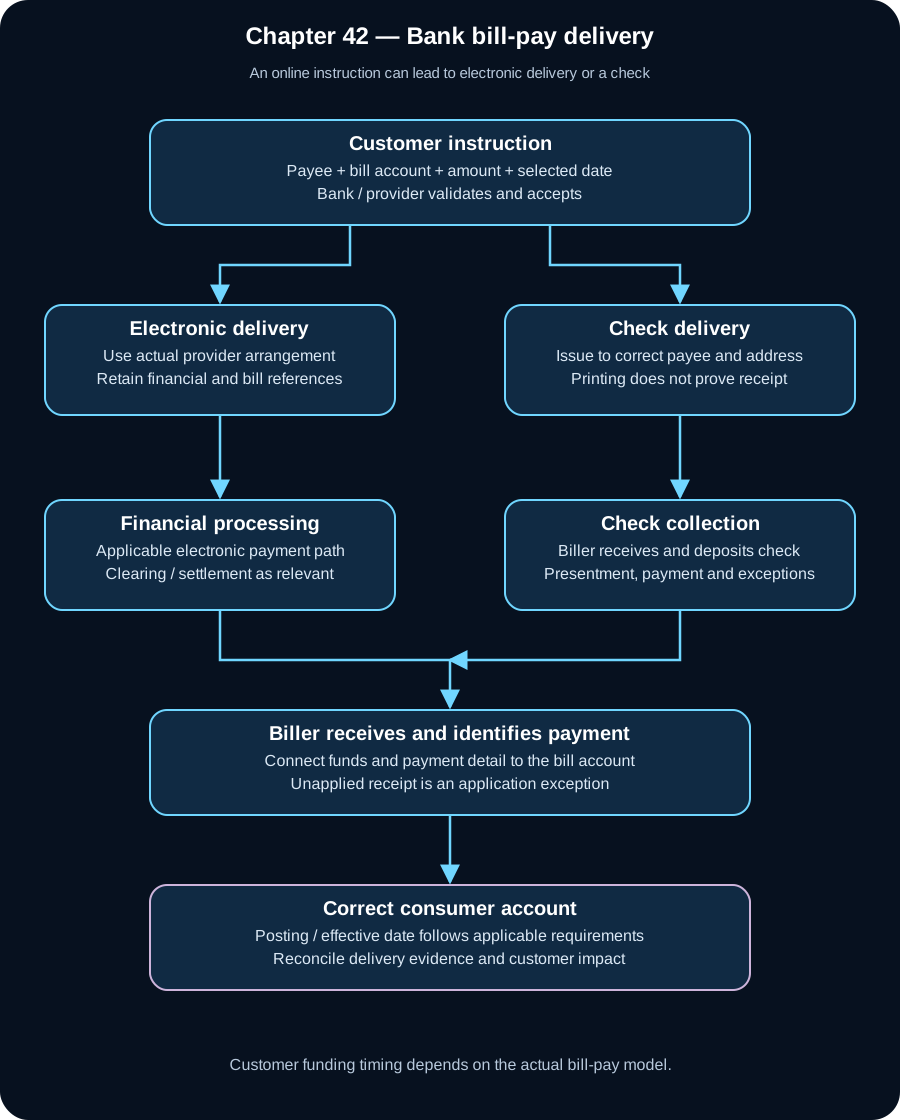
The diagram shows one customer instruction entering different delivery paths. The provider's delivery choice determines the downstream processing. Both paths must ultimately connect the payment to the biller's account record; neither the online submission nor check production alone proves that the bill has been credited.
Electronic and paper delivery need different evidence
For an electronic payment, the bank should retain the provider's routing and financial references, the relevant status and any biller acknowledgment. A file acknowledgment may confirm receipt of a batch without confirming every account-level posting. A rejected customer reference can leave the provider's transfer complete while the biller holds an unapplied item.
For a check, useful evidence includes the issued instrument details, payee, delivery address, mailing or delivery status where available, and subsequent payment or return information. The bank should not infer receipt merely because the check was printed. Nor should it infer that an uncashed check is lost immediately after the expected arrival date without investigating the biller's processing.
A delivery guarantee, where the service offers one, should be explained according to its actual conditions and remedies. It is a contractual service feature, not a universal rule attached to every online bill payment. Staff should know what evidence is required, which customer charges may be considered and when escalation is appropriate. The existence of a guarantee does not justify displaying an unsupported successful biller posting.
Payee changes require controlled maintenance. If a biller changes its electronic relationship or mailing address, pending instructions may need updated routing under the service's procedures. The bank should test how the provider handles previously scheduled payments, recurring templates and customer-visible history. An apparently minor directory change can affect thousands of future payments if it is applied incorrectly.
4. Biller collection and the end-to-end payment record
When the customer pays through the utility's own portal, the biller starts with a known account and can attach the payment to that account immediately. That is a useful advantage, but it does not remove payment risk. A portal can record an intended payment before an ACH debit is submitted, before a card transaction is captured or before the biller receives funds.
The payment record should connect the bill account, selected amount, funding method, authorization evidence and processing attempt. It should distinguish the customer's business instruction from individual technical requests. A browser retry or provider callback should not create a second bill payment unless the customer has actually authorized another transaction.
For an illustrative ACH collection, the biller obtains the required authorization, sends the instruction through its originating arrangement and receives processing status. The ACH operator processes entries and interbank settlement occurs through the applicable ACH settlement arrangements. The consumer's bank posts the debit and the biller's bank posts according to its agreement and the rail's processing. Returns and other exceptions can subsequently affect the result. The detailed ACH lifecycle remains in the earlier ACH chapters.
For an illustrative card collection, the portal sends the transaction through the acquiring path and handles the authorization result. Subsequent capture, clearing, settlement and merchant funding determine the financial completion. The utility may show a pending payment on the consumer account while those events proceed. It should define what that pending status means for reminders, late charges and service actions.
The biller ledger can use a payment status without asserting that every downstream event is final. For example, 'payment scheduled' can mean a valid future instruction exists; 'payment processing' can mean the instruction has been released; and 'payment posted' should have a defined account treatment. These are illustrative labels. The important point is to make them correspond to evidence and to explain any conditions that matter to the consumer.
Preserve a payment's identity through corrections
Suppose the customer enters $168.40 instead of $186.40 and confirms the amount. The biller should record the amount actually authorized. Correcting the remaining balance is a new customer decision or an action allowed by an existing valid authorization, not permission to alter the original instruction after the fact. A support agent should not edit the stored amount merely to make the bill reconcile.
If the account reference is incorrect, the payment may need reallocation within the biller ledger or a financial recovery, depending on where it went. These are different remedies. Reallocating an already received payment between supported customer accounts does not necessarily require another bank transfer. Returning funds to the payer and recollecting them creates separate financial transactions and risks.
The bank providing the biller's service should supply enough information to distinguish these outcomes. A single daily net credit without account-level payment and exception detail may satisfy treasury's balance reporting but leave the utility unable to explain its customer accounts. Integration should support both the financial total and the individual obligations that total represents.
One business payment, several technical acknowledgments
A provider may acknowledge a file, then report validation results, then report individual payment outcomes. The biller should retain those distinctions. If a file of 500 payments is received but five records fail validation, the correct population is 495 accepted records and five exceptions, subject to the actual response. Marking all 500 as paid based on file receipt misstates customer balances before any settlement question arises.
The return interface should identify whether a correction replaces a rejected record or changes an already accepted one. A biller repairing an invalid account reference should not resubmit all successful payments as new instructions. The original business identifier and the provider's response should support a targeted repair.
Batch totals are useful controls but do not prove correct allocation. Two account references can be transposed while the file count and amount still balance. The service should validate the relationship between the bill account, authorized instruction and output record. A reconciled aggregate with two wrongly credited households is still a failed customer outcome.
The biller also needs a defined treatment of a payment accepted during an account merge or closure. The financial instruction may complete while the old billing record is no longer active. A controlled mapping or exception process should route the payment to the appropriate obligation. Rejecting the accounting import without notifying anyone leaves the consumer's bank debit and bill balance inconsistent.
The support record should expose the business result without overwhelming agents with every message. An agent can see the accepted instruction, actual financial status and biller application while technical teams retain the detailed acknowledgments. That shared record makes escalation faster because the next team does not have to rediscover the payment's identity.
5. Authorization, recurring payments and customer control
Authorization should describe what the customer permits: a single payment, a recurring collection or a standing arrangement under which the customer takes a further action for each payment. Product labels such as autopay or express pay do not establish the legal or scheme classification. The actual interaction and evidence determine which requirements apply.
Regulation E section 1005.10 addresses preauthorized electronic fund transfers from consumer accounts. It requires written or similarly authenticated authorization for covered recurring debits and a copy of the authorization for the consumer. The regulation also provides stop-payment rights and requirements for certain varying transfers. The bank and biller should implement those provisions alongside the applicable payment-network rules rather than treat one as replacing the other.
For covered preauthorized transfers, a consumer can notify the account-holding institution at least three business days before the scheduled transfer to stop payment. The institution may require written confirmation within 14 days if it informs the consumer of that requirement and where to send it. The operational record should capture the notice and required follow-up without confusing a request to stop one payment with a cancellation of the underlying utility contract.
For covered transfers that vary in amount, section 1005.10 generally requires advance written notice of the amount and date at least ten days before the transfer, subject to the regulation's permitted arrangements, including specified ranges. The chapter does not assume that any generic bill reminder satisfies that requirement. The content, timing and authorization arrangement must be assessed together.
Standing authority is different from automatic execution
Nacha's Meaningful Modernization material distinguishes a Standing Authorization from the Subsequent Entries initiated through a consumer's affirmative action. An arrangement in which the customer says 'pay this month's bill' each time is different from a recurring debit that occurs without another instruction. The bank should preserve the action that triggers each subsequent payment as well as the underlying authorization.
The channel also matters. Nacha's published explanation identifies telephone oral authorizations with TEL and oral authorizations through internet or wireless channels with WEB, subject to the applicable rules and arrangement. A voice interaction with an internet-connected assistant is not automatically a telephone TEL entry merely because the customer spoke. Classification should follow the actual authorization method and current rules.
A customer who removes a saved funding account may expect future payments to stop. The product must make the effect clear and implement the appropriate action. Removing a display alias while leaving a recurring instruction active is a foreseeable source of complaints. Conversely, revoking permission to receive text reminders should not silently cancel a payment plan unless that is the explicit and lawful product behavior.
Authorization evidence should be retrievable with the payment. A support team needs to establish the amount, timing, method and scope agreed to without exposing unnecessary sensitive data. Changes to recurring settings should retain prior versions and effective dates. If a biller changes the collection date, the historical record should still explain which terms applied to the disputed payment.
The recurring-payment service should also handle account closure, returned payments and revoked authority without endless retries. A retry policy must follow the actual rail rules and authorization, not a generic rule that unsuccessful bills are automatically collected again. Customers need a clear way to choose another method and understand whether an already released instruction may still complete.
6. IVR and assisted telephone payments
Interactive voice response, or IVR, lets a customer interact with an automated telephone system. A payment call typically identifies the bill account, presents an amount, collects a funding method and captures the customer's instruction. A live agent may assist before or after the automated step. The design should make the handoff clear so that neither the agent nor the customer initiates the same payment twice.
The caller's telephone number can help locate a record, but it should not be treated as complete authentication. Numbers can be shared, changed or misrepresented. The service should use controls appropriate to the information disclosed and action requested. Reading a full account balance aloud before establishing the caller's authority can disclose sensitive information even if no payment is ultimately taken.
The amount and destination should be repeated before confirmation. The caller needs a practical way to correct an entry or abandon the payment. A long silence after confirmation should not lead directly to another debit when the customer presses the same key again. The application should distinguish repeated input within one attempt from a new authorized payment.
ACH authorization through a telephone channel must follow the applicable TEL requirements and consumer-law obligations. The bank should obtain the current Nacha Rules and its originating-bank requirements for production evidence, notices and retention. A recording of someone saying a bank account number is not, by itself, proof of a complete payment authorization. The evidence must establish the transaction the caller agreed to.
For card payments, the telephone environment brings card-data obligations. PCI SSC's current FAQ on audio recordings states that sensitive authentication data must not be retained after authorization; if a recording contains it, the data must be removed or made unrecoverable as required. Encrypting a recording is not a general exemption. A bank or biller should design call recording, agent desktops and payment entry together.
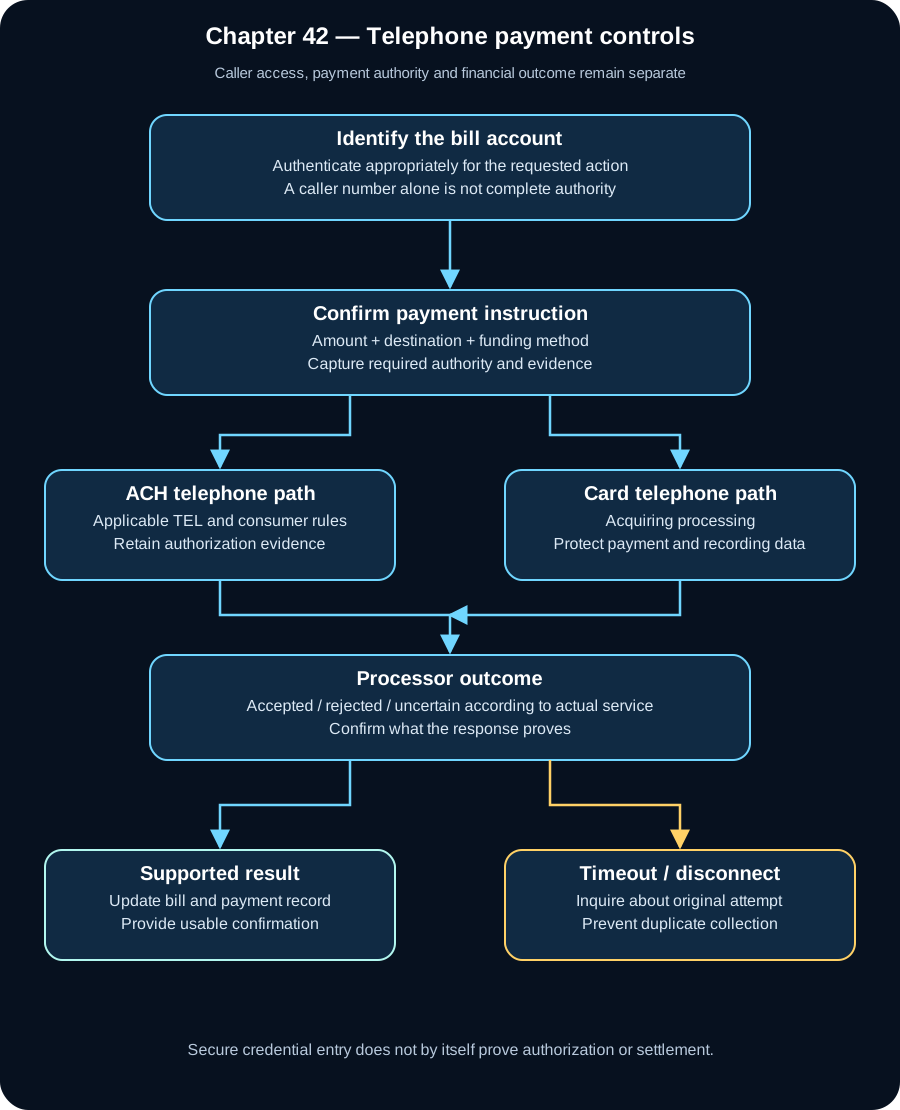
The diagram keeps caller identification, payment authority and the financial result separate. A secure input method helps protect credentials, but only the complete authorized instruction should reach the processing service. A timeout leads to inquiry about the original attempt, not an automatic second payment.
Keep payment data out of unnecessary systems
A common implementation uses a specialist payment-entry component so that sensitive digits do not appear in the agent's ordinary desktop or recording. The actual security and PCI scope depend on the complete design. DTMF suppression, a hosted IVR or tokenization should not be advertised as making every connected system automatically compliant.
The customer should receive a confirmation that can be repeated or retrieved. It should state the accepted amount and meaningful status without reading back full account credentials. Where a required authorization copy or notice is delivered through another channel, the process should capture the destination and any delivery failure. A successful telephone call does not prove that a separate email was received.
If the caller disconnects after authorizing the payment, the back end should complete or resolve the original attempt according to its actual state. The next agent should see whether the instruction was accepted, submitted, rejected or remains uncertain. Asking the customer to authorize again before checking can produce two payments and a preventable refund case.
Accessibility and language design affect payment accuracy. Prompts should be understandable, allow sufficient response time and offer a workable support route. An error message that merely repeats 'invalid entry' leaves the customer unable to distinguish a mistyped reference from an unavailable payment method. Better prompts improve both customer service and the quality of the financial instruction.
7. Text-to-pay and payment links
Text-to-pay is a channel pattern, not a single payment rail. A text may remind a customer of a bill, open a hosted payment page or trigger a subsequent payment under an established authorization arrangement. The bank must identify which pattern the service uses. A reply to a message should not be interpreted as authority for an unspecified amount or funding method.
A payment link should connect to the intended bill or payment session without exposing reusable credentials in the message. The link's possession alone may be insufficient authority to disclose account details or change a funding account. The product should consider shared devices, forwarded messages, recycled telephone numbers and an attacker obtaining a link from a notification preview.
The hosted page should show the biller identity, relevant account context, amount and payment method before confirmation. Where the customer can change the amount, that change must be reflected in the final instruction. A link generated for an earlier balance should not silently debit a higher current balance without the customer's appropriate authorization.
A link can be time-limited or single-use under the product design, but those controls should be implemented around the business event. If a completed link is opened again, the service should show the existing result or a safe explanation. It should not create another payment merely because the browser generated another request. If a link expires before the customer acts, the service should provide an authenticated route to the current bill.
Messages and money need separate permissions
Consent to receive communications, permission to access account information and authority to initiate a payment are separate questions. Applicable communications and privacy requirements should be assessed for the service; this chapter does not prescribe one blanket consent formula for all text messages. A reminder subscription should not be used as evidence that the customer approved a debit.
For a standing payment arrangement, retain the original authorization and the affirmative action for the subsequent payment where that model applies. For a new payment through a mobile browser, obtain the authority required for that transaction and channel. The fact that the journey began in SMS does not alone determine the ACH entry classification. The actual interaction and applicable Nacha rules matter.
Fraudsters imitate billers with urgent payment messages. Customer communications should provide a recognizable, independently accessible way to review the bill, such as the established app or known website. Staff should avoid instructions that encourage customers to disclose credentials in a text reply. A support team should also be able to distinguish a legitimate payment link from a fraudulent message without asking the customer to send sensitive information insecurely.
The biller should monitor unusual link generation, repeated delivery to changed numbers and attempts to alter payment destinations. A fraudster who takes over the biller administrator account can send convincing messages through a legitimate channel. Protecting the customer journey therefore includes access control over templates, account mappings and message campaigns, not only the customer's final confirmation screen.
Delivery reporting has limits. A messaging provider's accepted or delivered status is not proof that the customer read the bill, authorized a payment or received a legally required notice in a sufficient form. Operational dashboards should label those events precisely. Payment reporting begins only when the customer takes the relevant action and the payment system records it.
A stale link and a changed phone number
Suppose a customer changes mobile numbers after a text reminder was queued. The service should use its contact-maintenance rules and avoid sending unnecessary account detail to the former number. A link that still exists should not reveal a full bill account merely because someone possesses the message. The authentication and session design should address that possibility explicitly.
A payment link may be forwarded to another household member who is helping pay the bill. The service should determine what the supported journey permits. It may allow a properly authorized payment without granting access to the account's wider history, or it may require the account holder to authenticate. The implementation should not infer broad account-management authority from willingness to fund one bill.
The text itself should remain concise and recognizable, with a clear route to the established biller service. Urgent language that resembles common scams can undermine the bank's customer-education efforts. The customer should be able to review the obligation independently, and the biller should be able to verify a message through its normal support channel.
After payment, the link should show a coherent result. If a payment is pending, it should not invite another full payment without explaining the existing instruction. If a partial payment was made, the remaining amount should be accurate. If a refund later changes the balance, the page should use current evidence rather than retain an old permanent success badge.
These controls connect messaging to billing and payment state. They do not turn message delivery into payment authority or settlement. Their purpose is to ensure that a convenient reminder leads to the right obligation and a deliberate financial action.
8. Where clearing, settlement and bill posting occur
The bill-payment channel should not obscure the underlying financial mechanism. ACH collection, card acceptance, an electronic bank-bill-pay delivery and a mailed check have different processing and exception paths. The customer may reasonably use the word 'paid' for all of them, but bank operations needs more precise evidence.
For an ACH debit, the biller initiates through its originating arrangement under valid authority. The ACH system processes the entry and the relevant interbank settlement changes participating institutions' settlement positions. The consumer and biller account entries occur under their banking arrangements and the applicable rules. A later return can affect the collection. A portal's HTTP success response is outside that settlement mechanism.
For an ACH credit delivered through bill pay, the direction of the payment instruction differs from a biller-originated debit. The provider may also use arrangements that do not correspond to a simple one-customer-to-one-biller ACH entry. The bank should obtain the actual funding and disbursement model. It should not infer the ACH Standard Entry Class code from the consumer-facing product name.
For a check, the instrument moves through the collection process discussed in Branch 8. The bill-pay provider's issuance record and the check's paid status are different events. Where a provider-funded check is used, the customer's funding debit and the check's payment may affect different accounts at different times. The bank should explain that actual model instead of assuming every check is drawn directly on the customer's account.
For a card, authorization, clearing, network settlement and the biller's merchant funding remain separate. The utility may receive net proceeds after fees or adjustments, while its consumer ledger records the gross bill payment. A $186.40 customer payment should not be applied as a smaller amount merely because the biller's acquiring costs reduce the deposit, unless a separately disclosed and lawful customer charge changes the actual obligation.
On-us processing is still a financial event
If both accounts are held at the same bank and the service uses an internal book transfer, value can move through entries on that bank's own books without interbank clearing. That does not eliminate authorization, account validation, posting controls or customer reporting. The bank should identify the actual book-transfer arrangement and not describe an internal ledger entry as an ACH settlement simply because the user clicked an online payment button.
Biller posting is the allocation to the consumer's obligation. It can follow the money or occur provisionally before the money is fully resolved. The biller should define how pending collections affect reminders, late fees and service restrictions, consistent with applicable law. A technical failure to import a payment file should not be concealed by telling the consumer that the bank never sent funds.
Reconciliation joins these records. The bank or provider tracks the customer instruction and financial delivery; the biller tracks the obligation and application; settlement reporting establishes the financial movement. A reliable service can move from any one reference to the others. When a customer provides only a bank confirmation number, support should still be able to locate the corresponding biller posting or explain which handoff is unresolved.
9. Dates, cut-offs and creditor-specific requirements
A consumer sees a due date. Operations sees instruction cut-offs, processing calendars, delivery estimates, receipt dates and posting dates. The service must translate those details into an understandable promise without pretending that one time applies to every US bill. An ACH submission deadline, a provider's bill-pay cut-off and a creditor's legal payment-crediting obligation are different things.
The date selected in the interface should have one defined meaning. If it is the date the service expects delivery, the scheduling engine must account for the chosen method and available calendar. If it is a processing date, the customer should not be led to believe the biller will necessarily receive the funds that day. Paper delivery and electronic delivery can require different planning.
A payment submitted after the service's cut-off needs an honest response before final confirmation where feasible. The system should show the revised date or available alternative and any relevant cost. It should not accept a displayed same-day commitment and later quietly assign a different date. Exception handling should preserve the original promise so a complaint can be evaluated fairly.
Creditor-specific law can determine how a received payment must be credited. Regulation Z section 1026.10 requires covered creditors to credit payments as of the date of receipt, subject to its provisions. That is not necessarily the date a screen first displays the entry. It is also not automatically the date the consumer instructed an unrelated bank bill-pay service to send the payment.
The regulation addresses reasonable payment requirements and cut-offs in its specific scope. A bank should not turn a provision about covered credit payments into a universal 'all bills have a 5 p.m. deadline' rule. Utility bills, credit-card accounts and other obligations may have different governing requirements. The implementation needs a product-specific legal assessment and an accurate customer explanation.
Preserve both effective and processing dates
Suppose a covered creditor receives a payment on Tuesday but its visible ledger refreshes Wednesday. The service should preserve the appropriate effective crediting date even if the display processing occurs later. Conversely, a consumer's Monday scheduling confirmation does not prove that the creditor received the payment Monday. The evidence must establish the actual receipt under the applicable rule and arrangement.
Time zones matter when the customer, provider and biller are in different regions. Store an unambiguous event timestamp and the business-date interpretation used for the service. Do not rely on an agent manually translating an unlabeled '5:00' field. Daylight-saving changes and weekends should be part of calendar testing rather than exceptional surprises after launch.
A recurring payment falling on a nonprocessing day needs a defined treatment consistent with the authorization, applicable requirements and customer disclosure. The service should explain whether it moves the processing date and how that affects expected receipt. An internal batch calendar should not silently change the amount or create two collections around a holiday.
The customer-impact review should include late charges, interest effects where applicable, returned-payment fees and service interruption. The payment operations team may not own every remedy, but it should provide the evidence promptly to the responsible team. A technically repaired payment can still leave an unresolved customer harm if the effective date and resulting charges are ignored.
10. Funding, liquidity and biller proceeds
A bill-payment service must identify how each disbursement is funded. A customer's available account balance at scheduling may differ from the balance when the instruction is released. A provider may require prefunding, debit the customer at a defined stage or operate another approved arrangement. These choices affect both customer communications and the bank's exposure.
A future-dated instruction should not be described as funded merely because the customer had enough money when it was created. The service needs a defined balance assessment and treatment of insufficient funds at execution. It should also show the customer whether a payment was rejected before release or whether a released payment has created a different obligation under the agreement.
Where the provider makes a payment before customer funding is fully resolved, it creates exposure. The bank should understand who bears that exposure and how it is controlled. A service-level delivery promise does not make funding risk disappear. Treasury, credit and operations should be able to identify outstanding provider obligations and pending customer funding separately.
Biller funding can be aggregated. A utility may receive one credit covering many payments, less separately identified fees or other adjustments under its agreement. Its receivables team still needs the gross payment records and account references. The net bank deposit is not a substitute for the customer payment file.
Consider a fictional settlement batch with $25,000 of accepted bill payments and $100 of separately charged processing fees. If the arrangement funds $24,900 net, the reconciliation should identify the $25,000 payment population and the $100 expense or payable treatment. It should not allocate the fee by reducing random household payments. The actual accounting entries depend on the biller's policy and contractual arrangement.
Forecast the unsettled positions
A bank providing biller services should report pending collections, received funds, returns and reserves in a way that treasury can use. A scheduled debit is a forecast input, not cash already available to make another payment. An accepted card authorization is not the same as a funded merchant balance. A mailed check that remains outstanding is a different exposure again.
Weekend consumer activity can accumulate before a batch rail's next processing opportunity. Instant-payment services can offer different availability, but a biller's acceptance and posting system must support the actual method before the service promises an immediate outcome. Adding an always-available initiation page does not make every downstream process operate continuously.
Liquidity controls should also address refunds and duplicate collections. A biller may need funds available to make a supported refund while a disputed original payment is still under investigation. Finance should prevent a refund and a separate return or reversal from producing an unintended double reimbursement. The original payment, recovery and refund must share a case reference even when different providers process them.
The bank's service pricing should be transparent to the biller and any consumer-facing fees should be evaluated under the applicable requirements. Payment operations should know whether a fee is part of the authorized transaction, a separate charge or a deduction from biller proceeds. Ambiguous fee handling creates both reconciliation differences and customer complaints.
Funding failure and the customer's available balance
The customer should understand the funding event the service uses. If the bank assesses funds when a future payment executes, a low balance at that time may prevent release under the agreement. If the provider already disbursed value, the bank may face a different funding and customer-account situation. Support should identify which event occurred before offering cancellation or replacement.
An available-balance display can change between scheduling and execution. A payment service should not state that scheduling reserves funds unless it actually creates a supported reservation or hold. If a hold is used, its amount, duration and effect need to be accurately represented under the applicable requirements. A label such as scheduled should not conceal an unexpected restriction on the customer's money.
Multiple payments due on the same day create ordering questions under the service's actual process. The bank should have a defined treatment and accurate disclosures where required. This chapter does not prescribe a universal sequence for paying utilities, cards or other bills. The relevant implementation point is that the service must produce consistent outcomes and retain the evidence needed to explain them.
For the biller, a failed funding event should arrive with enough detail to update the pending-payment record. If a scheduled payment never releases, the biller should not wait indefinitely for settlement that cannot occur. If the bank bill-pay provider does not supply direct biller status, the bank must accurately communicate the result to its own customer so the customer can act.
Funding controls should be tested with several obligations and a changing balance, not only one payment from a well-funded account. That test reveals whether the service gives coherent notices, avoids duplicate retries and preserves the customer's choices when some instructions proceed and others do not.
11. Failed, cancelled, returned and duplicated payments
Exception handling begins by naming the event accurately. A rejected instruction never accepted for processing differs from a payment submitted to a rail and subsequently returned. A cancelled future payment differs from a request to recover a completed transfer. A biller ledger correction differs from moving money back to the consumer. Calling all of these a reversal leads staff toward the wrong remedy.
A pre-submission validation failure should identify what the customer can correct without exposing sensitive information. The service should not create a debit when the account reference or required authorization is incomplete. If an instruction is accepted but later fails funding, the customer needs a clear notice and the biller needs a reliable status so that it does not keep treating the bill as successfully collected.
ACH returns should be processed according to the actual return reason and current rules. The biller may need to restore an outstanding balance, stop a recurring arrangement or request another method. Reinitiation is permitted only in the circumstances and manner allowed by the rules and authorization. A generic retry loop across all return reasons is inappropriate.
A check-delivered bill payment may require a stop-payment or replacement process under the actual instrument and provider arrangement. The bank should establish whether the check has already been paid before treating replacement as risk-free. If a replacement and the original both reach the biller, the resulting duplicate needs coordinated recovery and customer accounting.
Card refunds and disputes follow the acquiring and network arrangements discussed earlier. A biller refund should be linked to the original payment and reflected in the consumer account. A card dispute can produce a separate financial adjustment; operations should identify it before issuing an additional refund for the same amount. A customer-service promise is not evidence that the processor completed the refund.
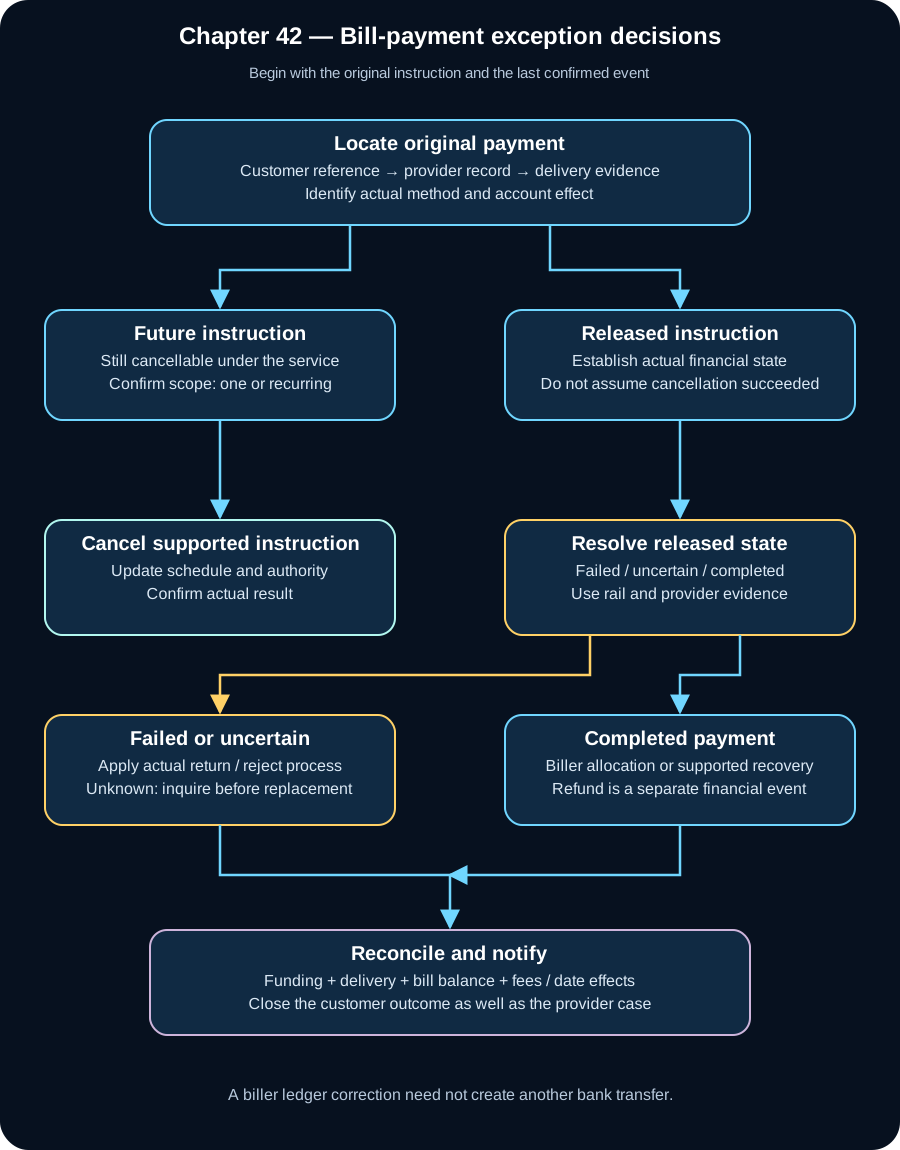
The diagram begins with the original payment record. It distinguishes a future instruction that can still be cancelled, a failed collection, an uncertain processing result and a completed payment requiring a supported recovery or ledger correction. Inquiry comes before replacement when the original outcome is unknown.
Unknown does not mean failed
A timeout can occur after a provider accepted the instruction. The system should query or reconcile the original attempt using stable references. If the customer submits again, the platform should recognize the existing business instruction where appropriate and explain the status. A new technical request identifier should not defeat duplicate prevention.
Duplicate detection must also recognize legitimate repeat payments. Two equal payments to the same biller are not necessarily accidental; a customer may intentionally pay two accounts or make an additional amount. Controls should examine the bill account, customer action, timing and instruction identity. The goal is to prevent replay without blocking valid consumer choices.
Once an exception is resolved, update every affected view: payment history, bill balance, funding account, refund record and customer communication. A case closed in the provider portal while the consumer still sees 'processing' remains unfinished service work. The bank should verify the customer-visible outcome, not only the technical ticket status.
12. Fraud, consumer errors and investigations
Bill-payment fraud can involve a compromised customer account, a false biller, altered payee details or a convincing payment link. Controls should focus on the action being taken. Adding a new payee and immediately making an unusual payment may require different scrutiny from paying an established utility account in a familiar pattern. A known biller name does not guarantee that the destination reference is legitimate.
Payee maintenance should protect account mappings and routing data. A provider administrator changing a biller's destination can redirect a large payment population. Appropriate access, approval, independent verification and audit history should cover those changes. Screening a customer at login cannot compensate for compromised provider configuration.
Consumer error handling must consider Regulation E where the transfer and account are covered. The institution should evaluate the notice under section 1005.11 and related provisions rather than decline an investigation merely because its system shows a successful transaction. The relevant facts include who initiated the transfer, what authority existed, the amount and date, and what actually posted.
The regulation's investigation and provisional-credit requirements have conditions and timeframes that the bank must implement in its current procedures. Consult section 1005.11 for the complete error-resolution timetable and its applicable conditions. The bill-payment implementation must nevertheless preserve the notice date, evidence requests, required communications and financial adjustments needed to meet those obligations.
A complaint that a utility charged too much is not automatically an unauthorized EFT claim. A complaint that an unknown party initiated a payment using compromised credentials is not resolved by proving that valid credentials were used. The bank must examine the actual allegation and applicable definition. Product teams should avoid blanket statements that all digitally authenticated payments are authorized or that all bill disputes can be solved through a rail return.
Investigate from the customer's account outward
For a missing bill payment, first identify the instruction and funding entry. Then establish the delivery method and the last confirmed downstream event. If funds reached the biller but were not applied, investigate the account reference and biller import. If the payment never left the provider, investigate acceptance and release. If the check was paid to an unexpected party, use the relevant check-fraud process.
Customer evidence can include a confirmation, statement entry or biller notice. Staff should accept and connect useful information without requiring the consumer to understand technical identifiers. The bank can translate its confirmation number into provider and rail references internally. Repeatedly asking the customer to obtain information that the bank's vendor already holds wastes time and weakens the investigation.
The case record should distinguish factual findings from provisional assumptions. 'Provider reports delivered' is not the same as 'biller confirms credited to account.' A screenshot can show what the customer saw at a particular moment, but it may not establish settlement. Retain each source and its meaning so the final decision is reviewable.
When an error caused fees, interest or service consequences, the responsible teams should review those effects under the applicable requirements and agreement. A corrected principal payment may not fully remedy the problem. The final communication should state the actual outcome, relevant dates and any remaining action the customer needs to take in plain language.
13. Reconciliation and reporting across the bill lifecycle
The reconciliation population begins with accepted customer instructions. It should account for scheduled, cancelled, released, rejected, completed and unresolved items according to the service's defined states. A provider settlement total cannot reveal whether a scheduled payment disappeared before release. The bank needs both the instruction population and the financial population.
Funding reconciliation connects customer debits or other funding positions to provider disbursements. Delivery reconciliation connects those disbursements to electronic acknowledgments or check outcomes. Biller reconciliation connects received payment records and money to customer-account postings. Each stage can balance independently while a cross-stage reference remains wrong, so the interfaces must retain the links.
For the $186.40 water bill, a useful case can answer whether the instruction was accepted, whether the customer was debited, how the provider delivered it, whether the utility received funds and which utility account was credited. If the utility received an aggregate settlement, the bank should be able to identify the individual payment within it. A total-only report is insufficient for that investigation.
The biller's accounting should distinguish receivables, cash or settlement claims, unapplied receipts, fees and refunds as appropriate to its policies. Collecting an existing bill generally settles or reduces the relevant receivable; it is not automatically new revenue at the payment date. The bank's own accounting records its deposit liabilities, settlement positions and service income under its accounting design, not the utility's revenue.
A payment applied to the wrong consumer account can require a ledger reallocation even when the bank settlement is correct. The correction should retain the original posting and authorized adjustment history. Deleting the original record makes it harder to explain statements already issued or service actions taken on the basis of that posting.
Make reports usable by different teams
Customer service needs a plain payment history and a traceable case. Treasury needs balances, expected funding and unsettled positions. Biller operations needs account-level posting and exception files. Risk needs exposure, fraud and return patterns. These reports can share a consistent underlying record without forcing every team to interpret the same raw file.
Operational measures should include payments missing expected evidence, account-reference rejects, duplicate attempts, late deliveries and unresolved customer-impact cases. A high technical success rate can coexist with poor biller application. Measure whether the obligation was correctly credited where that evidence is available, and label the limits where it is not.
Reconciliation should handle corrections as events rather than overwrite. A late return, a changed effective date or a provider adjustment may arrive after a daily report has been issued. The next report should identify the change and its relationship to the original payment. Finance should not have to compare unexplained restated totals to discover what happened.
Retention should support applicable legal, scheme and contractual requirements for the different record types. Payment authority, call evidence, financial records and customer complaints can have different requirements. The system should retain the necessary evidence securely and avoid keeping sensitive authentication data that must not be stored. A universal 'keep everything forever' setting is neither a sound security design nor a substitute for a retention policy.
A small settlement bridge with a real exception
Consider an illustrative biller file with three customer payments of $186.40, $90 and $75, totaling $351.40. The provider's financial report supports all three collections, but the biller's import rejects the $75 item because its account reference is inactive. Treasury can reconcile the $351.40 receipt while receivables records $276.40 applied and $75 awaiting allocation under its accounting policy.
That bridge is more informative than forcing both systems to show $351.40 applied. It identifies the exact customer-service risk and the team that must resolve it. If the inactive reference belongs to a migrated account, a controlled mapping can complete the application. If it identifies another problem, the case should retain the received cash while the appropriate remedy is determined.
Now suppose the $90 collection is subsequently returned. The bank or provider reports a distinct financial event linked to the original payment. The biller should update that customer's obligation according to the supported treatment and reconcile the return separately from the unresolved $75. Offsetting the two amounts in a generic exception total would obscure two unrelated customer cases.
If a processing fee is also deducted from funding, it belongs in a separate component of the bridge. It should not reduce the $186.40 household's payment simply because that is the only fully applied item left in the batch. Gross customer payments, financial returns, fees and unapplied receipts need their own traceable records.
The example shows why a bill-payment service requires more than a daily bank-balance match. The totals can reconcile while individual obligations remain wrong. The final check should establish that every customer-facing balance and status follows the supporting payment evidence.
14. Building a service that can be operated
The bank should define a common payment record while preserving channel-specific evidence. Bank bill pay needs payee-directory and delivery information. IVR needs the relevant call and authorization references. Text-to-pay needs the message or session relationship and the action that authorized payment. These details should connect to one business instruction rather than create isolated channel ledgers.
The architecture should separate bill presentment, customer identity, authorization, payment orchestration and biller application. These functions can be delivered by one platform, but their responsibilities remain distinct. A bill-data outage should not cause the system to invent a balance. A messaging outage should not make a completed payment disappear. A posting outage should create a traceable pending application rather than a false transfer failure.
Interfaces should specify status semantics, identifiers, versioning and correction behavior. A provider callback should be authenticated and processed idempotently. A callback reporting success must identify what succeeded: instruction acceptance, authorization, settlement or biller posting. The bank should not map every vendor status called 'complete' to the same customer label without understanding it.
Scheduled processing requires durable instructions and recovery controls. After an outage, the system should identify which payments were due, which were already released and which remain unprocessed. Replaying an entire day's schedule without checking accepted provider requests can duplicate payments. Recovery should be reconciled against external evidence before uncertain instructions are replaced.
Test the consumer's difficult cases
Testing should include a changed bill balance, an incorrect account reference, a payment at the cut-off, a recurring date on a nonprocessing day and insufficient funds at execution. It should also include an IVR disconnect after authorization, a repeated text link, a provider timeout and a biller posting failure after successful settlement. These cases expose gaps that a successful one-time payment does not.
For each case, verify the customer display, financial entries, biller balance, retained authority and support information. A technical test that checks only an API response can miss an inaccurate due-date promise or an unwanted second payment. Customer service should participate in testing because it must explain the result without reading application logs.
Operational access should allow inquiry and approved correction without granting broad payment authority. An agent resolving a missing receipt may need to resend a confirmation but should not automatically be able to change a payee bank account. Refunds, reissues and sensitive configuration changes need controls proportionate to their financial effect.
Vendor oversight should include evidence retrieval, outage communication, directory maintenance and recovery performance. A provider that delivers payments reliably but cannot supply records for consumer investigations creates a serious service gap. The bank should test those support obligations before launch, including how urgent cases are handled outside the provider's ordinary batch schedule.
Release acceptance should be based on reconciled end-to-end outcomes. The customer can identify the instruction, the funding is explained, the biller receives and applies the payment, and an exception can be resolved through the same record. Only then does a convenient interface become a dependable banking service.
Cancellation should update the schedule and the explanation
A customer asks to cancel next month's automatic utility payment. The agent should identify the actual arrangement, the requested scope and whether any instruction has already been released. Cancelling one occurrence, stopping a series and revoking the biller's authority are different actions. The service should record what the customer requested and apply the appropriate legal and operational process.
If the customer intends to stop all future collections, the agent should not merely remove the next visible calendar item while leaving the recurring rule active. The next billing cycle could recreate the payment and contradict the customer's instruction. The system should make series-level changes visible and retain their effective date and confirmation.
Conversely, a customer cancelling one payment may still want the series to continue. The interface should preserve that choice and explain the next scheduled occurrence. A broad cancellation made for convenience can cause later missed bills. Clear scope is therefore a control against both unwanted debits and unintended nonpayment.
The customer should also understand that stopping a payment does not necessarily terminate the underlying service or eliminate the amount owed. The bank can explain the payment action it performed and direct the customer to the biller for the commercial arrangement. It should avoid saying the utility account is closed unless it has reliable evidence and authority to make that statement.
A cancellation after release needs the actual payment status. A request can be accepted for investigation without the financial instruction being successfully stopped. The confirmation should identify that distinction. Staff should not promise that no debit will occur when the provider has only acknowledged a cancellation request and the outcome remains uncertain.
A useful operational acceptance review
Before launch, have a customer-service representative explain several test histories using only the information available in the ordinary support screen. Include a scheduled payment, an electronic delivery, a check-delivered payment, an ACH return and an unapplied biller receipt. If the representative cannot distinguish them, the service needs better evidence or labels before customers depend on it.
Ask finance to reconcile the same population from customer funding through provider disbursement and biller proceeds. Then ask the biller team to identify the obligations credited. The exercise should reveal any gap between a balanced bank total and the individual account outcomes. It should not require developers to supply undocumented interpretations of vendor status codes.
Review the customer communications produced by those cases. A message saying payment received should name the event the service actually confirms. A returned-payment notice should identify the affected payment and supported next step. A stale reminder should not continue demanding the original full amount after a partial payment or correction.
Finally, test the process for obtaining evidence from the provider during an investigation. The bank should be able to retrieve relevant authorization, delivery and financial records within the needs of its obligations. A contractual promise of cooperation is useful, but a demonstrated retrieval process is stronger evidence that the service can support real customers.
These checks join the channel, money and bill-account views. They add practical assurance without changing the underlying rails or creating a new format for consumer rights. The bank can then launch with a clear understanding of what its confirmations mean and how an exception will be resolved.
A final review should include the customer's statement description alongside the biller receipt. The two may use different references, but support should be able to connect them. If a provider name appears instead of the familiar biller name, the service should supply enough recognizable context to reduce avoidable confusion. This is especially useful for households paying several bills of equal amounts: amount and date alone may not identify which obligation was satisfied. The bank should preserve the payee and account context through its reporting rather than require the customer to reconstruct the relationship from memory.
15. Worked cases and implementation decisions
The following cases use the fictional water utility and its customers. They are designed to distinguish an instruction problem, a delivery problem and a biller-account problem. No amount or internal deadline below is a scheme limit or a universal service promise.
A scheduled bank payment and a late notice
The customer schedules $186.40 through bank bill pay and selects a date she believes is the bill's payment date. The utility later sends a late notice. The bank should retrieve the displayed date meaning, accepted instruction, funding record and delivery method. If the provider produced a check, a record of printing is not sufficient evidence that the utility received it on the intended date.
The investigation should establish the actual delivery and creditor receipt evidence available. If the service failed its own commitment, apply the relevant contractual and legal remedy. If the customer selected a processing date too late for the chosen method, the bank should still explain the result clearly and review whether the interface communicated the date properly. The case should not end with a generic statement that online payments take several days.
A telephone disconnect with a second payment attempt
A caller confirms a $90 payment and the call disconnects before the confirmation is read. The caller immediately contacts an agent and asks to pay again. The agent should first locate the original attempt. If the provider accepted it, the agent should provide its status and confirmation. If the outcome is uncertain, operations should inquire using the original reference.
A second authorized payment may be appropriate only after the customer understands the original state and the service has addressed duplicate risk. If two payments have already completed, the utility should determine how they were applied and arrange the supported correction or refund. It should not simply delete one payment from its screen while retaining both financial receipts.
A text reminder after payment
A customer pays through the utility portal, then receives a previously queued text reminder. Opening the link shows the old amount. The payment system should recognize the current bill and existing payment record. It should not create a second collection merely because the reminder was generated before the first payment posted.
The bank and biller should inspect the relationship between message generation, bill updates and payment status. A reminder can become stale without the original payment failing. The repair may be to update link behavior and suppress inappropriate follow-up messages. It does not require another bank transfer unless the financial record shows a separate need.
A successful collection with an unapplied account
The utility receives a settlement batch containing the customer's payment, but its import rejects the account reference. Treasury sees the money and the consumer sees a bank debit; the utility's collections team sees an overdue account. The correct next action is to investigate and apply the received payment using supported evidence, including the appropriate effective date.
Recollecting the bill before resolving the received item risks a duplicate. Refunding and asking the customer to pay again may also be unnecessary if a controlled internal allocation can solve the problem. The bank should supply the individual payment detail and the biller should complete its receivables correction. The case closes only when the customer account and any resulting charges are addressed.
For each case, identify the last confirmed event, the missing evidence, the team that owns it and the customer-facing consequence. That sequence turns a vague 'payment did not work' complaint into a manageable investigation.
16. Role checklist and learning closure
Product should explain the difference between bill presentment, a scheduled instruction and a credited bill. It should state what each displayed date and confirmation means for the actual payment method. Customer choice and payment authority should remain clear across bank bill pay, telephone and text journeys.
Technology should preserve one business instruction across retries, channel handoffs and provider callbacks. Operations should trace funding, delivery and biller application and select the remedy appropriate to the actual state. Finance should reconcile individual payments to aggregate proceeds, fees and corrections without changing the consumer's authorized amount.
Compliance should distinguish consumer-law obligations from Nacha rules, card-data standards and provider promises. Customer service should investigate the customer's allegation using evidence and explain the outcome without asking the consumer to understand internal payment plumbing.
The service is dependable when a consumer can tell whether a payment is scheduled, processing, credited or unresolved, and the bank can support that statement. Chapter 43 moves to corporate receivables, where one payment may settle many invoices and detailed remittance becomes central to applying cash correctly.
Authoritative references
Sources checked on October 5, 2026. Provider calendars, fees, funding models and delivery guarantees require the current service agreement. Production ACH authorization and exception handling require the applicable Nacha Rules and originating-bank requirements.
This application uses JavaScript for the full interactive experience. This text summary is served for accessibility and search indexing.