Commercial Cards, Virtual Cards, AFT and Push-to-Card Payouts. Commercial spending and card-based money movement across virtual-card controls, supplier acceptance, ERP reconciliation, AFT funding, recipient payouts, liquidity and separate-leg recovery.
A finance team approves a $4,800 supplier invoice and sends a controlled virtual card to the supplier. Across the same bank, a platform asks to pay a driver $180 to an eligible debit-card account. Both journeys involve card credentials, but they move value in different directions. In the first, the supplier accepts a purchase and collects through acquiring. In the second, an originating program sends value toward the recipient's card-linked account.
Chapter 35 explains these business uses without treating them as one generic card payment. Chapters 27–30 established the card ecosystem and financial lifecycle. Chapters 31–34 covered acceptance, stored credentials and disputes. This final chapter of Branch 7 connects commercial spending, virtual-card controls, account funding and card-based payouts to the bank's implementation, liquidity and reconciliation responsibilities.
A virtual card controls how a purchase may be made. An account-funding transaction sources value. A push-to-card transaction sends value to an eligible account. The credential does not make those purposes interchangeable.
For a roughly 60-minute core session, spend about 35 minutes on Section 2, Section 4 and Sections 8–11. For the next 10 minutes, use the chapter’s three diagrams to trace virtual-card purchasing and each separate leg of a funded payout. Use 10 minutes to work through one case in Section 15, then spend the final 5 minutes explaining: What should happen when funding succeeds but the recipient payout is declined or uncertain? Treat these timings as a study guide. The remaining sections, additional cases and extended reference material are follow-up study; completing the whole chapter takes longer.
All companies, values and incidents are fictional. Internal state and field names are illustrative. Product eligibility, limits, fees, processing semantics and availability commitments require the actual approved network and sponsor-bank program.
Chapter navigator
- Commercial spending and card-based disbursement
- Corporate roles liability and program hierarchy
- Procurement travel and purchasing-card controls
- Virtual credentials and controlled spending
- Supplier acceptance and invoice payment
- Data remittance and ERP reconciliation
- Commercial-card accounting and credit exposure
- Account Funding Transactions
- Push-to-card payouts and eligibility
- The linked funding and payout lifecycle
- Settlement availability and liquidity
- Fraud sanctions and program controls
- Failures reversals and recovery
- Bank architecture reporting and operations
- Worked cases and implementation testing
- Role checklist and learning closure
1. Commercial spending and card-based disbursement
A commercial-card purchase pays a merchant for goods or services using an issued card account. The corporate customer may use physical employee cards, purchasing cards, travel accounts or virtual credentials. The merchant accepts the purchase through its acquiring arrangement. The commercial customer later satisfies its card-account obligation according to the product terms.
A card-based payout has a different direction. An originating business or program sends money to an eligible recipient account using the card credential as part of the addressing and processing mechanism. The recipient is not acting as a merchant submitting a purchase simply because funds arrive through a card network.
Account funding is another distinct use. In Visa terminology, an Account Funding Transaction, or AFT, sources value from an eligible card-linked account for a permitted funding purpose. An Original Credit Transaction, or OCT, is used to push value toward an eligible recipient account. Other networks have their own terminology and implementation requirements.
These distinctions should appear in product requirements. “Pay suppliers using cards” can mean sending a virtual purchase credential for supplier acceptance, or making a payout through a supported program. The supplier's onboarding, fees, reconciliation and receipt of money differ between those designs.
The chapter remains focused on cards. It does not treat Visa B2B Connect, ACH supplier payments or instant account-to-account rails as virtual-card variants. A bank can offer several alternatives, but each needs its own scheme, participant and settlement model. Similar corporate use cases do not make the underlying mechanisms identical.
Choosing the product from the direction of value
A corporate purchase and a payout can both use card infrastructure while solving different business problems. In a purchase, the company buys goods or services from a supplier that accepts the credential. In a payout, an originator sends value toward an eligible recipient account. The business analyst should identify which obligation is being discharged before choosing the product or interpreting the transaction type.
Consider a logistics company with two needs. It must pay a repair supplier $4,800 for an approved invoice, and it must pay a driver $180 for completed work. A controlled virtual-card purchase may support the supplier payment if the supplier accepts the method. A supported push-to-card program may support the driver disbursement. The fact that both use card credentials does not make the recipient interaction, funding model or accounting identical.
The company should define the evidence that proves each obligation was paid. Creating a virtual credential does not prove the supplier used it. Submitting a payout request does not by itself prove the recipient account was credited under the service. The system should preserve the business obligation until the required payment evidence is available, then reconcile the resulting financial events to that obligation.
Product selection should also consider the counterparty experience. A supplier may need invoice remittance and a way to process the credential. A driver may need a clear payout status and a supported recipient account. The company's accounts-payable team and payout operations team may therefore need different workflows even if both are offered through the same bank portal.
The bank should explain the product's boundaries during onboarding. Commercial-card controls govern how a credential may be used under the program. Payout controls govern eligibility, authority, funding and release. Neither replaces the company's own approval of the underlying invoice or compensation amount. A valid technical transaction can still pay the wrong obligation if the corporate system selected the wrong supplier or recipient.
This distinction keeps the chapter focused. The common theme is using card-based capabilities to execute a controlled business payment and explain its final financial result. The relevant architecture begins with the obligation and follows the direction of value, rather than assuming that every operation involving a card number is an ordinary retail purchase.
2. Corporate roles liability and program hierarchy
A commercial program normally has a corporate customer, program administrators, authorized users, an issuer and supporting processors. The corporate structure can include subsidiaries, departments, cost centers and employee or supplier-specific spending arrangements. Requirements should identify who can request a credential, approve spending, change limits and resolve exceptions.
Liability and billing depend on the agreement. A program may place responsibility on the company, an individual or an agreed combination. The bank should not infer liability from the fact that an employee's name appears on a card. The agreement and account structure determine who owes the issuer and who receives statements or notices.
An employee's spending authority is also different from payment-network authorization. The issuer may approve a transaction that breaches an employer's expense policy if that policy was not represented in enforceable controls. Conversely, a valid business expense can decline because a configured limit is too narrow. The corporate policy and card-control configuration need a deliberate mapping.
Business-purpose credit cards do not generally receive the full consumer Regulation Z billing-error regime. The official interpretation to §1026.3 preserves specified credit-card issuance and unauthorized-use provisions under §1026.12(a) and (b), including their conditions. The bank should not claim that commercial cards have either every consumer protection or no legal protection at all.
Administration needs segregation of duties. The person approving a supplier invoice should not automatically be able to create an unrestricted credential and change the supplier's delivery address. A useful program audit trail records the business approval, credential request, control settings and subsequent changes. That evidence becomes important when the company disputes whether a purchase was within an employee's authority.
Mapping corporate authority to the bank's account structure
A commercial-card program can contain a corporate parent, legal entities, departments, cost centers, administrators and individual users. The bank should distinguish the hierarchy used for reporting from the hierarchy that determines liability and credit exposure. A department label in a portal is not itself a legal obligor. The applicable account and program agreements establish who owes the issuer and which responsibilities the company has accepted.
An employee's permission to spend should be linked to an approved business role. A purchasing manager may create supplier payments within a limit, while another user approves them. A travel administrator may manage employee cards without authority to alter the company's repayment account. The bank and company should define these permissions deliberately rather than grant every administrator unrestricted access because they all work for the same corporate group.
Legal-entity boundaries matter during reorganizations. A group can transfer a business unit while retaining familiar employee names and supplier relationships. The card program must establish which entity is responsible for new activity and how historical balances remain serviced. Moving a cost-center label does not automatically transfer a contractual debt. The implementation should use the bank's approved maintenance process and preserve effective dates.
The corporate customer also needs clear servicing authority. Who may dispute a transaction, request a refund trace, close a credential or change a spending control? The answer can differ from who originally approved the purchase. Support should verify the user's authority for the requested operation and maintain an audit trail, especially where one central team acts for several entities.
Commercial scope should not be inferred solely from the user's job title or a card's appearance. The product and legal relationship determine which protections and obligations apply. The limited Regulation Z business-card exceptions referenced earlier should be assessed correctly, while broader consumer assumptions should not be imported automatically. The bank's legal and compliance functions should define the applicable treatment for the actual program.
For functional design, retain separate identifiers for the corporate relationship, liable account, organizational allocation and credential user where relevant. This allows finance to report spending by department while credit risk measures exposure to the correct obligor. It also prevents a reporting restructure from accidentally changing payment authority or obscuring who is responsible for an outstanding balance.
3. Procurement travel and purchasing-card controls
Commercial cards often sit inside procurement or expense workflows. A purchasing card can support low-value business purchases under defined policy. Travel spending may be linked to a trip, booking or employee assignment. Supplier virtual-card payments can be linked to approved invoices. The control design should match the business event rather than merely assign a large monthly limit.
Possible controls include transaction amount, cumulative spending, validity period, merchant category and other supported restrictions. Availability depends on the issuer and platform. A bank should distinguish a control checked during authorization from a report reviewed after spending. A report that flags prohibited use tomorrow does not prevent the purchase today.
Merchant-category controls have limits. A category describes a merchant's classified activity; it does not necessarily identify every item in a basket. Blocking or allowing a category cannot be assumed to enforce an item-level procurement policy. More detailed business controls may require purchase-order or expense-system evidence outside the network authorization message.
Travel introduces legitimate amount changes and delayed financial events. A hotel authorization can differ from the final bill. A rental transaction can have additional supported charges. The corporate program should accommodate permitted lifecycle behavior while retaining controls and evidence. A rigid one-use rule that is unaware of authorization and clearing semantics can create avoidable declines or reconciliation failures.
Employee departure is a practical control case. The employer may disable new spending, but previously accepted transactions, refunds and disputes still need processing. Removing the employee from the HR system should not delete their historical account or transaction relationships. Finance must still allocate the final statement and any later merchant credit.
Connecting procurement approval to credential release
A purchasing-card control should complement the procurement process. The corporate system determines whether a purchase is approved, which supplier should be paid and what amount is legitimate. The card platform can then apply supported controls to the credential or transaction. The bank should not describe a merchant-category restriction or spending limit as a substitute for invoice approval, because those controls may not identify the precise goods or contractual obligation.
For the $4,800 repair invoice, the company might require an approved purchase order, confirmation of service and separation between requester and approver. Once those conditions are met, the payment service can create or select a credential with the supported restrictions. These are illustrative corporate controls, not universal requirements for every commercial-card program. Their value is that they connect the business decision to the payment capability.
The controls should be reviewed against legitimate supplier behavior. A supplier may process tax, freight or a permitted adjustment differently from the original invoice estimate. An overly narrow configuration can decline a valid charge, while an unrestricted configuration can permit more than the intended purchase. The company and provider should establish how approved changes are made and what evidence supports them.
Travel spending creates another pattern. An employee may need an estimated authorization for lodging or a later final amount under the merchant's supported acceptance process. The corporate control design should account for those legitimate lifecycle differences. It should not assume that every final transaction must equal the first authorization amount or that a temporary hold represents the final expense to be allocated.
Exception handling should preserve approval discipline. If a supplier reports a decline, the support user should establish the cause before raising limits or removing controls. A technical acceptance issue, an exhausted corporate limit and an amount outside the approved invoice require different actions. The company's urgency to settle the supplier does not justify granting broader spending authority without an approved basis.
The bank should retain the relationship between the approval, configured controls and actual transaction outcome. That evidence allows the company to investigate an unexpected purchase and allows the issuer to assess whether the product behaved as configured. A control is useful when its limitations are understood and its operation is observable, not merely when a portal displays it as enabled.
4. Virtual credentials and controlled spending
A virtual card is a payment credential without requiring the corresponding physical plastic for its intended use. It can be linked to an underlying commercial account and configured for a particular purpose. It is not necessarily an EMV network token, and it is not automatically a new deposit account containing separately reserved cash.
Visa's B2B Virtual Account Payment Method and Mastercard's In Control materials describe supported virtual-account and control capabilities. Product documentation must be checked for the actual implementation. A unique credential may be configured for limited use, but the precise meaning of single-use, cumulative amount and closure depends on the platform.
For the $4,800 invoice, the company might request a credential limited to the approved amount and intended supplier use where supported. The system should record the invoice, corporate funding account, approval and control configuration. Generating the credential does not mean the supplier has charged it, that clearing occurred or that the supplier received money.
Controls need to account for lifecycle events. An authorization may be reversed and retried. A supplier may submit an agreed partial amount. A refund may arrive after the credential's spending window closes. The program should define whether its restrictions concern new purchases, authorization exposure, clearing amounts or another measure. Those concepts must not be collapsed into one counter called uses remaining.
Credential delivery should be secure and limited to intended users or services. An invoice email containing payment credentials can become a fraud target. A bank should use approved delivery and access controls and avoid putting full credentials into ordinary ERP notes or support tickets. The business reference can be widely available without exposing the means of payment.
Understanding what a virtual-card restriction can enforce
A virtual credential can be associated with supported limits and restrictions, but the exact capability depends on the program. The business should establish whether a control applies to authorizations, accumulated spending, merchant characteristics, validity periods or another supported dimension. It should not assume that a label such as single use has an identical technical meaning across providers.
The distinction matters when a supplier uses more than one processing event. An authorization may be followed by a final financial record, an adjustment or a refund. The virtual-card design should support the legitimate lifecycle while preventing unintended new purchases under the actual service rules. Closing a credential for future spending should not be treated as permission to discard the historical financial relationship.
For a $4,800 invoice, a credential limit of $4,800 does not by itself prove the supplier charged the correct invoice. The supplier could apply the payment to another obligation, or the corporate reference could be wrong. The corporate system still needs invoice-level allocation and remittance. Amount controls reduce a particular exposure; they do not validate every commercial fact about the purchase.
Credential delivery is another control point. The company should use the provider's approved secure method and identify the intended recipient at the supplier. Sending usable payment details to an unverified email change can redirect purchasing capability. Supplier-maintenance controls should therefore be coordinated with credential delivery, especially when payment details are changed shortly before an invoice is due.
Expiry or non-use should create an operational state. If the supplier never processes the credential, the invoice remains unpaid unless another legitimate event settles it. The company should know when to contact the supplier, extend or replace the credential through the supported process, or choose another payment method. Before issuing an alternative, it should establish whether the original credential was already used or has an uncertain transaction.
The bank should report credential creation separately from financial activity. A dashboard showing thousands of virtual cards issued may reflect a growing backlog of unused payment instructions rather than successful supplier payments. Useful reporting connects created credentials, actual purchases, credits and invoice allocation. This gives the corporate customer a realistic view of payment completion and prevents technical provisioning metrics from being presented as cash-disbursement results.
5. Supplier acceptance and invoice payment
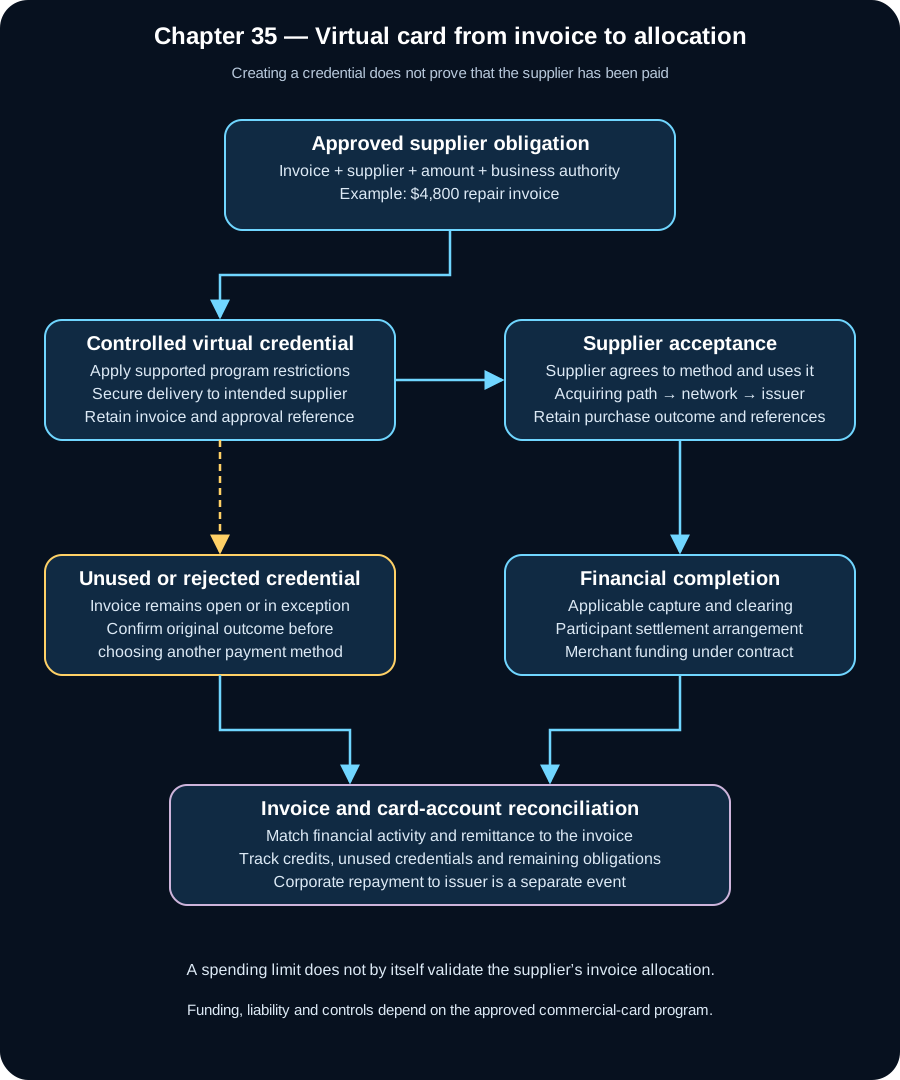
The supplier must agree to accept the virtual-card method through a supported acquiring arrangement. A buyer cannot unilaterally declare an invoice settled merely by sending a card number. The supplier still needs to process the purchase, and the financial result needs to be reconciled to the invoice.
Acceptance economics matter to both parties. The supplier's merchant fees and funding terms can differ from the buyer's card-account economics. A buyer rebate or extended repayment period does not mean the supplier receives the full invoice amount immediately without cost. Requirements should make the agreed commercial treatment clear.
The ordinary purchase lifecycle applies: the supplier initiates the card acceptance transaction, the issuer decides under the account and credential controls, and financial processing follows. The acquirer funds the supplier according to the merchant agreement. The corporate buyer later pays the issuer under its card terms. These are related but separate obligations.
Invoice identity should survive acceptance. If one virtual credential pays several invoices, the allocation must be explicit. If one invoice is paid through several transactions, those transactions must be linked. A card statement showing only a merchant name and amount may not be enough for automated accounts-payable closure.
The program also needs a path for non-acceptance. A supplier may refuse the method, fail to process the credential before expiry or submit an amount outside the approved controls. The invoice should remain open or move to a documented exception state. Switching to another payment method should first establish whether the card was already charged, so the company does not pay twice.
Following the supplier's acceptance and allocation process
A supplier receiving a virtual-card payment instruction still needs to accept and process it through its acquiring arrangement. The buyer should establish that the supplier supports the method and understands the remittance. A credential delivered successfully is not the same as a supplier payment completed. The buyer's accounts-payable system should retain that distinction so unpaid invoices remain visible.
The supplier may need to associate the credential with several invoices or with a partial amount of one invoice. The buyer should provide clear remittance through the supported channel. If the supplier applies the proceeds incorrectly, both organizations can have balanced card records while their trade accounts disagree. The payment reference should therefore connect the buyer's obligation to the supplier's receivable allocation.
Consider two invoices of $4,800 from the same supplier. Matching a card charge to the oldest equal amount may work accidentally but is not reliable evidence. A stable business reference or supported remittance relationship should identify the intended invoice. If the reference is missing, the item should enter a controlled allocation queue rather than be assigned automatically to whichever invoice makes the total balance.
Non-acceptance needs a defined disposition. The supplier may decline the method commercially, be unable to process the credential or encounter a valid control restriction. The buyer should distinguish those causes. A commercial refusal may require another agreed payment method; a technical defect may require provider support; a control mismatch may require a reviewed change. Reissuing credentials repeatedly without understanding the cause can create confusion and duplicate exposure.
The supplier's merchant fees and funding arrangement are separate from the buyer's card-account liability. The supplier may receive net proceeds under its acquiring contract, while the buyer owes the issuer the processed purchase amount under its commercial-card agreement. The buyer should not infer that a supplier's net bank-account credit must equal the invoice amount without considering the supplier's acceptance arrangement.
A complete operational trace can answer four questions: was the intended credential delivered, was it used for an accepted transaction, was the resulting financial activity allocated to the correct invoice, and were the relevant bank and merchant positions reconciled? Different parties supply those answers. The bank's corporate product should help connect them without claiming control over every part of the supplier's internal receivables process.
6. Data remittance and ERP reconciliation
Commercial-card programs can support enhanced transaction data and separate remittance or reconciliation feeds. Availability and quality depend on the merchant, acquirer, network and product. Terms such as Level II or Level III describe card-data arrangements; they are not universal ISO 20022 message versions or guarantees that every invoice line will arrive intact.
The bank and corporate customer should identify the source of each field. Invoice number may originate in the buyer's request. Merchant details may come from acceptance. Tax or line-item data may be supplied through enhanced merchant processing. Settlement references come from financial processing. A good reconciliation service preserves that lineage.
For a $4,800 invoice, the ERP may know the supplier, purchase order, cost center and approved amount before the card is created. The subsequent card event should be matched to that record using a stable business reference or supported platform relationship. Matching solely by amount can misallocate two equal invoices from the same supplier.
API and file controls both matter. An API can return credential creation success while a later reconciliation file contains no financial activity because the supplier never used it. A batch file can contain several payment requests with individual failures. The customer should receive item-level outcomes, not just a batch acknowledgement.
Reconciliation should distinguish requested, created, delivered, authorized, financially processed, credited or adjusted, and allocated to the invoice. These are illustrative internal states. The corporate customer's accounting policy determines when its supplier obligation is treated as discharged; the system should not substitute credential creation for the required evidence.
Missing enhanced data is an operational exception, not permission to invent it. If tax or invoice detail is absent, route the item for enrichment from legitimate corporate records and preserve the source. Fabricated remittance may make a dashboard look complete while corrupting accounting and audit evidence.
Preserving business meaning through files and APIs
Commercial payment data often crosses an ERP, a bank portal or API, a card platform and separate reconciliation reports. The implementation should identify the authoritative source of invoice, supplier, amount and allocation data. It should also identify which fields are transported through the card transaction and which travel through separate remittance channels. Not every useful business field is guaranteed to survive the network's financial record.
For a batch of supplier instructions, the bank should return item-level outcomes where the service supports them. A file accepted for processing can contain individual requests that fail validation or credential creation. The corporate customer should not mark the entire batch paid because the upload succeeded. The batch identity, item identity and later financial references should remain linked through their distinct stages.
An API creates similar requirements. A successful credential-creation response establishes the operation described by that API, not supplier acceptance or settlement. A later report may contain no purchase because the supplier never used the credential. The corporate system should represent that as an unused payment capability or pending supplier action, rather than an unexplained missing bank transaction.
Enhanced card data can improve allocation, but the customer should understand its availability and quality limits. Where invoice or line-item information is missing, the system should obtain it from legitimate business records or route the item for review. It should not manufacture tax or supplier detail to satisfy a reconciliation interface. The source of enriched data should remain traceable.
Version changes should be tested at the semantic level. A provider can rename a field, change a report layout or alter how a status is represented. The bank should verify that the corporate customer still interprets created, processed, credited and settled correctly. A parser that continues to run without errors can still map a changed field to the wrong business meaning.
The reconciliation model should support partial and multiple relationships. One credential can relate to several supported financial events, and one invoice can relate to several legitimate payments or credits. The system should preserve amounts and references for each allocation. This prevents an ERP from closing an invoice merely because it found one related card record, even when the amount received or paid does not satisfy the full obligation.
7. Commercial-card accounting and credit exposure
The issuer's commercial-card account reflects the corporate obligation under the product. The company's books reflect the relevant expense, asset or supplier payable and the resulting card liability. The supplier's acquiring ledger reflects its merchant receivable and net proceeds. These are different accounting viewpoints on the same business purchase.
An illustrative corporate posting can reclassify an approved supplier payable to a card payable when the company's accounting policy's payment condition is met. Later repayment reduces the card payable and cash. Exact timing and accounts depend on policy and the transaction facts. The training example should not be mistaken for a universal accounting standard.
Credit exposure is not eliminated by a virtual credential. A tight credential limit can restrict authorized spending while the issuer still carries the underlying corporate credit risk. The company may fail to repay. A merchant dispute or unauthorized-use claim can create additional exposure and operational work.
The bank should reconcile credential-level activity to the corporate account and aggregate limits. Thousands of individually small virtual cards can create significant combined exposure. If the platform tracks only each credential independently, it can miss a corporate-level limit or a concentration of spending within one supplier group.
Refunds should remain linked after a credential is closed for new purchases. A $500 supplier credit against a previously paid invoice may need allocation to that invoice, a subsequent invoice or another corporate accounting item. The issuer credit and the company's ERP treatment should reconcile. Deleting the virtual-card record after use makes that process unnecessarily difficult.
Chapter 34's dispute principles still apply, with the appropriate commercial legal and contractual scope. The program should retain employee authority, invoice approval and supplier acceptance evidence alongside the network transaction records.
Separating corporate spending, issuer exposure and repayment
The company's purchase and its repayment to the issuer are separate financial events. A supplier can be paid through the card acceptance process while the company still owes the issuer under the commercial-card agreement. The company's accounting should distinguish its supplier obligation, expense or asset recognition and card-account liability according to its policy. The issuer separately measures the corporate credit exposure.
Thousands of tightly controlled virtual credentials can still create a large aggregate obligation. A per-credential limit does not replace corporate-level credit management. The issuer should understand the total authorized and processed activity, outstanding balance and relevant program commitments under its model. The corporate customer should understand that restricting one credential does not necessarily increase its available aggregate facility.
An illustrative company may use a $4,800 virtual-card purchase to settle an approved supplier payable under its accounting policy, then later repay the issuer from its bank account. The card-account repayment reduces the company's issuer obligation and cash. It should not be recorded as a second payment of the supplier invoice. The ERP mapping needs to preserve that distinction to avoid double-counting expenditure.
Refunds can arrive after the original invoice was closed and the card balance was repaid. The credit still needs a legitimate corporate allocation. It may relate to a returned item, price adjustment or another agreed supplier correction. The company should link it to the original purchase and apply its accounting policy. Leaving it as an unexplained credit balance obscures both supplier activity and available corporate funds.
Issuer credit monitoring and corporate expense controls should exchange relevant information without being confused. A transaction within an employee's spending policy can still occur on a corporate account with constrained credit availability. A transaction approved by the issuer can still breach the company's internal procurement policy. Each decision addresses a different responsibility and should retain its own evidence.
The bank's reporting should make these positions understandable: purchases processed, credits received, account balance, repayment due under the agreement and relevant limit utilization. The company can then reconcile invoice-level activity to the card account and the card account to actual repayments. This gives both parties a clear financial model without implying that a virtual credential itself holds or settles money independently of the underlying account relationship.
8. Account Funding Transactions
Visa Direct for Card distinguishes pull-side AFTs from push-side OCTs. An AFT is used to source value from an eligible card-linked account for a permitted funding purpose. It should not be disguised as a retail purchase for goods merely because both can affect the sender's account.
An AFT can be part of a person-to-person transfer, account funding or another supported use case. Its eligibility depends on the account, program and market. The originator must use the approved transaction type and required data. A generic card validation success does not prove that the account can fund the proposed transaction.
The sender's authority should be established for the funding operation and amount. The originating platform needs to know whose funds it is sourcing, what account relationship is involved and how the value will be used. If the operation is intended to fund a payout, the relationship between the two legs must be explicit.
An AFT response should be interpreted according to the actual processing interface. The originator must distinguish request acceptance, financial outcome and any later settlement or reconciliation evidence. The system should not mark a recipient paid simply because the sender-side funding operation succeeded.
Funding can also have its own reversal or adjustment procedures. Visa Direct Connect exposes AFT reversal and adjustment capabilities, but their use must follow the applicable lifecycle and program rules. A reversal request is not a magic rollback of every downstream action. If a related payout already succeeded, reversing the funding leg can leave the originator out of pocket.
The business model must identify who bears that gap. If a platform releases value before its source is sufficiently certain under its approved risk model, the resulting exposure belongs somewhere. It should be measured and authorized rather than hidden behind a user-interface status saying transfer complete.
Treating the funding leg as its own financial operation
An AFT-funded transfer should begin with a legitimate instruction to source value from the eligible account under the approved program. The originator should identify the sender relationship, amount, purpose and supported credential context. It should not disguise a funding operation as a goods purchase to reuse an ordinary merchant integration. Transaction purpose is part of correct processing, not merely a label in the customer interface.
The funding operation needs its own identifier and result. The business transfer can refer to it, but the funding leg should remain independently traceable through inquiry, adjustment or reversal. If a payout later fails, operations must be able to establish exactly what happened on the source side rather than infer it from the overall transfer status.
An illustrative $180 transfer may have a confirmed source-side outcome and an uncertain recipient-side outcome. The platform should not reverse the funding automatically just because the payout response timed out. It first needs to determine whether the recipient was credited under the supported service. Reversing the source while the recipient payment succeeded can create an originator loss and an unresolved customer-account relationship.
The provider's API acknowledgement and the funding operation's financial meaning should be documented separately. Some responses establish request receipt or processing status; the actual service contract defines what each outcome guarantees. The bank should map those meanings into its internal states and retain native references. A generic HTTP success code should not be treated as proof of every downstream financial stage.
Funding risk should be measured explicitly. The originator may release a payout based on an approved risk and funding model before every later source-side uncertainty is eliminated. If so, the exposure should have an owner, limit and reconciliation process under the program. The system should not hide that risk by marking the two legs complete together.
Customer communication should distinguish the sourced value from the recipient payment. If money was taken from the sender but the payout remains unresolved, the platform should show the known position and the next action. It should not display completed merely because the source operation succeeded, nor display failed in a way that conceals value already collected. The customer's business transfer remains an obligation that must be resolved across both legs.
9. Push-to-card payouts and eligibility
A push-to-card payout sends value toward an eligible account using a card-network payout capability. Visa uses OCT terminology for its card push. Mastercard Send, within Mastercard Move, supports its own transfer capabilities. Do not treat one brand's API operation names and response semantics as a universal card-payout standard.
The recipient's card credential is an addressing mechanism for the supported account relationship. Money is credited to the account through the receiving institution's processing; it is not stored inside the plastic card. Eligibility may depend on account type, issuer participation, geography, currency and use case.
The originator should validate the supported account attributes and program eligibility before release where the service provides that capability. A syntactically valid card number or successful account check does not establish every necessary condition. The program should also explain what happens when eligibility changes between an inquiry and submission.
An OCT need not be paired with an AFT. A company paying a driver can use its own approved funding arrangement. An AFT-plus-push model is one possible arrangement, not a requirement for every payout. This distinction matters because otherwise a system may try to debit the recipient's card before paying them.
Customer availability is program-specific. Visa's public material states that actual availability varies by receiving institution, account type, region and domestic or cross-border context. Mastercard also describes account and transfer capabilities through its program documentation. A bank should communicate the supported service expectation for the actual recipient rather than promise that every card receives spendable funds instantly.
This chapter focuses on US implementation. A cross-border extension requires separate assessment of permitted corridors, currency conversion, party data and legal obligations. Domestic program approval should not be treated as permission to launch every international route.
Establishing recipient eligibility before release
A payout credential identifies a supported destination relationship, but eligibility involves more than a syntactically valid number. The originator should apply the service's supported checks for the actual program, account type, market and use case. It should also establish that the intended recipient relationship is legitimate. A technical eligibility response does not prove that the credential belongs to the person the business meant to pay.
For the $180 driver payout, the logistics company should protect recipient maintenance and payment approval separately. A driver-account profile may contain a valid payout credential that was changed by an attacker. The payment service can process that credential correctly while the business pays the wrong person. The company's identity and entitlement controls therefore remain important around the card-network capability.
Eligibility can change between inquiry and submission. An issuer or account status may change, or the program may reject the final transaction on facts not established by an earlier check. The originator should retain the inquiry result but still process the actual payout outcome. It should not promise success solely because a pre-check passed.
Recipient availability should be communicated using the actual service expectation. Public product descriptions can describe broad capabilities, while the supported account and receiving institution determine the result for a particular payout. The platform should distinguish submitted, accepted, credited and available where those meanings are separately provided. It should not invent a universal timing promise for every card-linked account.
An alternative payout method requires a controlled decision. If the original push is definitively rejected, the business can consider another eligible method under its agreement and authority. If the original outcome is uncertain, sending an alternative immediately can pay the obligation twice. The system should preserve the original attempt and establish its disposition before treating another route as safe.
The bank should also preserve the recipient information used at release. A later profile change should not overwrite the destination associated with the historical payout. Investigators need to know which credential relationship was submitted, which validation was performed and who authorized the instruction. This evidence supports wrong-recipient investigations and prevents the current customer profile from becoming a misleading substitute for the actual transaction record.
10. The linked funding and payout lifecycle
The diagram shows an illustrative transfer that uses a sender-side AFT and a recipient-side push. It also shows that a business-funded payout can begin with an existing approved funding balance. Each financial leg needs its own status and reconciliation.
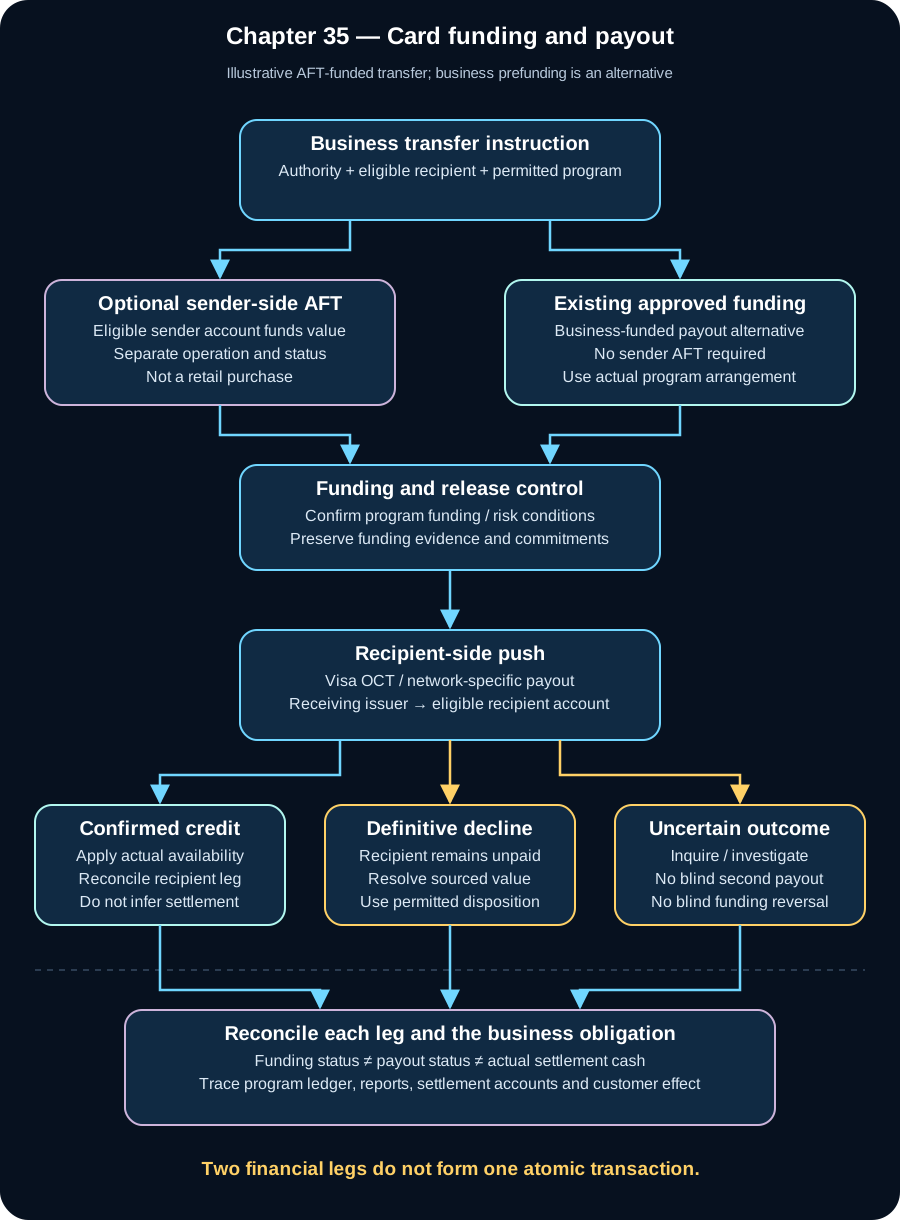
The originator first establishes the business instruction, sender authority where relevant, recipient details and permitted program. It checks applicable eligibility, controls and funding. Where an AFT is used, the funding operation is created with its own identifier and processed through the supported path.
The payout is a separate operation linked to the business transfer. The originator should release it only when its approved funding and risk conditions are satisfied. Its outcome can be successful, declined or uncertain according to the service. The originator then reconciles the recipient-side result and the relevant financial reports.
The two operations are not one atomic database transaction. A network can accept one while the other fails. A timeout can leave one uncertain. A later adjustment can affect only one side. The internal transfer record should therefore show the state of each leg rather than replacing both with a single success flag.
For the $180 driver payout, the business obligation is that the driver is owed $180. If the push declines, that obligation remains unless another legitimate event changes it. If the business funding was already reserved, the system needs to release or retain that reservation according to the actual next action. It should not record the driver as paid merely because money was earmarked internally.
The diagram's inquiry path is important. Before retrying a push or reversing related funding, establish the original outcome through the service's supported recovery mechanism. An unknown response is a financial uncertainty, not a definitive rejection.
Orchestrating two legs without pretending they are atomic
The business transfer should act as a coordinator for funding and payout, with each leg retaining its own operation and outcome. The platform can define illustrative states such as funding pending, funding established, payout pending, recipient result confirmed and recovery required. The exact names are internal choices. Their purpose is to prevent one leg's success from concealing the other's failure or uncertainty.
Before release, the coordinator should evaluate the approved funding condition and the current business obligation. A business-funded payout can use an existing permitted balance or arrangement without creating an AFT. An AFT-funded transfer has an additional source operation to track. The diagram shows both possibilities because forcing every payout through a card pull would misrepresent ordinary business disbursement models.
Suppose funding is established and the payout receives a definitive decline. The coordinator should retain the sourced value or reservation as an owned obligation and choose a permitted disposition under the program and customer agreement. That might involve a supported reversal, another authorized payout or an existing customer balance arrangement. The platform should not silently keep the value while marking the transfer failed.
Now suppose the payout is confirmed but the funding leg later requires investigation. The originator has a source-side exposure, not automatic authority to debit the recipient. The recovery path depends on the actual program and facts. The system should record the shortfall and responsible party rather than assume that a completed recipient credit can always be rolled back.
Technical retries should preserve each operation's identity. A repeated status inquiry should not create another payout. A restart after submission should recover the original result through the provider's supported mechanism. If an operator intervenes, the automated coordinator should recognize the established action and avoid repeating it. These controls are especially important because the two legs may use different service responses and reporting timelines.
The business transfer closes only when the legitimate obligation and financial positions are resolved. A successful recipient payment, a completed return of sourced value or another permitted final disposition can represent different closure outcomes. The platform should show which occurred. This gives the customer a truthful account of the transfer and gives the bank a reconcilable record of every financial leg.
11. Settlement availability and liquidity
Card-payout documentation can use settlement language for different service stages. The implementation must identify exactly what the service guarantees: processing acceptance, recipient credit, availability or participant settlement. Do not assume that a fast API response means the originator's and receiving institution's settlement cash moved at that instant.
Equally, do not assume that every current payout product uses an identical delayed batch model. The settlement mechanism must come from the approved service arrangement. This chapter does not infer account-level settlement details from a broad product page. The bank should obtain the applicable service guide, sponsor agreement and financial-report specifications before defining production accounting.
At the recipient institution, a successful payout can create a customer-account credit and an associated network or settlement position under the program. At the originator or sponsor, the payout creates the corresponding obligation or reduction in available program funding. Treasury reconciles the actual settlement-account or correspondent entries to the reports representing those obligations.
Program funding may involve prefunding, a settlement account, an approved credit arrangement or another documented model. The bank should identify which party provides liquidity and when that funding is usable. A customer's displayed wallet balance or the originator's internal available balance is not automatically cash held in the network's settlement arrangement.
Weekend availability creates a forecasting requirement. If payouts remain available while a particular funding source follows another operating calendar, the program needs sufficient liquidity or another approved arrangement. Limits and alerts should reflect outstanding commitments and uncertain transactions, not only completed payouts.
Operational cutoffs and amount limits should therefore be configuration sourced from the actual program. There is no single US-wide maximum for all virtual-card purchases, AFTs and push-to-card payouts. The safe learning principle is to identify the limiting participant and the effective rule rather than publish an unsupported universal number.
Making liquidity visible before it becomes a payout incident
The originator should distinguish cash or credit actually available under the program from an internal display balance. A business application can show funds allocated to payouts without those funds being usable in the relevant settlement or sponsor arrangement. Treasury needs to know where liquidity sits, who controls it and when it can support release. Those facts come from the actual service and funding agreements.
An illustrative payout program may plan $200,000 of weekend disbursements while one replenishment source follows a different operating calendar. The bank should assess the required available funding, outstanding commitments and uncertain transactions under its approved model. It should not forecast liquidity only from completed payouts, because in-flight operations can still consume capacity or create exposure.
A reservation model can help prevent the same available funding from being committed twice. The system should define when a reservation is created, consumed or released based on authoritative outcomes. An uncertain payout should not automatically release its reservation if the recipient may already have been credited. Conversely, a definitively rejected operation should not retain capacity indefinitely without a documented reason.
Settlement evidence should be reconciled to the relevant account or correspondent arrangement. Public product pages do not establish every account-level cash movement for every program. The implementation team should obtain the applicable financial reports and settlement specifications and document the actual debit and credit relationships. It should not fill gaps by importing an unrelated ACH, wire or instant-payment settlement model.
Operational limits should be treated as effective configuration sourced from the program. A limit can apply at a transaction, customer, business, sponsor or funding level. The platform should identify which condition blocked a payout and provide an appropriate response. A generic insufficient funds message can be misleading if the actual issue is a program limit or unavailable replenishment channel.
Treasury and customer operations should share a clear escalation path. If payout release is paused for funding reasons, the business needs to know which obligations are delayed and which already have confirmed recipient outcomes. Restoring liquidity should not trigger indiscriminate replay of every failed-looking instruction. The release process must still evaluate each original operation and its current status before sending value.
12. Fraud sanctions and program controls
Commercial-card fraud and payout fraud have different attack paths. A supplier credential can be intercepted or misused. A corporate administrator can create unauthorized spending authority. A payout recipient can be substituted after approval. A stolen sender credential can fund value that is rapidly sent elsewhere. The control model should follow the direction of value.
On the commercial side, protect credential creation, limit changes and delivery. On the payout side, protect recipient maintenance and release. A change of recipient credential immediately before a large payout should receive appropriate scrutiny under the bank's risk model. The network's technical ability to accept a credential does not establish that it belongs to the intended beneficiary.
For linked funding and payout, monitoring should consider both legs. Repeated funding from several unrelated credentials followed by concentration into one recipient can be a risk signal. The example is an illustrative monitoring hypothesis, not proof of wrongdoing or a regulatory threshold. Investigators need customer context and permitted-use information before reaching conclusions.
OFAC's compliance framework emphasizes a risk-based approach supported by management commitment, risk assessment, controls, testing and training. The bank should assess the parties, geography, products and information available in its program. It should not assume that the card network performs every sanctions obligation on its behalf, or that one generic screening sequence fits all use cases.
The sponsor and originating business need a documented responsibility split for onboarding, transaction monitoring, sanctions handling, suspicious-activity escalation and recordkeeping as applicable. Outsourcing the API integration does not answer who owns those obligations. Program approval should cover the full lifecycle and failure handling, not only successful sandbox calls.
Sensitive credentials should stay within approved secure environments. ERP exports, payout files and incident evidence should use protected references where possible. The data needed to investigate a transfer can be retained without exposing full payment credentials to every operations user.
Protecting the instruction that decides who receives value
Commercial-card and payout controls should begin with the business instruction. For supplier payments, protect invoice approval, supplier identity and credential delivery. For payouts, protect recipient maintenance, entitlement and release. A network can execute a technically valid request while the business instruction was manipulated upstream. The bank's risk assessment should therefore cover the program's full instruction path.
Separation of duties can reduce that exposure. A user who changes a recipient credential should not automatically be able to approve an exceptional payout to it. A corporate administrator who creates virtual credentials should operate within the approved hierarchy and controls. The exact permissions depend on the program, but the design should make sensitive combinations visible rather than distribute unrestricted administrative access for convenience.
Monitoring should join relevant events. A new recipient credential followed by an unusual payout, several source credentials funding one destination, or repeated supplier-control overrides can warrant review under the bank's risk model. These are illustrative hypotheses, not proof of misconduct or prescribed thresholds. Investigators should use customer context and the actual permitted use case to assess them.
Sanctions and financial-crime responsibilities should be allocated explicitly among the bank, sponsor, originating business and service providers as applicable. The institution should understand the party and transaction information available at each stage and how concerns are escalated. It should not assume that the presence of a card network means another participant performs every obligation on its behalf.
Controls should not expose unnecessary payment data. A corporate ERP may need a protected credential reference and financial outcome, while a restricted payment service handles sensitive values. Support records should preserve traceability without placing full credentials in general-purpose tickets or exports. Access to the ability to initiate a payment is itself sensitive even when the underlying number is not visible.
Incident response should preserve the original instruction, changes, release authority and actual financial outcomes. If a payout destination was substituted, the bank needs to establish which operations reached the unintended recipient before choosing recovery actions. Blocking future activity and investigating historical transfers are separate tasks. The customer should receive an accurate account of confirmed outcomes and recovery efforts, without a promise that every completed payout can be recalled.
13. Failures reversals and recovery
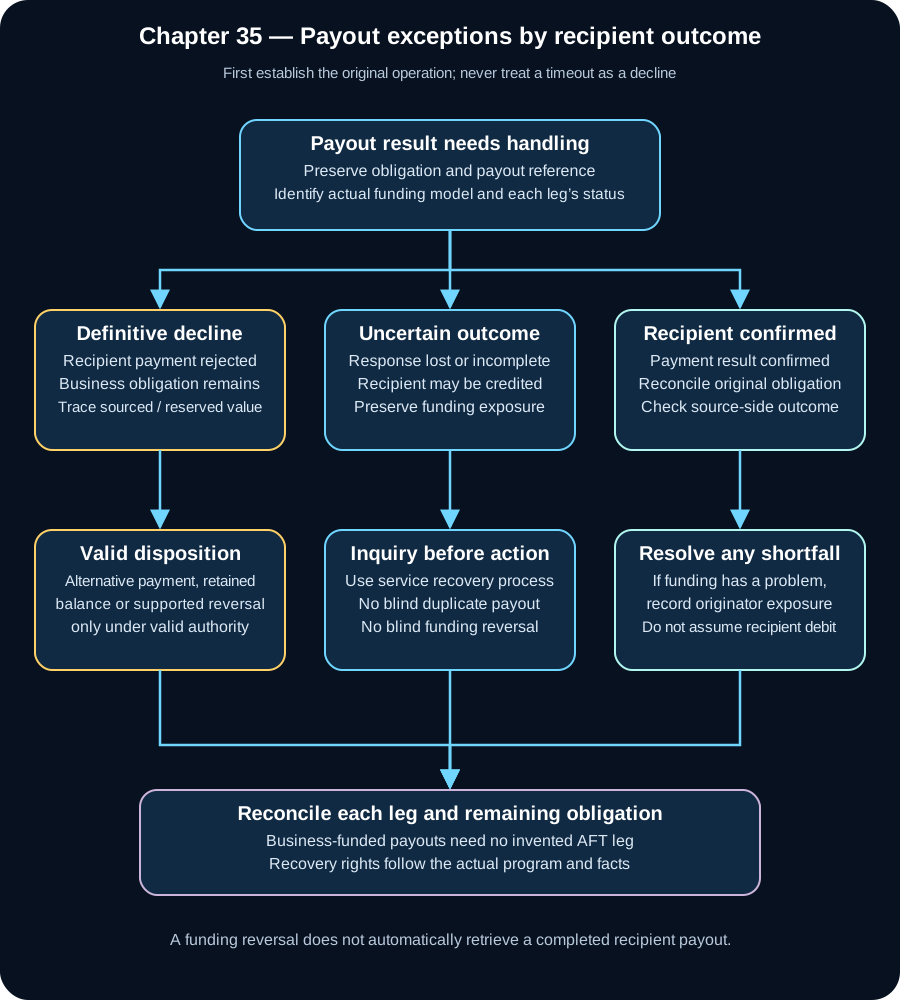
For a virtual-card purchase, a decline may result from control settings, account status or unsupported acceptance. The supplier should receive a clear path to resolve the issue with the buyer or provider. The buyer should not raise the limit indiscriminately without establishing why the legitimate invoice failed.
For AFT-funded transfers, a successful funding leg followed by a definitive payout decline requires a documented disposition of the sourced value. Depending on the program and customer agreement, that may involve an eligible alternative payout, retaining a customer balance or a supported reversal. The system must not silently keep the money with no customer-visible obligation.
A successful payout followed by a funding problem creates another exposure. The recipient should not be assumed debitable at will. Recovery rights and procedures depend on the actual program and facts. The originator needs to record the funding shortfall, determine the responsible party and use permitted recovery actions.
Unknown outcomes are especially important. If the push request times out, obtain authoritative status or use the specified exception process before sending another payout. If an AFT reversal also times out, that uncertainty needs its own tracking. One uncertain leg should not be overwritten by the status of another.
Returns or reversals in card programs should not be described using ACH return codes or instant-payment message names unless that particular interface actually uses them. A refund of a purchase, an AFT reversal and recovery of an erroneous payout have different business purposes. The adapter should expose the correct operations and retain their native references.
Wrong-recipient cases require rapid escalation, but recovery is not guaranteed. The bank should preserve the submitted recipient details, validation results, release authority and processing outcome. It should communicate the known status and recovery effort without promising that a completed credit can always be recalled.
Recovering the right leg for the right reason
Exception handling should begin with the operation and business purpose. A virtual-card purchase decline is different from a funding-leg failure, a recipient-push decline or a missing settlement record. The support interface should not route all of them to one generic payment failed action. Each has different evidence, financial exposure and permitted next steps.
For an unused virtual credential, the corporate customer may need to contact the supplier or change the payment method. Before doing so, it should establish whether any authorization or financial activity exists. A supplier saying it could not process the card may still have created an uncertain attempt. Paying by another method without checking can create a duplicate supplier payment.
For a funded transfer with a declined payout, the originator should account for the sourced value and choose a permitted disposition. The customer should not have to infer whether the money remains with the platform, is being returned or is awaiting another instruction. Each action should have its own operation reference and reconciliation evidence, including any supported reversal outcome.
For an uncertain payout, inquiry and correlation take priority over another release. The service's supported recovery mechanism should establish whether the original operation was accepted or credited. If the provider cannot immediately resolve it, the exposure should remain owned and visible. A timeout is a reason to investigate, not a universal permission to send again.
Wrong-recipient recovery requires prompt, accurate information. The bank should preserve the submitted destination relationship, validation, authority and outcome. It should use the actual program's available procedures and communicate the limits of confirmed recovery. The recipient should not be assumed debitable on demand, and a funding reversal should not be used as though it automatically retrieves the recipient's money.
The final reconciliation should explain every leg and residual obligation. If the business still owes the intended recipient, that obligation remains even if an erroneous payout occurred elsewhere. If the sender was funded back through a permitted reversal, the platform should reconcile that source-side result separately. This prevents a technically closed exception from hiding an unpaid business obligation or an unrecognized originator loss.
14. Bank architecture reporting and operations
A bank offering these products needs distinct business services behind any shared portal. Commercial-card services manage corporate hierarchy, credentials, controls and card-account obligations. Payout services manage recipient eligibility, funding, transfer legs and disbursement outcomes. Shared security and reporting can support both without erasing their differences.
An illustrative payout model contains business_transfer_id, funding_leg_id, payout_leg_id, program_id, sender_reference, recipient_reference, amounts and currencies for each leg, native processor references and settlement evidence. A virtual-card model additionally links corporate approval, invoice, credential and control version. These internal names are suggestions, not standard API fields.
Financial operations needs separate queues for unaccepted virtual-card requests, unused credentials, unmatched supplier charges, payout declines, uncertain funding, uncertain recipient credit, settlement mismatches and unallocated refunds. A single generic payment-failed queue makes it difficult to prioritize the actual customer and cash exposure.
Reporting should distinguish credentials created from purchases processed, invoices paid from card-account repayments, and payouts submitted from recipients credited under the service. Treasury should see available program liquidity, committed amounts, uncertain exposure and expected settlement movements. The corporate customer should see invoice-level results and exceptions it can act on.
The operating model needs a named owner for each boundary. If a corporate payment platform says the invoice was sent and the supplier says it was not paid, someone must determine whether the credential was delivered, used, cleared and funded. If a payout sponsor says the network accepted a request, someone must establish what that acceptance means for recipient credit and settlement evidence.
Recovery testing should include processor outages, duplicate files, late reports and program migration. A successful API demonstration is only one part of readiness. The bank must be able to reconcile money after the integration has failed in an inconvenient place.
Building a bank operating model for commercial payments and payouts
The bank can share authentication, entitlements and reporting infrastructure across products while preserving their distinct business services. Commercial-card functions manage corporate accounts, credentials, controls and purchase activity. Payout functions manage recipient eligibility, funding, release and transfer outcomes. A shared portal should not flatten these differences into one status model that cannot explain failures.
The data model should connect the original obligation to every financial operation. For supplier payments, that includes the invoice, approval, credential and purchase or credit records. For payouts, it includes the business instruction, recipient relationship, funding arrangement, individual legs and settlement evidence. Internal identifiers should coexist with native provider references so external inquiries remain possible.
Operations needs queues based on actionable conditions. Unused supplier credentials, unmatched charges, uncertain funding, uncertain recipient outcomes, rejected payouts and settlement discrepancies require different owners. A single queue sorted only by creation time can leave a high-exposure uncertain payout behind routine credential-delivery questions. Prioritization should consider customer impact, financial exposure and relevant deadlines under the actual program.
Reporting should distinguish product activity from completed business payments. Credentials issued, purchase authorizations, financially processed purchases, invoices allocated, payouts submitted and recipient outcomes confirmed are different measures. Treasury needs available funding and commitments, while corporate users need the status of their obligations. A dashboard should not use one successful-operation count as evidence that every supplier or recipient has been paid.
Release and maintenance controls should have auditable authority. Changes to corporate limits, supplier delivery details, recipient credentials and funding arrangements can alter financial exposure. The bank should retain who requested, approved and applied each change, together with its effective time. Historical transactions should remain linked to the configuration used when they were released.
A production-readiness review should demonstrate both successful and failed journeys. The bank should show a supplier payment through invoice allocation and a payout through recipient outcome and settlement reconciliation. It should also show an uncertain operation resolved without duplication. These demonstrations test the joined business and technical model more effectively than a collection of successful sandbox API calls considered in isolation.
15. Worked cases and implementation testing
The following cases connect the business obligation to the financial outcome. For each, identify the business obligation, actual payment mechanism, authoritative status and remaining exposure.
Case A — credential created, invoice marked paid. The company creates a $4,800 virtual card and closes the supplier invoice. The supplier never accepts the card. A month later, the supplier sends an overdue notice. What evidence was missing?
Credential creation was treated as financial completion. The company needs evidence of the supplier's accepted payment under its accounting and commercial policy. The invoice should remain unresolved until that condition is met. The program should report unused or expired credentials and support a controlled alternative method after checking that the card was not already charged.
Case B — invoice split across two charges. A supplier processes $3,000 and later $1,800 against an approved $4,800 arrangement. The platform labels the second transaction a duplicate because the virtual credential was intended for one invoice. What must the design distinguish?
One invoice does not necessarily mean one technical transaction if the approved program supports partial processing. Determine the intended controls and supported use model. The total accepted value and remaining authority must be tracked. Conversely, if only one full charge was authorized under the arrangement, the system should not silently permit arbitrary splitting. Business intent and actual platform capability need an explicit agreement.
Case C — AFT succeeds, push declines. A $180 funding operation succeeds, but the recipient account is ineligible for the proposed push. What remains owed?
The recipient has not been paid. The originator must account for the sourced value and determine its permitted disposition. It may need to return the funds or obtain an eligible alternative under the approved arrangement. The transfer record should show funding success and payout decline separately. Marking the entire transfer failed without recording the funded balance leaves money unaccounted for.
Case D — push timeout, operator retries. A business-funded $180 payout times out. An operator sends a second payout with a new reference. Both later succeed. Who is exposed?
The originator or responsible program party has paid $360 against a $180 obligation, subject to its arrangements. The bank must establish both credits and pursue permitted recovery without assuming an automatic recipient debit. The preventive control is status resolution and duplicate protection around the business obligation, not merely unique API request identifiers.
Case E — cancelled credential receives a refund. A $500 supplier refund arrives after the virtual credential was closed for new spending. The ERP no longer has the credential record. What should have been retained?
Historical links among credential, invoice, original purchase and corporate account. Closing new spending should not delete servicing and reconciliation evidence. Locate the credit using the processor and account records, allocate it under the corporate accounting policy and restore the missing historical mapping. Test refunds after expiry, closure and migration.
Case F — weekend liquidity. A program has an illustrative $50,000 of usable funding and $35,000 of submitted payouts whose outcomes remain uncertain. An internal dashboard shows only $10,000 completed and proposes another $30,000 release. What is wrong with that calculation?
It ignores commitments and uncertainty. The usable funding calculation must follow the approved program model and reserve for obligations that may already have succeeded. Completed payouts alone do not measure exposure. Resolve uncertain outcomes and apply the actual funding rules before deciding whether another release is permitted. The numbers are exercise assumptions, not network limits.
Testing should also cover corporate aggregate limits, supplier non-acceptance, recipient changes, unsupported account types, mixed-result batch files, partial credits and settlement-report replay. Every scenario should end with an explainable corporate, customer and bank financial position.
A payout incident with two different financial problems
A logistics company submits a batch of driver payouts. Some requests receive definitive declines, while others time out. The customer dashboard labels both groups failed, and an operator prepares to rerun the entire batch. Before release, bank operations separates the outcomes and identifies confirmed recipient credits among the timed-out requests. A blanket rerun would have paid those drivers twice.
The team preserves each original payout reference and links it to the driver's business obligation. Definitively rejected instructions can follow the approved next-action process. Uncertain instructions remain in inquiry. Confirmed recipient outcomes are reconciled to the corresponding funding and financial reports. The dashboard is corrected to show the actual distinctions rather than one broad failure label.
One instruction used an AFT funding leg. That funding succeeded, but the recipient push was definitively rejected. The originator must account for the sourced value and apply the permitted disposition under the program and customer agreement. Another instruction was business-funded and reached the recipient despite the timeout. It requires no sender-side AFT reversal because no such leg existed. The two cases demonstrate why funding models cannot be inferred from a generic payout status.
Technology changes the adapter to preserve native response meaning and operation identity. The release coordinator prevents another payout while the original result is uncertain. Manual support actions use the same controlled operation record. Treasury reporting includes outstanding commitments so uncertainty does not make available funding appear greater than it really is.
The incident closes when the intended recipients' obligations, funding positions and settlement evidence reconcile, with remaining recoveries separately owned. Management receives the actual duplicate risk avoided and the unresolved exposure, rather than a simple count of retried transactions. The lesson is practical: a payout service must know which leg moved value, to whom and with what evidence before it chooses a recovery action. Speed of submission is useful only when the system can explain the result.
16. Role checklist and learning closure
The Business Analyst establishes whether the use case is a purchase, funding transaction or payout before defining the flow. The Product Owner agrees supplier acceptance, customer availability and program economics without treating credentials as cash. Compliance and risk teams define the approved scope, controls and responsibility split.
The Architect separates credential lifecycle from money movement and represents funding and payout as distinct legs. The Developer preserves business and network identifiers and handles partial outcomes safely. The Tester validates unused credentials, failed second legs and duplicate recovery events. Treasury owns actual funding and settlement liquidity. Finance and operations reconcile corporate invoices, card accounts, recipient credits and residual exposure.
Branch 7 is complete when the learner can connect a physical purchase, a remote purchase, a recurring collection, a dispute and a card-based business payment without assuming that the same credential creates the same authority or settlement behavior in every case. Branch 8 next moves to checks and lockbox collections, where the instruments and evidence change again.
For every card-based business payment, identify who authorizes the value movement, which operation performs it and which account proves the result.
Authoritative references
Public sources checked on 6 September 2026. Production eligibility, account-level settlement arrangements, monetary limits, reversal rights and availability commitments require the applicable service guide and approved program agreements. No universal values or unsupported account-level settlement mechanism are asserted here.
This application uses JavaScript for the full interactive experience. This text summary is served for accessibility and search indexing.