Check 21, Image Exchange and Clearing. Understand Check 21 representations, image cash letters, technical profiles, acknowledgements, image quality, settlement evidence, warranties and consumer substitute-check recredit.
A bank's overnight check file arrives on time and passes its transport checks. Later, the paying bank opens one item and finds the front of a $7,250 check paired with the back of a different check. The file is readable. Its totals balance. The evidence is wrong. By the time the mismatch is reported, customer posting and settlement activity may already exist. The bank needs to repair the right record without collecting the check again.
Chapter 36 established the instrument and collection lifecycle. Chapter 37 examines the electronic representation that carries that lifecycle between banks: truncation, image cash letters, exchange agreements, substitute checks, technical controls and financial reconciliation. The detailed funds-availability and ordinary return rules remain in Chapter 38. Remote customer capture belongs in Chapter 39, and conversion into ACH belongs in Chapter 40.
Image exchange changes how a check is carried and processed. It does not turn the image file into settlement money or make every picture a legally equivalent substitute check.
For a roughly 60-minute core session, spend about 35 minutes on Sections 2–3, Section 5, Sections 8–9 and Section 11. For the next 10 minutes, use the chapter’s three diagrams to follow item identity, paired images and exchange evidence. Use 10 minutes to work through one case in Section 15, then spend the final 5 minutes explaining: How should a bank repair a defective image record without collecting the same check again? Treat these timings as a study guide. The remaining sections, additional cases and extended reference material are follow-up study; completing the whole chapter takes longer.
The banks, amounts and incidents are fictional. Internal architecture and status names illustrate implementation choices. Technical details are explained using the Federal Reserve's published implementation documents where specified; another exchange may use a different approved profile.
Chapter navigator
- Why check truncation changed the operating model
- Original check electronic check and substitute check
- Law exchange rules and technical standards
- Capture quality and image usability
- Image cash-letter structure and item data
- Endorsement data and collection-chain identity
- Exchange routes and receiving endpoints
- Acknowledgements rejects and safe resubmission
- Clearing credit and settlement evidence
- Electronic returns and adjustment handling
- Warranties indemnities and evidence obligations
- Consumer substitute-check recredit
- Archive integrity retrieval and reconciliation
- Implementation testing and change control
- Worked cases and operational decisions
- Role checklist and learning closure
1. Why check truncation changed the operating model
Truncation removes the original paper check from the forward collection path and allows its information to continue in another accepted form. This reduces dependence on physically transporting each original between banks. The operational change is substantial: image quality, data integrity, connectivity and evidence retention become part of the payment process rather than supporting conveniences around a paper workflow.
Check 21 created a framework for substitute checks that can serve as legal equivalents of originals when the requirements are met. It did not require every bank to accept electronic presentment or mandate that every item be converted into a substitute check. Electronic exchange depends on the applicable legal framework and agreements. The law became effective on October 28, 2004; its continuing importance is the legal bridge, not an assumption that all banks still move paper in the same way they did then. Federal Reserve Check 21 questions.
For a bank, truncation creates a duty to preserve a usable representation and the collection history. If the original is no longer travelling, the receiving institution must be able to identify and process the electronic item under the agreed terms. If a dispute later requires the original or a sufficient copy, the bank needs a retrieval process that reflects what was retained and by whom.
The operational benefit comes from removing unnecessary physical movement while retaining payment evidence. It is not achieved by discarding paper without controlling the image. A scan that misses the signature, amount or endorsement can reduce the receiving bank's ability to make a decision or defend a later claim. The capture point therefore becomes a place where processing efficiency and legal evidence meet.
The new dependency is the relationship between data and image
In the opening incident, the bank has two individually readable pictures. The defect is their association. The front identifies one payment, while the back may carry another depositor's endorsement and collection-chain information. A control that measures only image brightness or file size will not detect the whole problem. The system also needs to preserve the relationship among front, back, item data and source capture event.
The bank should treat an electronic item as a controlled evidence package. Its amount, routing information, account context, sequence references and images should belong to the same source instrument. If a repair changes one component, the record should show the previous version and the reason. The receiving service should get the version intended for that specific submission, not whichever image happens to be latest in a shared folder.
This changes incident analysis. A missing courier bag is a physical custody problem. A missing image object can be a storage, indexing, permission or transfer problem. A wrong image association can be a processing defect even when every file exists. Operations should classify the failure before choosing a recovery method. Resending an intact file will not correct a bad pairing inside it.
Business requirements should also state what customers can retrieve. A paid-check image in online banking can be useful evidence without being a substitute check. A bank may provide different document types through statements, archives and investigations. The customer should not have to understand file standards, but staff should know what each output represents and which rights or processes may depend on it.
The aim is continuity of evidence. The bank should be able to trace the original instrument into the image used for presentment, any later replacement representation, and every associated financial event. Without that continuity, faster clearing can simply move defects downstream more quickly.
2. Original check electronic check and substitute check
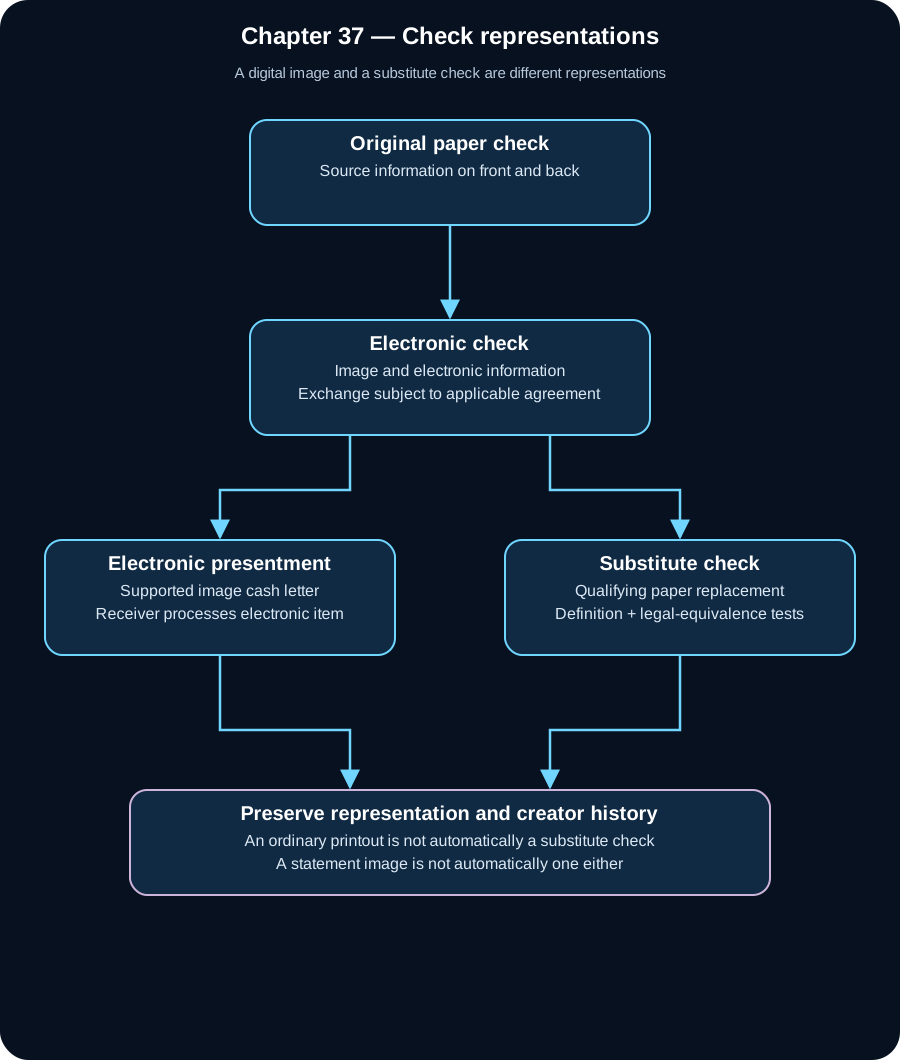
An original check is the source paper instrument. An electronic check is an electronic image and associated information meeting the relevant definition and exchange conditions. A substitute check is a paper reproduction meeting the statutory and regulatory requirements for that instrument. An image statement, downloaded picture or ordinary photocopy is not automatically a substitute check.
The distinction should appear in the data model. A document-type field should describe what the bank actually holds or provides, rather than classifying every image derived from a check as Check 21 paper. The bank may hold an original image, a picture of a substitute check, an electronic returned check and a customer statement image. These objects can relate to the same payment while having different processing and evidentiary roles.
A substitute check must satisfy requirements concerning its representation of the original and its suitability for automated processing, along with the required legal-equivalence conditions. The reconverting bank and applicable warranties are important parts of the framework. Teams should use the regulation and approved standards for production creation; a printable PDF assembled from front and back images is not sufficient merely because it looks plausible.
Electronic checks also rely on agreement for their exchange. Regulation CC §229.30 addresses the relationship between electronic checks, electronic information and the parties' agreement. That framework should be considered together with the actual exchange service and applicable law. Regulation CC §229.30.
Why a customer document request can become a legal workflow
A customer asks for proof that a check was paid. The bank may be able to supply an image through its normal archive. If the request instead requires an original or a substitute check, staff need to identify the supported process and explain what can be provided. The bank should not relabel an image to satisfy the request. An inaccurate label can mislead both the customer and anyone relying on the document.
The document history should identify whether the customer received a substitute check, because certain consumer recredit procedures depend on that fact and other conditions. An application that retains only a generic “document sent” event may not support the later analysis. It should record the type, relevant item, delivery evidence and version of any accompanying notice.
A picture of a substitute check also requires careful description. It may show the substitute check's layout, but the bank should not assume that delivering the picture is legally identical to delivering the substitute check itself for every purpose. Legal and product teams should define the supported outputs and customer language. Operations can then answer the request without improvising a legal conclusion.
Multiple representations must remain tied to one underlying obligation. If an electronic item later becomes a substitute check and is scanned again, the bank should preserve the chain rather than treating the new scan as an unrelated original. This is important for duplicate detection and investigation. A new image file name does not create a new right to collect the same amount.
The practical design question is what each representation allows the next participant to do. An electronic check supports agreed electronic processing. A compliant substitute check can support paper handling under its legal framework. A statement image supports customer access to information. Treating those outputs deliberately makes the service easier to operate and reduces the chance of creating duplicate or misleading evidence.
What makes the paper replacement legally usable
A substitute check must satisfy the applicable definition and legal-equivalence requirements; a bank cannot create one by printing an ordinary online image. Regulation CC addresses the required representation of the original front and back, applicable MICR information, physical and industry-standard characteristics, and suitability for automated processing. Legal equivalence also requires accurate representation of the original information and the prescribed legal-copy legend. The current production specification and law should determine the document, not an employee's choice of printer template.
The reconverting bank is the bank that creates a substitute check, or the first bank that transfers or presents a substitute check created by a nonbank. That role matters because the law assigns responsibilities to it. A bank receiving an image should not assume it is the reconverting bank merely because it stores or displays the image. The actual creation and transfer history determines the role.
Consider an image returned to a customer as supporting information. If the customer prints it at home, that printout does not automatically become a qualifying substitute check. If the customer attempts to deposit the printout, the receiving bank must classify what it has actually received. The bank should not allow the familiar appearance of a check image to replace the legal and technical acceptance decision.
This is also why customer document labels matter. A statement image, an informational copy and a legally equivalent substitute check can look similar to a non-specialist. The bank's archive should retain the document type actually supplied, with delivery evidence. Later consumer and interbank investigations can depend on that fact, so it should not be reconstructed from a generic label such as image available.
3. Law exchange rules and technical standards
The legal framework, the exchange arrangement and the file specification solve different problems. Check 21 and Regulation CC address legal status, rights, duties and related matters. Regulation J and Reserve Bank operating circulars matter when the Federal Reserve handles the items. Private exchange rules and bilateral agreements establish the relevant service relationship. Technical specifications define how information is represented and validated.
An X9 record is therefore not a regulation, and Check 21 is not the name of a single national clearing network. A bank can use a standards-based file under different exchange arrangements. The shared format does not prove that the participants have agreed to accept the file or that settlement will occur through the same accounts. Project documentation should identify all three layers explicitly.
The Federal Reserve's technical page states that its Check 21-enabled products use DSTU X9.37-2003/X9.100-187-2013, with published customer documentation describing the implementation. Teams should apply the current service profile rather than selecting a version based only on the newest X9 catalogue entry. A newer general standard does not automatically become a participant's production interface. Federal Reserve technical information.
A bank should also distinguish mandatory requirements from its own controls. A local rule rejecting images above a certain internal size may be an engineering choice. An exchange rule requiring a particular record is a service requirement. A statutory warranty is a legal obligation. The implementation should retain the source and owner of each requirement so that changes can be assessed correctly.
Turning a rule set into an implementable agreement
A requirements catalogue can identify the sending bank, receiving endpoint, accepted work types, approved file profile, acknowledgement meanings, settlement relationship and exception process. These are not decorative onboarding fields. They determine whether a technically valid file is appropriate for the destination and how the bank should interpret the response.
Suppose a vendor claims to support X9.37. The bank should ask which implementation profile, which record combinations, which image requirements and which exchange service have been tested. A parser can accept the base standard while rejecting a service-specific field value. A generator can create syntactically valid files that violate the receiving institution's operational agreement. The claim of format support is the beginning of validation, not its conclusion.
Version control should cover documentation and configuration. The bank needs to know the profile used to generate a particular file and the validation rules in effect when it was accepted. If a receiving service changes its requirements, the bank should assess both new submissions and outstanding exceptions. A repair performed after the change may need to preserve the original context while complying with the current permitted recovery procedure.
Legal review should focus on the actual commitments being made. A data-transfer agreement may not address settlement. A settlement agreement may not grant permission to receive images at a particular endpoint. A vendor contract may not establish the exchange relationship between banks. The project should identify any missing link before production rather than discovering it through an unpaid or disputed item.
A useful sign-off package brings these layers together without mixing them: the approved legal and service basis, the technical profile, the bank's processing controls and the evidence of successful testing. Each has an owner. The resulting architecture can be explained to developers and operations without implying that a file standard alone authorizes payment processing.
4. Capture quality and image usability
Image quality is a payment-processing control. The bank needs images that can be decoded, displayed and used for the intended operational purpose. Common problems include missing sides, excessive darkness or lightness, skew, cropping, streaks, folded corners and unreadable fields. A picture can satisfy basic file-format checks while failing to show information needed for payment or a later investigation.
The Federal Reserve publishes image quality assurance settings that define the metrics and thresholds it applies. A bank using that service should test against the published requirements and its own necessary controls. It should not invent universal quality thresholds or claim that every exchange applies the same settings. Federal Reserve image quality settings.
Quality assurance and authenticity are different. A sharp image of a counterfeit check remains a counterfeit concern. An image that passes brightness and skew tests does not prove the drawer's authority or the depositor's entitlement. Fraud controls should use the relevant account, customer and instrument context in addition to image quality. Chapter 38 develops the fraud decisions; this chapter concerns the integrity of the representation being processed.
Capture controls should preserve the source relationship. Front and back images must remain associated with the correct item and captured data. A scanner jam or document separator error can move an image into the wrong sequence. Balancing amounts alone may not expose the mismatch. The system needs controls and review tools that make those associations visible.
Repair should improve usability without rewriting evidence
When an image is unreadable, the bank should determine whether a better image of the original can be obtained. A supported recapture can replace the unusable representation while retaining its history. The bank should not digitally reconstruct a missing signature or amount from assumptions. Image enhancement may improve visibility, but it must not become fabrication of source content.
Consider an image where the numerical amount is visible but the written amount is cropped. An operator might know the expected deposit total and be tempted to accept the item on that basis. The correct action depends on the service requirements and evidence available. The deposit total is not a substitute for the missing part of the instrument. A controlled exception may require recapture or another supported process.
The quality queue should identify the defect and the responsible capture source. A branch scanner with repeated streaks needs maintenance. A mobile channel with repeated cropping may need better capture guidance. A provider conversion process that pairs images incorrectly needs a software correction. Treating every defect as an individual operator task prevents the bank from addressing the cause.
Review tools should display the relevant image and data together. If the reviewer can see only a thumbnail, an endorsement or alteration concern may be missed. If the reviewer can edit fields without seeing the source, a correction can become guesswork. The interface should support zoom and the approved repair action while preserving the original evidence.
Quality reporting should distinguish rejected items, repaired items, accepted exceptions and defects detected downstream. A high pass rate can be misleading if the bank simply relaxes its local controls and transfers unusable evidence to the next participant. The meaningful outcome is a usable, correctly associated representation that supports the payment lifecycle and later servicing.
5. Image cash-letter structure and item data
An image cash letter, or ICL, packages check data and images for exchange. The file, cash-letter, bundle and item levels organize the population and its controls. In the Federal Reserve implementation, headers and control records identify and balance these levels. The hierarchy is important because a bank may need to investigate an individual item, a whole bundle or an entire rejected file.
The published Federal Reserve record matrix identifies Type 01 file headers, Type 10 cash-letter headers, Type 20 bundle headers, Type 25 forward check detail, Type 31 return records, Type 50 image view detail, Type 52 image view data, and Type 70, 90 and 99 controls. Addenda have defined conditional uses. This is a structural orientation, not a complete record layout or production file example. Federal Reserve ICL customer documentation.
The bank should not invent field positions from that overview. Production generation requires the exact approved documentation, including mandatory and conditional fields, permitted values, character treatment, record ordering and image encoding. A human-readable JSON example can explain an internal item model, but it should not be presented as the exchange format. Likewise, ISO 20022 message names should not be attached to an ICL merely because the bank uses ISO elsewhere.
Control totals help establish that the file's stated population and amounts are consistent. They do not verify the underlying checks. A file with matching totals can still contain a duplicated item, an incorrect amount copied consistently into every total, or the wrong image. Structural validation is necessary but does not replace item-level evidence and business controls.
Designing a parser that preserves meaning
A parser should retain the distinction between absent, unreadable and zero values where the profile makes that distinction meaningful. Normalizing every unfamiliar character to a blank can erase evidence of a capture problem. Converting account identifiers into numeric fields can remove leading zeros. Trimming data without understanding the field can change the information used for routing or matching.
The bank should also preserve native identifiers rather than replacing them with its own UUID everywhere. Internal identifiers support application integrity, while native references support communication with the exchange partner. An investigator may need both. The mapping should survive file splitting, repair and resubmission so that the external institution can locate the original item.
File-level duplicate detection and item-level duplicate detection address different risks. Repeating an identical file can duplicate a whole population. Repackaging the same item into a new file can evade a file-only check. The bank should therefore model both the transport package and the underlying item. A new file creation time is not evidence that its checks are new.
A robust import process should validate the full structure before exposing incomplete records as accepted financial work, using the service's actual acceptance semantics. If the implementation stages records as they arrive, it needs a clear distinction between staged and accepted. A downstream posting engine should not act on an item whose enclosing file failed a required integrity check unless the approved service explicitly supports that treatment.
Operational diagnostics should identify the level of failure. “Invalid file” may be enough for an initial rejection but not for a bank repairing thousands of items. The support record should point to the relevant file, bundle, item and validation issue without exposing unnecessary sensitive data in general logs. Clear diagnostics reduce repair time while keeping the original population controlled.
Reading a control failure without losing the item
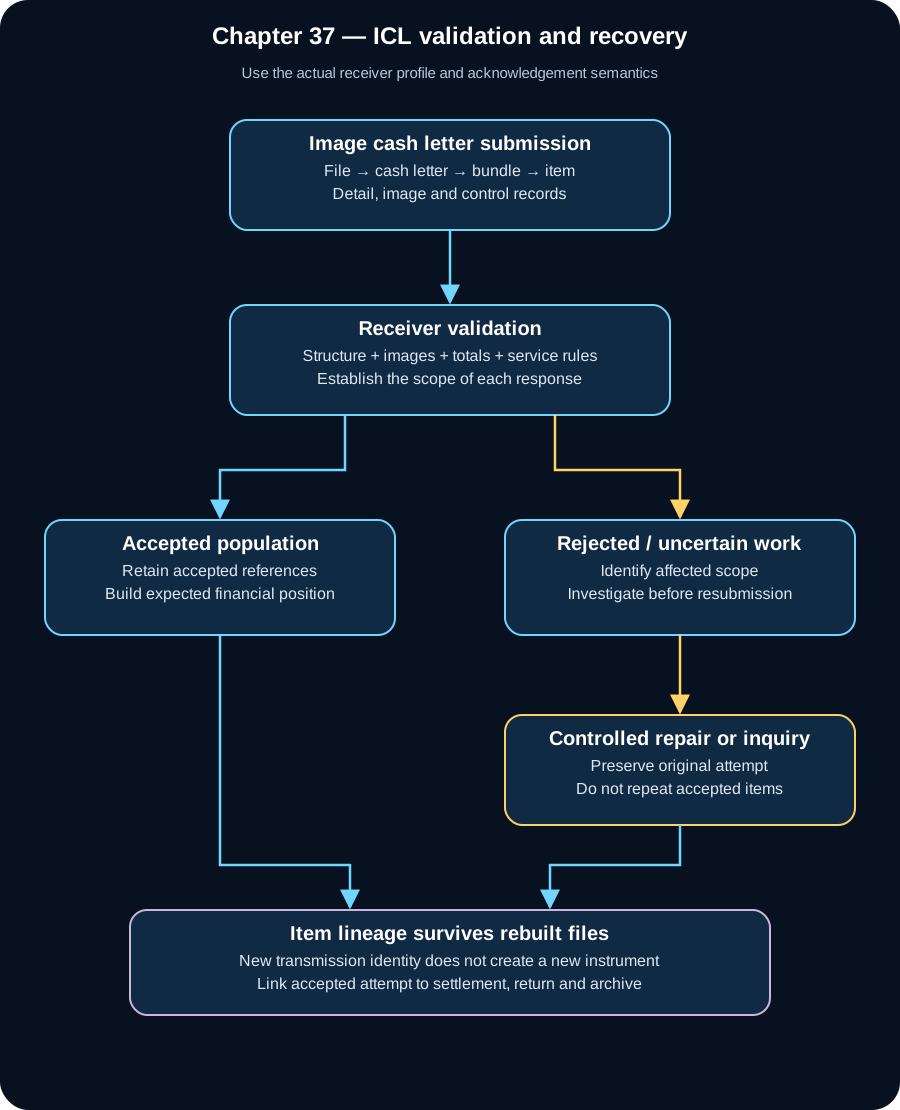
Imagine a forward file containing two cash letters, each with several bundles. The receiver accepts the first cash letter but rejects a bundle in the second under the service's supported validation model. The sender needs to know the exact scope of that response. A file-level success acknowledgement cannot be interpreted as item-level acceptance if the interface provides later detailed validation. Conversely, a bundle rejection should not cause the sender to resubmit already accepted work unless the service explicitly requires that recovery.
Control totals help locate the failure. A mismatch in item count may indicate a missing or duplicated record. A balanced amount with a count difference can occur when a zero-value or offsetting error masks the financial total. An image-record problem may leave the amount and count intact while making an individual item unusable. The validator should report the actual defect rather than reduce every failure to bad file.
The bank should preserve the original file, the receiver's response and the repaired output as separate artifacts linked to the same collection attempts. It can then demonstrate which records changed and why. If an operator changes an amount, the repair needs approved source evidence. If the defect concerns a required image, the bank needs a valid replacement representation rather than a fabricated blank image that satisfies a parser.
A synthetic test should exercise a small, known population where each expected acceptance and rejection can be checked. The purpose is to prove the service contract's behavior, not to discover it by sending malformed live customer work. Certification and operational testing should use the designated environment and procedures. Passing a local schema or record-length check is useful but cannot establish that the receiving service accepts the file under its business rules.
6. Endorsement data and collection-chain identity
Endorsement information helps establish how the item moved through the collection chain. The bank of first deposit and subsequent handling information can matter for returns, adjustments and claims. Image exchange must preserve the relevant information in the required data and image form. Losing the back image or stripping addenda can damage the receiving institution's ability to trace the item.
A bank's routing number in an endorsement record is not automatically the current settlement account identifier. The collection role, electronic exchange role and settlement role can belong to different institutions. Requirements should identify each field's purpose. Reusing one routing number across all roles because it makes a test file pass can misdirect returns or create incorrect settlement expectations.
Truncation history also matters when a paper representation is converted back into an image. The implementation should follow the supported addenda and history requirements rather than treating the rescan as a new first deposit. The bank needs to distinguish the original depositary relationship from a later institution's conversion activity. This helps preserve liability and duplicate-investigation evidence.
Customer restrictive endorsements are a different layer. They can affect whether a particular deposit is consistent with the restriction and can matter to the RDC indemnity analysis discussed in Chapter 39. The image-processing engine should preserve them, not interpret them as irrelevant marks to be removed during enhancement. A clean-looking back image that loses a restriction is a defective representation of the source.
Following an item after a routing change
Imagine that a bank changes its processor while older checks continue to generate returns and claims. New forward files use the new exchange endpoint, but older items still carry the original collection references. The bank should retain the old mappings and receiving arrangements for the required period. A current routing table alone may not explain where an old return belongs.
The archive should support historical lookup by native sequence, date, amount and bank reference. If a merger changes institution names, the old identity should remain searchable. Renaming every historical record to the current brand can make communication with another bank more difficult because that bank's evidence still contains the original name and routing context.
The bank should also establish which party supplies missing endorsement information during a repair. The processor may possess the file, the depositary bank may possess the deposit relationship, and the customer may retain the original paper. An investigator needs an agreed path to assemble the evidence. The presence of an outsourced archive does not ensure that every relevant field can be recovered.
Testing should include a missing BOFD reference, a valid historical routing number, a back-image defect and a rescan of a substitute check. The expected treatment should come from the actual profile and service rules. A generic test saying “all routing numbers must be current” can reject valid historical evidence, while a rule accepting any syntactically valid number can admit unusable information.
The operational objective is a traceable chain. Each participant should be able to identify what it received, what it sent and the references needed by the next institution. That chain is as important to post-payment investigations as it is to the initial clearing process.
7. Exchange routes and receiving endpoints
Banks can exchange checks through Federal Reserve services, private arrangements, correspondents or direct relationships. The chosen route determines the service terms, technical endpoint, acknowledgements, settlement relationship and exception procedures. A common file format does not make those routes interchangeable. The bank must establish eligibility and agreement before directing live items to an endpoint.
The Federal Reserve's Check 21-enabled service suite includes forward, return and receipt services. A bank should select and configure the services it actually needs, including how it receives incoming items and returns. An outgoing-only integration is incomplete if the bank cannot reliably receive the records needed for paying-bank decisions or depositary-bank recovery. Federal Reserve Check 21-enabled services.
The endpoint identity should be separate from the customer's bank account and from settlement designation. The processor may receive files on behalf of several institutions. The bank must ensure that the file's institution and work-type data direct it to the intended service relationship. A technically authenticated connection to a vendor does not prove that the items were assigned to the correct bank.
Routing changes need controlled activation. The project should identify when new files use the new route, how in-flight files are handled, how returns continue to arrive and how settlement reports will be reconciled across the transition. Switching a URL or certificate without this financial plan can create a period where both old and new routes process the same population.
A migration should prove both delivery and ownership
Suppose a bank moves from a correspondent-managed image service to direct exchange. The new path may reduce an intermediary, but the bank now owns functions previously performed by the correspondent. Those can include file validation, receipt monitoring, settlement mapping and exception handling. The migration plan should explicitly identify the responsibilities that move, rather than assuming that the new connection replicates the old service automatically.
A controlled pilot can use the approved testing environment and representative scenarios. The bank should validate the native acknowledgements, incoming reports, financial entries and operational access. A test file that reaches the destination proves connectivity; it does not prove that the bank can reconcile production settlement or resolve a return after an outage.
The fallback route must also be authorized and tested. A direct exchange failure does not permit the bank to send the same items through another route while the first outcome remains uncertain. The recovery team needs evidence of what was accepted and a supported procedure for the remainder. If the original route later confirms acceptance, the item record must prevent the alternate route from creating duplicate collection.
Endpoint inventories should include owners, contact paths, supported profiles and effective dates. Certificate rotation and network maintenance should be coordinated with the processing schedule. A certificate can expire at a technically predictable time while the operational impact remains severe if no one owns the resulting backlog and cut-off exposure.
The bank's routing strategy should be judged by reliable completion and recoverability, not merely low file-transmission cost. A route that is cheap in normal processing but difficult to investigate can increase operational expense and customer harm. The evidence and settlement model should therefore be part of the product decision from the start.
8. Acknowledgements rejects and safe resubmission
An acknowledgement means only what the interface agreement says it means. It can confirm transport receipt, successful validation, acceptance of a cash letter or another defined stage. It is not automatically confirmation of payment by the drawer's bank. The sending bank should preserve native responses and map them to explicit internal meanings rather than translating every positive response into paid.
A rejection also needs a defined scope. The service may reject a file, cash letter or item under its rules. The bank should use the reported population and reason to determine what can be repaired or resubmitted. It must not infer that every item failed because one report contains an error, or that every item succeeded because a network transfer completed.
An uncertain outcome is different from a rejection. If the connection fails after submission but before the acknowledgement is received, the recipient may already have accepted the file. The bank should use the supported inquiry and recovery process before sending the items again. Changing the file identifier solely to bypass duplicate controls is not a valid recovery strategy.
The internal record should connect the business items to every technical attempt. A repaired file can have a new package identity while containing some of the same checks. The bank must retain which original attempts were accepted, rejected or unresolved. This prevents a delayed acknowledgement from being applied to the wrong version or ignored because the application has moved on to a newer file.
A recovery decision needs a population not a guess
In a realistic incident, the bank sends three cash letters before a connection fails. It receives acceptance for the first, a rejection for the second and no response for the third. The safe recovery is not to rerun the whole morning. The first population has acceptance evidence. The second can follow the documented repair process. The third needs outcome resolution. Each group should have a distinct operational state and owner.
The bank should preserve the bytes or an integrity-protected copy of what was sent, along with the generating configuration and item inventory. That enables a comparison with the recipient's evidence. Recreating a file later from current database values may not reproduce the original submission, especially if operators have corrected data in the meantime.
Resubmission controls should distinguish repeated transport from repeated financial intent. An approved retransmission may resend the same package under the service's procedure. A new collection attempt after a genuine rejection may require a different package with linked history. Both should preserve the underlying item identity and the reason the action was allowed.
Operators need a recovery screen that shows the relevant acknowledgement, affected items and permitted next action. A button labelled retry without that context invites unsafe decisions. The system can automate supported steps, but it should leave a clear record of the basis for resubmission and any manual approval. This is particularly important where the financial value is large even though the file count is small.
The incident closes only when the bank can account for every submitted item and resulting financial effect. Restoring the connection is a technical milestone. Establishing the accepted population, reconciling settlement and correcting customer effects are the payment milestones that complete the recovery.
9. Clearing credit and settlement evidence
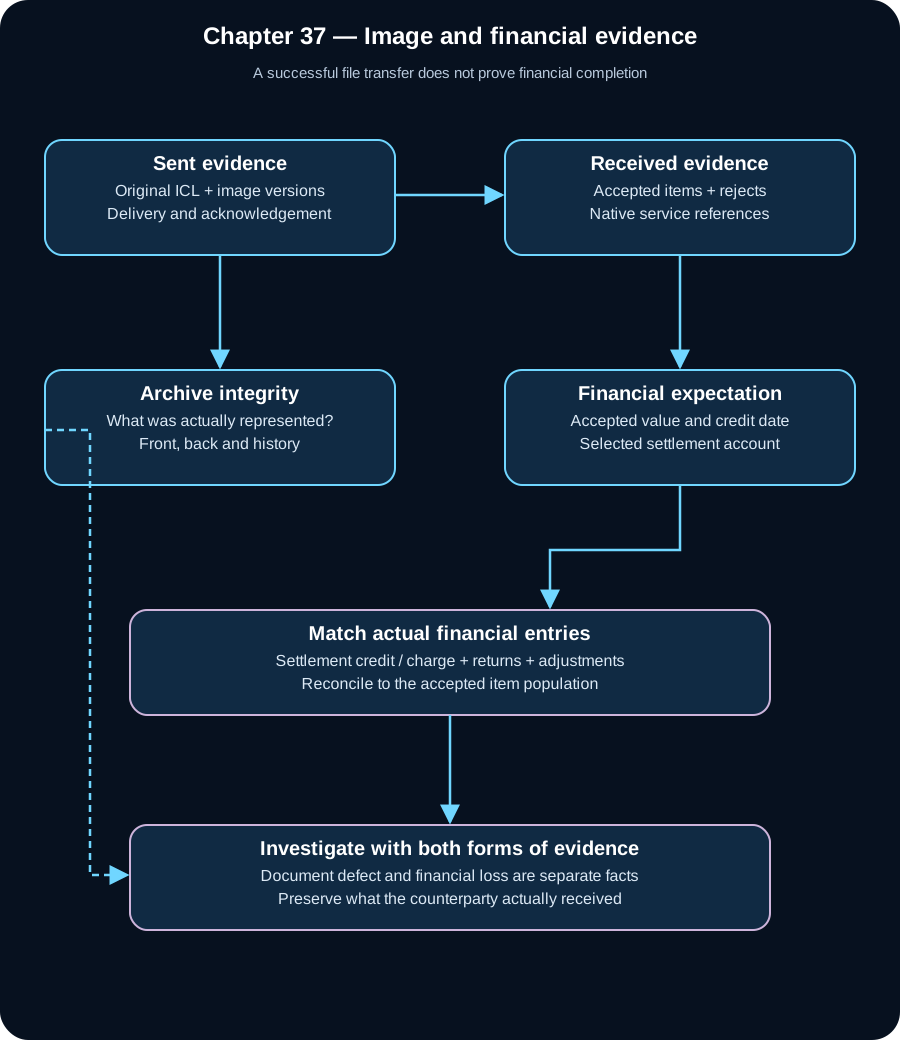
Clearing establishes and communicates the items and obligations to be processed. Settlement records the financial effects between the relevant banks or agents. An accepted ICL can support the clearing process without proving that a particular settlement account has been credited. The bank should reconcile the accepted population to the actual financial entries under its selected service.
A Federal Reserve customer may use its designated settlement relationship under the applicable operating circulars. Another bank may see the financial effect in a correspondent account. The route that carries images and the account that carries value should both appear in the operating model. A vendor's file-delivery report cannot replace the settlement-account evidence simply because the same vendor produces both reports.
Credit availability in a check service schedule concerns the bank's collection relationship. It should not be confused with the depositary bank's obligations to its depositor under Regulation CC. A service offering same-day credit to a bank does not create a universal same-day customer availability promise. Conversely, a bank's customer availability obligation may arise before its preferred collection evidence has arrived.
The Federal Reserve publishes product options and schedules tied to deposit deadlines, sorting and credit availability. The bank must use the current schedule for the actual option and endpoint population. This chapter does not publish a single national image-exchange cut-off, because none can describe all Federal Reserve, correspondent and private arrangements. Federal Reserve check services.
Building a financial expectation from accepted work
Suppose the bank sends $4.2 million of items and receives acceptance for $4.15 million while $50,000 is rejected. Its expected settlement should reflect the actual accepted population and the service's credit treatment. A report that assumes the full submitted amount will settle can overstate expected funds. If the rejected items are later repaired, they should enter a new expected position linked to their eventual acceptance.
The reconciliation should identify the value date, settlement account, direction, amount and source population. If a service nets certain entries, the bank needs the components that explain the net. Fees and adjustments should remain distinguishable. A single net credit can be financially correct while hiding several operational breaks unless the supporting detail is available.
Timing differences require explicit treatment. An item accepted after a relevant deadline may settle under a later schedule. A bank should record the reason for that timing difference rather than repeatedly opening the same break as missing funds. The expected date must come from the accepted service treatment, not a locally calculated assumption that ignores the recipient's report.
Treasury should be able to distinguish confirmed cash from anticipated credit and unresolved exposure. If an outgoing file is uncertain, the bank cannot safely treat its full value as both expected incoming cash and eligible for resubmission. The collection status and financial forecast should share the same evidence. This prevents an operational uncertainty from being counted twice in liquidity planning.
A settlement correction should not overwrite the original acceptance history. If an amount adjustment posts later, the bank needs to show the initial financial effect and the correcting entry. This is how finance explains the period's net result and operations explains what happened to the item. Rewriting the original cash-letter amount can make a current report balance while destroying the evidence needed for an external claim.
10. Electronic returns and adjustment handling
Electronic return processing uses the relevant return data, images, routing and service rules. It is not simply a forward ICL with a negative amount. The implementation must use the supported return record structure and preserve the original-item relationship. The ordinary legal return clocks are covered in Chapter 38; this section concerns how the electronic evidence supports that process.
A return should be matched to the original deposit or collection record using the available native references and item data. Matching only on amount and date is weak, particularly for high-volume billers with many identical payments. The bank should preserve the received return reason and any uncertainty or repair history. Translating every reason into a generic unpaid label removes information needed by customers and investigators.
An adjustment is a separate service process. The Federal Reserve's Check Adjustments service provides procedures for different investigation types. A bank using that service should identify the correct type, required evidence and timing. It should not treat an operational adjustment procedure as a universal legal claim mechanism or assume that every entry posted through it is final. Federal Reserve Check Adjustments.
Images can be requested for research without creating a new collection. The system should distinguish informational image delivery from financial presentment or return. A replacement image sent to resolve a quality issue should not trigger another customer posting merely because it contains the same amount and account data. The message's business purpose must govern its downstream treatment.
Matching a return after a file has been rebuilt
Imagine an original check included in a file that was rejected locally, repaired and then accepted through a new cash letter. The return arrives with references from the accepted submission. If the bank kept only the first file identity in the deposit record, it may fail to allocate the return. The correct model links the item to all attempts and identifies which attempt produced the financial collection.
The reverse problem occurs when a delayed return or adjustment relates to an earlier duplicate attempt. An operator should not attach it to the latest item merely because the amount matches. The case needs the original presentment evidence and the specific financial effect being corrected. This prevents the bank from reversing a legitimate collection while leaving the duplicate unresolved.
A service report may contain both financial and informational records. The import process should classify them according to the documented interface. It should not infer financial direction from a word in a description. Where a partner changes report content, the bank should test whether previously informational events could be misread as posting instructions.
Exception queues should separate unmatched returns, unreadable evidence, amount differences and disputed adjustments. Each requires different information and authority. An unmatched return needs allocation; an image problem needs usable evidence; a disputed adjustment needs case analysis. Combining them in one undifferentiated queue makes it harder to meet the relevant obligations and explain the remaining exposure.
Customer reporting should preserve the link to the original deposit and explain the financial effect. If the bank is still researching a received adjustment, it should not state that a final legal determination has been made. The external service status, customer account treatment and case conclusion can progress at different times. The operating model must keep them connected without forcing them into one status.
11. Warranties indemnities and evidence obligations
Electronic processing carries warranties and indemnities under the applicable framework. These allocate responsibility for particular defects or losses; they are not blanket guarantees that every accepted item is genuine. Regulation CC includes electronic-check warranties concerning accurate representation and duplicate payment, as well as other warranties and indemnities for specified circumstances. The bank must identify the actual provision and facts before asserting recovery. Regulation CC §229.34.
Substitute-check warranties and indemnities are distinct from the electronic-check provisions. A bank that creates or transfers a substitute check can have obligations under that framework. Legal equivalence, duplicate payment and loss arising from receipt of a substitute check rather than the original are specific questions. The case should not be labelled simply Check 21 claim without identifying the alleged defect and claimant's basis.
The bank's evidence architecture should support these distinctions. It needs to know which representation was sent, who created it, which institution handled it, what the recipient received and what financial loss is alleged. An image archive containing only the latest picture may not establish whether an earlier defective representation caused the problem.
A warranty claim also differs from a customer's complaint about the underlying transaction. A dispute that repair work was unsatisfactory does not become an image warranty claim merely because the payment used an electronic check. The bank should identify whether the allegation concerns authority, alteration, duplicate payment, representation quality, collection handling or the commercial obligation.
A claim should connect defect causation and loss
Suppose a paying bank receives an image with a missing endorsement and later incurs a loss. The investigator should establish what was sent, whether the source contained the missing information, which warranty or duty is relevant, and how the loss arose. It is not enough to show that an image was imperfect. The applicable claim may require a particular relationship between the defect and the loss.
The same discipline applies to duplicates. Two image records may exist in an archive because one is a retrieval copy. That does not prove two payment demands or two debits occurred. A duplicate-payment allegation needs the actual presentment and financial evidence. Conversely, two financial charges can arise from different representations of the same instrument even when file hashes differ. The case should follow the underlying payment, not just byte equality.
Legal and operations should agree an evidence checklist for each supported claim type. It can identify the original instrument, representation history, presentment references, settlement entries, customer effect and prior recovery attempts. The checklist should be specific enough to support the claim without collecting irrelevant personal information. Case staff should be able to explain why each requested record matters.
Accounting should distinguish expected recovery from received recovery. A claim submitted to another bank is not cash. A provisional credit may not establish final liability. The bank should retain the status and financial treatment prescribed by its policy, with the original settlement and any later adjustment separately visible. This prevents a case dashboard from overstating recovered losses.
The strongest operational control is often preservation before a dispute exists. Once an image version or transmission record has been overwritten, the bank may be unable to demonstrate what the other institution actually received. Versioned evidence, controlled access and retrievable native references make later legal analysis more reliable and less dependent on recollection.
12. Consumer substitute-check recredit
The special consumer expedited-recredit process is narrower than a general right to dispute any check image. Regulation CC §229.54 sets conditions involving a substitute check provided to the consumer, an improper charge or warranty claim, resulting loss, and the need for an original or sufficient copy to determine the issue. A bank should assess those conditions while preserving any other rights the customer may have.
The general claim period is 40 calendar days after the later relevant statement or substitute-check delivery, with an extension for extenuating circumstances. If the bank cannot determine the claim within 10 business days, the rule provides an initial recredit up to the lesser of the relevant loss, substitute-check amount or $2,500, with applicable interest; remaining recredit is addressed by the 45-calendar-day framework unless the bank establishes that recredit is not warranted. The provision contains notice, availability and reversal conditions that must be applied in full. Regulation CC §229.54.
These periods should not be copied into every ordinary check-fraud case. A bank needs a classification step that identifies the representation supplied and the claim basis. A consumer who received only an image statement may still have rights under other law, but that fact alone does not establish eligibility for this particular procedure. Customer service should route the complaint correctly rather than refusing to investigate because one special process does not apply.
The case system should preserve receipt dates, the customer's allegation, relevant delivery evidence, missing information, notices and financial entries. If a written submission is required under the rule, the bank must follow the associated requirements rather than letting a request for paperwork become an undocumented delay. The exact clock should be calculated from the applicable facts and provision.
When the bank determines that a qualifying consumer claim is valid, §229.54(c)(1) requires the applicable recredit no later than the end of the business day after the banking day of that determination. The bank should not wait for the tenth business day merely because that is the unresolved-claim checkpoint. A valid determination, an unresolved claim and an invalid determination each have their own required action. The case system should record which conclusion occurred and calculate the corresponding obligation from that event.
Designing a workflow around the customer rather than the document label
A consumer says, “The copy you sent shows $850, but I wrote $85.” Staff should first preserve the complaint and identify the item. They should establish whether the bank supplied a substitute check, what was charged and what evidence is necessary to determine the issue. The customer should not be expected to know the technical term for the document before the bank recognizes a potentially relevant claim.
The investigation should compare the original or sufficient copy, the substitute representation, captured amount, presentment record and account debit. If the source check says $85 and the processing record says $850, the bank needs to identify where the error entered. If the source itself is disputed, a different evidentiary question may arise. The workflow should not assume that every amount complaint is an image-conversion defect.
A provisional customer credit should be visible as such to authorized staff, with its legal basis and any conditions. It should not be confused with a merchant refund, an interbank adjustment or a final loss decision. If another credit arrives while the claim is open, the bank should coordinate the financial treatment under the applicable rules rather than automatically stacking credits or reversing one without analysis.
Notices should explain the action taken and the relevant customer effect. An internal message saying claim completed is insufficient. The bank should retain what was communicated, when and through which supported channel. This matters both to customer understanding and to evidence that the process met its obligations.
The practical lesson is to classify accurately and act on the correct clock. The special substitute-check procedure is valuable because it addresses a defined risk introduced by the representation. It should be neither expanded into a universal check rule nor overlooked because staff treat every document as just another scanned picture.
Consumer notices and the financial correction
The expedited-recredit process includes communications about the bank's determination and any recredit. Where the bank determines that the claim is not valid, the consumer needs the required explanation and supporting original or sufficient copy, with the applicable information about requesting relied-on documents. Where recredit is provided, the notice identifies the amount and when it is available. Staff should use the current rule's timing rather than treat notice creation as an optional case-closing task.
Recredit availability has its own provisions. The rule generally requires availability by the start of the next business day after recredit, while specified safeguards can permit a delay in particular circumstances. A bank should evaluate those conditions separately from the initial eligibility decision. A consumer's valid claim should not disappear from the workflow because another system applies a general account-risk flag.
If later evidence establishes that a provisional recredit was not warranted, the rule provides conditions for reversing it and notifying the consumer. The bank needs to identify the exact recredit and interest associated with it, the supporting determination and the resulting balance. Reversing the original check debit as well as the recredit, or removing an unrelated customer credit, would produce a new accounting error. Recovery should follow the linked financial event.
Take an illustrative qualifying $3,600 loss that remains unresolved at the initial recredit deadline. The initial amount under the statutory cap can be $2,500, with the remaining $1,100 tracked for the later determination and deadline, plus applicable interest treatment. The example assumes the eligibility and unresolved-claim conditions are satisfied. It is not a universal $2,500 customer benefit and does not authorize the bank to ignore a claim it can already determine should be recredited in full.
The case dashboard should show the consumer deadline, recredit amount, notice evidence and remaining investigation separately. An interbank recovery team may still be pursuing another institution while the consumer process is complete. That recovery uncertainty does not erase a customer obligation already established under the rule. Finance should distinguish the customer correction from the bank's prospective claim asset or loss treatment under its accounting policy.
13. Archive integrity retrieval and reconciliation
The image archive is part of the bank's payment evidence. It should preserve the relationship among the source instrument, image versions, item data, exchange attempts and financial events. Storage capacity alone does not create a reliable archive. The bank must be able to find the correct record, establish its integrity and retrieve it within the time needed for operations and claims.
Retention should follow applicable law, service rules, agreements and the bank's approved schedule. There is no single Check 21 rule requiring every bank and customer to retain every original paper check for the same number of days. Teams should identify the actual obligation for originals, images, transmission records and notices separately. Chapter 39 examines the customer's original-paper responsibilities in RDC.
Access controls should recognize that check images contain sensitive information. Full account details, signatures, payee information and endorsements should not appear in general application logs or unrestricted support exports. Authorized retrieval should be auditable, and external sharing should use the bank's approved channels. A payment investigation does not justify distributing an entire archive when only one item is relevant.
Reconciliation should connect what the archive says was sent with what the exchange accepted and what the financial accounts show. Missing images, orphaned metadata, accepted items without settlement allocation and settlement entries without item populations require different queues. The bank should not clear all such breaks through a generic balancing entry.
Restoring an archive is not the same as restoring evidence
After a storage incident, a bank may recover most image files from backup but lose part of the index linking them to item records. The files exist, yet operations cannot reliably identify which back image belongs to a particular front. Recovery should validate associations, not merely count restored objects. A high storage-recovery percentage can conceal a serious payment-evidence problem.
Integrity checks can help identify changes or corruption, but they should be interpreted correctly. A hash establishes whether bytes match a reference; it does not establish that the referenced image originally belonged to the correct check. The bank needs both technical integrity and source association. This distinction should appear in archive acceptance testing.
The bank should test retrieval using the identifiers actually supplied by customers and other banks. A customer may know amount, date and check number. An exchange partner may supply a native item sequence. A legal case may identify a specific document delivery. The archive should support controlled lookup paths across those references without requiring staff to search thousands of images manually.
Reconciliation reports should retain the reason a difference remains open. An image awaiting retrieval is an evidence gap. A missing settlement credit is a financial gap. An unallocated customer posting is a ledger gap. Their owners and escalation times can differ. Combining them under one unresolved count hides what the bank actually needs to do next.
A complete close record should identify the item population, accepted exchange evidence, settlement allocation, customer effects and any remaining claims. If the bank supplied a replacement image, the record should show that it was informational and whether it corrected the original defect. This keeps document repair from being confused with another payment event.
14. Implementation testing and change control
A bank implementing image exchange should validate the full path from source capture to receiving-bank usability and financial reconciliation. The test scope should include the exact profile, record combinations, image requirements, connectivity, acknowledgements, routing and settlement relationship. A vendor's generic certification or a successful file upload does not prove the bank's own configuration is ready.
The test population should reflect the instruments and channels the bank actually supports. It can include personal and business check layouts, multiple endorsements, repaired amounts, unreadable fields, larger images and mixed batches. Test data must be approved and fictional or otherwise properly controlled. Production customer images should not be copied into development merely because they are convenient examples.
Negative tests should target meaningful risks. A mismatched front and back, duplicate item in a new file, incorrect control total, missing required record, invalid endpoint and lost acknowledgement exercise different controls. The expected result should state the rejected population, retained evidence, customer effect and permitted recovery. A test that merely expects an error code is incomplete for payment operations.
Changes should be assessed across the legal, service, technical and operational layers. A new image library can alter encoding. A database migration can change identifier formatting. A routing update can change the receiving endpoint. A report change can break settlement allocation. Each can affect payment integrity even if the front-end deposit experience remains unchanged.
A release should be reversible without erasing payment history
Suppose a new generator version creates files with a field value the receiving service rejects. Rolling back the software prevents new defects, but the bank still has the rejected population to handle. The release record should identify which items were generated by the faulty version, which were sent, and which were accepted or rejected. Recovery must operate on that population rather than regenerating every deposit from the day.
If the new version also changed identifiers, the bank needs a mapping that survives rollback. Otherwise acknowledgements or returns can arrive with references that the restored system does not recognize. This is a financial continuity requirement, not just a software compatibility concern. The project should test delayed messages across version changes.
Performance testing should consider the operating window and recovery workload. A system may process normal volume comfortably but fail when a backlog must be rebuilt after an outage. The bank should measure whether validation, image retrieval, file generation and reconciliation can complete the permitted recovery before relevant service deadlines. Internal targets should be labelled as such rather than presented as national rules.
Operational training should use the same evidence and tools that production staff will have. If the test team relies on unrestricted database access to explain a defect, it should translate that capability into an approved support view or procedure. Staff need to know when to stop resubmission, whom to contact and how to report uncertain exposure to treasury and customer service.
The release is complete when the bank can process, reconcile and investigate the supported population under normal and failed conditions. The quality of the image matters, but so does the bank's ability to prove which image was used, what the receiving service accepted and where the resulting money moved.
Release criteria for a profile or endpoint change
A receiving institution may change a supported technical profile, file-delivery mechanism or report. The sender should assess which of its assumptions depend on that interface: record support, identifiers, image requirements, acknowledgements, rejection scope and settlement reporting. A version number alone is insufficient. The implementation needs the effective specification and the transition arrangement for work already in flight.
Testing should include retrieval as well as submission. A new image encoding that displays correctly in the capture application may fail in the archive viewer or customer document service. A report identifier shortened by an integration layer may remain readable to staff but no longer match the original cash-letter reference. These are practical compatibility failures even if the receiving bank accepted the payment file.
The bank should compare expected financial populations before and after the change. If the new interface changes whether a report includes rejected items, a reconciliation job may suddenly overstate or understate expected settlement. The correct fix is to interpret the new report as documented, not to post a balancing adjustment every day. Business semantics are part of interface compatibility.
A controlled deployment should identify the last submission under the old configuration and the first under the new one. Outstanding returns and adjustments may continue to refer to earlier work. Keeping both reference contexts retrievable allows investigations to continue during the transition. The release is complete when the bank can process new work and explain the old work still capable of producing a financial event.
15. Worked cases and operational decisions
Case A — a perfect image of the wrong back. A $7,250 check has a clear front and back, but the back belongs to another item. The file passes image-quality and total checks. What additional control is needed?
The bank must preserve and validate the association between capture event, item data and both images. Technical image quality does not establish correct pairing. The incident should identify the affected population, whether it was sent and accepted, and any downstream decisions or financial effects. A repair may require a correct replacement representation and coordinated handling under the service procedure. Blindly collecting the check again would introduce another risk without resolving the original evidence defect.
Case B — successful upload, no acceptance report. The connection closes after a complete file transfer, but the service acknowledgement never arrives. An operator proposes changing the file ID and sending it again. Why is that unsafe?
The recipient may already have accepted the first file. A new package identifier can bypass a file-level duplicate control while presenting the same checks again. The bank should use the supported status inquiry and recovery process, preserving the sent file and item inventory. Only the population established as eligible for resubmission should proceed. The test should include a delayed acceptance report arriving after the operator begins recovery.
Case C — image copy described as substitute check. Customer service downloads front and back images into a PDF and tells a customer that it is a legal substitute check. What should change?
The bank should classify the output accurately and use the approved process for any substitute-check request. The appearance of a front and back image does not establish compliance with the substitute-check requirements. Staff training, document labels and delivery records should distinguish image copies from substitute checks. The customer's underlying request for evidence should still be handled through the supported service.
Case D — balanced settlement, missing customer allocation. A cash letter settles correctly, but one item cannot be linked to the depositary bank's customer deposit. Is the clearing process complete?
The interbank financial entry may be correct, but the bank still has an allocation and customer-reporting problem. The investigator should use source and native references to identify the deposit relationship. An unexplained suspense balance should not be treated as a completed customer outcome. The test should demonstrate that aggregate settlement reconciliation and item-to-customer reconciliation are separate controls.
Case E — duplicate archive objects. The archive contains two copies of the same image, one from presentment and one from a later retrieval request. A fraud report counts both as duplicate payments. What is missing?
The report confuses evidence objects with financial events. It should identify the business purpose of each record and compare actual presentments and charges. Duplicate images can be legitimate archival copies, while duplicate payments can use different image files. The control should follow the instrument and financial history rather than count equal pictures alone.
Case F — consumer amount complaint. A consumer receives a substitute check and reports that the charged amount is wrong. Operations opens a normal image-retrieval ticket with no claim deadline. What is the risk?
The bank may fail to assess the conditions and timing of the consumer expedited-recredit process. The complaint should be classified promptly using the document supplied, alleged improper charge, loss and evidence needed. Other rights should also be considered where applicable. The retrieval task supports the legal workflow; it does not replace it. The case should retain notices and financial actions as well as the requested image.
A file-recovery exercise for the whole team
Give the team three files: one accepted, one definitively rejected and one uncertain. Add a ledger report that includes only the accepted file, a customer deposit report covering all three, and a late acknowledgement for the uncertain file. Ask the team to decide what can be resent at each point and which expected settlement entries should exist. This tests whether status, population and financial logic remain aligned as new evidence arrives.
Then add a corrected image for one rejected item. The bank should retain the earlier version and link the repair to the new permitted submission. The customer should still have one deposit item, not two. The reconciliation should explain the original rejection, later acceptance and eventual financial effect. A robust design can tell that story without deleting the first attempt.
The exercise is complete when the team can explain both the evidence and the money. A technically valid file, a readable image and a balanced cash letter are each useful, but none alone proves the whole collection outcome.
A representation-loss case
A paying bank receives a substitute check that omits information needed to resolve a contested payment. The first task is to identify the actual document received and its creator, then retrieve the source representation and collection history. The investigation should determine whether the missing information existed on the original and whether receipt of the substitute rather than the original caused a relevant loss. It should not start with an assumption that every document defect creates the same indemnity claim.
The exercise should also identify the customer effect independently. Was the account charged once or twice? Is the amount correct? Was a qualifying consumer supplied the substitute check? Has any correction already been posted? These questions prevent a technically valid document investigation from overlooking the customer's financial position or applying an expedited-recredit rule outside its scope.
Finally, ask which evidence would have been lost if the bank had retained only the latest corrected image. The answer should include the defective representation actually received and the timing of its use. A corrected archive view is valuable for current processing, but it cannot replace historical evidence of a disputed event. Reliable image exchange requires both usable current records and a trustworthy history of what participants actually sent.
16. Role checklist and learning closure
The Business Analyst separates document representation, exchange acceptance and financial completion. The Product Owner agrees the supported routes, evidence outputs and operational responsibilities. Legal and compliance teams identify the actual electronic-check, substitute-check and consumer-protection provisions, keeping them distinct from private exchange rules and technical standards.
The Architect preserves source-to-image-to-item relationships across capture, exchange, archive and case management. The Developer applies the approved profile and retains native acknowledgements and references. The Tester checks population control, paired images, rejected files, uncertain submissions, delayed reports and recovery across releases. Operations should be able to repair a representation without accidentally initiating another collection.
Treasury and finance use settlement-account evidence and explain its relationship to accepted cash letters. Customer service provides accurately labelled documents and routes complaints under the appropriate process. The archive supports all of these roles, but access should remain limited to the evidence each role needs.
Chapter 38 now asks when deposited funds must be available, what happens when a paying bank does not pay, and how fraud changes the investigation. Those questions rely on the reliable representation and presentment evidence established here.
A sound image-exchange service preserves one instrument's identity across every representation, transmission and financial event.
Authoritative references
Public sources checked on 6 September 2026. Production file generation requires the current profile approved by the exchange partner. The record overview is intentionally not a complete implementation specification. Service cut-offs, settlement designations and recovery procedures must be confirmed for the bank's actual arrangement.
This application uses JavaScript for the full interactive experience. This text summary is served for accessibility and search indexing.