Chargebacks, Disputes, Refunds and Card Fraud. Card complaints across separate customer-protection and network-recovery lifecycles, evidence, refunds, fraud, merchant exposure, financial adjustments and reconciled closure.
A customer reports that a $180 online purchase never arrived. The merchant says it has issued a refund. The issuer has already credited the customer while investigating. The acquiring bank receives a network dispute, and its merchant ledger deducts another $180. A week later, the refund reaches the issuer. There are now several credits and debits associated with one disputed purchase, and no one should close the case by looking at only one of them.
Chapter 34 connects the customer's complaint, the bank's investigation, the network recovery process and the financial records. Chapters 31–33 supplied the acceptance, authentication and agreement evidence. Chapter 29 explained clearing and settlement. Here, that evidence is used to decide what happened, what the customer is owed, whether another participant must reimburse the bank and how the final positions reconcile.
Customer protection, network recovery and merchant liability are connected, but they are separate decisions. A bank can owe its customer a correction even when it cannot recover from the merchant.
For a roughly 60-minute core session, spend about 35 minutes on Sections 1–2, Sections 5–6 and Sections 12–13. For the next 10 minutes, use the chapter’s three diagrams to keep customer investigation, network recovery and account credits distinct. Use 10 minutes to work through one case in Section 15, then spend the final 5 minutes explaining: How would you prevent a merchant refund and dispute recovery from creating an unexplained duplicate credit? Treat these timings as a study guide. The remaining sections, additional cases and extended reference material are follow-up study; completing the whole chapter takes longer.
All incidents are fictional. Regulatory summaries describe selected provisions relevant to the examples; the linked current text and official interpretations contain the full conditions. Network deadlines must be checked by reason, stage, transaction type and applicable rule version.
Chapter navigator
- The different questions behind a complaint
- Refund reversal dispute and chargeback
- Intake classification and immediate protection
- The customer and network lifecycles
- Consumer debit error resolution
- Consumer credit billing errors and claims
- Network eligibility stages and deadlines
- Evidence that addresses the actual allegation
- Merchant refunds and credit tracing
- Fraud classification and control feedback
- Acquiring exposure and merchant operations
- Financial events settlement and accounting
- Reconciliation duplicate credits and closure
- Case architecture reporting and communication
- Worked investigations and testing
- Role checklist and learning closure
1. The different questions behind a complaint
“I do not recognize this payment” can describe several situations. The customer may have forgotten the merchant's trading name. A family member may have used the card with authority. Credentials may have been stolen. A recurring charge may have continued after cancellation. A merchant may have submitted a duplicate. The intake process needs to establish the allegation without forcing every complaint into fraud.
The bank should identify the financial event being discussed. A pending authorization differs from a posted purchase. A posted purchase differs from a refund that has not yet arrived. The customer should not be expected to understand these technical categories, but the case handler must use them to choose the correct operational process.
The next question is product and legal scope. Consumer debit, consumer credit and commercial cards can have different protections and contracts. Chapter 30 established those product boundaries. A network logo does not tell the investigator which consumer-protection framework applies.
Then comes recovery. The network may provide a dispute right for the facts and transaction type, subject to its conditions. A merchant refund may already address the amount. The issuer may decide to correct a customer account without pursuing a network case. These possibilities should be assessed separately rather than encoded as “customer wins only if chargeback wins.”
A good case opening records the customer's own account of events, relevant dates, disputed amount and existing credits. It should preserve uncertainty. If the customer says goods did not arrive, the investigator should not rewrite that as “card stolen” merely because a fraud reason is easier to submit through the processor's screen.
Establishing what the customer is actually challenging
A dispute intake should preserve the customer's allegation before translating it into operational categories. The phrase I did not make this payment can mean that the customer denies authorizing it. The phrase I did not receive what I paid for describes a different issue. The phrase I cancelled can refer to cancellation of a service, revocation of payment authority or a merchant's promised refund. Those distinctions shape both customer treatment and the evidence needed for recovery.
Consider a $180 online purchase with an unfamiliar statement descriptor. The customer initially says it is fraud. The investigator identifies a trading name related to a recent order, and the customer then recognizes the purchase but says one item never arrived. The case should retain the original notice and the clarified allegation. It should not force the customer to abandon the record and start again in a way that loses significant receipt dates or earlier communications.
The disputed amount also needs clarification. A customer may challenge one item in a larger order, a duplicated charge or an unexpected difference between the agreed and charged amount. A system that allows only the full purchase amount can push investigators toward inaccurate claims. The case model should support the actual allegation and amount, while applying the relevant legal and network conditions to the facts established.
Pending entries need careful explanation. A customer may see an authorization hold and a posted purchase and believe two final charges occurred. The bank should establish the actual account effects and explain them plainly. It should not dismiss the complaint without checking, because a genuine duplicate can also exist. The distinction depends on ledger and processing evidence, not on whether two rows look similar in the mobile application.
The intake should identify existing merchant contact without making it an inappropriate barrier to required bank action. A merchant's promised credit, delivery investigation or cancellation confirmation can be relevant evidence. It does not automatically resolve the bank's obligations. The investigator should know what has actually happened financially and what remains only a promise.
Good classification reduces customer effort. The customer should be asked focused questions that help establish the facts, rather than being expected to choose a network reason code. The bank can then route the case correctly while retaining the narrative. This is the first point where business understanding prevents a technically valid but substantively wrong investigation.
2. Refund reversal dispute and chargeback
A refund is a merchant-originated financial credit under the applicable processing model. It commonly relates to a prior purchase, although supported exception arrangements must be checked with the acquirer. Its lifecycle includes submission, acceptance, financial processing and cardholder posting. A merchant saying “refund issued” may refer only to the first step.
An authorization reversal cancels or adjusts authorization effects through the supported process. It is not the same as a financial refund. A customer can see a pending purchase disappear after a reversal without seeing a separate credit on the statement. Conversely, refunding a settled transaction creates a new financial event rather than deleting the original purchase.
A dispute is the broader challenge or investigation. It can be resolved by explanation, merchant credit, correction or a formal network process. A chargeback is a network-defined mechanism that transfers financial responsibility under specified conditions. Terminology and stages differ between networks and processing systems.
Representment or second presentment, where applicable, allows the acquiring side to respond with the evidence and financial action permitted by the relevant process. Later escalation may include pre-arbitration or arbitration. These are not unrestricted opportunities to resubmit a purchase until the issuer accepts it.
The customer-facing case should therefore be related to, but not identical with, the network case. One complaint can involve several transactions. One transaction can generate partial disputes or several financial events. A bank needs to know both what it has told the customer and what has actually happened between network participants.
Distinguishing an instruction from its financial effect
Operational language often describes the action requested rather than the outcome achieved. A merchant may say it reversed a sale when it pressed a void button. The processor may translate that action into an authorization reversal, a capture cancellation or a financial credit depending on the lifecycle. The investigator should retrieve the actual operation and status before deciding what the customer should see.
Suppose a merchant presses refund for a $180 purchase, but the request fails validation. The merchant's order system may show refund requested while no financial credit exists. A customer-service note saying refunded is therefore insufficient. The acquirer should identify whether the operation was submitted, accepted, financially processed and supported by the relevant trace evidence. Each stage answers a different part of the complaint.
A chargeback is different again. It is a network-defined financial responsibility mechanism used under specified conditions. The issuer's customer credit can precede, follow or exist without successful network recovery. The merchant may experience a ledger debit through its acquiring arrangement, while the cardholder sees a credit from the issuer. These events should be related without assuming they are the same posting travelling unchanged through every ledger.
Response stages also need native terminology. One network's second presentment or another network's dispute response cannot be mapped mechanically from a generic case closed flag. The bank should retain the relevant stage, reason and financial effect from the actual processing system. A response accepted by a platform may mean the evidence was received, not that liability was finally decided.
The case interface should make these distinctions visible to the operator. It can show a merchant refund in progress, a temporary customer credit, a network recovery pending and a final determination as separate events. The operator should not have to infer the entire history from the last status code. This matters especially when a refund and a network case progress at the same time.
Customer communication should describe confirmed outcomes. We have opened an investigation, we have credited your account while reviewing the case, and the merchant's refund has posted are different statements. A bank that uses them interchangeably can create confusion about whether the money is temporary, whether further information is needed and whether another adjustment may occur under the applicable requirements.
3. Intake classification and immediate protection
The bank should locate the transaction and establish the alleged problem. Useful distinctions include unauthorized use, duplicate processing, incorrect amount, non-receipt of goods, cancelled recurring collection and missing credit. The customer's narrative should remain available even after the case receives a standardized category.
Immediate protection may include blocking a compromised credential, reviewing related activity or stopping applicable future collections. These actions should be scoped carefully. Suspending one wallet token differs from closing the underlying card account. A dispute about delivery does not automatically prove that the credential is compromised.
The institution should also identify deadlines at intake. The date the customer notified the bank can be legally significant even if the case is not entered into the network platform until later. A weekend staffing delay should not silently replace the true receipt date with the next working day's data-entry timestamp.
CFPB's EFT guidance distinguishes a bank's Regulation E obligations from narrower or different network processes. A bank should not require the customer to obtain merchant cooperation as a prerequisite to beginning a legally required error investigation. The merchant can provide useful evidence, but it does not control whether the bank accepts a valid notice.
Document requests should be proportionate and lawful. A customer may not have a merchant receipt for a transaction they say they never made. The investigator should use available bank and processor evidence and ask focused questions. A missing document is not automatically proof against the claim.
The opening acknowledgement should explain what is known, what the bank will investigate and how any temporary credit will be treated. Avoid promising that a network recovery has succeeded when only a case has been opened.
Opening a case that can survive handoffs
The first team receiving the complaint may not be the team that investigates it. A branch employee, contact-center agent, digital channel or fraud analyst can receive the initial notice. The institution should preserve the actual receipt information and relevant content through the handoff. A later case-creation timestamp should not silently replace the date on which the customer first gave a qualifying notice.
The intake record should distinguish the customer's statement from the bank's interpretation. It can record the transaction identified, the amount challenged, the alleged problem, relevant dates and any existing credit. It should also record uncertainty, such as whether the customer recognizes the merchant after a descriptor explanation. This allows a later investigator to assess the original facts without treating an early classification as immutable evidence.
Immediate protection should follow the alleged risk. An unauthorized-use report may justify credential protection under the bank's procedures. A delivery dispute may require investigation without closing the card. A cancelled recurring payment may require attention to future collections as well as the historical transaction. The bank should avoid a one-size-fits-all action that either leaves continuing exposure open or unnecessarily disrupts legitimate payments.
Document handling should be purposeful. The customer may possess an order confirmation, cancellation message or merchant credit receipt. Those documents can help, but the bank also has its own transaction and account evidence. The investigator should not demand irrelevant material simply because a generic form lists it. Missing information should be evaluated in relation to the actual allegation and applicable requirements.
The handoff should include any customer commitment already made. If the first agent promised a follow-up by a particular internal service date, the case team should know it. That commitment is separate from a statutory or network deadline, but missing it can still damage trust. The institution should distinguish those calendars rather than allowing one to obscure the others.
Quality review can sample intake records for correct product scope, preserved notice dates, clear allegations and appropriate immediate controls. A fast intake process is not necessarily a good one if it sends every unfamiliar descriptor to fraud or treats every merchant promise as a completed refund. The objective is a case that another competent investigator can pick up without forcing the customer to tell the entire story again.
4. The customer and network lifecycles
The diagram shows two connected processes. The customer-protection process and network recovery process can progress at different speeds. Refunds and other credits must be checked across both before financial closure.
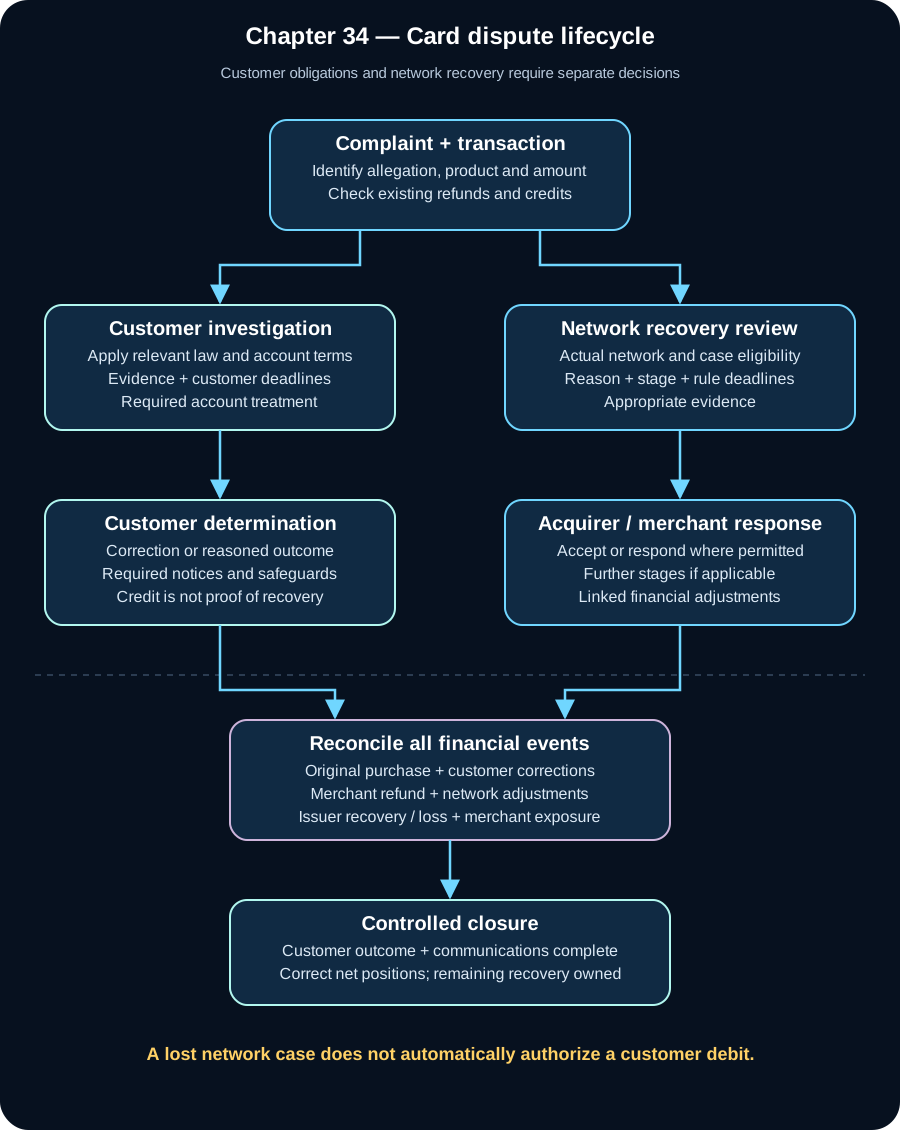
The bank begins with the complaint and original transaction. It determines the applicable customer obligations, investigates and makes the required account and communication decisions. In parallel, it evaluates whether the network process offers a valid recovery route and gathers the evidence needed for that route.
The acquirer receives the network case and engages the merchant where appropriate. It may accept liability or submit a permitted response. Further stages depend on the network and facts. A merchant refund may enter the financial lifecycle at any point, requiring both sides to reassess the remaining disputed amount.
The final control is not simply a closed network status. The issuer must reconcile the customer's net correction and its own recovery or loss. The acquirer must reconcile network adjustments, merchant debits and any refund already funded. Customer notices and unresolved accounting breaks also need completion.
This model prevents a common failure: treating a lost network dispute as automatic authority to reverse a customer's credit. The customer's legal position must be assessed independently under the applicable requirements. Network evidence can inform that assessment, but the network outcome is not a substitute for it.
Running customer protection and recovery in parallel
The dual lifecycle in the diagram should be reflected in work ownership. The customer investigation has its own decision, account treatment and communication requirements. The network recovery process has its own eligibility, evidence, stages and financial outcomes. A bank may use one platform to manage both, but it should not make completion of one automatically determine the other.
For example, the issuer may establish that a customer correction is required while its network recovery remains contested. The customer-facing team should complete the applicable treatment without waiting for a favorable network result. The recovery team can continue pursuing the permitted claim, with the bank carrying the corresponding exposure. The accounting model should show that exposure rather than leaving the customer's account unresolved to avoid recognizing it.
The reverse case also needs care. A network financial adjustment may arrive before the customer investigation is complete. The bank should identify what that adjustment represents and whether it settles the relevant recovery claim. It should not assume that any incoming network amount proves every part of the customer's allegation. Partial disputes and multiple transactions can make that assumption especially unsafe.
Shared evidence should remain consistent across the two processes. If the customer clarifies that the issue is non-delivery rather than unauthorized use, both the legal assessment and the network case should be reviewed for the effect of that clarification. The institution should not knowingly maintain contradictory allegations in different systems merely because one route appears more likely to recover money.
The acquirer has its own parallel responsibilities. It must handle the network process and its merchant relationship, which may include evidence collection, merchant debits, reserves or collection exposure under the contract. A merchant's inability to pay does not automatically eliminate the acquirer's network obligation. The bank should separate those liabilities so a failed merchant collection does not disappear inside a closed dispute status.
Operational closure can therefore be staged. The customer case may be resolved while recovery remains open, or the network case may be financially settled while a customer notice or accounting break still requires action. Each open obligation needs an owner. A single close button should not erase the remaining work simply because one team has finished its part.
5. Consumer debit error resolution
For covered Regulation E errors, §1005.11 generally accepts qualifying oral or written notice within sixty days after the relevant statement is sent. Investigation normally has a ten-business-day initial period. The extended route generally requires provisional credit and other conditions, with forty-five days for completion. Point-of-sale debit, qualifying new-account and specified foreign-initiated cases can use ninety days; qualifying new-account cases substitute twenty business days for ten. Errors must be corrected within one business day after determination, with results reported within three business days. The text also governs provisional-credit notices, exceptions and reversal safeguards.
Those periods are not network chargeback deadlines. The case system needs a legal calendar and a separate network calendar. It should calculate the applicable period from the actual account and transaction facts rather than assigning every debit-card case the same due date.
Consumer liability for unauthorized transfers is addressed separately in §1005.6. Its treatment depends on circumstances such as loss or theft of an access device and notification timing. An alleged unauthorized debit should not be assigned a flat $50 or $500 customer liability without applying the conditions. Additional protections can also arise from applicable law or the institution's product commitments.
For practical implementation, the account-opening date, first-deposit date where relevant, statement-transmission date, notice-receipt date and transaction classification should be available to the case service. The bank should retain the basis for the deadline calculation so an auditor can reproduce it later.
Provisional credit is a customer-account action with a corresponding bank accounting entry. It is not evidence that the merchant or acquirer has reimbursed the issuer. That distinction matters to finance and to customer communication: the bank may still be investigating while the customer has use of credited funds under the applicable requirements.
Building a legal timeline from reliable facts
The selected Regulation E periods summarized earlier depend on the applicable account and transaction facts. The case system should retain the inputs used by the bank's approved applicability and deadline logic. Relevant dates can include the statement transmission, customer notice, account history and the bank's investigation events. Missing data should be escalated while there is still time to act, rather than discovered only when an overdue report runs.
The institution should distinguish the legal calendar from an internal handling target. An internal target may be earlier to allow review and posting. That is useful operational design, but it should be labelled accurately. Staff should not describe the internal target as the customer's statutory deadline, or use an internal queue delay to extend the legal period.
Temporary credit should be controlled as a financial event. The system should record the reason, amount, account and related case, together with the applicable communication and account treatment. Reopening the case should not create another credit automatically. A failed posting should remain visible to the investigation team, because a case note saying credit approved does not establish that the customer received the required account effect.
Investigation should use the institution's available evidence as well as relevant information obtained from other participants. A network response can help explain the transaction, but the bank should assess it against the allegation. A technically valid credential interaction is not necessarily a complete answer to an unauthorized-use claim. The reasoning should show how the evidence supports the determination rather than simply attach a processor report.
When the bank determines an error or concludes otherwise, its operational workflow should implement the applicable correction and communication requirements. The decision and the posting should be reconciled. If an attempted correction fails because the account is closed or another system rejects the entry, the case should not be treated as fully completed until the financial disposition is resolved through the appropriate process.
This design makes the legal framework operational without turning the chapter into a substitute rulebook. Compliance defines the applicable requirements and interpretations; technology implements the calendars and account effects; operations supplies evidence and decisions; quality assurance verifies the complete result. The institution remains responsible for applying the current provisions to the actual facts, including conditions and exceptions not reproduced in this training summary.
6. Consumer credit billing errors and claims
Regulation Z §1026.13 governs qualifying billing-error notices, generally requiring written notice within sixty days after the first statement reflecting the error. The creditor generally acknowledges within thirty days unless resolved sooner, and resolves within two complete billing cycles, no later than ninety days. Restrictions apply to collecting disputed amounts and related adverse reporting while resolution is pending. The provision does not simply copy Regulation E's provisional-credit model.
Billing errors and other credit-card claims are not identical. Section 1026.12 separately addresses unauthorized use and certain claims and defenses against the issuer. Its claims-and-defenses provisions have their own conditions. For example, accepted goods alleged to be poor quality should not automatically be treated as the same billing-error category as goods not delivered as agreed.
The investigation system should therefore preserve the facts needed for classification: whether goods were delivered, accepted, returned or cancelled, what the merchant promised and what the customer alleges. A generic “goods issue” reason can hide legally important differences.
Unauthorized-use liability under §1026.12 is subject to conditions and limits; network or issuer zero-liability commitments are separate protections. Staff should not describe a statutory maximum as a mandatory customer charge. Nor should they assume that a commercial card receives every consumer-credit protection merely because the statement looks similar.
Credit-account operations also needs coordination with billing and collections. A dispute status stored only in case management is inadequate if statement generation, automatic payment and collections continue without the required treatment. Compliance should define the account effects, and testing should verify the actual customer-facing and accounting outcomes across the relevant systems.
Connecting the credit-card case to billing and collections
A credit-card dispute can affect systems beyond the dispute platform. Statement production, payment allocation, automatic payment, collections and credit reporting may need treatment determined by the applicable Regulation Z provisions and account facts. The case system should send the required information to those systems and verify the resulting behavior. A dispute flag that only appears on an investigator's screen is insufficient.
Suppose a customer challenges part of a statement balance. The bank needs to distinguish the disputed amount from unrelated amounts and apply the appropriate treatment. It should not freeze every activity on the account without a basis, nor continue ordinary collections on an amount that requires different handling. The exact rules belong to the applicable legal analysis; the implementation requirement is to preserve the scope precisely enough to carry them out.
The bank should also distinguish billing-error procedures from other claims or defenses and unauthorized-use provisions. The customer's allegation and product facts determine which analysis is relevant. A generic goods problem category can conceal meaningful differences between non-delivery, an accepted item alleged to be defective and unauthorized use. The investigator should preserve those facts rather than select a route solely from the merchant category.
Financial corrections should be reflected coherently in the account. If a dispute adjustment affects the balance, the downstream statement and payment calculation should use the correct treatment. If the correction is reversed under an applicable process, the bank must apply the required safeguards and communications. The system should not infer unrestricted debit authority from a lost network recovery case.
Customer service needs an explanation of the account view. The customer may see the original purchase, a dispute adjustment and a later merchant credit. The agent should be able to explain which entries are temporary or final and how they relate to the remaining amount due. Requiring the customer to understand network stages before explaining their statement is poor operational design.
Testing should follow the case through a statement cycle and relevant account actions. It should include a partial dispute, a merchant refund arriving during investigation, a reopened case and a failed adjustment posting. These are recommended integration cases. Their purpose is to verify that the bank's approved legal treatment survives the handoff from case management to the systems that actually affect the customer's balance and communications.
7. Network eligibility stages and deadlines
Visa and Mastercard publish different dispute frameworks and detailed conditions. Mastercard's guide distinguishes single-message and dual-message processes; its second-presentment and escalation rules depend on the case. Visa's merchant guidance explains dispute categories and evidence expectations. Neither supports a universal statement that every merchant has the same number of days to challenge every chargeback.
The bank should select the network process only after identifying the actual routed network, transaction type and allegation. A card bearing one brand can have debit activity routed through another enabled network. The brand visible to the customer may therefore be insufficient to identify the applicable recovery process.
Deadline configuration should record the triggering event, permitted period, calendar basis, applicable rule version and any relevant exception. Some dates relate to transaction processing, others to expected service or a later case event. An implementation should not hard-code all deadlines as a fixed interval from purchase date.
The merchant's response deadline from its acquirer can be earlier than the network's outer deadline because the acquirer needs time to review and submit evidence. That is a service arrangement and should be labelled accordingly. Operations should not tell a merchant that an internal preparation deadline is the statutory deadline for the customer's claim.
Before escalation, assess evidence, procedural eligibility, remaining amount and financial exposure. A bank should not pursue arbitration automatically on every unsuccessful response. Conversely, accepting a loss should be a controlled decision with the reason recorded. The process must retain who approved the financial outcome and what customer action remains necessary.
Calculating a network deadline for the actual case
A network deadline should be calculated from the correct rule, stage and triggering event. The institution needs to know the routed network, processing model, transaction type, reason and relevant dates. A generic number of days from purchase can be wrong even when it resembles a common deadline used in another case. The bank should use the current applicable network material and its approved operating interpretation.
The deadline record should retain its provenance. It can identify the rule version, inputs, calculated due date and any exception applied. If a network publishes a change, the institution should determine which populations it affects rather than silently recalculating all historical cases. Operations needs to understand whether a date changed because the facts were corrected, the rule changed or an earlier calculation was wrong.
Acquiring response schedules should distinguish the network's outer requirement from the merchant's preparation deadline. The acquirer may need time to review evidence before submission. That service arrangement should be communicated clearly to the merchant. A merchant who misses an internal preparation date may still require an assessed next action; the system should not automatically describe every such case as legally expired.
Submission evidence is another boundary. Creating a case in an internal system does not prove it reached the network platform. The bank should retain the accepted submission or other authoritative status supplied by the processing arrangement. A queue record marked sent but lacking downstream acceptance should remain monitored. This prevents a technical delivery failure from becoming an unnoticed missed recovery opportunity.
Escalation should consider the remaining amount, evidence and procedural eligibility. A bank can decide not to pursue a permitted stage for a documented commercial reason, but that is different from being unable to pursue it. The record should make the distinction visible. It supports loss analysis and prevents management from misreading every unrecovered amount as a fraudulent merchant or an invalid customer claim.
Where the public guide does not establish the exact applicable condition, the institution should obtain its current participant or processor documentation. This chapter intentionally avoids manufacturing a universal timetable. The practical skill is knowing which facts select the correct rule and how to prove that the resulting action was completed within it, while keeping the customer's separate legal timeline intact.
8. Evidence that addresses the actual allegation
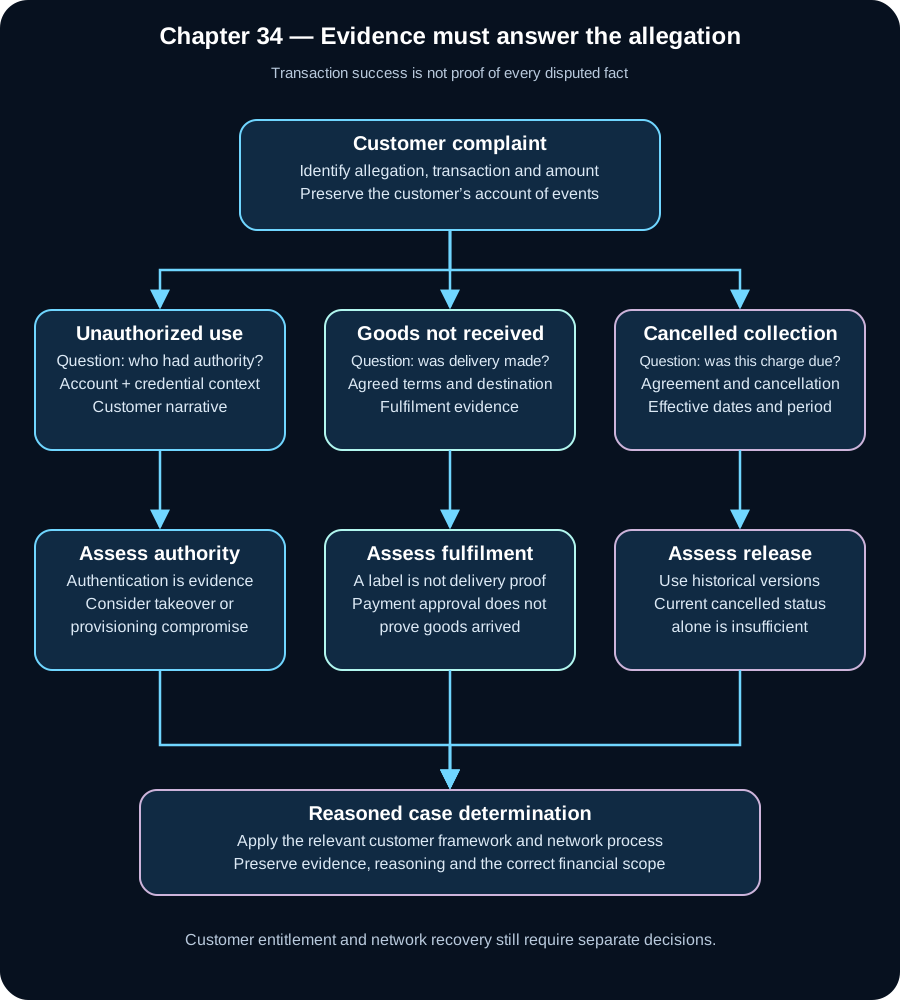
Evidence should answer the disputed fact. An authorization approval shows that a payment request was approved; it does not prove delivery. A delivery scan can help establish shipment history; it does not by itself prove that the cardholder initiated the purchase. A recurring agreement can support collection authority; it does not prove that cancellation was handled correctly.
For an alleged duplicate, compare original transaction references, order identities, amounts, capture records and fulfilment. Two equal amounts on one day can be legitimate purchases. Conversely, different network references can result from one commercial sale being submitted twice. The investigation needs the commercial relationship as well as the payment identifiers.
For non-delivery, establish the agreed delivery or service terms, fulfilment record and the customer's account of events. A generic merchant statement that its terms prohibit refunds does not answer whether it delivered what it agreed to provide. For cancellation, use the agreement version, cancellation timestamp, effective date and subsequent release events from Chapter 33.
For alleged unauthorized use, relevant evidence may include acceptance method, authentication results, device or token context and account history. These signals should be interpreted together. A valid cryptogram does not prove that token provisioning was legitimate, and an address match does not establish who controlled the browser.
Evidence packages should be legible, relevant and securely handled. A hundred pages of unrelated terms can obscure the decisive record. Network requirements determine the accepted format and mandatory information. The bank's internal record should retain both the submitted package and the reasoning used to select it, so a later reviewer can reconstruct the decision.
Building evidence around the disputed fact
Evidence should be selected through a proposition: what fact would this record help establish? An order confirmation can help identify the agreed goods and terms. A cancellation record can establish the customer's instruction and its timing. A payment reference can connect a financial event to the purchase. A delivery record can support a fulfilment account. None should be presented as proving more than it actually shows.
For unauthorized use, the bank should assess the customer's narrative with relevant account, credential and transaction evidence. A valid authentication result may be significant, but its meaning depends on the circumstances. Account takeover or fraudulent provisioning can produce technically valid interactions. The investigator should not convert a technical success into an automatic conclusion about the customer's authority without considering the broader evidence.
For non-delivery, the evidence should address what was promised and what happened. A shipping label proves that a label was created, not necessarily that the goods reached the agreed destination. A merchant's general refund policy does not answer whether the service was supplied. The institution should use the network's actual evidence requirements while keeping its reasoning focused on the allegation.
For cancelled recurring collections, the relevant record includes the agreement, effective cancellation and release history. A screenshot showing that the subscription is cancelled today may not establish its status when the disputed charge was submitted. Conversely, an old active status does not disprove a later valid cancellation. Versioned records and timestamps with context are more useful than a current-state screenshot alone.
Evidence packages should be readable and internally consistent. A short chronology with linked records can be more useful than a large undifferentiated export. The bank should preserve the original evidence and the exact submitted package, including any necessary redaction. Redaction should protect irrelevant sensitive information without removing the facts required to evaluate the claim.
The investigator should record why contrary evidence was accepted or rejected. If two systems show different amounts or dates, the difference needs explanation. A decision that simply ignores inconvenient records is difficult to defend and hard to improve. Clear reasoning also helps a later reviewer distinguish a reasonable judgment based on incomplete facts from a process defect that failed to obtain or assess evidence the bank already possessed.
9. Merchant refunds and credit tracing
A refund begins in the merchant's system but is complete for the customer only when the relevant credit reaches the account through the supported process. The merchant's internal refund reference, processor reference and network financial reference can identify different stages. Customer support should know which one it is providing.
If a merchant says it refunded $180, obtain evidence of the actual operation and status. A queued refund, a rejected refund and an accepted financial credit require different action. The acquirer should be able to trace whether the credit entered processing and which merchant funding or balance account supported it.
Refunds should ordinarily use the supported original-transaction relationship and credit path. Exceptions require the acquirer's documented process. Sending money to unrelated bank details supplied in an email can create a separate fraud exposure and leave the original card complaint unresolved.
Credential changes do not justify abandoning the trace. A card replacement or removed wallet token can complicate visible identifiers, but the original purchase references still matter. The issuer and processor should investigate the supported account relationship. If a credit cannot post, it should become an owned exception with a traceable financial disposition.
Refund timing should not be promised as one universal number of days. Submission, processing, account posting and customer visibility depend on the arrangement and actual event. The bank can communicate the confirmed status and applicable service expectation without claiming that the money is already available.
When a dispute is open, merchant and acquirer coordination is essential. Issuing a separate refund and accepting a full chargeback can create duplicate recovery for the same amount. The existence of a complaint does not prohibit every refund, but the financial paths must be linked and managed under the applicable process.
Tracing a refund through merchant and issuer records
A refund trace should start with the original purchase and the merchant's actual credit operation. The customer may have a merchant confirmation number that identifies an order-system action rather than a network financial event. The acquirer should determine what that reference means and locate the supported processing record. It should not reject the inquiry merely because the customer's reference differs from the bank's internal identifier.
Suppose the merchant says it refunded $60 of a $180 order. Operations should establish whether the amount was accepted, whether it entered the financial process and what trace information is available. A rejected or queued credit requires merchant-side action. A processed credit absent from the card account may require an issuer or interparticipant trace. These are different points in the lifecycle, and the customer should receive an explanation appropriate to the confirmed stage.
Credential changes should be treated as a trace condition, not as automatic proof that the money is lost. The original transaction relationship and supported account mapping remain relevant. If a credit cannot be applied, the responsible institution should identify its disposition through the applicable process. An unresolved credit should remain on an owned financial queue rather than being closed because the customer now has a replacement card.
The merchant's funding position can also matter. A refund request may require sufficient available merchant funding or another arrangement under the acquiring contract. The support team should distinguish a merchant-side funding failure from an issuer posting delay. Telling the customer that their bank is slow when the credit never left the acquiring side creates unnecessary work and undermines trust.
Open disputes require coordination. If the merchant processes a refund while the acquirer is responding to a network case, both teams need the credit reference and amount. The network response should reflect the actual financial situation under the applicable rules. A customer should not be denied a legitimate correction because the merchant intended to refund, nor should duplicate recovery be pursued without considering a credit that already addresses the same amount.
The final trace should identify the customer account effect and the acquiring financial effect. A processor status alone may be insufficient for full reconciliation. The issuer and acquirer each need to reconcile their own records, using the supported references to connect them. This makes refund servicing a financial investigation with a clear end condition rather than an indefinite exchange of screenshots between customer and merchant.
10. Fraud classification and control feedback
Card fraud can involve lost or stolen credentials, counterfeit use, remote credential compromise, account takeover, fraudulent token provisioning, merchant collusion or abuse of refund permissions. These patterns affect different controls. A bank should avoid treating all card fraud as an authorization-score problem.
The investigation should identify the earliest relevant compromise point where the evidence supports it. If an attacker provisioned a token after changing the customer's contact details, the control issue may be in account maintenance and provisioning. If a merchant employee issued refunds to unrelated credentials, the issue may be acquiring entitlements and refund monitoring.
Claims sometimes described as first-party or friendly fraud also require evidence. The bank should not use those labels as a default explanation for a customer it finds inconvenient. A customer can misunderstand a descriptor, dispute a genuine service failure or be unaware of account takeover. Intent should not be inferred solely from a successful authentication result.
Fraud reporting and dispute recovery are related but distinct. A network may require particular fraud reporting in addition to or independently from the financial dispute. The bank should use the applicable reporting rules and approved case classification. It should not alter the allegation merely to avoid a monitoring threshold.
Control feedback should be specific. A rise in duplicate disputes after a gateway release points toward retry or capture behavior. A rise in cancelled-recurring disputes points toward cancellation propagation. A rise in remote fraud involving newly provisioned tokens points toward issuer provisioning controls. The strongest response fixes the source of the loss rather than merely increasing the size of the dispute team.
Feeding confirmed causes back into fraud controls
Dispute data can improve fraud controls only if the classification is reliable. A customer initially reporting an unfamiliar descriptor may later recognize the purchase. A merchant delivery failure may be incorrectly filed as unauthorized use. A duplicate caused by a checkout defect may resemble repeated fraud. The bank should preserve case developments so reporting does not continue treating an early allegation as a confirmed final cause.
Fraud analysis should distinguish the point of compromise from the point of loss. A transaction can be approved through a valid token after fraudulent provisioning. An account can be taken over before a new delivery address is added. A merchant employee can misuse refund permissions after a legitimate purchase. These cases call for different controls even if the financial loss appears in the same card-fraud total.
The feedback loop should connect a pattern to a specific operational owner. Provisioning concerns belong with issuer credential and account-security teams. Repeated duplicate captures belong with the merchant or acquiring integration team. Cancelled-recurring complaints belong with agreement and release controls. A broad instruction to tighten fraud rules can increase false declines without addressing any of those causes.
Monitoring should use carefully defined populations. A rising dispute count can reflect more transactions, a merchant outage, improved reporting or an actual increase in fraud. The bank should compare relevant rates and amounts with the underlying activity and case maturity. It should not declare a control successful solely because fewer cases were opened if customer complaints were instead misrouted or discouraged.
Customer treatment remains separate from portfolio suspicion. A merchant or transaction pattern may justify deeper investigation, but the bank should assess each customer's allegation under the applicable requirements. It should not use a broad fraud hypothesis to avoid the evidence and decision needed for the individual case. Likewise, a customer's history of previous claims does not by itself establish the truth or falsity of the current allegation.
The control-change record should identify the observed problem, evidence, proposed change and expected effect. After implementation, the bank should review both loss outcomes and customer friction. This makes dispute learning useful to authorization, provisioning, merchant oversight and product design. The aim is to prevent the next incident while preserving fair and accurate investigation of the one already reported.
11. Acquiring exposure and merchant operations
The acquirer may have network obligations even if it cannot collect from the merchant. A merchant can stop trading, hold insufficient funds or dispute the acquirer's deductions. This creates credit and operational exposure that is different from the issuer's customer-protection obligation.
Merchant agreements can provide for reserves, offsets or collections from designated accounts under their terms. These should be implemented transparently in the merchant ledger. A reserve is not revenue and should not be treated as an unexplained reduction in sales. Its release and use need traceable accounting and authorized decisions.
The merchant should receive a clear case notice with the transaction, disputed amount, reason, required evidence and applicable response deadline. The acquirer should distinguish mandatory network information from its own helpful guidance. Small merchants need actionable requests, not an unexplained code and an immediate deduction with no route to provide evidence.
Negative merchant positions require controlled handling. If a merchant has $500 of new sales but $1,200 of dispute and refund debits, its net position can be negative before fees. The acquirer must establish how the agreement addresses the shortfall, record any collection attempt and reconcile the remaining exposure. It should not invent new customer purchases to offset the deficit.
Portfolio reporting should consider dispute causes, merchant concentration, unresolved exposure and operational defects. Ratios and thresholds used by network monitoring programs are version- and program-specific. This chapter intentionally does not publish a generic threshold that could be mistaken for the current rule across all brands and regions.
Managing the acquirer's exposure when the merchant cannot pay
The acquirer's financial obligation under the network arrangement may not match its ability to collect from the merchant. A merchant can close, dispute deductions or lack sufficient funds. The acquirer should therefore distinguish a network settlement obligation from a merchant receivable. Treating both as one net merchant balance can hide the bank's actual credit exposure.
Consider a travel-related merchant with $20,000 of new sales and $45,000 of refund and dispute-related debits in an illustrative period. Before other contractual items, the acquiring relationship has a $25,000 shortfall relative to those sales. The bank should establish which amounts are due, what reserves or other contractual protections are available and what collection action is permitted. The numbers illustrate exposure mechanics, not a required reserve policy.
Reserve movements should be transparent in the merchant ledger. A reserve can support risk management under the agreement, but it should not be confused with fee income or an unexplained loss allocation. The bank should record the basis for use or release and reconcile it to the underlying obligations. Merchant statements should make the relevant financial movements understandable.
Operational teams need coordination before issuing merchant instructions. The dispute team may request evidence, the funding team may reduce proceeds and the credit team may assess exposure. If each communicates independently without a common case view, the merchant can receive contradictory amounts and deadlines. A joined record should identify the network case, merchant financial position and outstanding actions.
Merchant insolvency or closure does not justify abandoning customer cases. The issuer still has its applicable obligations, and the acquirer still needs to handle the network and contractual consequences. The bank should not tell a customer that no correction is possible solely because the merchant is no longer trading. The applicable legal and network analysis must be performed on the actual facts.
Portfolio oversight should distinguish merchant misconduct, business failure and operational defects. Each can create disputes and exposure, but the response differs. A faulty recurring billing release may be repairable; a merchant unable to deliver prepaid services creates another risk. The bank should use evidence from complaints, financial activity and merchant monitoring to decide the appropriate action, without presenting an internal threshold as a universal network or regulatory requirement.
12. Financial events settlement and accounting
The original purchase remains part of history. A refund, chargeback, response adjustment or other correction creates a linked financial event. The ledger should not erase the original sale and replace it with a final status, because doing so destroys the evidence needed to reconcile cash and participant obligations.
On the issuer side, a customer credit can be posted before recovery from the network. An illustrative accounting model records the customer-account effect against a dispute receivable, suspense or loss account according to the bank's policy and the status of the claim. The exact account titles are bank-specific. Finance must decide when a receivable is supportable and when loss recognition is required.
On the acquiring side, a network dispute debit can reduce the member's settlement position and produce a merchant-ledger debit. If the merchant cannot cover it, the acquiring exposure remains. Merchant funding and network settlement should not be treated as the same ledger simply because both involve the same disputed purchase.
Actual money moves through the relevant network settlement arrangement. A case-management API message is not itself cash movement. The bank should reconcile financial adjustment reports and settlement statements to the settlement account or correspondent evidence, as applicable. Customer posting can occur on another timeline.
Use separate event identifiers, amounts, currencies, processing dates and settlement references. Partial disputes require amount-level relationships. A $60 dispute against a $180 purchase leaves $120 outside that particular allegation unless another claim applies. Treating the entire purchase as disputed can distort customer balances, recovery requests and merchant exposure.
Keeping customer credits and bank recoveries in separate ledgers
The issuer's customer account and its recovery accounting answer different questions. The customer account shows the purchase and applicable corrections. The recovery accounting shows whether another participant reimbursed the issuer or whether the bank bears a loss. A network recovery should not be posted directly to the customer a second time simply because it refers to the same purchase.
For a disputed $180 purchase, suppose the issuer credits the customer during investigation. That customer credit has a case reference and an accounting counterpart determined by the institution's policy. If a $180 network recovery later arrives, the bank should apply it to the relevant recovery position. It does not create another $180 customer entitlement merely because the recovery is described as a credit in a network report.
If the merchant also sends a $180 refund, the customer ledger may now contain the original purchase and two customer-facing credits. The bank must determine the correct final treatment under the applicable requirements and its evidence. It should not remove a credit automatically without establishing its nature and observing required safeguards. The accounting analysis and the customer-protection analysis must be coordinated.
The acquirer has another set of entries. A network adjustment can reduce its settlement position or create an obligation, while a merchant debit creates or reduces the merchant balance under the agreement. If the merchant cannot fund the debit, the acquirer retains an exposure. A balanced network settlement account does not prove that the merchant receivable has been collected.
Journal design should preserve event identity, amount, currency, source and relationship. A refund, chargeback, permitted response adjustment and internal correction should not all use one indistinguishable posting type. Finance needs to explain why each entry exists and how it affects the remaining exposure. This chapter describes the control logic; exact account names and recognition treatment depend on the institution's accounting policy.
Settlement reconciliation should use actual cash evidence from the relevant arrangement. A case message or platform acknowledgement is not itself movement of settlement funds. The bank should match the financial reports to the settlement account or correspondent records and investigate differences. Customer posting can occur on another timeline, so both the customer ledger and participant financial position need their own reconciled evidence of completion.
13. Reconciliation duplicate credits and closure
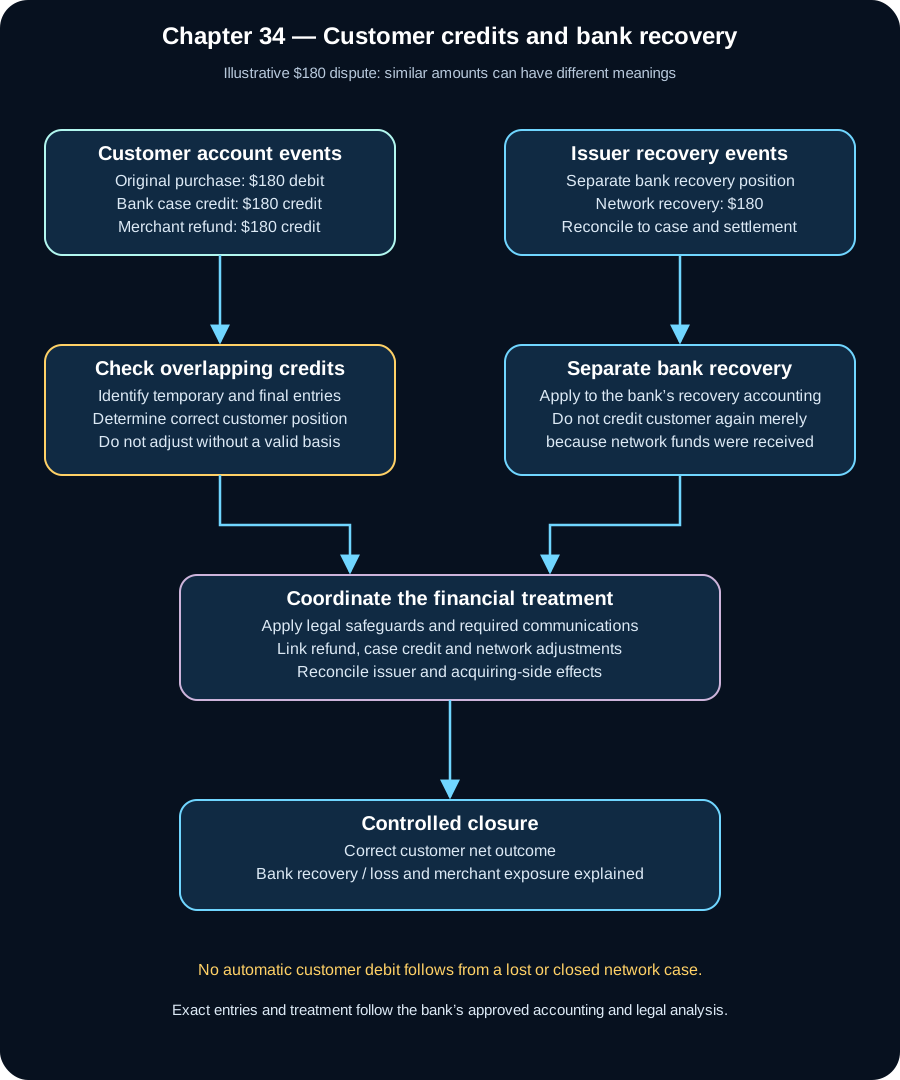
Return to the opening $180 purchase. Suppose the issuer provisionally credits $180, a merchant refund for $180 later posts, and a network recovery for $180 is also received. These are not three independent entitlements for the same error. The bank must identify which entries are customer credits and which are interparticipant recoveries before making any adjustment.
A safe reconciliation records the original purchase, disputed amount, temporary customer correction, merchant refund, network recovery and any subsequent adjustment. It determines the customer's correct net position and the issuer's remaining receivable or loss. Applicable legal requirements govern whether and how a temporary or duplicate credit can be adjusted; a network recovery event should not directly trigger an unrestricted customer debit.
The acquirer needs its own reconciliation. If it funded both a merchant refund and a chargeback debit for the same amount, it should establish the valid network remedy and merchant-ledger correction. A merchant should not remain charged twice because separate refund and dispute teams never exchanged references.
Closure should require several conditions: the customer determination is complete, required communications are delivered, the financial correction is reconciled, network recovery is resolved or appropriately separated, and residual accounting exposure has an owner. A case may be closed to the customer while the bank's recovery work continues, but the internal relationship should remain traceable.
Unmatched credits deserve investigation. A refund without an identified original purchase may be legitimate under the supported process or may indicate a mapping problem. Automatically discarding it can deprive the customer of money; automatically allocating by amount alone can credit the wrong account. Use the available network and account references and route unresolved items to an owned queue.
Closing the case without hiding a remaining obligation
A case can have several legitimate closure points. The customer's investigation may be complete, the network recovery may be finished and the accounting may be reconciled at different times. The bank should define what each status closes and what remains open. A customer-facing closed status should not delete the internal recovery record or conceal an unmatched financial event.
The closure review should establish the customer's final net position against the allegation. For a partial dispute, it should distinguish the corrected amount from the portion that remains legitimately charged. Existing merchant credits should be considered. The bank should also establish its own remaining recovery or loss and the status of required customer communications. These are related checks with different owners.
Duplicate-credit handling requires particular discipline. A customer may receive a temporary bank credit and a merchant refund. A processing replay may create another internal credit. A network recovery may appear only in bank accounting. The investigator should classify each event before proposing an adjustment. Looking only at the count of credits can lead to removing the wrong entry or failing to correct a real duplicate.
Unmatched financial events should not be forced into the nearest case by amount. Two customers can have identical purchase values at the same merchant. One customer can have several purchases of the same amount. Stronger references and transaction relationships should be used where available. If the match remains uncertain, the event should remain in a controlled queue with its financial exposure identified.
Reopening a case should preserve history. A later merchant credit, new evidence or posting defect may require further action. The system should record why the case reopened and prevent automatic repetition of the original customer credit or recovery submission. A reopened workflow is not a new financial entitlement unless the facts and applicable requirements establish one.
Management reporting should separate unresolved customer impact from unresolved bank recovery. A bank may correctly resolve the customer while continuing to pursue money internally. That should not be reported as an unresolved customer complaint solely because the recovery remains open. Conversely, a recovered network amount should not make the case appear fully successful if the customer notice or account correction failed. Accurate closure metrics reflect the actual obligations completed.
14. Case architecture reporting and communication
A practical case platform has distinct objects for the complaint, disputed transaction, allegation, legal timeline, network case, evidence package and financial event. They can be linked in one user interface without being represented as one record. This supports multi-transaction fraud reports and partial commercial disputes.
The deadline engine should retain its calculation inputs and rule version. A later rule update should not silently recalculate historical deadlines without an authorized basis. Calendar-day and business-day requirements must remain distinct. Account-specific facts should be available to the calculation, with missing data escalated before a deadline is missed.
Integration with the card ledger, core account, merchant platform and settlement service should be replay-safe. Receiving the same recovery file twice must not create two credits. Reopening a case must not automatically repost the original temporary credit. Every financial action should have an operation identity and an authorized reason.
Reporting should separate customer outcomes from recoveries. Customer credits issued, network recoveries received, merchant amounts collected, losses recognized and cases awaiting evidence are different measures. A high recovery rate can coexist with poor customer handling if deadlines or notices were missed. A low recovery rate can reflect correct customer protection in cases where the bank bears the loss.
Customer messages should explain the actual result in plain language. “We credited $180 while investigating” differs from “The merchant's $180 refund has posted” and from “Our investigation is complete.” The customer should not need to understand representment to know whether the bank expects any further action or whether a credit is temporary.
Designing a case platform around relationships and evidence
The case platform should support one complaint involving several transactions and one transaction involving several related financial events. It should distinguish the allegation, legal assessment, network case and customer posting. A flat table with one reason and one status per purchase will struggle with partial disputes, duplicate credits and a changing allegation. The user interface can remain simple while the underlying model preserves those relationships.
Evidence should be stored with provenance. The bank should know whether a document came from the customer, merchant, processor or its own system, when it was received and which decision it supports. Edited summaries should not replace the original record. Access and retention should follow the relevant requirements, with unnecessary sensitive information excluded from routine circulation.
Financial integrations should be replay-safe. A case export processed twice should not post two credits. A recovery report reloaded after a technical failure should not recognize the same recovery again. The posting service should identify the business operation and return an authoritative outcome. The case system should reconcile that outcome rather than assume that sending a file completed the customer adjustment.
Deadline services should expose missing inputs and calculation changes. An operator should be able to see why a due date applies and whether it is a legal, network or internal service date. If the account type or transaction facts are corrected, the system should retain the previous calculation and the reason for change. This supports audit and helps teams identify defects in upstream classification.
Quality assurance should review reasoning as well as timeliness. A case closed quickly with evidence that does not address the allegation is not a strong outcome. A late merchant response should not erase the bank's own required analysis. Review samples should test whether the determination, customer treatment, network action and financial entries form a coherent account of what happened.
Customer communication should be generated from the actual case state and checked against posting results. The system should not send a message saying a credit is available when the posting failed. Nor should it tell the customer the investigation is final while a required determination remains pending. Connecting communication to verified events prevents the bank's customer-facing story from moving ahead of its financial and operational reality.
15. Worked investigations and testing
The following cases connect the investigation to its financial outcome. For each, identify the allegation, legal route, potential network route, relevant evidence and final financial condition. Do not select a universal deadline without the facts needed to calculate it.
Case A — debit claim, no merchant response. A consumer alleges an unauthorized $420 debit-card purchase. The merchant does not answer the issuer's request. A processor agent suggests waiting until the merchant responds before opening the investigation. What should the bank separate?
The bank's applicable error-resolution obligation begins from a qualifying customer notice, not from merchant cooperation. It should proceed using the relevant bank and processor evidence, calculate the legal deadlines and determine the required customer treatment. Network recovery can be pursued through its own process. Missing merchant evidence may affect recovery, but it is not a reason to ignore the customer's notice.
Case B — delivery evidence answers the wrong question. A customer says they never authorized a $260 order. The merchant provides a delivery record. Is the allegation resolved?
Not necessarily. Delivery may establish that goods went somewhere, but the allegation concerns authority to use the credential. Examine the customer narrative, account and device evidence, authentication context and delivery details together. Conversely, if the customer acknowledges buying the goods but says they never arrived, authentication success does not answer the delivery allegation. Evidence must address the disputed fact.
Case C — partial refund and full dispute. A $180 order contains a $120 delivered item and a $60 cancelled item. The merchant refunds $60. The customer disputes $180 after seeing the original purchase. What should intake establish?
Clarify what the customer contests and whether the $60 refund has posted. Do not assume the delivered $120 is undisputed without asking, but do not submit a full duplicate recovery for the cancelled portion without considering the credit. The case should record the allegation and financial amount precisely. Any network submission must match the supported remaining claim.
Case D — network recovery lost, customer correction valid. The issuer determines that a customer correction is required, but its recovery submission missed a network deadline. Can the bank automatically debit the customer's account to remove its loss?
No. Recovery failure and customer entitlement are separate. The bank must apply the relevant customer-protection requirements and account terms. Its missed recovery deadline creates an internal operational issue and potentially a bank loss. Root-cause review should address intake, deadline calculation, staffing or submission failure without transferring the consequence to the customer without a valid basis.
Case E — duplicate temporary credit on replay. An overnight case file is processed twice, creating two $95 credits for one complaint. The network case has not yet begun. Is this a merchant dispute problem?
It is an issuer posting-control defect. Identify the duplicate operation, determine the lawful correction and communicate as required. Preserve both entries and the correcting event. The preventive control is idempotent financial posting keyed to the intended case action, not merely a check that the file name has not appeared before.
Test legal-calendar edge cases, partial claims, merchant credits arriving during investigation, account closure, token replacement, unreadable evidence, missed acknowledgements and negative merchant balances. Test customer letters against actual ledger state. A technically successful letter-generation job can still tell the customer the wrong amount or incorrectly describe a temporary credit as final.
A complete investigation with a refund arriving midway
A customer reports that a $180 order never arrived. The merchant provides a refund confirmation, but the issuer cannot find the credit on the card account. The intake team records the non-delivery allegation, the merchant's promise and the existing account entries. It opens the applicable investigation and evaluates a separate network recovery route. The refund confirmation is treated as evidence to trace, not proof that the customer has already been made whole.
During investigation, the issuer applies the required customer treatment under the relevant framework. The acquirer then identifies that the merchant's original refund request failed validation. The merchant submits a corrected credit through the supported process. Meanwhile, the network case has already created a financial adjustment. The participants now need to coordinate the refund and recovery paths to avoid duplicate allocation of the same amount.
The issuer records the merchant credit when it posts and compares it with the bank's earlier customer correction. It determines the appropriate final account treatment and communications under the applicable requirements. Separately, it reconciles any network recovery to its own accounting. The acquiring side reconciles the merchant-funded refund and network adjustment and pursues the permitted remedy for any duplicate financial responsibility.
The customer receives an explanation of the actual account outcome, not a discussion of every network stage. Internally, the bank retains the original purchase, complaint, temporary or final corrections, merchant refund, recovery events and final determination. If a customer-facing adjustment remains necessary, it is controlled and evidenced rather than triggered automatically by the arrival of a network file.
The root-cause review identifies two issues: the merchant called a failed refund completed, and the refund and dispute processes did not share timely status. The corrective work therefore improves merchant refund status reporting and cross-process reconciliation. Tightening authorization fraud rules would not address either defect. The case demonstrates the chapter's central distinction: customer correction, merchant refund and interparticipant recovery are connected financial responsibilities that must be reconciled, not interchangeable descriptions of one event.
16. Role checklist and learning closure
Reviewing the determination before closure
A useful final review asks whether the written determination can be understood from the evidence without relying on the investigator's memory. It should identify the allegation, relevant facts, evidence assessed and resulting customer treatment. The record should also distinguish any network recovery decision and explain a remaining bank loss or receivable. This makes the case reviewable by quality assurance, finance and a later complaint handler.
The reviewer should look for contradictions between the determination and actual events. A letter may say the customer received a merchant refund while the credit remains unmatched. A case may say the disputed amount was corrected while the posting failed. A network record may show full recovery even though only part of the customer's allegation was submitted. These differences should be resolved before the relevant obligation is closed.
The final check is customer understanding. The communication should explain what changed on the account, whether any credit remains temporary under the applicable process, and what further action is required, if any. It should not describe a technical network status as though the customer had participated in that process. Clear closure means the bank can explain both the decision and the money, with the remaining internal work assigned rather than hidden.
The Business Analyst separates complaint, legal entitlement, network case and financial event. Compliance and legal teams own applicability, customer obligations and notices. The Architect connects case management to ledgers without allowing network status to override customer protections automatically.
The Developer implements auditable deadlines and replay-safe corrections. The Tester challenges partial amounts, overlapping refunds and late evidence. Issuer operations owns the customer investigation. Acquiring operations coordinates merchant evidence and exposure. Finance reconciles credits, recoveries and losses. Fraud teams turn supported findings into targeted control improvements.
Before leaving the chapter, reconstruct the opening $180 case using separate customer-credit and network-recovery records. Then explain why successful settlement of the original purchase does not prevent a later valid refund or dispute adjustment.
A well-run dispute process can explain the customer's outcome, the participant liability and every financial entry without confusing one for another.
Authoritative references
Public sources checked on 6 September 2026. Public merchant guides provide context; current network rules and applicable bulletins determine case eligibility, evidence and deadlines. Accounting examples and workflow designs are illustrative and require the bank's approved legal and finance treatment.
This application uses JavaScript for the full interactive experience. This text summary is served for accessibility and search indexing.