Cash Collections: Branch, ATM, Vault, Smart Safe, CIT and Retail Agents. Connect physical cash custody, branch and ATM intake, vault verification, smart-safe credit, carrier and retail-agent services, reporting and bank cash-account reconciliation.
A regional grocery business finishes Sunday trading with cash in four different places. One store's manager has deposited notes at an ATM. Another store has placed its takings in a smart safe. A sealed bag from a third store is awaiting an armored carrier, while a fourth store has already delivered its deposit to a bank branch. The treasury dashboard shows several credits, but the cash operations team cannot answer where the money is simply by reading that dashboard.
The business wants usable balances, safe collections and a reliable way to reconcile each store's takings. The bank must connect physical custody, counted value, customer credit and any later transfer into its Federal Reserve or correspondent account. Branch 8 followed checks and lockbox receipts. Branch 9 begins with physical currency and coin, before moving to consumer billing, corporate receivables, electronic invoicing and account-to-account collection services.
Cash can change physical location before the customer's account changes, and a customer's account can be credited before the cash reaches the bank's vault. The agreement and the evidence must explain both.
For a roughly 60-minute core session, spend about 35 minutes on Section 2, Sections 5–9 and Section 12. For the next 10 minutes, use the chapter’s three diagrams to reconcile physical custody, customer credit and provider settlement. Use 10 minutes to work through one case in Section 15, then spend the final 5 minutes explaining: What evidence is required when a smart-safe credit differs from the cash later counted? Treat these timings as a study guide. The remaining sections, additional cases and extended reference material are follow-up study; completing the whole chapter takes longer.
Businesses, amounts, incidents and internal records are fictional training examples. Service-specific deposit acceptance, credit, custody, insurance and collection schedules must be taken from current agreements. The chapter does not assume that every smart safe, cash carrier or retail collection agent operates under the same legal arrangement.
Chapter navigator
- What a cash collection service delivers
- Participants, custody and ownership
- Branch and night-deposit intake
- ATM deposits and machine evidence
- Cash-vault receipt, verification and processing
- CIT pickup, transport and delivery
- Smart safes and provisional credit
- Bank cash accounts and Federal Reserve movements
- Retail agents and the two legs of a cash payment
- Calendars, availability and liquidity planning
- Suspect, unfit, mutilated and contaminated currency
- BSA reporting, fraud and sanctions controls
- Reconciliation, accounting and responsibility for differences
- Implementing and operating the service inside a bank
- Worked cases and operational decisions
- Role checklist and learning closure
1. What a cash collection service delivers
Cash collection turns physical receipts into an account balance that a business can use and explain. The process includes receiving currency and coin, establishing an accepted amount, protecting the cash in custody, posting the appropriate account entry and resolving differences. Transport is only one part of that service. A truck arriving on time is not enough if the deposit is credited to the wrong store or the customer cannot reconcile a shortage.
The grocery business first receives cash from its own customers. Those sales belong to its retail operations. When it deposits the takings, a separate relationship begins with the deposit-taking bank or collection provider. The bank does not need to reconcile every grocery purchase, but it does need sufficient information to identify the depositing business, the relevant account and the deposit population. Store-level references can connect the bank's deposit record to the retailer's sales and till records.
A cash deposit at a bank is not a check-clearing event. There is no drawer's instruction to present to another bank before the notes themselves can be recognized as cash. There can still be counting, authenticity, custody and account-posting uncertainty. These are cash-service questions and should be described in their own terms. Calling a deposit uncollected until an armored truck arrives may obscure whether the bank has already accepted a deposit under its agreement.
The customer promise should specify the point at which the bank recognizes receipt, the amount initially credited, when the balance becomes available and how later differences are handled. These points can vary by channel. A teller may count notes in front of the depositor. An ATM may accept notes into a cassette. A vault may receive a sealed bag whose contents are verified later. A smart-safe service may support an advance or provisional credit based on transmitted deposit data.
Start with the customer's operating day
The grocery group manages cash by store, till, trading date and pickup. Its bank may organize records by account, banking day and processing batch. Those calendars and identifiers overlap but are not identical. Sunday's sales can become Monday's bank deposit, and one pickup can contain bags relating to several trading days. A useful service preserves those relationships instead of forcing the customer to treat every bank credit as one day's sales.
Consider a store that retains $600 as its opening change fund and deposits $8,240. The bank should receive and credit the accepted deposit, not the full amount of cash that passed through the store's tills. A reconciliation difference between sales and deposit may be explained by authorized retained cash, refunds or another retail event. The bank should investigate a difference between the declared deposit and the cash it accepted; the retailer must also explain its own movement from sales to prepared deposit.
The implementation should define the service units. A bag, a transaction, a denomination count and a customer credit are different objects. Two bags may create one credit, or one bag may require separate records for accepted cash and a disputed item. This matters for reporting and charges as well as investigations. A service priced per bag should not accidentally bill every recount as a new customer deposit.
The practical objective is an accountable chain. The customer can say what it prepared, the carrier can say what it took into custody, the vault can say what it received and counted, and the bank can say what it posted. When these statements disagree, the process should identify the disputed handoff and the evidence needed to resolve it. That is the foundation for every collection channel in this chapter.
2. Participants, custody and ownership
The depositor owns the business relationship with its bank. Employees may prepare or deliver deposits on the business's behalf. A branch or ATM can provide the bank's intake channel. A cash vault can be operated by the bank or a contracted provider. Cash-in-transit, abbreviated CIT, refers here to the physical transport function performed by an armored carrier. A smart-safe provider supplies equipment and supporting services. A retail agent may accept cash under a separate deposit, bill-payment or prepaid arrangement.
These participants do not acquire identical roles just because they touch the same notes. A carrier transporting a sealed bag does not necessarily become a deposit-taking institution. A technology provider transmitting a safe's count does not thereby settle a bank obligation. A retailer collecting a consumer's bill payment may act for a payment service rather than for the consumer's bank. The contractual and legal role must be established before the bank decides what each receipt means.
Custody concerns who physically holds or controls the cash at a particular moment. Ownership and loss allocation concern rights and responsibilities under the arrangement. Customer credit concerns the bank's account liability. Insurance concerns defined covered losses and conditions. These concepts often interact, but none should be used as a substitute for the others. The fact that a bag is insured does not establish that the customer has an available bank balance.
Contracts should identify acceptance points, authorized locations, permitted carriers, responsibility for damaged seals, verification procedures and claim handling. They should also address subcontracting and service interruption. If the carrier changes the vault receiving a customer's bags, the bank needs to know whether the new location is authorized and how records will continue to match. A route change can affect the evidence and timing even if the same truck performs the pickup.
A sealed bag is evidence of a handoff
Suppose a store declares $8,240 and hands over one sealed bag. The carrier's receipt can establish that it collected the identified bag at a recorded time. Unless the carrier actually counted the contents under the agreed process, that receipt should not be interpreted as independent confirmation of $8,240. The declared amount, bag identity and verified amount should remain separately recorded.
If the vault later counts $8,140, the bank should investigate the $100 difference using the relevant evidence. That can include the store preparation record, seal condition, custody scans, vault count and any controlled recount. The correct liability outcome depends on the facts and agreement. A simplistic rule that the last person touching the bag always pays would conceal the actual dispute rather than resolve it.
The bank also needs a clear authority model for changing collection instructions. A request to deliver cash to a different vault or credit a different account should be authenticated through an established process. Staff should not rely on a new contact number included in the same email requesting the change. Instruction control protects the service before a physical loss occurs.
For the customer, clarity means knowing whom to contact and what the bank can establish. A relationship manager can explain the product, but an operational incident needs access to custody and financial evidence. The bank should ensure that the customer is not sent repeatedly between carrier, vault and branch because no participant owns the complete inquiry. Outsourcing a handoff does not remove the need for an accountable service owner.
3. Branch and night-deposit intake
At a staffed branch, cash intake can involve customer or representative identification, account selection, denomination counting, authenticity checks, receipt creation and posting. The sequence depends on the bank's procedures and equipment. What matters is that the accepted amount and credited account are supported by the actual transaction. A teller's balanced cash drawer does not prove that every deposit was allocated to the correct customer.
The teller should distinguish a deposit into an account from another cash transaction, such as a loan payment, monetary-instrument purchase or exchange of denominations. Each can produce different ledger and reporting records. Treating every receipt of notes as a deposit can create errors in customer reporting and BSA aggregation. The front-end transaction code should reflect the business event the employee actually performed.
Counting equipment can improve accuracy, but the operator still needs a procedure for rejected notes, mixed denominations and differences from the customer's declaration. A note rejected by a machine is not automatically counterfeit. It may be damaged, folded or outside the machine's supported condition. The bank should classify the issue and follow the appropriate review, rather than silently discard the note from the count or accept the customer's declared value without examination.
Night-deposit services introduce a custody interval before staff verify the contents. The depositor may place a bag in a secure receptacle when the branch is closed. The agreement should explain receipt, verification and credit treatment. Access logs, bag identifiers and controlled opening procedures help establish what was received. The bank should not promise that an unattended deposit has been counted merely because the customer used an approved drop location.
The receipt must describe the transaction performed
A branch receipt can show a confirmed accepted amount, while a night-deposit acknowledgement may initially identify a declared amount. The distinction should be visible to staff and, where relevant, the customer. If the bank later corrects an amount, the record should retain the initial declaration, accepted count and correcting entry. Replacing the original value everywhere can make the current balance look clean while making the complaint impossible to investigate.
Suppose a business employee brings two deposits for different store accounts. The teller counts both correctly but reverses the account assignments. The branch's physical cash total still balances. The customer allocation does not. A recovery needs to correct the affected customer entries under the bank's authority and preserve the original deposit references. It does not require an unexplained change to the branch's physical cash asset.
Cash availability has its own legal scope. For covered deposits, Regulation CC distinguishes cash deposited in person to an employee from cash not deposited in person, and other provisions can matter for particular channels. The bank should implement the applicable schedule and any more generous policy. Chapter 38 explains the broader availability framework; here, the practical requirement is to avoid applying a check-hold template to every cash receipt.
End-of-day control should connect the teller's accepted transactions, physical drawer balance, transfers to the branch vault and posted customer entries. A suspense balance needs an owner and supporting items. Staff should not force the drawer to balance by posting a difference against an unrelated customer. The integrity of branch cash accounting depends on both the physical count and the correct explanation of each ledger movement.
Balancing the teller's working cash
A branch cash deposit also enters the teller's own working position. The teller starts with an authorized cash allocation, receives deposits, pays withdrawals and transfers cash to or from the branch vault under the bank's procedures. The closing position should reconcile those movements to the physical count. Customer deposit accuracy and teller balancing support each other, but a teller's unexplained difference should not automatically be assigned to the last customer served.
Suppose a teller accepts and records $4,260 from a business, then later finds a $100 difference at close. The investigation should examine the relevant transaction evidence, transfers and count history. A supported correction to a specific transaction is different from an unsupported adjustment made merely to balance the drawer. The bank should preserve the original receipt and the reason for any later customer entry.
Transfers between tellers or between a teller and the vault should have their own acknowledgments. They change internal custody and inventory, not the customer's deposit balance. If both sides record the transfer as customer activity, the bank can create artificial deposits or withdrawals while the physical branch total remains unchanged. Separate transaction types and controls make that distinction operational.
Night-deposit processing presents another handoff. The employees retrieving bags should follow the bank's dual-control and evidence procedures, record the deposit population and route damaged or unexpected items for review. A bag found in the depository after a weekend needs its actual receipt and processing treatment, not an invented trading date based on the merchant's label. The bank can preserve the merchant's business date as separate information.
Customer receipts should describe the event they evidence. A receipt acknowledging a sealed bag should not falsely state that every note was counted in the customer's presence. A counted deposit receipt should accurately show the accepted amount. This precision helps the bank explain a later verification difference without contradicting the document it originally gave the depositor.
4. ATM deposits and machine evidence
An ATM cash deposit combines a customer interaction, machine handling and bank processing. The customer identifies an account and inserts notes or, in a supported service, a deposit envelope. The device records what it accepted and sends transaction information to the bank or processor. The bank posts according to the product and applicable obligations. The machine may continue to hold the physical currency until replenishment or collection staff service it.
A cash-accepting device needs to distinguish notes inserted, notes returned and notes retained. A jam can leave those quantities uncertain. The customer's screen may time out while the machine retains some or all of the cash. The bank must investigate that original event rather than tell the customer that an unsuccessful screen proves no deposit occurred. The machine journal and servicing evidence become important parts of the case.
The transaction record should identify the terminal, session, account, time, accepted or declared amount and result. The exact message format is determined by the ATM and processor interface; there is no single mandatory ISO 20022 deposit message for every US ATM. The bank should use the supported interface and retain its native references. A generic internal payment status should not erase whether the device actually retained notes.
Physical reconciliation follows the machine's inventory. Opening cash, accepted deposits, cash dispensed where applicable, removals, replenishments and closing counts must be explainable. A recycling ATM can reuse accepted fit notes for withdrawals under its design, making a simple bag-per-deposit model inappropriate. The bank still needs transaction-level evidence and controlled servicing records to investigate a customer's missing credit.
A deposit dispute is more than a balance complaint
A customer reports inserting $700 but receiving credit for $600. Operations should retrieve the transaction, machine counters, reject or retract information, journal and servicing differences. The evidence may support the customer, the posted amount or continued uncertainty. The bank must apply the relevant consumer error-resolution framework where the transaction is covered; an unresolved vendor inquiry does not automatically suspend the bank's customer obligations.
Regulation E expressly includes covered transfers through automated teller machines, subject to its definitions and scope. The fact that physical notes were involved does not remove every ATM deposit from that framework. Conversely, the bank should not assign every commercial cash-service dispute the same consumer procedure. Product, account and transaction classification determine the relevant duties.
When the bank credits a customer after investigation, the entry should link to the disputed ATM event. A later machine overage or processor adjustment should be reconciled to that case. Without this linkage, the bank can compensate the customer correctly and later post an unrelated second credit when the physical difference is discovered. Customer resolution and cash recovery need separate but connected records.
The customer experience should provide an understandable receipt, a way to report a discrepancy and a supported explanation of availability. If the ATM is out of service, it should not invite further deposits into an uncertain machine state. Maintenance and customer support should share enough incident information to prevent additional affected transactions while preserving the evidence needed for deposits already attempted.
5. Cash-vault receipt, verification and processing
A cash vault receives deposits from branches, businesses or carriers under defined arrangements. Intake establishes the shipment identity, customer or bank destination, package count and seal condition. Verification establishes the amount and condition of the currency and coin. These can occur at different times. A vault receipt should therefore identify whether it confirms package custody, a declared value or a completed count.
The vault's operating design should preserve the relationship between the customer's bags and the processing batches used by counting equipment. Combining bags for efficiency must not destroy the ability to allocate a later difference. The bank needs to know which customer population was included in a count and how any exception was resolved. A machine total without source relationships is insufficient for a defensible customer adjustment.
Currency processing can separate fit notes, unfit notes, suspect notes and other exceptions. Coin processing has its own equipment and packaging requirements. The service should identify which categories it accepts and how unsupported or contaminated material is handled. Physical safety procedures matter because an unusual deposit can affect employees and equipment, not only the customer's account balance.
The bank may use a third-party vault while retaining the customer deposit relationship. Its oversight needs access to count results, differences, custody evidence, service performance and incident reports. A provider's assurance that its own books balance is not enough if the bank cannot reconcile those results to customer credits. Contracted reporting and audit access should support the bank's actual obligations.
Verification can produce a second financial event
Assume a customer receives provisional credit for a declared $25,000 deposit. The authorized vault count establishes $24,900 under the bank's process. A supported $100 correction should refer to the original deposit and the count evidence. The system should not create a new negative deposit with no relationship to the original, nor should it overwrite the initial receipt and imply that the customer always declared $24,900.
A difference can also favor the customer. If verified cash exceeds the declaration, the bank should apply its approved correction and notification procedure. Operational incentives should not encourage staff to investigate only shortages. Both overages and shortages can indicate counting, allocation or custody problems. A consistent process improves customer trust and the reliability of the bank's cash accounts.
Recounts need authority and traceability. The bank should know who requested a recount, what population was recounted and which result became authoritative. A repeated count of a mixed batch may not establish the value of one original bag unless the source relationship remains intact. Staff should avoid presenting a broad batch result as precise evidence about an individual customer deposit.
The vault's completion report should distinguish verified and credited work from held exceptions. A bag awaiting investigation should remain in an accountable location and population. If the bank's customer-credit promise requires action before full verification, the resulting exposure should be visible. The operating process should manage that exposure explicitly instead of letting the word processed conceal the unfinished work.
Denomination and packaging reconciliation
A vault may reconcile both total value and denomination detail. A deposit declared as a mix of notes and coin can have the correct total but incorrect denomination data. That matters when the vault plans orders, verifies packages or supplies the bank's inventory reports. The system should distinguish a denomination correction from a change to the customer's total credit.
For example, a verified deposit can contain more $20 notes and fewer $10 notes than declared while totaling the same amount. The inventory records need correction, but the customer should not receive a debit and credit simply to reproduce a denomination change. Financial entries should follow changes in value or another supported event, not every operational correction.
Packaging instructions should be appropriate to the receiving service. Federal Reserve deposit requirements apply to the institution's FedCash relationship; a bank may give its commercial customers different preparation instructions for deposits that the bank or vault will subsequently process. Staff should not copy institutional packaging requirements into a small merchant's contract without confirming the actual intake design.
A mixed bag containing checks and cash needs distinct processing. The cash can enter counting and verification while the checks follow their own collection path. One bag identifier can connect the intake, but it should not give the checks the same financial status as counted currency. The customer report should preserve the components and any different credit or exception treatment.
Recounts should retain their sequence and reason. A second count may correct an initial machine or operator result. The final accepted result should be supported, while the earlier result remains available for review. Simply replacing the first count prevents operations from learning whether recurring differences arise from preparation, equipment or the vault's own handling.
6. CIT pickup, transport and delivery
Cash-in-transit connects physical locations through controlled transport. A carrier may collect from a business, move cash between branches and a vault, or deliver deposits to a Federal Reserve facility on a financial institution's behalf. The specific route and authority should be established in advance. A vehicle arriving with the correct company logo is not, by itself, sufficient proof that a particular pickup is authorized.
Pickup controls should identify the customer location, authorized carrier personnel or credential, bags collected and relevant custody acknowledgement. Delivery controls should identify the receiving location and its acceptance. The service should preserve any damage, missing-package or seal exception at the handoff where it is observed. Recording all issues only after the route finishes can make it difficult to establish when a problem arose.
Transport agreements should address loss responsibility, insurance, subcontractors, route changes, failed pickups and emergency arrangements. The bank should understand the coverage it relies on, including applicable conditions and exclusions. Insurance is a potential recovery mechanism for defined losses, not a substitute for evidence or a promise that every delayed customer credit will be reimbursed automatically.
For Federal Reserve cash services, Operating Circular 2 makes the financial institution's carrier arrangements and authorized dock access relevant. The institution contracts for transportation; the carrier acts within the authorized service arrangement. The Reserve Bank's cash-account relationship remains with the institution or its designated correspondent. A truck's arrival does not make the carrier the bank's settlement account holder.
A missed pickup affects more than logistics
A store's safe can approach capacity when a pickup is missed. The business may need an approved alternative deposit method or a revised collection arrangement. The bank should coordinate those actions with the service provider and customer rather than advise staff to move cash through an unapproved route. Capacity and staff safety are practical operating constraints, while credit treatment remains governed by the agreement and applicable obligations.
If the bank already provided provisional credit, the missed pickup may extend its exposure. Treasury and risk teams need to know the amount, location, age and next collection plan. Automatically reversing every credit may contradict the service terms; ignoring the growing exposure is equally weak. The response should use the actual contractual rights and verified incident facts.
A carrier's data feed can fail even when the physical pickup succeeds. The bank should reconcile the shipment using other approved evidence and restore the missing information. It should not schedule a second pickup for bags that are already in transit simply because the dashboard has no scan. The physical event and its electronic report must be investigated separately.
FinCEN's armored-car ruling also distinguishes transactions conducted under instructions from the reporting financial institution from those performed under instructions from its customer or another party. That distinction can affect CTR reporting details. The bank should retain the actual contractual and instruction relationship rather than use a single carrier label for every cash transaction. Transport ownership is relevant to compliance as well as operations.
7. Smart safes and provisional credit
A smart safe can count and validate supported notes, restrict physical access and transmit deposit information from the customer's premises. Some bank services use that information to provide advance or provisional credit before physical collection. The actual product determines when credit is provided and what conditions apply. Owning a connected safe does not automatically create such a bank service.
The bank should distinguish the safe's accepted-note count, any manually declared contents, the transmitted record and the bank's accepted credit instruction. A safe may have functions or compartments that do not all qualify for the same treatment. The service design should identify which events support credit and which remain informational. Staff should not assume that every amount appearing on a safe report has been independently verified by the bank.
A practical data record can include safe identity, location, deposit sequence, operator, denomination totals, accepted amount and time. Those fields are illustrative, not a national smart-safe standard. The bank and provider need an agreed interface, authentication, duplicate controls and recovery process. A delayed replay of yesterday's safe data should not generate another customer credit.
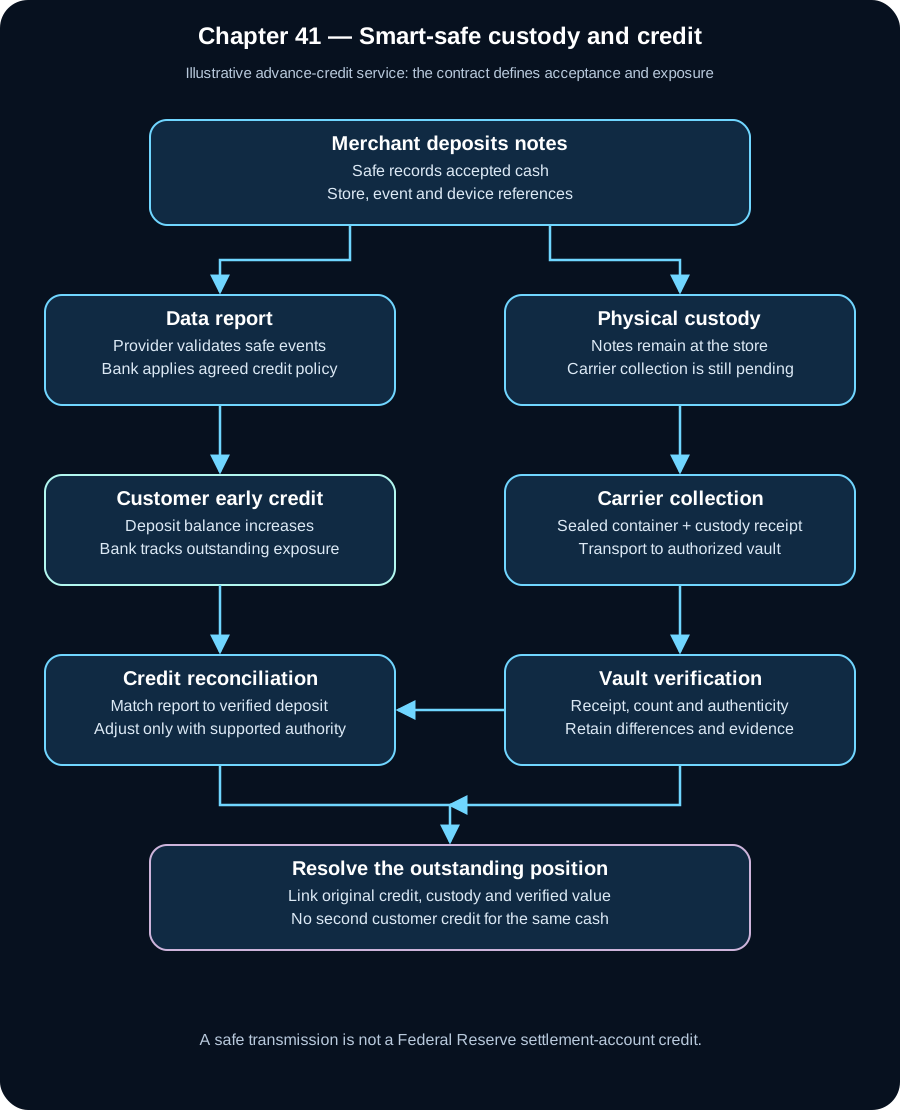
The diagram keeps the data and physical paths separate. The bank may recognize a customer liability before the notes reach its vault. Subsequent transport and verification must reconcile to that same credited population, rather than produce a second deposit merely because the physical cash has now arrived.
The safe is full, but the connection is down
Suppose the safe accepts $9,800 during an outage and stores the relevant events locally under its design. The customer may have a device receipt without a confirmed bank credit. The product should explain that distinction and how the bank will establish the original events when connectivity returns. A safe screen should not display a bank acceptance that the bank has not actually issued.
When the data is replayed, stable device and deposit identities should prevent duplicate posting. The bank should also detect missing sequences, unexpected resets and conflicting values. A new transmission identifier does not necessarily mean new cash. Conversely, two legitimate deposits can have the same amount, so amount-only duplicate detection can block valid work.
The credit arrangement needs an exposure model. Limits can reflect the customer, location, safe, uncollected value and time since pickup. A credit already posted may remain outstanding while several additional days of cash accumulate. The bank should monitor the actual covered population and apply supported actions when a limit or service condition is breached. A connectivity problem should not silently remove deposited cash from the exposure calculation.
Customer procedures remain important. Employees need to know which notes or other items are supported, how to handle rejected notes and whom to contact during a fault. Opening or servicing the device should follow authorized controls. The bank should preserve the safe's financial event history through maintenance or replacement so that a technical repair does not sever the link between customer credit and physical cash.
8. Bank cash accounts and Federal Reserve movements
A customer's cash deposit changes the bank's balance sheet through the applicable acceptance and posting process. In a simple counted branch deposit, the bank can increase its cash asset and its deposit liability to the customer. Moving those notes from the branch to the bank's vault changes their location; it does not create another customer deposit. The bank's internal cash accounts should reflect the movement without duplicating value.
When a financial institution deposits cash with a Federal Reserve Bank under the relevant service, its own or designated correspondent's Reserve Bank account is credited. Operating Circular 2 provides credit on the day the Reserve Bank accepts the deposit at a Federal Reserve dock, subject to adjustment for differences and specified irregularities identified in verification. The earlier retail customer's credit and the Reserve Bank credit are different account events.
The economic change at that stage is from physical cash held within the institution's cash supply chain to a balance in the relevant Reserve Bank account. If a correspondent provides the service, the customer bank must also understand the corresponding entry in its account with that correspondent. There is no need to invent a check presentment or an individual Fedwire payment for each store's bag. The cash service has its own account mechanism.
A later difference can produce an adjustment to the Reserve Bank account. The bank must identify the affected shipment and determine how that difference relates to its own cash records and any customer correction. The adjustment does not automatically establish that a particular retail customer is liable. The source population, count history and contractual basis still matter.
Currency logistics and electronic reporting
FedCash's E-Manifest service supports electronic exchange of shipment information between authorized armored carriers and the Federal Reserve at the dock. Its purpose includes replacing manual matching of paper manifests with scanning and electronic data. A manifest or electronic receipt supports custody visibility. It should not be described as an ISO 20022 payment instruction or as independent proof of final verified contents.
The bank should reconcile the deposit's declared amount, dock acceptance, Reserve Bank credit and later verification adjustments. If those records use different references, the integration must preserve the mapping. A financial entry that arrives before a detailed processing report should be matched when the supporting detail becomes available. Staff should not create a second cash asset because they cannot immediately identify the first credit.
An illustrative $500,000 vault shipment may relate to many customer deposits already credited over several days. The Reserve Bank credit should clear or reclassify the appropriate bank cash position under its accounting design. It should not be distributed as new customer money across those deposits. The customer ledger and the bank's liquidity account serve different purposes, even though the same physical notes connect them.
Treasury should distinguish usable Reserve Bank balances from physical cash awaiting shipment and from contractual claims arising from early customer credit. All may have value, but they are not equally available to meet an electronic settlement obligation at a particular moment. Accurate cash-service reporting lets treasury plan liquidity without assuming that a truck in transit is already a posted reserve balance.
9. Retail agents and the two legs of a cash payment
A customer walking into a retail store to hand over currency may be making a deposit, loading a prepaid account or paying a bill through a collection agent. The counter looks similar in each case. The legal relationship, destination of the money and meaning of the receipt can be quite different. A bank should establish which product it is supporting before describing the service as cash deposit acceptance.
Consider a household paying a utility bill with $140 at a participating retailer. In an illustrative agent arrangement, the retailer accepts the notes and records a transaction against the utility account through a provider's system. The retailer or provider subsequently settles its obligation through banking arrangements. The notes handed over need not travel physically to the utility's bank. They may enter the retailer's normal cash collection process while an electronic payment funds the biller's account.
The consumer-facing transaction and the provider's settlement are linked economically, but they are separate events. The provider may promise that a successful retail acceptance establishes the bill-payment date under its agreement with the biller. Alternatively, the service may require additional processing before the biller treats the payment as received. The bank must obtain the actual agreement and customer disclosures. Neither the presence of a barcode nor the printing of a receipt resolves that question by itself.
An agent receipt should identify the service, amount, fee where applicable, destination reference, date and transaction identifier. It should avoid displaying more customer information than the transaction needs. The customer needs a workable way to trace a missing payment without knowing the provider's internal settlement batch number. If a payment reaches the wrong utility account because a reference was entered incorrectly, support must be able to connect the retail transaction, provider record and biller posting.
Agent acceptance also creates exposure between acceptance and settlement. A biller might give its customer credit before the provider delivers the corresponding funds. The provider might prefund an account, use a contractual reserve or settle after acceptance. These are possible product designs, not interchangeable descriptions of one universal US model. The bank should identify whose balance funds the payment, whose obligation remains outstanding and what happens if a retailer or provider fails during that interval.
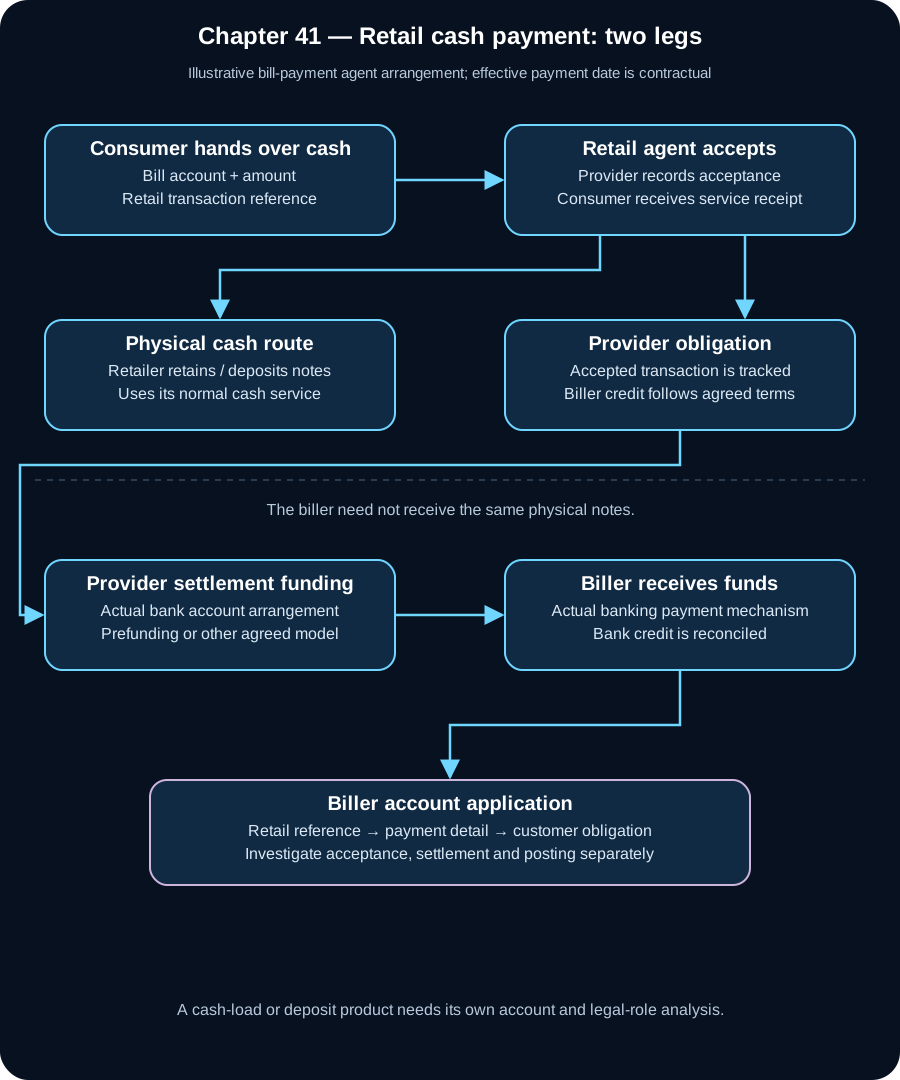
The diagram separates the customer handing over notes from the banking movement that funds the biller. A receipt can prove an accepted transaction under the service's terms without proving that those same notes have reached the biller's bank. The provider's settlement and biller posting must remain traceable to the retail transaction.
When the service is a deposit
For a retail cash-loading or deposit service, identify the receiving account, bank relationship and time at which the bank receives the funds under the actual arrangement. A retailer's collection receipt should not be presented as a bank deposit receipt unless that is what the service legally and operationally provides. Deposit insurance attaches according to applicable insurance requirements; a nonbank's promise to forward money is not itself a separate FDIC insurance guarantee against the nonbank's failure.
Retail staff may know little about the underlying account. That makes interface validation important. The application should confirm that the reference belongs to an eligible service without unnecessarily revealing personal account information. It should prevent a clerk from converting an unsuccessful transaction into a successful one by printing a local receipt. If connectivity fails after cash has been accepted, the procedure must preserve the transaction and evidence, establish whether the provider accepted it, and give the customer an accurate status.
The bank's due diligence should address the provider's agents, settlement controls, complaint handling and applicable legal responsibilities. Licensing and agency questions depend on the arrangement and relevant law; this chapter does not assume that every retail collector is a bank branch or that every agent arrangement has the same regulatory treatment. The practical requirement is to document the actual roles before launch and make the customer journey consistent with them.
10. Calendars, availability and liquidity planning
Cash services run on several calendars. A store may trade every day, its carrier may collect on selected weekdays, the vault may process on its own schedule, and the bank may apply contractual credit cut-offs. Federal Reserve cash appointments and the bank's electronic settlement obligations introduce further timing constraints. A useful operating calendar connects these schedules instead of calling them all the deposit date.
Suppose a merchant closes on Saturday, puts cash in a safe and receives contractual early credit. The next scheduled pickup is Monday. The bank has increased the customer's usable balance before it has completed the physical collection and verification cycle. If Monday is disrupted, the exposure lasts longer. Treasury and credit teams should be able to see that extension; it should not disappear because the customer-facing transaction has already been posted.
A contractual merchant credit schedule is separate from the funds-availability rules that apply to a qualifying deposit. Regulation CC distinguishes, among other things, cash deposited in person to a bank employee from cash not deposited in person. Its next-day availability provision specifies the next business day for covered in-person cash deposits and the second business day for covered cash deposits not made in person. Other provisions, including those for nonproprietary ATMs, require separate consideration. Staff should use the applicable rule and product arrangement rather than promise that every cash-related event is immediately available.
The earlier funds-availability chapter covers the wider Regulation CC framework. Here, the implementation point is that a safe report, carrier pickup or retail-agent receipt is not automatically the same event as a deposit received by the bank for every purpose. Product, legal and operations teams must identify the event that starts each obligation. The customer disclosure, timestamp logic and general ledger process should use that decision consistently.
Internal cut-offs need an explicit time zone and treatment of holidays, incomplete files and late acceptance. A safe transmission arriving after a processing cut-off might be included in the next scheduled credit run under the contract. That is different from changing the recorded time when the merchant actually inserted the cash. Preserve the original event time and the processing time. Rewriting history to fit a batch makes dispute investigation unnecessarily difficult.
Physical capacity can constrain a service even when the bank has abundant electronic liquidity. A safe can fill, an ATM can reject additional deposits, a vault can lack processing capacity and a carrier can lack available transport. These constraints can force merchants to retain cash longer, increase theft exposure or interrupt customer access. Forecasting should therefore include volume by location, denomination, device capacity, route and processing capacity, not merely total dollars collected.
Treasury should also distinguish currency and coin held to meet customer demand from excess inventory available to return through the bank's cash supply chain. A branch cannot meet a withdrawal with an electronic report saying that its next delivery is on the way. Conversely, holding too much physical inventory creates handling and security costs without necessarily helping an immediate electronic settlement need. Cash-service planning balances physical service requirements and financial liquidity rather than treating one as a substitute for the other.
A disruption plan should specify which promises can still be met when a route or vault is unavailable. Alternative collection, temporary credit limits and customer communications should be approved before a major holiday or severe-weather event. Staff should not improvise unlimited early credit because an ordinary pickup did not occur. The customer needs a clear explanation of what remains available and what evidence is required for any temporary arrangement.
Collection planning must include the return journey
A business that deposits cash may also need change for its next trading day. The bank should distinguish a collection instruction from a cash order. A merchant's deposit of $8,000 does not automatically authorize delivery of $8,000 in requested denominations, and the physical notes deposited need not be the notes later supplied. Orders require their own authority, inventory and delivery evidence.
For a grocery store, the useful service may combine collection of excess notes with delivery of coin and smaller denominations. The bank should record each leg separately. Netting the two values can help explain a commercial settlement under an agreed design, but it should not erase the gross custody events. A missing coin delivery cannot be investigated reliably if the report shows only one net cash amount.
The bank's own inventory planning should connect merchant demand to branch, vault and cash-supply arrangements. An electronic account balance does not tell the vault which denominations are physically available. If a requested denomination is unavailable, staff should use the approved substitution or customer-contact process rather than alter the order silently. The customer may need a particular mix to operate its tills.
Delivery evidence should identify the accepted order, dispatched value, custody handoffs and customer receipt. An order marked prepared is not necessarily delivered. If the customer reports a difference, the bank should compare the order and packing evidence with the receipt and supported counting process. As with deposits, an unexplained shortage should not be assigned to a participant solely because that participant was last in the chain.
Charges should also follow the actual service units. A collection fee, coin preparation charge and emergency delivery charge can be separate contractual items. The bank should be able to explain them against the agreed service and completed activity. A balanced deposit ledger does not establish that the invoice for cash services is correct.
This return journey completes the practical cash-service view without changing the chapter's focus. Cash collection supports the customer's operating cycle, and that cycle often includes retaining or obtaining the denominations needed for the next day. The bank should manage the physical service and account effects together while preserving the evidence for each distinct movement.
11. Suspect, unfit, mutilated and contaminated currency
Different cash conditions require different processes. A genuine note that is worn may be unfit for recirculation. A badly damaged note may require specialized examination as mutilated currency. A suspected counterfeit raises an authenticity issue. Contaminated currency raises handling and health concerns. Treating all four as an ordinary counting shortage loses information and can put employees at risk.
A bank's frontline procedure should explain what staff can determine safely and when they must escalate. Staff should use training and appropriate authentication methods rather than rely on one superficial feature. The Federal Reserve notes that counterfeit-detection pens are not always accurate and can produce false results. A device alert is useful evidence, but it is not a reason to invent a final determination beyond the bank's approved process.
Suspected counterfeit currency should follow the current US Secret Service reporting and submission process. The US Currency Education Program states that, from November 1, 2024, the Secret Service no longer accepts electronic suspected-counterfeit submissions through the USDollars website. Financial institutions and businesses should consult the current instructions and applicable counterfeit-note report process. An old bookmark to a discontinued portal should not remain the branch's operating procedure.
The customer conversation needs care. A teller should explain the bank's handling process and provide the documentation the process requires without promising reimbursement for a note that may not be genuine. A finding at the vault may occur after provisional credit. Any debit adjustment must follow the agreement and be supported by a traceable processing record. The bank should distinguish an authenticity adjustment from a fee and from a general account freeze.
Mutilated US currency follows the Bureau of Engraving and Printing's redemption process where applicable. Customers should use the BEP's current submission requirements, including its form and packaging instructions, rather than send damaged currency directly to a Federal Reserve Bank on the assumption that the Fed offers a retail redemption counter. The BEP makes the determination under its rules. A bank should not promise an amount or completion date before that examination.
A note damaged enough to require specialized examination should not be further damaged by enthusiastic attempts to clean, separate or flatten it. Frontline guidance should direct employees to the appropriate instructions. Contamination requires an equally deliberate escalation. Staff need a safe way to isolate the item, obtain specialist advice and arrange permitted handling. Routine cash counting should stop where the condition presents a health or safety concern.
Preserve the financial trail
Assume a vault records a $50 suspect note in a merchant deposit. The original deposit record, counting result, item handling reference, customer adjustment and any subsequent decision should remain connected. If the bank's approved process later requires a correcting credit, that credit should refer to the original adjustment. A separate unexplained $50 credit may settle the customer's balance but leave the operational case unresolved.
Reports should distinguish declared-versus-counted differences from counterfeit adjustments, damaged-currency referrals and processing errors. Otherwise a branch could appear to have a recurring counting problem when its actual issue is poor counterfeit training or inappropriate packaging. That distinction supports corrective action and fair customer treatment.
Do not extend currency guidance automatically to damaged coin. Currency and coin have different issuing and administrative arrangements, and special redemption programs can change. The operational manual should link to current official instructions for the specific item. This chapter does not prescribe a bent-coin redemption route or claim that an older procedure remains available.
The wider lesson is practical: a cash exception is not closed merely because the account balance has been adjusted. The physical item, reporting requirement, customer explanation and accounting entry must all reach a supported outcome. An unresolved custody record can remain a control problem even when the amount is small.
12. BSA reporting, fraud and sanctions controls
Cash collection is part of the bank's BSA/AML control environment. The bank needs sufficient information to understand the customer, expected cash activity and people conducting relevant transactions. A carrier pickup or vault delivery does not remove that responsibility. It changes how the bank obtains the information and how activity must be connected across channels.
The FFIEC BSA/AML Examination Manual describes currency transaction reporting for transactions in currency of more than $10,000, subject to applicable rules and exemptions. Multiple transactions must be aggregated when the bank has the required knowledge that they are by or on behalf of the same person during one business day. Cash-in and cash-out are assessed separately; they should not be netted to make reportable activity disappear.
For example, an illustrative customer deposits $7,000 in cash at one branch and $5,000 at another on the same business day. Where the bank has the required knowledge that these transactions are by or on behalf of the same person, the activity must be considered together. The bank should not depend on the second teller personally remembering the first transaction. Cross-channel data and appropriate customer identification make aggregation operationally possible.
Common ownership of businesses is not, by itself, a reason to treat every separately incorporated business as one person for all aggregation purposes. FinCEN's guidance addresses whether businesses are operated independently and the relevant facts. A bank should apply that guidance through its compliance process rather than create an indiscriminate rule that all entities sharing an owner have identical cash activity. Equally, different account numbers do not establish that activity is unrelated.
Armored-car transactions have specific identification considerations. FinCEN's administrative ruling distinguishes arrangements in which the bank contracts with the carrier from customer or third-party arrangements. Operations should capture the relationship and apply the relevant reporting treatment. It is incorrect to assume that a deposit is exempt from CTR consideration simply because a professional carrier delivered it.
CTR processing also requires a defined business-day treatment. The FFIEC manual discusses transactions received through night depositories, weekends and holidays. Cash collection systems should preserve actual acceptance information while supplying the business-day classification needed for reporting. A late-arriving vault file should create a controlled review if it changes reportable aggregation, rather than quietly overwrite a filed record.
Reporting is not a fraud verdict
A reportable cash transaction is not automatically suspicious. Conversely, activity below a reporting threshold may warrant investigation based on its pattern and context. Employees should not advise customers how to divide transactions to avoid reporting. The bank should explain that information is needed to meet its obligations and refer concerns to trained compliance staff.
Fraud controls address additional risks: fabricated safe reports, duplicate credit files, altered bag references, employee theft, account takeover and collusion between participants. Each risk needs evidence appropriate to the event. A customer name screen will not detect a repeated deposit file, and a balancing report will not establish that a new pickup instruction came from an authorized person.
Sanctions controls should be designed around the actual relationships, transactions and applicable OFAC requirements. Physical cash services do not carry the same standardized message fields as a wire. That limitation makes reliable customer and service-provider information important. The bank should not describe a cash-counting machine as performing complete sanctions compliance simply because the wider platform includes a screening function.
Compliance escalation must remain separate from ordinary customer adjustments. A shortage investigation can be explained through the deposit evidence; a confidential suspicious-activity process has different disclosure constraints. Frontline staff need clear instructions about what they may communicate and which team owns the decision. Mixing the two can produce inaccurate explanations and inappropriate disclosure.
13. Reconciliation, accounting and responsibility for differences
A cash collection service should reconcile physical custody, customer credit and the bank's own cash position. These are related views, not identical ledgers. A balanced customer posting file does not prove that every bag was received. A balanced vault count does not prove that every customer received the right credit. A matching Reserve Bank total does not identify which earlier merchant discrepancy remains unresolved.
Start with the collection unit that operations can trace: a deposit, bag, device event or other agreed identifier. Link it to the customer, service location, declared amount, custody events, verified amount and financial entries. Preserve the original value and each supported adjustment. A final net amount without its history may be adequate for a summary statement but is inadequate for a contested deposit.
Consider a merchant declaring $18,400 and receiving early credit for that amount. The vault verifies $18,350. Under the illustrative agreement, the supported $50 difference leads to a customer adjustment after review. The bank needs to show the original credit, the verification result, the authorized adjustment and the customer's resulting balance. If the missing $50 instead reflects a vault processing error, the outcome should follow that evidence rather than automatically charge the merchant.
The accounting design depends on the arrangement and the bank's chart of accounts. At a high level, a cash deposit increases an appropriate asset or claim and a customer deposit liability. Early credit may initially be supported by a receivable or another approved position until physical receipt and verification occur. These descriptions explain the economic relationship; they do not prescribe one journal template for every bank or imply that custody alone determines legal ownership.
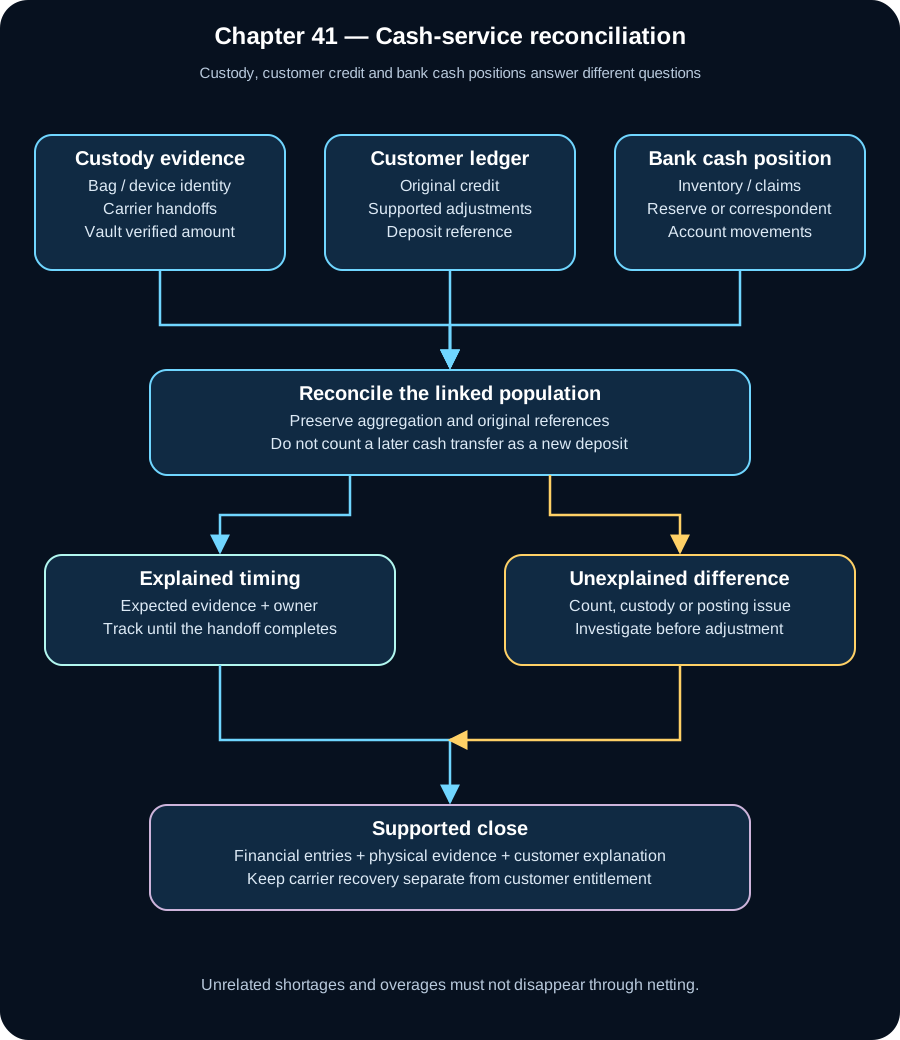
The diagram brings three records into one investigation. The amount credited to the merchant, the cash verified by the vault and the balance credited to the bank can relate to different stages and aggregation levels. Differences must be explained through the underlying events before a correcting entry is approved.
Separate timing from loss
An item can be unmatched because the carrier report arrived before the vault file. That is a timing difference, subject to an expected completion window. An item can also be unmatched because a bag is missing, a reference is wrong or a credit was duplicated. Those cases require different owners and actions. An aging rule should escalate the item when the expected evidence fails to arrive, rather than allow the label 'timing' to become permanent.
A reconciliation queue should show the amount at risk, last confirmed event, expected next evidence, responsible team and customer impact. The largest amount is not always the most urgent item. A modest missing deposit may leave a small business unable to pay staff, while a larger fully explained timing item may pose little immediate uncertainty. Prioritization should consider financial exposure and service consequences.
Suspense accounts need the same discipline. An entry should have an identifiable purpose and supporting case. Clearing suspense by moving an amount to another unexplained account does not resolve the difference. Repeated small write-offs can conceal a systematic counting, device or process problem; trend analysis should examine causes and locations as well as aggregate value.
Carrier claims and insurance recoveries should be tracked separately from the customer decision. A bank may owe a customer a credit under the agreement while still pursuing recovery from a service provider. Conversely, a filed carrier claim does not automatically establish that the customer is entitled to the declared amount. The case must distinguish the contractual customer obligation from the bank's recovery asset and any eventual loss.
Customer reporting should use recognizable references and plain descriptions such as an adjustment tied to the original deposit. The monthly service invoice should also reconcile fees to contracted activity. A charge for a pickup that never occurred is a service issue even if the deposit balances are correct. Good reconciliation therefore covers the money, the physical service and the evidence supporting both.
A concrete daily reconciliation bridge
Imagine an illustrative processing day with $900,000 of customer credits associated with cash services. Of that amount, $720,000 relates to verified vault receipts, $150,000 to early-credit safe events still awaiting collection, and $30,000 to branch receipts awaiting the branch's internal transfer cycle. These categories explain the customer-credit population; they are not a claim that all three are booked to the same asset account.
Operations should confirm that every credit belongs to one supported category and that no deposit appears twice. Finance should reconcile the corresponding asset or claim positions under the bank's accounting design. Treasury should use the categories to understand which value is physically held, which is awaiting transport and which has reached a usable settlement-account balance. Adding a later Reserve Bank deposit credit to the $900,000 as new customer money would double count part of the same economic value.
If $2,000 of the early-credit population remains unmatched beyond its expected collection cycle, the report should identify the affected locations and evidence. The exception should not be hidden by a $2,000 overage elsewhere. Netting unrelated shortages and overages can conceal two separate control failures even when the bank-wide total appears correct.
The bridge should also explain adjustments posted today against earlier deposits. A $50 correction from last week's vault processing belongs to its original deposit history and today's financial activity. Reports can show both relationships without pretending that the cash was deposited again today. This helps customers reconcile statements and helps finance explain why current postings differ from current physical intake.
Finally, the close should identify who reviewed unresolved differences and what remains to be obtained. An automated balance is useful, but unresolved evidence still needs ownership. The bank should be able to reproduce the day's position later using the retained source population, adjustments and approvals.
14. Implementing and operating the service inside a bank
Implementation begins with an event model and a responsibility map. Product defines the service promise; operations identifies what can actually be observed; legal and risk establish the contractual treatment; finance defines the entries; technology connects the evidence. If these decisions are postponed until after a vendor feed is built, the bank may discover that the available data cannot support its promised credit or investigation process.
For each channel, document the events that matter: customer submission, device acceptance, carrier collection, vault receipt, verification, customer credit and any bank cash-account movement. Some channels omit or combine events, but those differences should be explicit. An ATM accepted amount and a merchant's declared night-bag amount should not share a status that suggests identical evidence.
Interfaces should carry stable identifiers, event times, processing times, amount, currency, location and status appropriate to the service. Technical acknowledgments should state whether a file was received, validated or posted. A file received successfully may still contain rejected records. The sender needs enough response detail to repair a record without resubmitting already credited deposits.
Duplicate prevention should work at both file and transaction levels. A provider might resend the same file after a timeout or include an already reported deposit in a corrected file. The bank should recognize the business event and preserve the correction history. Rejecting every repeated filename is too weak, while rejecting every repeated amount could block legitimate deposits of the same value.
Access control should reflect the difference between viewing evidence, changing service instructions and moving money. Staff who investigate shortages may need images and custody records without authority to release an adjustment. Changes to a merchant's account mapping or an authorized collection location should receive appropriate verification and approval. A valid cash report routed to a fraudulently changed account remains a serious loss even when every physical bag balances.
Build for the difficult day
A vendor outage should leave the bank able to explain the last confirmed state. Store the evidence needed to identify deposits already credited, deposits awaiting a file and deposits whose status is uncertain. A recovery process should reconcile before replaying instructions. The goal is to complete missing processing without turning an outage into duplicate customer credits.
Physical incidents need coordination between security, operations, customer service and the provider. Employees should follow approved safety procedures; they should not be expected to protect funds through personal confrontation. Financial recovery and investigation follow once people are safe. The customer communication should distinguish a delayed collection from confirmed loss and explain what the bank can currently verify.
Vendor oversight should examine service performance by location and event, not only average turnaround. A provider can meet an average processing target while repeatedly failing one rural route or leaving exceptions unresolved. Useful measures include overdue collections, missing custody acknowledgments, verification delays, unsupported adjustments and age of open claims. Measures should reveal the customer's experience and the bank's exposure.
Testing should include partial files, missing references, repeated events, a device offline during acceptance, changed merchant account details, a rejected vault deposit and a later correction. Finance should confirm that each case produces coherent entries. Customer service should confirm that the displayed status and explanation match the evidence. Compliance should confirm that reporting information remains available even when the normal feed is delayed.
Launch should proceed with reconciled evidence from a controlled set of locations before expansion. A successful cash count alone is not an end-to-end test. The bank needs to see the correct customer credit, supported physical chain, correct bank position, clear statement description and workable exception case. Those observations establish whether the service can be operated responsibly at scale.
15. Worked cases and operational decisions
Return to the fictional merchant introduced at the start. Its stores use a mixture of smart safes, branch deposits and carrier-served vault processing. The following cases are intended to test the distinctions developed in the chapter. The amounts and internal procedures are illustrative; the correct contractual outcome depends on the actual service agreement and applicable law.
A credited safe event with no matching collection
A store receives $23,600 of early credit after its safe reports accepted notes. The next day's carrier file contains no pickup for that location. Customer service initially assumes that the merchant must repay the credit because the cash is missing. That conclusion moves too quickly. The absence of a pickup record could reflect a missed route, a delayed report or an incorrect location reference.
Operations should establish the last confirmed device event, the safe's current state, the scheduled collection and the carrier's evidence. Treasury and risk should see the outstanding early-credit exposure while the investigation continues. A temporary decision about additional credit should follow the approved arrangement. It should not erase the original accepted event or imply that a missing file proves theft.
If the carrier later supplies evidence of collection under an incorrect location code, the bank should repair the reference mapping and reconcile the original event. Posting a second credit would be wrong. If the pickup never occurred, the bank needs a safe collection plan and a contractual treatment of the extended exposure. In both cases, the customer explanation should reflect what is known rather than a convenient system label.
A retail receipt but an unpaid bill
A consumer presents a receipt for a $140 utility payment accepted at a retailer. The utility account still shows an overdue balance. The first question is whether the provider accepted the retail transaction and what its agreement says about the effective payment date. Staff should trace the receipt reference through the provider and biller records, including any rejected account reference or delayed posting.
The retailer's later cash deposit into its own bank account does not, by itself, settle this consumer's complaint. The relevant trail is the accepted bill-payment transaction, the provider's obligation and the utility's posting. If the provider settled a batch but the utility could not identify this account, the exception is at the application stage. If the transaction was never accepted, the handling of the cash and receipt requires investigation at the retail acceptance stage.
The resolution should address the payment, any resulting customer charge and the supported date under the applicable terms. It should not promise that a new payment is necessary before determining whether the original payment already created an obligation. That discipline avoids making the consumer fund the same bill twice while institutions reconcile their records.
A Federal Reserve adjustment after customer credit
A bank sends a consolidated vault deposit and receives Reserve Bank credit on acceptance. A later verification adjustment reduces that credit. Finance should trace the adjustment to the shipment and supporting processing information. The original bank credit and the adjustment must reconcile without creating a second customer deposit or immediately distributing the difference across unrelated merchants.
Where evidence identifies a specific merchant deposit, the bank should apply the agreement and its investigation process. Where the cause is internal processing or cannot yet be assigned, the bank should record and investigate the exposure appropriately. A consolidated Reserve Bank adjustment is not sufficient evidence to charge an arbitrary customer.
For each case, ask which event is confirmed, who currently holds the cash or owes the obligation, which ledger entry has occurred, what evidence is missing and what the customer has been told. A team that can answer those questions can usually identify the next useful action without confusing physical transport with settlement.
16. Role checklist and learning closure
A product manager should be able to describe exactly when the customer receives credit and which conditions can produce an adjustment. The explanation should distinguish a branch deposit, an ATM event, a smart-safe report and a retail-agent transaction. Similar customer language should not hide different obligations.
Operations should be able to trace a deposit through custody and verification, identify the last confirmed event and assign an exception to the team that can resolve it. Technology should preserve that trail across devices, files and posting systems, including corrections and repeated messages. Finance should connect customer balances to cash, claims and settlement-account movements without counting the same value twice.
Treasury should understand the timing and size of early-credit exposure and the difference between physical inventory and usable settlement balances. Compliance should receive the information needed for applicable cash reporting and investigations across channels. Customer service should explain delays and adjustments using evidence the bank actually holds.
The service works when these views agree. A merchant can recognize its deposit, the bank can account for the value, and an investigator can establish what happened without reconstructing the process from disconnected emails. Chapter 42 moves from collecting physical cash to collecting consumer bills through bank bill pay, telephone and text channels. The same discipline remains essential: identify the customer instruction, the payment mechanism and the event that actually satisfies the obligation.
Authoritative references
Sources checked on October 5, 2026. Contractual smart-safe credit, carrier schedules, agent settlement and internal accounting examples are illustrative; confirm the actual service agreement and implementation documentation before applying them.
This application uses JavaScript for the full interactive experience. This text summary is served for accessibility and search indexing.