BNPL, Payroll Deduction and Government Bill Collections. Follow loan repayments, payroll deduction remittances and federal agency collections through authority, settlement, exceptions and application.
A customer buys a $600 appliance using an installment plan. An employee authorizes $60 to be deducted from each paycheck for a benefit. A business pays a $600 federal agency bill through an online portal. All three involve collecting money, but the authority, creditor, payment instruction and evidence of completion are different. Treating them as recurring debits would misrepresent two of the arrangements and incompletely describe the third.
Chapter 47 followed customer collections into platform and seller proceeds. This chapter examines three institutional collection models: credit repayment under buy now, pay later; deductions made during payroll; and payments against government receivables. The shared discipline is to connect a valid obligation to the correct collection authority and financial evidence. The mechanisms must remain distinct.
A loan schedule, a payslip deduction and a government receipt are business records. Each needs its own connection to actual funds movement and the creditor's accounting.
Allow roughly 60 minutes for the chapter, diagram walkthroughs and worked cases. Customers, employers, loans and amounts are fictional. No example establishes a universal lending term, wage-deduction permission or government payment deadline. Sources were checked on October 5, 2026.
Chapter navigator
- Three collection models and their boundaries
- BNPL from purchase approval to merchant funding
- Repayment authority and payment methods
- BNPL exceptions, refunds and delinquency
- Current BNPL regulatory treatment
- Payroll deduction begins before net pay
- Deduction remittance and creditor application
- Payroll deduction failures and corrections
- Government collection channels and agency roles
- Where government collection money settles
- Dates, cutoffs and government receipts
- Returns, refunds and agency investigations
- Reconciliation and accounting across the three models
- Implementing institutional collections inside a bank
- Worked cases and implementation decisions
- Role checklist and learning closure
1. Three collection models and their boundaries
Buy now, pay later, or BNPL, is a credit arrangement used to finance purchases. The customer owes the lender under the applicable agreement, while the merchant receives proceeds under a separate funding arrangement. Collecting an installment reduces the loan obligation; it is not another sale of the appliance.
Payroll deduction changes the distribution of an employee's earnings through the payroll process. Depending on the arrangement, amounts withheld may be owed to a benefit provider, creditor or authority. The deduction record does not by itself establish that the employer remitted the money. It also should not be confused with an ACH debit from the employee's bank account after net wages were paid.
Government bill collection starts from an agency obligation such as a fee or non-tax debt. The payer uses a supported collection channel, and the payment must be associated with the correct agency and obligation. Federal tax execution is covered in Chapter 49; the existence of Pay.gov does not make it the universal portal for every tax, state bill or municipal charge.
The bank's product classification should identify the obligation owner, authority source, payment method and application target. A generic reference called customer account may mean a loan account, employee record, agency case or bank account. Those meanings need explicit fields and relationships in the implementation.
This is also a practical way to control scope. Lending decisions remain with the lender's credit process. Payroll calculation remains with the employer or payroll service. The agency determines its receivable and applicable collection terms. The bank connects authorized financial instructions to accurate outcomes without claiming to validate every underlying business decision.
2. BNPL from purchase approval to merchant funding
A BNPL checkout combines a purchase with a credit decision. The customer selects the product, receives the relevant terms and accepts the credit arrangement where approved. The merchant receives the provider's supported order or payment status and follows the contractual fulfillment process. The lender and merchant then have financial obligations that are not identical to the customer's installment schedule.
A common pay-in-four illustration divides a purchase into an initial payment and later installments, but BNPL products differ. Some have different repayment schedules, interest or fees. The bank should use the actual product agreement rather than infer loan terms from the BNPL label. This chapter's $600 example assumes four $150 payments solely for learning.
The implementation should preserve purchase identity, loan identity, approved principal, schedule version, merchant funding record and each repayment attempt. A credit approval is not evidence that merchant proceeds have reached the merchant's bank. A collected first installment is not evidence that all future installments are funded.
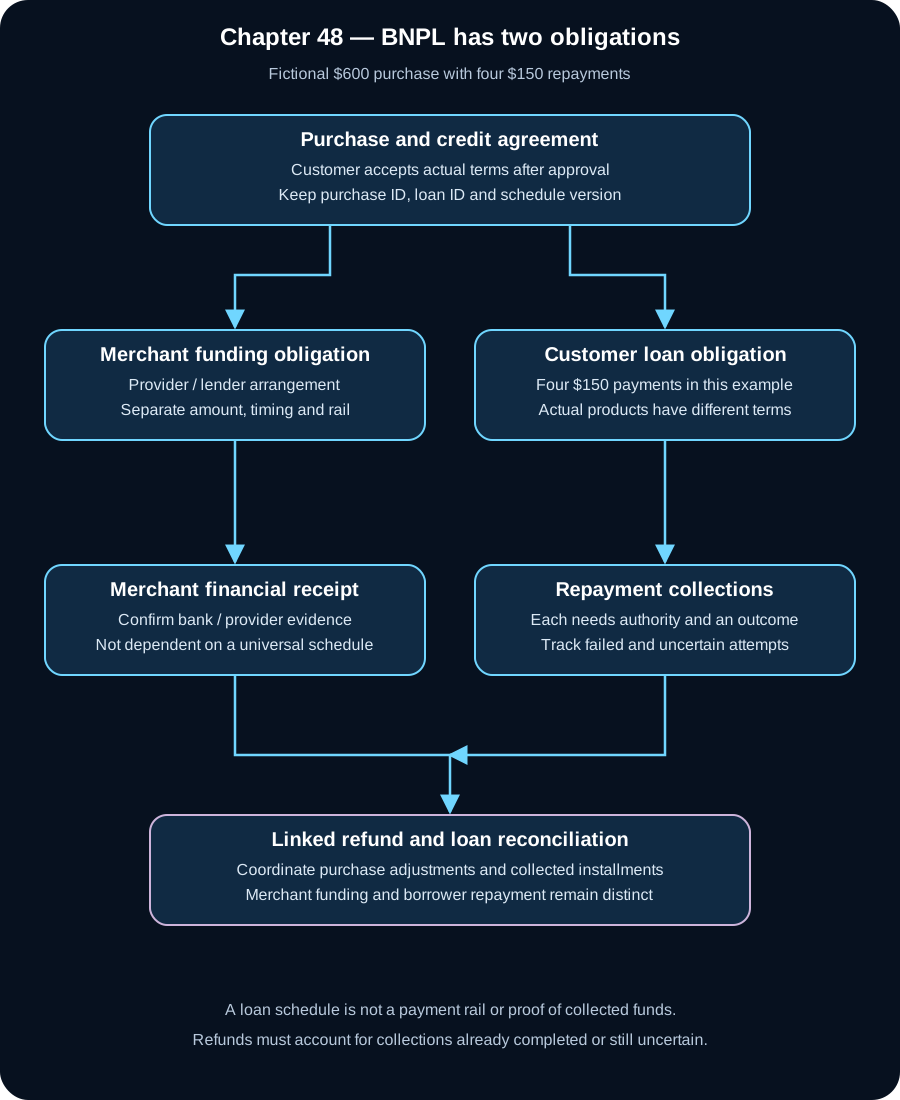
The diagram shows two obligations around the purchase: the provider's arrangement to fund the merchant and the customer's repayment obligation to the lender. It does not assume a universal settlement rail or that the merchant waits for every installment. The bank must establish the actual funding method and contractual timing for each leg.
For a merchant refund, preserve the connection to the loan. Refunding the customer outside the supported arrangement can leave the loan schedule active or produce an incorrect double credit. The lender needs the relevant refund evidence to adjust the obligation and any customer refund under the product's rules.
3. Repayment authority and payment methods
A loan agreement establishes a debt, but collection through a particular payment method requires the applicable authority. A supported ACH debit repayment needs the relevant ACH authorization and controls. A card repayment needs the appropriate credential and transaction treatment. A customer-initiated bank credit has a different initiation model. None should be selected merely because an account or card was previously used for another purpose.
For preauthorized electronic transfers from a consumer account, Regulation E addresses authorization and related protections. Its compulsory-use restriction generally prevents conditioning credit on repayment by preauthorized EFT, subject to specified exceptions. The bank should assess the actual product rather than treating the word automatic as sufficient permission for every collection. The underlying regulation, not a lender's screen design, determines the applicable requirements.
Inside the repayment service, retain the authority reference and the schedule to which it applies. If the customer changes the funding account, the change must be associated with the correct future installments and supported authorization. An already released collection should retain its original account and evidence. A new saved account should not silently rewrite history.
Each installment should have one business obligation and separate execution attempts. A declined card attempt does not create another installment. A retry after an ACH return should follow the applicable rules and authorization conditions rather than use a different amount or descriptor to escape the original result.
The customer should be able to understand what is due, what was attempted and what actually succeeded. A loan portal that says paid immediately on submission can become misleading when the financial collection later fails. An illustrative pending-collection state preserves the distinction until the required evidence arrives.
4. BNPL exceptions, refunds and delinquency
Separate purchase cancellation, goods dispute, loan adjustment and payment failure. A customer returning an appliance may have a valid commercial refund while an installment is already in processing. The service must coordinate the timing and resulting balance rather than assume a return notification cancels an in-flight bank instruction.
Suppose the fictional customer has paid two $150 installments on a $600 purchase and a full refund is approved. Before calculating what remains, verify that both collections actually completed and identify any pending third installment. The revised loan and customer refund should reflect settled collections and the approved adjustment. A third collection that later completes requires further reconciliation; it should not disappear because the loan was already labeled closed.
Delinquency is a loan-servicing state, not an ACH return code. A failed repayment can be one input, but the servicing process must apply the actual agreement and law. Likewise, a payment applied to the wrong loan can produce an apparent delinquency even though money was received. Investigate allocation before demanding another payment.
For a bank serving the lender, reporting should distinguish collection failure from merchant funding failure. If merchant funding completed but borrower repayment failed, the lender has a credit or collections issue. Reversing the merchant's unrelated funding without contractual authority would not be an appropriate generic remedy.
Customer communications should connect to the current supported balance and case status. Avoid automated overdue messages for an installment that is under a valid adjustment process without reviewing the applicable obligations and policy. The service should retain the decision and evidence behind any suspension or continuation of collection.
5. Current BNPL regulatory treatment
The CFPB's current BNPL compliance page states that it withdrew the 2024 BNPL Interpretive Rule on May 12, 2025. The chapter therefore does not teach that interpretation as an operative blanket rule requiring every BNPL product to be treated as a credit card. Historical announcements must be read alongside the withdrawal notice.
Withdrawal of that interpretation does not mean BNPL is unregulated. The actual product and activity determine applicable lending, consumer-protection, payment and state-law requirements. Longer-term interest-bearing credit and a particular pay-in-four arrangement should not be assumed to have identical treatment. The production compliance assessment needs the actual contract, creditor and servicing model.
For the business analyst, maintain a requirement register separating law, regulation, official interpretation, provider contract and internal policy. Include the source and effective status. When a document is withdrawn, review the requirements derived from it rather than deleting every control that happens to address the same customer risk.
A refund control may remain necessary under the contract, another applicable requirement or sound operational design. The reason should be recorded accurately. This distinction allows the bank to explain why it retains a control without claiming that a withdrawn document still mandates it.
The implementation should also include a change owner. Regulatory classification belongs with the appropriate legal and compliance teams; developers should receive approved functional rules rather than infer applicability from a news headline or the number of installments.
6. Payroll deduction begins before net pay
Payroll deduction operates within the calculation and distribution of earnings. The employer or payroll processor determines the authorized or legally required deduction, reduces the appropriate net-pay calculation and records an amount to be remitted or otherwise accounted for. The bank may later process employee net pay and a separate payment to the deduction recipient.
For the fictional $60 benefit deduction, the employee's payslip shows that $60 was withheld. That evidence does not establish receipt by the benefit provider. The employer's payable record and bank remittance must complete the chain. If the employer retains the amount unintentionally, the employee can be affected even though the net-pay credit was technically correct.
Distinguish a voluntary deduction from garnishment or a tax withholding. They can have different authority, limits, priorities and remittance requirements. The Department of Labor's wage-deduction guidance addresses FLSA restrictions on certain deductions; its garnishment guidance addresses separate Consumer Credit Protection Act protections. State law can add requirements. A signed form alone does not validate every possible wage deduction.
The bank should not calculate a universal permitted deduction percentage. It should receive an approved payment instruction and sufficient identifiers for the service it provides. The employer or responsible processor must determine the correct calculation and legal treatment. Where the bank offers broader payroll functionality, those responsibilities need explicit ownership and validated rules.
This boundary prevents a common error: using an ACH debit authorization to justify withholding from wages, or using a payroll form to justify a later debit from the employee's deposit account. They are different financial actions.
7. Deduction remittance and creditor application
After payroll calculation, the employer can owe separate amounts to employees, tax authorities and deduction recipients. Those obligations may be paid in different batches and on different schedules. A successful employee payroll file does not prove that every related recipient was paid.
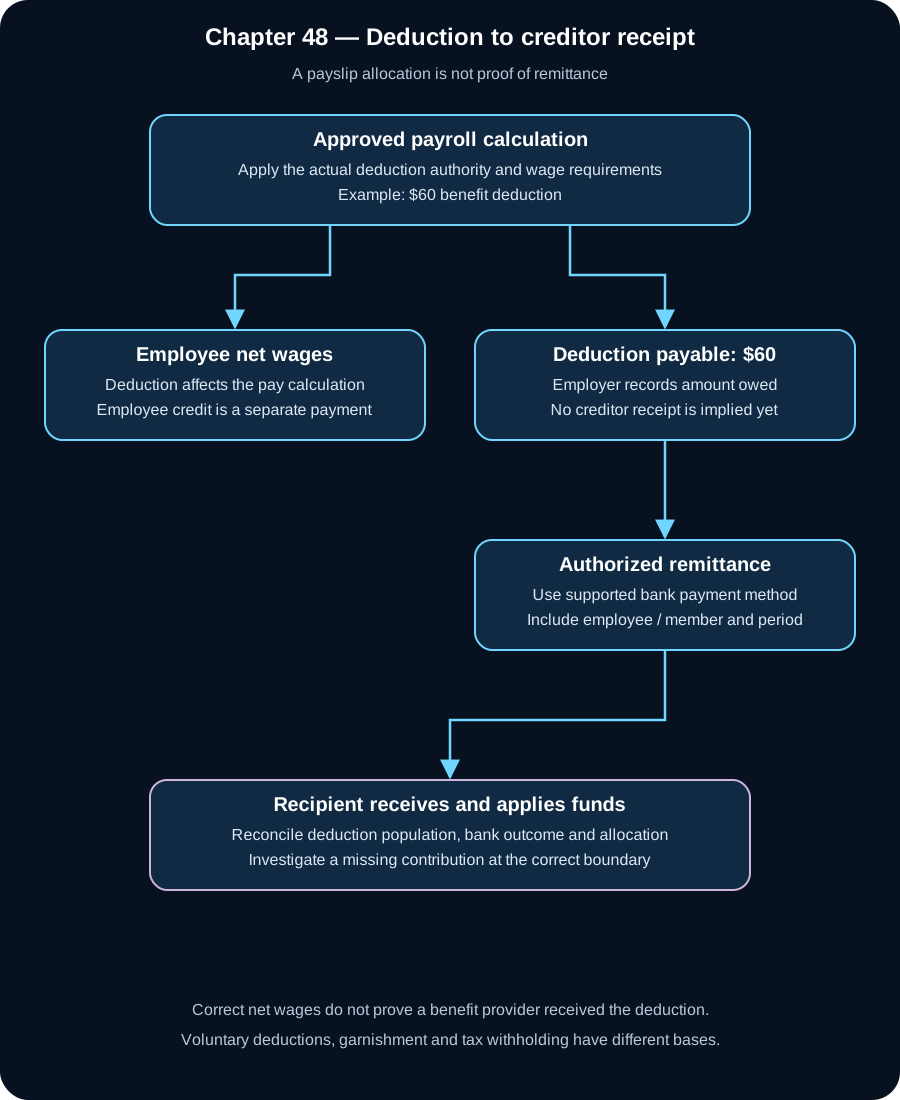
The diagram shows the deduction as a payroll allocation before the bank payment. It then connects the employer's payable to remittance and the recipient's application. An ACH credit is one possible remittance method, not a required mechanism for all deductions.
The remittance file should carry the agreed employee or member reference, period, deduction category and amount without exposing unnecessary payroll detail. A recipient receiving one aggregate bank credit may need a separate allocation file. The file total should reconcile to the financial payment, but the underlying individual allocations also need validation.
If a benefit provider receives $6,000 for 100 employees but the allocation file covers only 99, the cash receipt alone cannot confirm the missing employee's contribution. The employer and recipient should investigate the specific discrepancy. A balancing entry assigned to an arbitrary employee would make the totals match while creating a personal financial error.
For an employee leaving the organization, stop or change future deductions through the applicable process and resolve existing amounts already withheld. Ending employment does not erase an outstanding remittance obligation. The records should identify the final period, any correction and the actual recipient outcome.
8. Payroll deduction failures and corrections
A deduction can be wrong even when every bank transfer succeeds. The amount may be calculated incorrectly, the employee may not have authorized the relevant voluntary arrangement, or a change may have missed the payroll cutoff. Those are payroll or authority defects that require a correction decision; they are not automatically bank-payment failures.
Conversely, a correct deduction can be followed by failed remittance. The employer still needs to establish how the withheld amount will reach the recipient. An ACH return should be linked to the deduction payable and corrected destination, not booked as new employer income. Any employee communication should explain the effect on the benefit or debt balance accurately.
If both employee wages and deductions were miscalculated, handle their corrections separately. A request to reverse an entire payroll batch may recover correct wages from employees while trying to fix an unrelated deduction issue. The payment team should identify the specific erroneous instructions and use only the applicable correction mechanism.
For audit, preserve the original calculation, authorization or legal basis, approved correction, payment attempts and recipient acknowledgment. Changes to payroll records should not erase what appeared on the original payslip. An investigator may need to explain why the employee's bank credit and later adjustment differ from the first calculation.
The customer impact can extend beyond the dollar amount. An unapplied insurance contribution or loan repayment may trigger a service interruption or an incorrect delinquency. Operations should therefore establish creditor application, not stop at proof that the employer's bank account was debited.
9. Government collection channels and agency roles
Federal agencies can use Treasury collection services appropriate to their activity. Pay.gov provides an online collection channel with supported payment methods. Debit Gateway processes relevant ACH debit and check activity and related reporting. Credit Gateway supports specified credit-payment receipt arrangements. Collections Information Repository, or CIR, provides federal agencies with collection and deposit information.
These services do not all perform the same function. A web form captures payer and obligation information. A gateway connects processing and financial activity. A settlement mechanism moves value. An agency system applies the receipt to the obligation. A reporting repository consolidates evidence. Calling all of them the payment network obscures who can resolve an exception.
Pay.gov's published information describes payments to federal agencies using supported methods including ACH debit, cards and digital wallets. Availability depends on the form and agency arrangement. The payer should use the correct agency instructions, not assume that any Pay.gov form can accept payment for any government debt.
State and local authorities have their own collection arrangements and legal requirements. A city utility portal can use commercial payment providers without being part of Treasury's federal collection services. The bank should establish the actual beneficiary, identifiers and rules for that jurisdiction instead of copying a federal model to every government bill.
For the business paying $600, the obligation reference is as important as the bank amount. A technically successful payment applied to another case leaves the intended bill unresolved. The collection channel should validate the required reference and preserve it through agency reporting.
10. Where government collection money settles
For a supported Pay.gov ACH debit, the payer authorizes the collection and the financial processing follows the applicable Treasury and ACH arrangement. Debit Gateway's public description identifies its role in originating and settling Pay.gov ACH debit entries and providing transaction and settlement reporting. The form-submission acknowledgment is not itself proof that the payer's bank honored the debit.
Credit Gateway is different. Treasury Financial Manual Chapter 7500 describes it as a program for federal-entity Fedwire, FedNow and ACH credit receipts, operated by a commercial bank acting as financial agent. It explicitly distinguishes that bank's information-processing role from settlement at Federal Reserve Banks. The bank handling the information should not be drawn as holding the receipt in an ordinary commercial deposit account merely because it operates the gateway.
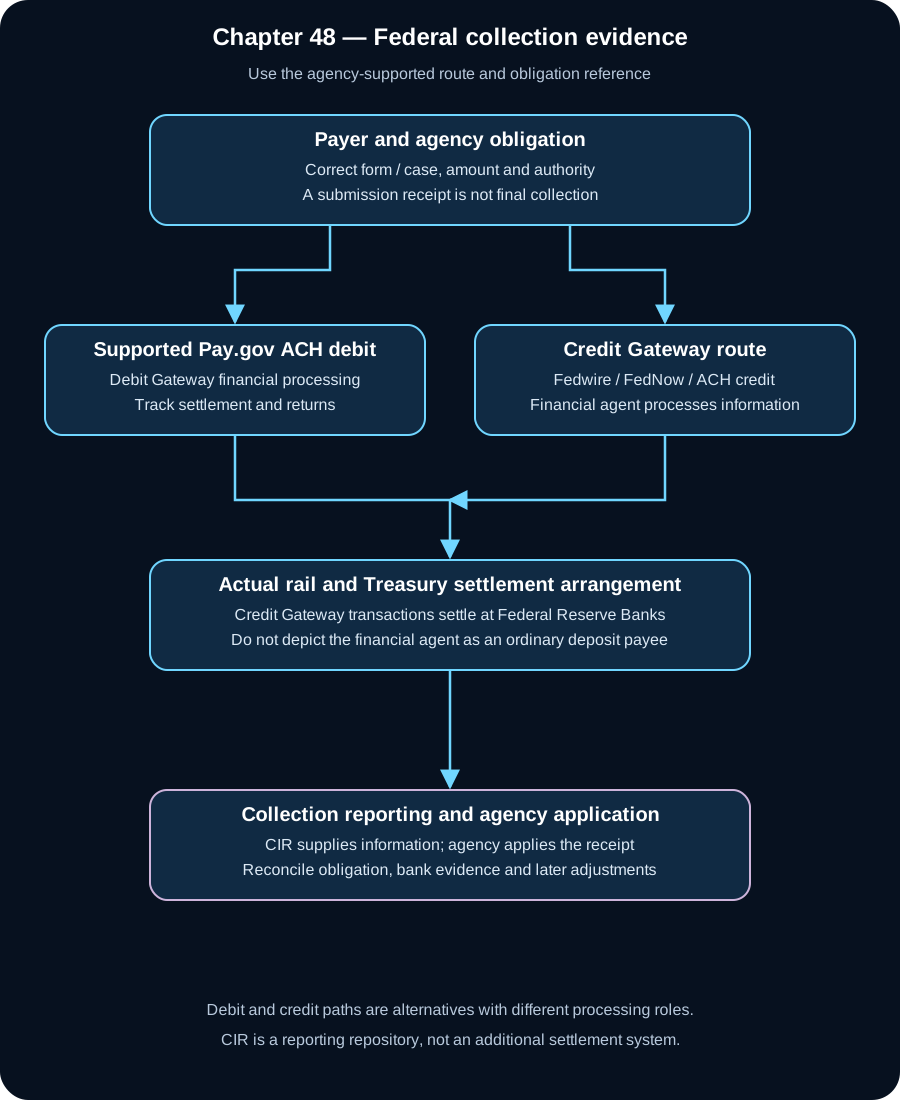
The diagram separates the debit and credit paths and then joins their reporting to the agency's receivable. The underlying rail and Treasury arrangement determine settlement. CIR supplies collection information; it does not become an additional settlement account because the agency can see the receipt there.
A bank building an agency service needs the current agency enrollment, routing instructions, account references and technical specifications. Public diagrams are not a source for production account numbers or message fields. Never copy a beneficiary or reference from an unrelated agency's form and assume it is valid for the new collection.
11. Dates, cutoffs and government receipts
Government bills have an obligation due date, while the selected payment service has an initiation schedule and processing calendar. The agency also has rules for recognizing and applying receipts. The bank should explain which date the product commits to and what evidence is available at each stage.
An online channel can be available outside banking hours without making every supported method settle immediately. An instant credit route can operate continuously where the agency arrangement supports it, but that does not mean every agency bill accepts it. Treasury's Credit Gateway FedNow information is evidence of an available service, not universal agency participation.
The payer's receipt should identify the form or obligation, amount, selected method, date and confirmation reference. If the transaction is only scheduled, the receipt should not imply final financial collection. Agency reports should preserve subsequent returns and corrections so the receivable is not left closed after a failed collection.
Avoid inventing a single government-wide cutoff. Federal non-tax collections, federal taxes, state taxes and municipal charges have different arrangements. The correct implementation obtains the applicable schedule and due-date treatment for the precise obligation and payment method. Chapter 49 addresses federal tax execution separately.
12. Returns, refunds and agency investigations
A returned ACH debit can leave a government obligation unpaid even though the original portal submission succeeded. The agency's application process should connect the return to the receipt and apply the appropriate receivable treatment. The payer needs a clear explanation of what failed and how to make a valid replacement payment.
A refund is a separate authorized financial action or supported service process. It should reference the original receipt and the agency decision. An employee or provider should not initiate a refund to an arbitrary account supplied in an email. The identity, destination and authority checks remain necessary even when the original collection came from a government portal.
If a payer reports that money left its bank but the agency cannot locate it, investigate amount, date, routing, obligation reference and channel confirmation. A bank debit can prove one financial event without proving correct agency allocation. The case may belong with the collection service or agency application team rather than require another bank payment.
Retain both the original obligation and the payment history during correction. Changing a case reference in the current display should not erase where the payment was first applied. The agency and payer may need evidence to establish timely payment or correct an adverse status under the applicable rules.
13. Reconciliation and accounting across the three models
BNPL reconciliation links loan principal and schedule adjustments to collected installments and merchant funding. The loan ledger, collection bank account and merchant payable do not necessarily move together. An installment received should be applied to the correct loan and components under the actual servicing policy, rather than assigned by amount alone.
Payroll-deduction reconciliation links amounts withheld by employee and period to employer payables, remittance and recipient allocation. In a simplified employer model, withholding creates or maintains a payable to the recipient; remittance reduces that payable and cash. The entry details depend on payroll accounting, but the key control is that withheld money does not disappear into an unexplained net-wage difference.
Government reconciliation links the agency obligation, channel receipt, settlement or return information and agency application. The agency should use the relevant Treasury reporting evidence and its own accounting requirements. A CIR record is a reporting source, not permission to ignore an unmatched obligation or subsequent adjustment.
In all three models, reconcile counts as well as values. Ten $60 deductions and one $600 government receipt have the same aggregate amount but entirely different populations. A control that checks only total dollars can conceal allocation errors affecting particular people or obligations.
Reporting should identify unresolved amounts by owner and next action: lender servicing, payroll calculation, remittance delivery, agency application or bank processing. That classification allows the bank to route a case accurately rather than declare every discrepancy an ACH issue.
14. Implementing institutional collections inside a bank
Create a service-specific model for obligation, authority, collection instruction, financial outcome and application. Reuse technical components where appropriate, but keep the business objects distinct. A payroll deduction consent and a loan repayment authorization should not share a generic approved flag without a defined meaning.
Interfaces should carry stable obligation and payment references, amount, relevant period and current outcome. Use actual provider or agency specifications for production formats. A generic bank API can orchestrate an instruction, but it does not replace the required ACH, card or government data needed downstream. Translation must preserve the references needed to investigate and apply funds.
Risk controls should address identity, authority changes, duplicate collections, altered creditor destinations and excessive or unsupported retries. Sanctions and AML responsibilities should be mapped to the bank's and other participants' actual roles. Payroll information and government identifiers require restricted access and careful handling in support logs.
Pilot the exception as well as the collection. For BNPL, test a refund while an installment is pending. For payroll deduction, test correct withholding with failed remittance. For government bills, test a financially received payment with an invalid obligation reference. Each should reach a responsible owner without creating a second collection merely to fix a status problem.
15. Worked cases and implementation decisions
A BNPL refund arrives between installments
The fictional $600 purchase has two confirmed $150 repayments. A full refund is approved while the third $150 collection is uncertain. The lender must coordinate the loan adjustment and determine whether the third collection completed. It should not close the case assuming only $300 was received and ignore a later $150 receipt.
For the exercise, prepare two outcomes: the third attempt fails, or it completes. In each, identify the confirmed customer payments, the revised loan obligation and the refund due under the product's actual treatment. The additional receipt changes the customer's financial position even though the purchase cancellation is the same.
A deduction appears on the payslip but not with the provider
An employee's payslip shows $60 withheld. The benefit provider reports no contribution. Check the deduction payable, remittance population, bank outcome and allocation file. If the employer never sent the amount, the employee's net-pay bank credit is not the failed leg. If the bank payment completed but the member reference is wrong, application requires correction.
Ask the learner to identify who can fix each failure. Payroll corrects the deduction record, the payment team handles delivery, and the benefit provider applies the contribution. The bank should connect the evidence without promising that a successful ACH entry alone restored the employee's benefit status.
An employee leaves after the deduction was taken
The employer stops future payroll for a departing employee but has already withheld a final $60 contribution. That amount still needs the appropriate remittance or approved correction. Deactivating the employee profile should not remove the payable from the batch or erase the member reference.
Test the exit process with a pending remittance and a later return. Historical access should allow the responsible team to complete the obligation even though no new wage payment will occur. The correct result is an explained final balance, not an inactive record that prevents investigation.
A government portal acknowledges a failed debit
A business submits a $600 agency payment and receives a confirmation. The ACH debit later returns. The portal acknowledgment remains evidence of submission, but financial collection failed. The agency must apply the supported receivable treatment and tell the payer how to resolve the outstanding obligation.
The bank should not reverse the historical submission record or mark the debt extinguished because a receipt number exists. The learner should connect confirmation, returned financial instruction and agency balance, then identify the authorized replacement process and relevant date treatment.
A government payment reaches the wrong obligation
The payer's bank evidence supports a $600 payment, but the agency has applied it to another case. Establish the original reference and agency posting before advising another payment. A correction to allocation can be required without a new movement of money.
If the agency ultimately requires a refund and new payment under its rules, preserve both financial records and the authorization. Do not invent a right to move funds between obligations without the agency's process. The bank's role is to supply accurate evidence and execute supported instructions.
A requirement cites the withdrawn BNPL interpretation
A draft system requirement says every BNPL customer account must use credit-card treatment solely because of the CFPB's 2024 interpretation. The current compliance page records its withdrawal. Escalate the legal basis for review and replace the unsupported universal statement with the approved product-specific requirement.
Retain useful dispute and refund controls where justified by other requirements, contracts or policy. The exercise tests source status and traceability, not whether the team can remove the most controls. A correct audit explains both the changed authority and the reason for the resulting implementation.
16. Role checklist and learning closure
Product should distinguish lending repayment, payroll allocation and government collection. Business analysis should preserve the correct obligation and authority. Technology should maintain references through financial processing and application. Operations should route failed collection, failed remittance and misapplication separately. Finance should reconcile the relevant loan, deduction payable or government receivable to actual financial evidence.
Legal and compliance teams should confirm product-specific requirements and current source status. The learner should now be able to explain why a loan schedule, payslip and government confirmation can all be accurate records without any of them alone proving final receipt by the intended creditor.
Chapter 49 moves to the payer's execution desk: payroll, supplier and tax payments prepared, funded, released and reconciled through a bank.
Authoritative references
Sources checked on October 5, 2026. Historical BNPL research supplies context, while the current CFPB compliance page establishes the withdrawal status. Payroll and agency examples require their own applicable legal and contractual review.
This application uses JavaScript for the full interactive experience. This text summary is served for accessibility and search indexing.