Canadian PAD Fundamentals and Rule H1. Understand the Canadian pre-authorized debit model, participant roles and the Rule H1 framework.
Canada Payments & Collections · Block 5 · Chapter 21 of 75
Think about the first Tuesday of the month in any Canadian bank branch or contact centre. A customer phones because the mortgage payment left the account two days earlier than expected. Another phones because the electricity bill debit was larger than last month and nobody warned them. A small business owner asks why three tenant rent collections came back unpaid and whether the agreements still stand. A treasurer at a mid-sized company wants to know why a subsidiary sweep was reversed and who authorized the reversal. None of these people use the phrase pre-authorized debit. All of them are living inside it. The mortgage, the utility bill, the rent collection, the intercompany sweep: each is a pull of money initiated by the party being paid, moving against an authorization the account holder gave earlier, clearing through the retail batch system under a rulebook framework most customers have never heard of. This chapter teaches you that framework at fundamentals depth so you can answer each of those calls honestly and route each problem to the right owner.
The model is simple to state and demanding to operate: the payor authorizes the biller once, and the biller initiates each collection as an automated funds transfer debit clearing through the Automated Clearing Settlement System under Rule H1. Convenience and forecastability are purchased with a bargain: provable authority, fair warning, accepted reversals, stopping when authority ends. The biller bank vouches for its billers before the first file; the payor bank decides each debit and honors payor protections; the clearing system moves interbank positions and records entries, never owing customers money or judging authorization. Keeping those duties straight is this chapter skill.
A few status facts anchor everything that follows, stated once so later sections can build on them. Pre-authorized debits are payee-initiated pulls that clear as automated funds transfer debits through the Automated Clearing Settlement System, which is live and operating as Canada retail batch clearing with deferred net settlement. Rule H1 is the Payments Canada scheme rule that governs the exchange for clearing and settlement of these debits, and the binding detail lives in the current published version of that rule, not in any training chapter. The current published Rule H1 and Payments Canada guides give the binding values stated below: standard variable pre-notification and first-PAD confirmation are 10 calendar days, category-specific recourse windows are 90 or 10 calendar days, one NSF re-presentment is permitted within 30 days for the exact same amount, and a payor cancellation notice period in the agreement may not exceed 30 calendar days. Procedures must still cite the current Rule H1 version and transaction code. The Real-Time Rail is a planned instant system; Payments Canada currently states that it will launch in Q4 2026: it is not a system you can send a pre-authorized debit to today, and this chapter mentions it only in passing where rail choice is discussed. Biller identification for bill payment routing uses the corporate creditor identification number database, which assigns unique numbers to billers so their clients bill payments route correctly; the PAD routing itself runs on the account identifier triple plus automated funds transfer records described in Section 5. Nothing here replaces the rulebook, the system closure calendar, your bank published schedules, or legal advice on any specific dispute.
How to read this chapter inside its block matters as much as any single section. This is the fundamentals chapter for pre-authorized debits: it teaches the model, the participants, the flow, the data, the framework shape, the controls, the exceptions at classification level, the posting and reconciliation view, and what a bank must do to offer the service. Later chapters own the deep detail, and this chapter points forward to them deliberately rather than competing with them. The agreements chapter owns mandate drafting, the mandatory and optional elements of the payor agreement, verification methods, and the handling of paper and electronic forms. The non-sufficient-funds and returns chapter owns dishonour reasons, retry discipline, and the funds-side handling of unpaid collections. The disputes chapter owns the reimbursement claim mechanics, the evidence packages, and the runbooks for contested debits. Whenever this chapter summarizes one of those topics in a paragraph and moves on, that is the division of labour working as designed. Follow the forward pointers; they are part of the course architecture, and designing procedures or arguing cases from this chapter alone would be misusing it.
Source-layer labels. Scheme rule: Payments Canada Rule H1 and ACSS rules/standards govern exchange, agreement evidence, notices, returns and recourse. Regulatory guidance/law: FCAC consumer guidance, the Retail Payment Activities Act, FINTRAC requirements and OSFI guidance apply only where their scope reaches the institution or provider. Bank-specific implementation: channels, authentication, fraud scoring, limits, cutoffs, holds, availability, posting order, alerts, retention schedules and vendor controls are institution procedures unless a cited rule or law says otherwise. Interac services: Interac products are separate scheme/product offerings; do not treat an Interac Direct recurring or pre-authorized payment as an ACSS Rule H1 PAD without confirming the product's legal and clearing path.
What you should be able to do after this chapter
After working through this chapter, you should be able to:
- explain in plain language what a Canadian pre-authorized debit is, why it is a pull rather than a push, and why the payor authorization given earlier is the legal and operational foundation of every later collection;
- trace a collection from agreement through billing, validation, release, ACSS clearing, pay-or-return, posting, and the recourse window;
- name payor, payor bank, biller, and sponsoring biller bank, plus Payments Canada clearing and Bank of Canada settlement, stating what each owns and never owns;
- explain the biller bank sponsorship duty functionally: the undertaking with the biller, the review of agreement forms and verification methods, and the warrant the bank carries for every file it releases;
- distinguish the four Rule H1 categories—personal, business, cash management and funds transfer—and choose the right category from the relationship and purpose rather than from amount or frequency;
- describe the four functional pillars of the Rule H1 framework, agreement as authority, advance notice of what is coming, recourse when pulls go wrong, and cancellation ending future pulls, without quoting rule language and without asserting any timeframe as fixed;
- discuss notice, recourse and cancellation timeframes only in hedged terms, always directing the reader to confirm the current Rule H1 text, and explain why training material must never hard-code day counts;
- explain how pre-authorized debit clearing fits inside deferred net batch settlement, why interbank positions settle on the cycle while return rights survive afterwards, and why a posted debit is not the same event as final settlement;
- list what data each collection needs, the account identifier triple, the automated funds transfer batch and item records, the linkage back to the stored agreement, the remittance the biller needs for cash application, and the return reason linkage on the way back;
- explain the role of the corporate creditor identification number database in identifying billers for bill payment routing and place it correctly beside PAD routing rather than confusing the two;
- compare a PAD pull against an automated funds transfer credit push and against a bill payment push to a biller, and advise a customer in thirty seconds which style fits their business event;
- place fraud, authorization, sanctions and record-keeping controls at the correct point in the flow, before release wherever prevention is the goal, and explain why screening after release is recovery rather than prevention;
- classify dishonours, returns, reversals, error corrections, recalls and investigations correctly, and describe recovery that creates linked new events rather than editing history;
- explain posting, accounting, liquidity, reporting and three-way reconciliation for PAD flows from both the payor bank view and the biller bank view, including how returns and reversals move through the books;
- describe what a bank must do to offer PAD services, onboard and oversee billers, test changes, monitor portfolios, and stay resilient, including how to talk about the planned Real-Time Rail without routing anything to it;
- work through fictional but realistic Canadian cases, a household utility collection, a supplier business collection, and a treasury sweep, and extract the control lesson from each;
- navigate confidently to the later chapters for agreement drafting depth, non-sufficient-funds and return handling, and dispute runbooks, and explain to a colleague why each question belongs where it does.
For a roughly 60-minute core session, spend about 10 minutes on this introduction and Section 1 with the comparison diagram, 15 minutes on Sections 2–4 with the participant map and the pull-model diagram, 10 minutes on Sections 5–6 with the categories and Rule H1 framework diagrams, 10 minutes on Sections 7–9, and 10 minutes on the fictional cases in Section 11, with 5 minutes on takeaways and references in Section 12. Treat these timings as a study guide. The agreements, non-sufficient-funds and disputes chapters are follow-up study; completing the whole block takes longer.
Chapter navigator
- Business context and customer need
- Participants, responsibilities and system boundaries
- Initiation, validation and bank processing
- Clearing or exchange, settlement and finality
- Data, identifiers, messages and references
- Rules, cutoffs, service levels and customer impact
- Fraud, compliance and operational controls
- Exceptions, investigations and recovery
- Posting, accounting, liquidity, reporting and reconciliation
- Bank implementation, testing and resilience
- Practical Canadian examples
- Key takeaways and authoritative references
1. Business context and customer need
Start with a Scarborough household holding a mortgage, two mobile contracts, electricity, insurance, a savings contribution and a gym membership: seven obligations, seven due dates, seven monthly chances to forget or mistype. They authorize each biller to collect automatically and monitor statements instead of scheduling payments. When it fails, calls arrive in clusters: early debits, changed amounts without warning, duplicates, a cancelled membership still collecting. Each complaint is a pull question in ordinary language, and the banker who thinks in the pull model resolves in minutes what takes others days.
The biller side faces one arithmetic: thousands of modest inflows tied to billing events, each expensive to chase. Voluntary payment timetables mean staffing collections for the worst month; scheduled pulls against standing authority convert chaos into forecast, this many collections on this date with a known dishonour rate to provision against. That forecast is the business case, and it explains biller investment in onboarding, notice discipline and reconciliation. The pull model concentrates credit risk and operational work into measurable processes rather than scattering them across missed due dates.
The same logic runs inside companies: parents sweeping subsidiary accounts, franchisors collecting royalties, distributors collecting from dealers. These business pulls are larger and fewer, reviewed by treasury staff who reconcile daily and notice anomalies within hours, while households may notice within weeks. That detection-speed difference is why the framework treats categories differently, a theme Section 6 develops and later chapters operate.
The customer questions cluster into a short list every section answers: automatic or per-action, when debited and with what warning, what happens on amount or date changes, short funds, or debits after cancellation, how to stop future pulls without cancelling the bill, what proof of authorization exists, and why a posted debit can still reverse. Each has an honest answer; each shortcut, fixed dates on batch timing, posted means final, bank cancellation ends the debt, creates the Tuesday queues.
A pre-authorized debit is one of three common ways a Canadian bill gets paid, and the advisory skill is matching the event to the style. In the pull, the biller initiates on schedule against standing authority: automatic for the payor, forecastable for the biller, carrying return and reversal exposure both banks manage. In the automated funds transfer credit push, the payer initiates each payment: full timing control, no pull disputes, but every payment must be released and cash application depends on strong remittance data. In the bill payment push, the payer acts through online banking toward a biller identified in the corporate creditor identification number database: convenient for one-off bills, exposed to misdirection and slow application when references are thin. Recurring credit-card charges sit outside this comparison entirely: they are not pre-authorized debits and sit outside Rule H1. The diagram below carries the thirty-second version for front-line use.
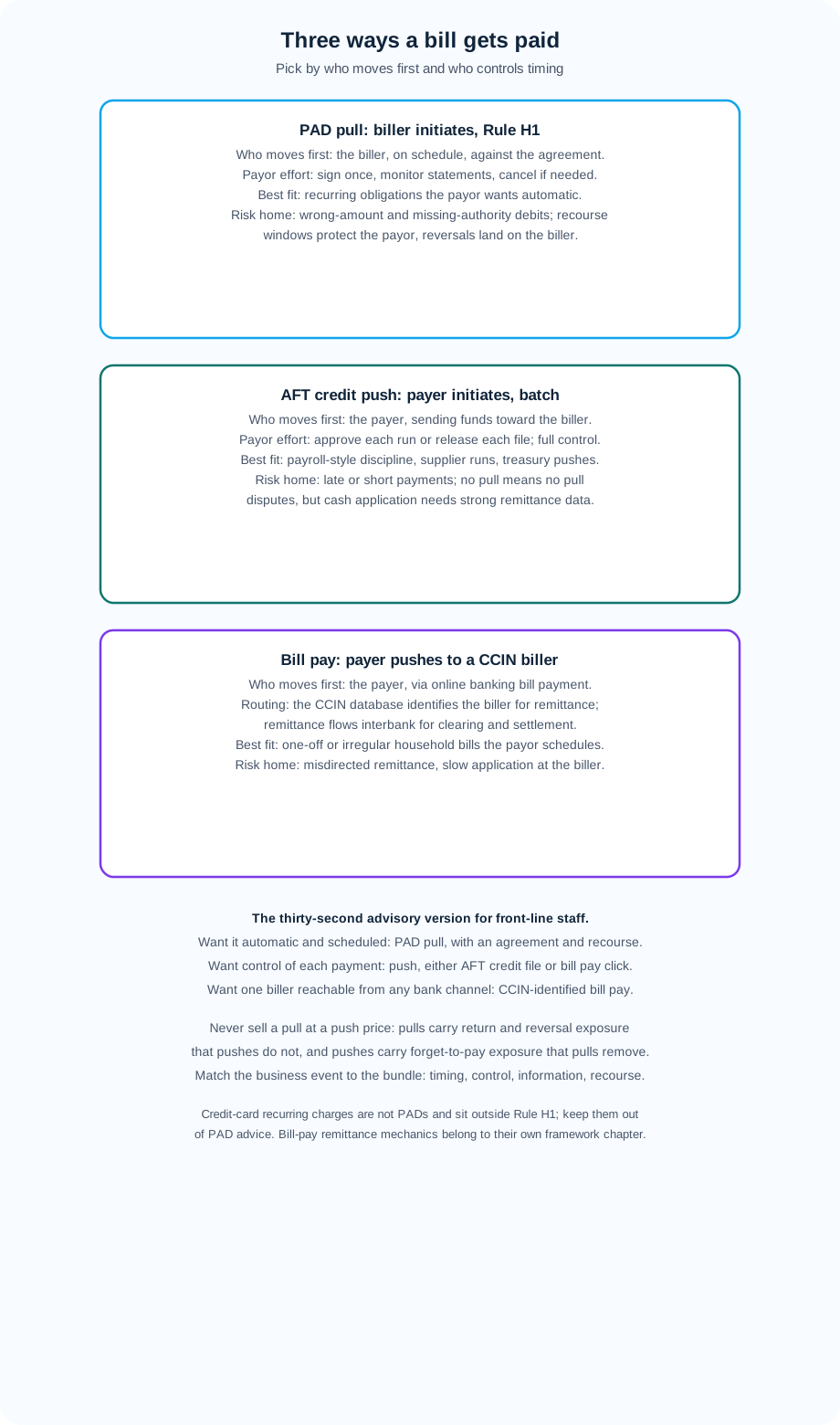
The diagram above is the advisory anchor for the chapter. Use it whenever anyone asks which payment style fits: who moves first and who controls timing decide the answer, and each style carries a different risk home. The rest of the chapter explains what happens after the pull is chosen, starting with who stands where when money moves.
2. Participants, responsibilities and system boundaries
Every pre-authorized debit involves more parties than the two customers who experience it as one biller collecting from one account. The bank professional must keep five layers straight: the customers on each side, the banks in their distinct roles, the system operator, the settlement agent, and the agents and service providers working behind the banks. Confusing any two produces the classic errors this chapter exists to correct: treating the clearing system as the party that owes the customer money, treating the biller bank as if it guarantees the biller behaviour, treating a file-building processor as if it warrants the items, or treating an indirect clearer as if it settles directly. Each layer owns named duties, and investigations walk the layers in order, which is why learning the map once here pays for itself in every later chapter of the block.
Start with the customers. The payor owns the account to be debited and grants the authority: the householder authorizing the utility, the franchisee authorizing the franchisor, the subsidiary whose account the parent sweeps. The payor duties are few but real: give accurate account details, understand the amount and timing rules in the agreement, keep the account fundable, monitor statements, and use the cancellation path the agreement describes when the arrangement should end. The biller, called the payee in rule language, holds the initiative and the heavier duties: obtain a proper agreement before the first collection, store it retrievably, build accurate files on schedule, give expected notices, absorb returns and reversals, reconcile every run, and stop presenting when authority ends. The economic obligation and the authorization live between the two customers; the banks move and protect money around that relationship without joining the underlying contract. Payor duties are few but real: accurate account details, understanding the amount and timing rules, keeping the account fundable, monitoring statements, and using the agreement cancellation path when the arrangement should end.
The banks stand on either side with asymmetric duties that mirror the pull direction. The payor bank is the decision point: it checks account state, funds, stop and hold flags and category handling, then posts the debit or dishonours it back with a reason. It is also the protection desk, receiving reimbursement claims for agreement-breaking collections, assessing them against the current rule, reimbursing where due, and routing reversals back to land on the biller. The biller bank is the gatekeeper: before volume flows it signs the biller undertaking, reviews agreement forms and payor-verification methods for adequacy, and thereafter validates, warrants and releases every file into clearing while handling returns and reversals with clear reporting. Neither bank guarantees the other side conduct. Each owns its side controls and clearing duties; the framework allocates the rest.
Payments Canada operates the clearing layer: exchange and netting infrastructure, the position calculation, and the published framework of rulebook, standards and closure calendar. It holds no customer accounts, decides no pay-or-return outcome, funds no position, and stores no authorizations. The Bank of Canada wears two hats that must never be blended: settlement agent providing the accounts on which net positions extinguish, and overseer of designated payment systems for payments system risk. Remember which question each hat answers so incident conversations do not blend them.
Behind the banks sit intermediaries and clearing capacities. Processors and bureaus may build files or host agreement images, but the releasing bank warrant never moves upstream to whoever pressed the keys: write down who authenticates, validates, warrants, returns, reconciles and stores evidence before volume flows. On capacity, a direct clearer exchanges and settles for itself while an indirect clearer acts through a direct clearer as agent under defined cutoffs, funding and reporting. An indirect bank timing and incident handling are bounded by its agent timetable, which front-line staff must know before promising anything.
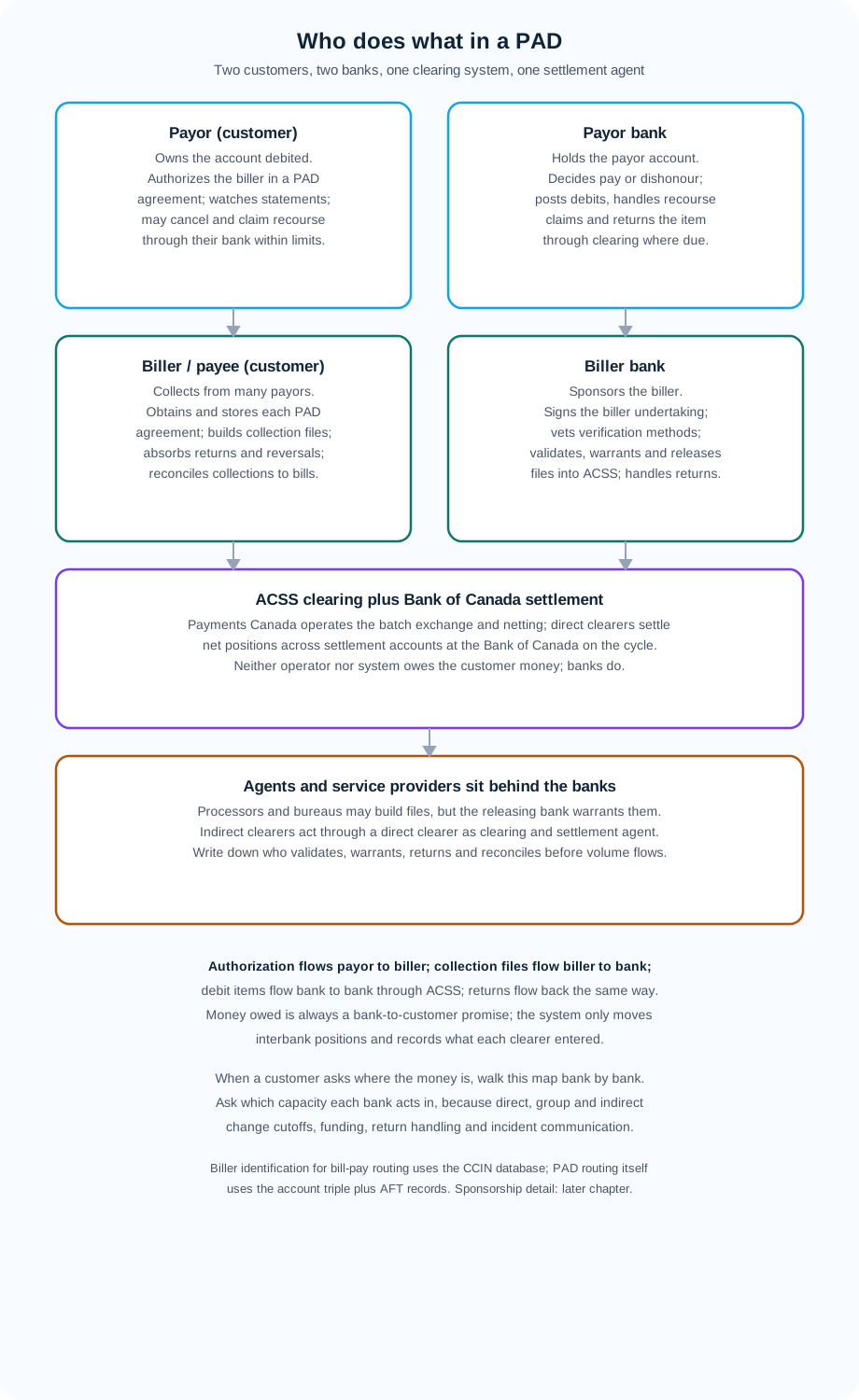
Whenever anyone says the bank will, ask which bank in which capacity, because the answer changes cutoffs, funding, returns and incident handling. Biller identification for bill payment routing uses the corporate creditor identification number database, while PAD routing uses the account triple plus automated funds transfer records; Section 5 keeps those addressing worlds apart. Two confusions deserve naming because they recur in incident reviews. Treating the clearing system as the party that owes the customer money sends investigations to an operator that holds no accounts and decides no outcomes. Treating a file-building processor as the warranting party sends accountability to a vendor that pressed keys while the releasing bank signed the warrant. Both errors waste the first day of an incident, which is why this map is worth memorizing rather than skimming.
3. Initiation, validation and bank processing
Every collection starts before any system sees it, in the same place every batch item starts: a customer-side instruction entering a bank channel and passing through the bank payment operations before any external clearing sees it. For pulls, the instruction is created by the collecting side rather than the paying side, which reverses the intuition bankers trained on pushes must unlearn. The biller billing run decides who owes what on which date; the biller collection process converts those decisions into a file of debit instructions; the biller bank validates and releases that file into clearing; the payor bank decides each item; the interbank positions settle on the cycle. Authorization evidence for the whole chain was created earlier, at agreement signing, and stored by the biller. Nothing about the clearing messages recreates that authority. They merely assert it, item after item, with the biller bank warrant standing behind each assertion. Holding that sequence in mind prevents the most common processing error in pull operations: treating a well-formed file as an authorized file. Format validity and authority are different checks, owned by different parties, and both must pass before release.
Initiation captures six facts plus authority: which payor, which account, how much under which amount rule, on which date under which timing rule, with what references, and under which stored agreement. A utility run produces variable amounts per meter reading; a mortgage servicer fixed amounts on fixed dates; a property manager rents with tenancy variations; a treasury function sweeps computed from balances. Each becomes an internal record with a durable identifier surviving every later stage, without which the biller cannot match returns or prove what was instructed. Turn billing decisions into releasable, authorized, reference-carrying instructions, or hold them with a reason while holding is cheap: held instructions cost a same-day fix, released bad data costs a return cycle measured in days. The delivery channel changes nothing about this discipline: billing platform export, host-to-host file or processor portal upload, whatever arrives is normalized into one internal instruction record before validation begins.
Validation is where preventable failures die, and it completes before release. Account checks confirm each destination triple survives exchange. Duplicate and anomaly checks compare against biller history: doubled totals, volume spikes, amounts or dates breaking agreement rules. Linkage checks confirm each item points to a stored matching agreement. Date checks confirm processable business days with balancing control totals; completeness checks confirm cash-application references. Repair or reject here, with reason, repair path and next window. Then the control stack in order: authentication, limits, fraud scoring, sanctions dispositions, record capture, cutoff assignment. Screening after release is recovery on return cycles, not prevention.
Release commits the file with the bank warrant implied: the bank stands behind each item authorization basis and data quality. It records release time, window, gateway acknowledgement and external references, because every later inquiry starts from that record. For an indirect clearer the agent cutoff decides the window, and the agency agreement should say so plainly. After release the bank tracks acceptances, watches for dishonours and reversals, posts credits under availability rules respecting return exposure, reports, and feeds reconciliation. Amendments after release are narrow: permitted pre-settlement correction only, never silent editing, with the original identifier following every correction. Two principles decide survival: route by policy, a collection that missed its window cannot be wished into same-day finality; and fail visibly and early, a bank that rejects with a reason and a next-window promise creates one call, while one that fails in clearing creates a week of investigations.
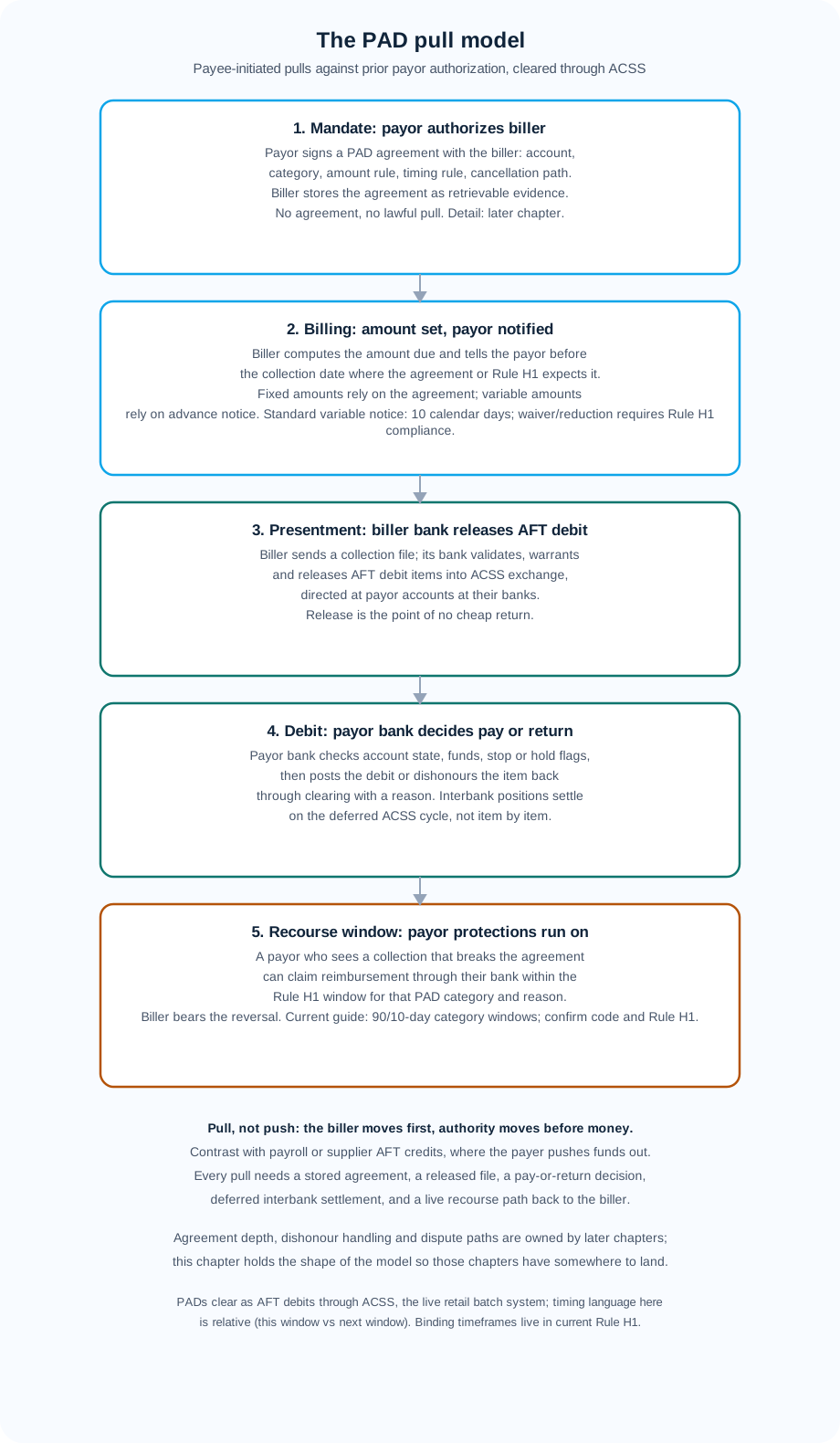
The diagram above is the flow anchor: mandate, billing, presentment, debit, recourse. The asymmetry defines pulls: the party that moves first is not the party that pays. Every later section opens one box or arrow; the agreements, non-sufficient-funds and disputes chapters later open theirs into full rooms.
4. Clearing or exchange, settlement and finality
If Section 3 is about the bank decision, this section is about the system promise, and the most expensive misunderstandings in pull payments come from blending six events that are genuinely different. Exchange delivers items and data between participants. Clearing validates, sorts and positions those items by stream and window. Settlement moves value finally between settlement accounts. Posting debits and credits customer accounts on bank books. Availability tells the biller the collected funds may be used. Finality tells the system the value movement cannot be unwound through the settlement mechanism. Every rail combines these differently, and the pull model adds a seventh shadow event that confuses newcomers: recourse survival, the fact that defined return and reversal rights for the underlying customer debits outlive interbank settlement. Learn the six words plus the shadow, use each exactly, and half of pull confusion disappears from customer communication and incident tickets alike.
The Automated Clearing Settlement System defers settlement by design, and the deferral is the whole point of batch economics. Participants exchange debit and credit items during daytime batch windows through their direct or agency arrangements. Each direct clearer enters the volumes and values of the items for which it is owed funds, and those entries combine with the other streams into net balances: a single net amount each direct clearer owes to the system or is owed by it. Settlement of the previous cycle net balances then occurs on the morning of the following business day, when direct clearers with net owing positions send settlement payments and the resulting debits and credits across settlement accounts at the Bank of Canada extinguish the balances. Thousands of customer collections collapse into one funding event per clearer. That collapse is the efficiency of batch, and the reason treasury teams forecast nets rather than items. Pre-authorized debits ride this exact machinery as automated funds transfer debits: nothing about being a pull changes the clearing physics. The pull character changes authorization, notice, recourse and cancellation. It does not change netting, the settlement morning, or the books on which positions extinguish.
Finality here is positional and rule-governed, not per-item and instant. When the cycle completes, interbank positions settle in central-bank money, yet return rights for the underlying debits survive for defined reasons: insufficient funds, closed accounts, missing authority, broken terms, processing errors. A biller credit can post while the payor retains recourse that reverses the collection back onto the biller. That is the pull batch bargain: efficiency and forecastability at the cost of deferred finality and reversal exposure. The honest vocabulary keeps both conversations straight: the position settled, the item posted, availability granted subject to return rights, and customer-debit finality awaits the applicable window, whose length is confirmed from the current Rule H1 text.
Contrast sharpens the advice: in the high-value system each payment settles individually in real time with no netting, and once settled it is final, so recovery needs a new payment with beneficiary agreement. Batch inverts every property. The planned Real-Time Rail, mentioned here only in passing, will add instant capability when it launches without changing today routing. Never promise same-day finality on batch timing: the channel may only offer what operations confirms for this instruction, this rail, this business day. Customer communication must use the six words exactly. Sent means released from bank processing. Accepted means clearing took it. Settled means interbank value moved. Posted means the account was debited or credited. Available means the party may use the funds, subject to holds or return rights. Final means the value cannot be unwound through settlement. Most pull complaints are vocabulary failures wearing operational costumes: the biller heard collected and understood final, the payor heard scheduled and understood guaranteed, and nobody corrected the translation until money moved.
Pulls create the availability trap that catches new billers: availability granted before the recourse window closes is provisional in substance even when it looks final on a statement. A prudent biller bank sets holds reflecting reversal exposure by category and history; a prudent biller treats early availability as working funds, reconciling daily against the historical reversal rate. Operations closes each cycle only when positions, confirmations and account entries agree, the three-way match of Section 9. Exchange mechanics and settlement-lifecycle depth belong to their dedicated programme chapters; this section gave pulls their vocabulary and shape.
5. Data, identifiers, messages and references
If clearing is the road network, data is the addressing, and Canadian pull payments fail far more often from bad addressing and thin references than from system outages. The discipline, captured in three verbs, is the same as for any batch flow: capture completely, validate early, preserve identity end to end. What differs for pulls is the evidence linkage: every debit item must point back to a stored agreement that does not itself travel through clearing, which means the bank and biller data handling must keep two worlds consistent, the clearing world of batch and item records and the authority world of agreements, notices and cancellation records. Lose the linkage and a routine dispute becomes a reconstruction project. Keep it and most disputes resolve on paper in one exchange.
Domestic routing starts with the account identifier triple, institution, transit and account number, validated against the financial institutions file for reachability. Exchange sorts on it, so an unreachable destination must be rejected or repaired before release, never released to see what happens: batch prices that error as a return cycle measured in days. The cheapest fix is always before release. The upstream twin is biller master-data quality, validated at onboarding and revalidated on change: a biller accepting account changes by casual unverified email will eventually collect from the wrong account, and no downstream control can prevent what onboarding allowed.
Each collection adds its data layer: batch headers, item records, amounts, dates and balancing control totals that catch truncated files before they poison clearing; linkage to the payor authorization, retrievable as evidence weeks later; transaction codes distinguishing pulls from pushes; exact return reason codes that keep returns machine-processable; and the invoice and period references the biller needs for cash application, whose absence creates unapplied-cash queues. Respect that the standards exist, use current versions, validate before release, and log truncation wherever legacy formats meet richer structured data on the path toward ISO 20022. Map explicitly at every format boundary, log what was truncated or enriched, and carry the original customer reference forward so the beneficiary can still reconcile without manual work.
Five references must survive every pull: the biller collection identifier for cash application, the bank instruction identifier for tracking and investigation, the clearing trace for the system view, the return linkage so dishonours find their originals, and the payor-facing reference that lets households and treasuries review statements and trigger claims. Drop any one and a different team pays. Reference discipline is unglamorous and decisive. Teach it to every new joiner in biller operations before anything else, because every downstream control quietly assumes the references survived.
Two addressing worlds must stay apart. The corporate creditor identification number database identifies billers for bill-pay routing, maintained on a published cycle: the payer pushes toward a numbered biller with remittance carrying biller number plus customer reference. The PAD world differs: the biller pulls from payor accounts via the account triple plus transfer records, and the agreement, not a number, is the authority. One household may use both in a week; one biller may collect by pull while receiving bill-pay remittance. Know which world each transaction lives in before investigating. And preserve evidence, authorizations, changes, notices, validation, release and return records, retrievably for the full challenge window. Storage is cheap. Reconstruction is expensive.
6. Rules, cutoffs, service levels and customer impact
Customers experience rules as promises: will the debit arrive on the expected date, how much warning comes first, when can collected funds be used, what happens if the debit is wrong, how does the customer stop the next one. The bank experiences rules as windows, obligations and evidence. This section connects the two at fundamentals depth. The current published Rule H1 and Payments Canada guides supply the values stated below; procedures must cite the version checked because rule text and transaction-code treatment can change. Bank-specific customer scripts must also state the applicable category, ground and item code rather than generalize across PADs.
The framework shape is four pillars. Agreement as authority: every pull needs a stored payor agreement the biller keeps and the sponsoring bank reviews before volume flows. Advance notice: variable collections warn the payor of amount and date early enough to fund, query or cancel; fixed ones rely on the agreement, and changes re-trigger notice. Recourse: agreement-breaking or unauthorized debits can be reimbursed through the payor bank inside category windows, with reversals landing on the biller. Cancellation: the payor can end authority by the agreement method and the biller must stop, though the underlying bill still needs a way to pay. The four pillars are functional here; operations reads the current published rule literally, including the values and transaction-code exceptions stated below.
Rule H1 has four categories, and they are not interchangeable. Personal PADs cover consumer goods or services. A personal claim for an unauthorized or agreement-inconsistent debit is generally available for 90 calendar days from the withdrawal. Business PADs cover goods or services related to a business or commercial activity; the comparable claim window is generally 10 days, but a business with no agreement has 90 days. Cash Management PADs transfer, consolidate or reposition funds between accounts of the same business or closely affiliated businesses at different financial institutions; under the current guide, recourse is limited to no agreement or erroneous processing, with a 90-day reporting window for those grounds. Funds Transfer PADs move an individual's funds between that individual's accounts at different financial institutions. Funds Transfer PADs coded 650 (electronic) or 83 (paper) carry no recourse within the Association rules except the no-agreement route; they may still be dishonoured within the next-business-day return window. Confirm the code and current Rule H1 text at onboarding. Category selection is by relationship and purpose, not amount or frequency; misclassification can apply the wrong notice, evidence and recourse treatment.
Timing attributes layer on top of category. Fixed-amount PADs must state the amount; if the amount changes, the payor generally receives written notice at least 10 calendar days before the first PAD at the new amount (the current Rule H1 sample notes an exception for a tax-rate reduction). Variable-amount PADs at set intervals require notice of the amount at least 10 calendar days before each debit, unless the parties mutually waive or shorten that period or the payor asks for the change; any reduction or waiver must be prominent and specifically accepted. Personal and business PADs also require confirmation of the agreement details at least 10 calendar days before the first due date, unless the payor waives that confirmation, in which case it must be provided within five calendar days after the first PAD. Triggered PADs use an unambiguous event or criterion; sporadic PADs require authorization before each debit; a one-time PAD must be identified as one-time and automatically terminates after the successful initial payment. Cancellation instructions must be in the agreement; a payor may revoke authorization at any time subject to a stated notice period not exceeding 30 calendar days. Agreement drafting is later-chapter discipline, but operations must enforce the current rule rather than invent shortcuts.
Service levels bundle timing with certainty, information and recourse. ACSS is a deferred-net retail batch system: exchange and clearing establish positions, and the previous day's net balances settle in the morning of the next business day through direct-clearer settlement accounts at the Bank of Canada. A customer credit or debit posting and the biller's available balance therefore do not erase Rule H1 return or reimbursement exposure. Cutoffs and value dates are stream-, participant- and bank-specific; use the current Payments Canada closure schedule plus the bank's published or internal timetable, not a hard-coded promise. The current Rule H1 changes effective July 27, 2026 also formalize the phase-out of paper PADs; paper PADs remain acceptable for exchange until December 1, 2028, after which they will no longer be acceptable items. The planned RTR is a separate, not-yet-production path as of this chapter date and must not be presented as a PAD route.
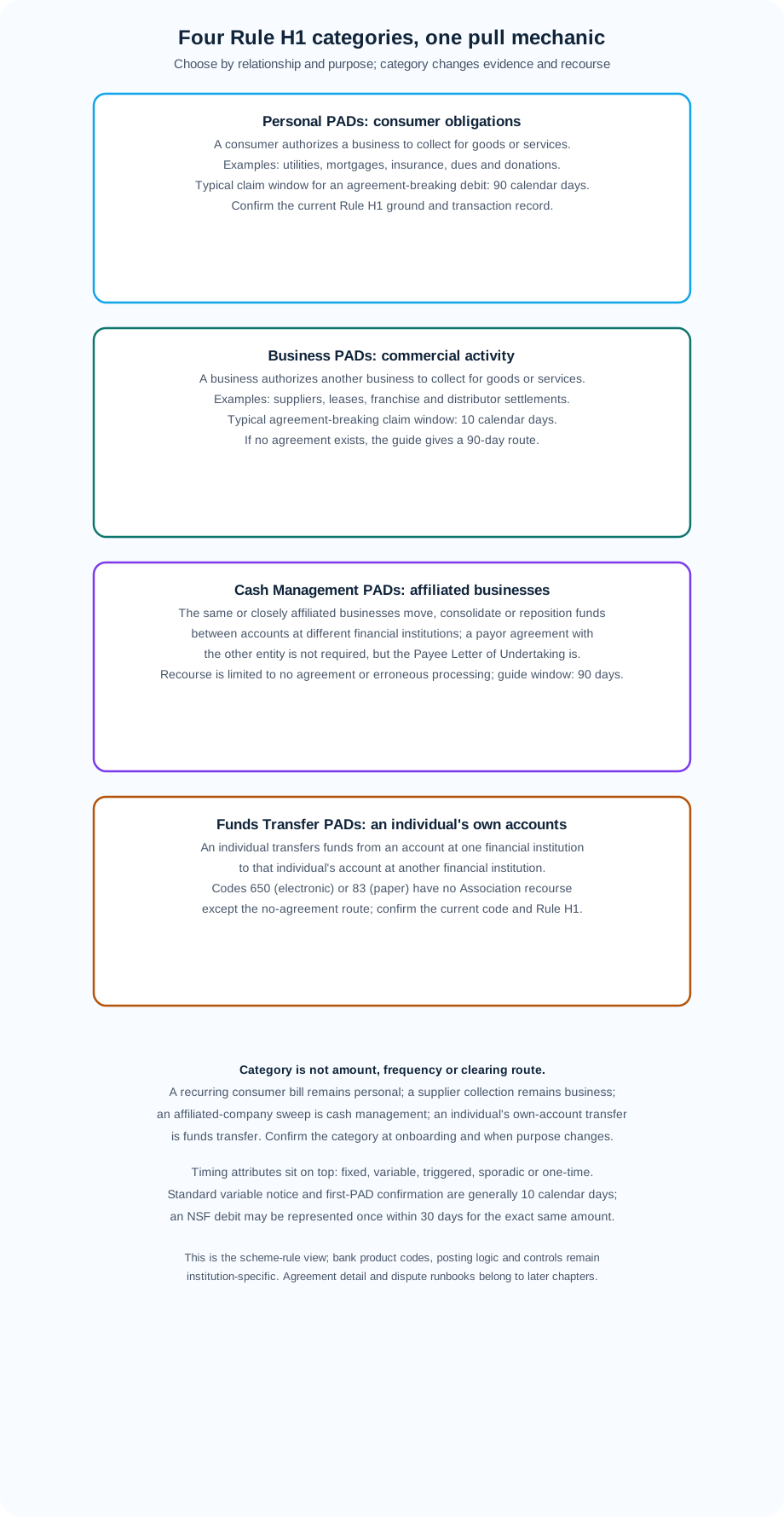
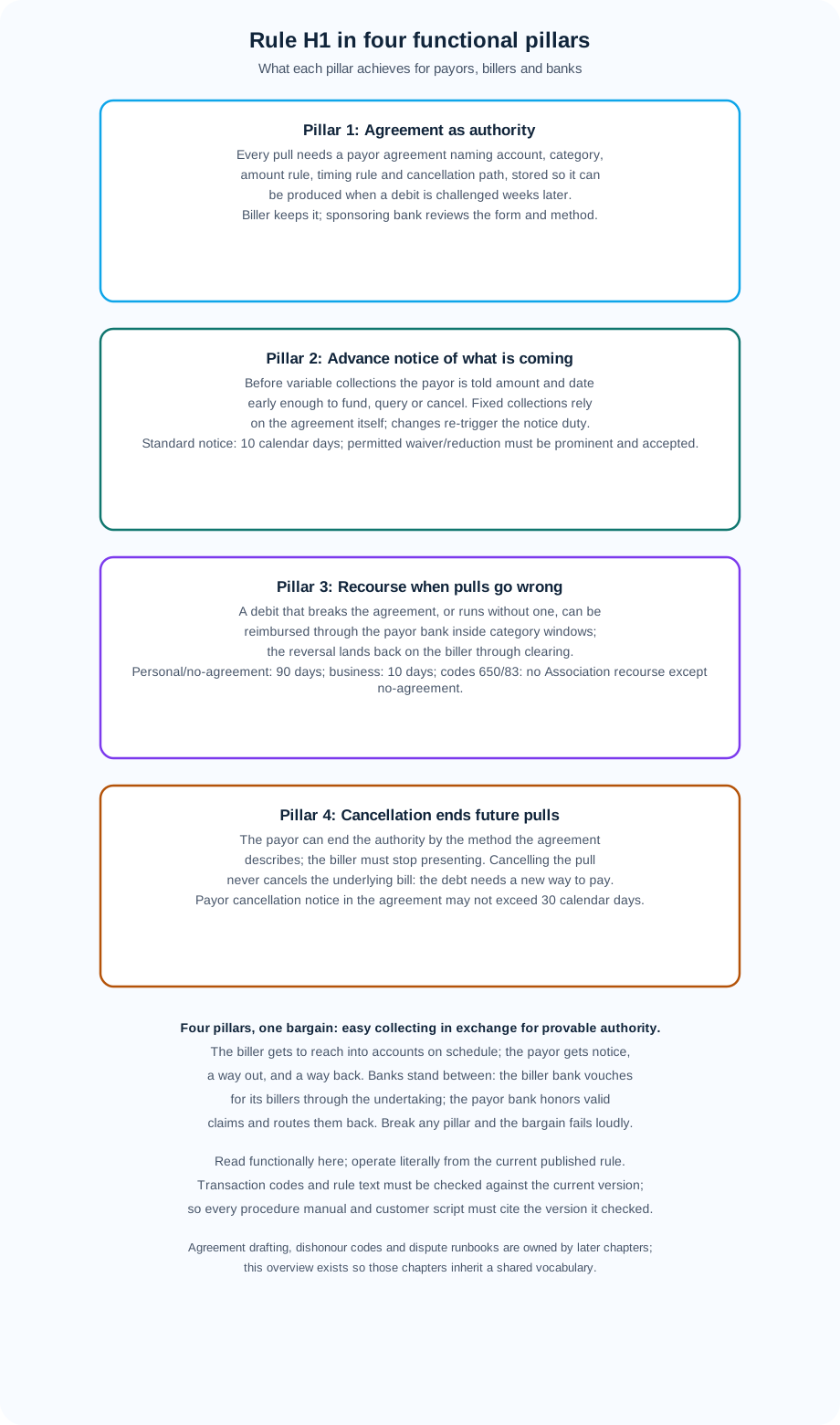
Customer communication must reflect finality honestly, using the vocabulary from Section 4 exactly. Sent means released from bank processing. Accepted means clearing took the item. Settled means interbank value moved. Posted means the customer account was debited or credited. Available means the party may use the funds, subject to holds or return rights. Final means the value cannot be unwound through the settlement mechanism. A batch posted must always be stated with return-rights awareness, especially for collections. Most pull complaints are vocabulary failures wearing operational costumes: the biller heard collected and understood final, the payor heard scheduled and understood guaranteed, and nobody corrected the translation until money moved unexpectedly. The two diagrams above give front-line staff the category and framework language to correct those translations at the first call rather than the fifth.
7. Fraud, compliance and operational controls
Controls fail most often not by absence but by placement. A verification review that starts only after a dispute arrives, a fraud hold that triggers after the biller has been told funds are available, a sanctions check that runs after value has settled, an authorization review that begins when the payor claims no agreement exists: each is a control that exists and still loses, because it runs on the wrong side of the event it was meant to govern. This section places each control family at the point in the pull flow where it can still change the outcome, and explains how the families interact. Rail-level control detail for fraud landscapes, reporting mechanics and screening systems lives in the programme later risk and compliance coverage; here the lesson is architectural. Prevention sits before release. Detection sits across processing and clearing. Evidence sits everywhere. Anything arranged otherwise is an incident report waiting for its date.
Fraud attacks four pull surfaces, each with a before-release control first. Takeover attacks initiation: meet it with authentication, behaviour verification and callbacks on high-risk detail changes. Origination fraud attacks the file with fictitious payors and inflated runs: meet it with onboarding, dual control over release and anomaly checks that hold unfamiliar runs. Incoming-side fraud uses mule accounts to collect and move on: score incoming credits too and watch new biller accounts with instant volume. Authority fraud presents debits without valid authorization: meet it with agreement evidence before presentment and honest dispute handling after. Each control costs before release and saves multiples after. That arithmetic is the business case operations must keep demonstrating to anyone tempted to release first and check later, because the history of pull losses is largely a history of checks deferred past the point where they could still change the outcome. Queues need named owners and ageing clocks: unowned queues are where returns, claims and evidence requests go stale, and stale exceptions become audit findings.
Authorization controls deserve emphasis because pulls move on claimed authority, not fresh instruction. The bank must evidence the agreement when challenged: captured understandably, stored retrievably, linked to the item, producible in the dispute window. The biller bank reviews forms and verification adequacy at onboarding and tests that retrieval actually works. The biller captures agreements the payor understands and never treats unverifiable onboarding as good enough. A mandate file that cannot be found equals no mandate, and outcomes reflect it. Evidence is created at onboarding and preserved at origination, never assembled during a dispute.
Sanctions and watchlist screening gate release with three dispositions: pass, documented false-positive release, or true-hit hold with escalation. Files hold hundreds of parties, so one true hit must hold tainted items without stranding clean ones, and truncated data that tempts release-and-check-later precedes every screening failure. Log what was checked, when, against which lists, with what disposition. Anti-money-laundering and record-keeping attach without being approvals: capture client and transaction data at origination, preserve it untruncated through clearing, report from complete data. Thresholds and filing mechanics belong to dedicated compliance coverage; this chapter placement rule is capture at initiation, preserve through clearing.
Oversight is layered. Payments Canada scheme rules govern member and participant processing; the Bank of Canada oversees ACSS as a designated payment system and provides settlement accounts to direct clearers; the RPAA applies to in-scope retail payment service providers but excludes designated-system payment functions and several regulated entities; FINTRAC reporting and recordkeeping apply only to reporting entities and prescribed transactions; OSFI Guideline E-21 sets risk-based operational-resilience expectations for federally regulated financial institutions. A bank's release gateway, authentication, limits, fraud/sanctions screening, approval sequence, evidence, exception queues and override controls are bank-specific implementation, calibrated to those applicable obligations and the institution's risk appetite—not a universal Rule H1 checklist. Supervisors and auditors should be able to trace authorization, approval, clearing, settlement, posting and exception evidence without treating a generic training list as a legal requirement.
8. Exceptions, investigations and recovery
Every collection window breaks differently, but every break is managed the same way: detect fast, classify correctly, contain within the rail rights, recover as a new linked event, and reconcile with evidence. Banks that classify first recover cheaply. Banks that act first, re-presenting, manually crediting, editing a settled item, create duplicate collections, duplicate credits and audit breaks that dwarf the original error. This section teaches the classification and the recovery discipline at fundamentals depth. Each mechanism in full, reason codes, timelines, correction flows, claim handling, reconciliation of exceptions, belongs to the dedicated later chapters, the non-sufficient-funds and returns chapter for dishonour handling and the disputes chapter for contested debits, which this section summarizes and points to throughout. Nothing here is a runbook. Everything here tells you which runbook to open.
Start with the taxonomy, because precise words are the cheapest control. A reject happens before clearing for invalid routing, closed accounts, limit breaches, failed screening or incomplete data: the biller repairs and re-originates. A dishonour happens after presentment when the payor side sends the item back for insufficient funds, closed or frozen accounts, stops, or ineligible items. Dishonours are normal pull traffic: well-run billers expect a measurable rate and process them daily by straight-through matching. A reversal corrects bank or biller error, duplicate files, wrong amounts, never by silent editing. An error correction is the biller-initiated reversal, recall where still possible or defined correction where processed, within its bank-agreement timeframes. A recall asks the other side to send funds back and needs cooperation. An investigation tracks uncertain outcomes. Using these words interchangeably guarantees confusion the incident did not require.
Recourse claims are the pull-specific exception: a payor seeing an agreement-breaking or unauthorized collection may claim reimbursement through the payor bank and the reversal is returned to the sponsoring/biller side with matching reporting. Under the current Payments Canada guide, the usual reporting windows are 90 calendar days for personal PADs, 10 calendar days for business PADs, and 90 calendar days for a business with no agreement. No-agreement claims are available for all categories within 90 calendar days; cash-management claims are limited to no agreement or erroneous processing; and Funds Transfer PADs coded 650 or 83 have no recourse within the Association rules except the no-agreement route. Claim grounds concern the agreement, wrong amount or date, missing confirmation/pre-notification, cancelled or absent authority, not general buyer protection for the underlying goods. Procedures must verify the current Rule H1 text and the item's transaction code before reimbursement. Forms, evidence packages and runbooks belong to the disputes chapter.
Retry discipline is where billers most damage themselves. If a PAD is dishonoured for insufficient funds, the current Payments Canada guide permits one further presentment within 30 days of the original transaction date, for the exact same amount and without the biller's extra fee. A dishonour does not by itself cancel the agreement, but the biller should contact the payor, arrange alternatives and update receivables before using that one permitted re-presentment. Bank agreements and current Rule H1 control any other correction or recovery path.
Recovery follows one iron rule: never mutate history, always create a linked new event carrying the original identifier, the failed-item clearing trace, and its own identifier. That linkage makes reconciliation possible and is what auditors verify. Investigations start from the release record, check clearing and posting, and only then query counterparties with precise references, with the agent in the path for indirect clearers. Communicate status honestly: never upgrade tracked to resolved before evidence arrives. On containment, pull scale punishes slowness: hold pending releases, quarantine repair queues, notify where required, then diagnose, under pre-assigned authority reachable every window. Classify, contain, recover as linked events, reconcile with evidence. Match every return to its original by reference, update the biller ledger, report clearly, and decide retry or write-off under the rules before the next run builds on stale balances. The bank that re-sends without linkage creates two collections and meets the second one through the payor complaint.
9. Posting, accounting, liquidity, reporting and reconciliation
Pulls create two postings per collection: a debit at the payor bank and a credit at the biller bank, each under its own bank rules. Payor-bank posting order decides which items pay when funds are short, a bank policy with customer impact, not a system rule. Statements must identify each debit recognizably, because payors challenge what they cannot recognize and every cryptic-but-valid collection costs both banks an investigation. The biller bank posts credits under availability rules respecting reversal exposure, reports item detail for ledger matching, and debits back returns as separate referenced entries. Availability speed is a risk decision by category and history, not a right to same-day finality.
Three books must agree through suspense, fees, returns and reversals without losing original identity. The biller bank converts memo positions to hard credits as collections confirm, debits back dishonours as separate linked entries, and posts service fees as their own entries, never inside collection amounts. The payor bank reduces balances for posted debits with disclosed fee entries, and handles reimbursed claims as credit-payor plus debit-reversal-path with suspense reconciled in transit. The biller receivables ledger matches billed, collected, dishonoured and reversed by reference, investigating unapplied cash rather than ageing it. Every surprising write-off traces to a reference dropped weeks earlier.
Liquidity for pulls is forecasting, not per-item funding: batch nets drive settlement funding, which is exactly what makes batch cheap. Both banks forecast their side, the biller bank credit inflows net of expected dishonours, the payor bank debit outflows, funding the net position through direct or agency arrangements. What must be funded is the exception tail: a large reversal against drawn funds forces an overdraft decision, and a dishonour wave against forecast leaves the biller treasury short. Size tolerance to reversal history, not promises, and stress-test posting policy against clustered debit days like month-start.
Reporting serves two readers. Payors need statements and alerts showing which biller, how much, when, under which agreement, with a challenge path; alerts for new billers, changed amounts and failed debits catch problems small and reduce claims. Billers need reports reconciling in one pass: collected, dishonoured with reasons, reversed with linkage, net available, fees applied. Processors need acceptances, window assignments and return files in the same references the banks use. Standards change the payload over time, never the discipline: report every event with surviving references. For indirect participants the agent reports are an added reconciliation leg: match what was sent against what the agent exchanged, and what the agent settled against the books, under the agency reporting duties, with breaks owned and aged like any other queue.
Reconciliation closes the loop with the three-way match that no pull operation may skip. The biller matches its billing ledger against the bank collection reports against its own bank account, investigating every break: collected but not credited, credited but not collected, dishonoured but not matched, reversed without linkage, fee without description. The biller bank matches released files against clearing confirmations against settlement positions and biller postings, owning the breaks that sit between release and clearing. The payor bank matches presented items against posting records against customer balances and recourse handling, owning the breaks between clearing and the account. For indirect participants the agent reports are the fourth leg: the indirect bank reconciles what it sent against what the agent exchanged, and what the agent settled against what the books show, under the agency agreement reporting duties. Unmatched items age in owned queues with named owners and escalation clocks, never in a shared inbox nobody reads. No match, no claim of completion: that is the sentence that keeps pull operations honest, and it applies equally to a three-item community association run and a three-million-item utility run. Evidence from every stage feeds the match, which is why Section 5 called reference discipline decisive and why Section 7 called evidence preservation a control rather than an archive.
10. Bank implementation, testing and resilience
Offering pre-authorized debit services is a business decision wrapped in an operations programme, and banks that treat it as merely turning on a file channel inherit the incidents that programme was meant to prevent. The implementation story has four movements: commercial and risk approval to offer the service, biller onboarding and sponsorship done properly, processing and control build with testing, and live portfolio monitoring with resilience. Each movement has named owners, documented standards and evidence, because supervisors, auditors and counterparties will each ask for a different slice of the same story. This section describes the programme at fundamentals depth. System configuration values, message mapping tables and test-case libraries belong to bank procedure manuals and vendor documentation, not to a fundamentals chapter.
Commercial approval starts with the bundle decision: which segments, categories, availability, fees, and reversal appetite. Consumer billers mean high-volume flows with complaint sensitivity; commercial collectors mean sharper scrutiny and larger single reversals; sweep structures mean concentrated windows where one reversal funds an event. Size underwriting, limits, availability, monitoring and staffing together, never revenue now and controls later. The biller undertaking sits at the centre, carrying obligations, limits, return handling, evidence duties and termination rights. Review it against the current rule on a cycle, because undertakings citing superseded mechanics create the disputes they were meant to prevent. Name an owner for each movement, commercial, onboarding, build and test, monitoring, because supervisors, auditors and counterparties each ask for a different slice of the same story.
Onboarding is where portfolios succeed or fail. Verify the business: existence, history, complaint record, capacity to absorb reversals, collection purpose. Review agreement forms functionally, with verification adequacy judged by the bank, not asserted by the biller. Confirm category by the Section 6 relationship test. Validate operations: formats, control totals, reconcilable references, return handling with named owners, evidence retrieval demonstrated under test, continuity beyond key persons. Set terms: limits with headroom, availability reflecting exposure, disclosed separate fees, and the assignment path on sale. Then release the first file small and watched. Every painful sponsorship failure traces to a skipped step here, usually verification or retrieval, found in a dispute wave instead of at onboarding when fixing was cheap.
Build, testing and change control follow the bank lifecycle with pull emphasis. Build covers intake, validation, the Section 7 control order, cutoffs, release gateways, return handling with linkage, posting and availability logic, reporting, and Section 9 reconciliation queues. Testing covers formats, duplicates, limits, screening, holiday-calendar cutoffs, return matching, evidence retrieval, and agent behaviour, with expected results documented before execution. Change control covers migrations, upgrades and rule-version adoption with re-run regression, rollback criteria and customer communication. Data quality gets its own thread: triple validation, reference preservation, truncation logging. Testing only the happy path means meeting exceptions first in production, with customers watching.
Monitoring, resilience and evolution close the programme. Watch volumes, dishonour and reversal rates, complaints, retrieval times and queue ageing, with thresholds that alert before breach. Review billers on cycle and trigger, re-confirming category, limits, availability and verification, because drift turns sound onboarding into exposure. Resilience covers contingency paths, coverage across every window, in-window communication trees, and rehearsed Section 8 containment. Track the planned Real-Time Rail through readiness work without routing to it, and adopt message modernization through tested coexistence. Later chapters plug into this programme at onboarding, processing, monitoring or resilience.
11. Practical Canadian examples
Three fictional but realistic cases, each labelled, each ending with control lessons. Names and amounts are invented; mechanics are representative. Agreement questions point to the agreements chapter, funds handling to the non-sufficient-funds chapter, contested debits to the disputes chapter.
Example (fictional): the variable utility bill that surprised a household. The Haddad family in Mississauga heats with electricity and pays the regional utility by pull from their joint chequing account, an arrangement signed two winters ago when they moved in. The agreement provides for variable monthly amounts collected mid-month, with advance notice of each amount before the collection date. January brings a cold snap and a bill nearly double December, but the notice email lands in a spam folder and nobody in the household sees it before the debit posts. One partner spots the amount on the banking app, assumes fraud, and phones the bank demanding an immediate reversal and a block on the utility. The adviser confirms the debit identity from the statement, explains the notice pillar, checks for overdraft damage, and offers two honest paths: query the billing office, or pursue formal recourse with timeframes confirmed from the current Rule H1 text. The household finds the spam-foldered notice with the correct amount, accepts the bill, updates the email, and keeps the pull. Lessons: variable pulls live or die on notice deliverability, so confirm receipt paths; statements must identify billers recognizably; diagnosing before reversing saves both banks an investigation.
Example (fictional): the supplier collection that dishonoured twice. Prairie Way Foods, a Saskatoon distributor, supplies a regional grocery chain and collects by business pull against monthly statements, each collection for the statement balance on the fifteenth. March brings a thin month for the grocer: the first presentment dishonours for insufficient funds, and Prairie Way, under cash pressure, immediately represents the same amount with a late fee added, then represents again a week later when the second attempt also dishonours. The grocer treasurer, reconciling daily, spots the padded retry, disputes the fee loading, and instructs the payor bank to return the item and to review the authority. The operations lead stops the retries, re-reads the agreement, which authorizes statement balances, not fee-loaded retries, and settles the overdue balance by wire plus separately invoiced fee. The agreement survives: a dishonour alone does not cancel authority, confirmed with the current rule, and next collections resume once funded. Lessons: current guidance permits one further presentment within 30 days of the original transaction date, for the exact same amount and without extra fees; dunning should precede that attempt because pulls collect best where the relationship still functions.
Example (fictional): the treasury sweep reversed for missing authority. A Montreal holding company sweeps three subsidiary accounts each Friday through funds-transfer pulls released by its bank, a structure built during an acquisition two years ago. After a reorganization, one subsidiary gets a new treasurer who sees the weekly debit, finds no agreement in the files transferred to her, and instructs the subsidiary bank to challenge it. The subsidiary bank investigates: the sweep agreement on file names the pre-reorganization entity, the assignment paperwork for the reorganization never updated the collection authority, and the holding company cannot produce a current agreement covering the new entity structure. The debit reverses for missing authority, and unwinding takes a week: fresh agreement for the current entities, category re-confirmed as cash-management, evidence filed, sweep resumed under monitoring. Nobody acted in bad faith; the authority simply did not survive the reorganization. Lessons: corporate actions must trigger authority review before the next run; cash-management collections need full evidence discipline despite limited recourse; treasury teams should diary every sweep for same-week review and apply the cash-management recourse grounds and current Rule H1 code.
Across the three cases the pattern is the chapter in miniature: notice and recognition, retry discipline and amount fidelity, authority surviving organizational change. The bank that classifies first, diagnoses from evidence, uses the current rule values and checks the item code, and opens the owning chapter runbook resolves faster and keeps both relationships.
12. Key takeaways and authoritative references
Twelve sections reduce to ten sentences a bank professional should be able to say without notes. Pre-authorized debits are payee-initiated pulls: the payor authorizes the biller once through an agreement, and the biller initiates each collection as an automated funds transfer debit clearing through the live retail batch system. Four parties plus the system layer carry the model: payor, payor bank deciding pay or return, biller building files and absorbing returns, biller bank sponsoring and warranting, with Payments Canada operating clearing and the Bank of Canada providing settlement accounts. Four Rule H1 categories decide protections and handling: personal for consumer obligations, business for commercial payments, cash management for same/closely affiliated businesses repositioning funds, and funds transfer for an individual's transfer between that individual's financial-institution accounts. Four functional pillars frame the rules: agreement as authority, advance notice/confirmation, recourse when pulls break the agreement, and cancellation ending future pulls. Current guide values are 10 calendar days for standard variable pre-notification and first-PAD confirmation (with permitted waiver/reduction mechanics), 90/10-day recourse windows by category and ground, one additional exact-amount NSF presentment within 30 days, and a cancellation notice period in the agreement not exceeding 30 calendar days. Procedures must cite the current Rule H1 version and transaction code. Clearing is deferred net batch with settlement on the cycle while return rights survive afterwards, so a posted debit is not described as final merely because it posted; the applicable return or reimbursement exposure must be communicated. Data discipline decides outcomes: the account triple, automated funds transfer records, agreement linkage, remittance for cash application, and return linkage on the way back, with biller identification for bill-pay routing using the corporate creditor identification number database kept distinct from PAD routing. Controls prevent before release and evidence everything: authentication, validation, limits, fraud, sanctions, cutoff and approval in order, with authorization evidence created at onboarding and never assembled during a dispute. Exceptions classify before action: rejects, dishonours, returns, reversals, error corrections, recalls and investigations each open a different runbook, and recovery always creates linked new events rather than editing history. The later chapters own the depth: agreements and mandates, non-sufficient-funds and return handling, contested-debit disputes, each pointed to throughout, with this chapter as the map they inherit.
The authoritative references below are official sources only. Scheme sources are the current Rule H1 and Payments Canada ACSS, AFT and CCIN pages. Regulatory sources are FCAC consumer guidance, the Justice Canada RPAA text, FINTRAC EFT guidance and OSFI E-21. Interac source is included only to distinguish Interac Direct's separate account-based product from an ACSS Rule H1 PAD. Settlement and oversight context comes from the Bank of Canada. The RTR page is cited for current planned/launch status, never as a live PAD path. Check currency on every visit: rule versions, pages and statistics move, and the version checked is part of every procedure citation.
- Payments Canada, Rules and documentation library, entry point to By-law No. 3, current ACSS rules including Rule H1, standards and procedure documents: https://www.payments.ca/systems-services/rules-documentation
- Payments Canada, Retail batch payment system, system description, clearing and settlement account, statistics and links to retail batch rules: https://www.payments.ca/systems-services/payment-systems/retail-batch-payment-system
- Payments Canada, Pre-authorized debit business guide, biller-facing explanation of categories, agreements, verification, notices, recourse and frequently asked questions: https://www.payments.ca/payment-resources/support-guides/business-guides/pre-authorized-debit
- Payments Canada, Corporate creditor identification number database, biller identification for bill payment routing, issuance through financial institutions and update cycle: https://www.payments.ca/systems-services/payment-services/corporate-creditor-identification-number-database
- Bank of Canada, Financial system, central-bank settlement accounts, oversight of payment clearing and settlement systems and financial-system context: https://www.bankofcanada.ca/core-functions/financial-system/
- Payments Canada, Real-Time Rail payment system, Q4 2026 launch status and readiness information; separate future system, not a live PAD path: https://www.payments.ca/systems-services/payment-systems/real-time-rail-payment-system
- Payments Canada, ACSS rule changes enhance payment system processes, July 27 2026 effective-date notice and December 1 2028 paper-PAD phase-out: https://www.payments.ca/acss-rule-changes-enhance-payment-system-processes
- Payments Canada, Financial institution guides, current PAD categories, confirmation, recourse, cancellation and NSF re-presentment guidance: https://www.payments.ca/payment-resources/support-guides/financial-institution-guides
- Payments Canada, Automatic funds transfer ISO 20022, current AFT debit/credit, return, reversal and identification-modification message portfolios: https://www.payments.ca/payment-resources/iso-20022/automatic-funds-transfer
- Financial Consumer Agency of Canada, Pre-authorized debits (PAD), consumer setup, cancellation, stop payment and reimbursement guidance: https://www.canada.ca/en/financial-consumer-agency/services/banking/preauthorized-debit.html
- Justice Canada, Retail Payment Activities Act, current statutory scope, exclusions and operational-risk/safeguarding framework: https://laws-lois.justice.gc.ca/eng/acts/R-7.36/page-1.html
- FINTRAC, Reporting electronic funds transfers, current reporting and data requirements for reporting entities: https://fintrac-canafe.canada.ca/guidance-directives/transaction-operation/eft-dt/eft-dt-eng
- OSFI, Guideline E-21, Operational Risk Management and Resilience, risk-based resilience and scenario-testing expectations for federally regulated financial institutions: https://www.osfi-bsif.gc.ca/en/guidance/guidance-library/operational-risk-management-resilience-guideline
- Interac, Interac Direct for business, separate account-based product supporting recurring/pre-authorized payments and distinct authentication/product controls: https://www.interac.ca/en/payments/business/interac-direct-for-business/
This application uses JavaScript for the full interactive experience. This text summary is served for accessibility and search indexing.