Bulk Receivables. Use business collection flows, references and reporting to support high-volume receivables.
Block 7 · Chapter 33 of 75
Canada Payments & Collections · Block 7: Interac Business and Pay by Bank · Bulk receivables at scale
Think about the first business day of the month inside a Canadian insurance company. Forty thousand premium notices went out last week. This morning reporting arrives: thousands of pre-authorized debits settling into the premium account, a wave of request-money fulfilments from policyholders who tap approve in their banking app, broker business debits settling through batch, and — inevitably — returns. Some payers were short of funds. A handful cancelled agreements and forgot to arrange another way to pay. Two employer groups changed banks and nobody updated the file. By noon the team must know which policies are paid, which sit in retry, which need a call, and what cash the treasurer can count on. Nobody there talks about clearing streams. All of them live inside bulk receivables: many payers, one payee, high volume, tight timing, reconciliation punishing every sloppy reference.
This chapter teaches you to run that operation the way a well-run Canadian bank and its business customers run it. The scope is collection flows that support high-volume receivables: payee-initiated pulls through pre-authorized debits governed by Rule H1, business and cash-management pulls collected as automated funds transfer debits through the Automated Clearing Settlement System, and request-led collections through Interac e-Transfer request-money sent at scale from invoices, apps, and QR codes. The through-line is the idea that decides whether a receivables operation is calm or chaotic: references drive auto-matching. Every section returns to it — how references are created at billing, carried through collection, reported by the bank, and matched to invoices — because at volume there is no other way to close the books.
A few boundaries keep this chapter honest. First, it covers collecting the money: initiation, clearing, posting, failure handling, reporting. Matching remittance to invoices, matching-rule design, and cash-application engines belong to Chapter 35, Business Remittance and Receivables Reconciliation, pointed to wherever matching depth begins. Second, mandate drafting and the authorization lifecycle belong to the Block 5 pre-authorized debit chapters; mandates are an input verified here, not a subject taught in full. Third, payer-initiated bill-pay pushes are adjacent but different: the payer initiates, so the problem becomes remittance, told where bill payments and Chapter 35 live. Fourth, this chapter is checked against sources current on 5 October 2026. The Automated Clearing Settlement System (ACSS) is live batch clearing with deferred net settlement. Interac e-Transfer, including Business Request Money through participating institutions, is live through Interac Corp infrastructure and is separate from Payments Canada. Payments Canada says the Real-Time Rail (RTR) is launching in Q4 2026 and is still in industry solution-assurance testing; it is not a collection rail usable today. Nothing here invents a limit, cutoff hour, fee, or day count: binding values come from your bank and the current rule text.
How to read this chapter inside its block matters. Block 7 is how businesses move money through Interac and batch channels at scale; this chapter is the receivables leg. It assumes the end-to-end walk from Chapter 5 — instruction, hub control, clearing, settlement, posting, reporting, reconciliation — applied to one biller collecting from thousands of payers. Read the flow diagram in Section 3 first, keep the Section 5 reference diagram beside every data discussion, and work the Section 11 stories slowly: an insurer collecting premiums, a software company billing subscriptions. They carry the chapter in miniature.
What you will be able to do after this chapter
After working through this chapter, you should be able to:
- explain bulk receivables operationally — many payers, one payee, scheduled or requested collections, reference-driven matching — and why volume turns small defect rates into large workloads;
- name the participants — biller or payee, payer or payor, sponsoring biller bank, payer bank, Payments Canada clearing, Bank of Canada settlement, Interac Corp for request-led legs, billing and service providers — and state what each owns;
- trace a collection from billing run through hub validation, batch clearing or request fulfilment, pay-or-return, posting, reporting, and cash application without confusing those stages;
- choose between request-money at scale, pre-authorized debit under Rule H1, and automated funds transfer debit using authority, frequency, payer type, and return tolerance;
- describe the invoicing reference discipline that makes collections auto-match, and why a missing or retyped reference becomes unapplied cash;
- explain the Rule H1 shape — agreement as authority, advance notice, recourse, cancellation — in hedged terms that send the reader to the current rule text;
- place fraud, sanctions, record-keeping, and supervision controls at the correct flow point, before release wherever prevention is the goal;
- classify failed collections — insufficient funds, authority breaks, account problems, expiry or decline — and recover through linked new events, never edited history;
- explain posting, accounting, forecasting, reporting, and daily three-way reconciliation, including provisional credits, returns, and unapplied cash;
- describe bank duties for offering collection services — onboarding, undertaking, form review, verification, testing, monitoring — and what makes a biller collectable;
- work through fictional cases — insurer premiums, software subscriptions, franchise royalties — and extract each control lesson;
- navigate to Chapter 35 for matching depth, Block 5 for mandate depth, and operations chapters for cutoff and investigation depth.
For a roughly 60-minute core session, spend 10 minutes on this introduction and Section 1, 15 on Sections 2–4 with the flow and choice diagrams, 10 on Sections 5–6 with the reference diagram, 10 on Sections 7–9 with the failure and dashboard diagrams, 10 on the stories in Section 11, and 5 on takeaways and references in Section 12. Chapter 35 and the Block 5 mandate chapters are follow-up study.
Chapter navigator
- Business context and customer need
- Participants, responsibilities and system boundaries
- Initiation, validation and bank processing
- Clearing or exchange, settlement and finality
- Data, identifiers, messages and references
- Rules, cutoffs, service levels and customer impact
- Fraud, compliance and operational controls
- Exceptions, investigations and recovery
- Posting, accounting, liquidity, reporting and reconciliation
- Bank implementation, testing and resilience
- Practical Canadian examples
- Key takeaways and authoritative references
1. Business context and customer need
Every Canadian biller with more than a handful of customers faces the same arithmetic. Revenue arrives as thousands of modest inflows tied to billing events — premiums due on the first, subscriptions renewing through the month, royalties on prior-month sales, invoices issued on delivery. Each inflow is small; together they are the company. Waiting for customers to remember is expensive: dunning staff, late payments, unpredictable cash, month-end surprises. The business case for bulk receivables is forecastability. A scheduled pull against standing authority, or a well-timed request the customer approves in seconds, converts scattered promises into a dated inflow the treasurer can plan around: this many collections on this date, with a known failure rate to provision against and a known retry path for the rest. That forecast is what the biller buys with onboarding discipline, notice discipline, reference discipline, and reconciliation capacity.
The payer's side of the bargain is convenience with control. A household juggling mortgage, mobiles, electricity, insurance, and savings holds half a dozen obligations with half a dozen due dates and a dozen annual chances to forget. Authorizing each biller to collect automatically, or approving an invoice-numbered request inside the banking app, replaces scheduling labour with monitoring labour. When it fails, complaints arrive in language this chapter translates. Early payment is a notice question. A larger debit with no warning is a variable-amount question. A cancelled membership still collecting is cancellation. Returned collections are authority-and-retry questions. The banker thinking in collection flows resolves in minutes what takes others days.
Scale turns these questions from anecdotes into operations. Forty thousand monthly collections at two per cent dishonour produce eight hundred failures every month — predictably, in a wave within days of the collection date. A one per cent reference defect rate produces four hundred unapplied items monthly for humans to chase. Neither rate means a broken operation. Both demand a designed one: owned failure queues, authority-respecting retry rules, reference standards enforced at billing, a dashboard showing collected, failed, and unapplied every morning. Billers treating exceptions as surprises staff for the average day and drown on collection week. Billers treating exceptions as inventory staff the queue and stay calm.
Three collection styles cover nearly every Canadian bulk-receivables portfolio. The first is the pre-authorized debit pull: the payer signs once, and the biller initiates each collection as an automated funds transfer debit clearing through the Automated Clearing Settlement System under Rule H1 — premiums, subscriptions, dues, instalments, utility bills. The second is the business and cash-management pull as an automated funds transfer debit: franchise royalties, distributor settlements, intercompany sweeps, under reviewed agreements and a bank-held undertaking. The third is request-money at scale: invoice-numbered Interac e-Transfer requests — from website, app, QR code, or invoice run — each approved or declined in the payer's banking app, fitting ad hoc and variable obligations with no standing authority, or where per-payment consent cuts fraud and disputes. Around these sits the push alternative the biller never instructed: payers paying through their own bill-pay service. Pushes still land in the receivables account needing references to match, which is why reference discipline covers money the biller never instructed.
The operating lesson is the one the diagrams repeat. Bulk receivables is a line with four stations — bill cleanly, collect through the right method, handle failures by reason, match by reference — running at its weakest station's speed. Matching engines cannot fix unissued references. Retry policy cannot fix unobtained authority. Fast rails cannot fix post-window files. Each later section takes one station apart; Section 11 shows all four running together, so you can see calm at volume.
2. Participants, responsibilities and system boundaries
A bulk collection involves more parties than the biller and payer seeing money owed and paid. Keep seven layers straight: customers, banks, system operator, settlement agent, request network, billing and service providers, supervisors. Confusing any two creates the classic errors — Interac as part of Payments Canada, the clearing system as the debtor, the billing platform as file warrantor, a service provider as a bank.
Start with the customers. The biller, the payee in rulebook language, is owed the money and initiates collection. The payer, the payor, owes it and authorized the pull or approves the request. In a pre-authorized debit the payer authorized once through a payer agreement; the ongoing role is funding the account, watching notices, cancelling through the agreed process when obligations end. In request-money the biller proposes and the payer disposes: approve, decline, or let expire — nothing moves without that decision. In a business pull the payer is a company reconciling daily and noticing anomalies within hours, while households may notice within weeks — a detection-speed difference shaping return rights, monitoring, and dunning throughout. The boundary that matters: customers own the obligation and authority, but never settle interbank value. Only banks and agents do.
The two banks carry different duties, deciding who answers for failure. The sponsoring biller bank vouches for billers before the first file: holding the payee letter of undertaking, reviewing agreement forms and verification methods, releasing files under its sponsorship, receiving returns and reports, crediting provisionally — batch credits carry return exposure. Its warranty runs with every file released: files it would not defend, it must not release. The payer bank holds the payer's account, decides each debit — pay or return — honours protections including reimbursement claims, posts with reason linkage the payer understands. It never judges invoice correctness; it judges whether the debit is authorized, funded, well-formed. On failure, ask first which bank owns it: an unreleasable file is a sponsor problem, an insufficient-funds return a funding outcome for the retry and dunning path.
Payments Canada operates the ACSS component of Canada's live retail batch system with rulebooks, exchange arrangements, clearing calculation, and deferred net settlement through Bank of Canada accounts. State the role plainly: it holds no biller accounts, posts no individual debits, guarantees no payer, chases no debtors. It provides rails, rules, and settlement arithmetic for orderly interbank clearing of thousands of debits. Rule H1 governs exchange procedures for clearing and settlement of pre-authorized debits, with binding detail in the current published version — not training chapters, vendor manuals, or remembered versions. Every procedure touching a pull must cite the version checked, because day counts and form requirements move between versions and stale citations lose disputes.
The Bank of Canada is the settlement agent behind batch collections: direct clearers hold settlement accounts there, and net positions from the day's exchange settle across those accounts on the cycle. Customer posting, availability, interbank settlement and rule-based returns or reimbursement are separate events. A biller may see a credit before a PAD is returned or reimbursed under the applicable Rule H1 category and timeframe; cash forecasts should therefore distinguish posted/provisional availability from final internal cash policy. Settlement finality is not the same thing as expiry of customer return or recourse rights.
Interac Corp completes the map for the request-led leg, and its boundary must never blur. It is separate from Payments Canada. Business Request Money is enabled through participating financial institutions and can be presented through a website, app, QR code or invoice; the current Interac product page lists only participating institutions and says availability is expanding. Interac describes instant deposits for its business service, but the actual experience, status fields and limits are bank- and account-dependent. The biller bank's integration and reporting layer should make request status — sent, viewed where provided, fulfilled, declined or expired — visible to the receivables team with invoice references attached, so unanswered requests are inventory with owners and follow-up dates rather than silence.
Billing platforms, enterprise resource planning systems, and payment service providers originate scale without owning settlement. The billing system builds the invoice, assigns the reference, assembles the file or request batch, and consumes bank reports for matching. The bank must define, before volume arrives, who authenticates biller users, approves file release, screens, holds funds, communicates status, and evidences each stage. A PSP that is subject to the RPAA must register with and is supervised by the Bank of Canada for operational-risk management, incident response, safeguarding of end-user funds and mandatory reporting; scope depends on the entity and payment functions. Bank and sponsor contracts must identify which party performs each function before volume arrives. The rule preventing most provider disputes is simple: the sponsor's warranty covers what the sponsor reviewed and released, so the sponsor reviews everything it warrants and releases nothing it has not reviewed.
Responsibility across all seven layers is a chain with no gaps. The payer authorizes or approves and funds. The biller bills cleanly, gives required notices, initiates only what authority supports, and works failures promptly. The sponsoring bank onboards, reviews, releases, warrants, reports, and oversees. The payer bank decides, posts, protects, and explains. Clearing exchanges and calculates. The settlement agent moves value finally. The request network carries the approval handshake where collection is request-led. Supervisors set rules and expect evidence. Every investigation in Section 8 walks that chain backwards from failure to missing link.
3. Initiation, validation and bank processing
Every bulk collection starts identically: a billing event becoming a collection instruction entering bank control before any external system sees it. The run closes — premiums calculated, subscriptions renewed, royalties computed, invoices numbered — and the receivables system assembles the set: a debit file of thousands of items, a business-pull file, or a request-money batch through the bank's Interac integration. That set passes through the bank hub: intake, validation, decisioning, release, gateway formatting, tracking, reconciliation feeding. One hub with collection adapters scales, controls, modernizes. Channels talking directly to clearing duplicate controls, fragment evidence, relearn every lesson per product.
Initiation varies by method but converges on one question: who pays whom, how much, on what date, under what authority, with what reference. A debit file carries headers, item records with the payer triple of institution, transit, and account, amounts, value dates, linkage to the stored agreement, and matching remittance. A business-pull file adds dealer, franchise, or subsidiary coding. A request batch carries payer addressing — email or mobile — amount, account to credit, and the invoice field the payer decides on. The hub first normalizes these into one instruction model with a durable internal identifier surviving every later stage, even as external references change shape between file, exchange, return, and report. Without it, retries cannot link to originals, returns cannot find invoices, dashboards cannot tell truth.
Validation catches most preventable failures before release. Authority validation confirms the linkage the pull rests on: a stored payer agreement for personal, business or funds-transfer PADs, or the sponsoring-bank undertaking and account relationship required for cash-management PADs; the authority is in the right category, not cancelled where applicable, and covers this amount pattern and timing. A pull with no live agreement must reject in the hub with a repair path back to onboarding — never forward to a dispute the biller will lose. Account validation confirms the triple is well-formed and routable and the biller's settlement account can receive credits. Amount and notice validation confirms variable amounts carry the notice the agreement and current rule require, or a properly recorded waiver — never an assumption notice was someone else's job. Duplicate and anomaly checks compare the file against history, expected patterns, and velocity limits: the same item twice, a file twice normal size, a shifted decimal, a past value date. Data-completeness checks confirm clearing-mandatory fields and matching-mandatory references are populated. Repair or reject happens here, not in clearing. A hub rejection costs a phone call and a same-day fix. A clearing rejection costs a business day and confused payers. A release with bad authority costs an indefensible reimbursement claim.
The control stack sits between validation and release, and order matters. Authentication and entitlement confirm submitter and releaser rights — file-release authority, dual control where policy requires. Limits check per-item, per-file, per-day thresholds. Fraud scoring covers mule, takeover, and anomaly signals, including inbound-side scoring of compromised payers. The bank's applicable sanctions-screening controls check parties, payment data and routing before release: pass, evidenced false-positive release, or true-hit hold. Applicable AML/ATF record-keeping and reporting controls must preserve required data at release — later reconstruction from truncated records can break reporting. Cutoff logic assigns today's window or next business day, setting availability honestly. Only then release — file to exchange, requests into the network — logging time, method, acknowledgement, reference, because every inquiry for the next month starts there.
After release the hub tracks two populations: requests awaiting payer decisions — sent, viewed, fulfilled, declined, expired — and pulls moving through exchange, pay-or-return, posting, return windows. It matches confirmations and advices to internal identifiers, watches settlement evidence, posts recognizable entries, generates Section 9's reports, feeds reconciliation with run control totals. Amendments stay narrow: pre-settlement cancellation where permitted, never silent editing, original identifiers following every retry so dashboards count one obligation with history. Two principles hold. Route by policy — authority, frequency, payer type, return tolerance, logged overrides. Fail visibly and early: rejecting a bad file with reason, repair path, and next-window promise creates one call; accepting everything and failing in clearing creates a month of claims.
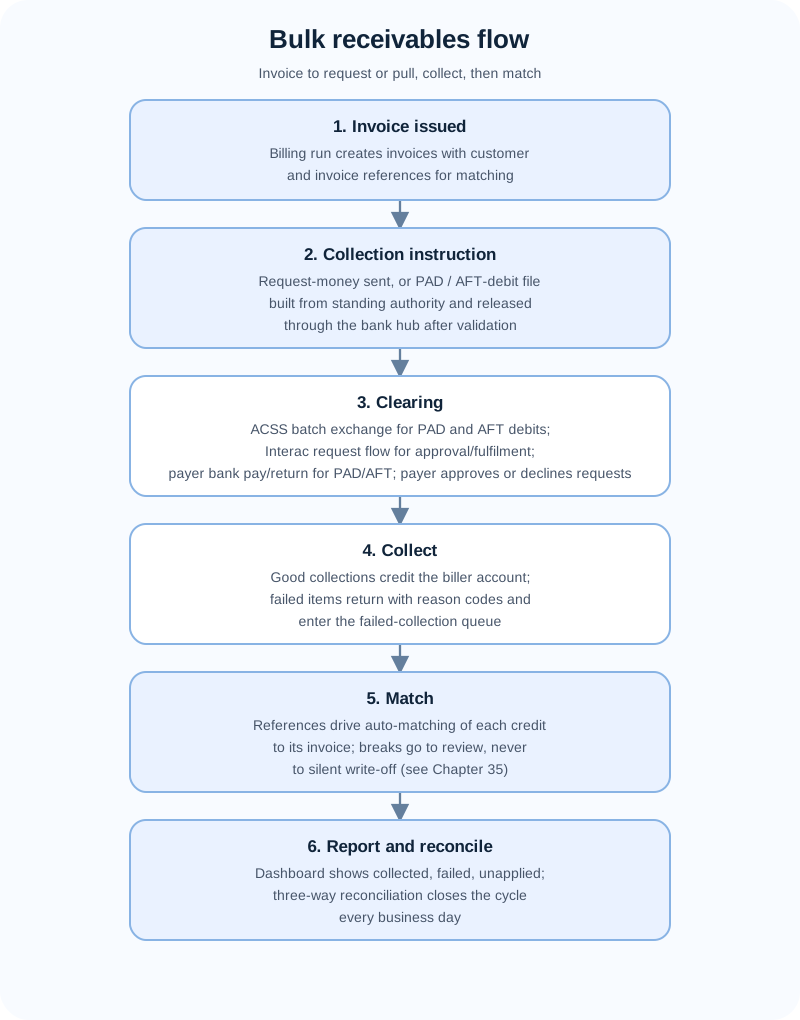
The flow diagram above anchors the chapter. Billing owns the invoice and reference. Biller and bank own authority and release. Clearing and the request network own exchange and the payer decision. Banks own posting. References own matching. Reporting owns truth. Every later section is a deeper pass over one box, and Chapter 35 takes the matching box further.
4. Clearing or exchange, settlement and finality
If Section 3 is the bank's release decision, Section 4 is the system's promise after release — and the gap between the biller seeing money and the money being beyond recall. Clearing, exchange, settlement, posting, availability, and finality are distinct events. Clearing compares, sorts, and positions instructions. Exchange delivers items and data between participants. Settlement moves value finally between settlement accounts. Posting debits and credits customer accounts. Availability says funds may be used. Finality says the movement cannot be unwound through settlement. Each collection method combines these differently, and blending them misstates cash, misprices reserves, and mishandles returns.
Batch pulls use ACSS's deferred retail-batch process. Participants exchange items through direct and indirect arrangements, sort debits by stream and destination, build positions by window, and settle net positions through Bank of Canada accounts on-cycle. Customer posting, availability, interbank settlement and rule-based returns or reimbursement are separate events. A biller may see a credit before a PAD is returned or reimbursed under the applicable Rule H1 category and timeframe. Forecasts should price expected returns, state availability with any applicable return exposure, and cite current H1 text rather than treating a statement credit as unconditionally final.
Request-led collections pair near-instant customer experience with bank legs on their own cycles. On payer approval inside the banking app, the biller may see fulfilment quickly — with confirmation and invoice reference where the integration provides them — and Interac advertises instant deposits for its business service. The participating institution and account determine the actual status, availability and reporting sequence. The consequence is narrower than many fear and wider than many assume. Narrower, because per-request approval removes the no-authority disputes haunting pulls: approval is the payment's foundation. Wider, because fulfilment is payer-timed — requests expire, sit unviewed, decline — so forecasting shifts from return-rate provisioning to response-rate chasing. Dashboards must carry request status as first-class inventory with follow-up dates, and dunning must include reminder and re-request rules alongside pull retries.
Three implications follow. First, never equate the biller's credit with settlement: a batch credit and a fulfilled request can look identical on a statement with different risk — a PAD credit may remain subject to applicable Rule H1 return or reimbursement exposure, while a request fulfilment records payer approval but still follows the participating institution's status and availability terms. Second, never treat messaging as settlement: file acceptance confirms data moved; request-sent confirms the payer was asked. Third, staff and fund the promised clock: batch needs window discipline, history-sized return buffers, and wave-scheduled collectors; request-led needs evening and weekend monitoring when payers approve, plus reminder capacity and expiry handling. The planned Real-Time Rail adds an instant option when live; until then every forecast, promise, and audit note here rests on the two live bargains — deferred batch settlement with returns, request fulfilment with payer-timing risk.
Scale reinforces the design. Batch concentrates items: one bad file becomes thousands of payer events. Request volume concentrates decisions: one confusing template becomes thousands of declines. The hub manages batch per file and requests per batch, presenting one biller status — collected, failed, still out, cash real — and Section 9 builds the dashboard carrying it.
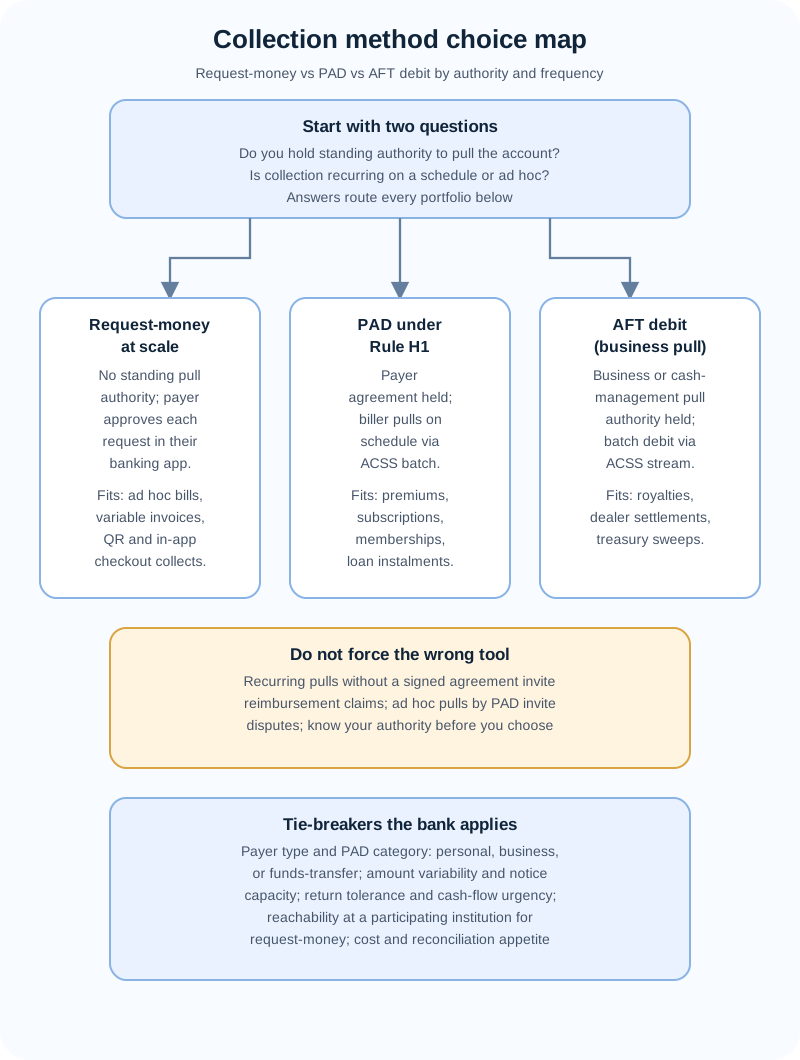
The choice map above belongs beside clearing as well as initiation, because the method chosen here determines which settlement bargain the biller lives under. Standing authority with recurring timing means batch pulls with return exposure. Ad hoc or variable obligations without standing authority mean requests with payer-timing risk. Choose by authority first; everything downstream follows.
5. Data, identifiers, messages and references
If methods are the roads, references are the addressing letting each payment reach the right invoice. Receivables operations fail far more often from bad addressing and thin remittance than from outages. The discipline — create references cleanly at billing, carry them unchanged through collection, report them faithfully, match on them exactly — decides whether clearing, posting, and reconciliation succeed or generate the exception inventory consuming the team. This section maps what each method needs, how references must be built, where truncation and retyping destroy them, and where this chapter stops for Chapter 35 to take matching further.
Batch pulls start with the account triple — institution, transit, account — under routing conventions validated against the Financial Institutions File and related references. No pull clears without correct routing, and none should release unvalidated: gateway reject costs a repair, return for closed account or bad routing costs a business day plus payer contact, misdirected posting costs an investigation plus reimbursement exposure. The file layer adds batch anatomy: headers identifying biller and run, item records with triple, amount, value date, agreement linkage, and matching remittance. Return advices mirror this with reason codes and linkage letting biller systems find originals without human search. Hubs must validate what clearing needs plus what matching needs, refusing release when either half is empty — a file that would clear but cannot match is an unapplied-cash manufacturing plan.
Request-money replaces account routing with Interac addressing — email or mobile number — plus the fields the payer decides on: amount, account to credit, invoice or message content shown at decision time. That visible content is this method's reference discipline and deserves file-layout rigour. A bare amount with no invoice number, period, or recognizable biller name invites decline, expiry, and misdirected payment. A request showing invoice number, period, amount, and the biller name the payer recognizes converts better and matches automatically on fulfilment. Billers sending at scale should treat the request template as a controlled document: one layout, mandatory reference fields, biller-name consistency with the invoice, no staff improvisation. The bank's integration duty is preserving that content end to end — biller batch through network to payer screen and back into the fulfilment report — without truncation or retyping, confirmed in testing rather than assumed.
Reference anatomy is where this chapter gets prescriptive, because anatomy wins or loses auto-matching. Every invoice should reference stable components: customer identifier, invoice or policy or contract number, billing period — one published format never varying per customer. The identifier finds the account, the number finds the obligation, the period disambiguates repeats: twelve similar monthly debits a year are unmatchable without a period element, and engines must never guess which month a bare amount belongs to. Publish the format, print it on every invoice and request in the same position, validate at billing before assembly, reject internally any invoice failing the format — defects caught at billing cost corrections, at matching cost chases. This also governs uninstructed pushes: arriving bill-pay payments still need the published format to match, one more reason the format stays public, stable, and simple enough for hurried retyping.
Two destruction points cause most unapplied cash. Truncation strikes wherever rich references meet constrained fields: long references through short remittance fields, legacy layouts clipping periods, reports abbreviating what clearing carried whole. Map field lengths end to end in implementation, log what truncates, shorten the published format rather than hoping tails survive. Retyping strikes wherever humans transcribe: keyed corrections, edited retries, payers copying paper invoices. Every retyping point is a defect foundry; eliminate it — barcodes and QR codes, copied-not-keyed fields, agreement numbers flowing untranscribed — or validate at the point with check digits. Classify each unapplied item weekly as truncated, retyped, missing, or genuinely unmatched: each class has a different fix, and only the last belongs to Chapter 35.
Where this chapter stops matters as much as what it covers. Matching-engine design — rules and tolerances, fuzzy and partial logic, split applications, short-pay and overpay handling, dispute holds, write-off governance — belongs to Chapter 35, and this chapter stays at the handoff: references created, carried, reported, delivered match-ready. Deeper than whether the reference survived, follow the forward pointer. That division is course architecture; building matching policy from this chapter alone misuses it.
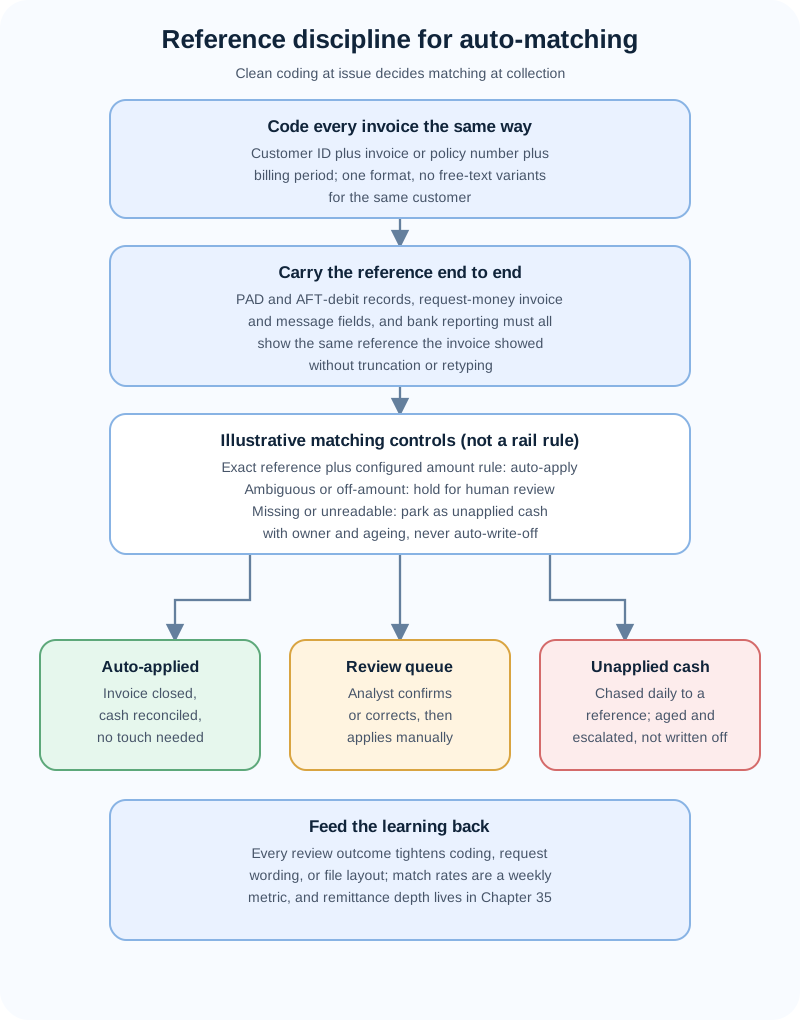
The diagram compresses the section into a billing-team poster. Code cleanly, carry unchanged, match by rule, park the rest as owned unapplied cash, feed every review outcome back into coding. Teams running that loop weekly watch match rates climb and chase queues shrink. Teams skipping it hire more chasers yearly.
6. Rules, cutoffs, service levels and customer impact
Customers experience rules as promises: collection on the first, notice of changed amounts, what happens when a debit disagrees with the agreement, how to stop future pulls, when a request expires, which reference appears. Banks and billers experience rules as windows, obligations, and evidence. This section connects the two without inventing one binding value. Cutoff hours vary by bank, clearer, file type, and day, moving with holidays and calendars. Debit-rule timeframes move between published versions. Request availability depends on participating institutions and their terms. This chapter speaks only in relative windows — morning, afternoon, and evening exchange activity on business days Monday to Friday excluding holidays, payer approvals across evenings and weekends — directing you to bank schedules, the closure calendar, and current rule text for binding values. Any note quoting a specific hour or day count from this chapter misuses it.
The Rule H1 framework governs pull collections; its shape teaches without quoting language or asserting timeframes. Four pillars carry it. Agreement as authority: the payer's agreement with the payee, holding the mandatory elements current text requires — account authority, category, amount and timing or specified event — founds every collection; no personal, business or funds-transfer pull exchanges without the required agreement or authorization. Advance notice: current H1 generally requires confirmation before the first personal or business PAD and 10-calendar-day pre-notification for applicable recurring changes and variable amounts, subject to its stated waivers and exceptions; use the current rule text for the exact procedure. Recourse: payers debited outside agreement, without agreement, or without required notice claim reimbursement through their bank within the current category window; money returns while commercial arguments settle outside rules. Cancellation: payers cancel through the agreement's process, ending future-pull authority without cancelling the underlying debt. Teach these pillars to every collector and onboarding session, then place current text beside them and confirm every timeframe before writing procedure — training material never hard-codes day counts the rulebook owns.
Categories change what a collection is; choose from the parties' relationship, not amount or frequency. Personal pulls collect household obligations — premiums, utilities, mortgages, memberships. Business pulls collect commercial obligations — supplier settlements, royalties, dealer debits. Funds-transfer and cash-management pulls move money between same or affiliated businesses — parent sweeps, consolidation. One-time pulls, terminating automatically once completed, collect a single obligation on a set date with fresh agreement needed for later pulls. Sporadic and event-triggered pulls, where agreements describe the triggering act, collect when the payer acts — each investment purchase, each service use. Miscategorized pulls quietly breed disputes: business obligations under personal agreements, or recurring streams papered as one-time pulls, fail at the first contested claim because evidence describes a different relationship than money describes. Bank form review at onboarding exists to catch exactly this; Section 10 returns to it.
Service levels bundle timing with certainty, information, and recourse, differing per method. Batch pulls offer low-cost scale with structured returns — thousands of items, one release, pay-or-return — at deferred settlement, return exposure, and dispute rights surviving posting. Request-money at scale offers per-payment consent with near-instant fulfilment and on-screen invoice content — higher ad hoc conversion, lower disputes, richer evidence — at payer-timing risk, expiry handling, participation dependence, and institutional per-request economics. Business pulls offer treasury-grade forecastability between known parties with daily reconciliation — at batch return exposure and the need for agreement precision. The advisory job is honest matching: recurring obligations with stable authority on pulls, ad hoc variable obligations without standing authority on requests, intercompany and dealer flows on business pulls with tight coding — portfolios freely mixing by segment, as Section 11's software story does.
Communication must reflect finality honestly, where banks lose trust fastest. Sent means the file or request left the hub. Accepted means the gateway or network took it. Fulfilled means the payer approved. Posted means the biller account credited. Available means usable, subject to return rights where they apply. Settlement finality and customer recourse are different concepts; describe a batch credit as final only under the applicable system, rule and bank availability policy, and cite current text rather than this chapter. Train every collector and customer-facing colleague on those six words. A biller told collected means final spends provisional money, blames the bank for the wave, and escalates a correctly processed return. A biller told posted means provisional-with-a-wave-coming holds a buffer, works the queue, closes calmly. The difference is one onboarding conversation, repeated at every limit review.
Pricing and cutoff discipline interact as everywhere in payments. Handling costs, and billers accept cost when tradeoffs are explicit. What they reject is paying for scale and receiving chaos: silent post-window files, reason-less returns, unmonitored integrations. Hub and biller share one clock: release only what the hub confirms for this run, method, and business day. That discipline, plus honest finality language, matters more than any fee schedule.
7. Fraud, compliance and operational controls
Controls fail when complete but misplaced. Authorization checked after exchange, sanctions screened after credit, verification reviewed after the first claim, request integrations monitored when payers complain — each exists and still loses. This section places each control family where it can still change the outcome, without duplicating the fraud, anti-money-laundering, sanctions, and supervision depth living in later blocks.
Pull fraud attacks authority first, funding second, in recurring patterns: no agreement on file, off-agreement amounts or dates, cancelled mandates still in runs, triples altered without instruction, duplicate files released twice. Controls sit pre-release by construction. Mandate linkage rejects agreement-less pulls. Tolerance checks flag off-pattern collections for confirmation. Cancellation feeds from servicing must reach runs before assembly — daily synchronization verified at onboarding and re-verified at review, because Monday's cancelled-policy collection is next month's claim. Duplicate and velocity checks catch double releases before payers see double debits. Post-release, return-reason patterns read like fever: sudden no-agreement returns from one biller signal onboarding or verification failure demanding sponsor attention, possible suspension, and evidence review before another run releases.
Request-led collections face different fraud at request and approval, led by impersonation: fraudulent requests resembling real invoices, approved unchecked. Defences are name consistency across invoices, agreements, and requests; content carrying verifiable invoice numbers and periods; bank-delivered payer education to verify unexpected requests separately; integration monitoring flagging off-pattern batches. Pre-established consent — expected requests explained by relationship and run — reduces risk and directs deposits correctly, so scheduled well-described batches beat sporadic surprises on conversion and losses. Autodeposit on designated accounts removes deposit-step attack surface. Payer ability to decline, and opt out of a requestor or the service, is a control to explain not bury: payers who can refuse suspicious requests rarely fund them.
Inbound-side screening deserves emphasis because receivables teams assume fraud only flows outward. A biller account receiving thousands of credits attracts abuse: compromised payer accounts debited through mule activity, layering through subscription or premium payments, overpayment-and-refund schemes where fraud sits in the refund issued rather than the collection received. Hubs must score incoming collection activity as well as outgoing payments — payer anomalies, rapid escalation, round-trips with urgent refund demands — in one case queue so cross-portfolio schemes appear once. Collectors need plain escalation: the overpayment arriving with an urgent refund request to a new destination is a case, not customer service, and refunds wait for return windows and verification before money leaves.
Anti-money-laundering obligations attach to collection events without being collection approvals. Banks and other reporting entities capture and retain the information required for their applicable AML/ATF obligations, preserve instruction-to-settlement linkage across clearing, posting, returns, and retries, and report from untruncated records. A biller or PSP may have separate obligations depending on its status and activities. This chapter cites only the introductory financial-intelligence publication for mandate context; thresholds, report types, and filing mechanics live in the financial-crimes chapters and current guidance, and no collector procedure quotes them from memory. The receivables point is narrower and fully in scope: never let truncation or summarization destroy per-payer linkage, because aggregated credits without payer detail quietly kill record-keeping.
Sanctions screening gates release for collections as for payments. Parties, remittance text, and routing screen before any file or batch releases: pass, false-positive release with recorded reason, or true-hit hold with escalation — recording what was checked, when, against which list, by whom. Domestic collections are not practically exempt: a pull clearing before a true hit surfaces becomes recovery with customer impact, while pre-release detection is a held file and a call. Cross-border-flavoured receivables — non-resident payers, foreign-currency billing through correspondent paths — repeat screening per hop and need complete data, since truncation manufactures multi-day false positives punishing innocent payers.
Supervision boundaries complete the plane. Providers performing retail payment activities face operational-risk, safeguarding, and consumer obligations under Bank of Canada supervision. Banks whose billers use platforms, invoicing fintechs, or collection providers must define contractually, before volume, who authenticates, screens, holds funds, communicates status, and evidences each stage — satisfying themselves that failure scenarios leave payers and billers whole. Sponsor oversight continues the logic: portfolio monitoring by return-reason trend, periodic re-verification of forms and verification methods, growth-tied limit reviews, documented suspension authority. The tying control is Section 3's release discipline: no instruction reaches any rail or network without passing authentication, authority validation, limits, fraud scoring, sanctions screening, cutoff assignment, and approval in order, each logged. Overrides — manual releases, verbal instructions, after-window exceptions — must be controlled, dual-approved, time-bound, because every major collection loss involves an override bypassing the order.
8. Exceptions, investigations and recovery
Every method breaks differently; every break manages the same way: detect fast, classify correctly, contain within the method's rights, recover as a new linked event, reconcile with evidence. Billers classifying first recover cheaply. Billers acting first — re-pulling, manually crediting, editing released files — manufacture duplicates and audit breaks dwarfing the original failure. This section teaches classification and recovery discipline at working depth; operations chapters teach each mechanism fully, and current rule text governs every timeframe in procedures built here.
Start with taxonomy, because words are the work. A reject happens before clearing: hub, gateway, or payer institution refuses for invalid routing, closed account, failed validation, incomplete data. Nothing moved; repair and re-originate. A return or dishonour happens after entry: the payer side sends back — insufficient funds, closed account, no authority, disputed pull — with rulebook reason codes and timeframes. A reimbursement claim happens when the payer tells their bank a pull fell outside agreement or notice: the payer bank restores the payer, money returns from the biller, the commercial argument settles outside rules. An error correction fixes the biller's own mistake — wrong amount, account, duplicate run — through the defined path within the bank-agreement window, never silent editing. A request outcome — fulfilled, declined, expired, pre-approval cancel — is no return at all: nothing moved without approval, so recovery means re-request, reminder, or alternative method. An investigation tracks uncertainty — missing confirmations, mismatched credits, unlinkable returns — through status inquiry and bank confirmation. Each word differs; interchangeable use guarantees payer-paid confusion.
Insufficient-funds failures dominate batch portfolios by count and deserve a runbook. Detection arrives via return reports, reason-coded and linked to originals: authority good, funding failed. For a dishonoured PAD, the current Payments Canada business guide says the same PAD may be tried one more time within 30 days of the original transaction date, for the exact same amount and without extra business fees; the bank agreement and current Rule H1 text control the operating procedure. After that permitted retry, the file path ends and servicing begins. Collectors contact payers under agreement terms, offer consented alternatives like request-money or bill-pay pushes, update forecasts. Prohibitions outweigh permissions: no repeat presentment without live authority, no fee-padded retries, no re-dating manufacturing attempts, no third try after a second failure. NSF is a funding event, resolved with the payer, not the clearing.
Authority breaks are fewer, costlier, handled oppositely: stop first, evidence second, collect third. A no-agreement return, cancelled-mandate collection, or reimbursement claim means permission contested or gone. Suspend that payer's pulls immediately — before investigating or arguing — because further pulls deepen liability and poison evidence. Then assemble the package: signed or recorded agreement, onboarding verification method, notice history, cancellation log with timestamps. Valid agreement matched by the pull: answer through the bank with evidence. Missing, cancelled, or mismatched: accept the outcome, repair onboarding, pursue the debt via currently consented methods — fresh agreement then pulls, or payer-approved requests. Re-presenting the contested pull is not persistence but a compliance event, and sponsors should treat billers doing it as portfolio risks.
Account problems and payer-choice outcomes close the taxonomy simply. Closed accounts, bad triples, and account changes need new payer details: update agreement records preserving instructions alongside originals, confirm through agreed channels, re-originate linked. Bank change-notification feeds update records promptly without substituting for payer authorization they do not represent. Expired or declined requests need no clearing action: commercial follow-up — pre-expiry reminder, corrected re-request, calls on large invoices, pull agreements once signed. Own-mistake corrections move fast and visibly: pre-processing recall where possible, defined correction after, plain-language payer notification, no netting mistakes into unrelated pulls where payers cannot see them.
Investigations walk one path per method: confirm release and reference, exchange or network acceptance, settlement or fulfilment evidence, posting or return, then communicate state. Batch needs file, trace, position, return, re-presentment status with identifiers throughout. Requests need send, view, fulfilment or expiry, deposit confirmation with invoice references. Preserve original identifiers, choose recovery by current urgency and authority rather than original method, communicate state plus next value date rather than activity. Four rules hold the section: never edit released value — originate linked corrections; never re-send on assumption — confirm state first or timeouts duplicate; never re-pull without live authority regardless of collectability; communicate the payer's next step in one actionable sentence, because confusing recoveries fail twice.
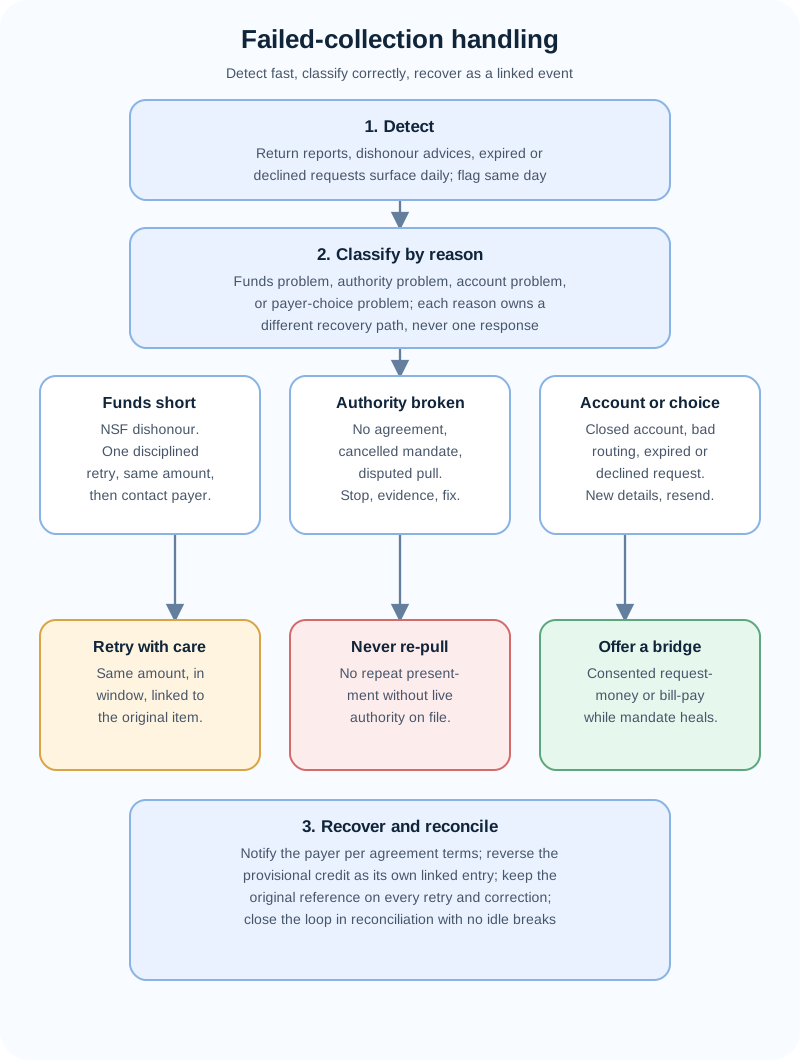
The diagram is the collections-floor poster. Detect same-day, classify by reason before acting, retry funds failures once with discipline, stop authority failures immediately, bridge with consented alternatives, reconcile every recovery linked. Operations chapters fill each box with mechanism detail.
9. Posting, accounting, liquidity, reporting and reconciliation
If Sections 3 through 8 move and recover money, Section 9 proves the story true and funds the next one. Posting, accounting, forecasting, reporting, and reconciliation are the receivables operation from the ledger, deciding whether the biller closes funded, balanced, explainable. This section follows a collection from settlement evidence to statement to ledger to forecast to collector queue, showing the three-way reconciliation holding the chain together daily across methods.
Posting translates clearing and fulfilment evidence into recognizable biller entries. Batch credits post in-cycle with run and invoice references. Fulfilled requests post to designated accounts with invoice content where the integration supplies it. Interac advertises instant deposits and, for Business Bulk Receivables, guaranteed funds/no chargebacks; treat those as product claims and verify the participating institution's terms rather than generalizing them to every Request Money flow. Returns post as linked distinct entries — provisional-credit reversals preserving originals, never silent subtractions — so systems find invoices, reopen them, route queues automatically. Fees post separately and visibly, never netted into principal — netted fees breed disputes. Every entry carries instruction, method, and remittance references from the run, making Section 5's discipline a posting requirement: unrecognizable entries cannot be applied, explained, or audited.
Accounting rolls postings into ledgers keeping provisional and final apart. Suspense holds day credits while returns remain possible; earned cash moves out as windows close and reconciliation confirms. Unapplied cash holds unmatched credits as its own aged owned balance, never buried in revenue. Returns accounts carry claims and corrections with counterpart linkage; fee accounts carry bank charges by method for honest portfolio reviews. Two pathologies warn early: ownerless growing suspense — every balance needs owner, age, next action, daily review; and netting — offsetting returns against new collections, folding corrections into unrelated runs, hiding fees in principal — which destroys per-invoice audit trails. Linked entries cost lines; they save examinations.
Forecasting turns collections into fundable cash. Start from run control totals, haircut by historical failure rates per method and season, schedule return waves behind collection dates, age unapplied balances, layer request-response curves. Output is dated spendable inflow: payroll funded, suppliers paid, reserves held. Three disciplines: forecast by method, because pulls and requests fail on different clocks; forecast net of the wave, because gross flatters cash when truth matters; reforecast after every run from actuals, because portfolios drift and last quarter's rate describes a different company. The treasurer's morning question answers from the dashboard: due, collected, failed, outstanding, real cash today.
Reporting serves four audiences from one evidence base. Collectors need failure queues with reason codes, invoice linkage, agreement status, next-action dates. Treasury needs dated inflow, wave schedule, unapplied position. Finance needs reconciled cash by portfolio and method, fee lines, ageing for close. Payers need plain confirmations, return explanations, next steps referencing recognizable invoices. Bank reporting must enable all four cuts: control-totalled collection reports, reason-coded linked return reports, request feeds with invoice references, statements carrying Section 5 references. Reports untied to their producing run are decoration; reconciliation exposes them within a day.
Reconciliation proves instruction, evidence, and posting agree — per method, every business day, breaks queued by age and owner. Every invoice should end collected and applied, failed and queued, or outstanding with status. As an internal control target, no break should sit idle past one business day without an owner, action and payer message where needed. Two pathologies: double-counting, when emergency re-releases duplicate unlinked originals — cured by Section 3's identifier discipline without exception; unapplied blindness, when unmatched credits count as reconciled because balances agree — money real but invoices open, revenue overstated, dunning misfiring against paid payers — fixed by aged unapplied queues with daily chasing. Match rates, reason-coded failures, retry success, response curves, and unapplied ageing are weekly metrics reviewed with billing and the bank; matching-rule depth behind match rates belongs to Chapter 35.
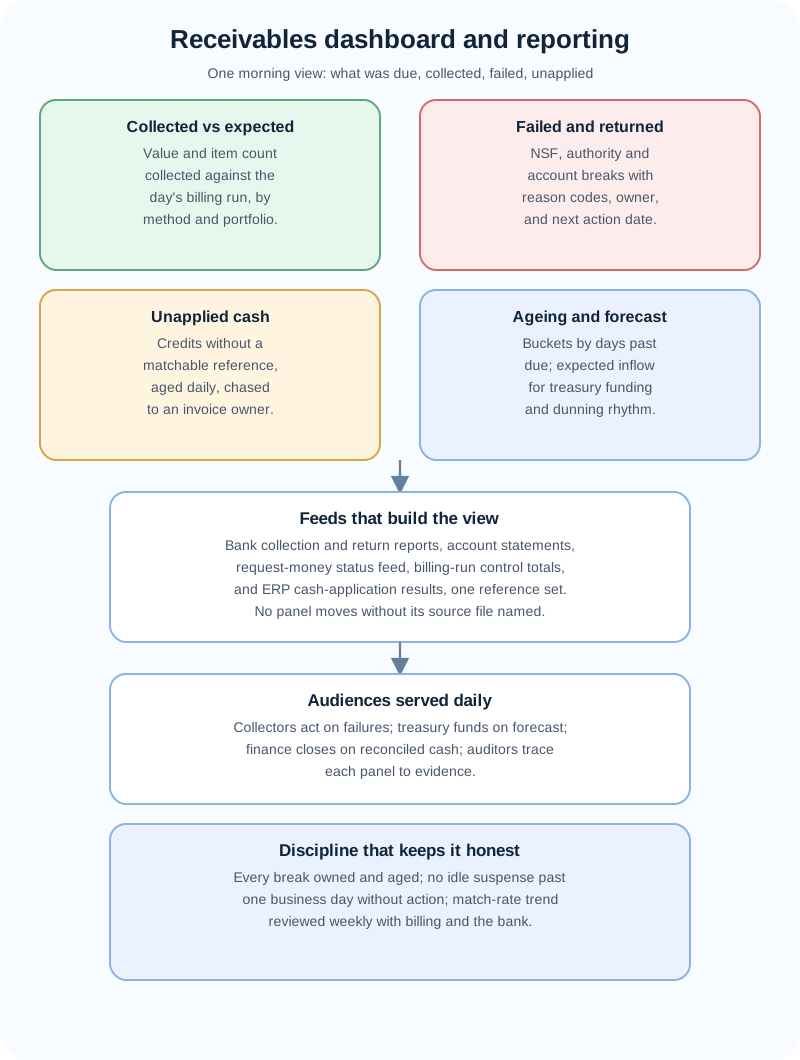
The dashboard diagram is the treasurer's morning page and collector work list in one picture. Collected versus expected, failed with reasons and owners, unapplied with ageing, forecast with wave priced in — every panel source-named, every break owned, no idle suspense. Build exactly that view before any other report; most receivables arguments end before starting.
10. Bank implementation, testing and resilience
Seeing the operation is one skill; wiring a bank to offer it — and a biller to be collectable — is another. This section is for product, technology, and operations leaders turning flow, controls, and dashboard into releases, tests, runbooks. It stays at collections implementation depth; rail build detail lives in rail chapters, matching-engine detail in Chapter 35.
Wire the hub before adding billers. Section 3's shared layer — intake; authority validation; dual-side fraud scoring; sanctions screening; entitlement and limits; cutoff assignment; batch and Interac adapters; lifecycle tracking; recognizable posting; control-total reporting; break-ageing reconciliation — must exist once, rail-aware, before the first portfolio. Each method arrives as an adapter: batch-debit into exchange-ready records with agreement linkage and return handling; request into addressed content-controlled requests with status and expiry handling. Silo-onboarded billers inherit the fragmentation hubs prevent; hub-onboarded billers inherit every control automatically — which is why sponsor oversight starts with architecture, not paperwork.
Biller onboarding is underwriting, not sales administration. The payee letter of undertaking establishes the relationship: biller follows applicable rules, bank sponsors reviewed files. Form review examines payer-agreement templates and processes — mandatory elements present, category fitting the relationship, amount and timing described, cancellation path clear, reimbursement statement correct per current text — with legal and compliance sign-off, not just relationship approval. Verification methods get equal scrutiny: a commercially reasonable payor-verification method must be accepted by the sponsoring bank and re-verified when channels change. Readiness covers the deciding list: reconcilable totals, validated formats, synced cancellation feeds, wave-sized return capacity, first-week staffing, named owners both sides. Limits — per-item, per-file, per-day, per-method — derive from underwriting, review with growth, enforce in hubs rather than trusting intentions. Everything documents against the checked rule version, because examinations ask which version and the answer must be a date.
Testing proves control as well as connectivity, mirroring this chapter. Gateway tests confirm approved-door-only entry. Hub-rejection tests confirm bad triples, missing linkage, duplicates, limit breaches, and incomplete request content reject with reason pre-clearing. Authority tests confirm agreement-less pulls never exchange, cancelled mandates block, mismatched categories flag. Fraud, sanctions, entitlement, and cutoff tests confirm holds, evidenced false-positive releases, and window assignment — including after-window runs waiting for next business day. Clearing, posting, and reconciliation tests confirm acceptance handling, reason linkage, status propagation, recognizable references, linked returns, visible fees, and three-way matching with ageing over full cycles including returns. Volume tests confirm payday-scale throughput without control degradation. Sign-off needs operations, treasury, financial crimes, finance, biller servicing — recording the tested rule version.
Post-launch monitoring is underwriting continued. Dashboards track return-reason trends per biller with review thresholds: rising no-agreement returns mean onboarding decay; rising insufficient-funds rates mean portfolio stress worth conversation before waves; falling request-response rates mean template or deliverability problems. Re-verification revisits forms, methods, and cancellation feeds — especially after platform changes, new channels, sharp growth. Limit reviews follow growth. Suspension authority — documented, dual-approved release holds when evidence no longer supports warranty — must predate need, because negotiating mid-incident converts incidents into losses. Every bank change needs calendar assessment, biller communication, control re-attestation, finality-respecting rollback, and full-cycle prove-out including returns.
Resilience covers what billers never see but depend on. Dual submission connectivity, hub failover preserving in-flight runs, backup batch paths for file-day failures, communication trees reaching biller owners within the hour, cyber-recovery preserving evidence linkage not merely balances. Drill predicted failures: corrupted exports, delayed exchanges, degraded request integrations on collection dates, provider outages forcing manual reconciliation. For the planned RTR at this audit baseline, readiness means programme participation and testing, not production collection: access and supervision assessment, instant-capable adapter design, always-on staffing and fraud models, and coexistence messaging that promises nothing before launch, reachability and funding exist. ACSS remains the live retail-batch system for the flows in this chapter. Every investment justifies identically: one failed collection date for a forty-thousand-payer portfolio dwarfs its backup path's cost.
11. Practical Canadian examples
Theory holds until collection week. Three fictional stories run the chapter end to end — companies, people, amounts, and timings invented for teaching and labelled accordingly, in relative windows, with procedure-writers sent to current text and bank schedules. Read each with the four diagrams open, then extract the control lesson.
Example (fictional): Lakeshore Mutual — insurer premium collection across forty thousand policies
Lakeshore Mutual is a fictional Ontario insurer collecting monthly premiums from about forty thousand personal policyholders plus three hundred employer-group accounts. Amounts vary modestly with endorsements and repricing; the authority base was built over a decade of paper and electronic agreements in varying quality. Collections run as pre-authorized debit pulls released before the morning batch window on the first business day, with employer-group business pulls in a separate file. Every discipline in this chapter holds together or fails together here; the story follows one March collection week.
Preparation starts before the run. Billing closes February endorsements, assigning each policy the single published reference — customer, policy, period — validated before assembly; three hundred retyped items correct at source rather than releasing into unapplied cash. The cancellation feed syncs overnight: two hundred lapsed policies leave the run with authority ended, because collecting cancelled policies manufactures claims. Variable-amount notices for repriced policies went out with required lead time, waivers recorded where properly given. The file carries headers, validated triples, agreement linkage, matchable remittance; release follows the full control order with logged acknowledgement.
Collection week behaves like the forecast — the point. Good debits post recognizably; the engine auto-applies the great majority overnight. The funds wave arrives near historical rates: roughly eight hundred items, reason-linked, reopening invoices automatically, entering one same-amount retry in-window while collectors begin payer contact. Authority breaks are few but instructive. Eleven no-agreement returns trace to a broker batch with undelivered agreements; those pulls suspend immediately, the broker gets an evidence demand with deadline, payers receive letters offering fresh agreements or request-money bridges. Four claims arrive from post-cancellation debits — two cancellations processed late internally, two never received — so the bank evidences where it can and absorbs where it cannot, fixing feed timing the same week. Two employer groups changed banks: routing updates, instructions preserved, items re-originate linked not duplicated.
Friday closes per Section 9. Collected versus expected, failed by reason with owners and dates, unapplied cash sharply down from billing-time validation, aged and chased, forecast reforecast from actuals for funding. The weekly bank review notes the broker failure, tightens broker-submitted verification, logs the checked rule version. The control lesson is one sentence: the calm week was manufactured beforehand by reference validation, cancellation synchronization, notice discipline, and wave-priced forecasting — and both incidents trace to authority hygiene, the next improvement target.
Example (fictional): Northbeam Software — subscription billing mixing requests and pulls
Northbeam Software is a fictional Toronto company billing twelve thousand subscriptions: nine thousand monthly consumer and small-business plans, two thousand annual enterprise invoices paid by customer payables teams, one thousand variable usage bills changing monthly. No single method fits all three, so Northbeam segments — Section 7's choice map concrete — through its April cycle.
Monthly plans run pre-authorized debit pulls under signup-captured electronic agreements, using the bank-reviewed verification method for identity and account ownership. Fixed tier amounts, monthly anniversary timing per agreements, references carrying customer, subscription, and period. This segment behaves like a smaller Lakeshore: high auto-match, small predictable funds wave with disciplined retry, rare authority breaks via suspension and evidence. Investment went into signup: one template with current-text mandatory elements, one approved verification method, one reference format — twelve thousand pulls on clean onboarding need almost no downstream heroics.
Enterprise runs request-money at scale. Large annual invoices, seat-count-variable, approved inside customer organizations by authorized payers who are not parties to a standing PAD, with no standing pull authority — where pulls invite disputes and requests convert. The run issues addressed requests carrying invoice number, period, amount, and the contract-recognized biller name. Fulfilments arrive payer-timed through the month, matching automatically. The unanswered tail works commercially: pre-expiry reminders, corrected re-requests, calls on largest invoices, account-manager escalation where needed. Response tracking replaces return provisioning, and the template is controlled — one March message-field shortening taught that request content is infrastructure, after response dipped a week before anyone connected cause.
Usage-based bills are the interesting segment: variable monthly amounts customers resist signing pulls for. These also go by request, with a step enterprise skips: advance amount notification inside the product days before requesting, so approvers never face surprise. Surprise kills approval — large unexpected requests decline first, questions later — and advance notice converts disputes into answerable pre-approval questions. Customers later converting to pulls get agreements properly recording variable character and notice arrangements, never inheriting request-era assumptions.
Month-end runs three-way matching per segment: totals against exchange and fulfilment evidence against postings, with segment metrics. Pull match rates hold on reference discipline. Request response curves inform next month's reminder timing. Unapplied cash stays small because invoices, pull records, requests, and reports share one published reference. The control lesson is segmentation: one portfolio, three authorities, three methods, one reference standard — and the courage to keep ad hoc segments request-led rather than forcing pulls without standing authority.
Example (fictional): Prairieview Foods — franchisor royalty pulls from forty dealers
Prairieview Foods is a fictional Calgary franchisor collecting monthly royalties from forty dealer-operators, each debit calculated on prior-month reported sales with supporting statements. Large amounts, small sophisticated payer count, daily-reconciling counterparties, precise business-pull agreements with calculation exhibits. The story is short because the operation is tight — and its inclusion shows receivables scaling down as well as up.
The run assembles from royalty calculations: each item carries dealer, agreement, and sales period in published format, with statements delivered alongside for pre-debit verification. Validation checks linkage, tolerances, triples; the treasurer releases under dual control. Batch clearing follows with pay-or-return at dealer banks. Returns are rare and diagnostic: one failed return triggers same-day treasurer-to-treasurer calls rather than retry queues — forty counterparties get phone calls, forty thousand get runbooks. Disputed calculations isolate the single item while thirty-nine collect. Reconciliation closes same-day with dealer-level matching, visible fees, statements filed with collection evidence for eventual auditors both sides.
The control lesson is proportion: identical stations — bill cleanly, collect by authority, handle failures by reason, match by reference — with staffing shaped to portfolio. Fast-detecting sophisticated payers reward calculation accuracy and same-day communication over retry machinery. And Section 6's agreement precision pays its clearest dividend: exhibits, period coding, and tolerance checks answer disputes before they become claims.
Misunderstandings these stories correct
Five errors recur wherever receivables are learned on the job. First, released means collected. No: release starts the chain; posting and completion of applicable return or reimbursement handling determine the biller's operational cash treatment, while fulfilment ends a request flow. Second, a signed agreement makes every pull safe. No: each pull must match amount pattern and timing with required notices — authority is per-collection, not per-relationship. Third, retrying until it pays is persistence. No: disciplined retry is one further same-amount attempt in-window; beyond that, recovery is servicing not clearing. Fourth, unapplied cash is a matching problem. Usually no: it is a billing-time reference or transit-truncation problem, and Chapter 35's engine cannot match what was never coded. Fifth, request-money needs no onboarding without mandates. No: templates, name consistency, integration monitoring, and payer education are onboarding by another name; skipping them buys declines, fraud, unmatchable fulfilments.
12. Key takeaways and authoritative references
Hold the chapter as five sentences. Bulk receivables turns thousands of obligations into forecastable cash: bill clean references, collect through authority-supported methods, handle failures by reason with linked recovery, match by reference with owned breaks. The sponsoring bank onboards, reviews, releases, reports and oversees under its agreements; the payer bank decides and posts under its account and applicable protections; ACSS exchange, net clearing and Bank of Canada settlement follow the system cycle, while Rule H1 returns and reimbursement rights can remain after posting; billing-time references decide automatic versus manual matching. Rule H1's shape — agreement, notice, recourse, cancellation — governs every pull, with timeframes citing current text, never training chapters. Controls gate release in fixed logged order, fraud scores inbound as well as pulls, pre-release screening prevents while post-release recovers. Posting separates provisional from final with linked entries and visible fees, forecasting prices the wave, reporting serves four audiences from one evidence base, reconciliation closes every business day with no idle breaks.
Carry five behaviours into collection week. Validate authority before release, every run — agreement-less pulls never reach clearing. Validate references at billing — format-failing invoices correct at source, never release into unapplied cash. Classify failures by reason before acting — funds retry once disciplined, authority stops immediately, accounts need new details, request outcomes need commercial follow-up. Promise status honestly — a posted batch credit may remain subject to applicable Rule H1 return or reimbursement exposure; settlement finality and customer recourse are different concepts, so follow current text and the bank's availability policy. Reconcile daily with no idle breaks — instruction against evidence against posting, per method, every break owned and aged. Repeated across thousands of items per run and dozens of runs yearly, these make bulk receivables boring in the best sense: predictable, provable, calm on collection week.
Carry the forward map: matching depth — rules, tolerances, partial and split application, short-pay handling, dispute holds, write-off governance — belongs to Chapter 35; build no matching policy here. Mandate drafting, agreement elements, verification, and authorization lifecycle belong to Block 5's pull chapters; confirm timeframes in current Rule H1 text. Cutoff mechanics, investigations, posting detail, and runbooks belong to operations chapters; confirm hours in bank schedules with the closure calendar. Request-money product detail lives with Interac Corp publications through participating institutions. Batch rail detail lives with the Automated Clearing Settlement System chapters. Follow the pointers; they are course architecture.
Authoritative references (official sources only, checked 5 October 2026)
This chapter uses only official sources. Re-check any time-sensitive page before customer or examination use. No bank-specific cutoff hours or amount limits are stated here. H1's current 10-calendar-day and 30-day statements are included only where cited and must still be implemented against the current rule and bank agreement.
- Payments Canada — Retail batch payment system page. Operator description of the retail batch system as the Automated Clearing Settlement System with the United States Bulk Exchange application, deferred net settlement with direct clearers holding settlement accounts at the Bank of Canada, 2025 statistics of about 10.6 billion items worth about $10 trillion, and the exchange and clearing model for batch debits including pre-authorized debits. https://www.payments.ca/systems-services/payment-systems/retail-batch-payment-system
- Payments Canada — Pre-authorized debit business guide. Business-facing guide to issuing pre-authorized debits: the payee letter of undertaking, the payer agreement with mandatory elements and categories, verification methods, pre-notification and waiver handling, one-time and sporadic pulls, retry discipline for dishonoured items, reimbursement and recourse framing, and cancellation handling under Rule H1. https://www.payments.ca/payment-resources/support-guides/business-guides/pre-authorized-debit
- Payments Canada — Rules and documentation page. Entry point to the current in-force rulebooks including Rule H1 for pre-authorized debits and the retail batch rules; confirms posted versions are in force with amendments such as those effective 27 July 2026, and directs procedure-writers to current text rather than training material. https://www.payments.ca/systems-services/rules-documentation
- Interac Corp. — Interac e-Transfer Business Request Money page. Product description of request-led business collection: requesting and collecting payments from websites, apps, QR codes, and invoices; pre-established consent and bank-grade security framing; availability through participating financial institutions. https://www.interac.ca/en/payments/business/interac-e-transfer-business-request-money
- FINTRAC — Introduction to FINTRAC publication. Government source for the financial-intelligence mandate, client identification, record-keeping, and prescribed reporting context applied to collection operations in this chapter. https://www.fintrac-canafe.gc.ca/intro-eng
- Bank of Canada — Payment systems the Bank of Canada oversees. Defines exchange, clearing and settlement; identifies ACSS and Interac e-Transfer as overseen systems; describes direct and indirect participants and RTR as a future system. https://www.bankofcanada.ca/regulatory-oversight/financial-market-infrastructures/payment-systems-the-bank-of-canada-oversees/
- Payments Canada — Financial institutions file. Confirms routing directory purpose and weekly updates used in routing validation. https://www.payments.ca/systems-services/payment-services/financial-institutions-file
- Payments Canada — System closure schedule. Confirms systems operate Monday–Friday except statutory holidays and supplies the current 2026 closure dates. https://www.payments.ca/system-closure-schedule
- Interac Corp. — Interac e-Transfer for Business. Documents business request/receive/bulk-receivables capabilities, instant-deposit and reconciliation claims, participating-institution variation, and product-specific limits. https://www.interac.ca/en/payments/business/send-receive-money-with-interac-e-transfer-for-business/
- Bank of Canada — Retail payments supervision. Defines RPAA scope, PSP registration, operational-risk, incident-response, safeguarding and reporting supervision. https://www.bankofcanada.ca/regulatory-oversight/retail-payments/
- Bank of Canada — Operational risk and incident response supervisory guideline. Sets expectations for in-scope PSP frameworks, third-party oversight, testing, recovery and incident reporting. https://www.bankofcanada.ca/wp-content/uploads/2024/02/operational-risk-and-incident-response.pdf
- OSFI — Reporting on anti-money laundering, anti-terrorist financing and sanctions. Describes OSFI sanctions-monitoring/reporting duties for federally regulated financial institutions. https://www.osfi-bsif.gc.ca/en/data-forms/reporting-returns/reporting-anti-money-laundering-anti-terrorist-financing-sanctions
- Justice Laws — Special Economic Measures Act. Primary federal sanctions statute, current to 21 September 2026. https://laws-lois.justice.gc.ca/eng/acts/s-14.5/index.html
Diagrams in this chapter: bulk receivables flow; reference and coding discipline for auto-matching; request-money at scale versus PAD versus AFT-debit choice map; failed-collection handling; receivables dashboard and reporting — all under /diagrams/payment-stories/canada/chapter-33/. No bank-specific cutoff hours or amount limits are shown. The Real-Time Rail is referenced as planned and not live at 5 October 2026. Stories, companies, people, amounts, and timings are fictional. Remittance-matching depth is forward-pointed to Chapter 35.
This application uses JavaScript for the full interactive experience. This text summary is served for accessibility and search indexing.