Bulk Payables. Understand business bulk payment initiation, approvals, release, status and exception management.
Canada Payments & Collections · Block 7: Interac Business and Pay by Bank · Chapter 32 of 75
Every Canadian payables team knows the same Tuesday morning. Two hundred supplier invoices are approved and due Friday. A property manager must pay eighty contractors across three provinces. A municipality must release grant instalments to forty community groups before month-end. A distributor owes forty-five carriers and cannot hold next week's capacity hostage to last week's paperwork. None of these payers wants to type two hundred separate payments into online banking, and none wants to send two hundred wires. They want one controlled motion: build a run, check it, approve it, release it, watch every item land, fix the few that do not, and prove the whole run reconciled.
This chapter is about that motion — business bulk payment initiation, approvals, release, status and exception management — taught in a rail-agnostic way. A bulk payables run created in a bank portal, an ERP integration, or an API batch can target different rails item by item: routine Canadian-dollar credits can travel as Automated Funds Transfer (AFT) through the Automated Clearing Settlement System (ACSS), everyday address-based sends can travel as Interac e-Transfer through Interac Corp infrastructure, and urgent or high-value items can travel as wires through Lynx. Route choice is per item, governed by urgency, value, data completeness, payee addressing, and business-day windows. Learn the run properly and you can carry any mix; the rails change the timing and finality bargain, not the initiation and control discipline. Evidence labels: Payments Canada, Bank of Canada and Interac descriptions are operator, legal or scheme facts; portal, hub, entitlement, screening, reconciliation and cutoff controls are bank/customer implementation patterns, not universal legal rules; examples are fictional.
Status facts anchoring the chapter, stated once: Business bulk initiation through bank platforms and APIs is a live, everyday capability: portals, host-to-host files and API batches that carry many instructions in one run with one approval envelope and per-item outcomes. Approvals happen before release — maker, checker and approver discipline with entitlements and dual control — and release commits the run to the bank hub for validation, screening and routing. ACSS and Lynx are live rails for the batch and wire legs respectively: ACSS clears retail batch with deferred net settlement and defined return rights, while Lynx settles each wire individually in real time in central-bank money with finality when settled and no system-level unilateral unwind. Interac e-Transfer legs use Interac Corp's service and participating financial institutions, with a 24/7 customer experience; notification is not deposit, and Interac's terms say funds are held until deposit, cancellation or expiry. Payments Canada's current RTR page targets a Q4 2026 launch with sequenced onboarding; nothing in this chapter routes to RTR before a participant is actually live. Timing is always relative, because exact cutoffs vary by bank, clearer, file type and day — binding times come from your bank's schedules with the closure calendar. No universal all-rail amount or cutoff rule is asserted here: Interac e-Transfer for Business publicly advertises up to $25,000 per transaction and up to 10,000 transactions per file, subject to the participating financial institution and account terms; other bank, customer and scheme limits still bind. Amounts in fictional examples are illustrations, not rules. Nothing here replaces the rulebook: exchange and settlement are governed by Payments Canada's published rules, standards and by-laws, with the binding text in the current published versions.
What you will be able to do after this chapter
After working through this chapter, you should be able to:
- explain why a business builds a bulk payables run instead of sending single payments, and what the run trades between control, cost, timing and evidence;
- name the participants in a bulk run — the paying business and its internal roles, the originating bank and its hub, clearing capacities, Payments Canada, the Bank of Canada, Interac Corp, receiving banks and payees — and state what each owns;
- trace a run from draft build through validation, approval control, release, per-item routing, clearing or exchange, settlement, posting and payee advice;
- compare the three live leg choices — AFT through ACSS, e-Transfer through Interac Corp, wire through Lynx — across timing, finality, data, return rights and experience, and choose per item with reasons;
- describe what initiation data each leg needs — domestic routing triple, Interac addressing, wire beneficiary-agent detail, remittance and references — and why incomplete data must be repaired before release;
- explain rules, business-day calendars, relative cutoff windows and service levels without inventing exact times, and tell a payables manager honestly which items are same-day final and which are next-window batch;
- place fraud, FINTRAC, sanctions and Retail Payment Activities Act (RPAA) controls before release wherever prevention is still possible, with special attention to vendor-master fraud and business email compromise;
- classify bulk outcomes — accepted, rejected, returned, expired, declined, pending, under investigation — and manage partial success where most items post and a few need repair;
- explain posting, accounting, funding, reporting and three-way reconciliation for bulk runs, including funding the payer account and matching run, rail evidence and ledger;
- describe what a bank must build to offer bulk payables — onboarding, entitlements, testing, status reporting, resilience — leaving room for the planned RTR without treating it as live;
- work through two fictional multi-leg bulk runs and extract the control lesson from each;
- navigate confidently to Block 4 for AFT depth, Blocks 6 to 7 for Interac depth, Block 8 for Lynx depth, Block 9 for message depth, and Block 14 for operations depth.
For a roughly 60-minute core session, spend about 10 minutes on Section 1, 15 minutes on Sections 2–3, 10 minutes on Section 4, 10 minutes on Sections 5–6, 10 minutes on Sections 7–8, and 5 minutes on Section 12. Section 11 is follow-up study.
Chapter navigator
- Business context and customer need
- Participants, responsibilities and system boundaries
- Initiation, validation and bank processing
- Clearing or exchange, settlement and finality
- Data, identifiers, messages and references
- Rules, cutoffs, service levels and customer impact
- Fraud, compliance and operational controls
- Exceptions, investigations and recovery
- Posting, accounting, liquidity, reporting and reconciliation
- Bank implementation, testing and resilience
- Practical Canadian bulk payables examples
- Key takeaways and authoritative references
1. Business context and customer need
Start with the payables manager's week, because bulk payables exists to solve her problem, not the bank's. On Monday she holds one hundred and eighty approved supplier invoices. Terms vary: some vendors offer early-payment discounts, some carriers threaten to hold capacity, some contractors stop answering the phone if Friday passes without payment. Finance has set a funding plan. Her four questions are always the same: will every payee be paid correctly, will value arrive on the promised date, what will the run cost, and what proof will exist when a supplier calls in three weeks asking which invoice a credit covered.
The bulk run answers those four questions with one envelope. Instead of releasing one hundred and eighty separate instructions — each with its own approval, cutoff gamble and evidence trail — the business accumulates approved payables into a single run: one validated file or API batch, one checked total, one approval at the right tier, one release, one funding movement, one status view, one reconciliation. The bank then fans items out per routing: routine domestic credits to ACSS batch, address-based sends to Interac, urgent items to Lynx. The manager watches one run with per-item outcomes rather than chasing separate payments. That consolidation is the entire economic and operational logic of bulk payables, and every control in this chapter protects it.
Why rail-agnostic matters becomes clear the moment a run is mixed. Most suppliers accept routine batch credits with invoice remittance and next-window value — the economical path. A handful of ad-hoc payees — a rural contractor with only an email address, a one-time customer refund, a field crew reimbursement — are better served by e-Transfer addressing without collecting banking details. One or two payments cannot wait: the carrier fee that unlocks weekend freight, the equipment balance holding a production slot. A platform forcing every item onto one rail fails two of these three groups. A platform routing per item — batch for the routine, e-Transfer for the addressable, wire for the urgent — serves all three inside one approval and one reconciliation. Per-item route choice is therefore not an advanced feature. It is the defining capability of modern bulk payables.
The week after release matters as much as the day of it. Suppliers call with three complaints: we were not paid, we were paid the wrong amount, or we were paid without information and cannot apply the cash. Each maps to a bulk discipline. Not paid means status tracking failed — the business could not distinguish a rejected item from a returned one from a pending e-Transfer never accepted. Wrong amount means validation or vendor-master discipline failed. No information means remittance discipline failed — the credit arrived but receivables could not match it. A well-run operation answers all three from the same evidence: run identifier, item identifier, rail reference, amount, value date, remittance, current status. Suppliers who match cash quickly offer better terms, dispute less, and keep shipping during disagreements. Bulk payables done well is a commercial asset, not merely an efficiency play.
Scale turns small defects into large workloads, which is why this chapter repeats four disciplines. Validate before release: one wrong transit digit across three hundred items is dozens of supplier calls and a week of returns. Respect the window: a run released after cutoff belongs to the next window, and every payee behind it shifts together. Reconcile every run: a run without a three-way match between approved run, rail evidence and ledger is an unresolved liability. And never pay an unvalidated payee. AFT chapters teach these for batch-only runs; this chapter extends them to mixed runs on different clocks.
It helps to place bulk payables on the programme map. Routine Canadian-dollar credits travel as AFT through ACSS with deferred net settlement and return rights (Block 4). Address-based sends travel as Interac e-Transfer through Interac Corp with near-instant 24/7 experience (Blocks 6 to 7). Urgent, high-value or settlement-critical items travel as wires through Lynx with per-payment gross settlement, same-day finality and no unilateral unwind (Block 8). Bulk payables sits above all three as orchestration: one initiation, one approval, one release, per-item routing, unified status, unified reconciliation. Pre-authorized debits are not bulk payables; they pull collections under mandate authority (Block 5). Cross-border items in foreign currency leave for correspondent rails (Block 11). The planned RTR will eventually add an instant option for some items but changes nothing about today's routing. Placing any payables event on this map in thirty seconds is the chapter's most valuable skill.
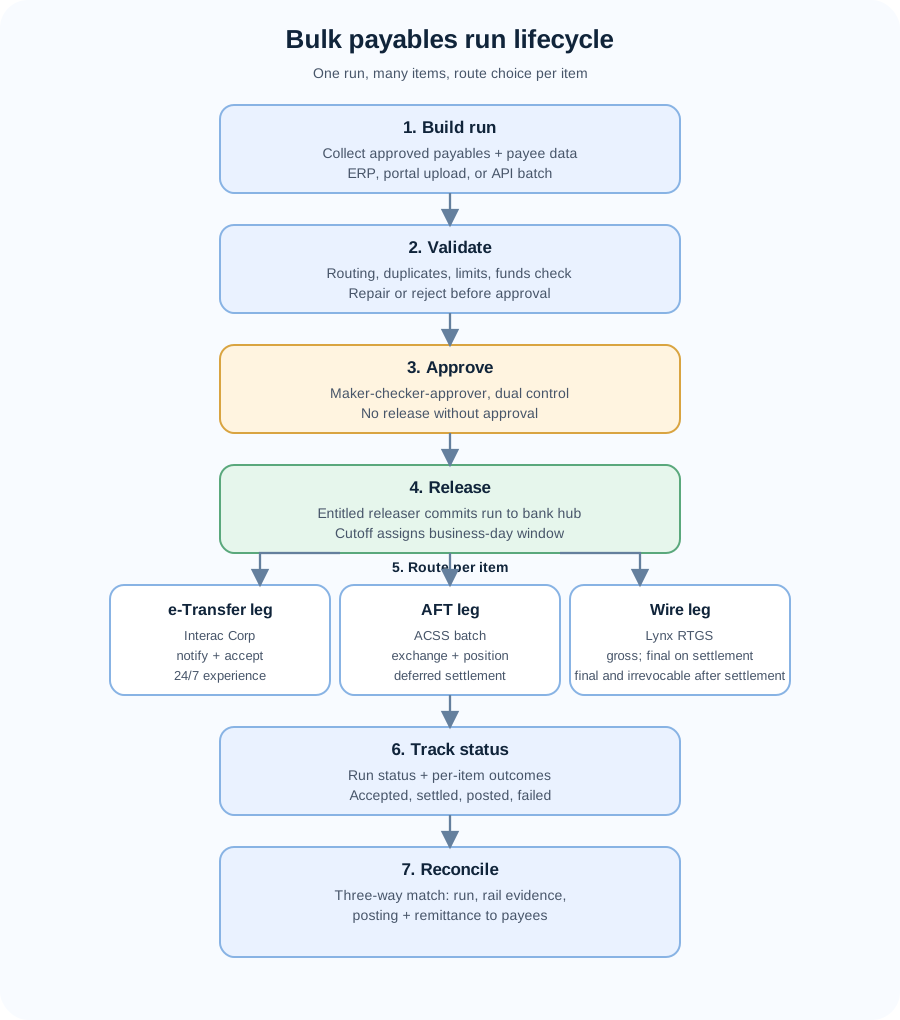
The diagram above is your anchor for the whole chapter. Read it top to bottom — build, validate, approve, release, route per item, track, reconcile — and notice its two truths. First, the run is one control envelope containing many independent outcomes: correctly approved and released, while individual items still reject, return, expire or pend. Second, routing happens per item after release, not once per run: the same approved run fans routine credits to batch, addressable sends to e-Transfer, and urgent payments to wire, each with its own timing and finality. Every later section is a deeper pass over one box or arrow in that picture.
2. Participants, responsibilities and system boundaries
A bulk payables run involves more parties than the business that thinks of it as paying its suppliers. Keep seven layers straight: the paying business with its internal roles, the originating bank with its payment hub, the clearing capacities behind that bank, the system operator, the settlement agent and overseer, the Interac network for e-Transfer legs, and the receiving banks with their payees. Confusing any two produces the classic errors — treating the ERP vendor as the party warranting payment, treating Interac notification as interbank settlement, treating the system as owing the supplier money, or treating a run acceptance message as proof every payee was credited.
Start inside the paying business, because that internal chain is where most losses begin. At least five accountabilities must stay distinct. Accounts payable owns the liability: matching invoices to purchase orders and receipts, applying discount and hold logic, proposing which invoices enter this run with what remittance. The vendor-master owner owns payee truth: creating and changing supplier banking details and e-Transfer addresses under dual control with independent verification — the single most fraud-sensitive duty in the flow. Treasury or finance management owns the decision to pay: approving the run at the correct tier, confirming funding, enforcing that larger or urgent runs need more senior approvers. The maker owns run construction: assembling the draft from approved payables, running pre-validation, attaching evidence, submitting for check. IT or the service bureau owns the plumbing: the enterprise system, file format or API integration rendering the run exactly as the bank agreed. Every painful bulk incident involves two of these collapsed into one person, or a handoff where both sides assumed the other owned a step. Learn the shape here: propose, verify payee, build, check, approve, release — six verbs, never fewer than three different people.
The originating bank is where the run becomes a warranted set of instructions. The bank authenticates every user, checks entitlements and approval completeness, validates the run against format, limits, duplicate history and funding, screens parties and remittance, confirms the payer account will be funded, and releases items into their rails with its standing behind what it introduces: data quality, authority and screening under the applicable rulebooks. What the bank does not do must be written down before volume flows: it does not approve suppliers, negotiate terms, maintain the vendor master, or guarantee payee acceptance or posting without return. That company-bank boundary belongs in the cash-management agreement, the file and API specification, and the approval procedures — because every dispute after a bad run starts with both sides pointing at that unwritten line.
Banks participate in clearing and settlement in distinct capacities, constraining what the payer's bank can promise. A direct clearer in ACSS exchanges directly, enters positions into clearing, holds a Bank of Canada settlement account, and funds its net position on settlement mornings. A Lynx participant holds intraday liquidity and queue responsibility for its own wires settling gross in central-bank money. An indirect participant uses a direct clearer as clearing and settlement agent under an agreement with defined cutoffs, funding, return-handling and reporting duties. The consequence: a business customer of an indirect institution lives inside the agent's timetable for batch and wire legs, and e-Transfer legs live inside Interac and bank processing cycles. Published cutoffs must already include the agent's margin, and front-line staff must never improvise timing promises beyond them.
Payments Canada owns and operates ACSS and Lynx: the rulebooks anchored by by-laws, the exchange and clearing infrastructure, the calculation turning batch entries into net positions, the RTGS infrastructure settling wires individually, and the business-day and closure calendar. It holds no payer or payee accounts, decides no individual posting, funds no position, and guarantees no payment. When this chapter says the system for a batch or wire leg, it means operated infrastructure plus governing rulebook — never the bank's hub, never a party to the commercial obligation, and never Interac. That last distinction matters constantly: Payments Canada operates batch and wire legs, while Interac Corp operates e-Transfer legs with its own addressing, notification, acceptance and bank-settlement arrangements. Staff blending the two misroute investigations and promise batch items with e-Transfer timing or e-Transfer items with wire finality.
The Bank of Canada provides the settlement accounts for Lynx wires and ACSS positions, oversees designated-system risk including Lynx, and supervises payment service providers under the RPAA — distinct from prudential supervision and FINTRAC's mandate. Interac Corp, receiving banks and payees close the chain: Interac provides addressing, notification, Autodeposit and acceptance; receiving banks validate, post and handle returns; payees maintain details, accept where required, and apply cash from remittance. Intermediaries — ERP vendors, processors, aggregators — originate scale, but responsibility does not move with the keystrokes. Write each intermediary's role down before volume flows.
Responsibility is a chain with no gaps. The payer authorizes and funds. The payer's bank validates, screens, approval-checks, releases and warrants. The clearing or network layer exchanges. The settlement agent moves value finally for batch and wire legs. The receiving bank posts and reports. The payee accepts where required and applies cash. Every investigation in Section 8 walks that chain backwards.
3. Initiation, validation and bank processing
Every leg in a bulk run starts in the same place: a business instruction entering a bank channel and passing through the bank's payment hub before any external rail or network sees it. The hub is the bank's shared layer for intake, validation, decisioning, release, gateway formatting, tracking and reconciliation. Banks operating one hub with rail adapters scale, control and modernize — same approval envelope, same screening, same status model, same reconciliation, with per-item adapters for AFT batch, Interac messaging and Lynx wires. Banks letting each channel talk directly to its rail duplicate controls and fragment evidence. This chapter assumes a hub, because that is how well-run Canadian banks carry mixed runs without rebuilding the bank per leg.
Initiation varies by channel but converges on one data question: who pays whom, how much, by when, with what references, under what authority, by which leg. Portals capture manual builds and file uploads with authentication, batch headers, item records, value dates and remittance. Host-to-host and ERP integrations submit structured files on schedule with control totals and agreed format versions. APIs submit batches programmatically with idempotency keys and status callbacks. Each channel must produce the same canonical run: durable run identifier, per-item identifiers stable across repair and re-origination, payee identification appropriate to the intended leg, amounts, currency, requested value date, remittance, and authority linkage to approval. The hub normalizes these into one instruction model with identifiers surviving every later stage.
Validation is where most preventable bulk failures are caught — before approval and release, not in clearing. The hub validates at two levels. At run level: schema conformance, header-to-item totals, item count against header, duplicate-run detection, entitlement to build, funding plausibility for full run value plus fees. At item level: routing triple well-formed with reachability for batch and wire candidates, Interac address well-formed for e-Transfer candidates, beneficiary-agent completeness for wire candidates, tier and velocity policy, duplicate payee-amount detection, payee-master status (no payment to unvalidated or recently changed payees without re-verification), remittance completeness. Repair or reject happens here with actionable reason codes. A run rejected in the hub costs a same-day fix. A run rejected in clearing costs a business day per item. A run released with bad data costs an investigation per payee.
The control stack sits between validation and release, and its order matters more in bulk because one bypass compromises hundreds of items. Authentication and entitlement confirm the human and authority: maker builds, checker reviews, approver authorizes at tier, releaser commits. Approval completeness confirms the required chain with correct tier, no self-approval, no reused approval from another run version. Limits check run, per-item, per-payee, daily and velocity thresholds. Fraud monitoring scores anomalies: new payees, changed details, round-amount spikes, first-time e-Transfer addresses, batch-to-wire urgency upgrades without reason. Sanctions screening checks parties, remittance and routing before release — pass, false-positive release with recorded reason, or true-hit hold with escalation. Record-keeping capture preserves data for FINTRAC, audit and RPAA evidence untruncated. Cutoff logic assigns each item to today's window or next business day with honest value-date expectations per leg. Only then does the hub release. Screening after release is recovery, not prevention: on settled Lynx legs it needs beneficiary cooperation, on e-Transfer legs payee action that cannot be compelled.
Release is distinct from initiation, approval and settlement. Release commits the approved run to gateways: AFT items for ACSS exchange, e-Transfer sends into Interac flows, wire items into the Lynx RTGS queue where liquidity and priority govern timing. Batch release before hub cutoff means today's window; after means tomorrow, shifting the whole batch cohort together. E-Transfer release issues sends awaiting acceptance or Autodeposit on a 24/7 customer clock while bank legs follow separately. The hub records release time, leg per item, gateway acknowledgement and external reference — every inquiry in Section 8 starts there. Release locks the run: no silent edits. Any change is a new version with fresh approval, or a linked follow-on run.
After release the hub stays active as system of record: tracking acceptances and rejections per item, matching clearing and network confirmations, watching settlement evidence, posting payer entries, generating advices, feeding portal and API status, ageing exceptions with ownership. Every item has a state, every non-final state an owner and next-action date, nothing idle past one business day without a customer message where needed. Amendments are narrow — pre-settlement cancellation where the leg permits, never silent editing — and original run and item identifiers follow every return, expiry, recall request and re-origination for reconciliation linkage.
Two principles decide whether the bulk view survives reality. Route by policy per item, not run habit: urgency, value, data completeness, addressing and currency leg by leg, with recorded override. Fail visibly and early: a hub rejecting a bad item in minutes with reason and repair path creates one phone call; accepting everything and failing across three rails creates a week of investigations.
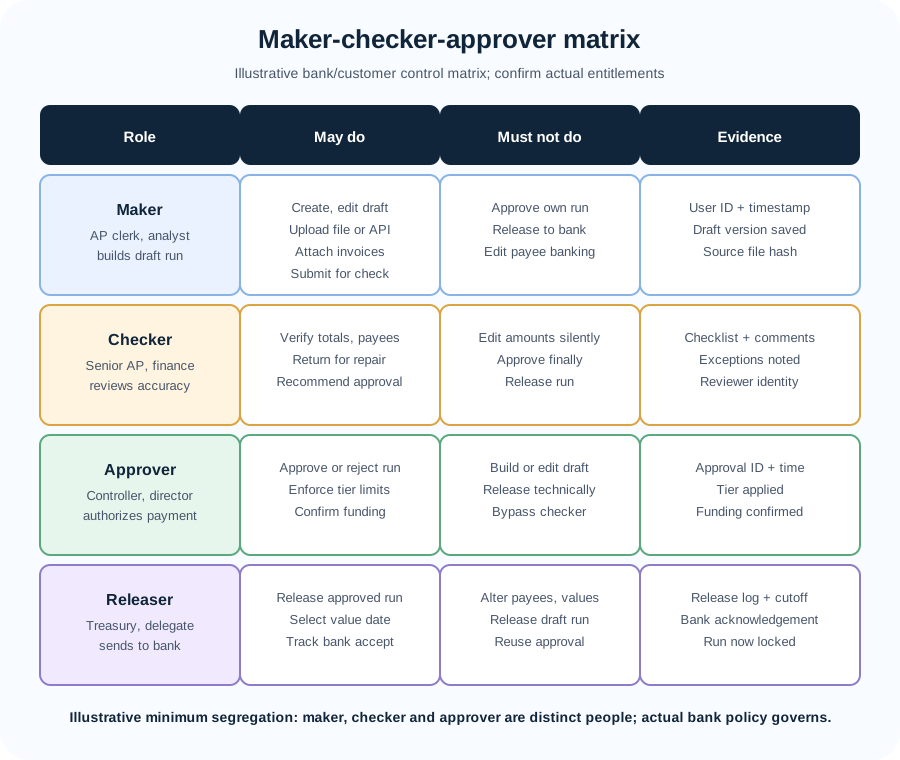
The matrix above is the chapter's control poster. The golden rule at the bottom is minimum segregation enforced in entitlements, not procedure documents: maker, checker and approver are three different authenticated people, the releaser cannot alter approved content, and every exception — emergency approver, after-hours release, verbal instruction — is dual-approved, time-bound and logged. Auditors ask for this matrix first. Build it before volume arrives.
4. Clearing or exchange, settlement and finality
If Section 3 is about the bank's decision, Section 4 is about each leg's promise. Clearing and exchange, settlement, posting, availability and finality are five different events, and bulk payables is where confusing them hurts most — one run holds items on different clocks. Clearing compares, nets or positions instructions. Exchange delivers items and data between participants. Settlement moves value finally between settlement accounts or through network legs supporting the customer experience. Posting debits and credits customer accounts. Availability tells the payee funds may be used. Finality tells the system value cannot be unwound through settlement. Every leg combines these differently; blending them misleads suppliers, misstates funding and mishandles exceptions.
Batch legs through ACSS defer settlement by design. Participants exchange AFT credits, build clearing positions by stream and window, and settle net positions through Bank of Canada accounts on a deferred cycle. Supplier experience of being paid precedes interbank settlement, and return rights survive settlement for defined reasons such as invalid routing or closed accounts. That is the batch bargain: low cost per item and broad reach at the price of deferred finality and return exposure. The batch cohort of a run shares one window fate — files in, items exchanged, positions calculated, funding completed — and a missed window shifts the cohort together. Supplier availability must always be explained with return rights attached, never as irrevocable value.
Wire legs through Lynx collapse clearing and settlement into one real-time event. Each wire settles individually in central-bank money across Bank of Canada accounts during business-day RTGS windows, with queueing, priority and intraday liquidity governing when. Once settled, a Lynx payment is final and irrevocable through the system; recovery needs a new payment with beneficiary agreement, not a system reversal. That finality carries the urgent few items, demanding complete data, senior approval and knowingly consumed liquidity.
Interac e-Transfer legs separate customer experience from the bank-account event. The journey — send, notify, accept or Autodeposit, deposit, confirm — is designed for 24/7 use and Interac says most business payments land within seconds, but the exact experience varies by participating financial institution. Interac's terms say the sending financial institution holds funds until deposit, cancellation or expiry, and that the transaction is final once Interac records the deposit. A transfer that is only notified is not deposited; an unaccepted transfer can expire or be cancelled, while a decline needs payee and bank handling rather than an automatic account-data repair. Operations must track sent, notified, accepted, deposited, expired, declined and cancelled as distinct evidence. Treating notification as deposit or as Payments Canada settlement overstates finality.
| Dimension | AFT leg via ACSS (live, batch) | e-Transfer leg via Interac Corp (live) | Wire leg via Lynx (live, RTGS) | RTR leg (planned, not live) |
|---|
| Best for | Routine supplier and contractor credits with remittance | Addressable, ad-hoc or after-hours sends | Urgent, high-value, same-day-final items | Future instant credit; no routing today |
| Clearing | Exchange plus positions by window | Interac service messaging and participating-FI processing; not an ACSS description | No netting; per-payment RTGS queue | Planned instant clear per payment |
| Settlement | Net positions via Bank of Canada accounts | Bank plus network settlement legs | Central-bank money, Bank of Canada accounts | Planned instant settlement |
| Customer timing | Next-window batch; returns possible | Near instant 24/7 on accept | Same business day if released in window | Seconds, 24/7/365 when live |
| Finality | Positional; return rights survive | Interac's terms treat the transaction as final once deposit is recorded; do not infer Lynx/ACSS finality | Per-payment final on settlement | Planned irrevocable on settlement |
| Failure mode | Reject pre-clearing; return with reason | Expire, decline, cancel pre-accept | Queue for liquidity; no unilateral unwind | Decline or uncertain-state handling |
Three implications follow. Never equate availability with settlement: a wire and a batch credit can look identical on a statement with opposite finality, and an e-Transfer deposit can look final while bank legs complete. Never treat messaging as settlement: run acceptance, Interac notification and AFT exchange confirmation each confirm data moved, not that every payee was finally paid. Staff and fund the clocks promised: batch needs window discipline and return reserves, e-Transfer needs acceptance monitoring with expiry handling across weekends, wires need intraday liquidity on business days. The planned RTR will add a 24/7/365 instant clock with its own liquidity model — hence room for it here, without routing to it.
Scale reinforces the design. Batch concentrates items, so one bad export is hundreds of payee events; wires concentrate value, so one delayed release is a treasury event; e-Transfer concentrates payee behaviour, so one unmonitored pending queue is dozens of expiries. The hub manages batch per file, wires per payment, e-Transfer per send — one run status from three rhythms, where partial success is normal.
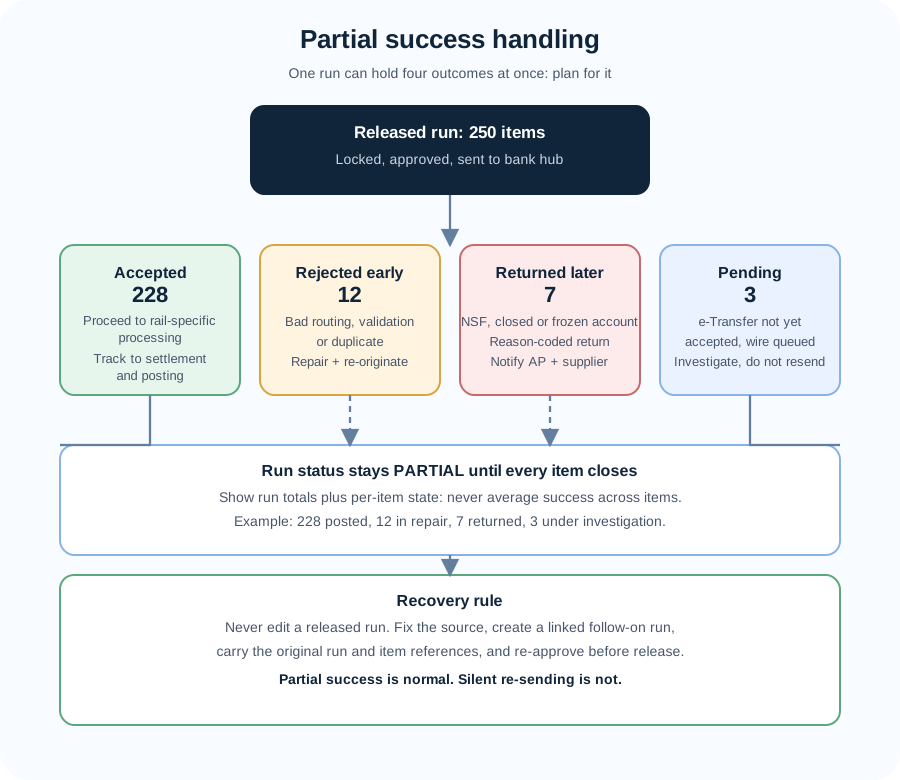
A released run holding acceptances, early rejects, later returns and pending sends simultaneously is not a failed run. It is a partially successful run with owned queues. Run status stays partial until every item reaches a final state; recovery is always a linked follow-on run, never silent editing; re-sending before confirming original state turns timeouts into duplicates.
5. Data, identifiers, messages and references
Bulk payables fails more often from bad addressing and thin remittance than from outages, and failure multiplies by run size. The hub's discipline — capture completely, validate early, preserve identity end to end — decides whether clearing, settlement, posting and reconciliation succeed or generate one investigation per payee.
Domestic routing for batch and wire legs starts with the institution number, transit number and account number triple, validated against the Financial Institutions File and related references. Wires additionally need complete beneficiary-agent identification for straight-through posting. Reachability is a data question before a leg question: an unreachable item must be rejected in the hub, never released to see what happens, because each leg charges error differently — wire repair needs a new payment with cooperation, batch error needs a return cycle. Vendor-master hygiene is therefore a bulk control: every payee record carries source, verification date, method and authorizer, and recently changed records trigger enhanced checking before next use.
Each leg adds its addressing layer. E-Transfer legs route on email address, mobile number or Autodeposit registration with notification, acceptance and deposit confirmation as handshake. Wire legs route on institution and account identification plus beneficiary-agent detail. Batch legs route on the domestic triple plus vendor identifiers for matching. The hub must capture the union of what the payer knows (who, how much, why, which invoice) and what the destination leg needs (where, in what format, with what reference), refusing release when the intersection is empty. A record with only an email address routes to e-Transfer but not batch; one with only transit and account routes to batch but not e-Transfer; a wire candidate without beneficiary-agent data routes nowhere until repaired. Teaching makers that distinction at build time prevents most rejects.
Messages carry that data, and Canada is mid-migration. Lynx legs are ISO 20022-enabled with credit-transfer, interbank, return, investigation and cash-reporting families plus end-to-end tracking references. AFT legs live in coexistence: long-used legacy formats alongside ISO 20022-enabled processing with richer remittance, carrying mapping, truncation and repair risk. Interac's business service describes itself as ISO 20022 compliant and supports remittance data, but that is a service/data-interface statement, not proof that the consumer network is wholesale ISO 20022 end to end; participating-bank integration points and schemas still govern. The coexistence lesson: richer data into a constrained leg truncates; thin data into a rich leg starves reconciliation. The hub must validate per destination schema, map explicitly, log truncation or enrichment, and carry original remittance forward so supplier statements still match the payables system. A run carrying amounts without invoice references has paid without communicating — the predictable result is unapplied cash.
Five references must survive every leg: the run identifier, the per-item identifier stable across repair and re-origination, the leg reference (batch trace, Interac reference, wire identifier), return and investigation linkage, and customer remittance (invoice, contract or grant reference the payee recognizes). Each absence breaks reconciliation: orphaned follow-ons, duplicate-payment risk, untrackable investigations, unapplied cash, ageing suspense. Enforce reference presence as a release gate.
Remittance deserves emphasis because bulk lives or dies on cash application. Suppliers reconcile on references, not amounts. Treat remittance as mandatory: invoice numbers, credit-memo linkages, discount-taken flags, payee-ingestible formatting. Where a leg constrains length, apply explicit truncation rules, supplement via an agreed advice channel, and log what the payee received. The cost of thin remittance is measurable — unapplied cash, withheld shipments, duplicate submissions, staff re-issuing proofs one supplier at a time — against a one-time cost of rich remittance at build.
Two modernization notes shape investment without changing routing. ISO 20022 coexistence is a multi-year condition: fund parallel validation, dual-format testing, explicit truncation rules and master migration permanently (Block 9). The planned RTR rewards structured remittance already — cleaner masters improve batch, e-Transfer and wire reconciliation before any instant leg exists.
6. Rules, cutoffs, service levels and customer impact
Payables managers experience rules as promises: will the supplier be paid Friday, when can funds be used, what will the run cost, what reference arrives, what happens on failure. The bank experiences rules as windows, obligations and evidence. This section connects the two without inventing exact cutoff times — those vary by bank, agent arrangement, file and API type, leg and day, moving with holidays. This chapter speaks only in relative windows: ACSS and Lynx operate on Payments Canada's Monday-to-Friday schedule except statutory holidays, while Interac e-Transfer for Business is offered 24/7/365 subject to participating-FI availability. Binding submission times and value-date promises come from your bank's schedules and the published closure calendar. Any note quoting a specific hour from this chapter misuses it.
Business days anchor batch and wire legs and frame e-Transfer promises. A Tuesday-evening batch file missing its window belongs to the next one, shifting every batch payee together. A Friday-afternoon wire after internal cutoff queues or waits under published policy without delivering finality. A Monday holiday shifts value dates, return clocks and funding needs. E-Transfer experience runs 24/7 including holidays, creating the most mismanaged expectation: a Friday-night send accepted in minutes while the same run's batch cohort waits for the next window. The hub must assign every item to a window or a 24/7 path at intake, and never let channels promise what leg calendars cannot deliver.
Batch cohorts clear in daytime windows with positions settling in defined settlement windows — one window fate per cohort. E-Transfer sends notify and accept continuously with expiry clocks running through weekends — per-send customer fates. Wire items settle during RTGS windows with intraday queueing — morning liquidity build, midday throughput, afternoon funding decisions — individual settlement fates per item. The translation: an evening e-Transfer refund can be accepted tonight; an evening batch file cannot create Friday-morning value after its window; a time-critical afternoon payment missing batch belongs on wire if the payer needs same-day finality and accepts cost, data and irrevocability. Routing by window is a bulk competence, not rail detail.
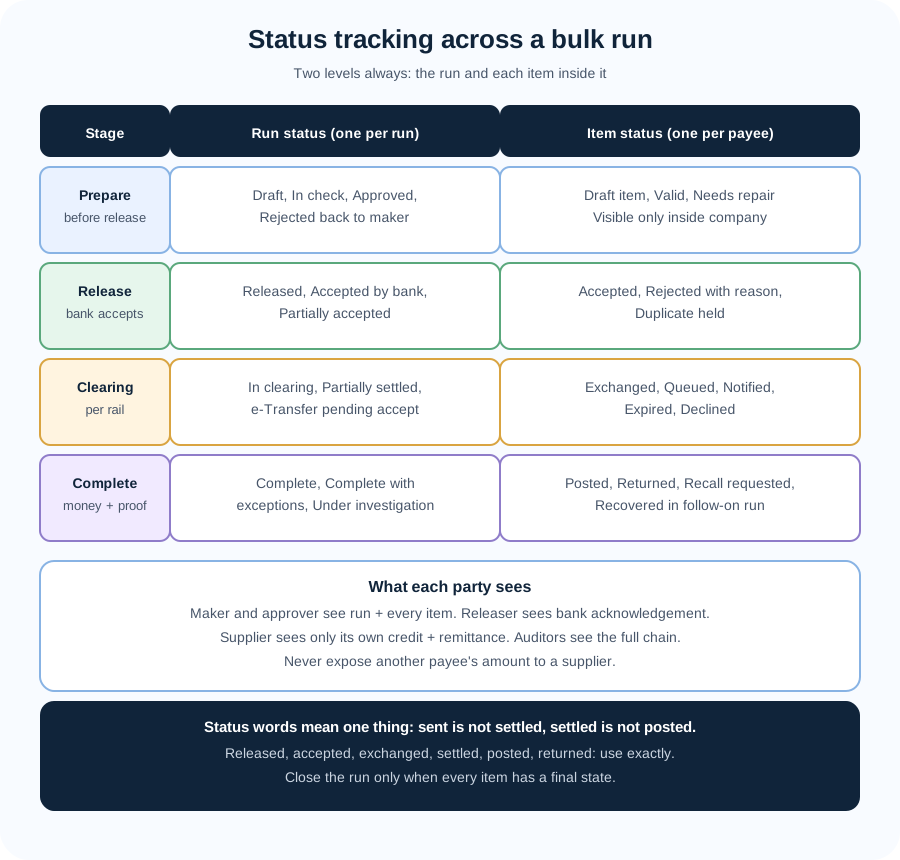
Service levels bundle timing with certainty, information and recourse — presented per item, not per run. Batch offers low unit cost with structured returns at the price of deferred settlement and return exposure. E-Transfer offers 24/7 near-instant experience with expiry, decline and pre-acceptance cancellation at the price of acceptance dependence and per-send monitoring. Wire offers same-day finality with intraday status and irrevocability at wholesale pricing with no unilateral recall. The planned RTR will offer instant value with rich data at the price of real-time fraud and always-on operations. Match each event to the bundle the payer willingly pays.
Communication must use one vocabulary across legs. Sent means released from the hub. Accepted means the gateway or network took the item. Exchanged means batch clearing took it. Notified means the e-Transfer payee was told. Settled means interbank value moved finally. Posted means the payee account was credited. Available means the payee may use funds, subject to holds or return rights. Final means settlement cannot be unwound. Expired, declined, returned and recalled each name distinct states, never synonyms for failed. A settled wire can be stated final with confidence; a posted batch item carries return-rights awareness; a deposited e-Transfer is good funds while bank legs complete; a run accepted is an envelope milestone, never proof every payee was paid. Most bulk disputes are vocabulary disputes before money disputes.
Pricing and cutoffs interact per item. Urgency costs, and payers accept that when explicit. They do not accept paying for urgency and receiving batch timing, or paying batch and discovering undisclosed holds, returns or expiries. The hub cutoff engine and channel promise engine must share one clock: portals and APIs offer only what the hub confirms for this item, amount, leg and business day, with fee and value-date disclosure before approval. That single-clock discipline is a Section 10 implementation requirement.
7. Fraud, compliance and operational controls
Controls fail when complete but misplaced — a sanctions check after a wire settles, a fraud hold after an e-Transfer is accepted, a master change reviewed after release. In bulk each loss multiplies by run size. This section places each control where it can still change the outcome.
Fraud concentrates in three places. Vendor-master fraud attacks payee truth: forged change requests, business-email-compromise messages purporting to be suppliers, callers knowing invoice numbers asking for updates before Friday. The control is independent verification through a known channel — callback to a registered contact, dual entry with separate authorizer, cooling logic for recently changed payees — before the record can be used in any run. No urgency overrides it; emergency changes follow an emergency path with senior approval, not a shortcut. Instruction fraud attacks run integrity: altered amounts, inserted payees, batch-to-wire upgrades. The control is the approval chain with entitlement enforcement, anomaly scoring and version immutability. Diversion fraud attacks the payee side: mule accounts receiving e-Transfer legs, first-time addresses with round amounts, urgency narratives discouraging verification. The control is payee-behaviour scoring on e-Transfer legs, velocity and new-payee logic on batch legs, callback discipline on wire legs. One case queue should see the run across all three legs, so a supplier compromised twice is seen once.
Business email compromise is the characteristic bulk attack and deserves the drill. The recurring pattern: a message resembling a known supplier announces new banking details, on letterhead, with invoice-accurate context, timed to a real run window. The clerk updates the master under Friday pressure; the checker seeing a familiar name approves; funds settle, finally if by wire. Prevention has four parts, all before release. Change discipline: verify every banking or address change against a registered contact, never contacts from the request itself. Segregation: whoever changes the master cannot build or approve a run using that payee until someone else authorizes the change. Anomaly review: the checker explicitly reviews new and changed payees, round amounts and urgency anomalies, documenting the review. Upgrade scrutiny: batch-to-wire moves after detail changes need senior approval with callback evidence. Use the Section 11 stories as drills for recognition under time pressure.
AML and FINTRAC obligations are distinct from payment approval, and scale makes data quality and traceability important. Where a reporting entity's obligations apply, it must determine whether a transaction is a reportable electronic funds transfer, apply the applicable aggregation and 24-hour rules, and retain the required information; a domestic bulk run is not automatically an EFT report. Preserve run-to-settlement linkage from approval through leg evidence to posting, and report from complete source data rather than leg fragments. FINTRAC's current EFT guidance states the applicable international-EFT reporting tests and filing timing; thresholds and mechanics live in Block 13 and current guidance.
A bank's sanctions and watchlist policy should gate release for every applicable leg. Screen relevant parties and payment information before release — pass, false-positive release with recorded reason and authorizer, or true-hit hold with escalation and ownership; do not describe a bank control as a universal Payments Canada or Interac rule. Present bulk screening run-aware: one true hit holds affected items while clean items proceed only where policy permits partial release, with hold reasons visible without exposing restricted detail to unauthorized users. Truncation creates multi-day false positives, so complete build-time data is a sanctions control. Log what was checked, when, against which list version, by whom — per run and held item. Domestic screening matters equally: a settled wire cannot be unwound unilaterally, an accepted e-Transfer needs payee cooperation — post-release screening on those legs is recovery, not prevention.
RPAA supervision adds the provider boundary bulk platforms increasingly cross. Providers performing retail payment activities face operational-risk, safeguarding and related obligations under Bank of Canada supervision — distinct from prudential supervision and FINTRAC's mandate. A bank sponsoring, integrating with or outsourcing bulk capability to a processor or aggregator must define in writing who authenticates, screens, holds funds and when, communicates per-item status, and evidences each stage — before volume arrives. A payer's software-vendor agreement does not transfer the bank's warrant for clearing introductions, and vendor interfaces do not replace bank entitlement enforcement.
Operational controls complete the plane in entitlements, not posters. Dual approval with tiers: larger runs, wire legs, new payees and after-cutoff runs need senior or additional approvers, enforced in-platform. Limits and velocity at run, item, payee, daily and new-payee levels that reject or route for review rather than silently queue. Cutoff enforcement refusing today's window after it, offering next explicitly, with no channel override of hub time. Queue management giving every non-final item an owner and next-action date with escalating ageing. Amendment discipline: locked runs, versioned repairs, linked follow-ons, never silent edits. Evidence preservation: immutable versions, approvals, screening dispositions, gateway acknowledgements, advice copies. The tie is release discipline — no item reaches any leg without passing authentication, validation, approval completeness, limits, fraud, sanctions, funding and cutoff in order, each logged. Overrides — manual releases, verbal instructions, after-cutoff exceptions — must themselves be dual-approved, time-bound and logged, because every major bulk loss involves an override bypassing the order under deadline pressure.
8. Exceptions, investigations and recovery
Every leg breaks differently; every break is managed identically: detect fast, classify correctly, contain within leg rights, recover as a new linked event, reconcile with evidence. Teams classifying first recover cheaply. Teams acting first — re-sending runs, manually crediting suppliers, editing released files — create duplicates and audit breaks dwarfing the original error.
Start with taxonomy, because interchangeable vocabulary guarantees confusion. A reject happens before clearing commitment: hub, gateway or receiving side refuses for invalid routing, closed account, malformed address, limit breach, failed screening, duplicate or incomplete data. Nothing settled; repair source and re-originate in a linked follow-on run. A return happens after batch entry: the receiving side sends the item back reason-coded within rulebook timeframes, matched by the hub to its original. An expiry or decline happens on e-Transfer legs: never accepted before the clock, or actively declined — funds return to the payer's flow, handled via payee outreach rather than account repair. A recall or return request after settlement or deposit needs payee or beneficiary cooperation on settled wires and completed deposits — no unilateral pullback of final value exists. Reversals correct bank error through defined mechanisms; disputes invoke rulebook rights with evidence burdens. An investigation tracks uncertain outcomes — wire without confirmation, batch item without return yet, e-Transfer between sent and accepted — via status inquiry, reference tracking and receiving-side confirmation.
Leg rights constrain recovery — classify before acting. Settled wire value needs a new payment with beneficiary agreement; no reversal exists. Batch items use rejects, returns, adjustments or re-presentment within windows, reason codes determining data, funding or outreach repair. E-Transfer legs use pre-acceptance cancellation, post-expiry re-origination with verified addressing, post-deposit recovery only with payee cooperation plus fraud paths. The hub must prevent impossible offers in-interface: no wire-reversal button, no batch-chargeback label, no cancellation of settled value, no re-send while original state is uncertain. That prevention outweighs any recovery procedure — the costliest exceptions begin as well-meant duplicate sends during timeout uncertainty.
Partial success is the normal bulk shape. Hundreds of items routinely hold accepted, rejected, returned, expired and pending states simultaneously. Operations needs run-level and item-level views at once: run totals with per-state counts, per-item reason codes with repair guidance, ageing per non-final item, ownership per queue. Run status stays partial until every item is final — posted, returned and recovered, expired and re-originated, or investigated and resolved — and closing with idle non-final items is a reconciliation break, not convenience. Supplier communication follows two levels: payables sees the run, each supplier sees only its items with its remittance, never another payee's amounts. Enforce that privacy technically in portals and callbacks.
Investigations walk one path per leg: confirm release and reference, gateway acceptance, settlement or network evidence, posting or return — then communicate state with next value date. Batch needs file, trace, position, return and re-presentment status. E-Transfer needs send, notification, acceptance or expiry, deposit confirmation, address verification. Wire needs queue, settlement and beneficiary-posting confirmation. Preserve original identifiers throughout, record each inquiry, and never re-send until original state is confirmed — timeouts become duplicates when patience expires before evidence arrives. Choose recovery legs by current urgency, data and payee capability, not original leg: a returned batch item needed urgently with complete wire data may correctly recover by wire with fee approval; a failed wire with thin data may better recover via verified e-Transfer or repaired batch.
Four rules belong beside every bulk workstation. Never edit released value — originate linked corrective items in follow-on runs citing parents. Never re-send on assumption — confirm original state through references and receiving-side evidence. Choose recovery legs by current urgency, data and capability, with fresh approval recording leg changes. Communicate state plus next value date, not activity. Follow-on runs carry the full envelope, because waived controls during urgent recovery are where fraud re-enters.
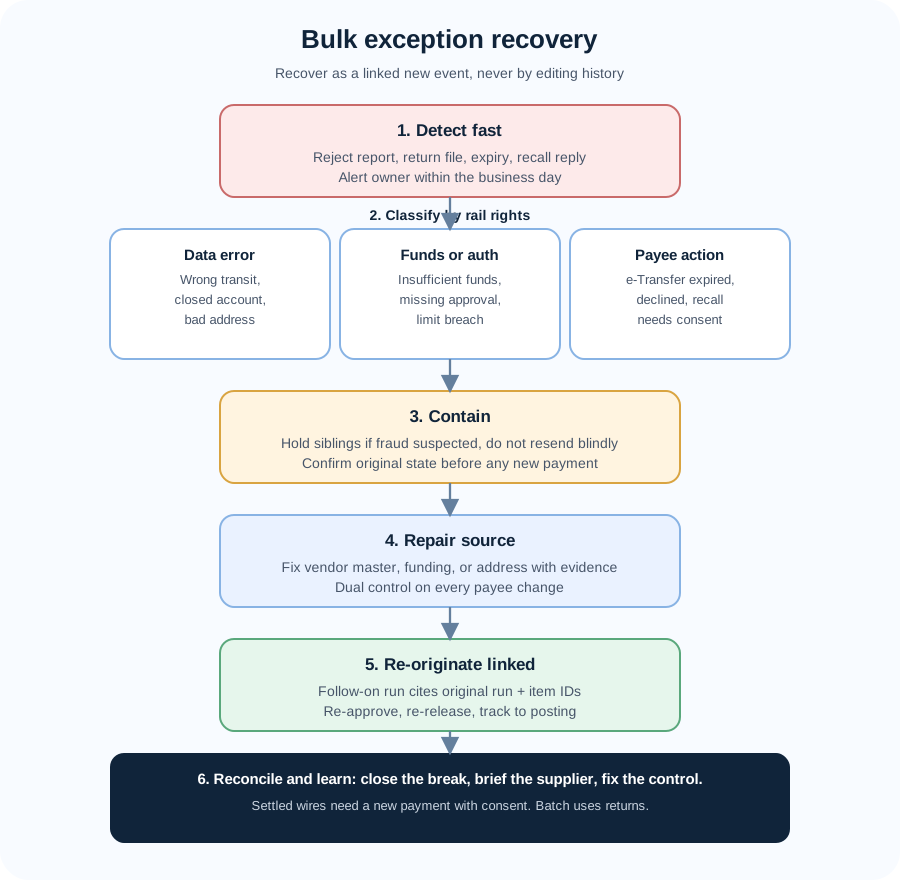
Detect within the business day, classify by leg rights, contain siblings where fraud is suspected, repair sources with dual control on payee changes, re-originate linked with fresh approval, reconcile to closure with supplier briefing and control learning. Run that loop per item while holding the run-level view, and partial success stays routine. Skip classification or re-send blindly, and a twelve-item repair queue becomes a duplicate-payment incident with two breaks per item.
9. Posting, accounting, liquidity, reporting and reconciliation
If Sections 3 to 8 move and protect money, Section 9 proves it moved correctly and funds the next movement. Posting, accounting, funding, reporting and reconciliation are the finance view of the same run — determining whether the business closes the week funded, balanced and explainable, and the bank closes the day.
Posting translates leg evidence into customer entries at both ends, each leg differently. The payer posts one funding debit for the run — or per-leg debits where structured — plus separately visible fees, never netted into principal, with value dates reflecting assigned windows. Payees post per item: batch credits with return-rights awareness, e-Transfer deposits on acceptance or Autodeposit with good-funds availability while bank legs complete separately, wire credits on settlement with same-day finality. Every entry must carry recognized identifiers: run, item, leg reference and customer remittance. Lump debits without run linkage cannot match payables; advices with amounts but no invoice remittance cannot apply to receivables. Both generate the calls bulk discipline prevents. Returns, expiries and recalls post as linked distinct entries referencing originals, never overwriting history.
Accounting rolls postings into accounts balancing every business day. Clearing and suspense hold batch value between exchange and settlement, clearing to owned breaks — never growing unexplained balances. Network settlement accounts hold e-Transfer value through bank cycles. Bank of Canada settlement accounts extinguish batch net positions and wire gross payments in central-bank money. Returns, expiries, adjustments and recoveries post linked with their own dates, originals untouched. Growing suspense without ownership, pending e-Transfer queues without expiry watch, unmatched return files — each is an investigation awaiting a supplier complaint, triggering ageing and escalation rather than month-end surprise.
Funding pays for release before settlement proves it. The treasurer's bulk-week question: what leaves today, on which legs, from which account, with what buffer for returns and expiries. Batch cohorts consume window funding for full batch value plus a return buffer sized by recent experience. E-Transfer cohorts consume smaller continuous funding with expiry-driven variance — some sends return unaccepted for re-origination or payables release. Wire items consume intraday liquidity payment by payment within business-day windows, with queue awareness among competing urgents. Hub window assignment is thus a funding input, not merely a promise: every item in today's window is a funding commitment, and late or upgraded items change it intraday. Businesses funding run totals without leg awareness overfund batch safety while underfunding wire urgency; banks releasing without funding confirmation create daylight exposure. Both should read the same hub queue and leg calendar each morning.
Reporting serves three audiences from one evidence base — and bulk exposes failure fast because audiences compare notes. Payables teams need run dashboards: status, per-state counts, reason-coded failures with repair guidance, honest per-leg value dates, downloadable item reports matching the payables system. Payees need applicable advices: amount, date, payer identity and invoice remittance. Treasury and finance need confirmations, positions, fee and funding reports tying to the ledger. Regulators, auditors and examiners need the full chain: immutable versions, approvals, screening dispositions, gateway acknowledgements, leg references, return and investigation records, retained beyond personnel change. All reports carry one identity — run and item identifiers — so supplier calls, treasury queries and audit samples converge on the same records.
Reconciliation proves run, evidence and ledger agree per leg, every business day, breaks queued by age and owner. The three-way match: the approved run as authorized, leg evidence as external proof (batch exchange and position records, Interac send and deposit confirmations, wire settlement confirmations), postings as ledger truth. Match at item level, summarize at run level, age every break with owner and action, never idle past one business day without customer messaging where payees are affected. Watch bulk pathologies: double payment when a wire duplicates an unlinked batch item, orphaned e-Transfer after mid-run address changes, return blindness when return files never match items, phantom completion when runs close with pending items. Each is prevented by stable identifiers, address stability, mandatory return matching, and refusing closure until every item is final.
Close the loop with payee experience: reconciliation without remittance matching leaves suppliers unreconciled while the bank balances. The payer's match proves money left correctly; supplier cash application proves it arrived usefully. Track remittance delivery as reconciliation data — references received per payee, via which channel, with what truncation — and treat unapplied-cash reports as run-remittance defects for the next build. Over a quarter, that feedback improves supplier relations more than any timing gain: suppliers forgive next-window value with complete remittance sooner than same-day value they cannot apply.
10. Bank implementation, testing and resilience
Seeing the bulk view is one skill. Wiring a bank to deliver it — portal, API, hub, gateways, status, reconciliation — is another. This section is for product, technology and operations leaders turning architecture into releases, tests and runbooks, leaving room for the planned RTR without destabilizing today's legs. Implementation-overview depth only; leg build detail lives in Blocks 4, 6, 7 and 8, messages in Block 9, operations in Block 14.
Wire the hub before adding legs and channels. Shared core first: run intake and normalization across portal upload, host-to-host file and API batch with one canonical run model; run- and item-level validation with reason-coded repair guidance; entitlement, maker-checker-approver and tier enforcement with releaser immutability; fraud, sanctions, limit, duplicate, funding and cutoff decisioning in release order; per-item routing policy with recorded override; gateway adapters for AFT batch, Interac messaging and Lynx wires normalizing leg statuses into one item-state model — draft, valid, approved, released, accepted, settled or deposited, posted, rejected, returned, expired, under investigation, recovered; tracking and callback services pushing run and item status with payee-privacy enforcement; posting, advice, reporting and three-way reconciliation closing the loop. A future instant leg arrives as one more adapter, not a new silo. Reject any design putting approval, screening or reconciliation inside a leg adapter.
Channels must share hub clock and vocabulary, or honesty fails at point of sale. Portals offer only hub-confirmed value dates per item, leg and business day; APIs return only normalized states; file acknowledgements distinguish received, validated, approved, released and accepted rather than collapsing into one accepted message. Entitlements reflect the matrix: makers cannot approve, checkers cannot edit silently, approvers cannot release technically, releasers cannot alter content, emergency paths are separate expiring entitlements rather than standing privileges. Payee-master functions need their own entitlements with verification workflows and change-cooling flags. Test every boundary violation — self-approval, reused approval, unchecked-run release, post-approval alteration, after-cutoff promises, cross-payee exposure. Each must fail with a clear message and logged event.
Testing must prove control as well as connectivity, signed off by operations, treasury, financial crimes, finance and support — not technology alone. Cover schema and authentication per gateway; hub rejection of bad routing, duplicates, limit breaches, unfunded runs, incomplete wire and e-Transfer data; fraud, sanctions, entitlement, tier and cutoff decisions including holds and evidenced false-positive releases; partial acceptance with per-item reason codes; e-Transfer notification, acceptance, expiry and decline including weekend ageing; wire queue behaviour under liquidity stress; linked returns, expiries, investigations and follow-ons; daily three-way matching with break ageing; regression and peak-week volume at real run sizes. Include the bulk negatives: one sanctioned payee among clean items, one compromised master change, a re-submitted run identifier, recovery attempted before state confirmation. Each must produce the controlled outcome — hold with ownership, partial release only where permitted, duplicate rejection, recovery block with guidance — not a generic error.
Onboard business customers in stages. Agreement first: cash-management terms, file and API specifications, approval tiers, cutoff honesty, per-leg fees, return and expiry responsibilities, advice entitlements, the company-bank boundary in writing. Then payee-master migration: cleansing, verification, deduplication, re-verification of changed records before first production value. Then connectivity and format testing: per-role entitlements, file round-trips with intentional errors, API acknowledgement and callback handling with idempotent retry. Then controlled production: small runs fully approved and reconciled, mixed-leg runs with deliberate rejects and returns, then peak-week volume. Only then grant standing entitlements, re-tested annually and on every material change.
Resilience covers what managers cannot see until failure: dual gateway connectivity per leg, hub failover preserving run state, backup submission paths, contingency wire and funding arrangements, notification-degradation handling, cyber-recovery preserving immutability and evidence, vendor and agent runbooks, communication trees reaching payables teams before suppliers. Drill leg-specific failover: delayed batch exchange, wire queue build, notification degradation, stalled investigations, corrupted exports. Every drill ends reconciled with supplier-message review.
At the October 5, 2026 baseline, RTR readiness means programme participation and adapter room, not production for this chapter: Payments Canada says launch is targeted for Q4 2026, with initial direct-to-Exchange participants followed by sequenced migration of Interac e-Transfer clearing-and-settlement participants in 2027. Track official Payments Canada material, assess access and RPAA implications for providers in the chain, keep adapter interfaces open for instant 24/7/365 behaviour with its own funding and fraud model, keep remittance instant-ready per Section 5, train channels never to offer instant timing before reachability and funding exist. Keep batch adapters modular for future format or window changes without rebuilding approvals or reconciliation. Every change — leg, format, screen, cutoff — needs calendar assessment, relative-window customer communication, control re-attestation, rollback respecting wire finality and batch return rights, and prove-out over a full business-day cycle including returns and expiries. Bulk platforms change safely when the shared core stays stable and only adapters move.
11. Practical Canadian bulk payables examples
Theory holds until run week. Two fictional runs — invented companies, people, amounts and timings, amounts as illustrations not limits — exercise this chapter's mixed-leg discipline. Neither invents cutoff times; neither routes to the planned RTR.
Example (fictional): Northgate Distributors — a 240-item supplier week across batch, e-Transfer and wire
Northgate Distributors is a fictional Ontario food distributor. Payables manager Priya runs a weekly supplier cycle via portal file upload with API status polling. This week's run holds two hundred and forty items: routine supplier credits for batch, small ad-hoc payees for e-Transfer, two urgent items needing same-day finality. Finance director Marc approves at tier; analyst Jonas confirms funding. The vendor master was cleansed at onboarding; every recent banking change carries verification evidence. Keep the lifecycle, matrix and partial-success diagrams beside this story.
Monday is build and validation. Priya assembles the draft from approved invoices with invoice-level remittance. Hub validation flags eleven problems before approval: six transposed transit digits in new supplier records, three duplicate invoice submissions from a double export, one malformed e-Transfer address, one batch item to a payee whose details changed Friday without independent verification. The changed-payee item is held for callback verification; routing errors and the bad address return with repair guidance; confirmed duplicates are removed with logged reason. No approval is sought on the dirty draft; the afternoon resubmission validates clean.
Tuesday is approval, routing and release. Checker Lena reviews the clean run with changed-payee verification now evidenced — callback to the registered contact, dual-authorized master change, cooling flag acknowledged — plus new payees, round amounts and two wire upgrades with commercial reasons and fee acceptance. She recommends approval with written notes; Marc approves at tier with funding confirmation; Jonas releases before hub cutoff with per-item windows: batch cohort to today's exchange, e-Transfer cohort to immediate send with acceptance monitoring, two wires to the afternoon RTGS queue with acknowledged liquidity consumption. Release locks the run; per-item acceptances arrive through the afternoon.
Wednesday through Friday is partial success. The batch cohort exchanges and positions; most items post with matchable remittance while five return — two closed accounts, two frozen accounts, one invalid transit. The e-Transfer cohort notifies within minutes; most accept the same day, two expire over the weekend, one declines to a wrong name and is held for re-verification, not re-send. Both wires settle with finality, unlocking weekend freight. Status stays partial with owned queues; nothing is re-sent on assumption. Each supplier sees only its own credit and remittance.
The following Tuesday carries linked recovery. A follow-on run cites parent and item identifiers: five repaired batch items with re-verified masters, two re-originated e-Transfer sends to verified addresses, the declined address held for a second callback. Fresh approval, screening, funding and window assignment — nothing inherited. Both runs reconcile together with parent linkage, no idle breaks, per-leg fee visibility. The review writes learning into procedure: fresher reference checks, Friday outreach for time-sensitive sends, the cooling flag's confirmed value.
Example (fictional): Harbourview Property Group — an 85-item contractor run with a compromise attempt
Harbourview Property Group is a fictional Halifax property manager paying contractors across three provinces plus owner distributions behaving like payables. Operations lead Sofia builds an eighty-five-item monthly run: batch credits for established contractors, e-Transfer sends for rotating seasonal crews preferring email addressing. Controller David approves; treasury confirms funding. Standing rule under test: any banking or address change needs independent callback verification and cannot be used until someone else authorizes it. Keep the matrix and recovery diagrams beside this story.
The run builds normally until validation flags one high-risk item: a known plumbing contractor's banking details changed yesterday afternoon — submitted by email with logo, accurate invoice numbers, urgency language and a real work order reference. Maker Tomas included it. Routing is well-formed so validation does not reject, but the master rule fires: recently changed payee, no independent verification, enhanced review required. Checker Amira calls the contractor's registered master number — not the email's number — reaching the real contractor, who confirms no change was requested. The item is held, the master change frozen, financial-crimes notified, and eighty-four items proceed. The compromise failed before approval through segregation and callback discipline; past release, batch offers only return rights and a wire upgrade would have been final. Whoever changes payee truth cannot run payments on it, and no deadline overrides verification.
Release and status test e-Transfer patience. Established contractors exchange and post routinely with work-order remittance. Seasonal e-Transfer sends notify within minutes; most accept the same evening, three pend through the weekend, one expires where a crew lead changed email silently. Operations resists re-sending pendings to alternate addresses supplied by text. Instead: confirm state (pending, not failed), contain (no alternate sends without verification), repair source (verified email update via registered crew contact, dual control), re-originate linked with fresh approval, reconcile per item. The expired send re-originates next week to the verified address and deposits on acceptance; pendings accept before expiry untouched. Pending is a state with owner and expiry date, not failure demanding re-send.
Month-end reconciliation closes quietly. The parent matches approved items to batch evidence, e-Transfer confirmations and postings with fee separation. The held compromise item stands as held before approval with verification evidence and crimes notification — a prevented loss with complete trail, not a missing payment. The follow-on matches parent linkage to fresh evidence. Breaks age to zero; suspense holds nothing unexplained. David records two improvements: crew email verification moves to onboarding, time-sensitive Friday sends get same-day outreach. No new technology — hub status and ownership used as designed.
12. Key takeaways and authoritative references
Hold the chapter as five sentences. Bulk payables is one controlled envelope — build, validate, approve, release — containing many independent per-item outcomes. The envelope routes per item across three live legs — routine credits as AFT through ACSS with deferred settlement and return rights, addressable sends as e-Transfer through Interac Corp with 24/7 experience and acceptance dependence, urgent items as wires through Lynx with same-day finality and no unilateral unwind — with the planned RTR as future room, not present routing. Prevention gates release through segregation, verification, limits, fraud monitoring, sanctions screening, funding and cutoff honesty, each logged. Partial success is normal, and recovery preserves identity through linked follow-on runs with fresh approval. Posting, funding, reporting and daily reconciliation prove the week closed funded and balanced; the run closes only when every item holds a final, owned, evidenced state.
Carry five behaviours into your next run week. Build from approved payables with complete data and remittance; never seek approval on an unvalidated draft. Enforce the matrix technically — three different people for maker, checker, approver; releaser unable to alter content; changed payees flagged automatically. Promise only leg-calendar windows in relative terms. Investigate before re-sending, choose recovery legs by current urgency and data, recover as linked events with parent references. Reconcile daily with no idle breaks.
Carry five distinctions preventing the costliest errors. Run acceptance is not payee payment: the envelope milestone confirms data moved, not that suppliers were credited. Notification is not settlement on e-Transfer: the customer moment completes on accept while bank legs follow. Posting is not finality on batch: credits post with return rights behind them. Settlement is not reversible on wire: finality means recovery needs a new consented payment. A follow-on run is not a duplicate: linked re-origination with fresh approval is controlled recovery; blind re-sending is the duplicate. Teach those five sentences to every maker, checker, approver, releaser and supplier-facing colleague.
Where to go next — forward links within the programme
- Blocks 4, 8 and 9 — Batch, wire and message depth. AFT disbursement economics, processing, returns and reconciliation (Block 4); Lynx architecture, RTGS finality, liquidity and investigations (Block 8); message families, tracking references and AFT coexistence (Block 9).
- Blocks 6 to 7 — Interac depth. Send, Autodeposit, request, business bulk patterns, cancellation, expiry, fraud and reconciliation behind the e-Transfer legs.
- Blocks 11 and 12 — Cross-border and planned instant. Foreign-currency items, correspondent paths, FX and value dates (Block 11); the planned RTR programme for future readiness (Block 12).
- Blocks 13 and 14 — Controls and operations. Fraud, FINTRAC, sanctions screening and RPAA supervision (Block 13); cutoffs, calendars, exceptions, posting, liquidity and resilience (Block 14).
Authoritative references (official sources only, baseline October 5, 2026)
Official sources only; re-check time-sensitive pages before customer or examination use. Interac's public business limits are product/FI-dependent, and no universal cutoff hours are stated here — binding times come from your bank's schedules with the published closure calendar, binding rules from current published text.
- Payments Canada — Retail batch payment system page. Operator description of the retail batch system comprising ACSS and USBE, direct and indirect participation, entry of volumes and values into net balances, and settlement through payments to and from the Bank of Canada. https://www.payments.ca/systems-services/payment-systems/retail-batch-payment-system
- Payments Canada — High-value payment system (Lynx) page. Operator description of Lynx as the real-time gross settlement system for high-value and time-critical payments, settling in central-bank money, including participation conditions such as holding a Bank of Canada settlement account. https://www.payments.ca/systems-services/payment-systems/high-value-payment-system-lynx
- Payments Canada — Rules and documentation page. Source for the current ACSS and Lynx rules, standards and by-laws with versions in force and update history, the binding text behind this chapter's functional descriptions. https://www.payments.ca/systems-services/rules-documentation
- Bank of Canada — Payment systems overseen by the Bank. Central-bank description of oversight under the Payment Clearing and Settlement Act, including Lynx as systemically important and ACSS as an overseen prominent system, with settlement-account and designation context for this chapter's finality claims. https://www.bankofcanada.ca/regulatory-oversight/financial-market-infrastructures/payment-systems-the-bank-of-canada-oversees/
- Interac — Interac e-Transfer for Business. Corporate product page for bulk payables, 24/7 availability, business remittance data, Autodeposit, product limits and file scale; it notes that limits and customer experience vary by participating financial institution. https://www.interac.ca/en/payments/business/send-receive-money-with-interac-e-transfer-for-business/
- Interac — Interac e-Transfer Terms of Use. Service terms for holding funds until deposit/cancellation/expiry, deposit finality in Interac records, cancellation/decline and transaction limits. https://www.interac.ca/en/interac-e-transfer-terms-of-use/
- Bank of Canada — The Bank of Canada’s settlement account policies for Payments Canada payment systems. Confirms Payments Canada ownership/operation and settlement accounts for Lynx, ACSS and planned RTR, with final settlement through Bank of Canada books. https://www.bankofcanada.ca/core-functions/financial-system/bank-canadas-settlement-account-policies-for-payments-canada-payment-systems/
- Bank of Canada — Retail payments. Current RPAA supervision scope, operational-risk, incident, safeguarding and reporting responsibilities for in-scope PSPs; distinguishes supervision from individual consumer dispute handling. https://www.bankofcanada.ca/regulatory-oversight/retail-payments/
- FINTRAC — Reporting electronic funds transfers to FINTRAC. Current international-EFT reporting, aggregation, 24-hour rule and filing guidance; use it rather than assuming every domestic bulk item is reportable. https://fintrac-canafe.canada.ca/guidance-directives/transaction-operation/eft-dt/eft-dt-eng
- Payments Canada — Real-Time Rail: Testing and launch. Current Q4 2026 launch target, testing status and sequenced onboarding timeline; this chapter treats RTR as planned and does not route live items to it. https://www.payments.ca/systems-services/payment-systems/real-time-rail-payment-system/testing-and-launch
This application uses JavaScript for the full interactive experience. This text summary is served for accessibility and search indexing.