Insurance, Pensions and Cross-Border Insurance Controls
Insurance and pensions create different financial-crime opportunities depending on their features. Investment-linked life products, surrender values, policy loans, beneficiary changes and cross-border distributions can move value. General insurance may present fraud and sanctions risk without being subject to the same AML perimeter as investment-related life insurance. Do not assign one universal risk or legal duty to every policy.
FATF's financial-institution definition includes underwriting and placement of life insurance and other investment-related insurance. Its life-insurance guidance uses a risk-based approach. National law determines the actual product and provider perimeter, pension treatment and reporting duties.
Identify policyholder, insured person, premium payer, beneficiary, beneficial owners where relevant, intermediary and payout recipient. These parties may differ legitimately, but the relationship and authority need explanation. A named beneficiary is not automatically the person funding the policy, and an intermediary is not necessarily the insurer's reporting officer.
FATF Recommendation 10's Interpretive Note addresses life-insurance beneficiaries and verification at payout; Recommendation 12 addresses relevant PEP assessment at payout, including enhanced scrutiny for higher-risk cases. Keep the applicable timing and national implementation clear rather than suggesting that every beneficiary must be fully verified at the first premium.
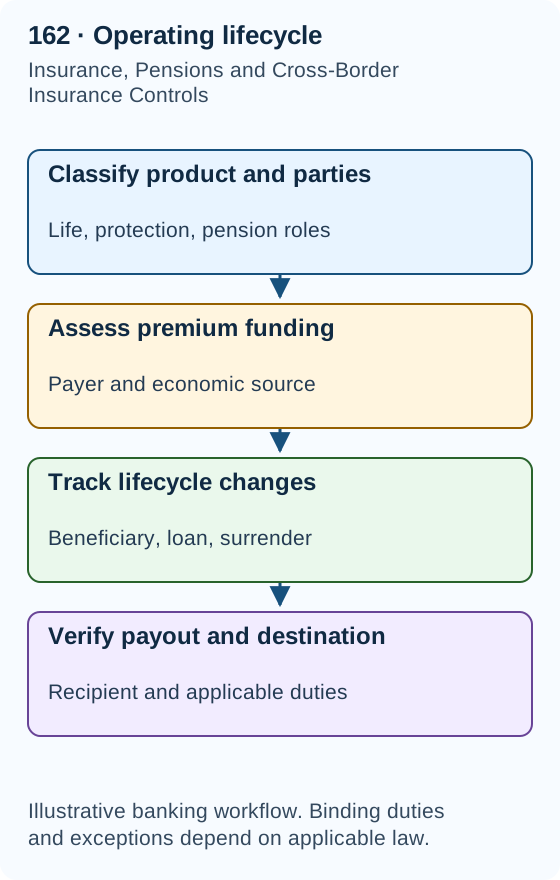
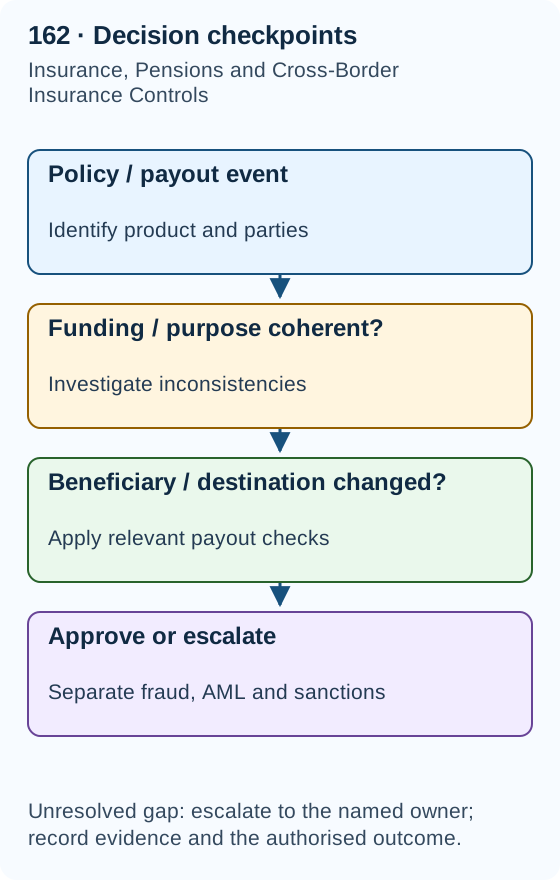
Classify the product by its actual features
Insurance can provide protection, accumulate investment value, pay income, cover commercial risks or support retirement arrangements. Financial-crime exposure changes with the ability to put value in, alter parties, borrow, surrender, assign rights and receive payouts. Begin with these mechanics rather than a single “insurance customer” risk rating. The bank also needs to identify its role: insurer, distributor, account provider, custodian, lender or payment processor.
Consider fictional bank distributor Cedar Bank and insurer Elm Life. Cedar introduces customers and may receive premium payments through its accounts. Elm issues the policy and administers benefits. A broker, policyholder, insured person, premium payer and beneficiary may all appear in the same transaction. Cedar and Elm should identify their own applicable obligations and how relevant information reaches the authorised decision owner.
Protection-only term cover generally has different value-transfer features from an investment-related policy with surrender value. A long-term policy with limited liquidity differs from one accepting flexible top-ups and allowing early withdrawal. A pension scheme with employer contributions differs from an individual investment contract. The legal perimeter must be mapped separately from the risk comparison; lower or different AML exposure does not eliminate fraud or sanctions concerns.
The US provides a useful jurisdiction-specific example. FinCEN's insurance framework is limited to defined covered products and integrates agents and brokers into the insurer's programme. It does not make every insurance agent a separately obligated insurer under that rule. Banks and broker-dealers can retain obligations under their own regimes. The linked historical FAQs explain the functional scope, but their old rule numbering and filing-form references should not be copied as current operational instructions.
FATF's life-insurance guidance dates from 2018. Its current official page states that later standards revisions, including the 2025 risk-based-approach changes, are not incorporated. Use its product examples alongside current Recommendations and national implementation. An official older document can remain informative without being a complete current legal manual.
Map the parties and their different interests
The policyholder owns contractual rights under the policy. The insured person is the person whose life or other risk is covered. The premium payer supplies money. The beneficiary may receive a benefit when the relevant event occurs. An assignee or pledgee may have rights affecting proceeds. The intermediary helps distribute or administer the product. These roles can overlap, but should not be treated as identical by default.
For example, a parent can pay a child's policy premium, an employer can fund employee cover and a company can own a policy connected to a key employee. These arrangements can be legitimate. The bank or insurer should understand the relationship, authority and economic explanation appropriate to the product. A payer mismatch is a question to assess, not an automatic finding of laundering.
Beneficiaries may be named individuals, entities or a class described by the policy. Apply the identification and verification timing required by the relevant framework. The FATF standard distinguishes relevant beneficiary information and payout-stage measures. Do not assume that the insured person, policyholder and final recipient are already fully interchangeable in the customer file.
Changes to roles can alter risk. A new owner, beneficiary, assignee, premium payer or destination account should retain its effective date and evidence. The bank needs to know whether an instruction comes from a person authorised under the current arrangement. A broker who arranged the sale is not automatically authorised to change the beneficiary or payout account.
Follow value from premium to final recipient
At premium payment, identify the product, policy, payer, amount, source account and expected pattern. A regular payroll-funded contribution differs from a large unexpected top-up funded by a newly formed company. The analyst should understand the customer's circumstances and product purpose before judging whether the payment is unusual.
During the lifecycle, value can move through top-ups, partial withdrawals, policy loans, assignments, refunds or surrender. A policy may permit some of these and prohibit others. Use the actual terms and applicable rules. A generic investment-account scenario can misunderstand premiums as deposits or a benefit payout as an ordinary withdrawal.
At payout, identify the event, entitlement, recipient, destination and instruction authority. A death claim, maturity benefit, surrender, refund and loan have different economic explanations. A clean initial premium does not establish that a changed recipient years later is correct. Payout controls should follow the current relevant parties and restriction state.
Surrender at a loss can be a signal because the customer gives up economic value, but there may be a legitimate liquidity need, misunderstanding, family change or dissatisfaction. Examine the timing, payer, recipient, product terms and explanation. Do not use a penalty percentage as an invented universal legal threshold or proof of crime.
Policy loans can provide liquidity secured by or linked to policy value, depending on the product. The loan proceeds explain immediate funding, but do not necessarily explain the original premium source. Record borrower, policy rights, recipient and repayment. Collateral or policy value supports one aspect of the product; it does not prove clean ownership or economic origin.
Distinguish AML, claims fraud and sanctions
Claims fraud concerns dishonest claims or deception. Money laundering concerns relevant proceeds, purpose and movement under the applicable framework. Sanctions can restrict parties, assets, services or transactions according to the regime. The same claim or payout can raise more than one issue, but the legal tests and actions differ.
A false claim can generate criminal proceeds, creating possible AML relevance. An early surrender funded by unrelated parties can raise AML questions without a false insured event. A legitimate death claim may still involve a legally restricted beneficiary. The bank should coordinate facts while retaining separate decisions, owners and report channels.
Do not make a fraud team's closure automatically close an unexplained source-of-funds concern. Do not assume a suspicious-activity report itself determines whether a claim is contractually payable. Legal, claims specialists, operations and authorised reporting officers need a clear process for the different decisions and any interim action.
Customer communications must also preserve applicable reporting confidentiality. A letter requesting beneficiary documents should not reveal that a suspicious report has been filed or is being considered where disclosure is prohibited. The ordinary claims record and protected reporting record should have appropriate access and export controls.
Pensions require scheme and member context
Pension contributions, transfers and benefits depend on the scheme, member, employer, provider and governing framework. Do not apply one universal insurance AML perimeter to every pension arrangement. The bank should identify its actual role and the relevant legal obligations, product restrictions and fraud safeguards.
Employer contributions can explain a payer different from the individual member. A transfer between permitted schemes can explain a large movement without an ordinary personal withdrawal. A proposed transfer to an unfamiliar recipient or an account controlled by a third party may raise authority, eligibility, fraud and financial-crime questions. Product specialists should explain the actual mechanics and permissible destination.
Promises of unusually early access or guaranteed returns can warrant fraud review depending on the facts and framework. They do not automatically establish a particular offence. The institution should verify relevant scheme and recipient details, assess the instruction and route concerns. A customer may be a victim as well as a source of information.
Cross-border business has several legal boundaries
Cross-border insurance can involve issuer, distributor, policyholder residence, premium origin, insured risk and beneficiary destination in different places. Map them separately. Settlement currency or the location of a correspondent bank does not alone determine the full jurisdictional perimeter.
Licensing, tax, suitability, consumer protection, privacy and AML are distinct frameworks. Completion of CDD does not certify that a product can lawfully be sold in another country or that a tax arrangement is valid. Financial-crime staff should identify relevant inconsistencies and route those questions to the responsible specialists.
The bank should know which entity handles the customer, premium, policy administration and report. Contracts can allocate operational tasks, but cannot waive an institution's own statutory duties. Information arrangements should explain what evidence can be obtained, how, when and through which lawful route. A distribution partnership should not become a chain in which every party assumes another has resolved the material question.
The later sections develop these principles through policy events, intermediary controls, pension transfers and worked cases. Examples and numbers are fictional teaching material. Controls described as design choices should be adapted to the actual product and applicable requirements rather than treated as universal rules.
Premium-to-payout analysis
At purchase establish the product's purpose, customer profile, ownership and funding. Premiums from an unrelated payer, sudden large top-ups or funding inconsistent with the customer's circumstances need context. The intermediary's involvement does not remove the insurer's or bank's own obligations.
During the policy lifecycle assess changes to beneficiary, ownership, assignment, residence, premium pattern and use of loans or surrender. Early surrender with economic loss can be a risk signal but is not proof of laundering: liquidity need, product misunderstanding or changed circumstances may explain it. Investigate the actual sequence and evidence.
At payout verify relevant beneficiary information, authority, bank destination and applicable PEP/sanctions treatment. A payout to an unrelated account or jurisdiction can change the risk even when original onboarding was sound. For pension transfers, understand scheme and member roles, permitted receiving arrangements and any fraud indicators under the applicable framework.
Cross-border business adds jurisdiction, tax, licensing, sanctions and reporting questions. Those frameworks differ. An AML review cannot by itself establish suitability, tax compliance or permission to distribute the product abroad; route those questions to the relevant specialists.
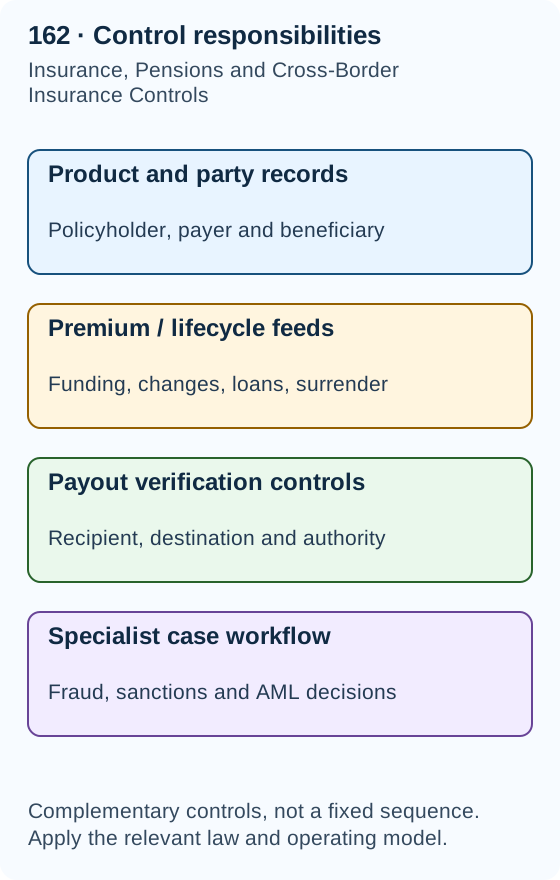
Build a product risk assessment from mechanics
Describe premium flexibility, value accumulation, liquidity, loan features, surrender, transferability, assignment, beneficiary change and payout options. Identify distribution channels and jurisdictions. These features help explain how value can enter, move and leave. A product name such as “whole life,” “annuity” or “retirement plan” should not substitute for the actual terms.
An investment-related policy with a large single premium and flexible withdrawal can present a different exposure from regular low-value protection cover. An annuity paying periodic income may have different payout mechanics from a contract allowing a lump-sum surrender. The assessment should identify the relevant features and control response, while local law determines which provider and product duties apply.
Consider whether business controls reduce a particular opportunity. Restrictions on third-party payments, assignment or payout destinations can be relevant if enforceable. A policy rule existing only in a brochure is weaker than a system and process that apply it. Establish any permitted exceptions and who authorises them. Do not describe a preventive control when the institution only reviews activity afterward.
Distribution affects evidence. A face-to-face agent, bank branch, online portal and overseas intermediary may obtain different information. The assessment should identify what reaches the insurer and what remains with the intermediary. A channel can be legitimate yet introduce information gaps needing an effective arrangement.
Premium funding and top-ups
At purchase, establish the customer's purpose and relevant financial circumstances. Identify the payer and source route appropriate to the product and risk. A recurring premium from the customer's regular account may need a different inquiry from a large one-off payment by an unrelated business. The evidence should explain the material funding, not merely prove that a bank transfer happened.
Top-ups can change the relationship's value and risk. A customer initially buying modest cover may later add substantial investment value. Review whether the change fits circumstances, product purpose and known source. The original acceptance should not operate as unlimited approval for future funding from any party.
Payments collected by agents need traceability. Determine whether money goes directly to the insurer, through an agent collection account or through a bank distributor. Preserve the payer, policy allocation and remittance chain. An aggregate transfer from an agent can conceal the underlying payer if allocation data is lost.
Reconciliation should compare collected premiums, policy allocations and insurer receipt. Differences may reflect timing, fees or administrative errors, but require explanation. An unallocated payment should not be assigned to the first matching customer merely to clear a queue. A wrong allocation can distort both policy value and financial-crime analysis.
Repeated small payments can be normal for premiums. Analysis should consider expected schedule, payer, product and aggregate pattern rather than assuming frequency implies structuring. If payments appear deliberately arranged to evade a relevant requirement, the concern needs the applicable facts and legal assessment. Do not invent a universal cash or premium threshold for every jurisdiction.
Cooling-off refunds and surrender
A policy can permit cancellation or a cooling-off refund under its terms and governing framework. A refund can be legitimate consumer protection. The institution should identify the original payer, current entitlement, requested destination and any relevant restriction. Returning money to an unrelated party may create a new question even when cancellation itself is permitted.
An early surrender may involve charges, reduced value or other economic consequences. Product specialists should explain the calculation. The analyst should understand whether the customer's stated reason makes sense in context. A liquidity need or changed circumstances can explain accepting a loss; repeated unexplained use of policies as short-term pass-throughs can warrant deeper inquiry.
Partial withdrawal and full surrender should be recorded separately. Their effects on cover and remaining value may differ. A monitoring system should not describe a partial benefit as closure of the entire policy. Accurate events help interpret repeated activity and later payouts.
If the instruction changes after approval, assess the material change. A payout approval for the policyholder's verified account should not authorise a later substituted company account automatically. Preserve the instruction version, approver and payment status. The bank's decision should be specific to the actual recipient and value path.
Ownership, assignment and beneficiary changes
An assignment can transfer or pledge rights under a policy, depending on the arrangement. Establish its legal effect with appropriate expertise. A bank may receive an assignment as loan security; another party may acquire rights for another legitimate purpose. The customer file should not assume that every assignment transfers all beneficial ownership identically.
Record the parties, rights, effective date, authority and evidence. If an assignment affects payout entitlement, the claims and payment processes need the current state. An old beneficiary record may not determine the entire distribution. A signed form without verified authority can still create an operational and fraud risk.
Beneficiary changes require product and legal context. A policyholder may legitimately change family beneficiaries after marriage, divorce or other events. The institution should assess relevant identity and risk requirements, authority and unusual circumstances. It should not treat every family change as suspicious or accept a broker's instruction beyond its mandate.
When a beneficiary is a legal entity or arrangement, identify the relevant information under the applicable framework. The entity name alone may not answer ownership, control or recipient questions. A beneficiary class may be appropriate initially, while a particular individual becomes relevant at payout. Preserve the distinction rather than inventing a fixed percentage for every potential recipient.
Policy loans and repayments
Follow policy-loan proceeds through borrower, policy rights, destination and purpose. The immediate source is the loan, but the original premium source can remain relevant. A loan against policy value is not independent corroboration that the funding was lawful. Credit and product assessments should not be mistaken for a complete financial-crime conclusion.
Repayment introduces another event. A repayment from the customer's usual account can be consistent with known income; an unfamiliar third-party payer may require explanation. Identify whether the product permits the payment and whether the economic relationship is coherent. The analyst should not close every question because the insurer's credit exposure has fallen.
A sequence of large premium, rapid loan, third-party repayment and changed beneficiary can be more informative than any event alone. Reconstruct the chronology and actual recipients. The pattern may have a legitimate explanation, but the bank needs evidence appropriate to the combined value path rather than separate isolated checklist ticks.
Payout and claims assessment
At a death, maturity or other benefit event, verify the relevant entitlement, party information, authority and destination under applicable requirements. The claims team evaluates the insured event and contract. Financial-crime controls assess relevant parties, funding and restrictions. Operations executes the authorised payment. These steps should be connected without assuming one team's approval completes all others.
A death claim may involve an estate, trustee, assignee or beneficiary with different rights. Legal clarifies conflicts or uncertainty. The bank should not pay the person who first contacts the relationship manager merely because the insured person has died. Preserve evidence of the event and the actual recipient's entitlement.
Check current relevant screening and status. A beneficiary may have changed identity data, residence or political exposure over the policy's life. The original premium screen may be years old. Apply the relevant payout measures and restrictions while recognising that a screening match needs identity resolution, not an automatic unsupported allegation.
Claims fraud evidence can also be relevant. A false document, inconsistent event or suspicious redirection should reach the appropriate specialist. If the claimant is a victim of an intermediary's deception, customer treatment and investigation need to reflect that possibility. The bank should distinguish a fraudulent instruction from a legitimate beneficiary's identity.
Pension contributions and transfers
Map scheme, employer, member, administrator, trustee, provider and receiving arrangement. Employer contributions can have a legitimate aggregate payer and individual allocations. Preserve member attribution and the scheme's actual structure rather than forcing every contribution into an individual insurance-premium model.
A transfer requires the relevant authority, eligibility, receiving arrangement and value path. Product and legal specialists establish what destinations and processes are permitted. Fraud staff assess relevant deception or scam indicators. Financial crime considers unexplained parties, source and movement under its own framework. These assessments should not be reduced to a single “pension approved” flag.
Member vulnerability and pressure may matter. A customer requesting an unusual transfer after aggressive third-party advice may need careful contact and safeguarding. Do not assume incapacity from age or dismiss the customer's instruction automatically. Use factual evidence and the authorised process, explaining the relevant questions clearly.
Refunds, overpayments, death benefits and retirement payouts can differ in entitlement and timing. Store their event type and authorised recipient. An employer payment is not necessarily the member's withdrawal, and a scheme transfer is not necessarily a benefit paid personally. Accurate classifications improve both controls and reporting narratives.
Cross-border evidence and lawful information flow
Map policy issuer, distribution location, policyholder and beneficiary residence, payer account, insured risk and payout destination. Determine which entities need which facts. A central administration hub may require product and identity information but should not receive every protected report by default. Privacy and secrecy constraints need specific legal handling.
Use precise requests to intermediaries. Identify the policy, event, material question and evidence needed through an approved secure route. A general assurance about customer legitimacy may not resolve an unusual third-party payment. Assess response sufficiency and record limitations. Contracts should support the information necessary for the service without directing unlawful disclosure.
If a cross-border product is not authorised for distribution, that question belongs to the applicable licensing process. AML completion cannot cure it. If a tax claim is inconsistent, route it appropriately while assessing any financial-crime relevance. Good control recognises boundaries and brings the right specialist into the decision.
The final review should connect product features, party roles, funding, changes and payout. It should explain why activity is coherent or which material facts remain unresolved. A policy number and a long-standing premium record are useful identifiers, not substitutes for the current economic and legal understanding.
Retirement benefits and changing payout forms
A retirement arrangement can move from accumulation to income or another permitted benefit form. The product and governing framework determine the available options. Financial-crime analysis should identify the member, entitlement, election, recipient and value path, while product specialists explain eligibility and economic mechanics. Do not assume that every retirement event is a cash withdrawal or that every annuity payment is a new premium.
For a periodic income product, the bank should preserve the authorised recipient and destination, the payment schedule and material changes. Repeated legitimate payments can be normal. A sudden instruction to redirect the stream to a new third party creates a different question. The original retirement election does not establish the new recipient's authority or entitlement.
Some arrangements permit changes between income and lump-sum benefits or other forms under specified conditions. Legal and product specialists should establish the actual permission and consequences. The financial-crime reviewer follows who receives value and why, without claiming to certify tax or suitability treatment. A large benefit can be expected at retirement while still requiring current party and payout checks.
An overseas move can change residence, bank destination and applicable service questions. The customer may legitimately wish to receive income where they now live. Establish the instruction, account relationship and relevant local requirements rather than treating foreign payment as automatically suspicious. A changed destination following an unverified intermediary request may instead require fraud and authority review.
Where death changes benefit rights, identify the relevant beneficiary or estate arrangement. A joint-life, survivor or guaranteed-period feature can have particular mechanics; do not infer them from the product's marketing name. Claims and legal staff explain entitlement, operations verifies the recipient and financial-crime controls assess the relevant current facts. Preserve the contract version and evidence supporting the decision.
These events should appear in the monitoring and case record with their actual type. An income payment, a death benefit, a transfer and a commutation can have different meanings. Accurate classification prevents an analyst from interpreting ordinary retirement mechanics as unexplained cash churn, while keeping genuine redirection or entitlement concerns visible.
Legacy policies and migration controls
Long-lived insurance and pension records can span several systems and mergers. A policy may contain paper documents, old customer identifiers, changed names and historical beneficiary amendments. A migration should preserve relevant rights, parties and evidence rather than treat a current policy balance as a complete customer history. The bank should identify what information is available and which gaps matter now.
Suppose Elm moves a legacy portfolio to a new platform. The old system stores beneficiaries in free text and assignments as scanned documents. The new platform supports named party roles and machine-readable restrictions. A simple balance-and-policy-number conversion would miss material entitlement information. Product, legal, data and control owners need an agreed mapping and review process.
Use representative difficult records. Include a beneficiary class, a corporate beneficiary, a changed name, multiple assignments, a deceased signatory and an unresolved claim. Preserve the original source and transformation. If a free-text record cannot be mapped reliably, route it for controlled review rather than guessing a party or silently defaulting to the policyholder.
Reconcile rights and events as well as balances. Matching total policy value does not show that every beneficiary, assignee and pending payout was migrated. Compare source populations, effective dates and exception queues. A migration can be financially balanced while a payout-control restriction has disappeared.
Stale identity information requires proportionate treatment under the applicable framework. The institution should identify current required facts and meaningful trigger events. It should not fabricate a recent verification date because the record was migrated today. Nor should it claim that an old file is automatically unacceptable without considering actual requirements, evidence and risk.
Test a payout immediately after migration. The reviewer should see the original relevant documents, current rights, unresolved exceptions and authorised instruction. A technical success screen is insufficient if operations cannot establish entitlement. Also test a change recorded during the migration freeze so it is not lost between the old and new systems.
Two migration outcomes with different conclusions
In the first fictional record, the old free-text beneficiary describes a legitimate family class, and the policy terms support it. The migration preserves the class and creates a workflow for identifying the relevant individual at payout. The correct result is accurate representation, not an arbitrary conversion to equal beneficiary percentages. Product and legal review confirm the scope of the representation.
In the second record, an assignment exists in a scanned document but was never linked to the old payout screen. The migration reveals a possible historical control gap. The bank identifies affected events and asks whether any payouts need review. It should not assume every prior payment was wrong, but should not erase the document because it complicates conversion.
The migration ledger records technical mapping, manual review, current restriction and historical assessment separately. A policy can be successfully loaded while entitlement review remains open. Management should see that distinction. A green data-import status must not be communicated as evidence that every financial-crime and legal question has been resolved.
Acceptance criteria include source retention, traceable role mapping, exception ownership, current payout behavior and assessed historical exposure. The project should demonstrate these outcomes with relevant records before declaring the portfolio ready. Long policy life makes evidence continuity particularly valuable: a future claim may depend on an instruction or right created years earlier.
Product-specific testing
Test an investment-linked policy, low-risk protection product, third-party premium, changed beneficiary, early surrender and policy loan. Expected controls should follow product features and applicable law, not a uniform investment-account template.
Separate fraudulent claims from money-laundering suspicion and sanctions prohibitions while coordinating shared facts. A false claim may generate proceeds, but each reporting framework has its own threshold and channel.
Review payout controls for stale beneficiary data, deceased customers, intermediary errors and attempted redirection. A successful premium-screening process does not establish that the final recipient was correctly assessed.
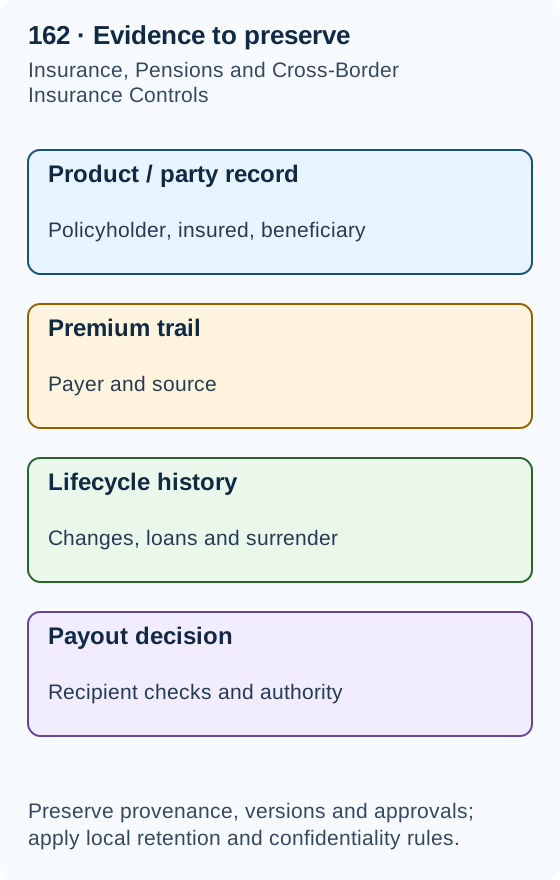
Ten tests across the premium-to-payout lifecycle
These fictional tests require expected outcomes agreed by product, operations, legal, compliance and relevant reporting owners. They verify the actual process and data, not only policy wording.
1. Product perimeter misclassified
Create a protection product and an investment-related product with different value features. The obligation and control catalogue should map each to its actual local perimeter and risk model. The system should not assign identical statutory duties merely because both are labelled insurance. Separate wider fraud and sanctions controls from the specific AML scope.
Change a product feature to permit cash value or flexible withdrawal. The change review should reassess relevant scope and risk rather than inherit the old classification automatically. Product development needs legal and operational impact evidence before release.
2. Aggregated intermediary payment loses payer identity
Send an agent's bulk remittance containing premiums for several policies. Reconcile the underlying payers, allocations and insurer receipt. The process should preserve attribution, not record the agent as the economic source for every customer. Test an unallocated item and confirm that it reaches a controlled queue.
Provide corrected allocation data and test reconciliation. Preserve the original mismatch and correction. A balancing total does not establish that each premium was assigned to the right policy or payer.
3. Large top-up outside the original profile
Add a substantial investment premium to a policy originally funded by modest regular payments. The relevant review should assess the new source, payer and purpose. An active-policy flag should not suppress the event. Provide a legitimate supported asset-sale explanation in a second run and verify proportionate resolution.
The bank should not repeat every old document request unnecessarily. The test asks whether the material changed funding is understood, not whether the customer can reproduce the entire original application.
4. Cooling-off refund to a substituted recipient
Cancel a policy within a permitted refund arrangement and request payment to an unrelated company. The refund route should receive the relevant entitlement, authority and fraud/financial-crime checks. A valid cancellation right does not automatically validate the substituted destination.
Repeat with the original documented payer and an appropriate refund. The institution should complete a lawful consumer outcome efficiently. The control should distinguish risk, not create a universal obstruction to refunds.
5. Beneficiary change by an unauthorised broker
Give a broker authority to submit applications but not alter beneficiaries. Attempt the change through a portal and a relationship-assisted route. The process should verify the actual mandate. A familiar intermediary identifier is not sufficient authority.
Then provide an authorised policyholder instruction. Test the relevant update, evidence, effective date and downstream payout data. A valid change in the policy system must reach screening and claims processes where applicable.
6. Assignment omitted from payout entitlement
Record a valid policy assignment affecting proceeds, then create a claim payout using only the old beneficiary record. The entitlement process should identify the assignment and route its effect for appropriate interpretation. The system should not assume every assignment has the same legal result.
Test release or expiry of the assignment. Historical claims should retain the state effective then, while current payout uses the updated arrangement. Versioning prevents both stale restrictions and rewritten history.
7. Policy loan followed by third-party repayment
Create loan proceeds and a repayment by a new entity. The chronology should link premium origin, borrower, loan destination and repayment payer. Credit repayment success should not close an unresolved payer question automatically.
Provide a supported legitimate relationship in a second run. Verify that the reviewer can record sufficiency without presenting policy value as proof of the original funds' legitimacy. The outcome should follow actual evidence.
8. Beneficiary verification and status at payout
Start with a permitted beneficiary class, then identify a specific recipient at payout. The process should apply relevant identification, verification and risk measures at the required stage. It should not bypass review because the policyholder was screened years earlier.
Create a similar-name match and then a confirmed relevant status. Test identity resolution and the correct applicable action. A vendor hit should not become an automatic finding of wrongdoing or an unsupported block instruction.
9. Pension transfer to an unfamiliar arrangement
Request a transfer with a new receiving scheme or recipient. The process should establish authority, eligible destination and relevant evidence through the product and legal framework. Fraud indicators and financial-crime questions should reach their owners rather than disappear behind an administrative transfer code.
Test a legitimate well-supported scheme transfer as a control example. The system should preserve the scheme and member roles without describing the movement as a personal cash withdrawal when it is not.
10. Reporting confidentiality in claims correspondence
Create a claim case with protected suspicious-reporting information. Generate a customer letter, intermediary update and support export. The process should preserve lawful communication while preventing inappropriate report disclosure. Test document metadata and attachments, not only visible text.
The claims team may need an operational hold or evidence request without access to the protected report. Verify that role-specific views communicate necessary action and preserve confidentiality. Authorised officers retain their decision and access.
Independent assurance of the event population
Reconcile premiums, top-ups, refunds, loans, repayments, withdrawals, assignments, beneficiary changes, claims and payouts to the appropriate source systems. Some relevant events are not cash entries. A control population limited to premium receipts cannot establish payout or role-change coverage.
Check distributor and insurer records. Differences can arise from timing, fees, cancellations or allocation errors. Preserve the reason and population affected. A monthly total matching in aggregate can still conceal payments assigned to the wrong policy or a missing intermediary channel.
Sample high-value and ordinary activity, accepted and rejected claims, early and mature payouts, direct and intermediary sales. Product diversity matters. A well-controlled simple policy does not establish controls for investment value, assignment or pension transfers.
Review closed cases for reasoning. Did the evidence answer the material question? Was a legitimate explanation supported? Did a referral reach the authorised owner? Was an event described accurately as attempted, pending or completed? These questions reveal operating quality beyond checklist completion.
Assess staff and intermediary training through actual scenarios. An agent should know which facts to capture, how to escalate unusual funding and where authority ends. A training attendance record alone does not demonstrate that an unauthorised beneficiary instruction will be recognised. Use realistic examples and preserve the observed outcome.
Finally, distinguish completed technical remediation from assessed past exposure. A corrected role feed can restore current coverage while earlier payouts remain unreviewed. Assurance should identify both the implemented change and the historical population requiring analysis, with clear evidence and owners.
Worked surrender case
A fictional customer buys an investment-related policy with third-party funds, requests early surrender despite a material penalty and directs payment to a new overseas account. Investigate the payer relationship, economic explanation and payout destination. Keep legitimate liquidity explanations open while resolving inconsistencies.
Explain why the penalty is a signal requiring context rather than automatic proof of crime and identify the separate payout checks.
Worked case: Elm Life's third-party-funded policy
This teaching case uses fictional people, institutions and amounts. Arin buys an investment-related policy from Elm Life through Cedar Bank. The stated purpose is long-term family saving with protection. The initial application names Arin as policyholder and insured person, with a family beneficiary. Expected funding is a single premium from Arin's own account.
A different payer arrives
The premium comes from Meridian Services Ltd. Cedar and Elm need to understand the payer relationship and source appropriate to their respective roles. Arin says Meridian is a family company making a documented distribution. The first statement shows the money moved but does not establish entitlement or economic origin. The analyst asks targeted questions about the company, distribution and authority.
In one version, ownership, distribution records and the funding path support the explanation. The institution records the evidence and any limitation, updates the expected funding and accepts the policy under its applicable controls. The third-party payment is not inherently criminal. In another version, company control is unclear and the distribution documents contradict the payment amount. The material gaps remain open.
The broker says the policy is commercially urgent and the customer is well known. That statement helps explain timing but does not answer the ownership or entitlement question. The authorised review decides the permissible action under the applicable framework. The file should identify what is missing and whether a bounded lawful option exists rather than using “broker comfort” as verification.
Early loan request
Soon after issue, Arin requests a loan linked to policy value and asks for payment to an overseas company. Product staff explain the contract's loan mechanics and available amount. Credit analysis does not settle the recipient's entitlement or the original premium source. The financial-crime review connects the payer, policyholder, borrower and proposed recipient.
Arin explains an equipment purchase. The bank requests relevant purchase and recipient information through its approved process. A genuine supported transaction may explain the loan and destination. An inconsistent or unavailable explanation can change the assessment. The case should not state that taking a policy loan is proof of laundering; it should explain the actual unexplained value path.
Operations records whether the loan instruction is pending, approved or executed. If a concern arises before execution, the authorised workflow may permit a restriction. If the money has already settled, investigation and possible recovery differ. A case note should not claim prevention when the control acted afterward.
Beneficiary and assignment changes
The broker submits a beneficiary change to a new company and an assignment document. Its original authority permitted application submission, not all later policy changes. Operations verifies the policyholder's instruction and asks legal to interpret the assignment's effect. The bank preserves the original and new arrangements with effective dates.
If the assignment supports a legitimate secured lending arrangement, identify the lender, rights and relevant payout effect. If it is incomplete or lacks authority, the gap remains. A document title does not establish its legal validity or scope. A beneficiary change and an assignment can affect different rights and should not be collapsed into one generic party update.
Early surrender at a material penalty
Arin then asks to surrender, accepting a significant contractual charge and requesting payment to a third destination. The analyst reconstructs premium funding, loan, changes and payout. The penalty is part of the economic context, not automatic proof of criminal intent. A family emergency or product misunderstanding could explain the surrender, but the source and destination still need coherent evidence.
The customer provides a medical-liquidity explanation in one version. Product and claims staff establish the contract's treatment, and relevant recipient evidence supports a lawful outcome. The bank records why the activity is explained. In another, Arin supplies inconsistent reasons and cannot connect the new company to any entitlement. The reporting officer and authorised risk owners assess the unresolved facts separately from the contractual surrender calculation.
Coordination between Cedar and Elm
Cedar holds payment evidence; Elm holds the policy and change history; the broker holds some initial customer information. Each institution identifies its own relevant duties and lawful information route. They share necessary underlying facts through authorised arrangements and preserve reporting confidentiality. Neither assumes that another's general assurance completes its own visible concern.
The common chronology should show who paid, who held rights, who instructed, what changed, what evidence was received and who ultimately received value. The file distinguishes customer statements, documents, specialist interpretation and corroborated facts. It should not describe the broker as the beneficial owner merely because the broker transmitted forms.
Final outcomes
If the material facts are sufficiently explained, the relevant transaction can proceed according to product terms and applicable law. The file records the reasoning and any changed expected activity. If significant facts remain unresolved, the institution follows the applicable restriction, reporting and relationship-review process. It should not claim that a report automatically determines contractual payment rights or that a contract automatically overrides a legal asset restriction.
Assurance later finds that beneficiary changes entered Elm's policy system but were not reaching the screening and payout-control population. The bank scopes the period and policies, repairs the role feed and reconciles the source. It reviews affected historical events rather than declaring the issue closed merely because the current feed works.
Worked pension-transfer case
Fictional member Sora asks to transfer retirement assets to a newly promoted overseas arrangement. An intermediary promises immediate access and unusually stable returns. The administrator identifies the scheme, member, receiving entity and authority required by its framework. It does not assume that every overseas transfer is improper, but the factual indicators merit appropriate inquiry.
Product specialists explain whether the destination and transfer mechanism are permitted. Legal interprets relevant eligibility and cross-border questions. Fraud staff consider deception and pressure. Financial crime assesses relevant parties and unexplained value movement. Each conclusion should be recorded within its scope rather than a single unsupported “scam confirmed” label.
The customer may be a victim. Contact should be clear and respectful, using authorised verification and safeguarding processes. Age alone does not establish inability to decide. If the receiving arrangement is legitimate and evidence resolves the concerns, the process should support a lawful transfer. If authority or eligibility is missing, that can require restriction independently of whether criminal intent is established.
The event record should preserve whether assets remain in the original scheme, have been transferred or are pending. A transfer instruction does not establish completed payout. The final recipient and scheme roles should remain visible for later reconstruction and any relevant reporting.
Additional judgement cases
A parent's regular premium for a child. Understand the family relationship, product and applicable requirements. A different payer can be ordinary. The control should distinguish a supported family arrangement from an unexplained unrelated business payment without assuming either from the name alone.
An employer's aggregated pension contribution. Preserve employer, scheme and member allocation. The employer is the payer, while individual members may hold relevant interests. Reconciliation and role data prevent the entire remittance being attributed to a single personal customer.
A death benefit with competing claimants. Establish the insured event and entitlement under the policy and relevant law. Route disputed authority to legal and claims specialists. The person who first contacts the bank is not automatically entitled to receive payment. Financial-crime checks remain relevant to the actual recipient.
A general-insurance claim involving a restricted counterparty. The product's AML perimeter may differ from investment-related life cover, but sanctions and fraud questions still require assessment. Legal scope determines the action. Do not use absence from one AML definition as permission for a prohibited transaction.
An agent retains a premium temporarily. Reconcile payer, collection date, policy allocation and insurer receipt. Determine whether the delay is authorised timing, administrative error, misappropriation or another issue. The evidence should show what happened rather than treating every delay as crime or harmless practice.
A refund after product misunderstanding. A customer may legitimately cancel after discovering unsuitable features. The refund should follow lawful product and consumer treatment while checking entitlement and destination. A financial-crime process should not obstruct a supported consumer outcome simply because early cancellation appears on a generic red-flag list.
Knowledge checks and reasoned answers
- Why classify product mechanics? Value accumulation, liquidity, assignment, loans and payout options determine different risk paths; one insurance label cannot explain them all.
- Does the premium payer always own the policy? No. The roles can differ legitimately, but the relationship, entitlement and funding need appropriate explanation.
- What does a bank statement establish? It primarily supports movement from an account; it does not by itself prove the economic legitimacy or entitlement behind the balance.
- Why is a surrender penalty a signal rather than proof? Legitimate liquidity or changed circumstances can explain loss. The institution needs the complete sequence and evidence.
- Can a broker change beneficiaries automatically? Only with valid authority under the actual arrangement; sales involvement alone does not establish that power.
- Does a policy loan explain original wealth? It explains immediate borrowed funds, while original premium origin and ownership remain separate questions.
- Why assess beneficiaries at the relevant payout stage? The recipient and relevant status may become specific or change over time; old policyholder screening does not establish every current payout fact.
- Does an AML review establish cross-border sales permission? No. Licensing, conduct, tax and product frameworks require their own specialist assessment.
- Why retain employer and member roles in pensions? Aggregate employer funding and individual interests have different meanings; accurate allocation supports controls and entitlement.
- What completes feed remediation? Evidence of current coverage, reconciliation, affected historical population and appropriate substantive review, not only a deployed technical fix.
Data and control ownership
Store party roles separately and version beneficiary, ownership and assignment changes. Link premium, refund, loan, surrender and payout events to the same policy without losing the payer and recipient identities. Record intermediary involvement and the evidence relied on.
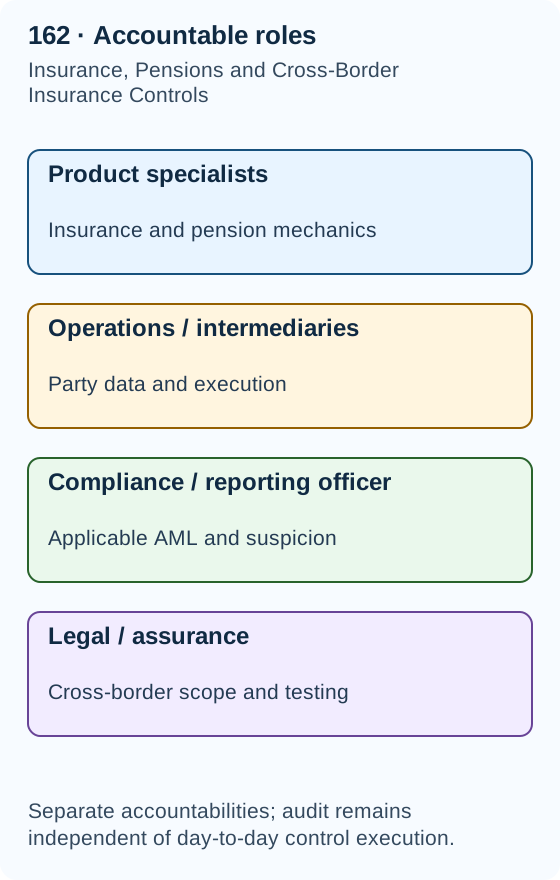
Acceptance tests should prove that lifecycle changes trigger the appropriate review and that payout instructions cannot bypass required verification or restrictions. Product specialists explain mechanics; operations own payment execution; compliance defines applicable duties; legal interprets cross-border questions.
Effective control follows the policy's actual value and party changes rather than assuming all insurance behaves like a bank deposit.
Party and policy data with effective dates
Use a policy identifier linked to product version, issuer, distribution entity and governing arrangement. Product features and terms can change between versions. The bank should know which features applied to the customer's contract rather than applying today's product brochure to every historical policy.
Store policyholder, insured person, payer, beneficiary, assignee, authorised representative, intermediary and payout recipient as distinct roles. Include effective dates, authority and evidence. A person can occupy several roles, but the data should show which role matters to each event. A beneficiary entity should not overwrite the policyholder record.
Preserve a beneficiary class where that accurately describes the arrangement and support individual identification when required for an event. Do not assign arbitrary percentage interests merely to satisfy a corporate-ownership field. Product and legal specialists should define the required representation and changes.
Separate event types for premiums, top-ups, refunds, loans, repayments, withdrawals, surrender, claims, assignments and role changes. Some create cash movement; some alter rights or future entitlement. A monitoring population limited to payments can omit the non-cash event that changes who later receives value.
Record instruction, effective, knowledge and settlement dates. An assignment may become effective before the insurer receives it; a payout instruction may be given before a role update completes. Investigators need to reconstruct what was true, what was known and what occurred when a decision was made. One generic transaction timestamp cannot answer all three.
End-to-end reconciliation
Reconcile distributor collections to policy allocations and insurer receipt. Use policy, payer, event and amount rather than only an aggregate total. Timing differences, fees and cancellations can be legitimate, but should have evidence. A payment attached to the wrong policy can still leave the total balanced while creating incorrect customer value and risk information.
Reconcile role changes to the relevant screening and payout processes. A beneficiary saved in the policy administration system must reach the controls required by design. Define how changed identities, entities and classes are handled. If the data cannot be transmitted, the manual or alternative control should be specific and workable.
Reconcile approved payouts to execution and settlement. A claims approval, payment instruction and bank settlement are separate facts. Track failed, returned, cancelled and reissued payments. A returned payment later reissued to a different recipient should not disappear as a harmless duplicate of the first instruction.
Reconciliation defects should reach an owner with the affected population and risk. A zero-premium day may be normal; a zero-event feed while policies continue operating may be a failure. Explain expected populations and alert criteria so operations can distinguish business inactivity from missing data.
Intermediary governance in practice
Define the intermediary's role in sale, evidence collection, premium handling, changes and claims. Contracts and procedures should identify what information reaches the insurer, which authority permits instructions and how unusual facts are escalated. A broad statement that the broker “handles AML” is insufficient to explain the operating model.
Assess intermediary controls relevant to the service. Training, data quality, response routes, complaints and unusual activity can all inform the review. A high sales volume does not demonstrate good control. An intermediary may have its own obligations under another regime, but that fact does not necessarily discharge the insurer or bank's separate duties.
Test the information arrangement before relying on it. Send a permitted targeted request for a particular premium or party change and assess response sufficiency. Confirm secure transfer and authorised access. A successful document upload is not evidence that the underlying question was answered.
When an intermediary repeatedly fails, identify the cause and action. Training may fix misunderstanding; a system mapping may fix missing fields; contractual changes may improve access; persistent refusal or misconduct may require restriction or termination. The decision should follow the demonstrated issue and applicable framework rather than a generic yearly questionnaire score.
Payout restriction design
Payout controls should connect the event, entitlement, current parties, authority and restriction state. Claims staff establish the relevant event and contract; operations executes only an authorised instruction; financial crime and sanctions owners provide their decisions within scope. Legal handles conflicts and interpretation. The workflow should show how these approvals combine without making one department the owner of every question.
A restriction should identify policy, event, recipient, amount or asset, legal or policy basis, owner and permitted next steps. A case marked “hold” can be operationally ambiguous. Is the hold for missing beneficiary evidence, a suspected fraudulent instruction, a contractual dispute or a legal asset restriction? Each may require different action and communication.
Material changes should invalidate or reopen the relevant approval. A destination account change, new assignee or changed recipient can alter the decision. Test normal user changes, bulk uploads, emergency procedures and payment reissue. A carefully controlled original claim can still be bypassed through a later payout edit.
Consumer and beneficiary treatment also matters. An authorised restriction should have clear ownership and review, with lawful communication and efficient evidence requests. Avoid repeated requests for the same record because teams cannot share permitted facts. A process can protect against crime while remaining precise about the customer's legitimate claim and unresolved question.
Fictional incident: the beneficiary-change feed stops
Elm Life's policy administration system continues accepting beneficiary changes, but an integration defect stops those events reaching the payout-control service. Premium monitoring remains active, so the daily financial-crime dashboard appears normal. A claim review discovers that the payout screen shows an old beneficiary. The incident owner first establishes the affected event types, policies, period and actual payouts.
Operations applies a controlled interim review to relevant payouts if authorised and workable. Product and legal staff clarify current entitlement. Technology restores the integration and maps role versions. Financial crime assesses the control gap and resulting cases. The bank should not claim that all payouts were incorrect merely because the feed failed, nor that no risk existed because premium alerts continued.
Historical reconstruction compares policy changes, approval records and actual recipients. Some events may have been reviewed through another valid process; others may require substantive assessment. Preserve evidence of each category. A blanket replay count does not establish the risk outcome for every payment.
Post-release testing includes a named beneficiary, a class becoming specific, an entity beneficiary, an assignment affecting rights and a payout reissue. Reconcile sources and demonstrate the authorised outcomes. The incident closes only when current operation and historical assessment are supported, with remaining limitations explicitly owned.
Reporting narratives with policy context
A useful factual narrative explains the product, parties, funding, relevant changes, requests, value movement and reason for concern. It distinguishes ordinary policy mechanics from the unusual facts. A premium payment and a surrender may be months apart; their relationship should be described rather than left in unrelated rows.
State whether events were attempted, approved, pending or settled. Identify the payer and final recipient accurately, including intermediary roles. Do not describe an agent remittance as the agent's personal money where it represents allocated customer premiums. Do not state that a beneficiary received funds when only a claim instruction exists.
The reporting officer applies the relevant framework and preserves confidentiality. A claims-fraud report, suspicious-activity report and sanctions report can have different channels and requirements. Coordinated facts do not establish that one filing fulfils every duty. The operational case should record the relevant authorised actions without exposing protected report content to unnecessary users.
Cross-border operating-model review
Map every entity involved in distribution, issue, administration, collection and payout. Identify legal perimeter, product permissions, data access and reporting for each. A group process can provide common standards while local entities retain binding responsibilities. A global workflow should support local differences without inventing uniform deadlines or product classifications.
Third-country support and cloud access can create separate information-transfer questions. Privacy and legal owners should assess the actual data, recipient, purpose and route. Customer consent should not be treated as universal permission for every transfer or protected report disclosure. Financial-crime staff need the permitted evidence necessary for their decision, not unrestricted access to all policy files worldwide.
Cross-border policy changes can also affect licensing or tax treatment. Route them to the relevant specialist and preserve the scope of advice. A financial-crime approval should not be displayed to product staff as proof that every distribution or tax condition is satisfied. Accurate labels help prevent unintended reliance.
Management information and challenge
Report exposure by meaningful product features and channels, not only premium income. Relevant views can include investment-value products, third-party funding, flexible top-ups, assignments, early surrender, policy loans, changed beneficiaries and cross-border payouts. Categories indicate where controls need understanding; they do not prove wrongdoing.
Show missing party data, unallocated payments, incomplete role feeds, unresolved entitlement and response failures. A low suspicious-case count can coexist with a missing event population. Coverage and data-quality information should therefore accompany case volumes and reporting metrics.
For exceptions, show the material gap, authorised decision, scope, expiry and evidence needed for closure. Repeated temporary allowances can become an uncontrolled standing service. A committee should see the unresolved issue and customer impact rather than a green status that hides repeated extension.
For remediation, distinguish design, implementation, testing and historical assessment. A control deployed this month may leave older payouts unreviewed. The board or responsible committee needs clear residual exposure and ownership. Completion should be supported by actual evidence rather than a training email or technical deployment ticket alone.
Insurance and pension control works best when product mechanics, party roles and value events remain visible throughout the lifecycle. Accurate data and authority, proportionate funding inquiry, effective intermediary arrangements and specific payout decisions allow the bank to explain both legitimate customer outcomes and material unresolved concerns.
References and further reading
Reviewed 2 October 2026. FATF provides international standards; applicable national law determines binding duties. The operating examples are fictional teaching cases.
- FATF Recommendations, updated June 2026 — relevant anchors: 10 and 12 Interpretive Notes; FATF financial-institution definition and life-insurance guidance.
- FATF life-insurance risk-based guidance
The 2018 FATF life-insurance guidance does not incorporate subsequent standards revisions, including the 2025 Recommendation 1 changes, as its current official page explains. The US FAQs below are historical guidance; use current applicable regulations and filing instructions instead of copying their old CFR numbering or forms.
- FinCEN insurance programme and reporting FAQs, March 2008 — US covered-product and insurer/intermediary scope; historical numbering and filing references require current operational mapping.
- FinCEN supplemental insurance FAQs, May 2006 — functional product scope; read with current rules.
- Current US insurance-company regulations, 31 CFR Part 1025 — jurisdiction-specific regulatory anchor.