Higher-Risk Countries, Countermeasures and Enhanced Due Diligence
Country risk is one component of a customer's and transaction's financial-crime risk. It can arise from operations, ownership, counterparties, funding, goods routes and delivery channels; nationality alone is an incomplete proxy. A bank should understand the actual connection and control exposure rather than applying a label mechanically.
FATF publishes two distinct statements: jurisdictions under increased monitoring and high-risk jurisdictions subject to a call for action. Increased monitoring means a jurisdiction is working through identified strategic deficiencies. FATF does not call for automatic enhanced due diligence solely because a jurisdiction is in that statement; it encourages risk-based consideration. The call-for-action statement identifies where enhanced measures or countermeasures are called for. Read each country's text, not only a colour-coded vendor flag.
FATF Recommendation 19 addresses enhanced due diligence for countries for which FATF calls for it and effective, proportionate countermeasures. These international statements are separate from binding national high-risk-country rules and sanctions prohibitions. A national list may have a different scope or date. A sanctions asset freeze is not interchangeable with enhanced due diligence.
As reviewed on 2 October 2026, use the official 19 June 2026 statements as the relevant published snapshot and check for later updates before an operational decision. This chapter intentionally does not embed a static country list. Record the list version, publication date, domestic implementation and reason for the chosen action.
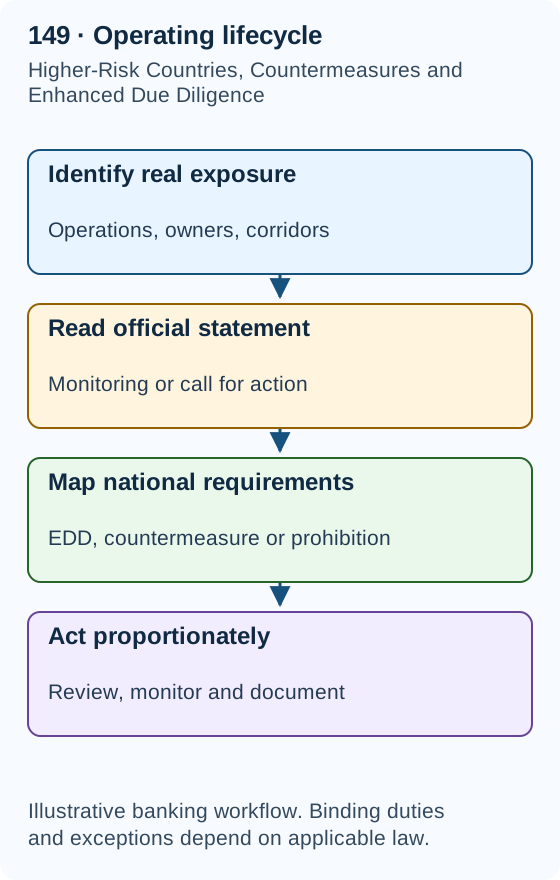
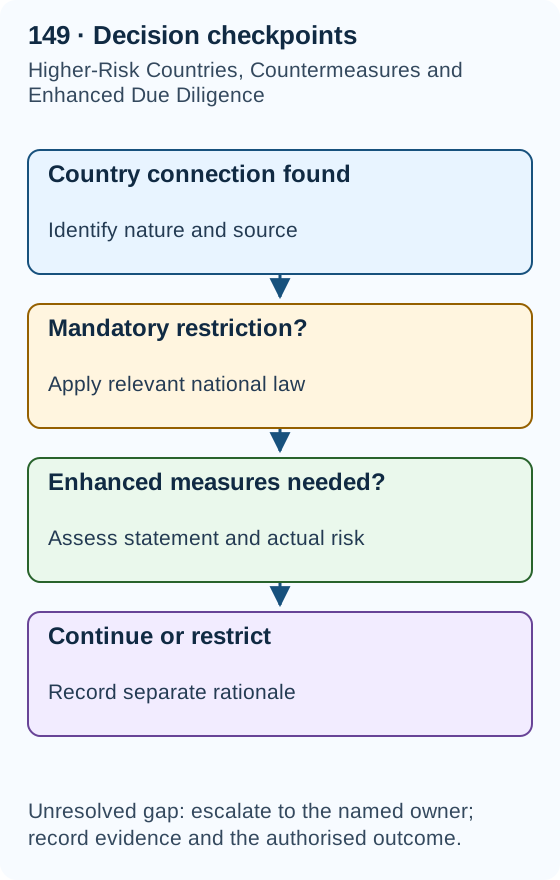
Four questions behind a country label
Ask which source identifies the concern, what connection the customer or transaction has to the jurisdiction, which rule applies to the bank entity and what action the rule or risk assessment requires. Those questions prevent a vendor colour from becoming a legal conclusion. A source may describe strategic AML/CFT deficiencies, corruption exposure, conflict, sanctions, tax transparency or commercial payment difficulty. The information can be relevant, but the categories have different meanings. Keep them separate enough that staff can explain the decision and identify the appropriate specialist when uncertainty remains.
The geographic connection also needs definition. Residence, nationality, incorporation, operations, ownership, bank location, transaction route and goods destination can point to different places. A company incorporated in one jurisdiction can operate elsewhere and use a bank in a third. A person born in a higher-risk country can live and transact entirely in another. A payment passing through a correspondent location may have a different risk significance from a beneficiary operating there. Determine the actual exposure rather than treating every country field as interchangeable. The rule should identify the connection relevant to its purpose.
The source's legal effect must be assessed for the entity and service. FATF statements inform international standards and risk analysis; national implementation can create specific obligations. A binding domestic requirement may have different scope or timing from a vendor's FATF-derived rating. A bank can also adopt an additional policy restriction within lawful discretion. Record these layers separately. Staff should not describe a discretionary group appetite decision as a legal ban, or assume that a general risk score overrides a binding obligation. Clear classification improves both control accuracy and customer communication.
Increased monitoring, enhanced measures and countermeasures
FATF's increased-monitoring statement should be read on its own terms. The current June 2026 statement does not itself call for blanket enhanced due diligence on all listed jurisdictions; it supports risk-based consideration and warns against cutting off entire customer classes. The call-for-action statement has a different purpose and identifies calls for enhanced measures or countermeasures according to its text. Country-specific provisions can differ within that statement. Do not collapse both documents into a single blacklist or treat a possible future step as a measure already imposed. FATF increased monitoring, June 2026, FATF call for action, June 2026.
Enhanced due diligence should address the identified risk or applicable requirement. It can involve better ownership understanding, stronger source-of-funds or source-of-wealth evidence, additional business context, appropriate management approval and closer review of activity. The exact measures follow the relevant local framework and risk. Repeating a basic identity request may contribute little if the concern is unexplained ownership or commercial purpose. A useful EDD decision states the uncertainty, the additional information or control needed and how the result affects the relationship. It should not be a checklist with no connection to the exposure.
Countermeasures can be more extensive than customer-level EDD. Their content can concern financial relationships, correspondent arrangements, establishments, reporting or other specified restrictions under applicable implementation. A bank should identify the exact requirement and responsible function. Some measures affect product strategy or institutional relationships rather than individual onboarding. Compliance and legal interpretation need to reach treasury, correspondent banking, product governance and operations where relevant. A generic high-risk-customer workflow cannot implement every countermeasure merely by requesting additional documents. Governance should establish which business activities are affected and how compliance is demonstrated.
Sanctions remain a separate legal analysis
Sanctions can prohibit transactions, require freezing or blocking, restrict services or impose conditions according to the relevant regime and nexus. Country-risk EDD does not remove those obligations. Conversely, a FATF country indicator does not automatically create a sanctions prohibition. The workflow should preserve the source, scope and authority of each decision. A customer may require EDD while a payment is legally permitted; another payment may be prohibited regardless of the customer's overall risk rating. A low customer score cannot authorise a prohibited transaction, and a high score is not itself a freezing power.
Where several regimes may be relevant, route uncertain scope to the appropriate legal and sanctions specialists. Geography is only part of the analysis; parties, ownership or control, goods, services, currency or other nexus can matter under particular rules. Do not code a single country field as a complete determination. The bank should distinguish name-matching uncertainty, geographic exposure and a confirmed legal restriction. Preserve factual evidence and approved interpretation. An operational hold while a question is resolved should have a defined purpose and authorised handling rather than be described automatically as a legal asset freeze.
Customer messages should state the relevant operational situation truthfully through approved wording. A discretionary appetite decision may need different explanation from a binding legal prohibition. Staff should know when they can request clarifying information and when specialist approval is necessary. Reporting confidentiality requires separate consideration where an investigation or report exists. Country labels should not become unsupported allegations about a customer's conduct. Good communication can reduce avoidable friction without disclosing protected details or promising an outcome the bank cannot lawfully provide.
Country risk across the banking lifecycle
At onboarding, understand where the customer operates, who owns or controls it, what products it seeks and which flows are expected. Match evidence to the material questions. A trading business may need a coherent account of suppliers, buyers and goods routes. A remittance service may need understanding of agents, recipients and settlement. A humanitarian organisation may require information about purpose, delivery partners and controls proportionate to its exposure. The same geographic connection can have different meaning across those services. A country-risk decision should be about the proposed relationship, not just the passport or incorporation address.
During activity, compare actual patterns with the customer's explanation and relevant controls. A new corridor, unexpected counterparty or change in source of funds can require review. A transaction that passes through an overseas bank does not automatically establish a new customer operating country. Preserve the facts and assess their significance. Monitoring should recognise indirect exposure where data supports it, while avoiding broad conclusions from weak proxies. A missing geographic attribute can itself be a data-quality issue requiring repair; assigning an arbitrary risk category does not replace obtaining the relevant information.
When sources or rules change, identify existing exposure and decide the appropriate response. Some changes require immediate legal action; others require targeted risk reassessment or updates to monitoring. New onboarding, existing relationships and historical transactions can need different treatment. Preserve effective dates and the basis of each action. A current list entry does not automatically make a past transaction unlawful. A removal does not automatically erase other customer-specific concerns. The bank should assess what changed, which obligations now apply and what evidence supports any revised decision.
Proportionality and legitimate flows
Risk-based measures should preserve distinctions between customers and activities. A legitimate payment can involve a jurisdiction with serious strategic deficiencies. The bank still applies applicable requirements and determines whether it has adequate information and controls. It should avoid treating every connection as proof of misconduct or every enhancement as a reason to exit. Humanitarian assistance, legitimate non-profit activity and personal remittances deserve attention to disruption, consistent with the current FATF statements and any binding restrictions. Available lawful routes require appropriate analysis; humanitarian purpose is not a universal exemption from sanctions or other law.
Review the effect of the programme on customers as well as detection outcomes. Repeated unnecessary requests, unexplained payment delays, misclassified geography and wrongful restrictions can indicate weak design. A high rejection rate does not establish compliance quality. Combine it with reasons, sample evidence, legal accuracy and customer impact. Where information cannot support a required decision, the bank should apply the appropriate response rather than accept unsupported risk. Proportionality means a considered lawful control, not a promise that every requested service can be provided.
The control objective is a bank able to explain the source, connection, obligation and action behind a geographic decision. Reliable data, legal interpretation, risk judgement and implementation all contribute. The following sections show how to translate those elements into country-risk assessment, EDD, controlled updates, transaction handling and assurance without reducing the subject to a static coloured list.
Country risk in the customer and payment lifecycle
At onboarding establish operating countries, ownership locations, expected corridors and counterparties. Explain why the customer's business generates the proposed flows. Use credible evidence for source of funds, trade activity and business purpose proportionate to identified risk. A lawful remittance or humanitarian payment may need careful controls without being inherently suspicious.
For enhanced due diligence, define what the enhancement actually accomplishes: stronger ownership evidence, additional source-of-funds information, management approval, closer monitoring or restrictions required by local rules. Repeatedly requesting the same document adds friction without addressing the risk. Countermeasures can be more extensive, but their form depends on the applicable national requirement and FATF statement.
When a list changes, identify existing customers and transactions exposed through more than residence codes. Reassess relevant ownership and counterparty connections, update controls, test screening or routing changes and notify affected teams. Distinguish new onboarding restrictions from the treatment of existing relationships; closure is a separate decision unless law dictates otherwise.
Humanitarian assistance, legitimate non-profit activity and remittances require attention to unintended disruption. FATF's current statements emphasise preserving legitimate flows. That does not override a binding prohibition; it requires identifying available lawful routes and avoiding blanket decisions unsupported by actual risk or law.
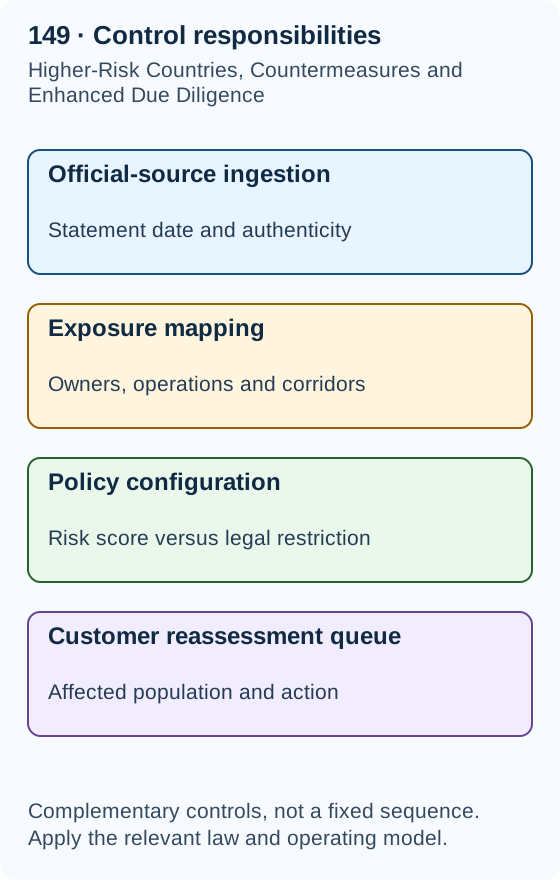
Define the geographic facts you actually need
Build a data inventory connecting each country attribute to its purpose. Customer residence can support one risk question, incorporation another and business operations a third. Beneficial-owner connections can matter where they affect control, funding or relevant obligations. Payments introduce originator, beneficiary and bank locations, while trade services introduce goods routes and destinations. The inventory should identify the source, reliability, date and missing-data handling. A field called high-risk-country-match without the underlying attribute prevents reviewers from understanding the exposure. The bank needs enough detail to distinguish a genuine connection from a weak or irrelevant proxy.
Do not assume all attributes can be derived from the same source. A bank identifier can indicate where a financial institution is located, not where its customer operates. An IP address can indicate network routing or travel rather than residence. A mailing address can be a service address. A company registry can provide incorporation without its operating footprint. Those facts may support enquiries but should not automatically replace the attribute a rule actually requires. The data design should preserve inferred and verified information separately so uncertainty remains visible.
Address complex relationships through evidence and purpose. A company can have a holding entity, manufacturer, distributor and customer base in different places. The bank should understand which connections create its exposure and what information is needed. Demanding every geography associated with every distant affiliate can create noise without resolving the material question. Conversely, relying only on the account-holder address can overlook the service's actual use. The assessment should explain why specific connections are relevant to ownership, activity, funding, counterparties or applicable legal scope.
Build a source hierarchy with distinct meanings
Maintain official statements and binding national measures separately from internal risk assessments and vendor data. A vendor can help normalise sources and deliver updates, but its rating is not the legal authority. Preserve the original source and identify transformations. If a vendor merges increased monitoring, sanctions and corruption indicators into one category, the bank needs the components to decide appropriate actions. A source hierarchy should support traceability rather than declare every official item equivalent. Different authorities issue different types of requirements and guidance for different purposes.
Publication and application dates can differ. An official announcement can describe a future measure, a consultation or a current change. National implementation may follow a FATF statement through a separate legal process. The change owner should determine what is current for each bank entity and preserve the interpretation. Technology can prepare configuration in advance, but activating it before the approved date can create unjustified restrictions. Delayed activation can create compliance gaps. The source record should therefore include status, relevant dates, scope, reviewer and approved implementation treatment.
Internal country-risk judgements can use additional credible information about the bank's exposure. A corridor with weak ownership transparency and complex intermediaries may need closer attention even when it is not on a particular official list. An assessment should explain evidence, limitations and control implications. Avoid presenting an internal rating as an allegation that every customer from the jurisdiction is criminal. The model should allow customer-specific facts and services to influence the decision while respecting mandatory measures. Country risk is an input to judgement and obligations, not a complete customer verdict.
Choose EDD that answers the risk question
Identify the uncertainty before requesting more information. If concern arises from unclear ownership, obtain relevant evidence about the chain, control and persons. If activity lacks commercial coherence, examine contracts, invoices, counterparties and the actual movement of value. If source of wealth is material, understand how the customer accumulated wealth and assess credible supporting evidence. If source of funds is the question, examine the specific money supporting the transaction. The two concepts should not be merged. A legitimate overall business does not automatically explain every particular payment.
Enhancements should have owners and decision criteria. A relationship manager may obtain customer context; specialists assess complex ownership or local conditions; an authorised manager approves a relationship where required; operations applies monitoring or transaction treatment. State what evidence is sufficient and what uncertainty requires escalation. An EDD file can be lengthy yet weak if it contains documents unrelated to the concern. Reviewers should be able to follow the reasoning from identified exposure to requested evidence, findings, remaining gaps and the permitted decision.
EDD can include closer monitoring, but define what that means operationally. More frequent review, specific scenarios, transaction-level approval or targeted counterparty checks have different dependencies and effects. Identify expected volume, staffing, data and escalation. A note saying enhanced monitoring applies without configuration or ownership does not establish a control. Test whether relevant new activity triggers the intended review and whether staff can distinguish an explained pattern from unresolved concern. Additional controls should improve understanding, not merely increase alerts that operations cannot assess credibly.
Countermeasures affect institutional decisions too
Read the specific applicable measure and identify the affected business. A measure concerning correspondent relationships requires action from the responsible institutional banking functions. One concerning establishments or ownership can require strategic and legal assessment. A reporting measure can require data and submission changes. The bank should not attempt to implement all of these through a customer-risk score. Map the requirement to products, counterparties, entities, systems and accountable owners. Preserve the source and scope so execution can be tested against the actual obligation.
Distinguish what the country or authority is called upon to implement from the obligation binding on the bank through its local framework. FATF statements and national measures are related but not identical sources. Legal and compliance assessment should identify current duties and any approved additional policy response. Management can choose more cautious commercial limits where lawful, but should label them as policy and consider consequences. A control instruction citing FATF without explaining applicable implementation can leave operators uncertain about whether they are performing EDD, imposing a discretionary limit or executing a legal prohibition.
Institutional implementation needs its own evidence. A correspondent decision should identify the institution, relationship type, services, relevant measures, approved action and completion. A restriction may require changes to routing, account permissions or product eligibility. Check for indirect or alternate routes within scope. A front-end restriction that leaves a legacy payment path available is incomplete. Release or reversal should have an appropriate basis, because removal from one source may not remove a separate measure. The bank should preserve the decision history rather than simply change the institution's current rating.
List changes and existing relationships
When a source changes, compare versions and classify the significance. A jurisdiction may be added, removed or subject to revised language; a domestic implementation may change independently. Identify affected customers through relevant attributes and relationships. A residence-only scan can miss businesses operating in the jurisdiction or counterparties creating transaction exposure. A scan of every possible association can overstate the population. Define the matching method and confidence, reconcile results and establish priorities based on obligations and risk. The change process should be explainable before customer actions begin.
Existing customers may need reassessment rather than automatic exit. Determine which measures apply to continuing relationships, which apply to new business and which affect particular transactions. Review customer-specific information and available controls. Record why the selected response is sufficient or why the service cannot continue. If the decision is a policy exit, coordinate notice, pending activity, linked products and complaints under the applicable arrangements. Reporting and legally required restrictions remain separate assessments. Closing an account does not replace a report or resolve a historical control weakness.
Removal from a list also needs interpretation. Update the relevant indicator and assess whether related measures have changed, but retain other risk facts. A customer with unresolved ownership or suspicious activity does not become low risk solely because a jurisdiction leaves increased monitoring. Conversely, continuing an outdated country-derived restriction without another basis can create unnecessary harm. The bank should identify the source of each action so changes can be applied accurately. Versioned decisions allow it to remove what no longer applies without accidentally disabling an independent legal or customer-specific control.
Payment and trade enquiries
Payment review should distinguish the geography in the message from the transaction's actual purpose and parties. A beneficiary bank in a country may serve a customer elsewhere. A payment description can be incomplete or misleading. Obtain information proportionate to the question, preserve the original message and record reliable corrections. Do not fabricate missing attributes from assumptions to make a payment pass. An operational hold should be routed and aged with an owner. Indefinite uncertainty is a control and customer-service problem requiring escalation, not a stable final outcome.
Trade services can involve several routes and commercial actors. Goods may be shipped from a manufacturer through a transshipment hub to a buyer, while an invoice is issued by a distributor elsewhere. Those arrangements can be legitimate but need coherence. Review contracts, transport documents, goods descriptions, parties and the reason for the route where material. Country risk interacts with other concerns such as ownership, unusual pricing or unsupported intermediaries. It should guide relevant questions rather than turn every complex route into suspicion. Sanctions or export-related questions require their own applicable analysis and expertise.
Preserve contrary evidence. Verified delivery, independent commercial records and a longstanding explained relationship can weaken a concern. New counterparties, unexplained changes or inconsistent documents can strengthen it. The investigator should state what was established, what remains uncertain and which bank decisions follow. A country label is not a substitute for that analysis. The reporting officer applies the local threshold using available facts; the payment or relationship owner handles authorised operational outcomes. One decision should not be used to imply another without the relevant authority.
Humanitarian activity, remittances and legitimate NPOs
Identify the specific service and lawful path rather than assuming a universal exemption or prohibition. A humanitarian organisation can have a genuine purpose while still needing suitable ownership, partner and payment understanding. Sanctions frameworks may contain relevant exceptions, licences or conditions, but their scope must be assessed under the applicable regime. AML/CFT EDD requirements remain distinct. Early specialist involvement can prevent an operational team from promising a transfer before the legal and evidence questions are resolved. The bank should seek a workable lawful control where available rather than rely on a broad label.
Remittances can involve individuals with limited standard documentation and small recurring payments. Proportionate customer understanding and approved alternative evidence can support legitimate access. The bank still evaluates relevant parties, source and activity under its framework. A geography-only maximum-risk rule can generate unnecessary review without identifying material behaviour. Segment analysis and quality testing should examine whether controls distinguish ordinary patterns from unresolved concern. The objective is reliable risk management, not achieving a high rejection rate for customers associated with a particular place.
Measure unintended disruption through evidence. Track delays, duplicate requests, incorrect country classifications, complaint themes and wrongful restrictions where relevant. Examine whether the cause is law, risk policy, data quality or operational capacity. Different causes need different repairs. Removing a necessary legal control to improve a customer metric is inappropriate; correcting a defective mapping can improve both legal accuracy and service. Senior management should receive this distinction so customer impact is treated as part of control design rather than a reason either to ignore risk or to accept avoidable harm.
Oversight and assurance of geographic decisions
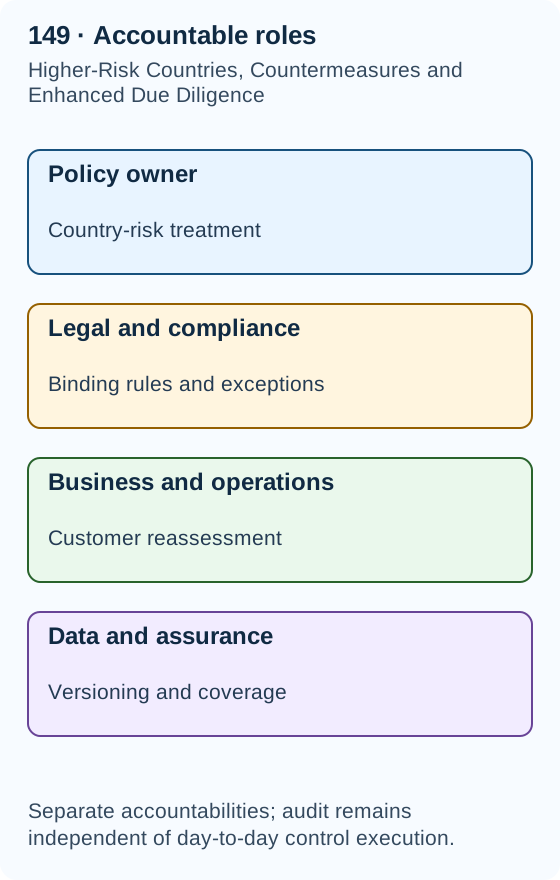
The country-risk owner should maintain current sources, interpretations and approved policy measures. Data owners maintain attributes and mappings; technology implements effective-dated rules; business and operations apply them; specialists resolve scope; independent reviewers assess coverage and decision quality. These responsibilities need a change route when a new statement or national measure appears. A vendor update alone should not be treated as completed implementation. The bank must know which settings changed, which populations were assessed and which actions or limitations remain open.
Assurance should examine cases receiving different outcomes, including permitted activity, EDD, restrictions, exits and corrected false matches. Compare the source and applicable rule with actual exposure and evidence. Test whether changes preserve history and whether a rollback affects separate sanctions controls. Inspect missing-data handling and manual overrides. A rule can produce consistent outputs while consistently applying the wrong source or geographic attribute. The reviewer should therefore assess the meaning of the control, not merely its reproducibility.
Senior reporting should explain material exposure, source changes, implementation status and customer impact. Avoid aggregating every country-related concern into one total that cannot distinguish a legal prohibition from a risk review. Identify unresolved interpretations, data gaps and operational limitations with owners and decisions required. The bank's conclusion should state what it can demonstrate about its geographic controls and where uncertainty remains. That clarity is more valuable than a polished map whose colours conceal different sources, dates and actions.
Version control and outcome assurance
Maintain provenance for country-risk inputs: official source, publication date, vendor transformation, internal approval and effective configuration. Test a newly listed jurisdiction, removal, spelling variant, disputed territory code and customer with an indirect connection. Verify that risk scoring and legal restrictions remain separate fields.
Sample decisions for consistency. Similar customers should receive comparable treatment when their actual exposures match, while distinct risks should produce explainable differences. Measure delays, rejection reasons, false escalations and cases requiring legal interpretation; a high rejection rate alone is not evidence of better compliance.
Proposals and consultations belong in change planning, not the current-obligation table. Capture the expected date and uncertainty so technology teams can prepare without activating an unadopted restriction.
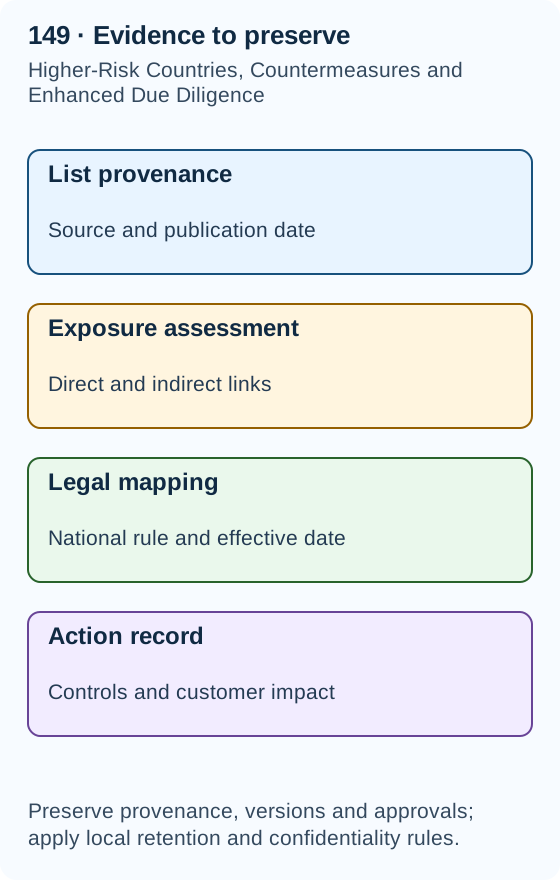
Model source, exposure, requirement and action separately
The source object identifies the authority or other information provider, document, publication date, status, relevant content and version. The exposure object identifies the customer or event's connection, with source and confidence. The requirement object identifies applicable legal or policy treatment for the bank entity and service. The action object records what the bank does, who authorised it, when it applies and what evidence supports it. Separating these objects prevents a country code from doing the work of an entire decision model. It also allows one source change to affect several actions without erasing their independent bases.
For example, a customer's operating-country exposure can trigger a risk reassessment while a separate sanctions rule applies to a specific counterparty. Both may be relevant to the same transaction, but their effects differ. A risk assessment can support EDD or an authorised policy limit; a confirmed legal prohibition requires its own handling. The interface should show those reasons distinctly. A generic rejected because high risk message gives operators little information about authority, next steps or possible correction. It can also make customer communication inaccurate by suggesting that every rejection is legally mandated.
Preserve historical decisions and current status. A source can be removed, revised or superseded while a previous decision remains relevant to an investigation. Store the source version, exposure facts and rule inputs used at the time. Current views can show updated treatment without rewriting earlier records. A retrospective review should specify whether it assesses compliance at the historical date or current continuing risk. Those questions can use different information. Applying today's country table to past events without explanation can create false breach findings or overlook measures that previously applied.
Define geographic data semantics and confidence
Each geographic attribute should have a meaning, source and permitted use. Distinguish residence, nationality, incorporation, operations, beneficial-owner connection, beneficiary location, bank location and goods destination. Define how multiple values are represented. A multinational customer may operate in several jurisdictions, and a single primary-country field may lose relevant exposure. Preserve original values when normalisation changes spelling or coding. The bank should be able to trace a match to the actual attribute rather than infer that a maximum country score represents every dimension of geography.
Missing and uncertain data need explicit states. Unknown beneficiary location is not the same as a verified low-risk destination. An inferred address from an intermediary should not appear as customer-confirmed residence. A disputed country or territory mapping may require the approved interpretation for the specific source and rule. Test ambiguous and inconsistent values rather than only standard country codes. When a rule cannot be applied reliably, route the uncertainty to an appropriate process. Arbitrary defaulting can produce both missed exposure and unnecessary restrictions while leaving the dashboard apparently complete.
Relationship propagation should be deliberate. A customer connected to an owner or counterparty in a jurisdiction can have relevant exposure, but not every distant graph association should automatically create the same treatment. Define the relationship types and confidence needed for each use. Test verified ownership, historical ownership, common director and alleged connection separately. A graph link supporting investigation may be unsuitable as an automatic prohibition trigger. The model should preserve the reason for propagation and allow a reviewer to inspect the source facts and resolve errors.
Controlled source ingestion
Use a process that verifies source changes before operational activation. Record what was received, compare it with the official material where relevant and identify additions, removals and revised text. A vendor may change category mappings or wording without a new official statement. The bank should distinguish those events. Automated ingestion can reduce delay, but legal or policy interpretation remains necessary where source meaning affects obligations. A successful download is not approval to change customer treatment. Define who confirms scope, date and implementation, and how urgent changes are handled.
Test malformed files, missing records, unexpected schema changes and a source returning an older version. A partial update should not silently replace a complete table. Retain a controlled prior version and establish failure handling appropriate to the source and obligations. The bank may need a temporary manual process or a restricted deployment while resolving the defect. An indiscriminate fail-open can miss required measures, while an indiscriminate fail-closed can disrupt large legitimate populations. The fallback should be an approved decision with clear scope, ownership and limits.
Reconcile vendor transformations with the original source. One vendor category might combine increased monitoring with a call for action, while another uses a numerical risk scale. The receiving bank needs a mapping that retains the necessary distinctions. Test source records whose text requires different treatment within the same overall statement. A mapping based only on a document title can be insufficient. Preserve interpretation evidence and configuration approval so assurance can establish why the bank implemented particular EDD or countermeasure treatment rather than accept an unexplained colour as authority.
Rule activation and legal scope
Configuration should identify the bank entity, service, relevant connection, source, treatment and effective dates. Separate binding requirements from additional policy controls. A management override can be available for some discretionary decisions while unavailable for mandatory prohibitions. The system should enforce the approved distinction and record any permitted exception with its authority. Test an ordinary user attempting to downgrade a legal requirement, a specialist resolving a false match and an authorised policy exception. Those operations should not be represented as the same override action.
Future measures belong in readiness planning until the relevant application conditions are met. Store proposed or future status explicitly so operational users can distinguish preparation from current duty. Test an event immediately before and after an approved effective date and a corrected event submitted afterward. Define how the source event date and decision date affect the applicable process. A global activation at midnight headquarters time can be inappropriate for a rule tied to a different local framework. The implementation needs the approved interpretation, not an assumed universal time-zone convention.
Rollback should be scoped. If a defective country-risk mapping is reverted, the process should preserve separate sanctions or other legal controls. Maintain dependencies and test the rollback population. A single integrated configuration bundle can make it difficult to repair a risk score without disabling a prohibition. The release plan should identify that risk before production. Preserve the failed version, approvals, affected decisions and remediation evidence. Restoring the previous table does not automatically resolve customer actions already taken or required measures missed during the defective period.
Acceptance tests for onboarding and EDD
Use fictional customers with controlled differences. Compare two companies incorporated in the same jurisdiction but operating in different places with different ownership and services. Compare a customer born in a jurisdiction with no relevant continuing connection to one whose proposed activity directly involves it. The expected outcomes should follow the approved source and rule scope, not an assumption that all geographic associations are equal. Confirm that operators can explain why additional information is needed and what question it answers. A test passing because both customers receive maximum risk may reveal poor design rather than caution.
Test the EDD workflow's actual outputs. A requirement for additional source-of-funds understanding should lead to relevant evidence and an authorised assessment. It should not be satisfied by another copy of basic identification. A management-approval task should identify who can decide and what information they receive. Enhanced monitoring should have implemented coverage and an owner. Include missing evidence, contradictory ownership and an adequately explained legitimate customer. The workflow should preserve uncertainty and support proportionate permitted decisions, rather than turn every exception into automatic rejection or acceptance.
Test customers with multiple geographic attributes and changes over time. A relocated individual, a company expanding operations or a new owner can alter the relevant exposure. The system should preserve history and create the appropriate review event. It should not reset every previous decision merely because a primary address changed. Ensure that customers who cannot provide a standard document have the approved alternative route where suitable. Measure whether the implementation applies the intended requirements accurately across the supported population, including unnecessary friction caused by defective mappings or misunderstood evidence.
Payment, trade and indirect-exposure tests
Construct payments with distinct originator, beneficiary and bank locations. Change the correspondent route while holding customer facts constant and verify whether the relevant rule should change. A payment may pass through a jurisdiction without its underlying business being located there. Conversely, a beneficiary-bank location can conceal a different operating destination. The expected assessment should depend on the rule's actual scope and available evidence. Test missing attributes and unreliable enrichment. The system should not invent a country from an unrelated identifier solely to complete processing.
Trade tests should include coherent routes and genuinely unexplained changes. A documented transshipment arrangement should not be treated identically to inconsistent goods destination or unsupported intermediary involvement. Preserve the goods, parties and route information needed for the relevant review. Separate AML/CFT geographic risk from sanctions or other trade restrictions, with appropriate specialist referral. Test whether the case can record both an explained commercial pattern and a remaining legal question. A single pass or fail field may be too coarse to support those distinct conclusions.
Indirect exposure tests should examine the linkage quality. A verified owner in a jurisdiction may trigger a defined review under the approved framework. A similarly named person or a historical director may not support the same action. Confirm that confidence and effective dates survive the transaction or customer workflow. Corrections should reach downstream controls and affected cases. Otherwise a false geographic link can continue to cause customer restrictions after the source record is repaired. Traceability should show the source fact, propagation rule, resulting task and final decision.
Customer-impact and exception assurance
Quality review should sample permitted activity, delayed transactions, EDD outcomes, restrictions, exits and corrected errors. Compare the decision with the source, local rule, exposure and evidence. Examine whether staff use accurate reasons or simply cite a generic list. Customer impact measures should identify cause: mandatory legal action, risk policy, information uncertainty, data error or capacity. Without that distinction, management can misread an avoidable mapping defect as inevitable compliance cost or pressure staff to remove a necessary legal control to improve turnaround.
Review humanitarian and remittance cases through the approved legal and risk framework. A legitimate purpose can support relevant context and lawful available routes, but does not automatically override a prohibition. Staff should know when specialist interpretation is required and how urgent customer needs are escalated without bypassing controls. Test approved routes and denial paths, including conditions on recipients, purpose or evidence where applicable. The expected results should be grounded in the bank's actual framework. A generic humanitarian flag should not disable all sanctions screening or geographic review.
Manual exceptions need reasons, authority and later review. A false match resolution should preserve the evidence establishing why the source did not apply. A discretionary policy exception should identify the permitted risk decision and conditions. A legal licence or exemption, where relevant, requires its own verified scope and handling. Those are different mechanisms. Reporting them all as overrides can conceal whether the bank is correcting errors, exercising discretion or applying a legal route. Assurance should sample each type and challenge unsupported or expired conditions.
Closure evidence after a defective update
Identify the affected source version, configuration, period and population. Reconcile customer and transaction decisions made during that window. Determine which actions were unnecessary, which required measures may have been missed and what current or historical review is appropriate. A corrected risk table is only one component of closure. Customer outcomes, reporting or notification assessments where applicable, control-root-cause repair and sustained operation may require separate evidence. Assign the responsible functions rather than expecting the country-risk owner to resolve every downstream effect personally.
The final validation should show that the repaired process retains source distinctions, applies correct dates and entity scope, handles uncertainty and preserves separate legal controls. Review the process that allowed the defective update, including approval, mapping tests, change notification and rollback. If the bank cannot identify which customers were affected, that limitation itself needs escalation and a credible assessment method. A release is successful when the control outcome is demonstrated and remaining uncertainty is governed, rather than when the map returns to its expected colours.
Worked list-change case
A fictional country enters increased monitoring. A vendor changes every resident customer's risk to the maximum and operations starts closing accounts. The bank should compare the vendor rule with the actual FATF statement, national obligations and each relationship's exposure. Increased monitoring alone does not establish a sanctions ban or universal closure requirement.
Explain what additional information may be justified, which customers need reassessment and how lawful humanitarian or remittance flows will be considered. Record why any restriction is required rather than citing a generic grey-list label.
Review challenge: a source with revised wording
A source update leaves a jurisdiction on the same statement but changes the measures called for in its text. The bank's loader sees no addition or removal and therefore makes no change. A reviewer should ask whether the control compares material content, not only membership. Identify which obligations or policy decisions depend on that wording and whether national implementation has changed. The release record should preserve the original and revised source, interpretation, dates and affected services. A country code staying constant does not establish that its operational treatment remains unchanged.
Test a revised country-specific paragraph, a future conditional measure and a vendor-only rating change. Each should enter the appropriate assessment rather than the same activation path. A proposal can require readiness work without becoming a current restriction. A vendor judgement can inform internal analysis without being described as new law. The bank's owners need a route to resolve uncertainty and approve treatment. A loader that reports no technical error can still miss a material change in meaning, so assurance should inspect source interpretation as part of control effectiveness.
Review challenge: the customer has several geographic connections
A company is incorporated in one jurisdiction, operates factories in another, sells to customers in several places and banks through an institution elsewhere. The reviewer should identify which connection matters to the specific rule or risk question. Do not combine the attributes into an unexplained maximum score and then assume it establishes a prohibition. Preserve the source and confidence of each connection. The resulting review should address ownership, commercial purpose, funding or activity as relevant, with appropriate specialist analysis for legal scope. The same customer can receive different decisions for different transactions for sound reasons.
Test a customer whose operating-country information changes while incorporation remains constant. Confirm that the relevant review is triggered and that historical decisions remain linked to prior facts. Test a payment routed through a correspondent location with no change in underlying parties, and a beneficiary actually operating in a different country from its bank. The expected result should follow the approved scope. If the system cannot distinguish these situations, the data or rule design needs repair; asking operators to exercise judgement without showing the relevant facts is an inadequate substitute.
Review challenge: EDD has no effect on the decision
A customer file contains additional documents and a management approval but does not explain why they address the identified exposure. The reviewer should identify the question the enhancement was meant to answer and inspect the evidence and reasoning. An unexplained payee is not resolved by another identity document. An opaque ownership chain is not resolved by an invoice confirming a payment amount. The final decision should state material facts, remaining uncertainty, applicable measures and conditions. A longer file is not inherently a stronger file.
Test an adequately explained legitimate case and an unresolved case with superficially complete paperwork. The workflow should allow authorised proportionate outcomes and preserve why they differ. If enhanced monitoring is required, demonstrate its actual population, rules, ownership and escalation. A free-text note is not implementation. Confirm that required approvals have suitable authority and that commercial pressure cannot erase a legal condition. Review samples after release, because users may complete every checkbox while the process still fails to produce an intelligible decision.
Review challenge: removal disables too much
A jurisdiction leaves a particular risk source and the bank removes every associated control. Some customer-specific concerns and separate legal measures remain. The reviewer should trace each action to its source and scope. Remove or revise treatment that no longer applies, while retaining independent bases where appropriate. Conversely, do not preserve an outdated source-derived restriction without another reason. A maintained decision model supports both accurate relaxation and accurate continuation. A single country-block flag cannot easily distinguish these outcomes.
Test source removal, policy change, resolved false match and continued separate sanctions treatment. The expected output should identify which action changes and which remains. Inspect customer notifications and open tasks created under the old version. A corrected table can leave stale reviews or exit instructions in surrounding systems. The bank should reconcile those effects and record the basis for current treatment. Assurance should examine both over-restriction and missed obligations, rather than infer correctness from a lower queue volume after the update.
Review challenge: a humanitarian flag bypasses every control
A workflow allows a payment marked humanitarian to avoid all geographic and sanctions checks. A legitimate purpose can be relevant to legal routes and risk context, but cannot be treated as a universal permission. The reviewer should identify the applicable framework, any available exception or licence, its conditions and the evidence needed. Specialist interpretation should reach the actual payment process. A generic flag entered by a relationship manager should not replace that assessment. The bank can prioritise urgent cases while maintaining appropriate authority and information.
Test a clearly supported lawful route, an incomplete recipient record and a payment outside the scope of an approved condition. Confirm that staff can explain the next step and that unresolved matters have an owner and escalation. Customer-impact review should distinguish unavoidable legal constraints from avoidable data or workflow defects. Legitimate non-profit activity and remittances should not be discouraged through unsupported blanket rules, while material risks and binding requirements remain addressed. Effective control depends on that distinction being operationally usable, not merely stated in policy.
Evidence required for the country-risk conclusion
The final reviewer should be able to identify the source, relevant geographic connection, applicable entity and service, current rule, evidence, decision authority and implemented action. The bank should retain source and configuration history, demonstrate affected-population coverage and explain manual exceptions. Senior management should know unresolved interpretations, data limitations and customer impacts. A conclusion supported by those elements is stronger than an unexplained rating. Geographic risk management is effective when staff can make and reconstruct suitable lawful decisions, including explaining why similar labels can lead to different outcomes where the actual facts or requirements differ.
Requirements for controlled country-risk updates
The policy owner specifies the distinction between a risk indicator, mandatory enhanced measures and a prohibition. Data teams map countries and indirect exposure attributes. Technology teams version configuration and preserve the rule used for past decisions. Operations receive practical examples and an escalation route for uncertain jurisdiction connections.
Before release reconcile the affected population, test permitted and prohibited cases, confirm effective dates and ensure that manual overrides cannot defeat binding rules. After release review unexpected rejections and route them to policy or legal owners. Rollback of a defective risk score must not accidentally disable a separate sanctions control.
The bank's evidence should show which requirement applied, how the customer's exposure was assessed and why the action was proportionate.
Fairhaven Bank: when a country update becomes the wrong control
Fairhaven is a fictional bank providing individual accounts, remittances and small-business services. A vendor sends a country-data update indicating that the fictional jurisdiction Calder has entered increased monitoring. Calder is an invented jurisdiction used to illustrate source interpretation; the case is not a claim about an actual country or current national rule. Fairhaven's local compliance assessment determines the applicable legal treatment and the bank's risk-policy response. The case assumes no automatic domestic prohibition follows solely from this particular increased-monitoring event. Separate legal restrictions remain subject to their own rules.
The vendor classifies Calder as restricted-country in a shared file. Fairhaven's adapter maps that category to maximum customer risk and payment rejection. It does not preserve whether the underlying source concerns increased monitoring, a call for action, a national measure or sanctions. The release test verifies that the new country code appears in the table and that a test payment is rejected. No test asks whether rejection is the correct action. Technical consistency therefore validates the defect rather than the intended control. The problem begins in source meaning, before any individual customer is assessed.
Different exposures receive one unjustified response
The update affects several distinct customers. Mara was born in Calder but has lived and worked elsewhere for many years; her activity has no identified continuing Calder connection relevant to the new risk-policy review. Elm Trading is incorporated elsewhere but imports genuine goods from Calder and makes supplier payments there. FamilyLink provides a remittance service involving Calder recipients. Relief Reach, a legitimate humanitarian organisation in the case, plans a payment to an operating partner there. Their exposures differ. The system assigns the same maximum risk and queues relationship exits for all four.
Operations receives a sharp increase in payment rejects and customer enquiries. Staff explain that FATF has banned the country. That statement is unsupported by the source and the case's local assessment. The country-risk owner compares the vendor file with the underlying statement and identifies the category collapse. Legal and compliance determine which current obligations and policy measures actually apply. The bank does not simply remove every geographic control to restore service. It separates the erroneous mapping from independent legal restrictions and preserves those controls while repairing the risk treatment.
The immediate incident plan stops unauthorised exit processing generated by the defective rule, identifies rejected or delayed activity and establishes an approved review route. Customer-service staff receive corrected truthful wording about the operational review and assistance. The bank records which earlier messages were inaccurate and assesses customer impact. The affected population is defined from configuration version and decision logs, not merely from complaints. Customers who did not complain may also have been affected. The source data, failed mapping and decision history remain preserved for investigation and assurance.
EDD follows the material question
Elm Trading's relationship team examines its operating exposure. The business has long-standing suppliers, contracts and transport evidence supporting many payments. One recent supplier is new and requests payment to an unrelated account outside the expected route. The Calder indicator contributes to the review context, but the material concern is the unexplained payee and commercial relationship. Staff obtain relevant ownership, invoice and account information through the approved process. They do not repeatedly ask for the director's identity document as though that would resolve the transaction question. The EDD result distinguishes explained activity from unresolved uncertainty.
Independent evidence confirms the established suppliers and explains the normal goods route. The new payee request remains unsupported. The authorised payment process holds that transaction for further review under its applicable arrangements, while ordinary permitted activity is not treated identically. The investigator assesses facts and contrary evidence. Any suspicion-reporting question follows the relevant local threshold and responsible officer. The bank does not declare every Calder-related payment criminal or assume that a failed supplier enquiry alone establishes a report. The relationship decision and individual payment handling retain separate authorities and rationale.
Mara's case exposes the nationality proxy. The source attribute used by the rule is place of birth, while the bank's approved reassessment scope concerns actual relevant geographic exposure. The team verifies the source facts and corrects the mapping's use of the attribute. Mara's unrelated activity does not receive an automatic maximum-risk label from that unsupported connection. The correction is recorded and propagated to downstream tasks, including the queued exit. The bank retains the reason so later review can establish that the action corrected a control error rather than bypassed a requirement through an unexplained override.
Remittances and humanitarian activity need usable routes
FamilyLink's assessment examines its service, customer and agent populations, recipient patterns, settlement, information quality and existing controls. Some flows are ordinary recurring family transfers; others involve newly added agents whose roles need clarification. The bank identifies the actual risk questions and relevant measures under its framework. It does not conclude that the entire service is unacceptable solely because Calder entered increased monitoring. Equally, it does not ignore weak information about agents because remittances are legitimate in general. The review can support targeted enhancements, clearer data or a limit on an unsupported route.
Relief Reach provides purpose, partner and payment information for a planned programme. Specialists separately assess any applicable sanctions or other legal conditions, while the AML/CFT team evaluates the relevant customer and activity risks. Humanitarian purpose supports context and may be relevant to lawful routes where available; it is not coded as a universal exemption. The bank asks focused questions about the recipient and use of funds rather than rejecting the payment from a generic country colour. If required information or a lawful route cannot be established, the responsible functions determine the appropriate outcome and explain the operational situation accurately.
The bank records customer impact alongside risk decisions. Delays can affect families and programme delivery. That urgency should support timely prioritisation and specialist escalation, not removal of necessary legal checks. The customer-service process identifies what information remains needed and who owns the decision. A payment should not sit indefinitely in a queue labelled high risk with no task or authority. The incident review asks whether control design can distinguish these legitimate purposes and relevant exposure accurately, rather than measuring success through the number of payments rejected.
The population review reveals indirect exposure
The first remediation extract selects customers with Calder in their residence field. It includes Mara but misses Elm Trading, whose registered address is elsewhere, and several businesses with operations in Calder. The data team revises the population definition to include approved relevant operating and transaction connections with provenance and confidence. It does not include every distant association in the group graph. The review distinguishes verified operations from inferred or historical relationships. The method is documented so assurance can assess whether it addresses the defect and the intended geographic controls.
The bank also examines transactions rejected during the defective window. Some had no relevant Calder connection; others involved actual activity requiring review; a few were subject to an independent legal restriction unrelated to the erroneous mapping. Those categories receive different handling. A bulk replay that automatically releases every previously rejected event would be unsafe. The recovery plan identifies which decisions can be corrected through reliable evidence and which need specialist assessment. It preserves original identifiers, source events and prior decisions so remediation does not overwrite the incident history.
The historical review is purpose-specific. It examines how the faulty configuration treated events during the incident period and whether the correct current or historical process was followed. It does not use today's country list to declare all earlier transactions unlawful. If a separate measure applied at a historical date, specialists assess that scope with the relevant evidence. The review records available versions and limitations. Where the bank lacks an exposure attribute, it identifies the uncertainty and a credible method rather than assigning a convenient default and claiming complete precision.
Rollback preserves independent obligations
Engineers propose reverting the shared country table. The release review discovers that the same bundle includes separate sanctions-routing settings. A simple rollback could therefore disable controls unrelated to the Calder defect. The team separates the risk mapping repair from those legal settings and tests both. The country-risk owner confirms the corrected source classification; sanctions specialists validate continued independent handling; operations tests customer and payment routes. Approval depends on demonstrated outcomes, not only successful installation of an older file. The bank retains the failed and corrected versions for later review.
The new release preserves source categories, applicable dates, entity scope and action types. Increased-monitoring information supports the approved risk process. Specific national measures and sanctions remain represented separately. A false geographic match can be resolved with evidence without creating an unrestricted override of a binding requirement. The test pack includes additions, removals, revised statement text, ambiguous attributes and events on activation boundaries. It also checks that future proposals remain planning items rather than current restrictions. The control now evaluates meaning as well as syntax.
Independent assurance examines the whole response
Assurance obtains the affected population, decision logs, source versions, mapping approvals, customer corrections and unresolved exceptions. It samples permitted activity, EDD, remaining holds and independent legal restrictions. It checks that the repair did not merely reduce complaints while leaving missed required measures unaddressed. It also examines staff messages and reasons used in the workflow. Some existing cases still cite FATF ban even after technical repair; those records and training examples require correction. Restoring configuration does not automatically repair interpretations already embedded in operational work.
The final conclusion identifies what is resolved and what remains limited. The country table is accurate for the approved sources and scope. Customer actions from the faulty period are reconciled, with individually unresolved cases retaining owners. Source ingestion now requires meaning and implementation review. The bank has improved indirect-exposure data but records gaps still awaiting remediation. Senior management approves specific work and receives customer-impact evidence. The programme's quality is demonstrated by accurate, proportionate and traceable decisions, rather than by the appearance of a colourful map or an indiscriminately high rejection rate.
References and further reading
Reviewed 2 October 2026. FATF provides international standards; applicable national law determines binding duties. The operating examples are fictional teaching cases.
- FATF Recommendations, updated June 2026 — relevant anchors: 19 and 1.
- FATF increased monitoring, 19 June 2026
- FATF call for action, 19 June 2026