Wallet Strategy & Ecosystem Economics
Stored credentials, tokenised value, passes, partnerships and ecosystem economics
Choose an economic model for the actual service
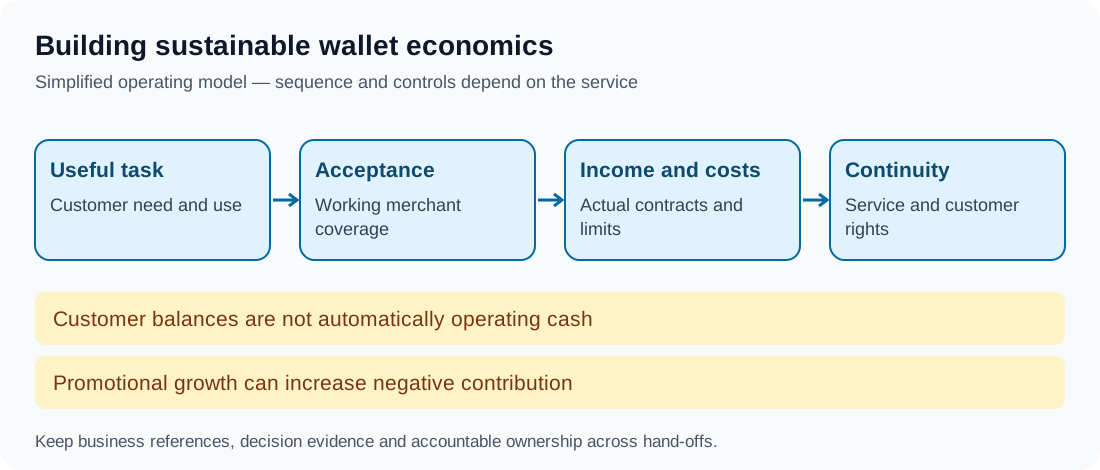
A wallet can simplify credential use, hold a monetary balance or organise passes and partner services. Its revenue depends on the particular contracts and products. Interchange does not automatically accrue to every wallet operator, and a visible customer balance is not freely available operating cash.
Start with the useful task and actual acceptance network. A credential wallet may create value through convenient payment and risk reduction; a stored-value service also needs funding, redemption and balance servicing. Explain the instrument boundaries described in Digital Wallets.
Acceptance and commercial dependence
An acceptance network benefits users when relevant merchants actually support it. Count successful useful payments and coverage, not simply signed partner names. Technical integration, fees, refund behaviour and settlement timing influence whether acceptance works in practice.
Map dependence on large merchants, funding banks, processors and device ecosystems. More app tiles do not necessarily diversify common infrastructure. Merchant or platform exit can change acceptance and economics while customers still have balances and unresolved disputes.
Income, costs and restrictions
Separate subscriptions, transaction fees, contractual interchange shares, merchant remuneration and any lawful investment returns. Apply the actual recognition and protection framework. The EU E-Money Directive illustrates specific safeguarding, redemption and benefit restrictions; do not generalise them into a worldwide rule that every safeguarded arrangement can or cannot earn any return.
Include processing, fraud, support, disputes, promotions and partner costs. Customer funds and restricted reserves should not be assumed available to fund those costs. Faster payout may involve provisional availability, an advance or another arrangement; describe its actual legal and financial nature.
Fictional example: promotion economics
A wallet earns 0.40 per qualifying purchase and incurs 0.25 in specified direct costs. A launch subsidy adds another 0.30 per purchase. Contribution is then minus 0.15 before central costs under these simplified assumptions. Growing volume with the same subsidy increases that loss.
Assess whether retained users still find value when promotion changes. Forced defaults and difficult balance redemption can produce apparent retention while weakening trust and creating conduct risk. Loyalty-point breakage follows the actual promise and accounting treatment, not an automatic right to recognise every unused point as profit immediately.
Takeaway
Measure useful acceptance, mature contribution, customer cost and unresolved financial effects. Sustainable wallet strategy needs service value, honest economics and continuing access to customer rights through partner change or exit.