SME Digital Banking
Accounts, invoicing, cash flow, finance and business tools
Understand the business and who acts for it
Small and medium-sized enterprise banking joins financial accounts with invoicing, payroll, collections, cards and finance. Start with the actual legal customer. A company, partnership and sole trader have different legal structures; a sole trader is not necessarily a separate legal person from its owner.
Verify business identity, relevant ownership and control, and authority to act under the applicable framework. The FATF guidance on beneficial ownership of legal persons provides a public reference for that subject, with national implementation still relevant. A registration field and founder login alone do not establish every fact required for the relationship.
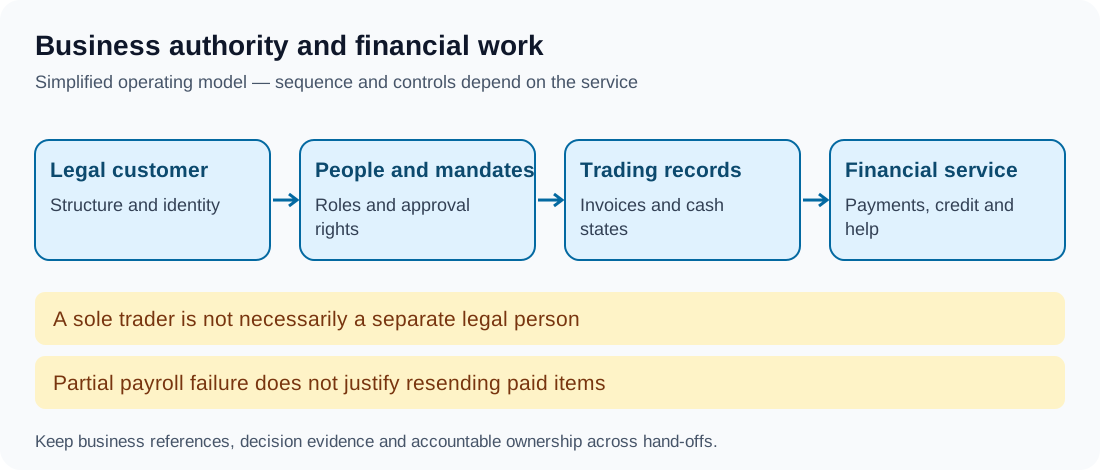
Separate roles and financial authority
Viewing statements, preparing a file, approving payments and administering access are different rights. Make invitations and role changes clear and enforce limits in the payment systems. A person allowed to upload invoices should not acquire payout authority through a convenient default.
Approval arrangements depend on the mandate, product and risks. Dual control is valuable in many business workflows but is not universally mandatory for every sole trader or payment. Test changes in directors, staff and delegated powers, including recovery and device theft. Preserve who authorised each instruction and which mandate applied.
Invoices and payment states must join
An invoice records a commercial claim. It is not itself proof of a settled payment. Invoice issue, customer dispute, payment instruction, receipt and reconciliation can occur at different times. Partial payments, credit notes, fees and duplicate transfers need explicit treatment.
For payroll or supplier files, identify each item and the file-level outcome. Some items may succeed while others fail. Retry only the relevant unresolved instructions after checking their effects; do not pay the entire payroll again because the summary screen timed out.
Bank-account detail changes require appropriate verification and authority. Where receivables are assigned or financed, collection directions depend on the agreement and applicable law, including notification where required. Do not prescribe one universal assignment process for every facility.
Cash forecasts and finance
Show the inputs and uncertainty behind cash forecasts. Expected sales are not cash receipts; gross merchandise value is not profit or necessarily net cash available. Refunds, platform fees, payroll, taxes and seasonality can change repayment capacity substantially.
Credit assessment considers the business, facility, obligations and relevant concentration. A marketplace feed may omit other sales or expenses. Distinguish a helpful forecast from a credit offer with its own terms and assessment. Monitor the booked facility and servicing needs after origination, including hardship and failed collections under the actual arrangement.
Bookkeeping connections should expose only authorised data and actions. Access to an accounting feed does not automatically authorise payment initiation. Explain export scope, permissions and removal, while preserving legally required records.
Fictional example: partial payroll failure
A business submits ten payroll items. Eight have confirmed execution; two remain rejected before execution. The operator verifies individual statuses and corrects only the two rejected items under the required approval process. The reconciliation retains the original file and replacement references.
A bookkeeper prepares the corrections but cannot approve them under this firm's mandate. If approval rules change, the system records the authorised change and its effective time. Recovery of a stolen device must not bypass that mandate.
Takeaway
Monitor aged unmatched receipts, incorrect permissions, unresolved file items and forecast error alongside service use. SME digital banking succeeds when authority, trading evidence and financial effects remain connected through routine work, exceptions and exit.
Continue to Financial Inclusion.