Product Led Growth
Growing through useful product experience, adoption and customer advocacy
The product as a route to growth
Product led growth means that experiencing useful product value helps people adopt, retain or recommend a service. It can coexist with sales, partnerships and paid acquisition. In banking, it must work alongside eligibility, identity checks, credit decisions and customer protection. A product requiring underwriting is not automatically excluded from this growth approach.
Define the value event for the customer job. A business may value completing a controlled invoice payment; a saver may value understanding a goal and its progress. Downloads, registrations and repeated logins are weaker evidence. Some valuable banking tasks occur infrequently, so daily engagement is not a universal success measure.
Design a complete first experience
Map discovery, eligibility, onboarding, first value and subsequent use. Identify which steps can be simplified and which controls must still operate. Explain referrals, processing delays and unsupported use cases before promising immediate results.
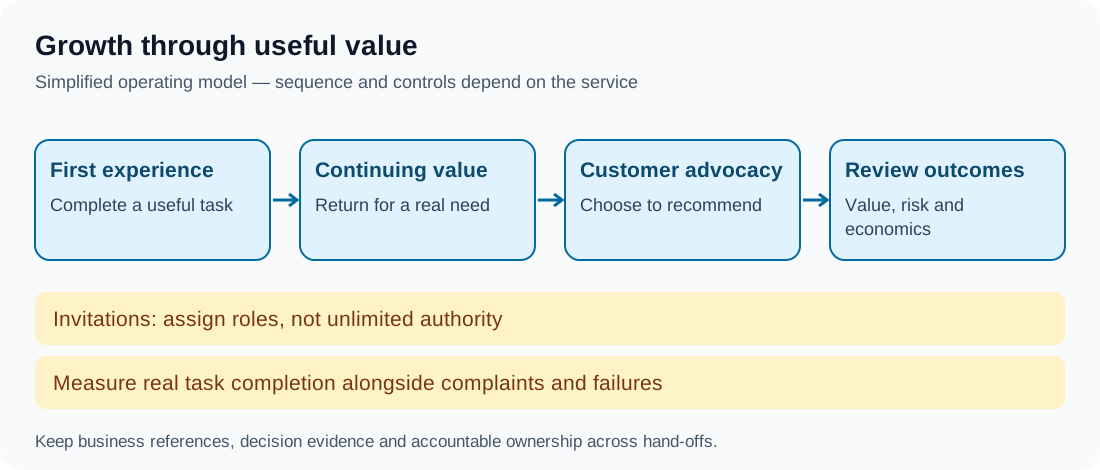
Use progressive disclosure to reduce unnecessary complexity while keeping material terms and risks visible. A demonstration can use synthetic data; it must not imply approval or a live account exists. For payments, distinguish instruction accepted, processing, settled and recipient credited where those are different states.
Collaboration needs authority
Inviting a colleague can create genuine value in a business account, but an invitation is not authority to view every balance or send money. Establish the account administrator's rights, invited user's role and any required approval or verification. Revoking a user should remove applicable access and sessions.
Referral mechanics need clear reward conditions, abuse controls and appropriate promotion review. A customer should choose whether to invite others. Importing address books or sending invitations without a suitable basis can create privacy and trust problems. Social proof does not establish a product's suitability for the recipient.
Measure retention and harm together
Track the eligible population reaching first value, time to that event, meaningful repeat use, voluntary referrals and contribution by cohort. Define active use for the product rather than selecting an event that makes the chart look larger. Separate incentives from organic behaviour, and monitor abandonment after mandatory controls.
Pair growth with failed actions, support contacts, complaints, fraud and customer comprehension. Experiments require appropriate review and reversible implementation. Do not randomly withhold required disclosures or protections to improve conversion. An apparent growth gain can simply move unresolved work into a later support queue.
Worked example: team payments
In this fictional small-business service, the useful event is an approved supplier payment with a clear status and audit trail. The owner invites an accountant as a viewer and a manager as an approver. Roles are explicit; neither invitation gives unlimited payment authority.
The pilot measures businesses completing that task and returning for a subsequent legitimate need. It also tracks duplicate instructions, role errors and support effort. An invitation experiment increases sign-ups but creates confused permissions. The team repairs the permission explanation before extending it, rather than counting all additional registrations as value.
Operating the loop
Product, engineering, risk and operations should share the definition of first value and the evidence behind customer messages. Version event definitions and connect analytics to business references without collecting unnecessary sensitive information. Test referrals, access changes, failed first payments and loss of the customer's device.
The UK FCA Consumer Duty is one scoped framework for assessing product, value, understanding and support outcomes. Growth design must follow the rules applying to its actual market and product.
Takeaway
Growth through product value depends on a useful, understandable and controlled experience. Adoption metrics should demonstrate the customer job completed and the service's ability to sustain it.
Continue to Freemium & Subscription Banking.