Premium APIs
Commercial services beyond mandatory access
What is being sold
A premium API is a capability offered on commercial terms beyond, or separately from, the applicable mandatory-access obligation. It may provide additional functionality, information, service support or a business integration. Premium is a commercial label, not a regulatory exemption.
First identify the mandated scope and charging rules in the actual market. Where access must be available on specified terms, a bank cannot silently reclassify that duty as a paid optional product. Equally, do not assume every account-information or payment API everywhere must be free.
Define the additional benefit
Examples can include approved extended history, richer business information, corporate bulk integration or event notifications. Their commercial availability depends on authority, confidentiality, intellectual property, product restrictions and the framework. A history window or recurring payment type is not automatically outside the mandate merely because it sounds advanced.
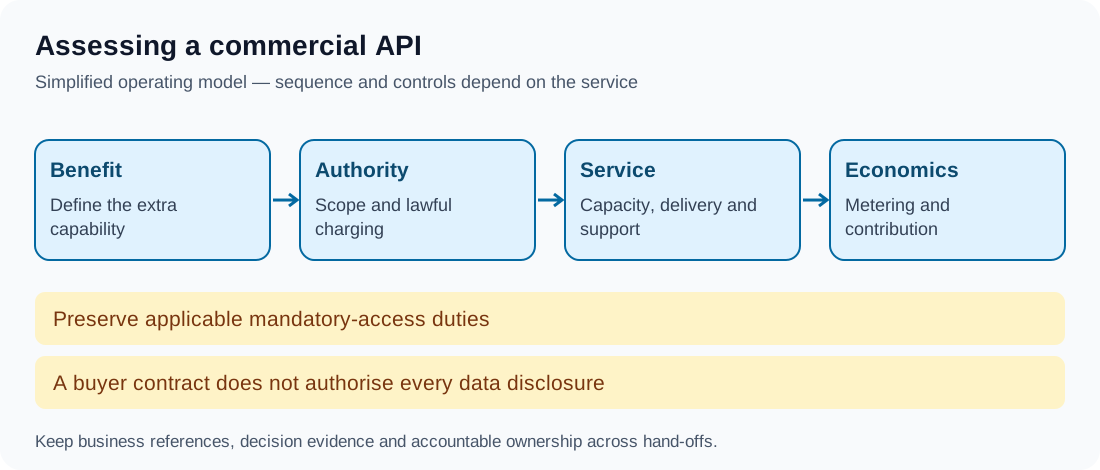
Describe what the buyer receives, which customer permissions or corporate mandates are needed, how the service works and how it differs from any required access. A contract with the buyer does not itself authorise disclosure of every customer's data.
Preserve required access
Capacity, support and release planning should keep required interfaces compliant with their obligations. Do not intentionally degrade mandated service to force purchase of a paid alternative. Different commercial service levels can be legitimate where they remain consistent with the framework.
Separate products sufficiently to measure performance and incidents, but do not present isolated clusters, code bases or teams as universal legal requirements. Shared infrastructure can be controlled through capacity management, appropriate prioritisation and evidence. The required outcome and technical design are different questions.
Pricing and metering
Pricing can use subscriptions, usage, outcomes or support tiers. Define billable events, retries, failed calls, test traffic and disputes. Metering should be reproducible from controlled records and should not expose personal data unnecessarily.
Model direct serving costs, support, fraud or operational exposures, resilience investment and acquisition. Gross API revenue is not contribution. Consider the effect of a small number of large consumers and the cost of their traffic bursts or bespoke changes.
Worked example: a paid notification service
In this fictional product, a corporate buys notifications about defined account events. Polling access remains available under its existing arrangement. The product contract explains event meaning, delivery behaviour, replay, missing events and the authoritative enquiry path.
A duplicate notification should not trigger a duplicate downstream accounting effect. The corporate deduplicates by event identity, and the bank provides suitable delivery and enquiry controls. The fee buys the defined service; it does not guarantee that every customer-facing action is final merely because an event was delivered.
Permission and complaints
Identify the data subjects and account authorities affected. Explain material additional uses and retention where required. A buyer-funded service can still cause customer harm if it introduces misleading displays or unapproved downstream processing.
Allocate support and incident responsibilities in the contract without implying that commercial terms override mandatory customer protections. Maintain evidence of what was delivered, authorised and billed. A billing dispute, unauthorised access event and payment dispute require different analysis.
Sources and review questions
The EBA PSD2 rulebook and UK Open Banking standards help identify the relevant access framework; they do not create one universal premium price list. Before launch, establish mandatory scope, lawful charging, authority for extra data, service capacity and a fair dispute process.
Takeaway
A premium API earns its price through a defined lawful capability and reliable operation. Commercial growth must remain consistent with the bank's mandatory-access duties.
Continue to Open Banking Business Models.