Personalisation
Relevant experiences, offers, nudges and next best actions
Adapt the experience to a useful need
Personalisation changes information, functionality or offers using customer context. It can show an upcoming payment, a relevant service option or a product offer. These are different purposes, with different data and customer-protection considerations. A safety message is not automatically marketing, and a marketing offer should not be disguised as an essential service alert.
Define the intended benefit before choosing a model. Reducing time to find a held product is different from maximising loan conversion. Consider whether the customer would understand the use of their information and whether the actual legal basis, notice and permissions support it.
Separate eligibility from ranking
Generate candidate actions, remove those that are unavailable or inappropriate under the applicable policy, then rank permitted options. A high propensity score does not establish eligibility, affordability or suitability. A statement about likely interest is not a guaranteed product approval.
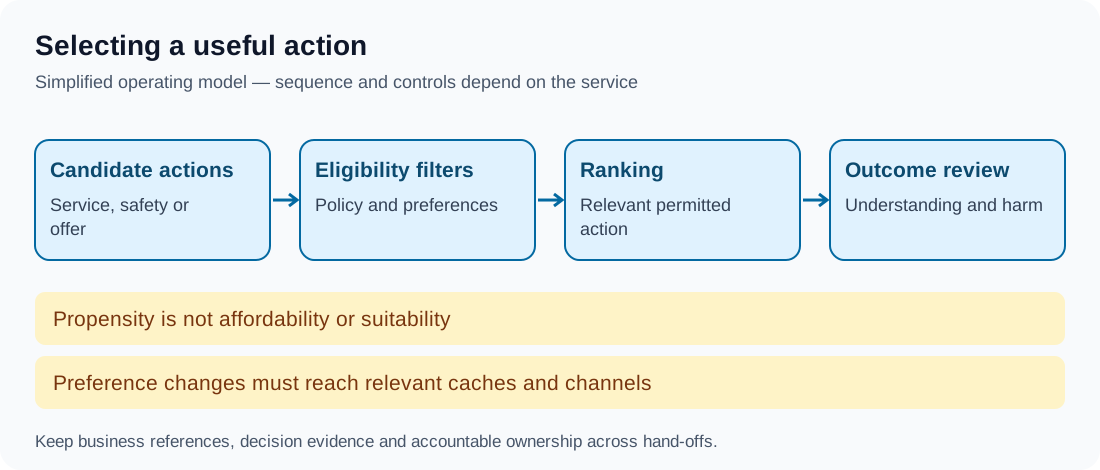
Apply relevant preferences, contact restrictions, frequency limits and current customer state. A recently closed account should not receive a welcome journey based on stale product data. Document how service, safety and commercial priorities interact; do not let a revenue ranking suppress an important customer notice.
Nudges, understanding and choice
A nudge can explain consequences or make a useful option easier to find. Its placement, wording and repetition can also create pressure. Keep material costs and risks visible, make optional actions recognisable and provide meaningful routes to decline or dismiss where appropriate.
Avoid inferring a definitive financial need or vulnerability from a single balance dip or hesitation. If the service uses sensitive inferences, review their validity and applicable restrictions. Providing support should not depend on a customer accepting an unrelated commercial product.
Data and decision evidence
Retain enough information to explain the presented action: relevant source values and freshness, policy and ranking version, exclusions, presentation and customer response. Minimise sensitive logs and control their access. A complete copy of every screen and every source record is not automatically necessary or lawful.
Check that preference changes reach campaign tools, app caches and partners as applicable. Personalisation can fall back to a useful default when inputs are unavailable. The fallback should not silently present a stale price or turn a previously suppressed offer into a mandatory task.
Worked example: a balance warning
In this fictional banking app, a forecast suggests that scheduled bills may exceed available funds. The customer receives a clear estimate based on known transactions, with uncertainty explained and links to inspect the assumptions. The app does not describe the forecast as a settled future balance.
A commercial team proposes an automatic loan offer on the same warning. Review considers product eligibility, relevant credit obligations, customer understanding and whether the presentation creates pressure. A conversion increase alone would not establish a better customer outcome.
Evaluate the complete effect
Measure task completion, useful responses, dismissals, misunderstandings, complaints and outcomes after acceptance. Compare segments to find exclusion or inappropriate pressure. Conversion uplift should be assessed alongside losses, support work and the quality of the customer's decision.
The UK FCA Consumer Duty provides a market-specific framework for product, value, understanding and support. Data-protection and marketing rules must be assessed separately; the same personalisation design is not automatically lawful everywhere.
Takeaway
Relevant personalisation begins with a permitted, useful action. Ranking and conversion optimisation should operate inside eligibility, customer understanding and choice controls.
Continue to Real Time Decisioning.