Merchant Ecosystems
Commerce, acceptance, settlement, financing and analytics
Connect the merchant's jobs
A merchant ecosystem combines services such as commerce software, payment acceptance, payouts, accounts, financing and analytics. The merchant needs to understand what was sold, what was paid, what remains available and which obligations may reduce future receipts.
Identify the merchant, marketplace, acquirer or payment facilitator, payout provider and any lender. Their responsibilities depend on the model and contract. A merchant-of-record arrangement differs from a facilitator model, but neither label alone determines every dispute or refund obligation.
Sales and money are different records
An order can be unpaid, cancelled or partly fulfilled. A payment can be authorised without final settlement. Gross sales, settled receipts, reserves and payable amounts should be labelled and reconciled rather than collapsed into one balance called “available”.
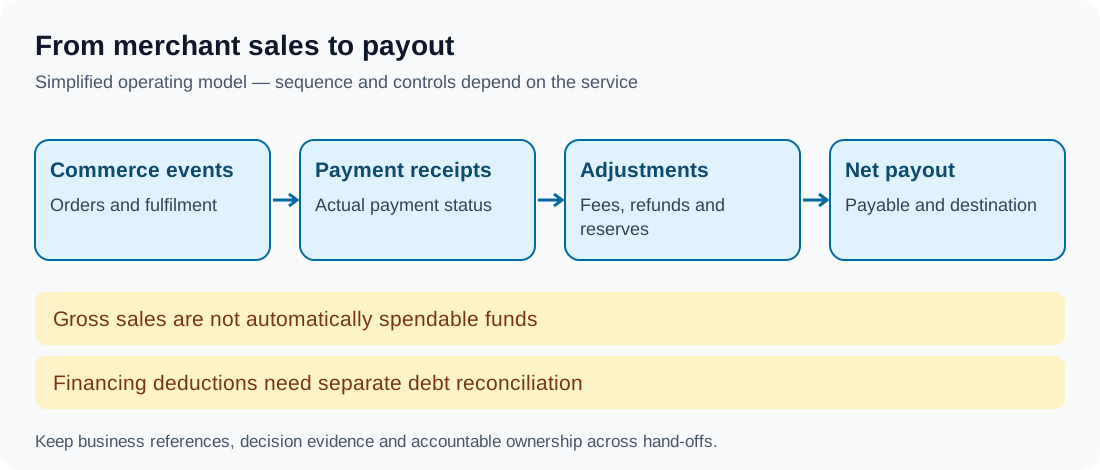
Explain payout timing and conditions, including weekends, rails, currencies and contractual reserves where relevant. “Instant payout” should describe the actual event promised, its eligibility and exceptions. A payout API response does not alone establish that funds are available at the destination bank.
A simplified payout bridge
In this fictional settlement period, relevant settled proceeds are 10,000 currency units. Fees are 200, refunds 500 and a contractual reserve movement 300. Under this simplified arrangement, the payable amount is 9,000. The reserve is explained separately from an earned fee or a final loss.
This arithmetic is not a universal settlement formula. Taxes, multiple currencies, adjustments, earlier balances and other items may apply. Each line needs a business reference and the treatment established by the actual agreement and financial record.
Financing against receipts
Merchant financing may use sales evidence, receivables or a share of receipts for collection. Determine the actual legal product and explain price, repayment, security, recourse and changes in activity. “Revenue-based” does not prove that all payments flex with revenue or that a weak-sales period removes every obligation.
Avoid treating dashboard sales as sustainable profit or complete repayment capacity. Assess expenses, seasonality, platform dependence and other relevant obligations. Reconcile collection deductions to the financing balance so a payout deduction is neither missed nor counted twice.
Refunds, disputes and exceptions
Link returns and chargebacks to original orders and payment references. Explain who funds a refund when seller funds are insufficient and what contractual reserves or set-offs apply. A merchant's customer-service agreement does not automatically replace scheme or statutory rights.
In a fictional partial return, the order changes first and a refund follows. The merchant dashboard shows both the requested adjustment and its financial status. If the provider event is missing, reconciliation opens a case rather than assuming the customer's credit completed.
Data, support and assurance
Analytics should distinguish sales, margin, cash and forecasts with coverage and uncertainty visible. Customer or merchant information needs permitted use and appropriate access boundaries. A merchant insight should not expose unrelated individuals through granular filters.
Monitor unmatched orders, settlement differences, aged payouts, reserve disputes, financing adjustments and complaint themes. Test closed merchants, provider outage, currency conversion, duplicate callbacks and migration of outstanding items. Account and payment records must remain usable when a commerce module is unavailable.
Public reference and application
Where UK retail products are in scope, the FCA Consumer Duty provides requirements concerning products, value, understanding and support. Merchant distribution arrangements need to identify the actual regulated provider and applicable obligations.
Takeaway
Merchant ecosystems are useful when the commerce and financial records reconcile. Clear payout bridges, financing terms and exception ownership help merchants act on the dashboard without mistaking sales for spendable money.
Continue to Partner Lifecycle Management.