Digital Inclusion & Assisted Access
Affordable access, alternative data, assisted journeys and underserved segments
Assistance is a controlled route to completion
Assisted access helps a customer complete a task that an independent digital journey cannot support. It may involve a trained agent, branch, call specialist, interpreter or another approved route. Assistance should preserve informed choice, privacy and appropriate authority through the whole task.
Identify the actual obstacle: connectivity, language, accessible interaction, evidence, confidence or recovery. The World Bank's Global Findex 2025 provides research on access, usage and digital connectivity. It supports examining barriers, rather than assuming all customers need the same channel.
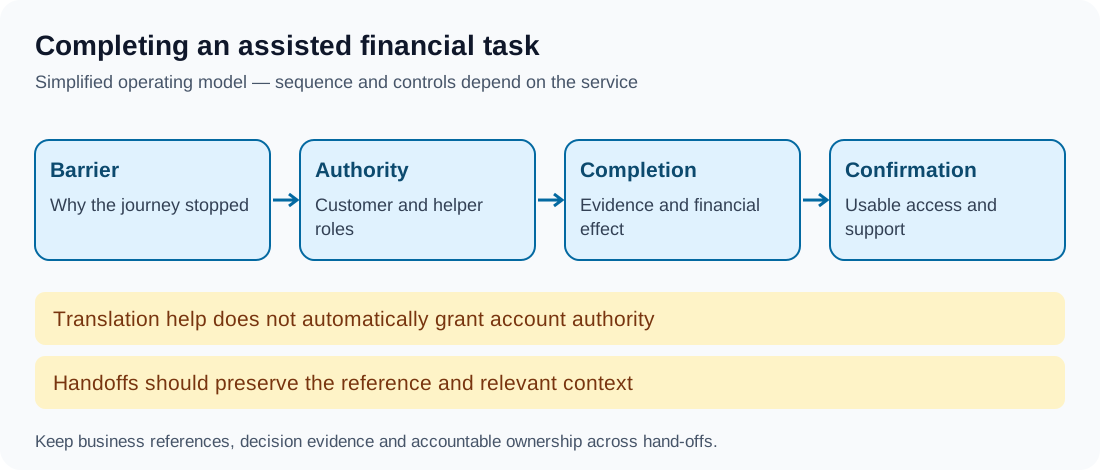
Help and delegated authority are different
A helper translating instructions is not automatically authorised to make a payment or operate the account. Establish the customer's involvement and any recognised delegation or legal representative arrangement. Do not ask a helper to collect passwords or one-time codes as a routine substitute for a secure approved process.
Design privacy for shared devices and public counters. Staff should see only information needed for the task, with appropriate access logs and controls against coercion, fabricated evidence and agent fraud. An assisted process still needs the required identity and product assessment.
Preserve continuity and explain product differences
Carry the application or case reference through handoffs. Avoid forcing the customer to repeat a sensitive story because one channel cannot read another's permitted context. Define queue ownership, progress communication and escalation when the assisted path cannot complete promptly.
Where the same product is offered across channels, preserve its promised rights and explain any relevant channel conditions. Different suitable products may legitimately have different features, pricing or eligibility; identical rates and limits are not a universal legal requirement. Do not hide a materially restricted product behind a promise of equivalent service.
Fictional example: account recovery
A customer uses a shared phone and loses access after the other user changes it. An approved specialist establishes the required identity and authority through a suitable independent process. The helper can explain the questions but cannot answer as the customer or receive new credentials without appropriate authority.
The recovery record shows what was verified, which access was replaced and whether potentially compromised sessions were revoked. Confirm actual access and help the customer understand privacy on the shared device. Do not wipe financial records merely to restart the journey.
Outcomes and takeaway
Measure completion, repeated contacts, waiting time, avoidable lockouts and customer understanding, with product and risk context. Agent count alone does not show that assistance works. A useful assisted route reaches an accurate financial outcome while keeping the customer and authorised representatives in control.
See Financial Inclusion for broader affordability and use outcomes.