Customer Support in Digital Banking
Self service, human escalation, complaints and vulnerable customers
Support is part of the financial service
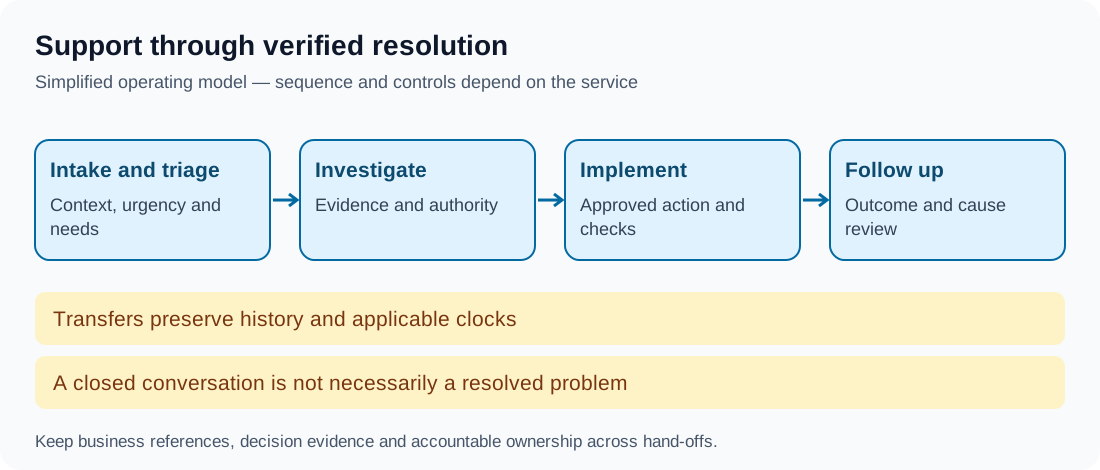
Digital support helps customers understand and resolve problems through self service, assisted channels and specialist teams. An unanswered payment or failed account recovery remains a live customer problem even if the conversation has ended. Measure resolution and harm, not only contact deflection.
Define ownership across product, operations, fraud, disputes and complaints. Establish who can authorise each action and how an urgent case reaches available cover. A support agent should not need to invent a financial decision because the responsible team is unclear.
Preserve the case across hand-offs
Attach relevant customer, product and transaction references, the question, evidence and current status. Keep the original case history and applicable deadline clocks. Channel or team changes should not reset age or require unnecessary repetition of the customer's story.
Information access should be proportionate to the task. Agents need evidence, but not unrestricted document collections, authentication secrets or unrelated accounts. Record decisions and actions with an audit trail and enforce role permissions at the systems that create financial effects.
Urgency and complaint duties
Triage suspected compromise, imminent harm, hardship and inaccessible service appropriately. Distinguish acknowledgement, investigation, substantive decision, implementation and verified resolution. A refund request is not a refund already booked.
Identify the actual dispute or complaint regime, product, customer and jurisdiction. Internal ticket targets do not replace statutory or scheme deadlines. There is no universal global response clock for every banking complaint, and fraud reimbursement depends on its actual legal framework and facts.
Customers needing additional support
Ask sensitively about relevant needs, offer suitable channels and avoid unnecessary collection of sensitive details. Vulnerability can be temporary or contextual; it is not a permanent label inferred reliably from one transaction. Review privacy and access for any support notes.
The FCA's consumer-support review discusses practices under the UK Consumer Duty, including enabling customers to realise product benefits and pursue financial objectives. Its scope should not be presented as a worldwide duty to use one specific support model.
Worked example: a failed card lock
In this fictional app, a customer tries to lock a card and sees an error. Support checks the actual card-control state, secures the relevant access through an authorised process and explains which transactions the restriction covers.
The case remains open until the relevant action is evidenced and unresolved effects are assigned. The agent does not assume that the failed screen means no restriction took effect, or promise that every pending transaction disappears. Any fraud report follows the applicable investigation and customer-protection process.
Capacity and quality
Forecast workload by arrival, handling complexity, skills and urgency. Average handling time alone can reward premature closure. Monitor aged queues, repeat contacts, reopened cases, missed deadlines, corrections and customer outcomes.
Review themes and feed fixes into the product and control owners. Test outages, provider delays, failed identity recovery and high-volume incidents. Service restoration does not automatically resolve the customers already affected; those cases need continued ownership and communication.
Takeaway
Effective digital support connects the customer to a responsible decision and verifies its implementation. Accessible routes, preserved evidence and outcome measures make that process operational rather than a collection of ticket closures.
Continue to Trust, Transparency & Dark Patterns.